GREEN BOOK: we get to spend time with Tony Lip!

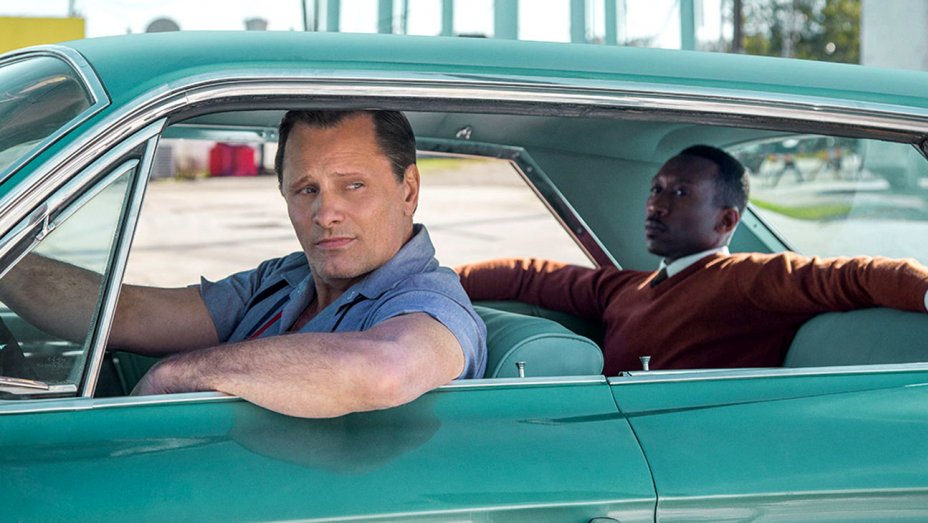
Viggo Mortensen and Mahershala Ali in GREEN BOOK

Set in 1962, Green Book is the story of Tony Lip (a burly Viggo Mortensen), an Italian-American bouncer at the Copacabana, who is enlisted to accompany a highbrow African-American musician Don Shirley (Mahershala Ali) on a concert tour of the American South.  The title refers to the pamphlet that listed African-American-friendly accommodations in the segregated South.

These guys are an odd couple – one culturally refined and intellectually curious, the other decidedly not.    Tony uses his imposing physical presence, comfort with violence and uncommon chutzpah to navigate life.  Not surprisingly, given his Bronx working class background, he is racist by today’s standard.  Shirley, on the other hand, is a sometimes fastidious Renaissance Man.  Each underestimates the other UNTIL …

Green Book is a great movie because it transcends the odd couple movie formula by probing the depths of these characters.  Tony is irascible and  enjoys disregarding the niceties of rules; early in Green Book, he see him park his car next to a fire hydrant, dump out the contents of a garbage can and then use the can to hood the hydrant.  He knows his way around the world of Wise Guys.  His appetite for his favorite foods (even in mass quantities) is admirable.  He is comfortable in his own skin and resists self-improvement (until he needs some help with romantic letters to his wife).  In Green Book, Tony Lip is not impressed by ANYTHING until he hears Don Shirley play piano.

The hyper-achiever Shirley, in contrast, is decidedly not comfortable in his own skin.  He is isolated from whites by racism and isolated from most blacks culturally.  Shirley is moody – there are multiple roots to his dissatisfaction and unhappiness – and one particular root is revealed later in the film.  Ali’s Shirley flashes an insincere showbiz smile to accept an audience’s applause, but is otherwise obsessed with always maintaining his dignity on his terms.

To their surprise, both men are affected by the other.  As inhabited by Mortensen and Ali, these are two of the most compelling characters in any odd couple movie, road trip movie or civil rights movie.

An early title says that Green Book is “inspired by true story”, and the closing credits show us the real people who are portrayed. Peter Farrelly deserves massive praise for having snagged the rights to this story and recognizing what could be done with it.  Tony Lip is a marvelous character, and Viggo Mortensen’s performance in Green Book is one of the great pleasures of this year in the movies.


ZAMA: the corruption of colonialism (as if we needed to know)

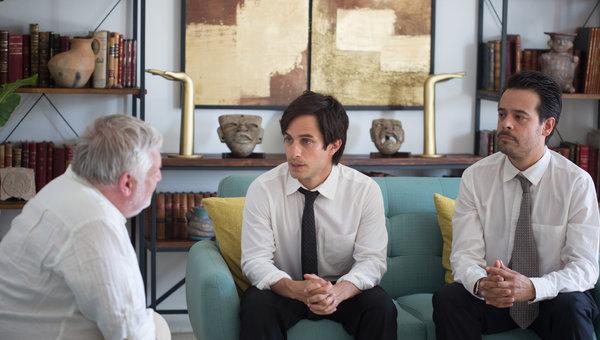
Daniel Giménez-Cacho in ZAMA

The protagonist of Zama is a colonial magistrate in the late 1700s, a low-level functionary of the Spanish crown in a remote backwater of South America. A pretty decent guy for a colonizer who enslaves other humans, Diego de Zama (Daniel Giménez-Cacho) has been loyally performing his duties, and his sole ambition is to get a transfer and return to his family.

But his bosses just won’t give him that transfer, even when he performs a morally painful task. Worse than that, his life is an unending sequence of indignities. While de Zama can’t get relieved, the underling who has been fired for insubordination gets the assignment of his choice; de Zama lusts for the Spanish colonial woman who teases him, but she only will bed the same insubordinate underling. De Zama can’t even get his indigenous mistress to wash his shirt.

The Wiley Coyote of Spanish colonialism, De Zama is frustrated, humiliated – and finally, far worse. Zama’s descent leads to his final act of refusing to give what he sees as false hope to even his tormentors. As the indignities pile up on Zama, the absurdity becomes wry; I kept thinking of the Job-like misfortunes of the protagonist in the Coen brothers’ A Serious Man, which is funny as hell, unlike Zama.

The finest screen actors are best when they are silently watching, observing and assessing their own situations. The Spanish-born Mexican actor Giménez-Cacho is particularly adept at this, and throughout the film we see “I am so screwed” in his eyes.

This is all meant to show us the fundamental corruption of colonialism, and that colonialism ultimately destroys the colonizer as well as the colonized. (Yes, this really hasn’t been controversial for the past 50 years.)

This is a one-note movie. Zama has a score of 89 from Metacritic and is beloved by many admirable critics, including the great Manohla Dargis. But the repetitive tedium and the Message worn on its sleeve didn’t pay off for me. You can stream it if you insist.

ROMA: exquisite portrait of two enduring women

Yalitza Aparicio (second from left) and Marina de Tavira (center) in ROMA

In the powerful and sublimely beautiful Roma, Cleo is the cheerful and ever-on-duty domestic servant in the Mexico City home of Sofia, her doctor husband, their four kids and Sofia’s mother. Sofia’s upper middle class family are light-skinned gueros and Cleo is indigenous. Sofia’s husband leaves her, and she tries to hold her household and her emotions together without letting on to the kids.  Sofia and Cleo’s relationship changes and is forged closer when each faces a personal crisis.

That distillation of the story doesn’t begin to capture the profound depth of Roma.  Despite their differences in race and class, Cleo and Sofia are in the same situation – facing life’s travails and the responsibilities of family without any help. They are isolated and they must find ways to endure.

Cleo (Yaritza Aparicio) encourages and nurtures the imagination of the youngest child, Pepe. She is playful and adored by the children.  This is Aparicio’s first acting gig; she was chosen from among 3000 candidates for the role.  Sofia, who is balancing on a knife-edge throughout the story, is played by veteran actress Marina de Tavira, who found Sofia’s story to be the same as her own mother’s. These are two wonderfully authentic  performances.

Roma is written, directed and edited by master filmmaker Alfonso Cuarón (Gravity, Children of Men and Y Tu Mama Tambien).  This may be his masterpiece.  Cuarón won two Oscars For Gravity, in which he conveyed the terrible and unforgiving enormity of outer space. In Children of Men, he created one of the longest, most intricate and compelling action shots in cinema history.

Shot in glorious black and white, Roma is packed with amazing set pieces, both with long static shots and even longer tracking shots.  There’s a nighttime tracking shot that follows Cleo through several blocks of a bustling Mexico City downtown street.  In another extended single, dolly shot, the camera follows characters from the beach into the surf, beyond the surf break and then back to shore.

Emergencies in the surf of a beach resort and in a hospital are among the most harrowing movie scenes that I’ve seen this year – even more intense than  climactic scenes in thrillers.

As heartbreaking as Roma can get, there’s a great deal of humor here.  Much is centered on the family dog and his massive production of excrement.  There’s also the repeated ordeal of an oversized Ford Galaxy inching its way into an undersized car park.  A rural hacienda contains some very unusual wall decorations.  And there’s an unexpected and remarkably inappropriate naked martial arts performance.

According to those who would know, Roma is an evocative time capsule of Mexico City at the beginning of the 1970s.

The characters of the mom and the domestic, along with the events – the riot, the forest fire, the earthquake, etc. – are recreated from Cuarón’s most vivid and enduring memories of his own childhood. It’s a deeply personal and individual story, but one which is universal –  that of women carrying on without the support of (and even despite) the men in their lives.

I saw Roma at the Mill Valley Film Festival in October at a screening with Aparicio, de Tavira and producers Gabriella Rodriguez and Jonathan King.  Cuarón shot the film in sequence over 108 days and only showed the cast the script one day at a time, directing them to “surrender” to the story.  Rodriguez confirmed that the family sees Marooned at the movie in a nod to Gravity.

Roma takes its title from the family’s neighborhood in Mexico City.

Roma will be released in New York, LA and Mexico City theaters this weekend and will open more widely on November 29. Having been financed by Netflix, it will stream to Netflix subscribers on December 14.  This is one of the year’s very best films, and it will receive multiple Oscar nominations.

THE OUTLAW KING: medieval slaughter, falling flat

Chris Pine in THE OUTLAW KING

Chris Pine has the title role in Netflix’s The Outlaw King.  It’s the story of Robert the Bruce, who wrested control of Scotland from the English and became the Scottish king in the early 1300s. I like Chris Pine, and he makes a medieval warlord very relatable, but this movie is pretty flat. I was especially disappointed because I admired director David Mackenzie’s last movie (Hell or High Water – also with Chris Pine) so much.

I’m guessing from Mackenzie’s surname that he was drawn to Bruce as an icon of Scottish nationalism. But all these historical struggles of conquest and rebellion in the feudal era were really just tugs of war between rival warlords – the moral equivalent of the Soprano Family. To its credit, The Outlaw King (as do Shakespeare’s histories) does not overly romanticize the self-serving motivations of the nobility

The Outlaw King is kinda historically accurate – it captures the overall arc of the story, although Bruce’s archenemy, the future Edward II, was not at the battle of Loudin Hill and, hence did not engage in a mano a mano showdown with Bruce there as depicted.

On the other hand, there isn’t much in the historical record about most women in the early 1300s, particularly Bruce’s second wife, Elizabeth (Florence Pugh).  The filmmakers have constructed a pretty interesting character in Elizabeth, so that’s all to the good.

We do know that Edward II was a pretty interesting cat (not a complement), but, while The Outlaw King portrays Edward’s problems with Dad and hints at his narcissistic bravado, it misses the chance to go deeper.

There is a lot of the hacking and hewing of medieval combat a la Braveheart, in The Outlaw King, chiefly in Bruce’s pivotal victory at the battle of Loudon Hill. But the overall emptiness of the movie leaves the battle scenes, as well-crafted as they are, less thrilling than those in Orson Welles’ Chimes at Midnight and Kenneth Branagh’s Henry V.

The Outlaw King exists for those who need a dose of medieval slaughter and a spunky queen, but there’s not enough there for the rest of us.

FIRST MAN: making mankind’s greatest achievement boring

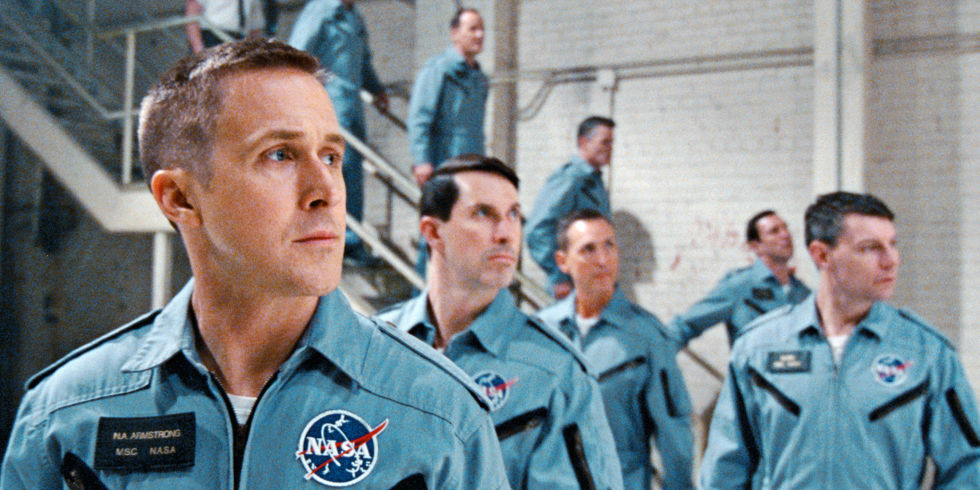
Ryan Gosling (left) as Neil Armstrong in FIRST MAN

First Man is the astoundingly boring story of mankind’s greatest achievement – sending men to the moon and returning them safely to earth.  It’s a major whiff for Damian Chazelle, the director of indie hit Whiplash and the refreshingly original La La Land.  Chazelle also wrote Whiplash and La La Land, but not the screenplay for First Man.

Ryan Gosling is the moon-walking astronaut Neil Armstrong, and Claire Foy (The Crown) is his wife Janet.  Much of the film is consumed in the story of their marriage, damaged by the loss of a child and stressed by the danger of Neil’s missions.

With the ingenuity, courage and sacrifice that produced the moon mission, this should have been a thrilling story.  Instead, it drags morose characters through a meandering procedural.

Gosling gets to prove that he can play taciturn, which gets old fast.  Foy dances along the continuum from aggrieved to highly aggrieved.  Their talent is wasted, as is an excellent cast overall.  Ciarán Hinds and Kyle Chandler are the NASA managers, and Jason Clarke and Cory Stoll (excellent) are other astronauts.  Shea Whigham and Lukas Haas are in here somewhere.

As the end credits rolled, The Wife and I turned to each other in wonder at how unentertaining this film was.  First Man especially suffers in contrast to The Right Stuff, Apollo 13 and Hidden Figures.  Worst true-to-life NASA movie of all time?  Here’s  a contender.

MUSEO: portrait of alienation in the form of a heist

MUSEO

The true life Mexican heist film Museo is really a portrait of alienation – and immature alienation at that. It’s about a young middle class guy in a third world country, and he has first wold problems; his prospects are not unlimited, but he’s way better off than his less educated compatriots. So he and his weak-willed buddy pull off an audacious art theft.

Unusually, and perhaps uniquely, among heist films, hardly any time is invested in assembling the team (here it’s the guy and his buddy) or in the heist itself. The guys steal the most famous ancient Mexican artifacts from the National Museum, essentially the heart of the nation’s heritage. The theft becomes a sensation that dominates the national zeitgeist, triggers an all-out manhunt and a political scandal. How could this have happened?

Of course, there can’t possibly be any buyers for such high visibility objects (just like in this year’s other real life slacker heist film American Animals). Most of the film is figuring out what to do next – and good options are non-existent.

The protagonist is played by the fine actor Gael Garcia Bernal. Unfortunately, this character really isn’t that interesting; I think that is because his alienation is based on petulance and not on rage (see the great Jack Nicholson ragingly alienated roles of the 70s).

Museo does a good job of evoking the Mexico City and Acapulco in the mid 1980s. But without the central thrill of a heist, we are left with an unsympathetic protagonist and his predicament, and that’s really not enough for a two-hour movie. I saw Museo at the Mill Valley Film Festival.

https://vimeo.com/287000720

BLACKKKLANSMAN: funny and razor sharp

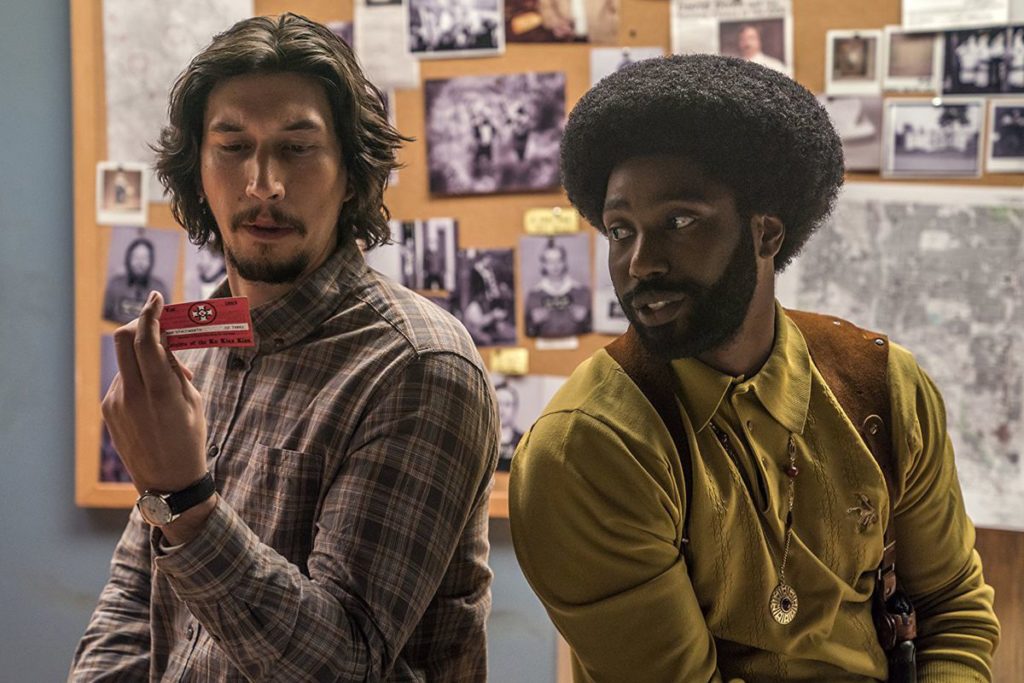
Adam Driver and John David Washington in BLACKKKLANSMAN

In BlacKkKlansman, Spike Lee takes the stranger-than-fiction story of Ron Stallworth and soars. Stallworth was a real African-American rookie cop in Colorado Springs who infiltrated the local Ku Klux Klan in the 1970s.

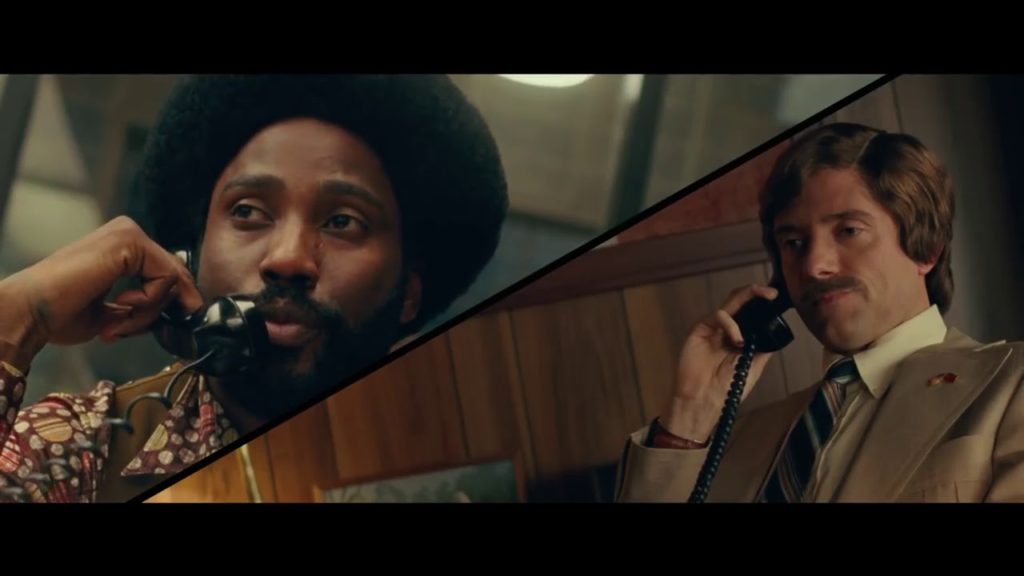
Stallworth (John David Washington) seduces the KKK with a racist rant on the telephone, and then has his white partner Flip Zimmerman (Adam Driver) impersonate him at the KKK meetings. Stallworth and Zimmerman race against the clock to quash KKK violence. Along the way, Stallworth tries to romance the comely cop-hating militant Patrice (Laura Harrier).

All of the actors are excellent, but it’s Spike Lee who is the star here, taking this oddball novelty story and transforming it into an exploration of hate in America – then and now.

The local KKK is a bunch of clowns. Paul Walter Hauser (Shawn in I, Tonya) plays a member of the Colorado Springs Klan posse, which tells you all you need to know about their efficacy. Suffice it to say that this gang who can’t burn a cross straight will get their comeuppance. Even their media-slick national leader, David Dukes (Topher Grace), is ripe for an epic prank.

As the moronic Klansmen bumble around and even name Stallworth their leader, BlacKkKlansman is riotously funny. But Spike makes it clear that racial hatred is not going to be wiped out in the 70s with the Colorado Springs KKK. When David Dukes lifts his glass to “America First”, it’s chilling.

At the end of the film, Spike lets go with his patented dolly shot, and we are sobered by a racist symbol unbowed. Then, Spike takes us seamlessly into the present with some actual scenes from contemporary America. It’s very powerful, and, when I saw it, many audience members wept.

John David Washington and Topher Grace in BLACKKKLANSMAN

Spike is inclusive – inclusive with intentionality – and this goes beyond the Ron/Flip buddy partnership. The Civil Rights movement benefited from Jewish support, and Black leaders like Thurgood Marshall and Martin Luther King Jr. worked hand-in-hand with Jewish colleagues. But Jews (and all whites) were less welcome in the Black Power age. In BlacKkKlansman, Spike makes it clear that African-Americans and Jews are natural allies in the struggle against bigotry, and seeks to revive the alliance.

Spike also celebrates the Afro.  BlacKkKlansman boasts the most impressive assembly of Afros, perhaps ever, especially Harrier’s.   Oscar Gamble, Franklyn Ajaye and Angela Davis would be proud.

Spike also masterfully employs period music to tell this story: Ball of Confusion, Oh Happy Day, and, of course,  Say It Loud -I’m Black and I’m Proud.  Somehow, he even found a place for Brandy (You’re a Fine Girl).  But Emerson Lake and Palmer’s Lucky Man may be the most perfectly placed song.  It’s all pretty stellar.

Spike Lee has made two cinematic masterpieces: Do the Right Thing and 25th HourBlacKkKlansman may not be a masterpiece, but it’s right at the top of Spike’s other films and it’s perfect for this age in America.

THE MOSSAD: epic cloak and dagger

Subject Peter Malkin in a still from THE MOSSAD. Photo courtesy JFI

Anyone with an interest in historical cloak-and-dagger will appreciate the documentary The Mossad, about Israel’s legendary foreign intelligence service. We meet some current and recent Mossad officers, who are extremely tight-lipped.  But decades of intervening history have freed their older colleagues to spin first-hand tales of the Mossad’s most legendary operations:

  • The kidnapping of Nazi death camp czar Adolph Eichmann (and we hear from the guy who physically grabbed Eichmann in Buenos Aires).
  • The cultivation of a longtime mole at the highest level of the Egyptian government.  The mole is identified.  We hear how the Israeli military reacted to the advance warning of Egypt’s 1973 invasion – you may be surprised.
  • The methodical hunting down of the Palestinian terrorists who kidnapped and murdered Israeli athletes at the Munich Olympics.

The Mossad is a natural bookend to the The Gatekeepers, about another Israeli intelligence agency.  The Gatekeepers is centered around interviews with all six surviving former chiefs of Shin Bet, Israel’s super-secret internal security force. We get their inside take on the past thirty years of Israeli-Palestinian history. What is revelatory, however, is their assessment of Israel’s war on terror. These are hard ass guys who went to the office every morning to kill terrorists. But upon reflection, they conclude that winning tactics make for a losing strategy.
The Gatekeepers is available to rent on DVD from Netflix and for streaming on Amazon Instant, iTunes, Vudu, YouTube, Google Play and Flixster.

You can find how to watch The Mossad along with the entire SFJFF program at San Francisco Jewish Film Festival.

THE DEATH OF STALIN: gallows humor from the highest of scaffolds

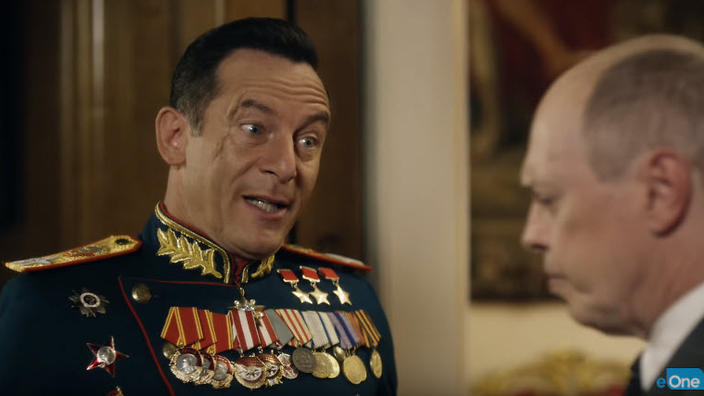
Jason Isaacs and Steve Buscemi in THE DEATH OF STALIN

One might not expect the death of Josef Stalin and the subsequent maneuvering of his cronies to make for a savagely funny movie, but that is exactly what writer-director Armando Ianucci has accomplished in in The Death of Stalin.  In his Veep and In the Loop, Ianucci has proved himself an expert in mocking the ambition, venality and flattery of those reaching for power.  In The Death of Stalin, he adds terror to his quiver of motivations, and the result is darkly hilarious.

Serving Stalin was a high-wire act.  By the end of Stalin’s Great Terror, everyone still standing in the Soviet leadership had survived by flattering Stalin and by loyally carrying out every Stalin command, no matter how misguided and/or murderous.  Given that the slightest misstep – or even a wholly imagined fragment of Stalin’s paranoia – could lead to a summary bullet-in-the-head, this was no small achievement.  These may have been the most powerful men at the very top of a superpower, but they have all been traumatized into extreme caution by years of fear.

For example, when Stalin suffers a cerebral hemorrhage and falls to the floor, his guards are afraid to burst into his room.  When Stalin is discovered on the floor by his housekeeper, the regime’s top leaders gather around him and decide on next steps.  The first question is whether to call a doctor, because they fear that if Stalin wakes up and finds that someone else has made a decision, he will have them executed.  (Once they get past that, they must work around the fact that Stalin has already killed or exiled all the competent doctors in Moscow.)

Of course, it would be absurd for Stalin’s inner circle to refrain from calling a doctor for hours and hours.  But it really happened.  So did all of the other key occurrences in the movie, although the events were compressed from the real six months into a three-day movie plot.

This cast is brilliant.  Steve Buscemi is cast as Nikita Kruschev and proves to be an inspired choice.  Jason Isaacs, with a ridiculously broad (but historically accurate) chest full of medals, is especially delightful as Field Marshal Zhukov.   Michael Palin, as Molotov, has one of the best bits as he deadpans political correctness while figuring out whether he can admit that the sudden release of his imprisoned wife is really good news.  Each one of the actors – Simon Russell Beale, Olga Kuryenko, Paddy Considine, Jeffrey Tambor, Andrea Riseborough – gets to shine with Ianucci’s dialogue.

This is gallows humor from the highest of scaffolds.  The Death of Stalin is an insightful exploration of terror – and hilarious, too.

THE POST: riveting thriller and revelatory personal portrait

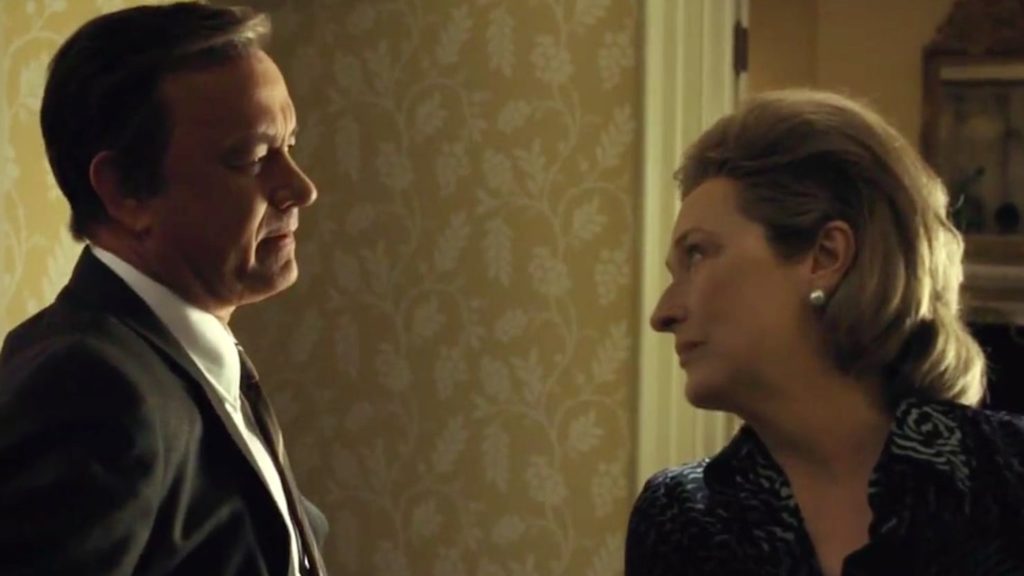
Tom Hanks and Meryl Streep in THE POST

The Post may be a docudrama, but it plays as a thriller and an astonishingly insightful portrait of Katharine Graham by Meryl Streep. It’s one of the best movies of the year – and one of the most important.

Essentially, this movie is about a corporate decision, but master storyteller Steven Spielberg sets it up as a tick-tock, high stakes thriller.  Washington Post publisher Katharine Graham (Streep) must decide whether to publish the Pentagon Papers at a moment when her company is most vulnerable to market forces and government intimidation.  Nothing less than the American principle of freedom of the press hangs in the balance.

The Post also delivers the personal and feminist transformation of Katharine Graham, learning to move beyond her Mad Men Era roles as wife/mother/socialite andto , for the first time, assume real, not titular, command of a business empire.  And she goes All In on the ballsiest gamble any CEO could make.  To say that Streep brings Graham to life is inadequate.  Streep IS Graham. It sometimes seems like Streep can get an Oscar nomination without even making a movie, but this performance is one of Streep’s very best.

Spielberg surrounds Streep with a dazzling cast.  Tom Hanks lowers the pitch of his voice and becomes the swashbuckling editor Ben Bradlee.  Tracy Letts gives us another fine performance, this time as Graham’s financial guru Fritz Beebe.  As Bradlee’s second wife Tony, Sarah Paulson ignites a monologue with her piercing eyes.

Bruce Greenwood is quite brilliant as Robert McNamara, Graham’s old friend and the architect (and unwilling sta) of the Pentagon Papers. Greenwood is such an overlooked actor, and he’s so reliably good (he was even good in Wild Orchid, for Chrissakes).

The Pentagon Papers was the 7,000-page secret official history of the American involvement in the Vietnam War. Commissioned by then Defense Secretary Robert McNamara, the Pentagon Papers chronicled the years of bad decisions by the Truman, Eisenhower, Kennedy and Johnson administrations and, especially, the deceitfulness of JFK’s and LBJ’s public optimism about the War.  The truth was that the US government knew that the war was unwinnable and that it was only prolonged because nobody knew how to get out while saving face.  The US President in 1971, Richard Nixon, was following the same course, unnecessarily wasting the lives of another 20,000 Americans during his term of office; the ruthless Nixon and his henchman Henry Kissinger were desperate to keep the Pentagon Papers secret.  A private sector defense expert, Daniel Ellsberg, had access to the Pentagon Papers and sought to have them published, and The Post tells this story, which takes the audience from a jungle firefight into the courtroom of the US Supreme Court.

Baby Boomers will appreciate being transported back to quaint 1971 technology: typewriters, one-page-at-a-time Xerox machines, rotary pay phones, real typeset and ink presses.  (And cigarette smoking in restaurants and cigars in the workplace.)

I’ve also written an essay on some of the historical figures and events depicted in The Post: historical musings on THE POST.

The Post is worth seeing for Streep’s performance, for the history (incredibly important at this moment in the nation’s history) and for the sheer entertainment value.  One of the year’s best.