Stream of the Week: ALL THE WAY – LBJ comes alive

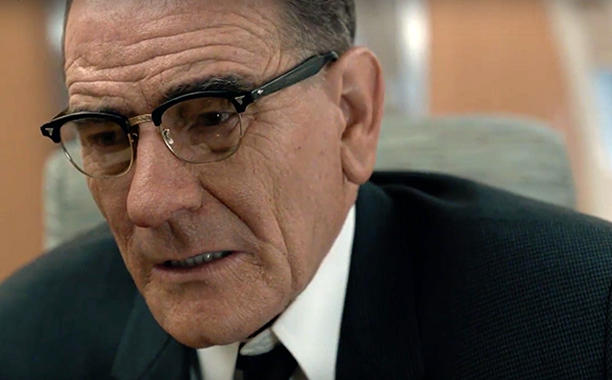
Bryan Cranston in ALL THE WAY

Lyndon B. Johnson, one of American history’s larger-than-life characters, finally comes alive on the screen in the HBO movie All the Way. Bryan Cranston (Breaking Bad, Trumbo) is the first actor who captures LBJ in all his facets – a man who was boring and square on television but frenetic, forceful and ever-dominating in person. All the Way traces the first year in LBJ’s presidency, when he ended official racial segregation in America with the Civil Rights Act of 1964.

LBJ was obsessed with gaining and keeping political power, and he was utterly ruthless and amoral about the means to do that. His tools of persuasion included deceit, flattery, threats, promised benefits and horse-trading. He was equally comfortable in playing to someone’s ideals and better nature as well to one’s vanity or venality. In All the Way, we see one classic moment of what was called “the Johnson treatment”, when LBJ looms over Senator Everett Dirksen, and it becomes inevitable that Dirksen is going to be cajoled, intimidated or bought off and ultimately give LBJ what he wants.

LBJ was so notoriously insincere that one of the joys of All the Way is watching LBJ tell completely inconsistent stories to the both sides of the Civil Right battle. Both the Civil Rights proponents (Hubert Humphrey and Martin Luther King, Jr.) and the opponents (the Southern Senators led by Richard Russell) must determine whether LBJ is lying and to whom. Each of them must make this calculation and then bet his own cause on his perception of LBJ’s real intentions.

But LBJ amassed power for two reasons – he needed to have it and he needed to do something with it. Along with the LBJ’s unattractive personal selfishness and the political sausage-making that some may find distasteful, All the Way shows that Johnson did have two core beliefs that drove his political goals – revulsion in equal parts to discrimination and poverty. We hear references to the childhood poverty that led to the humiliation of his father, to the plight of the Mexican schoolchildren in Cotulla, Texas, that he mentored as a young man, and his outrage at the discriminatory treatment suffered by his African-American cook Zephyr.

Bryan Cranston brilliantly brings us the complete LBJ – crude, conniving, thin-skinned, intimidating and politically masterful. Besides Cranston’s, we also see superb performances by Melissa Leo as Ladybird, Anthony Mackie as MLK, Bradley Whitford as Hubert Humphrey and Frank Langella as Richard Russell.

All the Way is remarkably historically accurate. It does capsulize some characters and events, but the overall depiction of 1964 in US history is essentially truthful. As did Selma, All the Way drills down to secondary characters like James Eastland and Bob Moses. We also see the would-be scandal involving LBJ’s chief of staff Walter Jenkins, a story that has receded from the popular culture. Vietnam is alluded to with a reference to the Gulf of Tonkin incident, which is fitting since Vietnam grew to become LBJ’s nemesis and the national obsession only after the 1964 election.

All the Way was adapted from a Broadway play for which Cranston won a Tony.  LBJ’s 1964 makes for a stirring story, and All the Way is a compelling film. You can stream it from HBO GO, Amazon’s HBO Now,  iTunes, YouTube and Google Play.
HARRIET: story great, movie only okay


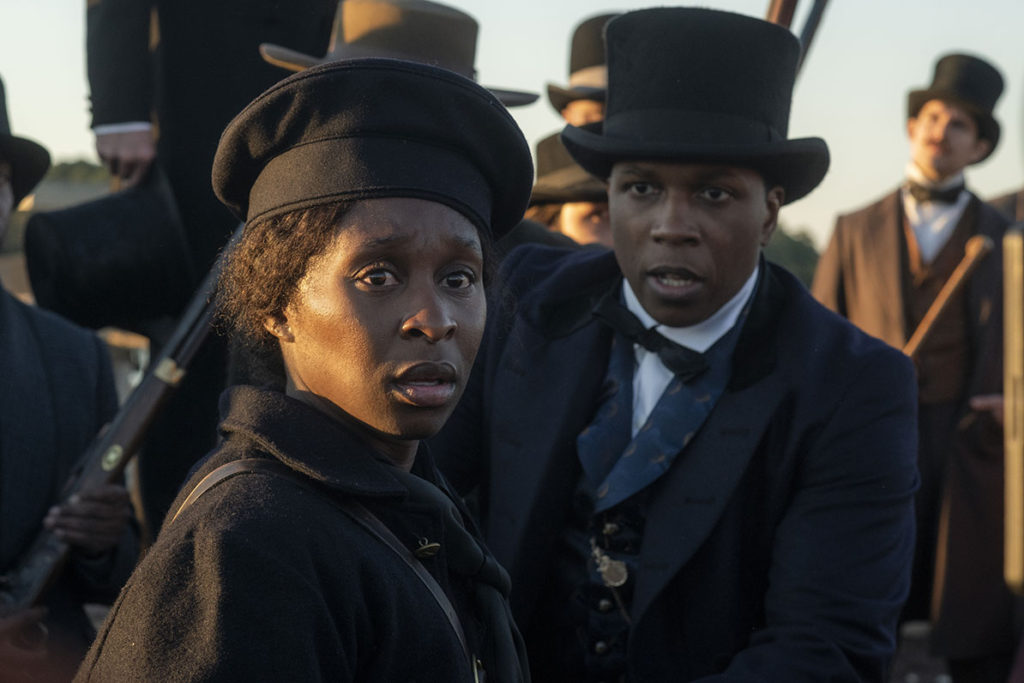
Cynthia Erivo in HARRIET. Photo courtesy of Focus Features.

I first watched the trailer for Harriet askance because the Harriet Tubman action figure I saw on-screen didn’t resemble the tiny, revered Tubman in the sepia photos. But that is because of my own skepticism of Hollywood history and my own woeful ignorance of the historic Tubman. The ancient lady in her photos and the historic Tubman are explained in this fine NYT piece Harriet Tubman Facts and Myths: How the Movie Tried to Get it Right. As Harriet’s director Kasi Lemmons says in this NYT article, “You don’t have an image of what she was like when she was actually doing this work in her late 20s, when she was this young superheroine, this completely badass woman.”

Harriet is good history. The problem is that Lemmons doesn’t trust us to appreciate Tubman’s heroism when we see it – a 100-mile solo escape from slavery, guiding 75 escaped slaves to freedom with the Underground Railroad, leading troops into battle to free 700 more in the Civil War, and becoming a thought leader in the abolitionist and suffragist movements. So we have this swelling music every time Tubman does something inspirational. The constant, obvious beatification is distracting.

Tubman is played with convincing intensity by Cynthia Erivo. Erivo was absolutely the best thing about the Steve McQueen film Widows; since Erivo’s character teamed with those played by Viola Davis, Michelle Rodriguez and Elizabeth Debicki, the fact that she stole the movie is impressive. Erivo is a Broadway musical actress/singer, and Harriet uses her singing talent as well.

If you’re not expecting great cinema, you’ll appreciate this important and compelling history. Harriet makes it clear why Tubman belongs on the twenty dollar bill.

LORO: just eye candy

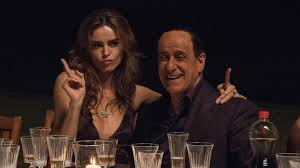
Kasia Smutniak and Toni Servillo in LORO

Loro is director Paolo Sorrentino’s take on the career end of the despicable Italian media mogul and former prime minister Silvio Berlusconi. The Berlusconi character has a different name, but there’s no mistake that it is the hair-dyed, ever-grinning Berlusconi.

The movie Loro is actually the combination of two television programs. In the first, we see Berlusconi’s corruption through the POV of another amoral grasper, Sergio (Ricardo Scarmacia). Sergio seeks his fortune by collecting a brigade of cocaine-fueled escorts to sexually entertain Berlusconi. In the second half, we follow Berlusconi himself as, out of power, he is unable to climb back into power, he loses his wife and he is sexually humiliated by a 20-year-old aspiring actress. Sorrentino gets his licks in by making Berlusconi, finally, pathetic.

Loro stars Sorrentino’s frequent collaborator Toni Servillo, who is able to play the Berlusconi character as a figure powerful to get all he desires…and then not.

I had high expectations of Loro because I loved Sorrentino’s The Great Beauty and Youth. Sorrentino is a master of the eye candy and those movies are especially beautiful, but also tell stories compelingly. Ultimately, Loro is much more interesting visually than it is thematically.

Loro, which got a screening at the San Francisco international Film Festival, has just concluded a wisp of a theatrical release in the Bay Area. It can be streamed from Amazon, iTunes, Vudu, YouTube and Google Play.
JOJO RABBIT: a joyous and hilarious movie about the inculcation of hatred

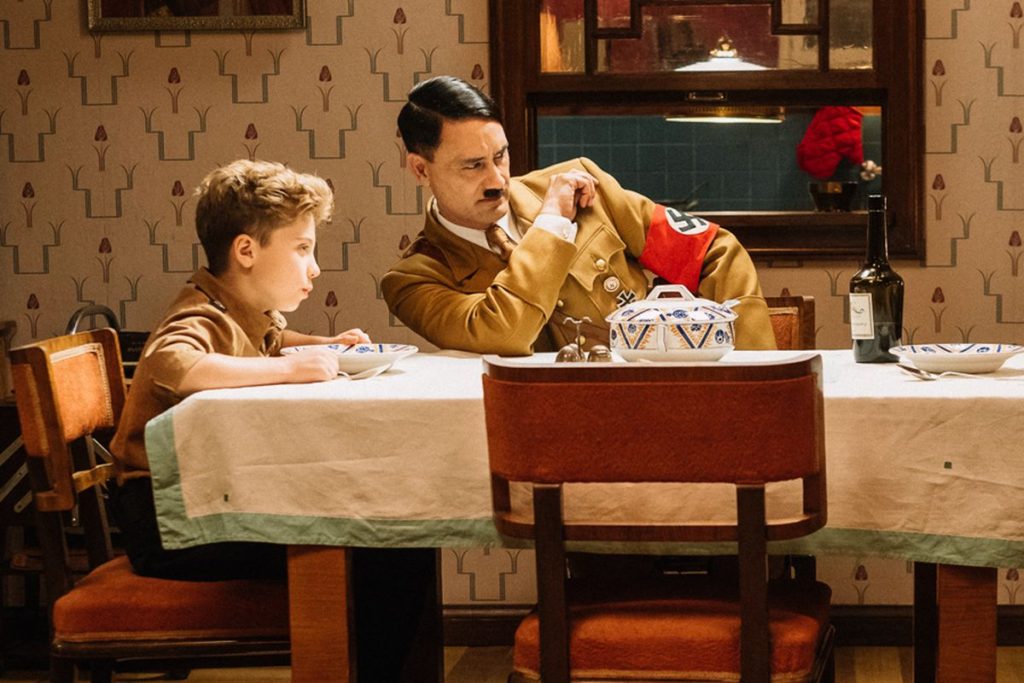
JOJO RABBIT

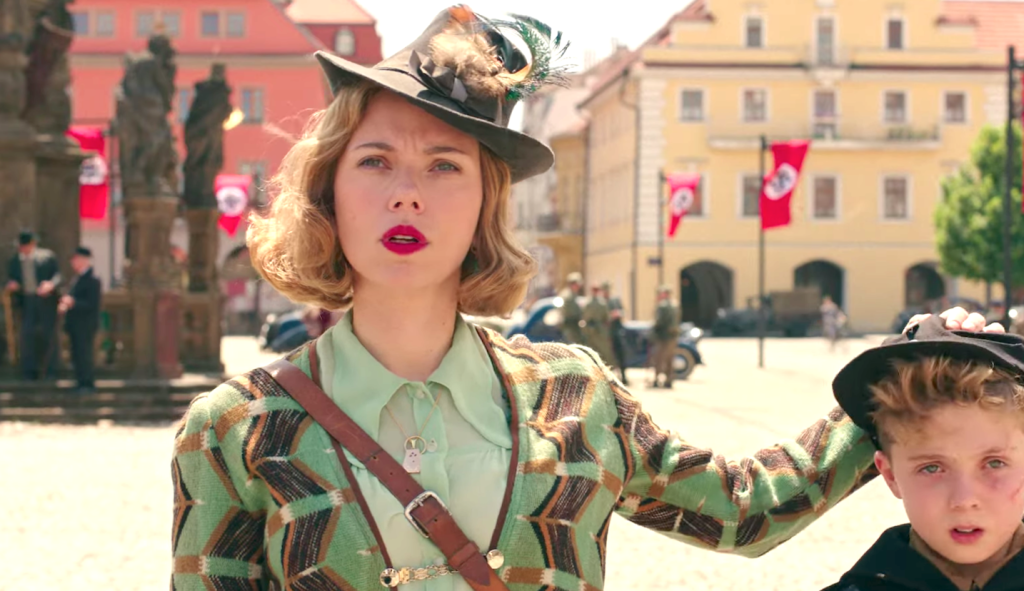
Filmmaker Taika Waititi takes on hatred in his often outrageous satire Jojo Rabbit. His protagonist is the ten-year-old German boy Jojo (Roman Griffin Davis), growing up during the final years of World War II. Jojo lives with his mom (Scarlett Johansson) because his dad is away (and we learn that the father is likely dead), It’s a tough childhood in these conditions, and Jojo copes with the help of an imaginary friend, who happens to be Adolph Hitler, played uproariously by Waititi himself.

Waititi doesn’t play the historical Hitler; he plays a benign and reassuring figure that is imagined by a child brought up on Nazi propaganda. He fills that role that uncles and grandads get to be with kids – the cherished figure who is always on your side and never make you do your chores. Of course, a playful and nurturing Hitler is absurd, and Waititi is brilliantly funny.

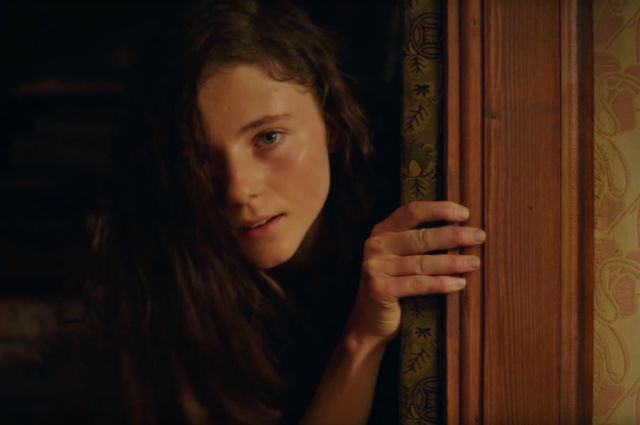
Jojo tries to fit in with the Hitler Youth, and his hobby is innocently filling a notebook with illustrations of the most hideous Jewish stereotypes that he has been taught. What we understand but Jojo doesn’t, is that his mom is risking her life in the anti-Nazi Resistance. She’s also been hiding the Jewish girl Elsa (Thomasin Mackenzie) in the attic a la Anne Frank.

Thomasin MacKenzie in JOJO RABBIT

Jojo discovers Elsa, and , as is usually the case with a ten-year-old boy and a fifteen-year-old girl, she becomes the boss of him. He gets an up close lesson in Jewishness, and it’s a revelation to him. It’s also clear that Germany is losing the war, although Jojo, as a child, is slower to connect the dots about that than are the adults. As the propaganda is unpeeled, the absurdities of the hatred and scapegoating are revealed to Jojo.

Roman Griffin Davis is a perfect choice to play the relatable innocent Jojo. Thomasin MacKenzie, so genuine and ethereal in Leave No Trace, is wonderful here, too. The entire cast is good, especially Johansson, Sam Rockwell as a cynical army officer, Rebel Wilson as a Nazi true believer and Stephen Merchant as a grinning Gestapo goon.

Even more than most movies, this is a film of its time. Five years ago, we might not have seen the value of a movie discrediting the Joseph Goebbels approach – pounding outrageous lies into a mass audience made gullible by its own dissatisfaction, targeting the “other” as blameworthy for all ills. But here we are, 74 years after the destruction of the Nazis, once again watching blowhard demagogues drumming up hatred for minority groups and scapegoating immigrants – in the US and Europe and around the globe. With its skewering of manufactured hatred and the Big Lie, this witty and ultimately sweet film resonates.

I saw Jojo Rabbit at the Mill Valley Film Festival, where the audience ROARED with laughter. This is going to be an audience favorite.

AN AMERICAN STORY: NORMAN MINETA AND HIS LEGACY

AN AMERICAN STORY: NORMAN MINETA AND HIS LEGACY

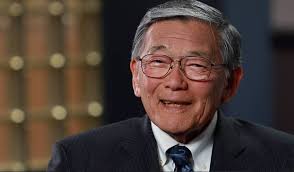
An American Story: Norman Mineta and His Legacy traces the life and times of Norman Mineta, who amassed a startling number of “firsts” and other distinctions in America history:

  • The first Asian-American mayor of a major U.S. city.
  • The first Japanese American member of Congress elected from the 48 Continental states.
  • A Cabinet Secretary in both Democratic and Republican Administrations.
  • The nation’s longest-serving Transportation Secretary.

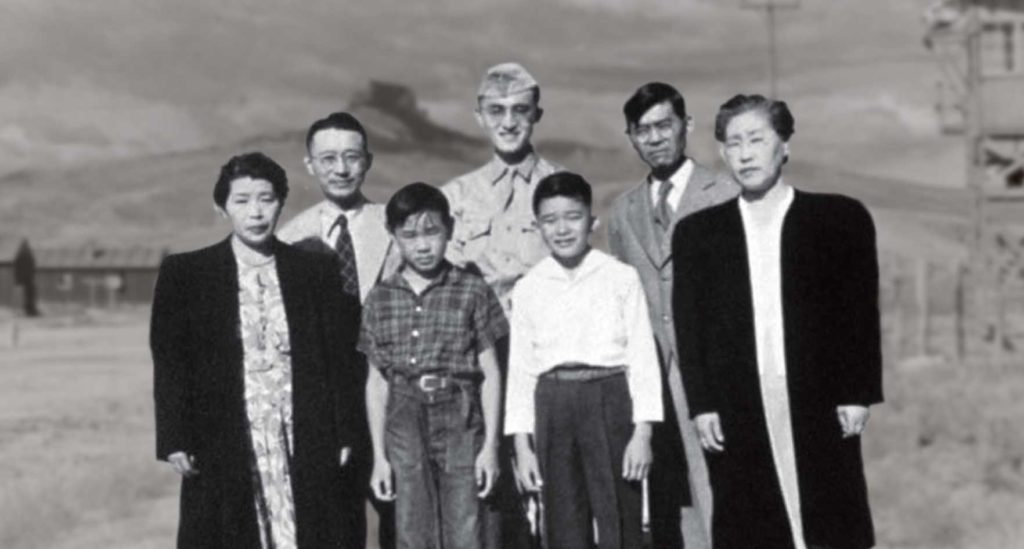
The achievements were even more remarkable given that, as a child, Mineta was imprisoned by his own US government in a WW II internment camp. And given that his political base had, during his career, an Asian-American population of far less than ten percent.

This didn’t happen by accident.  Norm Mineta is a driven man. At the same time, his ambition and will is tempered by his buoyancy and ebullience.

Documentarians Dianne Fukumi (director and co-producer) and Debra Nakatomi (co-producer) embed the story of Japanese-Americans, from immigration through internment, and on to reparations.

AN AMERICAN STORY: NORMAN MINETA AND HIS LEGACY

The defining event for Mineta’s Nissei generation was the WW II internment of 120,000 Americans by their own government. The central thread in the Mineta story is that the injustice of Mineta’s internment informed George W. Bush’s resistance to treating American Muslims that same way in the aftermath of the 9/11 attacks.

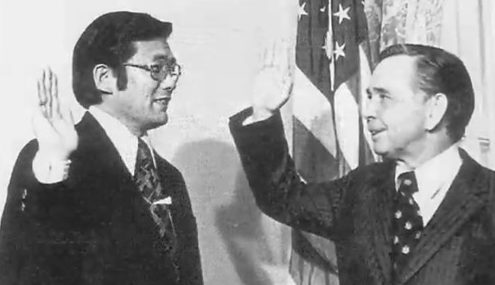
Mineta being sworn into the US House of Representatives by House Speaker Carl Albert in AN AMERICAN STORY: NORMAN MINETA AND HIS LEGACY

The film’s most delightful moment may be the octogenarian Mineta sunnily taking his luggage through security at Norman Y. Mineta San Jose International Airport.

[Full disclosure: I have known Norm since I served in his 1974 primary campaign and interned for him on Capitol Hill in the mid 70s.]

I saw An American Story: Norman Mineta and His Legacy at an October 2018 special screening with Norm Mineta, Fukumi and Nakatomi in San Jose. A brisk 60 minutes, it will be broadcast on PBS in May 20.

https://vimeo.com/266805068

MEETING GORBACHEV: uncritical but humanizing

Mikhail Gorbachev in MEETING GORBACHEV

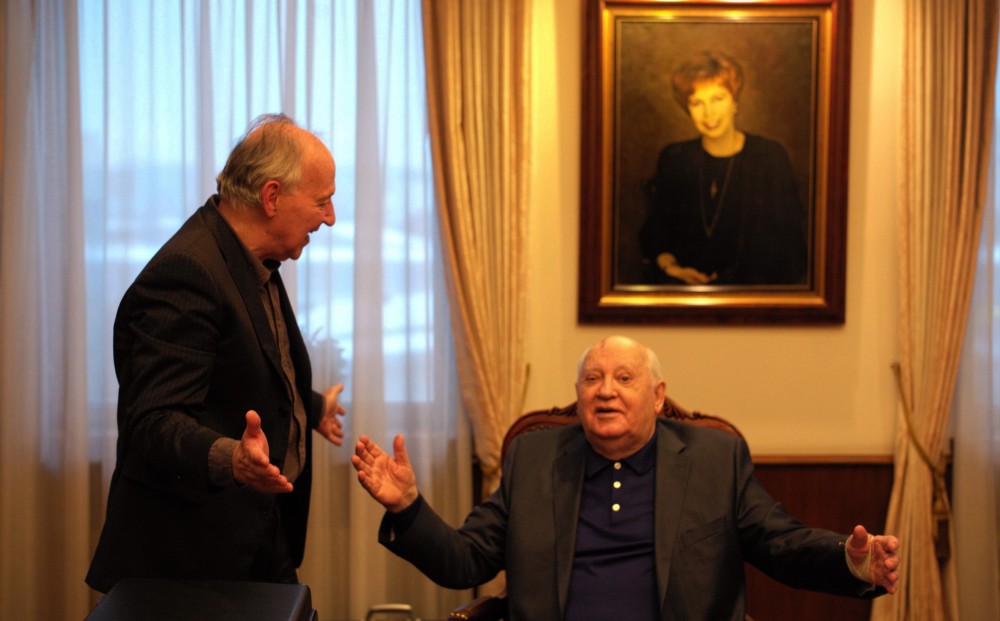
Meeting Gorbachev is Werner Herzog’s admiring biodoc of Mikhail Gorbachev, unquestionably one of the 20th century’s most pivotal figures. Herzog filmed three conversations with the then 87-year-old Gorbachev in 2018.

Gorbachev is revered in Germany – particularly by Werner Herzog – for allowing the peaceful, and startlingly quick, reunification of Germany. This biodoc is, to a fault, uncritical. At one point, Herzog even tells Gorbachev, “I love you”.

As the leader of the USSR, Gorbachev’s concepts of Perestroika and Glasnost transformed the political, economic and foreign policy of the Cold War superpower. More than any other individual, Gorbachev can claim credit for ending the Cold War, abolishing and destroying mid-range and short-range nuclear weapons, and the unchallenged independence of the Iron Curtain countries.

Gorbachev is also a tragic figure of Shakespearean proportions. He was intending to reform the USSR, not to destroy it. A coup by fossilized communists knocked him out of power but couldn’t be sustained, spinning out of control and leading to a chaos taken advantage of by the strong man Putin,.

Herzog’s film is excellent in its well-researched and well-told story of the rise of Gorbachev from a modest agricultural backwater – a talented achiever on the rise. Herzog’s irreverent sense of humors, as always, peeks through in the state funerals of Gorbachev’s predecessors, each more absurdly funny than the last.

The greatest gift of Meeting Gorbachev is, as the title suggests, is the unfiltered Gorbachev himself – now a grandfatherly raconteur. We get to appreciate his intellectual curiosity and his clarity of thought and direction. His charm and charisma, even at 87, help us understand how he rose to world leadership.

Werner Herzog and Mikhail Gorbachev in MEETING GORBACHEV

Herzog was a charismatic and innovative leader of German New Cinema. Between 1972 and 1982, he created the art house hits Aguirre:The Wrath of God, Strozek Nosferatu the Vampyre, and Fitzcarraldo.

In 1997, Herzog switched gears with the underrated documentary Little Dieter Needs to Fly and followed it with great docs like Grizzly Man and Encounters at the End of the World. Most remarkably, Herzog has also become one of the greatest narrators of English language documentaries; somehow, his German-accented narrations are hypnotic. (In 2007, Herzog slipped in Bad Lieutenant: Port of Call New Orleans with Nicholas Cage in the Klaus Kinski wild man role and cinema’s funniest iguana hallucination.)

Meeting Gorbachev played at the San Francisco International Film Festival (SFFILM). I saw Meeting Gorbachev at Silicon Valley’s Cinema Club.

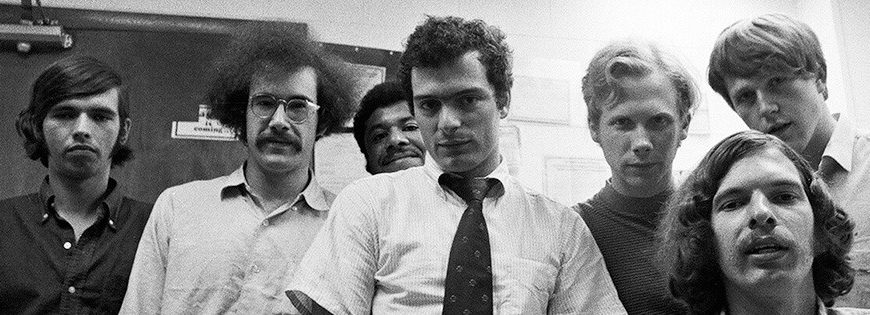
WBCN AND THE AMERICAN REVOLUTION: inventing a medium

WBCN AND THE AMERICAN REVOLUTION

There was a time before FM radio was a big deal, and a time when someone had to imagine it. A fairly conventional-appearing lawyer named Ray Rieman did just that in Boston, and started by assembling a team of colorful misfits.  Mirroring the counter-culture, these guys invented just about every aspect of the album-oriented FM radio that became ubiquitous in American cities within just a few years.The documentary WBCN and the American Revolution tells this story.

Rieman was an iconoclastic genius who faced new challenges daily.  For example, what happens if you run a radio station and your news director learns from the new wire that he has just been indicted for terrorism?

One of the less remembered aspects to hippie culture was that it was pretty sexist. That’s how WBCN started out, but these guys were very open to change, especially after local women listeners delivered a pointed gift of live baby chicks to the station.

We see WBCN’s impressive set of firsts – the first alternative radio news show, the first female rock DJs, the first gay radio show, and the first time that Bruce Springsteen was live on the radio, along with Patti Smith’s obscenity-laced poetry.

Of course, WBCN and the American Revolution is a time capsule, rekindling vivid memories for Baby Boomer and serving as an excellent cultural history for those younger,

Cinequest is hosting the world premiere of WBCN and the American Revolution.

LITTLE HISTORIES: Historical events changing our lives…and not

LITTLE HISTORIES (HISTORIAS PEQUEÑAS)

Sometimes the great events of history affect – and even change – our lives.  And sometimes those events are merely the backdrop to our own personal dramas.  This is explored in the Venezuelan anthology Little Histories (Historias Pequenas).

The vignettes in Little Histories are set in a four-day period of national upheaval in April 2002.  A popular attempted coup d’état removed Hugo Chavez from his presidency for 47 hours, until he was restored by the military. Throughout Little Histories, we watch Venezuelans from all walks of life as they lead their ordinary lives through the national tumult – or try to. Live news reports about the coup are always on the televisions, ubiquitous in every home and office. Some characters hear gunfire or breathe tear gas, and some have riots break out on the street where they live.

All this is just background noise for an affluent professional couple whose marriage is rocked by one adulterous episode too many. But the turmoil becomes all too present for a homeless guy and a drug-addled hooker when the rioting finds the spot on the street that they habituate. And, for a mid-level military officer and his volatile girlfriend, all becomes unraveled when the coup threatens to expose a corruption scam, and he is being hung out to dry as the fall guy.

Actress Assiak Oviedo is superb as a housekeeper in the governmental palace, steadfastly mopping the marble floors as the nation’s leaders rise and fall and rise again around her. There’s a wonderful scene where a jubilant elite celebrates the takeover; behind them, a journalist, a security guy, two waiters and the housekeeper watch impassively, without having a stake in the outcome.

This is the first narrative feature for writer-director Rafael Marziano Tinoco, and his insights into the overlay between personal and societal crises are original and sometimes profound. Cinequest is hosting the world premiere of Little Histories.

VICE: like Macbeth, only funny

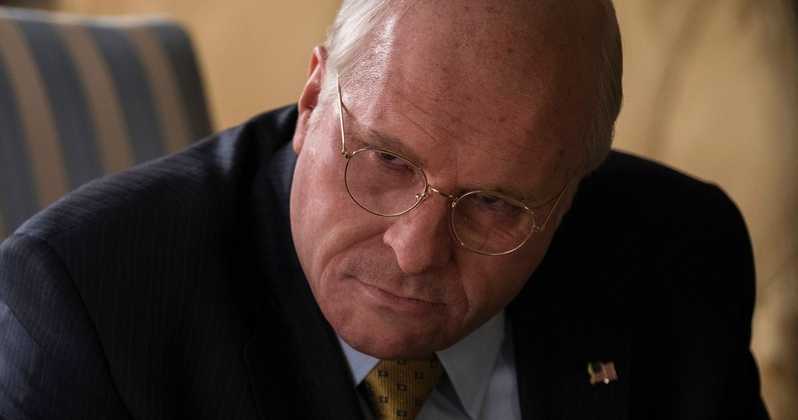
Christian Bale in VICE

Vice is the comic biopic of Dick Cheney by writer-director Adam McKay (The Big Short).  Cheney is played by a physically transformed and unrecognizable Christian Bale.

McKay’s take is that Cheney’s driving motivation and genius is the accumulation and exercise of power – to whatever end and by whatever means.  McKay also sees Cheney as a mediocre slacker molded and fueled by Lynne Cheney (Amy Adams), whose own ambitions were limited in the 1960s by her gender.  So, this is a tale of ruthless grasping along the lines of Macbeth or House of Cards, only mostly non-fiction.

McKay drops in the horrifying real impacts of Cheney’s exercise of power, but this is mostly a very funny movie.  Donald Rumsfeld, Cheney’s mentor in power-grabbing, and George W. Bush, Cheney’s stooge, are played for laughs in very broad performances by Steve Carell and Sam Rockwell.  McKay also tosses in a funny faux ending and has Dick and Lynne, in bed for the night, erupt in Shakespearean dialogue.  Jesse Plemons plays a fictional Everyman narrator.

Bale’s performance is extraordinary, and goes well beyond the impeccable impersonation, down to every Cheney mannerism – stoneface, sneer and grunt.  Adams is excellent as his Lady Macbeth.  So is the rest of the fine cast, especially Alsion Pil as lesbian daughter Mary, Tyler Perry as Colin Powell and Shea Whigham as Lynne Cheney’s probably murderous father.

Vice is pretty good history, biography from a sharp point of view and a damn entertaining movie.

COLD WAR: tragic sacrifice for enduring love

COLD WAR

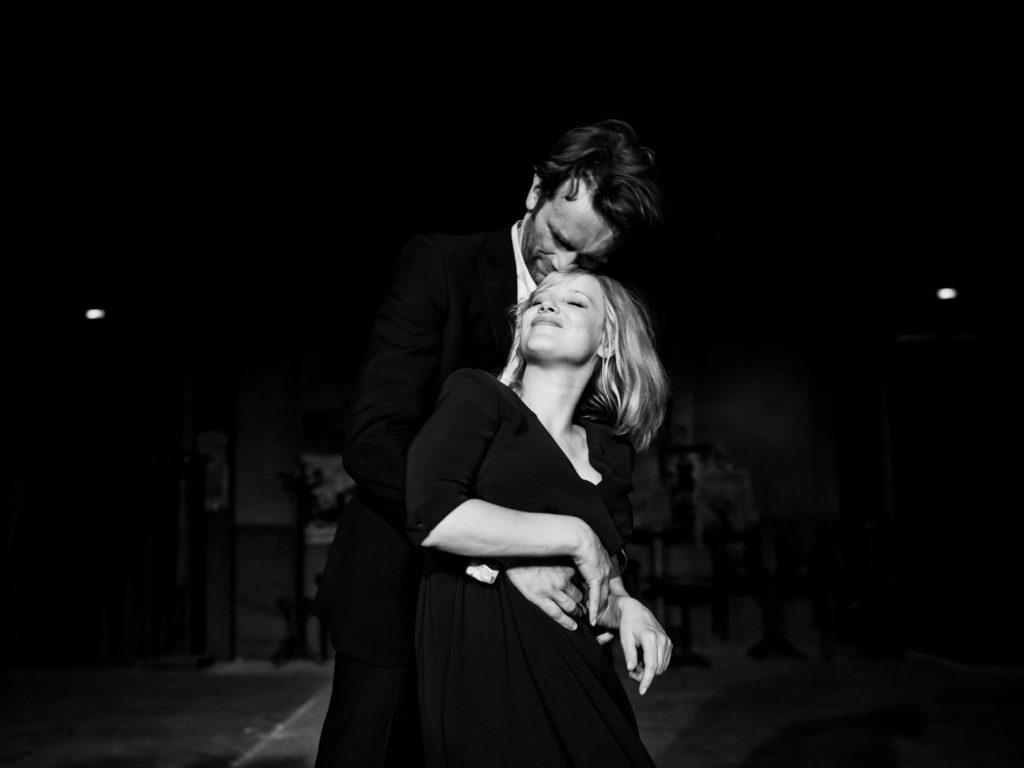
In the sweeping romantic tragedy Cold War, Wiktor (Tomasa Kot) is a talented musician/arranger in post-War Poland and an archivist of folk music. He becomes the musical director of a communist state-sponsored folk music revue, and falls for the ensemble’s comely and spirited lead Zula (Joanna Kulig), despite her being a bit of a brat. This being the Cold War, the question is whether the couple can flee Poland to freedom, artistic and otherwise. Zula is so unreliable that this is not cut and dried. Instead, the story spans a decade and four European countries as writer-director Pawel Pawlikowski explores the depths of sacrifice that humans will make for love.

The story in Cold War is inspired by that of Pawlikowski‘s own parents. Cold War is not as compelling as his recent masterpiece Ida. Virtually every shot in Ida could be hung in a gallery, which is not the case in Cold War although there are many beautifully filmed sequences. Both Ida and Cold War are shot in exquisite black-and-white and in a boxy aspect.

Joanna Kulig’s appearance changes dramatically depending on her makeup – to an unusual extent. The Wife suggested that this reflected a chameleon-like aspect to the character of Zula.

I enjoyed the character of the slime ball toadie Kaczmerak (Boris Szyc), the administrative manager of the folk music group. Kaczermak is so accepting of the corruption in Cold War communist society, that he greets every development with tranquil aplomb.

Fans of Ida will recognize Agata Kulesza, who played Ida’s aunt, as Wiktor’s musical partner Irena.

I saw Cold War at the Mill Valley Film Festival in October.  It releases in theaters on December 21 and, having been financed by Amazon Studios, will be streamable from Amazon.