NAPOLEON: but didn’t they name a complex after this guy?

Photo caption: Joaquin Phoenix in NAPOLEON. Courtesy of AppleTV.

Of all living filmmakers, Ridley Scott would seem the most well-equipped to pull off a boundless EPIC, but his Napoleon, other than three spectacular battle scenes and a little sex, is boring, underwhelming and a little confounding. As The Wife said exiting the theater, it’s a slog, and she wasn’t referring to the winter retreat from Moscow.

For better or worse, Napoleon covers Napoleon Bonaparte’s entire public career – from his emergence in 1793 at age 24 to the beginning of his final captivity on St. Helena in 1815 at the age of 46. It’s kinda like a college survey course in the Napoleonic Era. Napoleon’s historical accuracy is solid, and, for a Hollywood movie, remarkably unusual.

Even with a running time of 2 hours and 38 minutes, there’s a lot of ground to cover. He did fight 61 battles, and it took the SEVENTH Coalition of opposing nations to defeat him. So, we get the briefest of glimpses of Napoleon’s mother, his second wife and other major figures in his life and times.

Here’s what is great about Napoleon – three extraordinarily spectacular battle scenes, depicting the Siege of Toulon, and the famous Battles of Austerlitz and Waterloo. They are amazing to watch, and the first two help us to understand Napoleon’s military genius (and the third, Wellington’s military genius). A segment of Austerlitz where Napoleon orders cannon fire to break the ice under enemy forces is one of greatest and most unforgettable battle scenes in cinema history.

Napoleon also does a pretty fair job with the the relationship between Napoleon (Joaquin Phoenix) and his first wife Josephine (Vanessa Kirby). It was a very uncomplicated one: he was utterly captivated by and devoted to her, and she just wasn’t that IN to him. Josephine was a survivor and an adventuress, who navigated through her misogynistic environment with a gift for canny manipulation. He finds that even making her an empress isn’t enough to quell her promiscuity. Phoenix and Kirby do a good job with this part of the story.

But, oddly for a biopic, Napoleon fails to help us understand Napoleon. Sure, he’s ambitious from the start, but why? And why does he need to keep conquering, at the risk of overreaching and losing everything? After all, didn’t they name a complex after this guy?

Joaquin Phoenix was so vivid as Johnny Cash in Walk the Line, as Commodus in Gladiator, and as Freddie in The Master; he was so original and authentic in Her and C’mon C’mon. But, in Napoleon, his performance doesn’t unwrap the package of Napoleon’s psyche. I can’t say it’s Phoenix’a fault, but the collaboration between Phoenix, Scott and screenwriter David Scarpa doesn’t pay off.

Scott does point out in an end title that 3 million lost their lives during the Napoleonic Wars, which raises the question, to what end? This guy with an insatiable appetite for power and conquest was starting wars with some twits who had been born into underserved monarchy.

Here’s a random digression from the movie Napoleon. Was Napoleon’s military prowess overrated? This is ironic, because Napoleon rose on his merits. But the forces he was defeating were led by royalty and aristocrats, who were given command of armies, not by their own training and demonstrated skills, but by the accident of birth. Alexander I of Russia, for example, started out as an immature, headstrong nitwit and aged into a fullblown nutcase. Maybe Napoleon was analogous to MLB Hall of Famers who never had to face black ballplayers. Hmmm.

Napoleon is now in theaters, and will stream on AppleTV on a date TBD.
THE LADY BIRD DIARIES: essential history

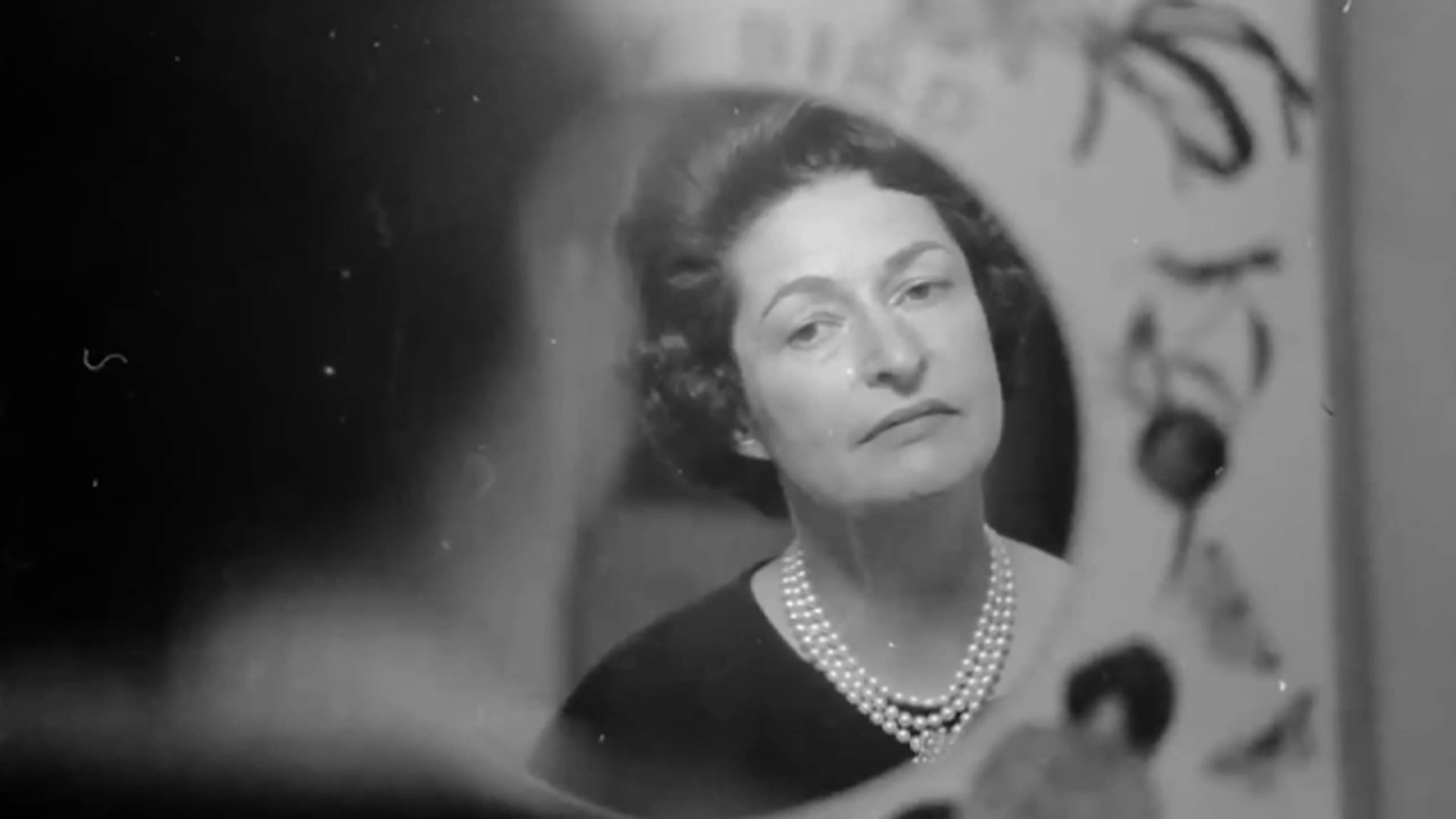
Photo caption: Lady Bird Johnson in THE LADY BIRD DIARIES. Courtesy of Hulu.

For students of 29th Century American political history, The Lady Bird Diaries is essential. In her time as First Lady, Lady Bird Johnson audio-recorded her candid observations of some of the nation’s most dynamic and turbulent years. The 123 hours of those recordings, now released after her death, have been excerpted into the core of this singular documentary.

We hear Lady Bird’s unique point of view on the JFK assassination, LBJ’s battles with depression, the infamous White House luncheon Eartha Kitt incident and RFK. And, after all, she was living in the White House with LBJ through his Civil Rights triumphs and the morass of Vietnam. LBJ’s presidency was so jampacked, we get the tiniest mention of Medicare (Oh, yeah, THAT was LBJ, too).

Lady Bird’s first-person perspective would be valuable enough in a written document, but hearing her actual voice brings even deeper insights into the events, LBJ and Lady Bird herself.

Indeed, The Lady Bird Diaries Lady Bird’s own voice is almost the entire film, annotated only by director Dawn Porter’s exceptional use of explanatory titles, archive clips and photos. Porter’s use of images is as brilliant as I’ve seen in a doc.

Lady Bird’s narration, combined with recorded phone calls between the Johnsons, makes clear Lady Bird’s involvement in her husband’s career. She gave him advice on matters both tactical, critiquing his speeches, and strategic (including whether to seek re-election). LBJ was notoriously thin-skinned, came closest to welcoming criticism only from Lady Bird. One of the most sharp and insightful segments is a disagreement between the Johnsons on how to handle the Walter Jenkins scandal (LBJ’s chief of staff caught in a homosexual haunt) days before the 1964 presidential election. Clearly, Lady Bird was determined to give LBJ her best thinking, whether he wanted it or not.

The Lady Bird Diaries also reminds us of:

  • Lady Bird’s groundbreaking work on the environment, then known as the “beautification” campaign.
  • Her gameness to campaign in a 1964 whistlestop tour through the South, facing down White voters howling about LBJ’s Civil Rights Act of 1964.
  • The toll on the Johnsons from the the unrelenting public scorn about Vietnam.

This is fantastic history and an extraordinary film. The Lady Bird Diaries is streaming on Hulu.

THE LEAGUE: untold stories

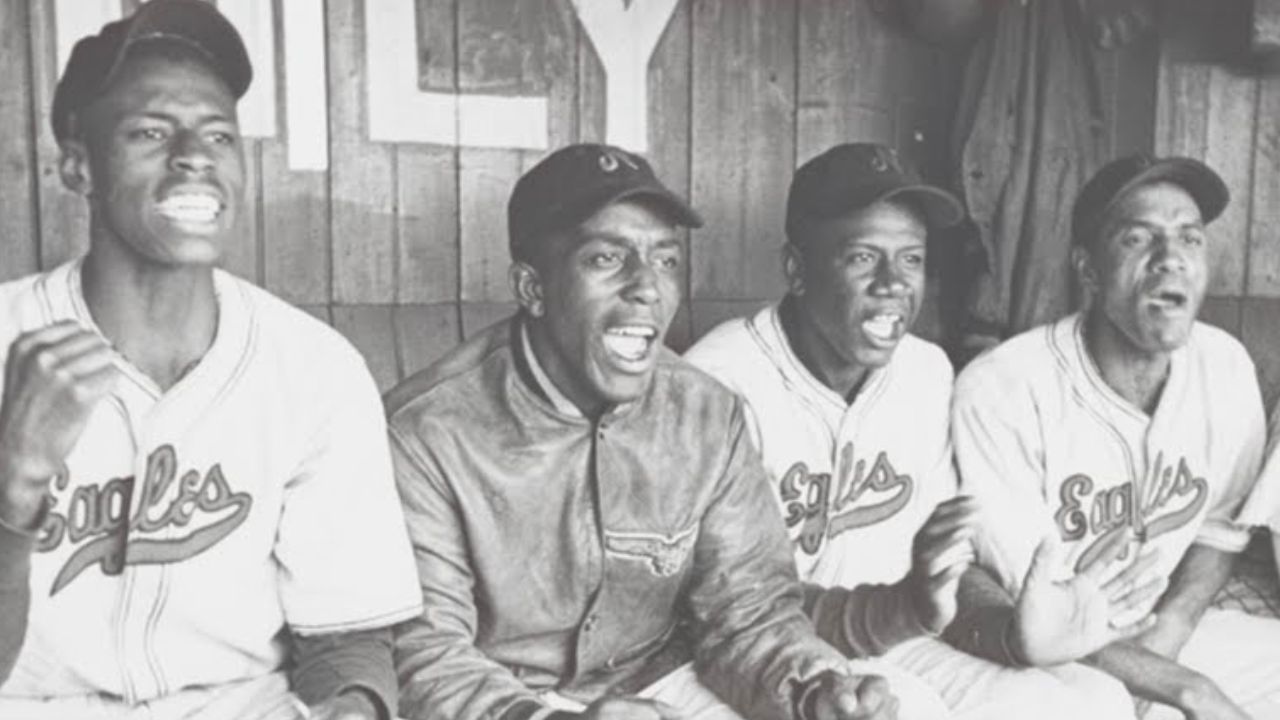
Photo caption: THE LEAGUE, courtesy of Magnolia Pictures.

The League is a comprehensive documentary on the history of Negro League baseball.  As one would expect from a Sam Pollard doc, it’s well-sourced and reveals some less well known history:

  • Rube Foster, remembered as a pitching great and inventor of the screwball, was the impresario and strategic mind behind the first Negro League.
  • Effa Manley, the canny co-owner of the Newark Eagles, was a pioneering female AND African-American businesswoman with the spunk, if not the resources, to stand up to MLB.
  • The Negro Leagues’ surprisingly brief lifespan and even briefer glory days.
  • Why the immensely talented, even Ruthian, Josh Gibson wasn’t put forward to integrate MLB (like Jackie Robinson was).  
  • How MLB execs like Branch Rickey and Bill Veeck worked with the Negro Leagues (or not).
  • The painful trade-offs from the long-awaited integration of MLB.

The League is the work of filmmaker Sam Pollard, who directed the more compelling MLK/FBIThe League will appeal to those with interests in baseball and/or civil rights.  The League is streaming on Amazon.

OPPENHEIMER: creator of a monster controlled by others

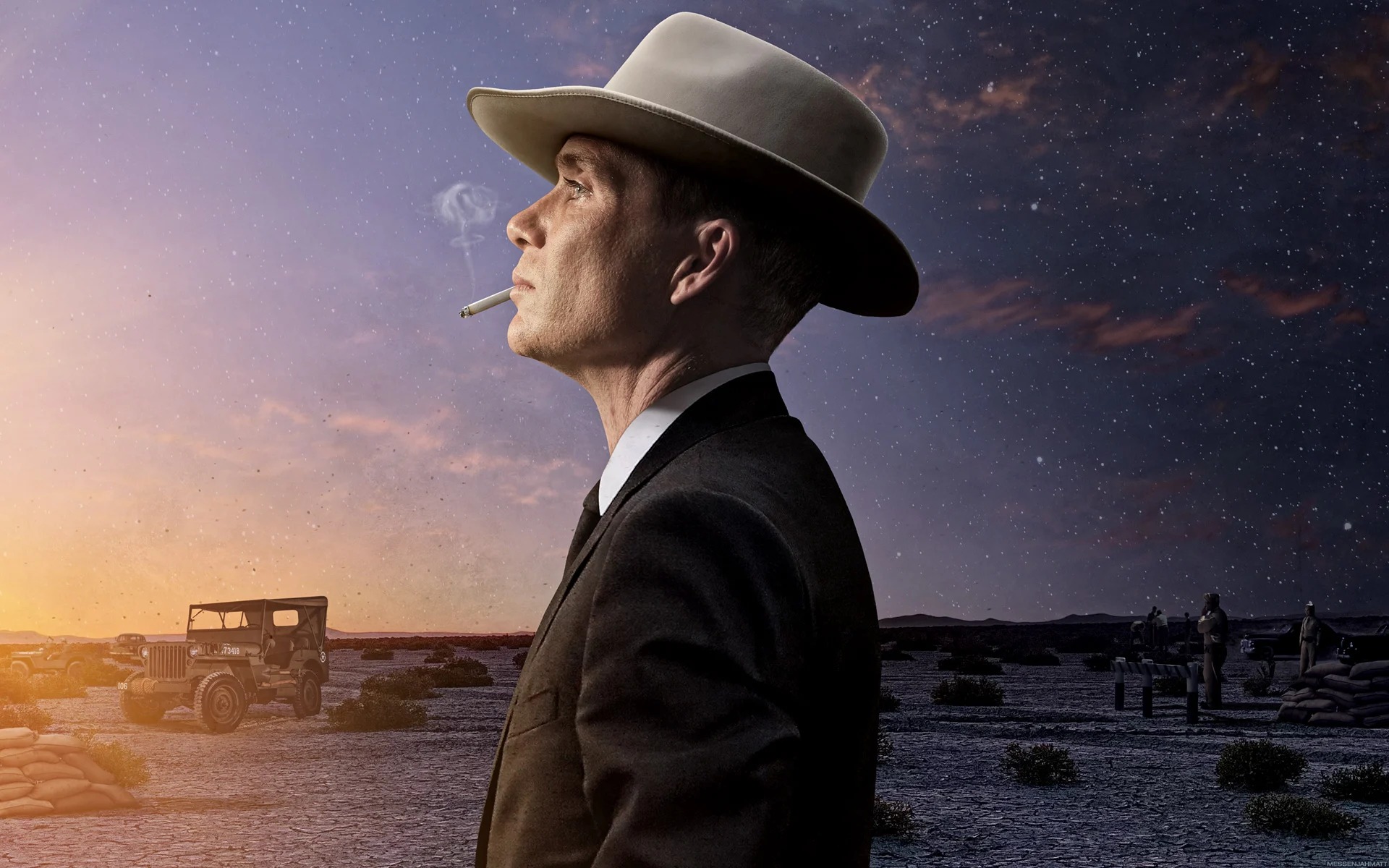
Photo caption: Cillian Murphy in OPPENHEIMER. Courtesy of Universal Pictures.

Christopher Nolan’s epic masterpiece Oppenheimer is a thrilling, three-hour psychological exploration of physicist Robert J. Oppenheimer (Cillian Murphy), who was brilliant enough to lead the development of the first atomic bomb, but could not grasp that he would then lose all control on its use.

Oppenheimer was a prima donna, but the team he assembled of star academics (31 of which had won or would win their own Nobel Prizes) was filled with prima donnas. Both a natural leader and manipulative, Oppenheimer was smoother, more practical and less politically naïve than the other scientists. But he was no match for real practitioners of politics. One character reminds him, genius is no guarantee of wisdom. The smartest person in the room makes a mistake in thinking that he can ALWAYS outthink everyone else.

Cillian Murphy, with his searing eyes and prominent cheekbones, is an actor with a striking appearance and presence. He’s always good, but he’s not the guy I would immediately think of to carry an epic; but this is Murphy’s sixth movie with Nolan, and Nolan knew that Murphy had the chops. Looking unusually gaunt, Murphy becomes Oppenheimer as he ranges from arrogant self-confidence to a creature in torment. It’s a magnificent, career-topping performance.

Himself a practitioner of the empirical, Oppenheimer, could not conceive of or understand the arena of public opinion, where lies and fear can triumph over fact and virtue. Robert Downey, Jr., in a great performance, plays Oppenheimer’s foil Lewis Strauss, a man who understands influence, political positioning and spin.

Nolan’s screenplay is based on the Oppenheimer bio American Prometheus. The mythological Prometheus brought fire to human, and was punished by the gods with perpetual torment, specifically by an eagle, each day of eternity, eating his liver anew. Oppenheimer gets the heartache of being victimized by the communist witch hunt of the 1950s and the nightmare that his monstrous creation is in the hands of those less ethical, less smart and less virtuous than he.

The Manhattan Project, the mastering of all the scientific and technological challenges in developing the first nuclear weapon, in a race with the worst villains in the history of the world – that’s fodder for an epic movie in itself. Yet that’s the backdrop to this psychological study. Together, the stories of the Bomb and Oppenheimer make for a movie that’s an astounding achievement.

The stakes could not be higher – not just life and death, but life and death on a heretofore unimagined scale. Not to mention the primary goal of stopping the Nazis. And the survival of the planet itself.

At the time, physicists could not rule out the possibility that a nuclear reaction would continue until it incinerated the atmosphere. In Oppenheimer, the scientists calculate a “near zero” chance of destroying the entire planet, giving serious pause to the scientists and alarm to lay people.

The bomb needed to be assembled and tested, of course, and the scenes of the fisrt bomb test are harrowing. Imagine putting together an atomic bomb and arming it, with 1940s technology (no robots or laser-precision machining) and THEN waiting out the winds and rain of a fierce desert storm.

There’s an emotionally surreal scene as the Los Alamos team rapturously celebrates the atomic bomb blast at Hiroshima – consumed by pride and relief that their work of over two years was successful and that it would surely end the war more quickly; but unthinking about the very real, inevitable and horrific human carnage on the ground in Hiroshima and the threat of nuclear annihilation that the world would tremble under for the rest of time. Nolan shows Oppenheimer leading the celebration, and then envisioning the horrors.

Oppenheimer is visually thrilling, thanks to Dutch-Swedish cinematographer Hoyte Van Hoytema, who already has an impressive body of work: Nope, Spectre, Ad Astra, Her, The Fighter, and Nolan’s Interstellar, Dunkirk and Tenet. Nolan, Van Hoytema and editor Jennifer Lame will undoubtedly be honored with Oscar nominations for Oppenheimer. Ludwig Göransson’s music is pretty great, too.

The cast is deep, and there are many excellent supporting performances in Oppenheimer, including:

  • Emily Blunt as Oppenheimer’s wife Kitty, who doesn’t get a lot of screen time, but becomes a force as Oppenheimer comes under attack.
  • Florence Pugh as a needy Oppenheimer girlfriend. I have not understood why Pugh is trending toward the A-list, but she’s really steamy here.
  • Matt Damon as General Leslie Groves, the military commander who job it was, while Oppenheimer was managing a town full of divas, to manage Oppenheimer himself., once observing you’re not just self-important; you ARE important.
  • Benny Safdie as the mercurial Edward Teller, who Oppenheimer keeps inside the tent, so as to not disrupt the Manhattan Project, with autonomy to develop a hydrogen bomb.

Rami Malek is glimpsed, oddly gecko-like, in the middle of the story and then pops up with a surprise near the end.

Mick LaSalle, writing on Oppenheimer, quipped that Gary Oldman “who played Winston Churchill in “The Darkest Hour,” is President Harry Truman here. If Oldman ever plays Stalin, he could do the Potsdam Conference as a one-man show.

Christopher Nolan and his collaborators have made a movie that runs for three hours without a single slow or dry moment, despite spending two hours on nuclear physics. I am confident in predicting that Oppenheimer will receive (and deserve) at least ten Oscar nominations and could challenge the record of fourteen.

WIFE OF A SPY: espionage non-thriller

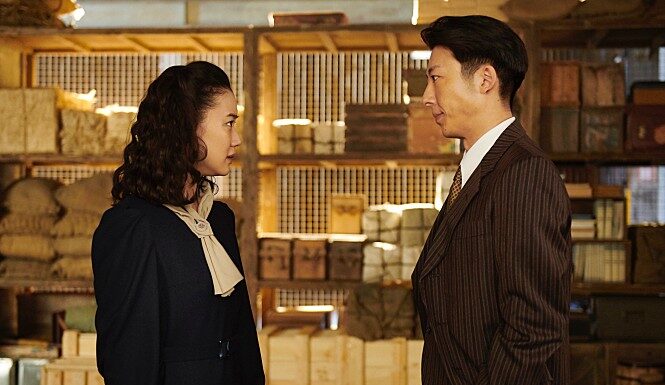
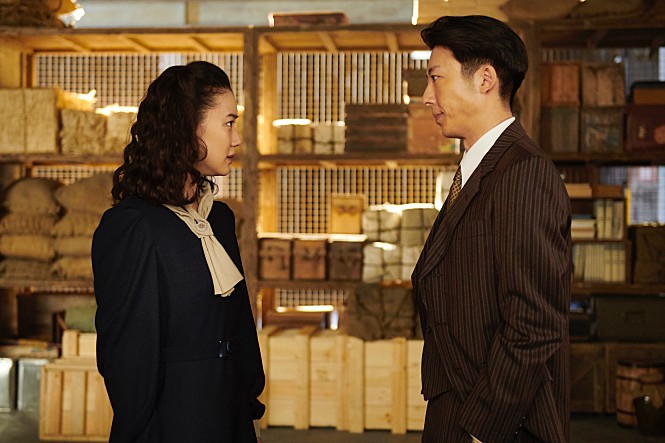
Photo caption: Yû Aoi and Issey Takahashi in WIFE OF A SPY. Courtesy of Kino Lorber.

In the espionage non-thriller Wife of a Spy, the prosperous Yusaku (Issey Takahashi) runs a business in international commerce. That is increasingly uncomfortable in 1940 Japan, where the militaristic government is whipping up xenophobia and bullying those Japanese who interact with foreigners.

Yusaku is a smooth cosmopolitan who won’t be intimidated. He keeps on the road, even to dangerous hotspots like Manchuria. That’s not okay with his loving, apparently frivolous wife Santoko (Yû Aoi), who, frustrated by his absences, is getting increasingly suspicious about what he’s really up to.

She finally stumbles upon his secret – he and his nephew Fumio (Ryôta Bandô) are outraged by the war crimes of the military government and are engaged in a secret plot to undermine it. Santoko, who was been a mere adornment, becomes herself embroiled.

Regrettably, Wife of a Spy is more of a snoozer than a thriller. It just takes director Kiyoshi Kurosawa (no relation to Akira) too long to get through the first and second acts.

Worse, I found the sudden dramatic lurches in the performances by Yû Aoi and Ryôta Bandô very off-putting. I don’t think I missed something cultural because I’ve watched a lot of Japanese cinema, and haven’t seen anything like this before. It’s like the director of a high school play says, “Now throw yourself on the floor!” Yû Aoi is a popular and lauded actress who has five nominations and two wins in the Japanese equivalent of the Oscars. I’m blaming Kurosawa.

I’m also mostly alone in my opinion. Wife of a Spy enjoys a high score of 79 on Metacritic and was a New York Times Critic’s Pick. Wife of a Spy’s advocates may be seduced by the film’s undeniable beauty. The cinematography by Tatsunosuke Sasaki, production design by Norifumi Ataka and the costumes by Haruki Koketsu are exquisite.

Here’s a novel aspect to Wife of a Spy. The hero is a traitor to his nation. Yusaku loves Japan, hates the Japanese government, and believes Japan will be better off the sooner that Japan loses the war. So, he is trying to hasten the defeat of his own nation’s military, which is the definition of traitorous. I haven’t heard that this was hugely controversial in today’s Japan.

Wife of a Spy is streaming on Amazon, AppleTV, Vudu, YouTube and KinoNow and is included on MHz.

TETRIS: corporate thriller amid communist collapse

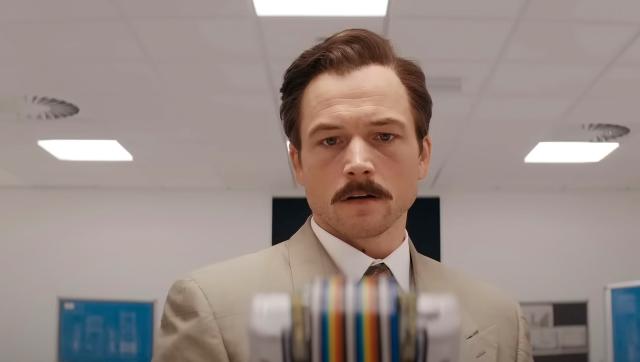
Photo caption: Taron Egerton in TETRIS. Courtesy of AppleTV.

Tetris, the story of the race for the rights to the video game, is an entertaining corporate thriller.

Taron Egerton (unrecognizable from Rocketman) plays Henk Rogers, a small-time entrepreneur who is betting everything on snaring the rights to Tetris for Nintendo. As written and as played by Egerton, Henk Rogers is an ever-earnest hustler (in the best sense), with a Ted Lasso-like moral core. Rogers is plunged into a competition where the other players, a seasoned software merchant and a British billionaire, have no compunction about cheating.

To complicate things, the video game rights are owned by the government of the USSR, which is in the throes of imminent collapse. It’s unclear who can ink the deal for the Soviet state, which always moves with cumbersome suspicion and xenophobia. Here, the Soviets don’t really appreciate the value of Tetris, but they know it’s valuable and are desperate not to be taken by Westerners.

Egerton is good, and benefits from vivid supporting performances by Robert Allam as Robert Maxwell, the blustering magnate on the precipice of financial collapse, Igor Grabuzov as a menacing wannabe oligarch and the ever-reliable Toby Jones as a crooked competitor.

It’s a fun watch. Tetris is streaming on AppleTV.

ALL QUIET ON THE WESTERN FRONT: the trauma of war

Photo caption: Felix Kammerer in ALL QUIET ON THE WESTERN FRONT. Courtesy of Netflix.

The anti-war epic All Quiet on the Western Front unforgettably makes two points: war, in general, is a traumatizing experience and WW I, in particular, was disgustingly senseless.

The screenplay was adapted from the famous Erich Maria Remarque novel, as was the 1930 Lewis Milestone cinematic masterpiece. Since the story is told from the point of view of a German infantry recruit, Netflix commissioned a German director and cast for this version. That director is German filmmaker Edward Berger, who has been working in US television over the past decade. The actors may be German and Austrian, but they speak English in this movie.

Paul (Felix Kammerer) is a callow youth who, with his friends, is swept away by patriotic fervor and enlists in the German Army just in time to participate in the last few months of WW I. Both sets of belligerents have been grappling for years in the mire of trench warfare, suffering mass casualties for the sake of a few hundred yards here and there. The conditions between battles are horrific, and the battles are more so. Paul endures the terror of bombardment, gas attacks, invulnerable enemy tanks and charges across no-man’s land in the face of machine gunfire. The hand-to-hand combat is especially savage.

Kammerer, in his first screen role, is exceptional as an Everyman who experiences physical and mental exhaustion, dread, panic, shock, guilt and hopelessness.

The battle scenes are superbly photographed by cinematographer James Friend, who has 71 screen credits, not a one suggesting that he was capable of anything this masterful.

War may be traumatizing, but this eminently watchable film is not. All Quiet on the Western Front is streaming on Netflix.

THE GREATEST BEER RUN EVER: a blowhard plans a stunt, gets an education

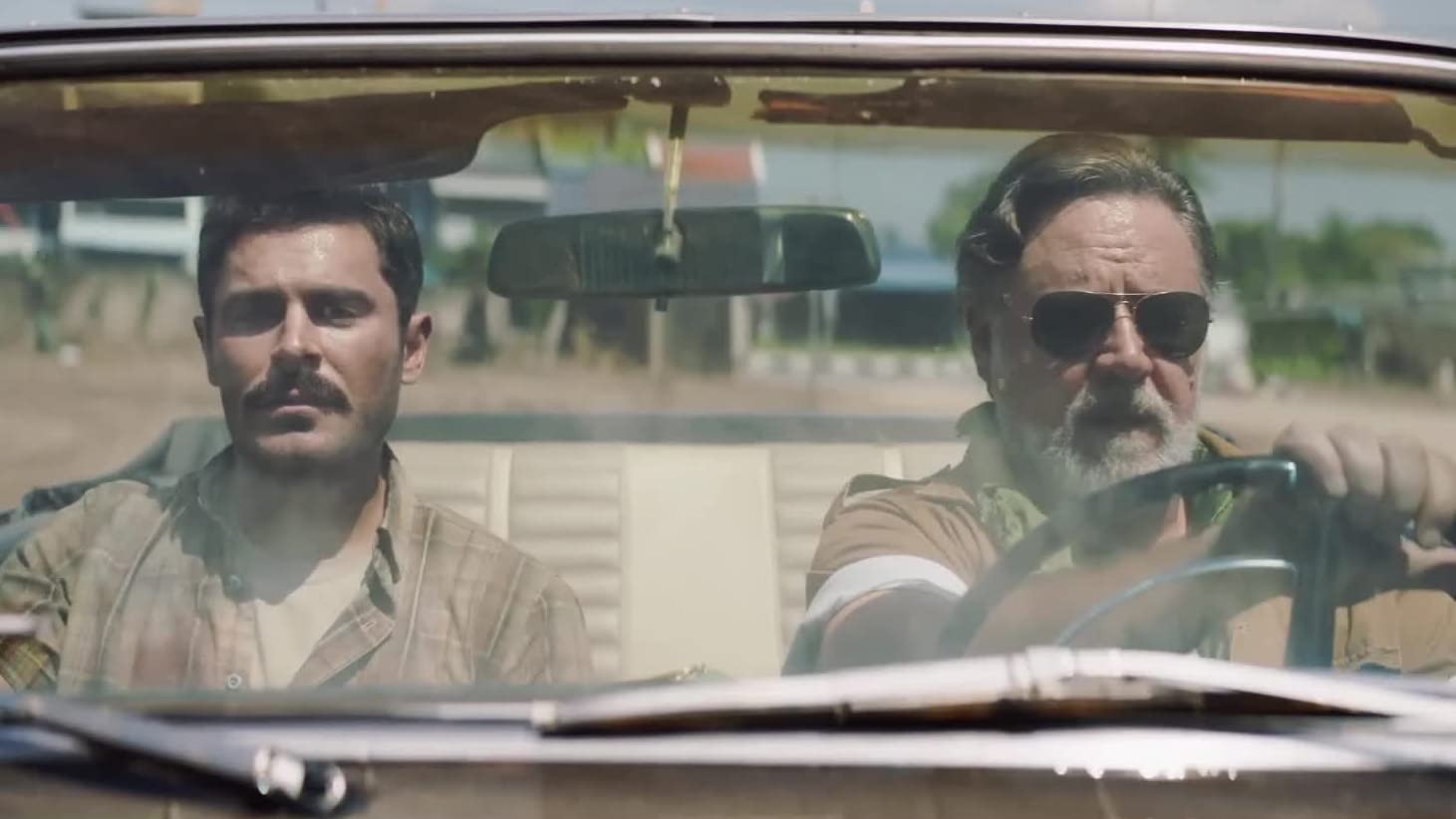
Photo caption: Zak Efron and Russell Crowe in THE GREATEST BEER RUB EVER. Courtesy of AppleTV.

In the surprisingly thoughtful anti-war comedy The Greatest Beer Run Ever, an ignorant blowhard’s neighborhood pals are serving in the Vietnam War, and he thinks he can uplift their spirits by bringing them beer. It’s a plot too idiotic to be credible – except that it really happened.

Our protagonist is Chickie (Zak Efron), a slacker ne’er-do-well (although we didn’t call them slackers back then) who has the intellectual curiosity of a stump. Offended by non-rah rah media coverage of the Vietnam War and by the burgeoning anti-war protest movement, he thinks a simplistic gesture is in order. As a merchant marine, he actually has means to GET TO Vietnam – by signing on a freighter. So, off he goes, with a duffel packed with cans of beer.

Once he is on the ground in country, of course, he sees that press is accurately reporting that the war is not going well and that the LBJ Administration and the military commanders are indeed lying about it. He learns that not all Vietnamese welcome Americans. And that war is very, very dangerous and very, very scary. Nor do his pals all welcome his crazy stunt.

A lesser director could have made this film as an empty-headed Bro comedy, only about the stunt itself. But Peter Farrelly, as he did with the Oscar-winning Green Book, has made an entertaining movie about a serious human experience.

And give Farrelly credit for something rarely seen in a Hollywood Vietnam War movie – Vietnamese characters are more than cardboard cutouts. Chickie has interactions with a goofy traffic cop, a savvy bartender and, most stirringly, a peasant mother and her young daughter in the countryside. The carnage and grieving among Vietnamese of all persuasions is depicted, too.

That being said, The Greatest Beer Run Ever is a very funny film, with most of the humor stemming from Chickie’s dunderheadness and the military characters all assuming that an American civilian asking for a helicopter ride into a combat zone MUST be CIA.

The very underrated Zak Efron carries the movie as Chickie gets force fed a life-changing reality check. Russell Crowe is excellent as a world-weary war correspondent. Bill Murray, without a single wink at the camera, is perfect as the lads’ bar owner, a WW II vet who just doesn’t get it. Matt Cook is very funny as a junior Army officer who idolizes the CIA.

Make sure you watch the closing credits.

The Greatest Beer Run Ever is streaming on AppleTV.

THE AUTOMAT: nickels in, memories out

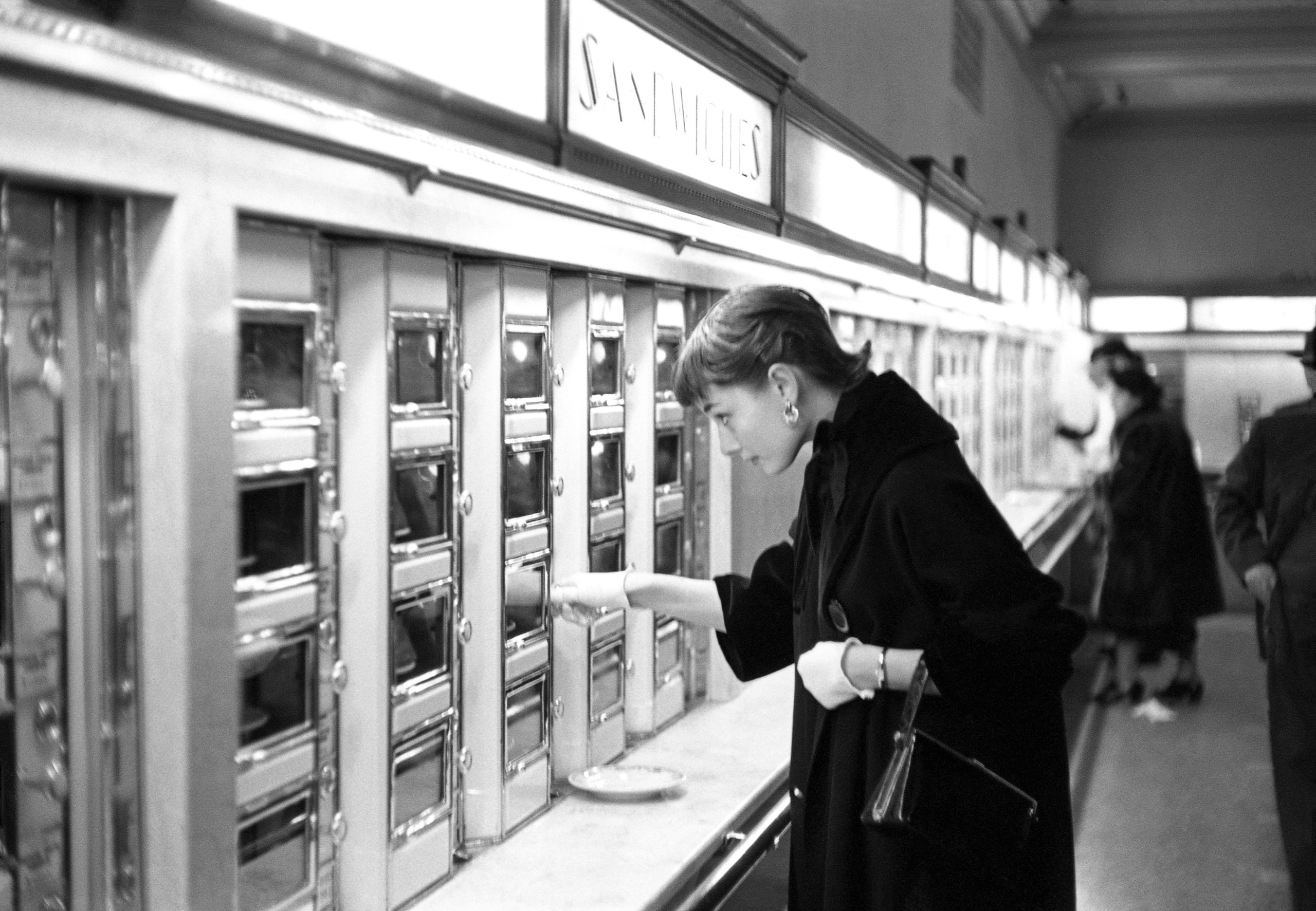
Photo caption: THE AUTOMAT: Actress Audrey Hepburn photographed by Howard Fried in New York City as part of a multi-day photo shoot for Esquire magazine, 1951. Courtesy of A Slice of Pie Productions.

The charming documentary The Automat traces the fascinating seven-decade run of the marble-floored food palaces where one could put nickels in a slot and be rewarded with a meal. The story of the automat is essentially a business history of Holt & Hardart, which pioneered the automat concept in Philadelphia and New York, and dominated the market for years, at one point the nation’s largest restaurant chain. Mel Brooks, Ruth Bader Ginsburg and Colin Powell speak to how the automat touched their lives, and Starbucks founder Howard Schulz credits the automat as his inspiration; (Mel Brooks even wrote and performed a song for the film).

The Automat is the first film for director Lisa Hurvitz, who spent eight years on the project. Along with the celebrities, Hurvitz has sourced her film with longtime Holt & Hardart employees, members of the founding families and even the guy who titled his Ph.D. dissertation, Trapped Behind the Automat: Technological Systems and the American Restaurant, 1902-1991.

The Automat is filled with unexpected nuggets, including:

  • The New Orleans origin of Holt & Hardart’s signature coffee.
  • The astounding percentage of the NYC and Philly populations once fed by Holt & Hardart.
  • The devastating impact of a nickel price increase.

Above all, The Automat features the automat as a democratic institution – a place and an activity enjoyed by a diverse collection of customers from all classes, genders and races.

The Automat gives voice to those nostalgic about the automat, but it is clear-eyed about why it didn’t survive – a business model based on volume when the volume of customers moved to the suburbs, along with social changes in post-war America.

The Automat had a blink-and-you-missed-it theatrical run in March, but now you can stream it from Amazon, AppleTV, Vudu, YouTube and KinoNow.

THE AUTOMAT: nickels in, memories out

Photo caption: THE AUTOMAT: Actress Audrey Hepburn photographed by Howard Fried in New York City as part of a multi-day photo shoot for Esquire magazine, 1951. Courtesy of A Slice of Pie Productions.

The charming documentary The Automat traces the fascinating seven-decade run of the marble-floored food palaces where one could put nickels in a slot and be rewarded with a meal. The story of the automat is essentially a business history of Holt & Hardart, which pioneered the automat concept in Philadelphia and New York, and dominated the market for years, at one point the nation’s largest restaurant chain. Mel Brooks, Ruth Bader Ginsburg and Colin Powell speak to how the automat touched their lives, and Starbucks founder Howard Schulz credits the automat as his inspiration; (Mel Brooks even wrote and performed a song for the film).

The Automat is the first film for director Lisa Hurvitz, who spent eight years on the project. Along with the celebrities, Hurvitz has sourced her film with longtime Holt & Hardart employees, members of the founding families and even the guy who titled his Ph.D. dissertation, Trapped Behind the Automat: Technological Systems and the American Restaurant, 1902-1991.

The Automat is filled with unexpected nuggets, including:

  • The New Orleans origin of Holt & Hardart’s signature coffee.
  • The astounding percentage of the NYC and Philly populations once fed by Holt & Hardart.
  • The devastating impact of a nickel price increase.

Above all, The Automat features the automat as a democratic institution – a place and an activity enjoyed by a diverse collection of customers from all classes, genders and races.

The Automat gives voice to those nostalgic about the automat, but it is clear-eyed about why it didn’t survive – a business model based on volume when the volume of customers moved to the suburbs, along with social changes in post-war America.

The Automat is opening this weekend at the Vogue in San Francisco, the Rafael in San Rafael, the Landmark Albany Twin in Albany and the Summerfield in Santa Rosa.