
Love, Marilyn: a closer look at Marilyn Monroe

LOVE, MARILYN

The insightful HBO documentary Love, Marilyn uses Marilyn Monroe’s own words and those of people in her life to give us a candid yet sympathetic inside look at Marilyn.  The core of the film is from a recently discovered trove of Marilyn’s own letters and journals.

Her friends Susan Strasberg and Amy Greene appear in this film. Others speak from file footage, including husband Arthur Miller, acting coach Lee Strasberg and her first Hollywood agent.  For the rest, especially Marilyn herself (and biographer Norman Mailer, friends Elia Kazan and Truman Capote and frustrated director Billy Wilder), an all-star cast of readers bring their words to life. 

The readers include four Oscar winners and six Oscar nominees.  The most effective are Marisa Tomei reading Marilyn’s earnest efforts at educational self-improvement and Lili Taylor reading Marilyn’s struggles with a recipe she trying to put on the table for traditional hubby Joe DiMaggio. Everybody else (especially Evan Rachel Wood and Viola Davis) is really good, too, except for Ben Foster, who is mannered and overtheatrical when reading Mailer’s words.

There are some rel nuggets here. We see the book on human body movement that Marilyn used to create her signature jiggling walk.  We hear Kazan’s description of how Arthur Miller made a good first impression by refusing to let Marilyn take a cab to a party.  We understand how she flipped potential career-killing nude photo scandal into a huge publicity boost and better film roles.  We even hear Amy Greene relate Marilyn’s assessment of DiMaggio’s most intimate skill.

Entertaining and sometimes moving, Love, Marilyn is a worthwhile contribution to our understanding of Marilyn, the person, the actress and the phenomenon.

Hey Bartender: today is the Golden Age of cocktails

HEY BARTENDER

Hey Bartender explores the new wave of Craft Bartending.  This is not about watching guys cry in their boilermakers at the neighborhood dive.  It’s about the new application of culinary sensibilities – fresh ingredients, creativity, presentation and hospitality – to the cocktail.  If you enjoy striking a blow for liberty now and again, this movie is cocktail porn – in fact, I’ve added it to my Best Food Porn Movies.

Hey Bartender takes us to the Museum of American Cocktail, and we learn that there is such a thing as a Cocktail Historian.  We spend time at the New York City’s Employees Only, recognized as the world’s best cocktail bar.  We meet the nation’s current celebrity bartenders and contrast them with the proprietor of a struggling family owned joint in Westport, Connecticut.  We tag along with attendees at the major craft bartending convention, Tales of the Cocktail in New Orleans.  And we see the featrured bartenders mix some delectable looking concoctions.

Because I streamed Hey Bartender at home, I was able to pause it at the 55-minute mark to make myself an Ellis Island (Makers Mark, Carpano Antica and a swish of Strega, shaken and served neat in martini glass, which I discovered at San Francisco’s Poesia.).

Hey Bartender is having a very limited theatrical run (a single showing this week in one local theater) and is available streaming fro, Amazon, Vudu, iTunes and other VOD outlets.

We Steal Secrets: The Story of WikiLeaks: an inside look at an improbable scandal

WE STEAL SECRETS

In We Steal Secrets: The Story of WikiLeaks, master documentarian Alex Gibney, weaves together three threads, each essential to the improbable story of WikiLeaks.  First, there is the hermit-like anarchistic hacker Julian Assange, whose narcissistic brashness could deliver personal fame, but not sustain a movement.  Then there’s the leaker Bradley Manning, a lonely misfit with one soaring talent.  Finally, there is the post-9/11 security environment, in which US government secrets are now shared between many levels of many security agencies, presuming each lowly functionary has a need to know.

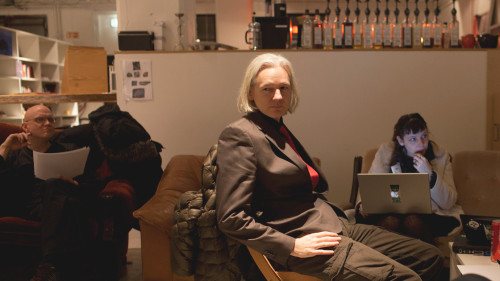
Gibney brings us interviews with Manning’s immediate supervisor in the Army, his boyfriend and the confidante who turned him in.  We see footage of Assange in his hotel room before his big press conference (from another filmmaker – Assange did not cooperate with Gibney).  Gibney does introduce us to Assange’s former team members at WikiLeaks, his journalistic partners and even a Swedish woman who accused him of sexually victimizing her.  It all makes for a comprehensive inside perspective.

All three threads of the story are astounding, especially how anyone could keep Bradley Manning in the US Army and how the nation’s diplomatic and military secrets were all opened to a private at an isolated forward base in Iraq.  Gibney could have made an equally entertaining movie, if less complete, based on Assange alone; Assange is an odd duck who had his rock star moment and left a trail of relationship carnage behind, burning every single friend, colleague and well-wisher along the way.

Gibney is remarkable prolific.  After winning the 2008 Best Documentary Oscar for Taxi to the Dark Side, he has churned out Casino Jack and the United States of Money, Client 9: The Fall of Elliott Spitzer, Magic Trip, The Last Gladiators, Park Avenue: Money, Power and the American Dream and Mea Maxima Culpa: Silence in the House of God.  It’s a body of work that is notable for its strong quality and even more astonishing productivity.

We Steal Secrets: The Story of WikiLeaks is in theaters and is also available streaming from Amazon, Vudu, YouTube, Google Play and other VOD outlets.

Mel Brooks: Make a Noise: a master looks back

MEL BROOKS: MAKE A NOISE

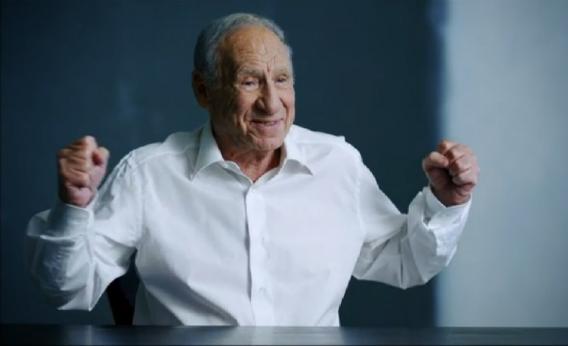
PBS’s American Master series is airing the documentary Mel Brooks: Make a Noise, which reviews the career of master filmmaker Mel Brooks.  In particular, we glimpse inside the making of such masterpieces as The Producers (one of my Greatest Movies of All Time), Young Frankenstein and Blazing Saddles.  We see clips from those movies and hear from Talking Heads (including Brook’s best friend Carl Reiner).  But the best part of Make a Noise is hearing from Brooks himself.  He’s personally delightful and remarkably clearheaded about what makes his films so funny.

Detropia: urban plight

DETROPIA

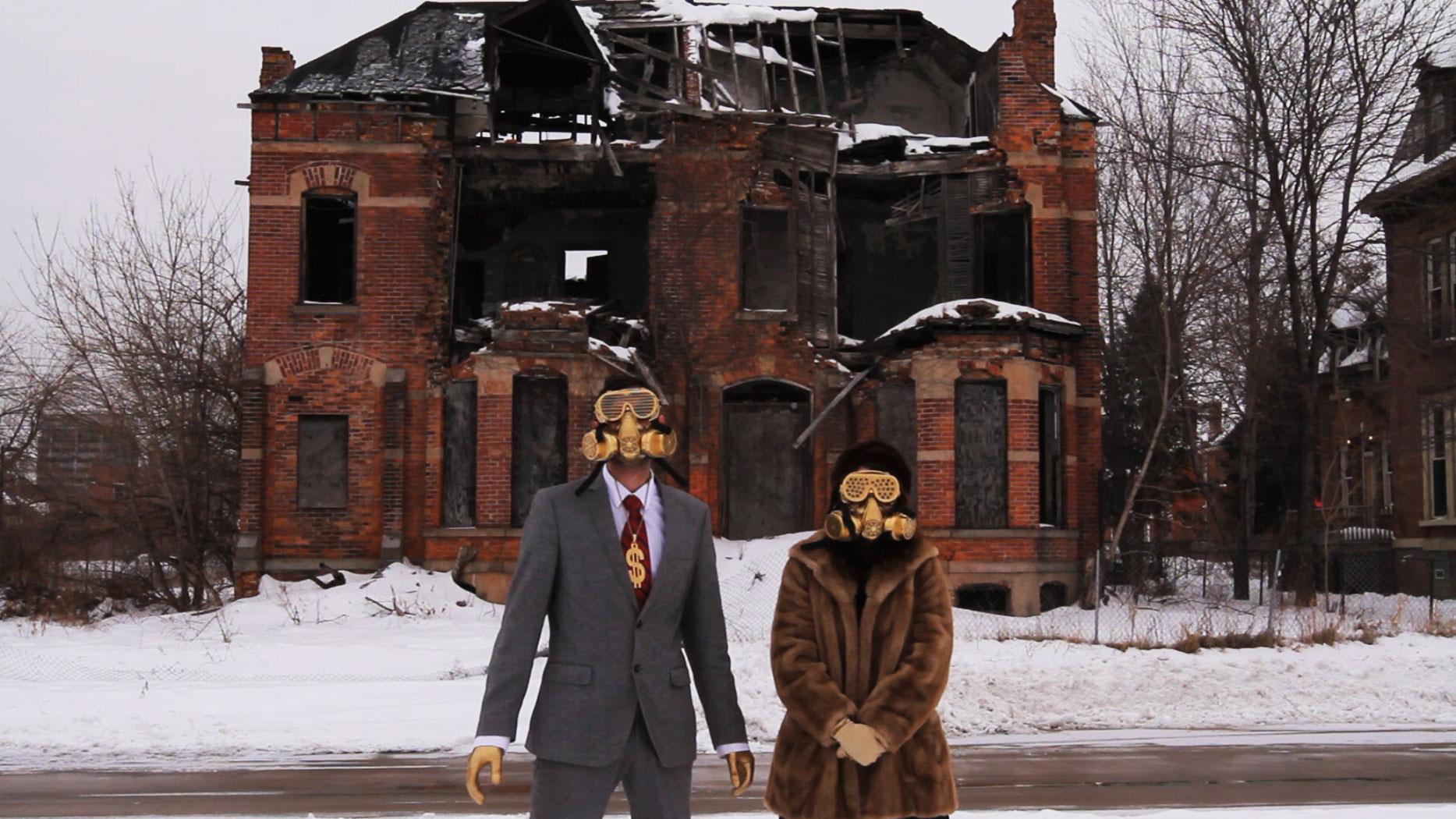
Detropia, the absorbing documentary about the plight of contemporary Detroit, will be broadcast on PBS’s Independent Lens beginning May 27.  Detropia tells a compelling story in an unexpected and effective way.

Before watching the film, I knew that Detroit has lost half of its population and was not surprised to learn of its 30-50% unemployment.  But I didn’t expect the blocks and blocks of abandoned homes and businesses and the streets with no traffic.  Detropia’s Detroit looks like New Orleans after Katrina or San Francisco after the 1906 earthquake.  Essentially, there’s been an economic tsunami here.  I was astonished to see city leaders seriously considering the demolition of large parts of the city and the relocation of residents into more efficient and more cohesive concentrated neighborhoods.

How did this happen?  And what can be done?  There’s no agenda by the filmmakers – other than keen-eyed observation.  The filmmakers give a voice to three sets of local witnesses who tell the city’s story.  And there’s an interesting and unexpected choice to feature the city’s opera.

Most surprising, despite being a movie about urban decay, Detropia is still a visually arresting and often colorful and beautiful film.  And, despite the hopelessness of Detroit’s situation, the perspective of the local witnesses keeps Detropia from becoming depressing.

The filmmakers, Heidi Ewing and Rachel Grady (Jesus Camp, 12th & Delaware), deserve recognition for making Detropia so compelling without it becoming a screed.  Indeed, Detropia is a Sundance award winner.

Stories We Tell: when life surprises…and how we explain it

Michael Polley in STORIES WE TELL

Stories We Tell is the third film from brilliant young Canadian director Sarah Polley (Away From Her, Take This Waltz), a documentary in which she interviews members of her own family about her mother, who died when Sarah was 11.  It doesn’t take long before Sarah uncovers a major surprise about her own life.  And then she steps into an even bigger surprise about the first surprise.  And then there’s a completely unexpected reaction by Polley’s father Michael. 

There are surprises aplenty in the Polley family saga, but how folks react to the discoveries is just as interesting.  It helps that everyone in the Polley family has a deliciously wicked sense of humor.

The family story is compelling enough, but Polley also explores story telling itself.  Everyone who knew Polley’s mother tells her story from a different perspective.  But we can weave together the often conflicting versions into what seems like a pretty complete portrait of a complicated person.

Polley adds more layers of meaning and ties the material together by filming herself recording her father reading his version of the story – his memoir serves as the unifying narration. 

To take us back to the 1960s, Polley uses one-third actual home movies and two-thirds re-creations (with actors) shot on Super 8 film.  Polley hired cinematographer Iris Ng after seeing Ng’s 5 minute Super 8 short.  The most haunting clip is a real one, a video of  the actress Mom’s audition for a 60s Canadian TV show.

Make sure that you stay for the end credits – there’s one more surprise, and it’s hilarious.

The Central Park Five: a sense of outrage

THE CENTRAL PARK FIVE

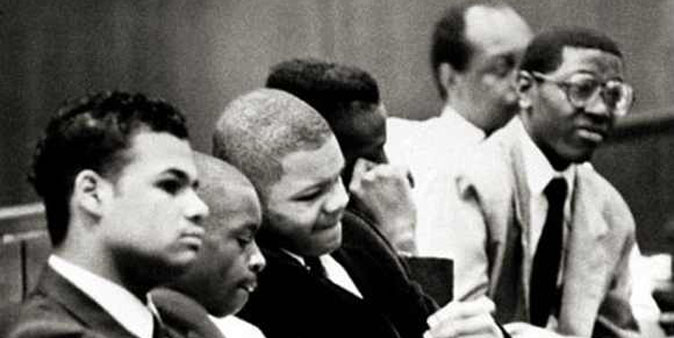
PBS is now broadcasting the excellent documentary The Central Park Five, about the media-driven rush to wrongly convict five young men of the rape attack upon the Central Park Jogger.  The film is co-directed and co-written by famed documentarian Ken Burns (The Civil War, Baseball) , his daughter Sarah Burns and her husband David McMahon from Sarah’s book of the same name.  The Central Park Five is just as credibly researched as Ken Burns’ previous work but has more of a bite, more of a sense of outrage.

The Central Park Five begins with the actual perpetrator of the crime, so we immediately are reminded that the Central Park Five teens are innocent, which helps us absorb their experience through their eyes.  That’s critical for us to understand how they could have been browbeaten into confessing to crimes that they did not commit.

We see their video confessions and hear from the Five and their families today.  We also hear from lawyers, politicians and journalists, but not from the police or prosecutors.

The story of The Central Park Five is remarkably compelling.  It’s also an important film.  Viewers will never assess confessions induced by police interrogations in the same way again.

Beware of Mr. Baker: please don’t hit me again, Ginger

The documentary Beware of Mr. Baker traces the life of the extremely volatile legendary rock drummer Ginger Baker (Cream, Blind Faith).  Baker is undeniably a musical genius, and the film highlights the stature of his work in both rock and jazz.  Unfortunately, the nasty combination of his aggressively anti-social personality and his heroin addiction precluded successful professional and familial relationships.  We hear about Baker’s good and bad sides from his former Cream band mates Jack Bruce and Eric Clapton, several of his ex-wives and his son, drummer Kofi Baker.  And we meet Ginger Baker himself, for better and for worse.  At one point, the septuagenarian Baker employs his cane to break the nose of the film’s director, Jay Bulger.

Bulger gets credit for comprehensive research into Baker’s life and times, for his inventive use of animation in depicting stages of Baker’s life and for getting the combustible Baker himself on camera.  Beware of Mr. Baker is the skillfully told story of a fascinating life.  Beware of Mr. Baker is now available on VOD through Amazon and other outlets.


56 Up: surprisingly mellow

56 Up is the next chapter in the greatest documentary series ever. Starting with Seven Up! in 1964, director Michael Apted has followed the same fourteen British children, filming snapshots of their lives at ages 7, 14, 21, 28, 35, 42 and 49 – and now at age 56. Choosing kids from different backgrounds, the series started as a critique of the British class system, but has since evolved into a broader exploration of what factors can lead to success and happiness at different stages of human life.

We have seen these characters live roller coaster lives.  The surprise in 56 Up is how contented they seem to be.  They seem to have independently reached a stage in their lives where they live with acceptance and satisfaction.  Accordingly, it makes for mellow and pleasing viewing for us.

Michael Apted is a big time director (Coal Miner’s Daughter, Gorillas in the Mist, most recently the 2010 chapter of the Chronicles of Narnia saga).  It is remarkable that he has returned so faithfully to his subjects in the Up series.  I’ve included the 7 Up series in my list of Greatest Movies of All Time.

Because Apted includes clips from earlier films to set the stage for each character, you don’t need to watch all eight movies.  Because there is so little conflict in 56 Up, it would be ideal to first screen an edgier film like 35 Up or 42: Forty Two Up.  But 56 Up stands on its own, and it’s another gem in the series.

THE GATEKEEPERS: winning tactics make for a losing strategy

The Gatekeepers: This Israeli documentary is centered around interviews with all six surviving former chiefs of Shin Bet, Israel’s super-secret internal security force.   We get their inside take on the past thirty years of Israeli-Palestinian history.  What is revelatory however, is their assessment of Israel’s war on terror.  These are hard ass guys who went to the office every morning to kill terrorists.  But upon reflection, they conclude that winning tactics make for a losing strategy.

Filmmaker Dror Moreh also makes file footage pop off the screen with 3D effects, and shows us the night vision helmet cam view of an Israeli military raid on a houseful of terrified Palestinians.  It’s powerful stuff, and a Must See for anyone with an interest in the Israeli-Palestinian conflict or the American War on Terror.

The Gatekeepers is available to rent on DVD from Netflix and for streaming on Amazon Instant, iTunes, Vudu, YouTube, Google Play and Flixster.