
The Act of Killing: the banality of evil like you’ve never seen it

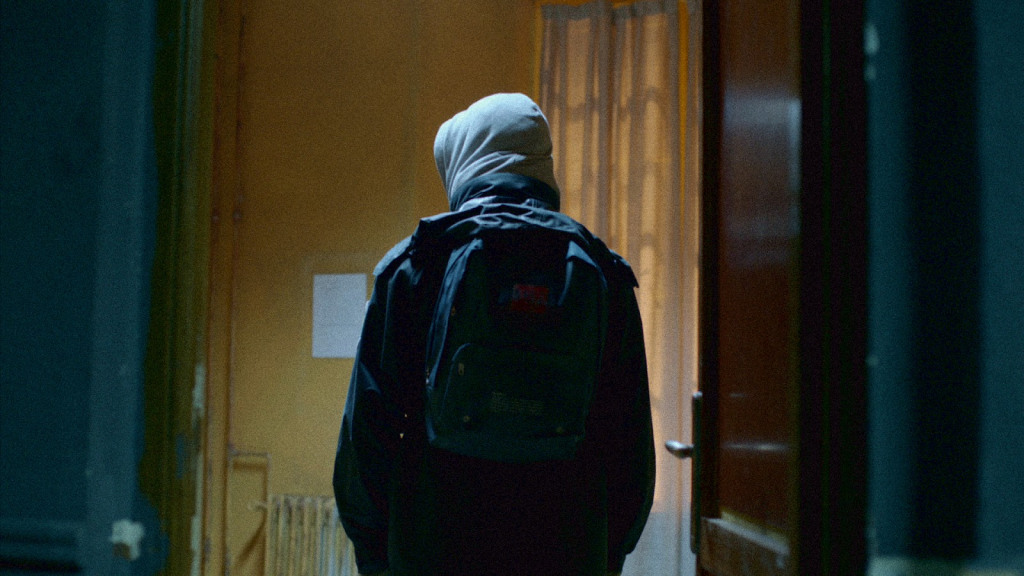
Okay, here’s a jaw dropper.  In the chilling documentary The Act of Killing, perpetrators of genocide in Indonesia are asked to re-enact their murders – and they are pleased as punch to do so.  We meet unapologetic mass murderers face-to-face.  Filmmaker Joshua Oppenheimer has created the year’s most startling documentary.

After the 1965 military coup, death squads sympathetic to the military labeling opponents of the regime, landless farmers and ethnic Chinese as “communists” – and killed 2-3 million fellow Indonesians.  The killers were mostly Indonesian paramilitary groups and gangsters.  The Act of Killing introduces us to several of these murderers,  who don’t try to evade or spin their deeds, but instead look proudly and nostalgically at their murders as the highlight of their lives.

The film primarily focuses on two self-described gangsters, Anwars and Herman.  The two enthusiastically embrace the film project so they can document their murders for history.  Anwars is said to have killed a thousand by himself.  Because beating them to death produced too much messy blood, he devised a method of strangling them with wire. The corpulent Herman chooses spends about a third of movie dressed in flamboyant drag, which is ridiculous, but the film is so disturbing that the audience just can’t laugh. Besides acting out interrogation torture murders and a village massacre, the two come up with a Bollywood-like musical number of Born Free, complete with dancing-girls in front of a waterfall, in which the garotted dead reappear to thank Anwars for sending them on to the afterlife.  It is beyond bizarre.

In the film’s most riveting scene, a guy who has been recruited to play a torture victim in the film-within-a-film, recounts the death squad murder of his step-father to Anwars and Herman.  To keep his composure, he awkwardly laughs as he describes the abduction – but his eyes are clearly blaming the old gangsters.  Then he acts out his torture for the camera.

The Act of Killing is hypnotically compelling – you can’t believe what’s on the screen, can’t believe that you’re still watching it and can’t stop watching.

The Act of Killing is directed by Oppenheimer and co-directed by someone credited as “Anonymous” and Christine Cynn.  Oddly, there is no writing credit.  The great documentarians Errol Morris and Werner Herzog are among the executive producers.

[We don’t often explore genocide from the perpetrator’s point of view, although two excellent documentaries come to mind:  Shoah and Blind Spot: Hitler’s Secretary, both on my 5 Essential Holocaust Films.  The current film Hannah Arendt is about the academic theorist who coined the term “banality of evil”, but that story’s duel of letters between hand-wringing intellectuals makes for a stale discussion.]

The Act of Killing is a very uncomfortable movie, and I suspect that it wouldn’t be not a great choice for most of my readers.  But it pushes the envelope of cinema and is the most uniquely original film of the year (or millennium so far?).  I’m really glad that I watched it.
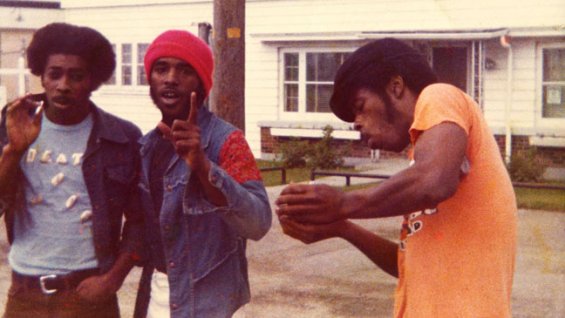
A Band Called Death: before punk there was Motown punk

A BAND CALLED DEATH

The documentary A Band Called Death tells the story of three African-American brothers from Detroit who formed a band that could have launched punk music – but remained unknown until the 21st century.  The brothers’ parents invested a settlement from a car accident into top flight instruments for the teens, who unexpectedly eschewed soul for rock.  Two years before The Ramones and The Sex Pitols, Death’s groundbreaking sound was about to earn the band a record deal when…Well, just watch the movie.  The filmmaking is solid if unremarkable, but the story is a great one.

Thanks to Paul and Harrison for turning me on to this gem.  A Band Called Death is available streaming on iTunes.

Casting By: revealing an essential piece of filmmaking

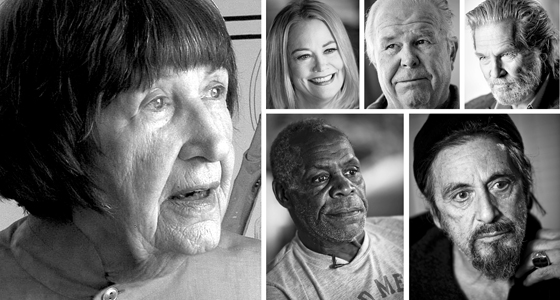
Marion Dougherty (left) and some of her discoveries in CASTING BY

Every serious movie fan should see the fine HBO documentary Casting By, which reveals the importance of the casting department, chiefly by focusing on the pioneering work of New York casting director Marion Dougherty and her Hollywood counterpart Lynn Stalmaster.

In the hey day of the Studio System, studios would simply typecast actors plucked from their list of contract players,  But Dougherty, casting for the early TV dramas shot in New York, picked the most promising stage actors and cast them AGAINST type.  When the Studio System collapsed in the early 1960s, Dougherty and Stalmaster were able to bring this approach to the movies, especially for former TV directors like Sidney Lumet and George Roy Hill and young up-and-comers like Martin Scorsese.

It’s really difficult to imagine American cinema from the past 50 years without Al Pacino, Dustin Hoffman, Gene Hackman and Robert Duvall – and Dougherty is the person who cast them for their breakout credits.  Not to mention James Dean, Jack Lemmon, Warren Beatty, Rod Steiger, Jon Voight, Christopher Walken, Glenn Close, Martin Sheen and Diane Lane.  And she pushed for Danny Glover to be cast in his Lethal Weapon role, originally written for a white detective.

Stalmaster’s story is just as compelling, including his advocacy for then unknown John Travolta and his casting of the very odd kid in Deliverance.

Casting By also takes on the turf war with the remarkably ungenerous Directors Guild, which results in grudging credits and no Oscars for casting directors.

Casting By is now playing on HBO.

The Cheshire Murders: beyond the police procedural

THE CHESHIRE MURDERS

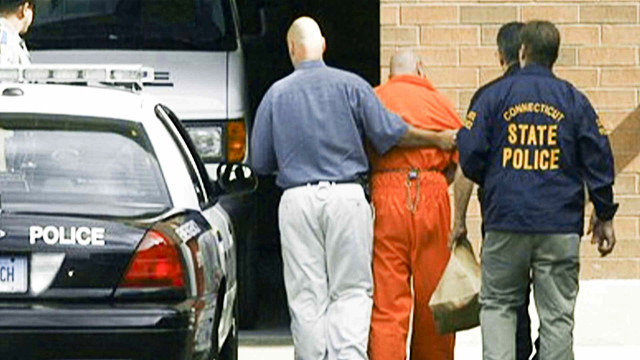
The Cheshire Murders, another in HBO’s fine summer documentary series, takes us beyond the familiar police procedural.  This is not a whodunit – we immediately know what happened and who committed the crimes.  Three murders were committed in a home invasion, and the two perpetrators were caught red-handed – their guilt confirmed by confessions and DNA and other forensic  evidence.

Instead, as The Cheshire Murders peels back the onion, we hear about the crime’s impact on a quiet Connecticut suburb and on the families of the victims and the perpetrators. We trace the unanswered questions on the police response.  We follow the life journeys of the murderers which culminate in this horrific crime.  We see how the case affected the political debate over capital punishment in Connecticut, and test our own views on capital punishment with the facts of  a heinous crime, certain guilt and monstrous offenders.

The Cheshire Murders is all the more effective because the filmmakers refused to sensationalize the case.  The facts, speaking for themselves, are compelling enough.

The Cheshire Murders is currently playing on HBO.  Note: Some of the victims of this wanton, senseless and disgusting crime were children; although there are no grisly images, the facts of the case are disturbing.

Deceptive Practice: The Mysteries and Mentors of Ricky Jay

DECEPTIVE PRACTICE: THE MYSTERIES AMD MENTORS OF RICKY JAY

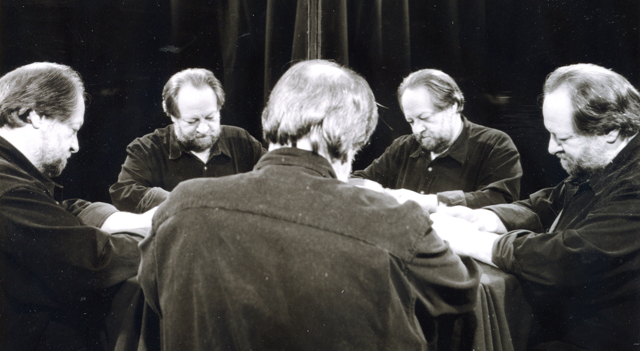
In tracing the development of the great magician Ricky Jay,  the documentary Deceptive Practice:  The Mysteries and Mentors of Ricky Jay explores the fascinating history of 20th century American magic.  We get to see performances by Jay and his mentors, with comments by Jay himself.  Ricky Jay’s mysteries are the secrets of 1) his illusions and 2) his family – both unrevealed.  Whether expansive about his mentors and his passion for magic, or tight-mouthed about his relationship with his parents, Jay is a fascinating character.

Because the audience gets to see lots of amazing magic, Deceptive Practice is attractive as a performance film.  But Jay is an unsurpassed raconteur, one of my favorites, and when he holds forth, it’s as entertaining as any of his illusions.

(I was fortunate to see Deceptive Practice at the San Francisco International Film Festival sitting next to bunch of real magicians.)

Gideon’s Army: Sisyphus goes to court

GIDEON'S ARMY

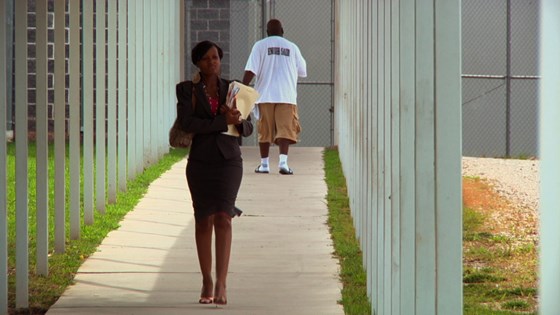
Gideon’s Army, another gem from HBO’s fine summer documentary series, explores the work of public defenders in the South.  By defending indigent criminal defendants, these lawyers preserve the American legal principles of fair trials and the presumption of innocence.   But the game is rigged against them – they are starkly under-resourced and, in the South, face shockingly high bail requirements and extremely severe mandatory sentencing laws.  Each responsible for 120-150 cases at a time, they suffer long hours and low pay, defending the mostly guilty – a recipe for burnout.  One PD even has had one client who planned to murder her in open court.

To tell this Sisyphean story, Gideon’s Army focuses on a handful of public defenders and their cases.  There’s probably more optimism in the film than in real life (which is necessary, because a more realistic depiction would probably be depressingly unwatchable).    It’s an important subject and a good watch.  Gideon’s Army is currently playing on HBO.

DVD/Stream: you gotta see The Imposter

The Imposter

I’m repeating last week’s DVD/Stream of the Week because you just shouldn’t miss The Imposter.  Life is at times stranger than fiction, and The Imposter is one of the most jaw-dropping documentaries I have seen. Nicholas Barclay, a 13-year-old Texas boy, vanished in 1994. Three years later, a young man surfaced in Spain, claiming to be an American boy kidnapped for sexual exploitation; he was identified by Spanish police as Nicholas Barclay. In fact, he was a serial impersonator named Frédéric Bourdin who had contrived the ruse to escape getting busted for his own petty misdeeds.

That’s not a spoiler, because The Imposter’s audience learns this framework right away. Here’s the first real shocker: the imposter is accepted by Nicholas’ family. This is more amazing because Frédéric is seven years older than Nicholas, is not a native English speaker and looks nothing like him. Of course, Frédéric is surprised that the family is embracing him as Nicholas – and then he begins to suspect why…

Filmmaker Bart Layton expertly spins the story, We meet the actual Frédéric Bourdin, members of the Barclay family, and the detectives who broke the case.

The Imposter is available on DVD from Netflix and streaming from Netflix, Amazon, iTunes and many other VOD providers.

20 Feet from Stardom: essential for music fans

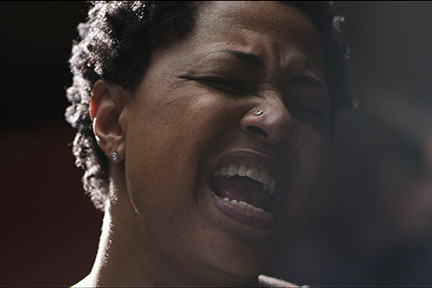
Lisa Fisher in 20 FEET FROM STARDOM

The documentary 20 Feet from Stardom delves into the careers of rock music’s backup singers – so close to the celebrity spotlight, yet so obscure and under appreciated.  Some prefer the background (the Walkers and the electrifyingly talented Lisa Fischer), and some aspire to major solo careers (Judith Hill).  Others have been disappointed in the quest for stardom (Merry Clayton and Claudia Linnear) – or stardom has been delayed (Darlene Love).  We meet all of these very talented and appealing women, and hear from Mick Jagger, Bruce Springsteen and Sting.

The best parts are hearing Darlene Love’s story (which adds to the body of evidence that Phil Spector is a terrible human being), the inside glimpse into Merry Clayton’s iconic solo in the Rolling Stones’ Gimme Shelter and experiencing the magical voice of Lisa Fischer.  It’s a little slow in places, but 20 Feet from Stardom is a pretty good choice for any viewer and essential for music fans.

Here’s a description from the director.


DVD/Stream of the Week: The Imposter

The Imposter

Life is at times stranger than fiction, and The Imposter is one of the most jaw-dropping documentaries I have seen.  Nicholas Barclay, a 13-year-old Texas boy, vanished in 1994.  Three years later, a young man surfaced in Spain, claiming to be an American boy kidnapped for sexual exploitation; he was identified by Spanish police as Nicholas Barclay.  In fact, he was a serial impersonator named Frédéric Bourdin who had contrived the ruse to escape getting busted for his own petty misdeeds. 

That’s not a spoiler, because The Imposter’s audience learns this framework right away.  Here’s the first real shocker: the imposter is accepted by Nicholas’ family.  This is more amazing because Frédéric is seven years older than Nicholas, is not a native English speaker and looks nothing like him.  Of course, Frédéric is surprised that the family is embracing him as Nicholas – and then he begins to suspect why…

Filmmaker Bart Layton expertly spins the story, We meet the actual Frédéric Bourdin, members of the Barclay family, and the detectives who broke the case. 

The Imposter is available on DVD from Netflix and streaming from Netflix, Amazon, iTunes and many other VOD providers.

The Out List: as clear as clear can be

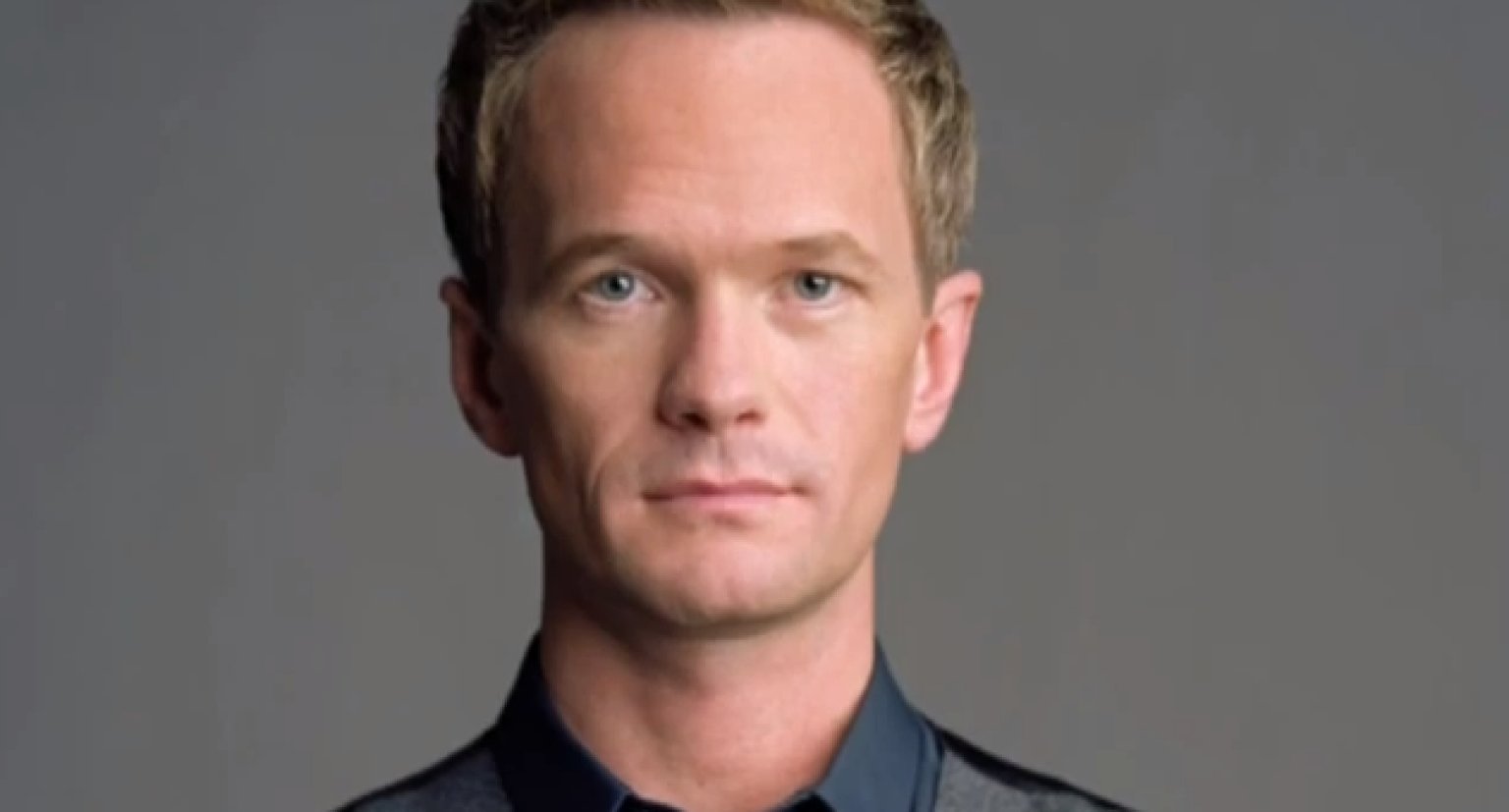
Neil Patrick Harris in THE OUT LIST

Another in HBO’s excellent summer documentary series, The Out List is a talking head documentary about the value of being out – both personally valuable and to the community.   There are the celebrity performers that you would expect: Neil Patrick Harris, Cynthia Nixon, Wanda Sykes and Ellen DeGeneres.  But it’s amazing to hear from Lupe Valdez, a lesbian Latina Democrat elected by the fine people of Dallas County, Texas to be their Sheriff.  (There’s also the current favorite in the race for Mayor of New York City Mayor, Christine C. Quinn.)   The most compelling stories come from drag queen promoter Lady Bunny, personal finance guru Suze Orman and transgender writer Janet Mock.

Their stories represent the range of all human stories – some funny, some touching and some both at the same time.  Like in every group of humanity, there is some edginess and not everybody is trying to be appealing.  But I would doubt that anyone could watch The Out List and still feel justified to be a hater.  The Out List is not just for those interested in LGBT issues, but for everyone with an interest in people, society and the human experience.