Gore Vidal: The United States of Amnesia: the man who invented snark

GORE VIDAL: THE UNITED STATES OF AMNESIA

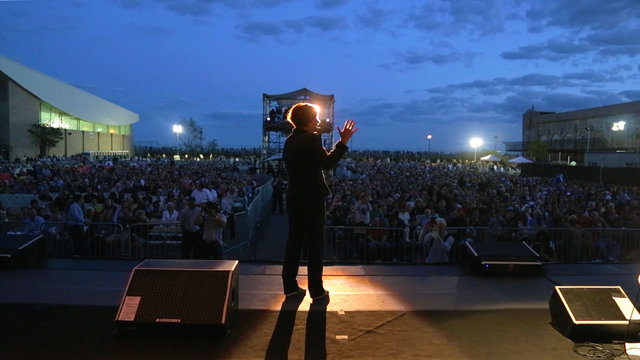
Nicholas D. Wrathall’s documentary Gore Vidal: The United States of Amnesia is an affectionate portrait of the famously prickly novelist. Vidal, himself an American blue blood, delighted in the harshest criticism of American society, culture and politics. In the film, he observes “When I want to know what the United States is up to, I look into my own black heart.”

Vidal practically invented snark. Most of all, he seemed to relish the role of provocateur, publicly spewing out outrageous (and oft factually unreliable) statements. There has never been a more entertaining TV talk show guest.  In Gore Vidal: The United States of Amnesia, we see many of the famous talk show moments – including the 1968 NBC debate when he baited the ubercool William F. Buckley into calling him a queer; that was a pricelessly typical moment, where Vidal playfully PRETENDED to take himself very seriously in labeling Buckley “crypto-Nazi”, causing Buckley – who really WAS taking himself seriously – to erupt.

Wrathall’s film benefits from his access to Vidal himself, facilitated by Vidal’s nephew, the director Burr Steers (who co-produced and appears).  So there are glimpses into less well-known aspects of Vidal’s life, including his longtime partner and his love of living in Italy.

Say what you must, Vidal was both absorbing and ever-amusing, which makes Gore Vidal: The United States of Amnesia an intelligent diversion.

The Final Member: the Icelandic penis documentary – not so much about penises

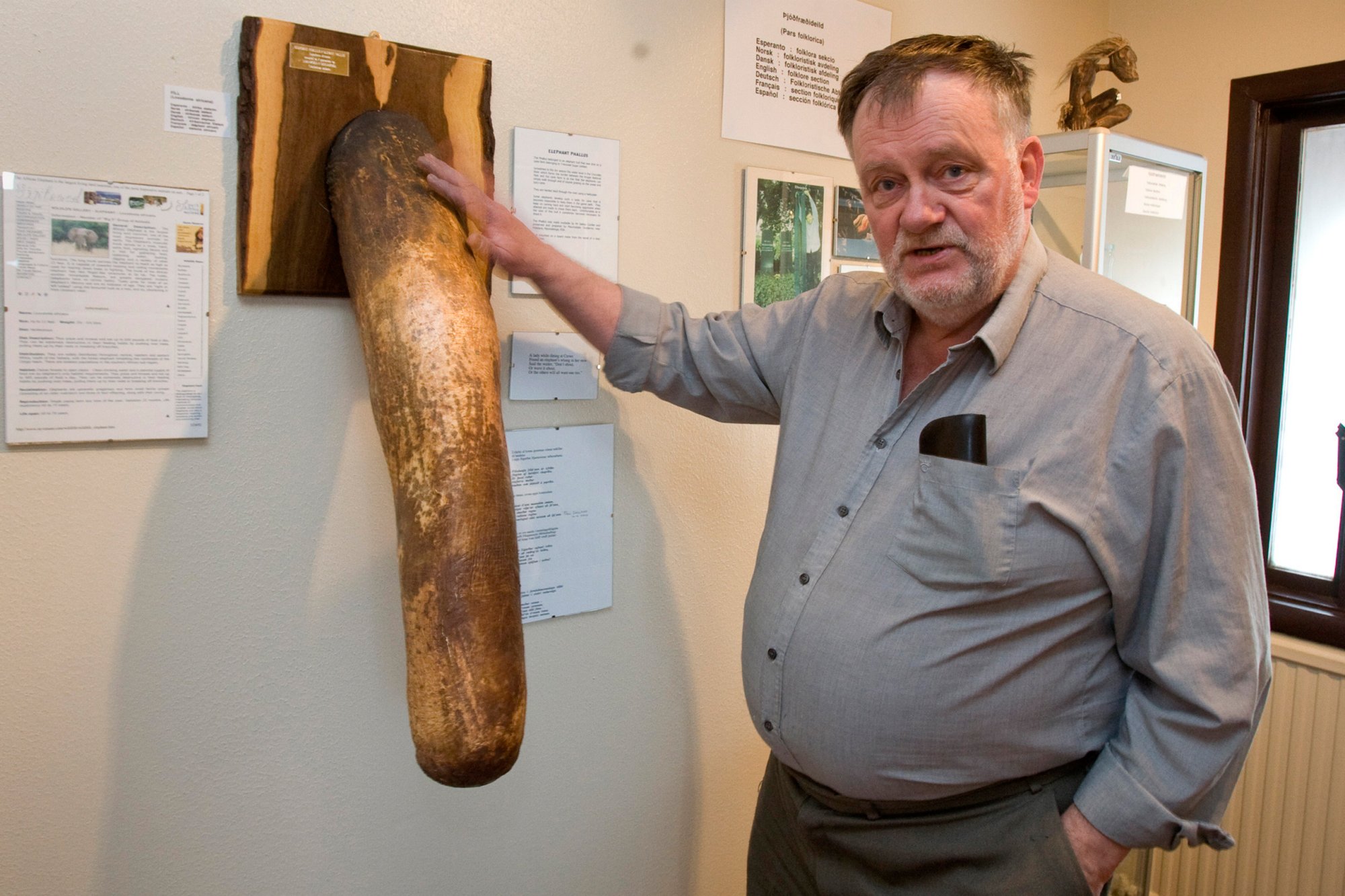
final chapter“Of course you are” is what The Wife says when I answer one of her questions with something like, “I’m watching the Icelandic penis documentary”.  Indeed, the documentary The Final Member is about the curator of the Icelandic Phallological Museum.  He has collected and displays sample penises from every mammalian species from hamster to sperm whale.   THAT’S NOT THE WEIRD PART.

The museum still lacks a sample from Homo Sapiens.  It’s the curator’s quest – and the men vying to contribute their own organs – that is central to The Final Member.   Like the
Errol Morris films Days of Heaven (pet cemetery) and Tabloid (Mormon missionary, cloning dogs), it’s not that the OBJECT of obsession is so funny – it’s the obsession itself.  It’s that the documentary presents people who are SO OBSESSED and SO EARNEST about the topic.  Of course, it is pretty funny when guys are each striving to put their penises on museum display.

In fact, the lengths to which one guy is willing to go for penis fame and fortune is astounding and, for male viewers, wince-inducing.  I’m working on a list of Jawdropping Documentaries, and – believe me – The Final Member is gonna make that list.  I recommend The Final Member for its 75 minutes of “he said WHAT?” LOL moments.

BTW that’s one-third of a sperm whale penis in the image at the top of this post.  (And the very last shot in The Final Member is a very wry filmmaking joke, too.)

The Final Member is now streaming on Amazon and iTunes.

Searching for Sugar Man director dies

Malik Bendjelloul
Malik Bendjelloul

The Swedish filmmaker Malik Bendjelloul has died suddenly at age 36. He won the Best Documentary Oscar with his FIRST FEATURE – the powerful Searching for Sugar Man. Judging from Sugar Man, this is a significant loss to future cinema. At least we can still watch his one riveting and flabbergasting story – available on DVD from Netflix and Redbox and streaming from Amazon, iTunes, Vudu, YouTube and Xbox Video.

Finding Vivian Maier: hiding her own masterpieces

vivian maier1
The engrossing documentary Finding Vivian Maier begins with the death of a Chicago woman so obscure that none of her neighbors knew her name.  She was a standoffish hoarder, and when a box of her junk is acquired at an estate auction, the buyer, a picker named John Maloof, finds lots and lots of photographs.  He posts some of them on the Internet, and it turns out that the woman was, hitherto undiscovered, one of the great 20th Century photographers.  So Maloof acquires the other boxes from the auction and embarks on a quest to find out who she was, why she took over 100,000 images and why she never showed them. Fortunately, we get to come along.

We quickly learn that her name was Vivian Maier, and that she worked as a nanny.   As Maloof’s journey of discovery takes us to another city and then to another country, we begin to piece together her life.  Because Maier lived with families to raise their children, we meet some of her former charges. We are able to construct what she looked and sounded like, how she dressed and walked and about her array of eccentricities.  We learn about a very disturbing dark side.

But Maier remained secretive even inside the families’ homes, so some of the puzzle pieces remain undiscovered.  We can infer that a pivotal event happened during her childhood.  We conclusively find out that she was obsessively private, but we can only guess why.

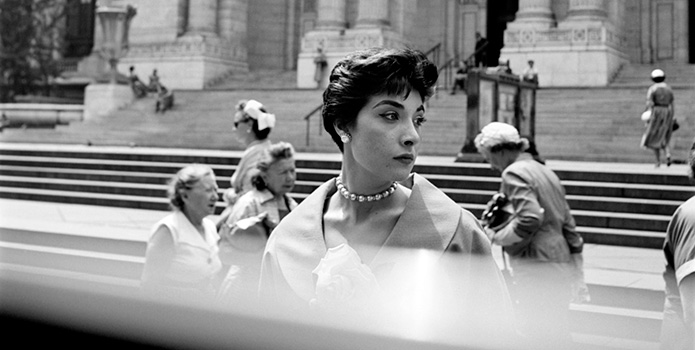
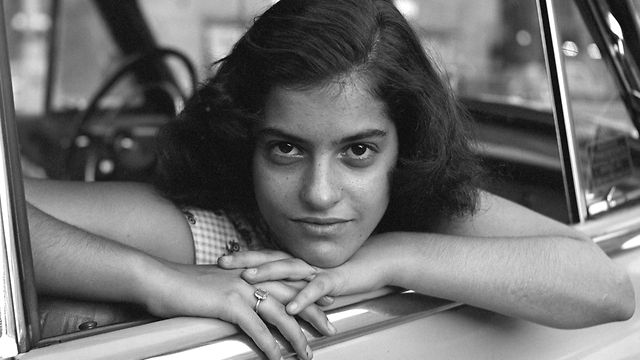
Vivian Maier is no longer obscure.  Her work is now shown widely in museums and galleries.  As a photographer, she had an uncommon gift to connect personally with her subjects and to document the humor and tragedy of the most human moments.  In the guise of a detective story, Finding Vivian Maier does her justice.


vian maier2

The Unknown Known: Rumsfeld exposed…by himself

Rumsfeld: unruffled by the Errol Morris documentary treatmentErrol Morris is a master documentarian (Gates of Heaven, The Thin Blue Line, Standard Operating Procedure), so he is the perfect guy to explore the personality and career – and, above all, the self-certainty – of Donald Rumsfeld, architect of the American wars in Afghanistan and Iraq.  For most of the film, Rumsfeld himself is on-screen talking to Morris’ camera.  Rumsfeld is apparently completely immune from self-doubt, but ultimately reveals more about himself than he would like.

The title of the picture comes from a Rumsfeld memo that describes a policy maker’s “unknown known” as that which you thought you know but it turns out that you didn’t.  Of course, the classic “unknown known” is the certainty that the Iraq War would be justified and would turn out well.

In contrast, the “unknown unknown” is something that you don’t know that you don’t know and that Rumsfeld says that you have to imagine (such as the Pearl Harbor and 9/11 attacks).  Of course, the imagining of all kinds of such attacks drives the neo-conservative theory of preemptive war – to strike at those who can be IMAGINED to threaten you.

Rumsfeld is remarkably glib and very effective at selling his own version of reality.  Morris takes this on early in the documentary by getting Rumsfeld to deny linking Saddam with Al Qaeda and then shows him doing exactly that in a pre-Iraq War news conference.  Indeed, Morris himself is an effective off-screen participant throughout, sparring with Rumsfeld, with each guy winning his share of verbal tussles.

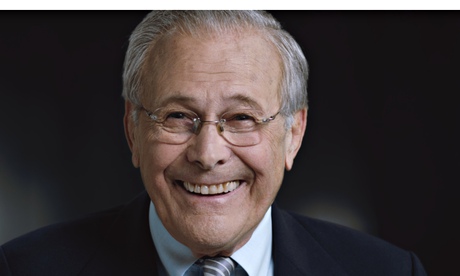
When Rumsfeld thinks that he’s won a point, he grins the infuriating grin in the image above.  The one time he loses his smile is when Morris mentions a moment when Rumsfeld almost became Reagan’s Vice-President (and then future President), and Rumsfeld acknowledges that, yes, this was possible.  The film is brilliantly edited, and Morris knows EXACTLY how long to extend a shot to catch Rumsfeld in moments of reflection.

The movie traces Rumsfeld’s remarkable life and career from his marriage and early start as a young Congressman  thru his roles in the Nixon and Ford administrations with the end of Watergate, the fall of Saigon, his salesmanship for defense spending increases in the 1970s and his service as Reagan’s Middle East envoy.  After a time in the wilderness during Bush I, of course, he came to his greatest power during Bush II.  He gives a stirring first-person account of the 9/11 attack of the Pentagon, relating what the scene was like even before the first responders arrived.  But the core of the film is about the Rumsfeld decisions about Iraq.

Unusual for a current events documentary, there’s also some top shelf music from Danny Elfman, Oscar nominated for Good Will Hunting and Milk.

You can find The Unknown Known tomorrow in theaters and streaming now on Amazon, iTunes, YouTube, Google Play and Xbox Video

Cinequest: Teenage

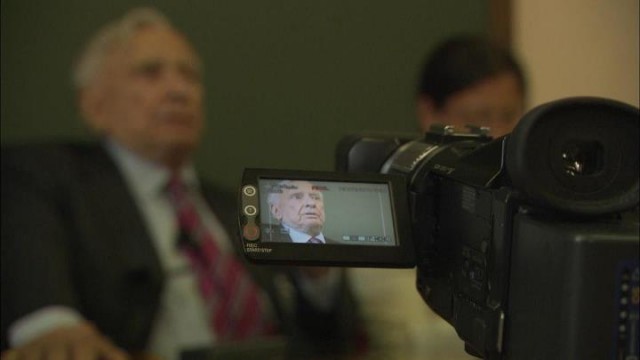
teenageThe most important ingredient for a documentary is a good story, and Teenage has just that – the 20th century emergence of a hitherto unknown phenomenon: the teenager. Teenage postulates that through the end of the 1800s, kids – by going to work when they were 12 – transitioned directly from the child’s world to the adult one; the advent of child labor laws gave the 12 to 18-year-olds the leisure time to express all of that hormone-driven energy. Combined with the generational disgust felt by the young for the older generation that had wasted much of their cohort in WWI, that mix of rebelliousness, immaturity and bad judgement we now as the modern teenager was born – and has driven our popular culture ever since.

To make the case for that thesis, filmmaker Matt Wolf has assembled some stunningly evocative file footage and sprinkled in some re-creations.  The re-created characters are read by the likes of Jena Malone and are shot in color.  The problem is that some of the black-and-white footage ALSO has the look of re-creation, so I couldn’t tell what was a historical document and what was the filmmaker’s interpenetration of the period. This was just enough to lose me. I wish Wolf had the faith to let his file footage speak for itself.  Still, it’s a good story, and worth the watch.

House of Radio: radio speaking for itself – on camera

French documentarian Nicolas Philibert takes on a backstage tour of the seven channels of Radio France in House of Radio (La Maison de la Radio).  Philibert’s style is entirely observational – there is no narration and I remember only one title  identifying the Radio France building at beginning of film.  The camera just watches the people of Radio France do their jobs – including interviews, news reports, performances, games shows and even the sports reporters on motorbikes covering the Tour de France.

As San Francisco Film Society Director of Programming Rachel Rosen noted, radio is a medium that draws much of its power from the absence of images.  The editing in House of Radio seems completely random but it’s not – Philibert strings all of his nuggets together so that we never lose interest.  I want to see this guy’s next movie.

I saw House of Radio at the San Francisco Film Society’s French Cinema Now series.  It’s not currently available in theaters or on DVD or streaming in the US.

Hers to Lose: an inside look at a campaign spiraling into defeat


Hers to Lose: Inside Christine Quinn’s Bid for Mayor is an extraordinarily evocative political film, it’s only 30 minutes long and you can watch it for free.

It’s the story of Christine C. Quinn’s bid for New York City mayor in 2013.  At the start of the race, Quinn was the heavy favorite.  She was the City Council President and a dominant force in Manhattan’s Democratic establishment. She would have been the first woman and the first openly gay Mayor of New York City.

Then, as happens in politics, two things went wrong.  First, she had positioned herself as the Democratic partner and heir to Republican Mayor Bloomberg, which helped her immensely in the years of Bloomberg’s popularity in New York; but by the time of the 2013 primary, Bloomberg had become very UNPOPULAR among Democratic primary voters.  Then, as voters looked to an anti-Bloomberg alternative, one of Quinn’s opponents, Bill de Blasio unleashed a killer campaign commercial, featuring his teenage son Dante, that crystallized the aspirations of the electorate.  Quinn sank like a rock in the polls, and de Blasio shot upward.  This was one of those moments in a political campaign when there is just nothing a candidate can do to stop a popular tsunami.

As Hers to Lose opens, we see Quinn – just after her defeat – explaining that she granted access to the New York Times documentarians so they could record her victory.  She is composed, but her eyes are filled with pain.  Quinn had dedicated years of her life to running in this race, suffering political and personal attacks, enduring long hours and living in a fish bowl; to see this film is to appreciate how much she put into the contest and how helplessly she watched her lead slip away.  At its most searing, Her to Lose chronicles the never-ending torrent of abuse hurled at Quinn by haters – especially the single issue opponents of horse-drawn carriages who hang around her building so they can revile her as she begins each day; as one might assume, this vitriol takes its toll.

You can view Hers to Lose: Inside Christine Quinn’s Bid for Mayor here at the NYT.

Seduced and Abandoned: a sly look at money grubbing

Seduced and Abandoned is director James Toback’s (The Pickup Artist, Tyson) documentary about that overlooked aspect of filmmaking: the pitch.  The camera follows Toback and his star Alec Baldwin through the Cannes Film Festival as they try to get funding for their new movie. The project they are pitching is Last Tango in Tikrit.  One can only imagine…

Toback is shameless in his pursuit of backers: “250 years from now, the only reason anyone will know your name is when it rolls on the screen as producer of my movie”.  When Toback and Baldwin learn that a young actor-wannabe has a very rich dad, they pounce and dangle a newly written role for the son.   Toback is willing to dump Neve Campbell for a younger box office hottie and to change the plot from a Middle East story  so he can shoot in the US.  It’s all very sly.

Seduced and Abandoned is playing on HBO.  Here’s the teaser.

Stream of the Week: How to Make Money Selling Drugs

HOW TO MAKE MONEY SELLING DRUGS

Filmmaker Matthew Cooke’s documentary How to Make Money Selling Drugs is a dispassionate critique of the Drug War.  Using the How To format as an attention grabber, Cooke presents the job opportunities in illegal drug commerce as rational economic decisions  How much money can you make as a street dealer?  As a drug smuggler or kingpin?  What is the risk that you will need to defend your product inventory from a violent robbery?  What are the risks that you will be incarcerated?  How do those risks change if you are African-American?

The talking heads are former industry insiders, ranging from former street dealer 50 Cent to big league smuggler Brian O’Dea and notorious LA druglord Freeway Rick.

How to Make Money Selling Drugs is effective because Cooke generally strips away the value judgements and lets the audience draw its own conclusions, balancing out the risks and rewards.  The final risk presented, that of addiction, is particularly sobering.  (How to Make Money strays from this approach just once, with a Woody Harrelson diatribe.)    I expect that most viewers will conclude that 1) drug dealing is not a great long-term career path; and 2) the Drug War has not been effective in reducing drug abuse or illegal commerce.

How to Make Money Selling Drugs is available streaming from Amazon, iTunes and Vudu.