
PELICAN DREAMS: real pelicans, dreamy pace

PELICAN DREAMS
PELICAN DREAMS

Because I often fish along the Central California coast, I enjoy watching pelicans cruise majestically along the top of the bluffs and dive for fish in surgical strikes. The California Brown Pelican is the subject of Judy Irving’s meditative documentary Pelican Dreams. You may remember Irving’s surprise 2004 hit The Wild Parrots of Telegraph Hill, a documentary so captivating that it played 28 weeks in San Jose.

Wild Parrots had two things going for it – the oddity of birds from tropical rainforests living wild in a cold and grimy city, along with a compellingly unusual human star. Pelican Dreams doesn’t have those OMG features, but it has the very interesting stories of two individual birds, along with the riches to rags to kinda riches story of the species. The California Brown Pelican was named as an endangered species in 1970, but the ban of DDT has allowed the population to rebound, so they are no longer listed as endangered, but still face threats from oil spills, fishing tackle and climate change.

Irving had been looking to do a pelican documentary and met with the director of a pelican rescue facility, but she didn’t know how to begin the movie. Then, two weeks later, a pelican landed in the middle of traffic on the Golden Gate Bridge. Irving takes us through the life of that pelican, known to biologists as Pink 193 and named Gigi by Irving (for Golden Gate). Irving has a decidedly non-clinical view of the birds: “I would like a pelican in MY back yard”.

Pelican Dreams has a dreamy and meandering pace; like listening to Wyndham Hill New Age music for 80 minutes, it’s not a bad thing, you just need to be ready to settle in.

One more thing – the movie’s final shot (through a Panorama camera) is spectacular and unforgettable – a pelican diving at sunset – against a pink sky and purple coastline.

Here’s the trailer.

ART AND CRAFT: could a sane man devise a con this successful?

ART AND CRAFT
ART AND CRAFT

The startling documentary Art and Craft is about an art fraud.  Of prolific scale. And which is apparently legal. By a diagnosed schizophrenic.

We start with a guy named Mark Landis.  He is very good at photocopying (!) great art works, applying paint to make them seem like the real thing, putting them in distressed frames and donating them to museums in the name of his late (and imaginary!) sister.  He has done this hundreds of times, fooling scores of snooty museum curators in the process.

Why does he do this? Why can’t he stop? What’s with the imaginary sister?  Those answers probably lie within his schizophrenia, a disease which doesn’t impair his skill or his cunning.  Landis himself, once you get over his initial creepiness and become comfortable in his Southern gentility and wry mischievousness, is one of this year’s most compelling movie characters.

Why doesn’t his fraud constitute a criminal act?  Because he doesn’t profit from selling his fakes, he just gives them away.  And he doesn’t take the tax write-off.

How come he doesn’t get caught? These are PHOTOCOPIES for krissakes!  Those answers are in the self-interest and professional greed of the museum professionals – embodied by one puddle of mediocrity who becomes Landis’ obsessive Javert.

All of these combine to make Art and Craft one of the year’s most engaging documentaries. I saw Art and Craft at the San Francisco International Film Festival, where it was an audience hit.

LAST DAYS IN VIETNAM: folly, desperation, heroism

LAST DAYS IN VIETNAM

History is a compendium of individual human stories, oft caught up in a world event. That’s what drives the riveting documentary Last Days in Vietnam, which chronicles the desperate attempts of many South Vietnamese to escape before the Communist takeover in 1975. Over 140,000 got out in the initial exodus, including 77,000 through the means depicted in this film – mostly compressed into just two panicked days.

As if there weren’t enough American folly in Vietnam, the first evacuation plan didn’t include any non-Americans, even including the Vietnamese dependents of Americans. Then there were evacuation plans that were never implemented because of the blockheadedness of the US Ambassador.  In the final week, young American military and intelligence officers took matters into their own hand, and began a sub rosa evacuation – ignoring the chain of command, breaking immigration laws and risking career-killing charges of insubordination.

Last Days in Vietnam is directed by Rory Kennedy (daughter of RFK), who recently made Ethel, the affecting bio-doc of her mother. Kennedy does a good job of setting the historical stage for those who didn’t live through the era, and then letting the witnesses tell their compelling personal stories.

The talking heads include:

  • the six-year-old who jumped out of a helicopter and then watched his mother drop his baby sister on to a ship’s deck;
  • the US Navy vet who plays the taped diary that he sent home to his wife after the fateful day;
  • the CIA analyst who unsuccessfully tried to convince the deluded US Ambassador that the end was at hand;
  • the college student who managed to get over a wall inside the embassy, but found that his freedom was not guaranteed;
  • Ford Administration officials Henry Kissinger and Ron Nessen, who relate the White House view of the events.

One heroic young American officer managed with ingenuity and chutzpah to get out hundreds of Vietnamese.  In the film’s most poignant moment, it falls to him to tell the final American lie to the 400 Vietnamese remaining in the US embassy, for whom there were no more helicopters.

I saw the movie in San Jose with an audience that was about half Vietnamese-American, some of the age to have lived through this period.  San Jose’s 100,000 Vietnamese population is largest of any city outside Vietnam, and many Vietnamese-Americans still memorialize the subject of this film as Black April.  The exit from the theater was somber.

Last Days in Vietnam is a PBS American Experience film, so I expect it to show up on TV within the year.

ALIVE INSIDE: people astonishingly transformed by music

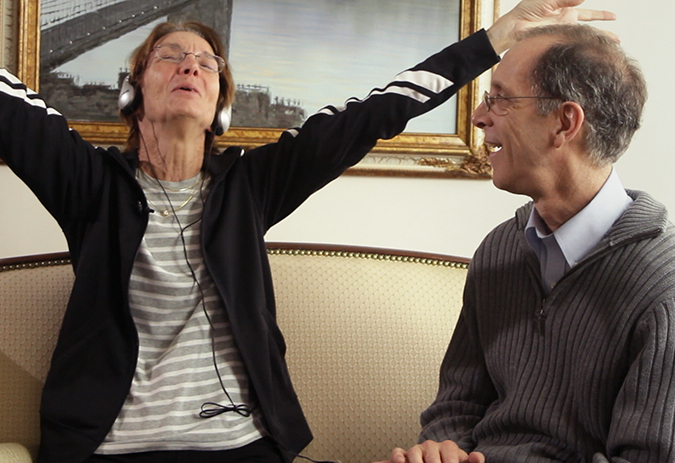
Alive InsideAlive Inside is one of the most emotionally powerful documentaries that I’ve EVER seen.  Seemingly miraculously, Alzheimer’s patients are transformed by music.  The music doesn’t cure Alzheimer’s, but it pulls the patients out of isolation, helps them relate to other people and brings them joy.

Alive Inside tells the story of a solitary guy, Dan Cohen, and his tiny non-profit Music & Memory, which distributes iPods to Alzheimer’s patients.  Michael Rossato-Bennett filmed Cohen’s work to prepare a video for Music & Memory.  That original six-and-a-half minute video went viral.  Rossato-Bennett realized that he had the beginnings of a movie, and, several years later, Alive Inside is the result.

Alive Inside won an  Audience Award at Sundance, and I think that Alive Inside will be one of the two favorites for the Academy Award for Best Documentary Feature.  It’s already on my list of Best Movies of 2014 – So Far.

All that aside, it’s a riveting film – and an example of the power of cinema.   It’s impossible not to be moved when people essentially recover their humanity.  And when you leave the theater, you’ll likely be thinking about making sure that your kids have your playlist.

The Newburgh Sting: war on terrorism…NOT

The Newburgh Sting is a credible and politically important documentary from HBO. In 2009, the FBI arrested four American Muslims with what look like bombs outside a synagogue.  The Newburgh Sting examines the case by showing us the actual FBI surveillance videos and audios, along with talking heads of relatives and community members. And a different reality emerges.

As the story unfolds, the FBI enrolls an informant – a serial con man who needed FBI leverage to hang on to the ill-gotten gains of a previous scam. The informant heads to hardscrabble Newburgh, NY, and flashes cash and expensive cars; he pretends to be an international terrorist who will pay $250,000 for a “job”. The informant finds a local hustler who will say anything to scrounge some cash. The hustler rounds up three more unemployed guys who will also do anything for a little money, let alone $250,000. The informant describes and plans the job, organizes the job and provides all the materials (including fake bombs).

Whether or not this meets the legal definition of entrapment is one thing. But, as a matter of policy, it’s clear that – absent the FBI informant paying them to do so – these guys would never have been involved in such a scheme. It’s also easy for the audience to conclude that the FBI only stopped a “terrorist incident” that it manufactured, spending resources that could have been used against real terrorists with the actual means to carry out an attack.

The most distasteful part of the story is the cable news coverage of the arrests, trumpeting the FBI’s spin: the capture of a terrorist cell intent on mass murder of Americans. By the time we watch this, we have seen the video of the informant and the dumbass suspects actually plotting the “attack”, and we have a pretty clear picture of the personalities involved and what really happened. Because of the surveillance videos, it’s definitely worth a watch.

The Newburgh Sting is playing on HBO.

A Brony Tale: odd and odder

I’m not sure I was comfortable learning about the “Bronies”, subjects of the documentary A Brony Tale.  My Little Pony is an animated television series that is made for an audience of little girls and which features flying pastel cartoon ponies. Bronies are fans of My Little Pony who are predominantly male and between the ages of 14 and 30. As one of the My Little Pony voice actresses notes, “my pervert alarm went off”.

I was settled in for a cringefest of a freak show, but surprised to met a biker Brony, an Iraq combat vet Brony, married Bronies and just a lot of seemingly manly and normal-looking Bronies. A Brony Tale raised some serious questions of gender expectations – why can we be so repelled by someone’s surprising taste in a harmless TV show? But then we visit BronyCon – the convention for Bronies – and see a lot of them expressing themselves with very strange costuming (and FanimeCon is held close to my house, so I have a high bar for strange costuming).

A Brony Tale is only 79 minutes long – and could have shaved 4-5 minutes off the voice actress’ journey to the BronyCon.  A Brony Tale is available streaming on iTunes.  Still mulling this over. Hmmmm…

Tim’s Vermeer: 5 minutes of wow and 75 minutes of boring

The documentary Tim’s Vermeer tells the story of Tim, an accomplished technologist with plenty of money and time on his hands, who comes across the theory that the 17th century Dutch master Johannes Vermeer used optical devices to paint.  He embarks upon an experiment to prove this theory plausible. He invents an optical device, grinds his own paints, recreates Vermeer’s studio and spends four months trying to copy Vermeer’s The Music Lesson.  Tim, it turns out, is a buddy of the magicians Penn and Teller, so the whole thing has become a film (produced and narrated by Penn and directed – inartfully – by Teller).

There’s one captivating moment in Tim’s Vermeer, when Tim – who is NOT a painter – tries out his Rube Goldberg mirrors with his first ever oil painting.  Tim takes a photo of his father-in-law as a young man and completes an astonishingly perfect copy in oils.

Apart from this moment, Tim’s Vermeer is a yawner.   Although only 80 minutes long, the four months of painting seems like four years.  The film’s content could have been stretched into a 30-minute cable show.  Several critics have been unable to resist pointing out that watching Tim’s Vermeer is, in parts, LITERALLY watching paint dry.

The movie makes one intriguing point:  the idea that art and technology are separate is a modern one.  Now people go to school to learn art OR tech – which wasn’t the case in Vermeer’s time and may not need be today.   It’s interesting to me that, in Tim’s Vermeer, artists were comfortable with the idea that the old masters used technology, but art historians were not.  It didn’t occur to the artists that the use of technology would diminish Vermeer’s artistic genius, but the art historians felt the need to be defensive of Vermeer.  Hmmm.

Tim’s Vermeer is available on DVD from Netflix and streaming from Amazon, iTunes, YouTube, Google Play and Xbox Video.

SPOILER ALERT:  Tim does paint a reasonable facsimile of The Music Lesson, but it has a paint-by-the-numbers feel and doesn’t have the mesmerizing quality of a real Vermeer.

DVD/Stream of the Week: The Unknown Known

Rumsfeld: unruffled by the Errol Morris documentary treatmentErrol Morris is a master documentarian (Gates of Heaven, The Thin Blue Line, Standard Operating Procedure), so he is the perfect guy to explore the personality and career – and, above all, the self-certainty – of Donald Rumsfeld, architect of the American wars in Afghanistan and Iraq. For most of the film, Rumsfeld himself is on-screen talking to Morris’ camera. Rumsfeld is apparently completely immune from self-doubt, but ultimately reveals more about himself than he would like.

The title of the picture comes from a Rumsfeld memo that describes a policy maker’s “unknown known” as that which you thought you know but it turns out that you didn’t. Of course, the classic “unknown known” is the certainty that the Iraq War would be justified and would turn out well.

In contrast, the “unknown unknown” is something that you don’t know that you don’t know and that Rumsfeld says that you have to imagine (such as the Pearl Harbor and 9/11 attacks). Of course, the imagining of all kinds of such attacks drives the neo-conservative theory of preemptive war – to strike at those who can be IMAGINED to threaten you.

Rumsfeld is remarkably glib and very effective at selling his own version of reality. Morris takes this on early in the documentary by getting Rumsfeld to deny linking Saddam with Al Qaeda and then shows him doing exactly that in a pre-Iraq War news conference. Indeed, Morris himself is an effective off-screen participant throughout, sparring with Rumsfeld, with each guy winning his share of verbal tussles.

When Rumsfeld thinks that he’s won a point, he grins the infuriating grin in the image above. The one time he loses his smile is when Morris mentions a moment when Rumsfeld almost became Reagan’s Vice-President (and then future President), and Rumsfeld acknowledges that, yes, this was possible. The film is brilliantly edited, and Morris knows EXACTLY how long to extend a shot to catch Rumsfeld in moments of reflection.

The movie traces Rumsfeld’s remarkable life and career from his marriage and early start as a young Congressman thru his roles in the Nixon and Ford administrations with the end of Watergate, the fall of Saigon, his salesmanship for defense spending increases in the 1970s and his service as Reagan’s Middle East envoy. After a time in the wilderness during Bush I, of course, he came to his greatest power during Bush II. He gives a stirring first-person account of the 9/11 attack of the Pentagon, relating what the scene was like even before the first responders arrived. But the core of the film is about the Rumsfeld decisions about Iraq.

Unusual for a current events documentary, there’s also some top shelf music from Danny Elfman, Oscar nominated for Good Will Hunting and Milk.

You can find The Unknown Known on DVD from Netflix and streaming on Amazon, iTunes, YouTube, Google Play and Xbox Video.

Life Itself: Roger Ebert’s truth

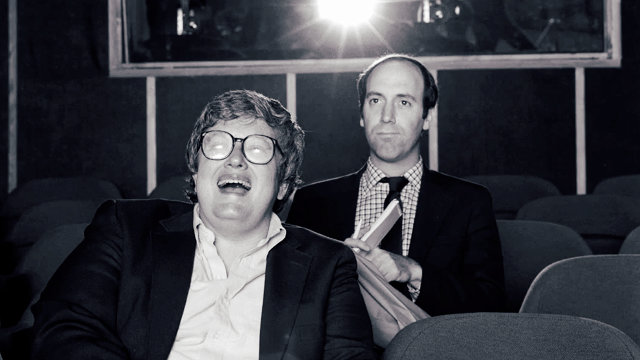
Roger Ebert in LIFE ITSELF

Life Itself is the affectionate but not worshipful documentary on movie critic Roger Ebert’s groundbreaking career, courageous battle against disease and uncommonly graceful death.  Ebert popularized movie criticism and evangelized for the lesser known foreign films, documentaries and indies that I love.  In a 2002 cancer treatment, Ebert lost his lower jaw and, with it, his ability to talk or eat.  Astonishingly, this didn’t slow him down; he replaced his television show with a pioneering blog and Twitter account – and remained just as productive and influential as ever.

Filmmaker Steve James set out to make a movie of Ebert’s memoir of the same name, but – just as the project started – Ebert’s cancer returned.  So the story includes Ebert’s final illness and death.  Ebert retained the joy in his life far longer than could most in his situation – it’s a marvel and a model for the rest of us.

James is one of the deserving filmmakers whose art was boosted by Ebert, who picked James’ obscure documentary Hoop Dreams as the best film of the year. Ebert similarly helped directors from Spike Lee in the 1980s to Raman Bahrani in the 2000s. In Life Itself, Errol Morris says that he would have had no career without Ebert and Siskel, and Martin Scorsese says that they saved his career.

But the primary theme of Life Itself is truth.  In his work, Ebert demanded truth from himself and from the cinema that he reviewed.  In this film, Ebert insisted on showing the person he was at the end – with his infirmities on full display.  There are moments of frustration where he is not so lovable and stories about his personal flaws.  We are all packages of virtues and weaknesses; seeing Roger’s weaknesses just adds credibility to his strengths and accomplishments.

Life Itself is a Must See for fans of Roger Ebert and for people musing on their own mortality.  People with less of an interest in Ebert may find the movie a little too long.  But the human story of a life – challenged and then ending – is very strong.

Citizen Koch: righteous but lame

xxx Koch (center)  in CITIZEN KOCH
David Koch (center) in CITIZEN KOCH

The advocacy documentary Citizen Koch exposes the terrible effects of the US Supreme Court’s Citizens United decision, which allows the right-wing billionaire Koch brothers to anonymously spend unlimited treasure to promote political candidates, measures and legislation that I (The Movie Gourmet) abhor.  Filmmakers Carl Deal and Tia Lessin, who have worked with Michael Moore, share Moore’s use of documentary to persuade by observation: here are the facts that will lead you to agree with us.

The very best aspect of Citizen Koch is the core story of Governor Scott Walker’s assault on public employees and their unions in Wisconsin.   Citizen Koch meticulously connects the dots between the Koch Brothers’ strategy of degrading the Democratic Party’s strength by weakening public employee unions and Walker’s machinations.  It’s a conspiracy in plain sight.  Citizen Koch is at its best when this thread is told from the perspective of a few Wisconsin public employees – who are themselves Republicans.

Unfortunately, what could have been a superb film on the political conflict in Wisconsin gets flabby and diluted with threads about Citizens United and Charles and David Koch.  The worst part is a fourth thread about Buddy Roemer, a sleazy opportunist who has changed political parties three times but is held up as some sort of beacon of good government; it’s outrageously naive and potentially discredits the rest of the film.

And here’s a little controversy that is illustrative of the Koch Brothers political power.  PBS was going to air Citizen Koch on its documentary series POV, but chickened out because David Koch sits on the board of PBS’ NYC affiliate WNET and is a huge contributor to PBS products like Nova.