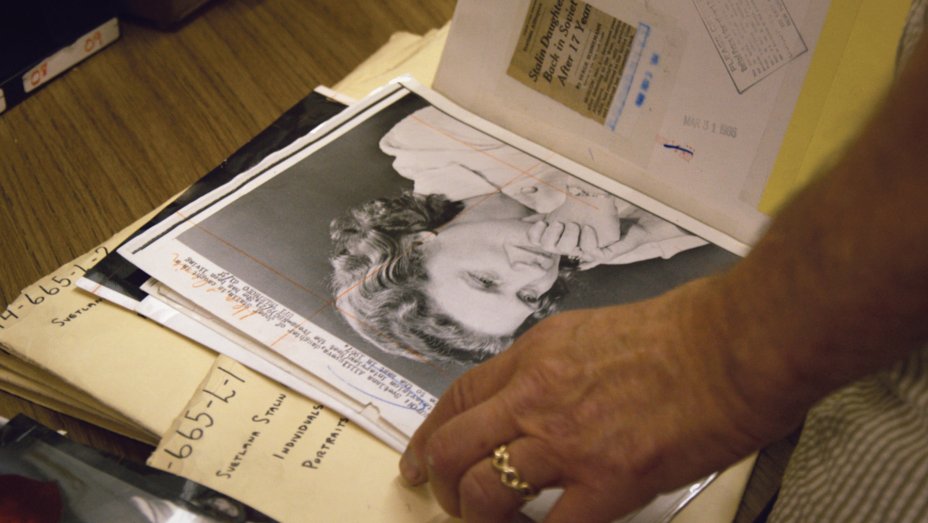
The one absolutely essential requisite for a fine documentary film is a fascinating subject, and Obit proves that an insightful filmmaker can find the fascination in the most unlikely place. It’s about the writing of New York Times obituaries. Director Vanessa Gould chose the subject when the NYT published the obit of an acquaintance whom she feared would become overlooked; the story in her own words is here (scroll down).
The writers in Obit explain something counter-intuitive – good obituaries are very little about a person’s death. Sure, they are published upon a death, but the key to an obit is to explain the person’s life. It helps that the NYT obits eschew the old-fashioned and hypocritical canonization of the dead, instead pseudo-resurrecting them by finding what was most interesting about their lives.
Obit is a superb study on writing. We sit on the writers’ shoulders and observe their process in real-time. Obit lives up to its tagline: Life on a Deadline.
Obit was released briefly earlier this year and is now available to stream on Amazon, iTunes, Vudu, YouTube and Google Play.
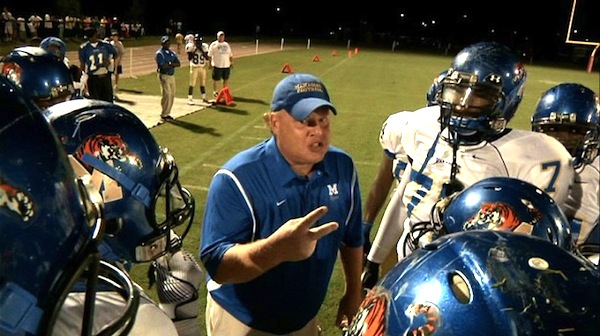
With football season (finally) approaching, it’s time for a Feel Good, Oscar-winning story set on the gridiron. The extraordinary documentary Undefeated begins with a high school football coach addressing his team:
Let’s see now. Starting right guard shot and no longer in school. Starting middle linebacker shot and no longer in school. Two players fighting right in front of the coach. Starting center arrested. Most coaches – that would be pretty much a career’s worth of crap to deal with. Well, I think that sums up the last two weeks for me.
Undefeated is the story of this coach, Bill Courtney, leading his team through a season. The kids live in crushing poverty and attend a haplessly under-resourced high school in North Memphis.
Undefeated may be about a football team, but isn’t that much about football. Instead of the Xs and Os, it shows the emotional energy required of Courtney to keep each kid coming to school, coming to practice and on task. He gets many of the kids to think about goals for the first time in their lives. He is tireless, dogged and often frustrated and emotionally spent.
The film wisely focuses on three players, and we get to know them. Like the rest of the team, all three are from extremely disadvantaged homes. One is an overachiever both on the field and in the classroom, but surprisingly emotionally vulnerable. Another has college-level football talent but very little academic preparation. The third, recently back from youth prison, is impulsive, immature, selfish and extremely volatile.
Undefeated won the 2012 Oscar for Best Documentary for filmmakers Daniel Lindsay and T.J. Martin – but it didn’t get a wide theatrical release. It’s available now to stream from Amazon, Vudu, YouTube and redbox.
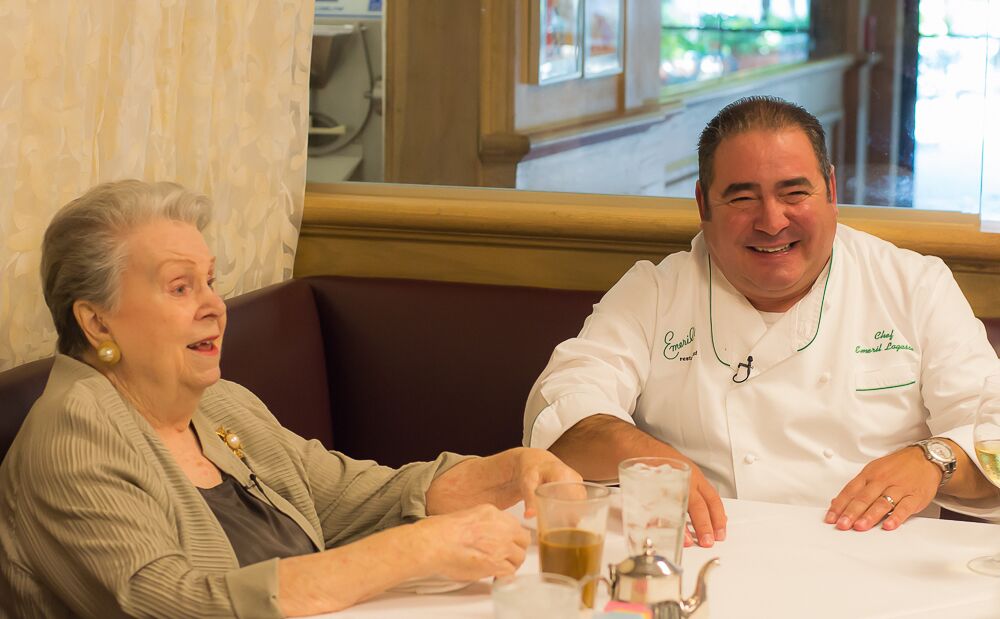
The documentary Ella Brennan: Commanding the Table tells the story of the New Orleans powerhouse restaurateur – and it’s one compelling story.
Ella Brennan is a woman who, before she was thirty, started running restaurants in the pre-feminist 1950s. Ella Brennan started as the little sister and became the matriarch of the famous New Orleans restaurant family. She launched Brennan’s and Commander’s Palace, the latter still the greatest of New Orleans Creole restaurants. On her journey, she had to overcome Mad Men-era sexism, a slew of business cycles and hurricanes – and even family betrayal.
We see a woman with old-fashioned obsession with detail and very high standards. We also see culinary and marketing creativity that can only be described as genius. Ella Brennan is responsible for Bananas Foster, the Jazz Brunch and a host of food trends. Along the way, she mentored the celebrity chefs Paul Prudhomme, Emeril Lagasse and Jamie Shannon. Here’s a New York Times profile of Ella Brennan that mentions this film.
I saw Ella Brennan last fall at the Mill Valley Film Festival. Ella Brennan: Commanding the Table can be streamed from Netflix Instant.
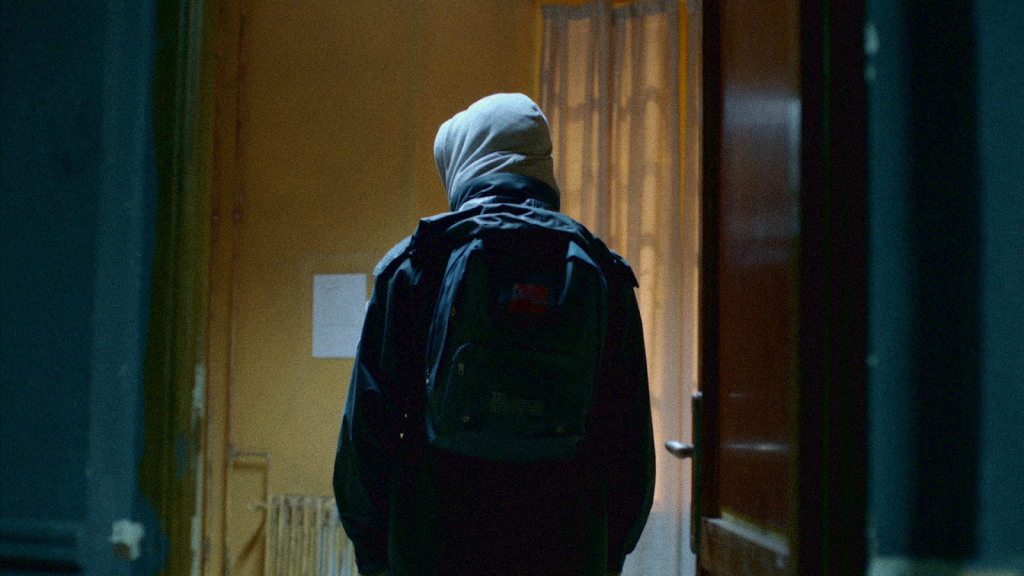
You just shouldn’t miss The Imposter. Life is at times stranger than fiction, and The Imposter is one of the most jaw-dropping documentaries I have seen. Nicholas Barclay, a 13-year-old Texas boy, vanished in 1994. Three years later, a young man surfaced in Spain, claiming to be an American boy kidnapped for sexual exploitation; he was identified by Spanish police as Nicholas Barclay. In fact, he was a serial impersonator named Frédéric Bourdin who had contrived the ruse to escape getting busted for his own petty misdeeds.
That’s not a spoiler, because The Imposter’s audience learns this framework right away. Here’s the first real shocker: the imposter is accepted by Nicholas’ family. This is more amazing because Frédéric is seven years older than Nicholas, is not a native English speaker and looks nothing like him. Of course, Frédéric is surprised that the family is embracing him as Nicholas – and then he begins to suspect why…
Filmmaker Bart Layton expertly spins the story, We meet the actual Frédéric Bourdin, members of the Barclay family, and the detectives who broke the case.
The Imposter is available on DVD from Netflix and streaming from Netflix, Amazon, iTunes and many other VOD providers.
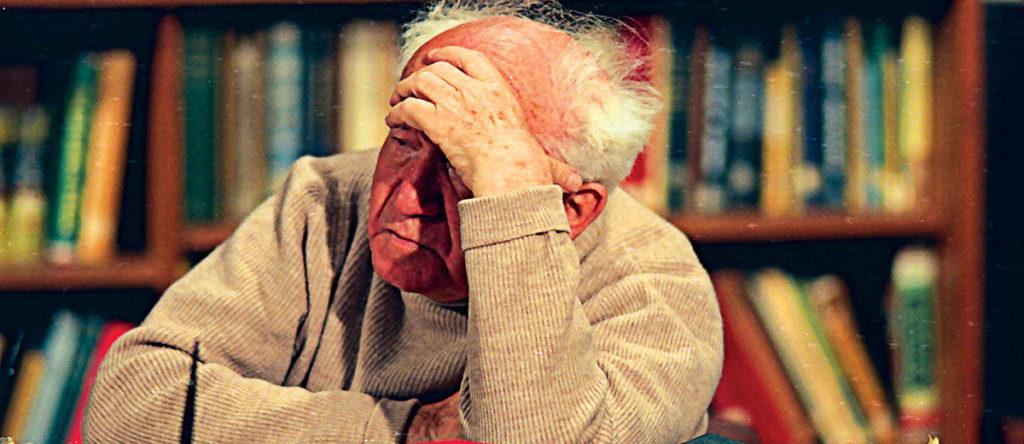
In Ben-Gurion, Epilogue, footage from a recently discovered video interview allows us to hear from Israel’s founding leader in his own words. In 1968, David Ben-Gurion was 82 years old and had been retired from public office for five years. Living on a remote kibbutz in the Negev Desert, he still had a lot to say.
Ben-Gurion was interviewed for seven hours over several days, but the video was lost until recently. First the images were found, which triggered a search for the sound. The result is Ben-Gurion, Epilogue, with the seven hours distilled down to one hour. Director Yariv Moser gets out of the way and lets Ben-Gurion speak for himself. The result is an important document of 20th Century history.
Not a guy who naturally “holds forth”, Ben-Gurion is prodded into revealing his inside view of his controversial acceptance of German reparations. We also get his take on the Zionist movement (not exactly what you’d expect) and, of course the Big Question: land for peace. There are also telling insights into his marriage.
The SFJFF runs from July 20 through August 6 at theaters in San Francisco, Palo Alto, Albany, San Rafael and Oakland. You can peruse the entire program and buy tickets and passes at San Francisco Jewish Film Festival.
Israel was created as a home for refugees. What happens when African refugees overwhelm a neglected Tel Aviv neighborhood is the subject of the topical documentary Levinsky Park.
Director Beth Toni Kruvant takes us to Tel Aviv’s hardscrabble Hatikva neighborhood, now burdened with an influx of African refugees from sub-Saharan Africa. The refugees aren’t Jewish, they don’t speak Hebrew and they sure aren’t white. Discouraged from working legally, the refugees encamp on the streets and do what they need to survive. The Israeli government senses a lose-lose media profile on the issue and tries to duck it entirely.
So how do the local Israelis react? There is a wide spectrum. Some welcome and try to help people fleeing for their lives. Others tag the newcomers with the loaded pejorative “infiltrators” and try to kick them out. We see some ugly, overt racism in Levinsky Park, but nothing unlike what we’ve seen in the US in the Trump Era.
It’s the same question that confronts all countries in the West about political asylum-seekers – who will actually invite them in? What’s different about Levinsky Park, of course, is that this is Israel – the one nation created by and for refugees.
A leader emerges from the refugees, the charismatic and articulate Mutasim Ali. He frames their plight as a movement, and they strive to regain some control over their own futures. Levinsky Park is a compelling real-life story and screens at the SFJFF:
Castro (San Francisco), Thursday, July 27 11:15 AM
Albany Twin (Albany), Friday, August 4 4:05 PM.
The SFJFF runs from July 20 through August 6 at theaters in San Francisco, Palo Alto, Albany, San Rafael and Oakland. You can peruse the entire program and buy tickets and passes at San Francisco Jewish Film Festival.
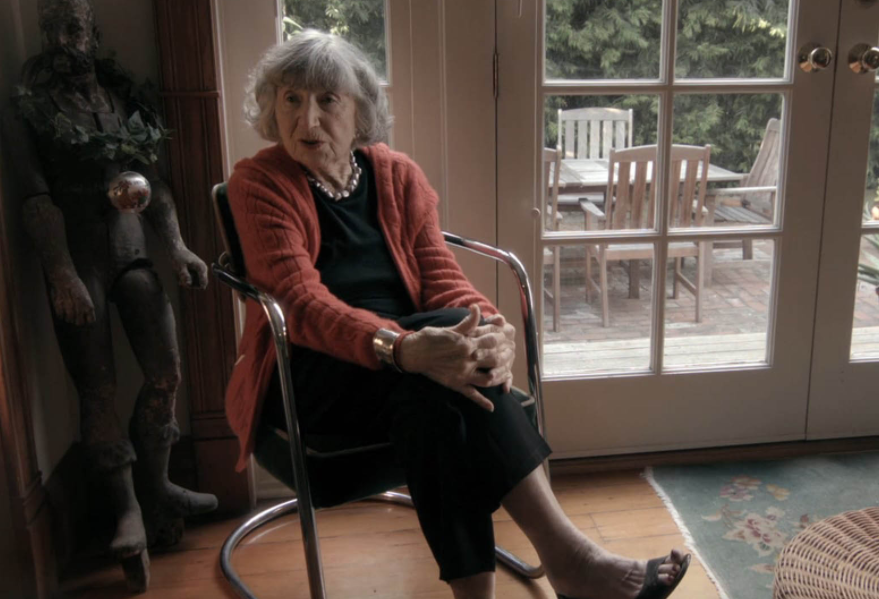
The delightful bio-doc A Classy Broad chronicles the amazingly resilient life of Marcia Nasatir, the first woman production vice-president at a major Hollywood studio. Nasatir is now 91 years old and still pitching movies.
Nasatir has lived a singular life. I won’t spoil her hometown, but it’s not a place that is known for producing Jewish Hollywood execs. As a young single mom in New York, she started at the bottom of the publishing trade, and climbed to a position selling the movie rights of literary properties. She moved to representing authors as an agent, which resulted in the motion pictures Butch Cassidy and the Sundance Kid and Chinatown.
Nasatir burst through the glass ceiling as a studio exec at UA, where she greenlit One Flew Over the Cuckoo’s Nest, Rocky, Carrie and Apocalypse Now! Dumped by the other suits, she became an independent producer and brought The Big Chill to the screen after it had been rejected by seventeen other companies.
Nasatir’s legacy is a huge chunk of Hollywood’s auteur era of the late 1960s through the early 1980s. The “classy” in the movie title references an episode where she got fired when the moguls thought her movie taste was too elevated to make money for the studio.
Nasatir demonstrated enormous confidence for a woman of her era, and is the very paragon of resilience. She met every challenge with her two-word slogan (and epitaph-to-be): “Done. Next!”
A Classy Broad screens three times at the SFJFF:
Cinearts (Palo Alto), Saturday, July 22 3:50 PM
Castro (San Francisco), Sunday, July 23 1:35 PM
Albany Twin (Albany), Sunday, August 6 12:15 PM
The SFJFF runs from July 20 through August 6 at theaters in San Francisco, Palo Alto, Albany, San Rafael and Oakland. You can peruse the entire program and buy tickets and passes at San Francisco Jewish Film Festival.
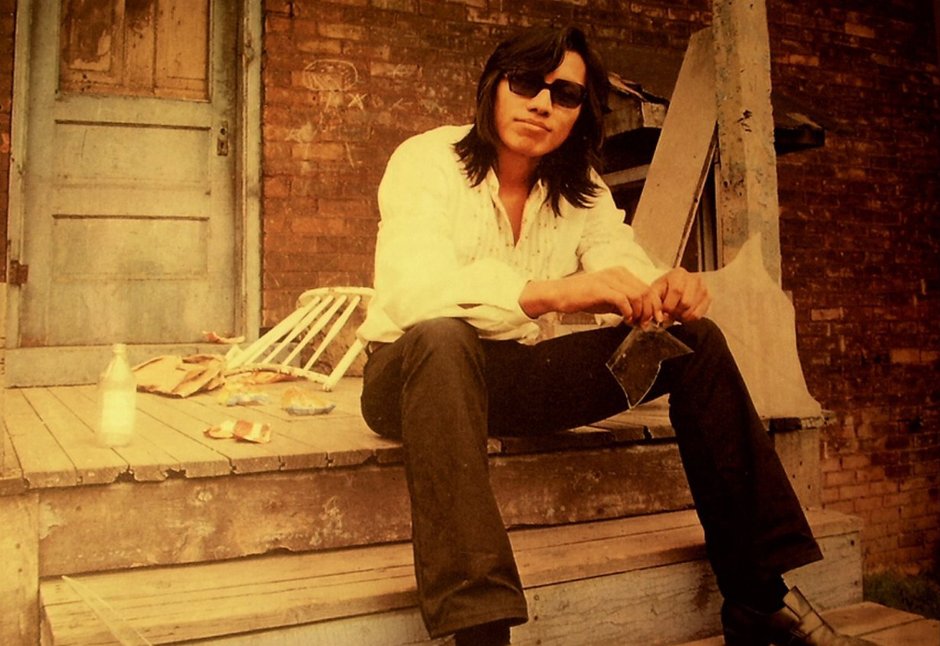
What a story! A Detroit construction laborer named Sixto Rodriguez was also a singer-songwriter who cut two albums in 1970 and 1971. The albums didn’t sell in the US, and he faded back into obscurity. Yet in South Africa – completely isolated by the sanctions of the apartheid era – the artist known as Rodriguez became huge, and his songs fueled a protest movement. Rodriguez never knew of his success, and South Africans believed that he had suffered a dramatic rock star death. The powerful documentary Searching for Sugar Man is the story of some stubborn South African music geeks trying to find out what really happened to Rodriguez, and the startling truths that they uncovered. (The title comes from Rodriguez’ most iconic anthem, the song Sugar Man.)
I have never seen a biographical documentary of a contemporary figure with less comment from the subject himself. There is a brief filmed interview with the eccentric Rodriguez, who reveals very little of his perspective on his own story. His songs can only be written by a reflective person, but Rodriguez is the farthest thing from self-absorbed. Still, the interviews with his family, friends and fans and his songs help us feel like we know him.
It’s a flabbergasting and unpredictable story and well told. Sadly, the young director Malik Bendjelloul suddenly died just fifteen months after Searching for Sugan Man won the Best Documentary Oscar. You can stream it from Amazon, iTunes, Vudu, YouTube and Google Play.
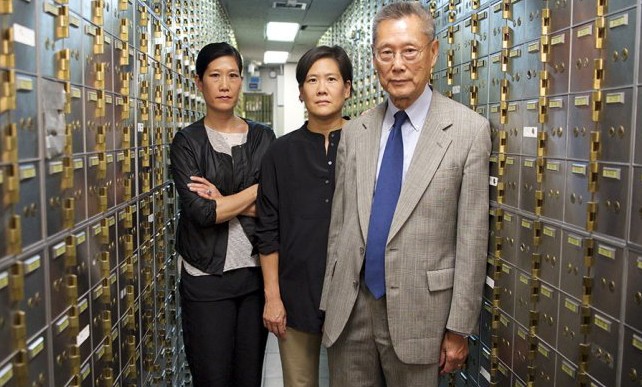
Nobody likes a bully, and the documentary Abacus: Small Enough to Jail tells the riveting story of an American family business bullied into a nightmarish fight for survival. We meet the members of family, the Sungs of New York, and relive their existential struggle. It’s a compelling story, well-told.
Thomas Sung founded the Abacus Federal Savings Bank, a small bank in New York’s Chinatown, and passed on the management of the bank to his daughters. The bank’s customers are almost all Chinese from the neighborhood. The bank management discover a corrupt loan officer, fire him and turn him in to regulators. But prosecutors go on to blame the whole loan department and then the bank leadership – and file criminal charges against the bank. Suddenly, the Sungs are in a fight for their professional lives.
The Manhattan prosecutor was looking for a scapegoat for the financial crisis of 2008. Let’s remember that the global crisis was caused by the biggest players in the American financial system. The very biggest financial institutions were guilty of overt corruption – the banks were packaging and selling worthless financial products and the credit rating agencies were falsely labeling them as valuable. Banks were making crazy, unsustainable and predatory home loans. Insured accounts turned out to be not really insured.
But those crooked big banks were “too big to fail” They were bailed out by the taxpayers and escaped accountability for their crimes. Here’s what is mind-boggling: to this day, the tiny Abacus Federal Savings Bank remains the ONLY bank that has faced criminal charges from the financial crisis. Hence the movie’s subtitle “Small Enough to Jail“.
Abacus: Small Enough to Jail comes from the documentarian Steve James, who directed Hoop Dreams, the masterpiece that both Roger Ebert and Gene Siskel picked as the best movie of 1994, as well as the more recent Ebert celebration Life Itself. Abacus is brilliantly sourced – James was able to get prosecutors, defense attorneys and even jurors on camera, along with the entire Sung family.
Getting to know the individuals in the Sung family is one of the pleasures of viewing Abacus. Let’s just say that it’s a mistake to take a family business to court when the whole family are lawyers.
Right at the beginning of Abacus, James makes an inspired choice – he matches the family patriarch and bank founder Thomas Sung with George Bailey from It’s a Wonderful Life. And the engrossing saga of the Sungs begins.
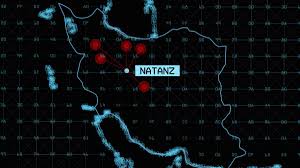
My Stream of the Week is a movie that has actually become MORE topical since its release last year. The important and absorbing documentary Zero Days traces the story of an incredibly successful cyber attack by two nation states upon another – and its implications. In Iran’s nuclear weapons development program, the centrifuges used to enrich uranium began destroying themselves in 2010. It turned out that these machines were instructed to self-destruct by a computer worm devised by American and Israeli intelligence.
No doubt – this was an amazing technological triumph. Zero Days takes us through a whodunit that is thrilling even for a non-geek audience. We learn how a network that is completely disconnected from the Internet can still be infected. And how cybersecurity experts track down viruses. It’s all accessible and fascinating.
But, strategically, was this really a cyberwarfare victory? We learn just what parts of our lives can be attacked and frozen by computer attacks (Spoiler: pretty much everything). And we learn that this attack has greenlighted cyberwarfare by other nations – including hostile and potentially hostile ones. Zero Days makes a persuasive case that we need to have a public debate – as we have had on nuclear, biological and chemical weapons – on the use of this new kind of weaponry.
And here’s why it is more topical today. Since Zero Days’ release last year, we have endured the successful Russian cyberattack on the US election process. And we face an unpredictable foe in North Korea, and our only practical protection against North Korea’s nuclear threat may be our own preemptive cyberattacks.
Director Alex Gibney is one our very, very best documentarians. He won an Oscar for Taxi to the Dark Side, and he made the superb Casino Jack: The United States of Money, Enron: The Smartest Guys in the Room, Client 9: The Rise and Fall of Elliot Spitzer,Mea Maxima Culpa: Silence in the House of God,Going Clear: The Prison of Beliefand Steve Jobs: Man in the Machine.
Gibney’s specialty is getting sources on-camera that have the most intimate knowledge of his topic. In Zero Days, he pulls out a crew of cybersecurity experts, the top journalist covering cyberwarfare, leaders of both Israeli and American intelligence and even someone who can explain the Iranian perspective. Most impressively, Gibney has found insiders from the NSA who actually worked on this cyber attack (and prepared others).
Zero Days is available to stream on Amazon, iTunes, Vudu, YouTube and Google Play.