Come along with Werner Herzog as he explores the 33,000-year-old Chauvet cave paintings in southern France. It’s a great topic for a film – a specially authorized descent into the claustrophobic confines of a prehistoric cave, littered with human footprints and the skulls of extinct cave bears. Surprisingly, some of the paintings look like they were painted in the Renaissance or later.
And, of course, Herzog (Aguirre: The Wrath of God, Grizzly Man) is a great story teller. Here, he made the wise choice to film in 3D. The paintings are not on flat canvasses, but on uneven rock faces. The 3D allows the audience to appreciate how the artists used the curves in the rock to give the illusion of motion in their subjects.
Don’t miss Cave of Forgotten Dreams while it can be seen in 3D.
On May 1, Turner Classic Movies is showing Gates of Heaven (1978), the first masterpiece by documentarian Erroll Morris. It’s overtly about a Bay Area pet cemetery, but as Morris interviews the cemetery owners and the pet owners (as well as the guy at the rendering plant), the subjects expose their passions, aspirations and vulnerabilities. And it’s hilarious.
This is an excellent introduction to America’s best documentarian, whose other films include The Thin Blue Line (which freed a wrongly convicted man from Texas’ Death Row) and Standard Operating Procedure (which exposed what was behind the abuses at Abu Ghraib).
Morris’ newest film, Tabloid, will be released on July 15.
This documentary tells the remarkable Cold War spy story of Army Colonel Ryszard Kuklinski. In his service on the Polish General Staff, Kuklinski saw that the Warsaw Pact’s war plans for an invasion of Western Europe would inevitably lead to the nuclear obliteration of Poland. To avoid that horror, he passed on the Warsaw Pact war plans to the West so NATO could strengthen its stance and thereby deter the invasion by making it a less attractive option for the Soviets.
Kuklinshi passed over 40,000 pages of secret Warsaw Pact documents to the CIA – the largest act of espionage in world history. After the screening, Director Dariusz Jabloński said that Kuklinski considered himself a Polish soldier doing his duty, not a spy for the West.
Kuklinski died just before he could be interviewed for this documentary. However, Jabloński did secure interviews with the senior commanders of the Soviet and Polish militaries, former Polish heads of state, CIA officers and Kuklinski’s widow, as well as screen shots from Warsaw Pact war simulations. At 110 minutes, it’s a little long, but the story is compelling.
Charles Ferguson’s brilliant documentary Inside Job may be the most important movie of the year. It is a harsh but fair explanation of the misdeeds that led to the recent near-collapse of the global financial system. Unexpectedly, the film begins in Iceland, setting the stage for the collapse and kicking off the easily understandable explanations of the various tricks and bamboozles that have hidden behind their own complexity.
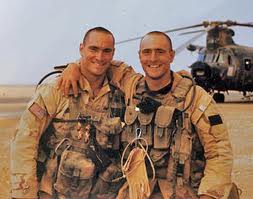
The Tillman Story weaves three stories together: the making of Pat Tillman, how he died in Afghanistan and his family’s struggle to pull the sheets back on the US military’s cover-up. At its core, it is the story of people who insist on truth dealing with a system that operates on perception.
I thought I knew the story. Tillman left the fame and wealth of an NFL career to enlist in the Army post-911. He was killed in a firefight in Afghanistan. The Army reported that he was killed while heroically charging the enemy to save his comrades. It was later revealed that he was killed by fire from his comrades. Still later, it became clear that the heroic death story was immediately concocted by the military for spin control or, worse, propaganda.
I didn’t know that Tillman predicted that the Army would propagandize his death and smuggled out to his wife the documentation of his wish for a civilian funeral. I didn’t know that Tillman crouched on a hill watching the bombing of Baghdad, and said, “This war is so fucking illegal.” I didn’t know that Tillman was with the team that waited hours to “rescue” captured soldier Jessica Lynch (abandoned by her captors) until a film crew arrived.
The US military made a huge miscalculation: they assumed that the family that produced someone with Pat Tillman’s values would be satisfied with a phony narrative of cartoonish heroism.
The more I think about The Tillman Story, the more I admire it. And I am increasingly grateful that Michael Moore didn’t make this movie and degrade it into a screed. Instead, Director Amir Bar-Lev avoids the simplistic and satisfying formulas and respects his subject matter and the audience by letting the story speak for itself.
As usual several documentaries made my list of Best Movies of 2010: Inside Job, The Tillman Story, Joan Rivers: A Piece of Work, and Sweetgrass.
And there were still more excellent documentaries. Ken Burns augmented his brilliant Baseball with The Tenth Inning. PBS’s Earth Days told the story of the modern environmental movement through the voices of key players. The Most Dangerous Man in America brought new texture to the story of Daniel Ellsberg and the Pentagon Papers. The fine PBS series Independent Lens brought us Lost Souls (Animas Perdidas), in which filmmaker Monika Navarro trailed an uncle deported to Mexico and discovered secrets in her own family.
I am not a Joan Rivers fan, but Joan Rivers: A Piece of Work won me over. Rivers’ compulsion to stay busy at age 77 by accepting every conceivable gig is fascinating, and her raw vulnerability makes you care about her. It also helps that Rivers is very, very funny. It is one of four documentaries on my list of Best Movies of 2010 – So Far.
For my recent DVD choices (including trailers), see DVDs of the Week.
This documentary chronicles the physically grueling and emotionally draining three-day competition for the MOF, the highest designation for French pastry chefs. Amid impossibly towering sugar sculptures and delectable cream puffs and layer cakes, we see the essential cores of competition – aspiration, ambition, perseverance, commitment, desperation, heartbreak and victory. Kings of Pastry is directed by the brilliant documentarians Chris Hegedus and DA Pennebaker (The War Room).
Charles Ferguson’s brilliant documentary Inside Job may be the most important movie of the year. It is a harsh but fair explanation of the misdeeds that led to the recent near-collapse of the global financial system. Unexpectedly, the film begins in Iceland, setting the stage for the collapse and kicking off the easily understandable explanations of the various tricks and bamboozles that have hidden behind their own complexity.
Like this year’s other best documentaries, The Tillman Story. Joan Rivers: A Piece of Work and Sweetwater, Inside Job gets out of its own way and just lets the story speak for itself. There is no need for a Michael Moore to portray the financial sector as criminally greedy and reckless – the facts speak for themselves and the audience can be trusted to “get it”. At the showing I attended, there was general applause at the end.
Besides the obvious villains at the investment banks (Goldman Sachs, etc.) , the insurers of credit default swaps (like AIG) and the rating agencies (e.g., Moody’s), Ferguson also takes aim at these thieves’ political enablers and economist apologists. There are some 60 Minutes-style ambushes, but they are far less interesting for the squirming of the subjects than for exposing the completely clueless entitlement of the financial sector and its governmental and academic lackeys.
Inside Job exposes our Wall Street government, and is unflinchingly bipartisan in meting out the blame.
The more I think about The Tillman Story, the more I admire it. And I am increasingly grateful that Michael Moore didn’t make this movie and degrade it into a screed. Instead, Director Amir Bar-Lev avoids the simplistic and satisfying formulas and respects his subject matter and the audience by letting the story speak for itself.
I thought I knew the story. Tillman left the fame and wealth of an NFL career to enlist in the Army post-911. He was killed in a firefight in Afghanistan. The Army reported that he was killed while heroically charging the enemy to save his comrades. It was later revealed that he was killed by fire from his comrades. Still later, it became clear that the heroic death story was immediately concocted by the military for spin control or, worse, propaganda.
I didn’t know that Tillman predicted that the Army would propagandize his death and smuggled out to his wife the documentation of his wish for a civilian funeral.
I didn’t know that Tillman crouched on a hill watching the bombing of Baghdad, and said, “This war is so fucking illegal.”
I didn’t know that Tillman was with the team that waited hours to “rescue” captured soldier Jessica Lynch (abandoned by her captors) until a film crew arrived.
The US military made a huge miscalculation: they assumed that the family that produced someone with Pat Tillman’s values would be satisfied with a phony narrative of cartoonish heroism.
The Tillman Story weaves three stories together: the making of Pat Tillman, how he died in Afghanistan and his family’s struggle to pull the sheets back on the US military’s cover-up. At its core, it is the story of people who insist on truth dealing with a system that operates on perception.
And here is a sharp insight from Mick LaSalle:
“By the way, “The Tillman Story” has an R rating because of language. Think about that one, too: Lies are rated G and can be heard around the clock on television, but try saying the truth with the proper force and you end up with a restricted audience.”