JAMES STEWART, ROBERT MITCHUM: THE TWO FACES OF AMERICA: is “hero/anti-hero” too simplistic?

‘

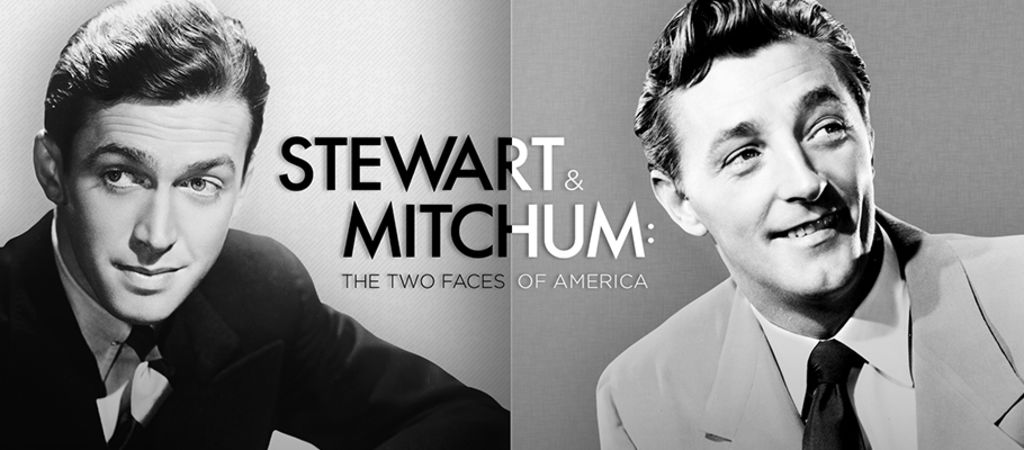
The 2017 documentary James Stewart, Robert Mitchum: The Two Faces of America traces the mostly parallel and mostly contrasting Hollywood careers of icons James Stewart and Robert Mitchum.

Hero and anti-hero. James Stewart became perhaps American cinema’s greatest screen actor by portraying earnest, well-meaning,, play-by-the-rules types like George Bailey and Jefferson Smith. Mitchum, so identified with film noir, is known as an insolent rebel with no pretense of following anybody else’s rules. (Of course, it’s more complicated than that – among Stewart’s greatest performances are his darkest, in Hitchcock classics like Vertigo and Rear Window and in Anthony Mann’s psychological Westerns like Winchester ’73.)

James Stewart, Robert Mitchum: The Two Faces of America is not a deep dive into this optimism/cynicism theme of American postwar psychology. Instead, it’s more of a marriage of two showbiz biodocs.

That being said, fans of the actors (and I am a big fan of both) get some insights. Both actors reflect on their own work (see trailers below). The most evocative segment is about Stewart’s grief at the loss of his son, a marine killed in the Vietnam War that Jimmy himself supported politically.

Stewart and Mitchum did not socialize, despite their daughters knowing each other in high school. They only worked together once, late in their careers, in the 1978 remake of The Big Sleep. James Stewart, Robert Mitchum: The Two Faces of America highlights a remarkable coincidence in their deaths.

I watched James Stewart, Robert Mitchum: The Two Faces of America on Turner Classic Movies, where it will be replayed on June 25. It is also streaming on the subscription services WATCH TCM and DIrecTV.

LOVING HIGHSMITH: intimate and revelatory

Photo caption: Patricia Highsmith in LOVING HIGHSMITH. Courtesy of Frameline.

In the revelatory biodoc Loving Highsmith, documentarian Eva Vitija reveals intimate perspectives on the iconic author. Patricia Highsmith’s novels were turned into twisted movie thrillers that include Hitchcock’s Strangers on a Train and all the Tom Ripley movies, as well as the queer memoir Carol.

Vitija has sourced Loving Highsmith with the firsthand memories of Highsmith’s last live-in lover Marijean Meaker, her Berlin lover Tabea Blumenshein, her Paris friend Monique Buffet, and members of Highsmith’s rodeo-focused Texas family. The insights include:

  • Highsmith’s Texas roots.
  • Her heartbreakingly one-way relations with her mother.
  • The origin of the Tom Ripley character.
  • Her intentionality in crafting the ending of Carol.
  • Her obsession with her married secret London lover.

Even those who are familiar with Highsmith will be impressed with this 360-degree portrait. Loving Highsmith plays this year’s Frameline on June 21 at the Castro.

FANNY: THE RIGHT TO ROCK: triple-threat trailblazers

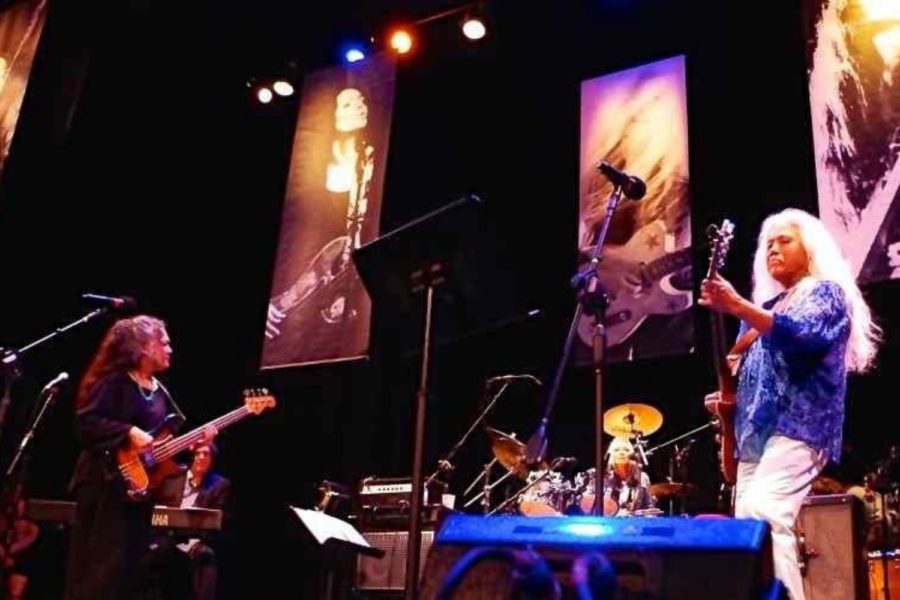
Photo caption: Fanny in FANNY: THE RIGHT TO ROCK. Courtesy of Film Movement.

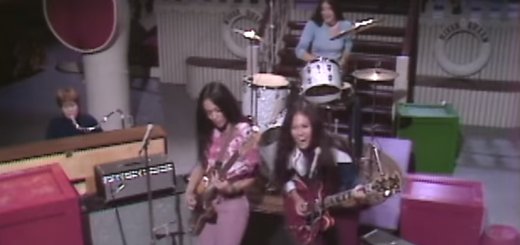
Fanny: The Right to Rock documents the first all-female rock band to get signed by a major record label and churn out five albums. Fifty years ago, the band Fanny was breaking ground for women musicians – and for lesbians and Filipinas. Women rockers were a novelty in the early 1970; imagine layering on LGBTQ identity and Asian-American heritage.

Although you probably haven’t heard of them, this was no garage band. They had a major label record deal, European tours, and hung out with big name peers. Unlike many male bands of the period, Fanny didn’t crash and burn due to drug use or clashing egos. They just never caught on with record-buyers.

It’s pretty clear that music industry and media sexism, combined with maybe being a little ahead of their time to deny Fanny stardom. Too bad – I would have loved to listen to them in their heyday.

Their music fits right into the stuff I was listening to in the 1970s. I’m guessing that the reason why I hadn’t heard of them is that they didn’t get played on FM radio in the Bay Area.

Fanny in FANNY: THE RIGHT TO ROCK. Courtesy of Film Movement.

These women can still really rock in their 70s, and they’re a hoot.

Fanny: The Right to Rock is filled with colorful anecdotes from back in the day. Todd Rundgren, an important early associate of Fanny, and Bonnie Raitt appear as eyewitnesses. Cherie Curry of the Runaways, Cathy Valentine of the Go-Go’s and Kate Pierson of the B-52s testify to Fanny’s trailblazing status.

I screened Fanny: The Right to Rock last year at the Nashville Film Festival. It releases into theaters, albeit very hard to find, this weekend. I’ll let you know when it becomes available on streaming services.

LIKE A ROLLING STONE: THE LIFE AND TIMES OF BEN FONG-TORRES: tell me more

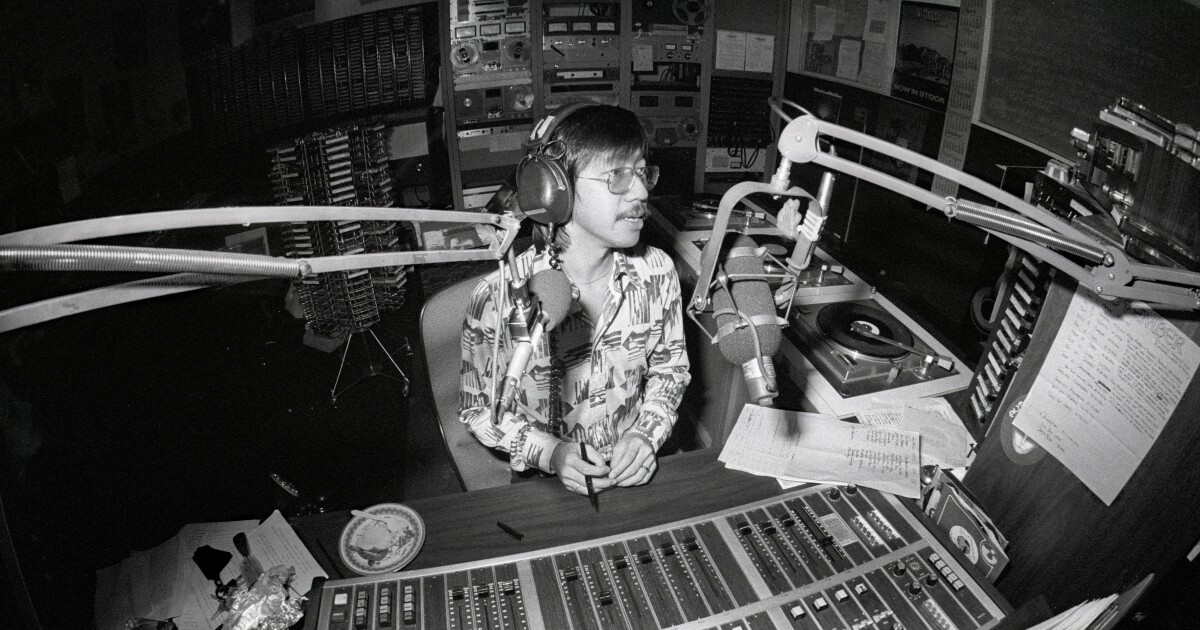
Photo caption: Ben Fong-Torres in LIKE A ROLLING STONE: THE LIFE AND tIMES OF BEN FONG-TORRE. Courtesy of Netflix.

The documentary Like a Rolling Stone: The Life and Times of Ben Fong-Torres lives up to its title, which is a very good thing. Fong-Torres, the longtime music editor of Rolling Stone magazine, is an accomplished man in the most interesting times. Like a Rolling Stone is a satisfying combo of Fong-Torres helping to invent rock music journalism, the history of Rolling Stone magazine, and Fong-Torres’ personal journey growing up the son of Chinese immigrants in baby boom America.

For rock enthusiasts, Like a Rolling Stone: The Life and Times of Ben Fong-Torres is filled with nuggets like:

  • Ray Charles, having been made comfortable by Fong-Torres, unleashing his resentment of racism and the mainstream co-opting of black music.
  • Fong-Torres himself interviewed about his Marvin Gaye interview, the first popular introduction of Gaye and how he thought of his artistry.
  • The audiotape of a candid moment ith Jim Morrison, apparently in a liquor store.

Fong-Torres reminds us that the coolest people are those who are not trying to be hip. A humble man among raging narcissists and ever the consummate professional, Fong-Torres behaved professionally even amid the hardest core rock star partying.

As his rock critic protege and now movie director Cameron Crowe describes him, Fong-Tores projects “a lightness and a gravitas at the same time“.  The best interviewers are, as is Fong-Torres, good listeners; Fong-Torres’s signature technique has been to follow-up the answers to his question with a simple “tell me more“.

The documentary also gives Fong-Torres the chance to reveal the origin of his puzzling name: His Chinese father came to the US under a false Filipino passport as “Ricardo Torres” to evade the Chinese Exclusion Act.

Like a Rolling Stone: The Life and Times of Ben Fong-Torres is streaming on Netflix.

JANE BY CHARLOTTE: as mildly interesting as the subject

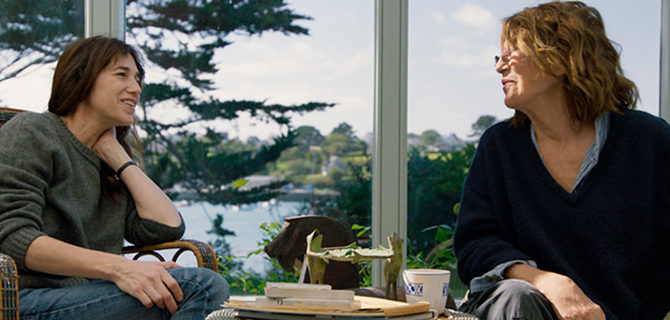
Photo caption: Charlotte Gainsbourg and Jane Birkin in JANE BY CHARLOTTE. Courtesy of Utopia.

In Jane by Charlotte, the actress Charlotte Gainsbourg examines the life of her mother Jane Birkin in a series of cinéma vérité candid moments and on-camera interviews. The English-born Birkin was a beauty in Swinging London known for her 1968-1980 Paris-based relationship with singer-songwriter lover Serge Gainsbourg, who is is a cult figure in France. Birkin and Gainsbourg collaborated in music and film, and were a celebrity couple.

Charlotte Gainsbourg and Birkin are an amiable mom-daughter, very comfortable with each other. Because of that, and perhaps because Birkin is so used to being in front of cameras (acting in movies, modeling and being hounded by paparazzi), Birkin opens up about her relationships, her parenting and what it’s like to physically age.

The thing is, I’m not really that interested in Jane Birkin (or Serge Gainsbourg, for that matter) – and I’m a Baby Boomer, formed in the era when Birkin was a minor pop icon. (Can someone be a minor icon?) Jane and Charlotte are two nice people, pleasant enough to spend 88 minutes with, but it’s not a compelling, unforgettable experience.

The one captivating segment of Jane by Charlotte is when Charlotte brings back Jane back to Serge Gainsbourg’s apartment, which Jane had not visited in four decades. Jane and Serge’s love nest for 12 years and Charlotte’s childhood home, it is fraught with memories and loaded with emotion. The museum-like apartment itself, reflecting Serge Gainsbourg’s singular taste and eclectic interests, is pretty cool.

BTW I’m a big fan of Charlotte Gainsbourg’s. She’s an often fearless and always interesting actor (including in Sundown earlier this year). (Just wish she hadn’t appeared in so many movies by that cynical provocateur Lars Von Trier; I originally posted that Von Trier was a dickwad, but The Wife made me change it.) This is Charlotte’s directing debut.

Jane by Charlotte is streaming on AppleTV.

MAU: fact-based optimism and thinking big

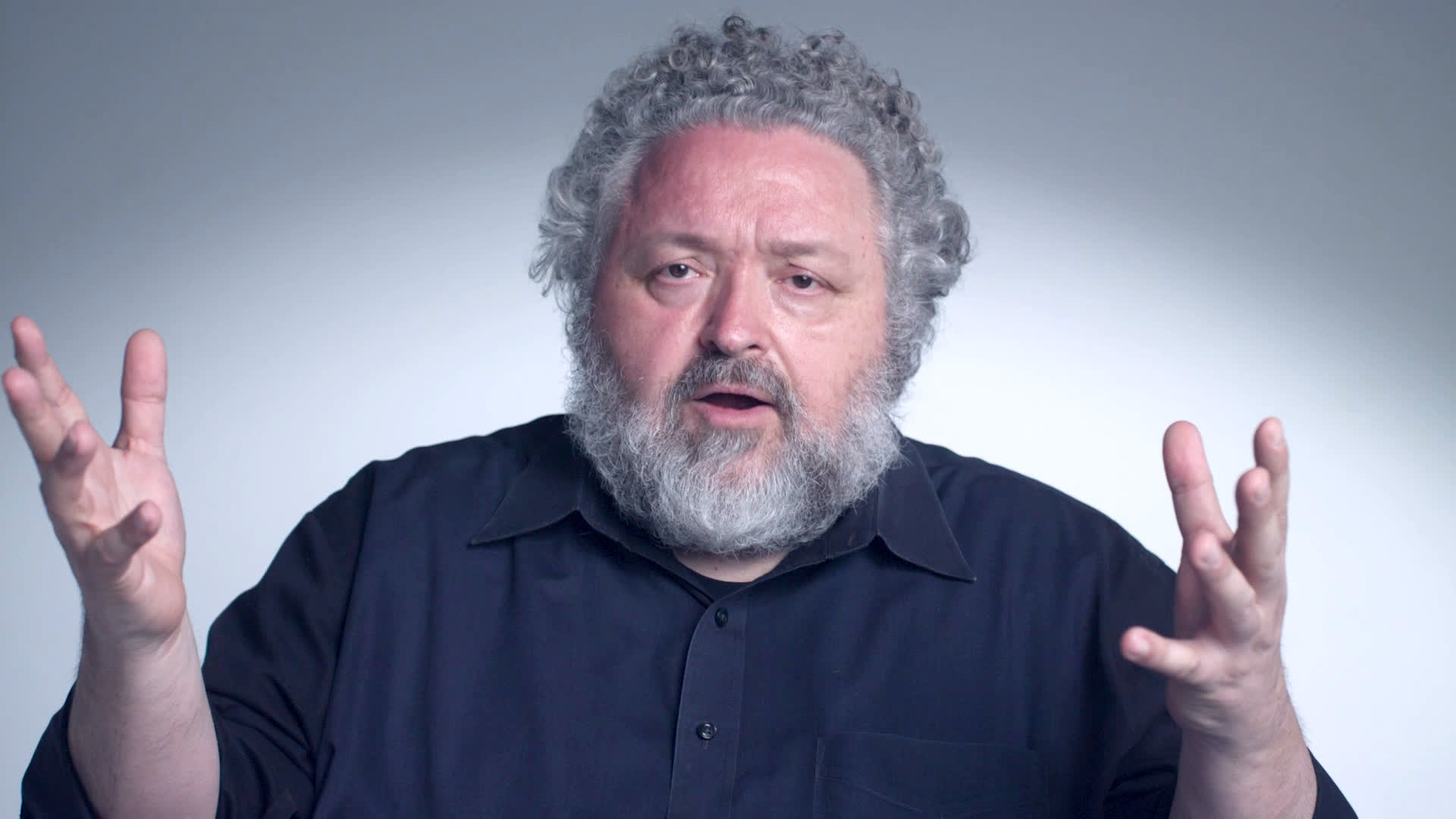
Photo caption: Bruce Mau in MAU. Courtesy of BABKA.

The term visionary is overused, but it surely fits Canadian designer Bruce Mau, the subject of the documentary Mau.

I generally think of design as the means to make objects more pleasing and useful and attractive to consumers. But Mau observes that almost everything we experience is not natural – and therefore DESIGNED. And if designed, it can be RE-DESIGNED to be more beautiful, more sustainable, more intelligent and more humane.

Bruce Mau thinks big. He has been retained to redesign Coca-Cola. And to redesign the millennium-old pilgrimage experience of Mecca. And to redesign the nation of Guatemala.

Mau’s upbringing and his work is somewhat interesting, as is his aspirational exhibition project Massive Action. But the most compelling aspect of Mau is the exposure to how Bruce Mau THINKS. Mau essentially becomes the world’s best TED Talk.

Mau will be released in theaters this weekend.

OSCAR MICHEAUX: THE SUPERHERO OF BLACK FILMMAKING: a pioneer worth knowing about

OSCAR MICHEAUX: THE SUPERHERO OF BLACK FILMMAKING. Courtesy of TCM.

If you don’t know who Oscar Micheaux is, you should – so watch the documentary Oscar Micheaux: The Superhero of Black Filmmaking. As writer/director/producer, the African-American Michaeux created so-called “race films” – movies made for black audiences from a black perspective during the most shameful years of American racial segregation. Michaeux himself directed 42 feature films DURING Jim Crow.

There’s a lot in Oscar Micheaux: The Superhero of Black Filmmaking:

  • Micheaux’s pivotal sojourn in a cabin in, of all places, the Dakotas.
  • His very personal and hands-on distribution methods.
  • His discovery of Paul Robeson’s on-screen charisma, a full eight years before Robeson’s first Hollywood film (The Emperor Jones).
  • Micheaux’s comfort in portraying that most incendiary topic – interracial relationships. 
  • How he slyly bent rules to avoid censorship.

I have seen some Oscar Micheaux films, and their stories, freed of the White Hollywood lens, are eyeopening. They allowed black audiences to see big screen characters that acted like real African-American – not the degrading stereotypes in Hollywood movies.

That being said, Michaeux did not make “Noble Negro” movies. His work is authentic, and criticized, for example, black preacher-hucksters who exploit religious devotion in the African-American community for their own venal and carnal appetites.

Oscar Micheaux: The Superhero of Black Filmmaking features a solid panel of expert talking heads to explain Micheaux’s place in cinema and in African-American history. The most compelling are screenwriter Kevin Wilmott and University of Chicago cinema professor/TCM host Jaqueline Stewart. 

Animation is used sparingly and effectively, including one inspired segment to Gil Scott-Heron’s The Revolution Will Not Be Televised.

I watched Oscar Micheaux: The Superhero of Black Filmmaking on Turner Classic Movies, and it is streaming on HBO Max.

THE AUTOMAT: nickels in, memories out

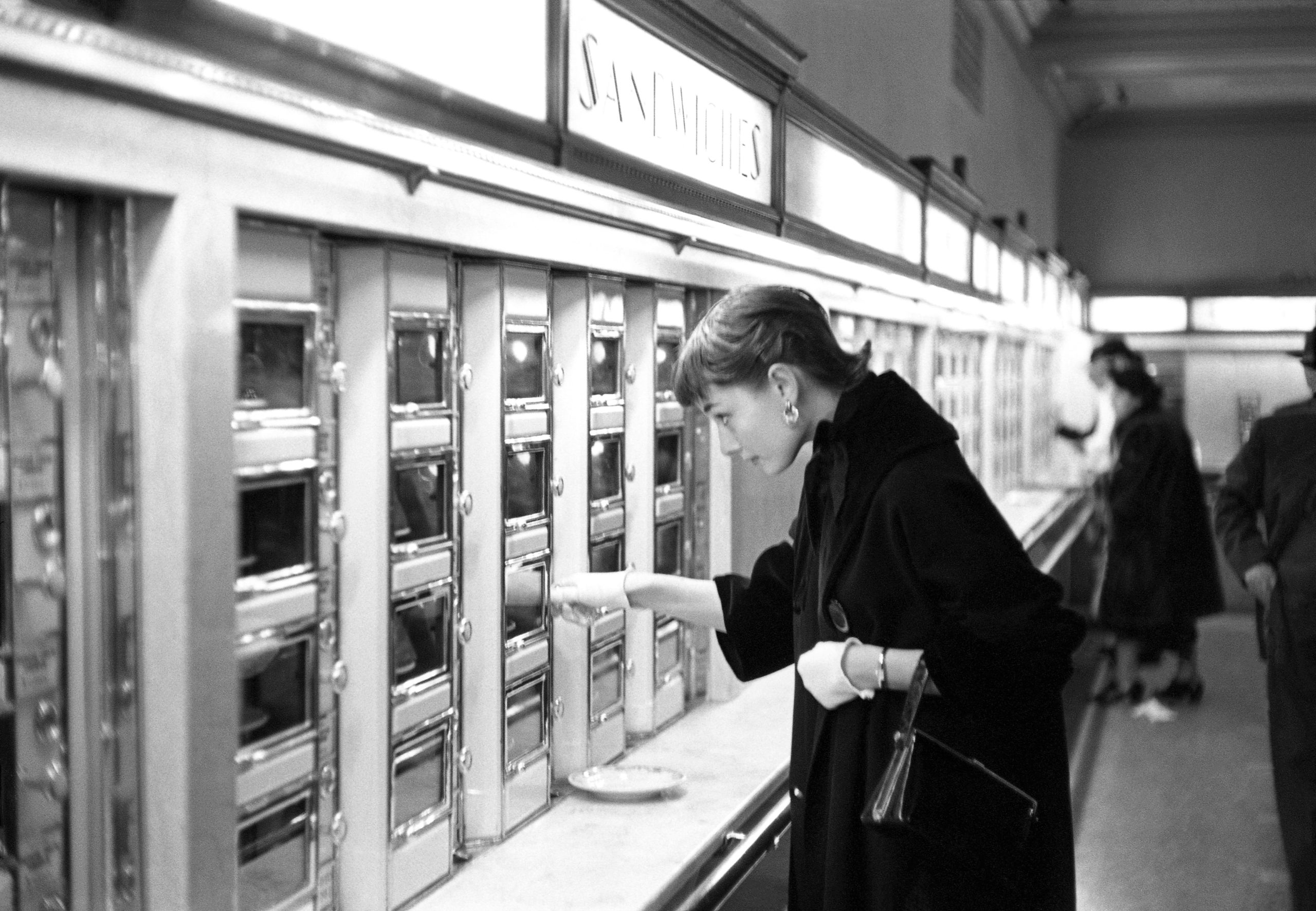
Photo caption: THE AUTOMAT: Actress Audrey Hepburn photographed by Howard Fried in New York City as part of a multi-day photo shoot for Esquire magazine, 1951. Courtesy of A Slice of Pie Productions.

The charming documentary The Automat traces the fascinating seven-decade run of the marble-floored food palaces where one could put nickels in a slot and be rewarded with a meal. The story of the automat is essentially a business history of Holt & Hardart, which pioneered the automat concept in Philadelphia and New York, and dominated the market for years, at one point the nation’s largest restaurant chain. Mel Brooks, Ruth Bader Ginsburg and Colin Powell speak to how the automat touched their lives, and Starbucks founder Howard Schulz credits the automat as his inspiration; (Mel Brooks even wrote and performed a song for the film).

The Automat is the first film for director Lisa Hurvitz, who spent eight years on the project. Along with the celebrities, Hurvitz has sourced her film with longtime Holt & Hardart employees, members of the founding families and even the guy who titled his Ph.D. dissertation, Trapped Behind the Automat: Technological Systems and the American Restaurant, 1902-1991.

The Automat is filled with unexpected nuggets, including:

  • The New Orleans origin of Holt & Hardart’s signature coffee.
  • The astounding percentage of the NYC and Philly populations once fed by Holt & Hardart.
  • The devastating impact of a nickel price increase.

Above all, The Automat features the automat as a democratic institution – a place and an activity enjoyed by a diverse collection of customers from all classes, genders and races.

The Automat gives voice to those nostalgic about the automat, but it is clear-eyed about why it didn’t survive – a business model based on volume when the volume of customers moved to the suburbs, along with social changes in post-war America.

The Automat is opening this weekend at the Vogue in San Francisco, the Rafael in San Rafael, the Landmark Albany Twin in Albany and the Summerfield in Santa Rosa.

A SONG FOR CESAR: the arts embedded in activism

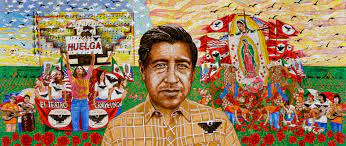
Photo caption: A SONG FOR CESAR. Courtesy of Juno Films.

A Song for Cesar is a rich documentary on the role of music and the arts in the critical years of Cesar Chavez’s United Farm Worker movement – so rich that it’s much more than that. There’s a time capsule of the turbulent 1960s, the story of emerging Chicano identity and a meditation on the role of arts in political activism – all embedded in a compelling history lesson.

A Song for Cesar shows us how music and the UFW uplifted each other. Anthems were used in mobilizing, and benefit concerts were a major pillar of UFW fundraising. In the other direction, Cesar Chavez and the movement inspired a generation of Chicano musical artists. We hear directly from a veritable Who’s Who of Chicano musicians from Malo, El Chicano, Tower of Power, War, Santana and Los Lobos through Ozomotli. The memories of UFW allies like Taj Mahal and Joan Baez are also central to A Song for Cesar.

It’s not just only about music, either – the importance of murals and theater are highlighted. We hear from Luis Valdez, founder of Teatro Campesino, about the beginnings of Teatro and its place in the movement.

A Song for Cesar captures the zeitgeist of the time. The UFW’s organizing campaign coincided with (as well as inspiring) new Chicano identity and pride. As Tower of Power’s Emilio Castillo says, “People were ready to protest for social change.They weren’t going for the old okey-doke no more.” 

A Song for Cesar reminds us of the mass casualty tragedies that galvanized the Farm Worker movement, along with the low pay, wage theft, horrid working conditions and exploitation. (A personal reflection: when I think of the cruelty, disrespect and social control embodied in the short handled hoe, I still get pissed off.) Exceptionally well-sourced, A Song for Cesar presents first-hand recollections of Chavez family members, UFW leader Dolores Huerta and other participants. The UFW history is deep enough to acknowledge the overlooked role of Filipinos in the UFW, with Larry Itliong as a co-founder of the union.

The Farm Workers had to face goon violence from the growers and infiltration by racist law enforcement. It becomes all the more relatable when Luis Valdez describes facing the violence with non-violence in very personal terms. A Song for Cesar is solid history and an important document of the times.

A Song for Cesar is filled with cool tidbits, like how Cesar Chavez was himself a big jazz fan, who would comb record store bins whenever he had the chance. Who knew?

A Song for Cesar opens this weekend, and will have March 18-24 runs at the Opera Plaza and the Smith San Rafael.

JAGGED: clear-eyed, but not that angry after all

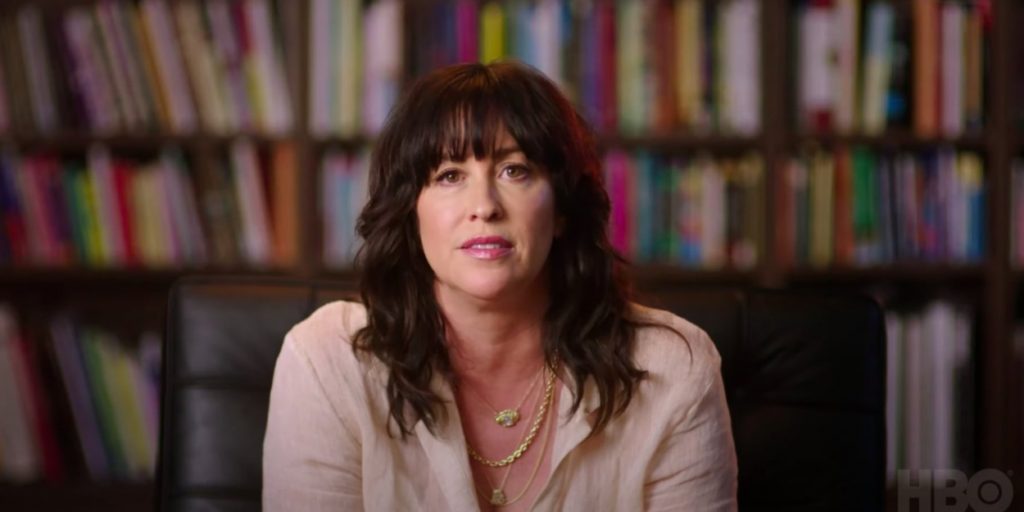
Photo caption: Alanis Morissette in JAGGED. Courtesy of HBO.

Jagged is a surprisingly addictive biodoc of singer-songwriter Alanis Morissette, packed with Morissette’s own reflections. Jagged traces Morissette’s beginnings as a child prodigy and teen pop princess (big hair and all) to the point where she matured into an innovative songwriter and groundbreaking stadium act.

The deepest dive is appropriately on Morissette’s debut album Jagged Little Pill and the 18-month concert tour to support it. With sales of over 33 million, Jagged Little Pill is still the number one selling album by a woman. It’s amazing to reflect that Morissette was only 19-20 when writing the songs and only 20-21 on the tour.

Alanis Morissette in JAGGED. Courtesy of HBO.

Of course, Morissette’s breakthrough came with one of the bitterest of all breakup songs, You Oughta Know, raising the question of just how angry is she? Not at all, says Morissette, who notes that she released her anger in the writing of You Oughta Know and moved on.

Director Alison Klayman (Ai Weiwei: Never Sorry) takes us back to the 1994 media coverage, by male music writers, of Morissette as Angry Young Woman. Jagged takes advantage of lots of candid backstage/tour bus footage from the tour; and that Morissette is an even-tempered and playful person, not even temperamental, let alone raging.

In her years a teen pop singer, Morissette was allowed to tour the world without parental protection, which predictably made her vulnerable to exploitation by older men. It’s really worth watching Jagged to hear Morissette’s framing of how women publicly discuss sexual abuse years afterwards: “They weren’t silent. The culture wasn’t listening.”

Oddly, Morissette herself is unhappy with the documentary, calling it “salacious”. I thought that Klayton handled Morissette’s own words about her sexual abuse in a way that was the opposite of salacious. Klayton has Morissette present herself as insightful and well-grounded, which adds up to a flattering impression.

Jagged is streaming on HBO.