In Nathan Silver’s comedy Between the Temples:, Jason Schwartzman plays a cantor whose wife’s death the year before has plunged him into despair; he is so paralyzed by depression, he has even lost his ability to sing. He has a chance meeting with his childhood music teacher (Carol Kane), now a retired widow.
Despite her age and his resistance, she insists on joining the bat mitzvah class he teaches at the temple. She’s a force of nature and may have enough gusto to overcome his angst. As their friendship evolves, will it bring him out of his funk?
Between the Temples is co-written by C. Mason Wells and director Nathan Silver. There are plenty of chuckles arising from Schwartzman’s character trying to neutralize his former teacher’s tsunami of will. And there are LOL moments from Madeleine Weinstein’s hilarious turn as as the rabbi’s lovelorn daughter Gabby.
Kane is excellent, and so is Dolly De Leon, who stole Triangle of Sadness, sparkles as a relentlessly determined Jewish mother. The prolific comedy writer Robert Smigel appears as the rabbi.
I screened Between the Temples for this year’s San Francisco Jewish Film Festival; Between the Temples opens in Northern California theaters this weekend.
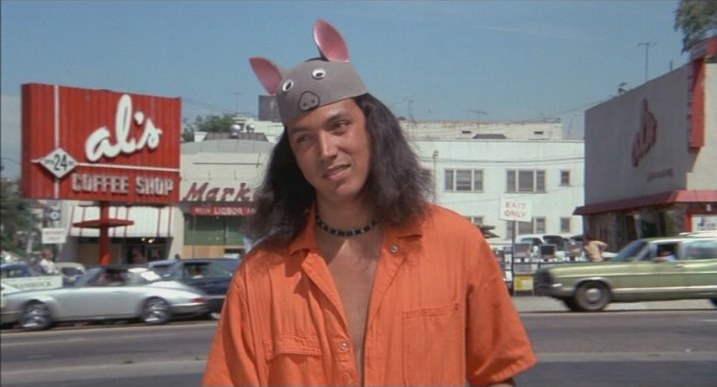
Otis Day, Antonio Fargas and Darrow Igus in CAR WASH. Courtesy of Universal Pictures.
Here’s a jubilant good time at the movies. On June 19, Turner Classic Movies will air the unpretentious ground-breaker Car Wash from 1976. Car Wash portrays the raucous hijinks and foibles of the crew at a downtown LA car wash, the Dee-Luxe, and explores a diversity of contemporary African-American perspectives. And the title song became a major disco hit.
The mostly African-American crew of the Dee-Luxe is very aware that they are at the bottom rung of the economic ladder. The work is menial and boring, and they have no stake in the enterprise. To pass the time, they resort to teasing and pranks. Some of the antics are sophomoric, and many are politically incorrect.
Car Wash samples a range African-American perspectives, from an angry African nationalist to a flamboyantly corrupt preacher. Mostly, we have guys getting by in a dead end job, so they can survive and maybe have fun after work. There’s an openly gay character, which was a big deal in 1976; (he has the best and most quoted line in the movie)..
Henry Wingi in CAR WASH. Courtesy of Universal Pictures.
Car Wash is not a message picture. It does make observations, and lets you form your own social criticism. The white carwash owner is unimaginative, cheap and resistant to change, and his son, the heir-apparent, is well-meaning, but he’s a cannabis-addled buffoon. The foreman’s hard work and initiative is not rewarded. It’s hard to maintain dignity in the face of overtly racist attitudes from customers and symbols of institutional racism, like a parole officer. This America is not a meritocracy.
The guys in the crew are played by a bonanza of African-American acting talent: Bill Duke, Ivan Dixon, Franklyn Ajaye, Antonio Vargas, Otis Day, Leonard Jackson, Garrett Morris, Arthur French, Darrow Igus and Ray Vitte, along with Clarence Muse, who acted in his first Hollywood movie in 1929. Native-Americans and Latinos are represented by Henry Wingi (one of Hollywood’s great stunt men) and Pepe Serna, respectively.
Comedians George Carlin, Richard Pryor and “Professor” Irwin Corey have cameos. Brooke Adams and Danny DeVito were in the cast, too, but had their scenes cut.
Melanie Mayron in CAR WASH. Courtesy of Universal Pictures.
Car Wash was the first film by an African-American director shown in competition at Cannes (and possibly the most unabashedly low brow Cannes entry). Director Michael Schultz was already a veteran television director and was the most prolific African-American director of Hollywood films before Spike Lee.
Three cast members – Bill Duke, Ivan Dixon and Melanie Mayron – became prolific directors themselves. Those three, not a white man among them, have amassed over 160 directing credits between them. Screenwriter Joel Schumacher, one of the few white males with a major creative role in Car Wash, would also go on to direct feature films.
If you miss Car Wash on TCM, you can stream it from Amazon, AppleTV and YouTube.
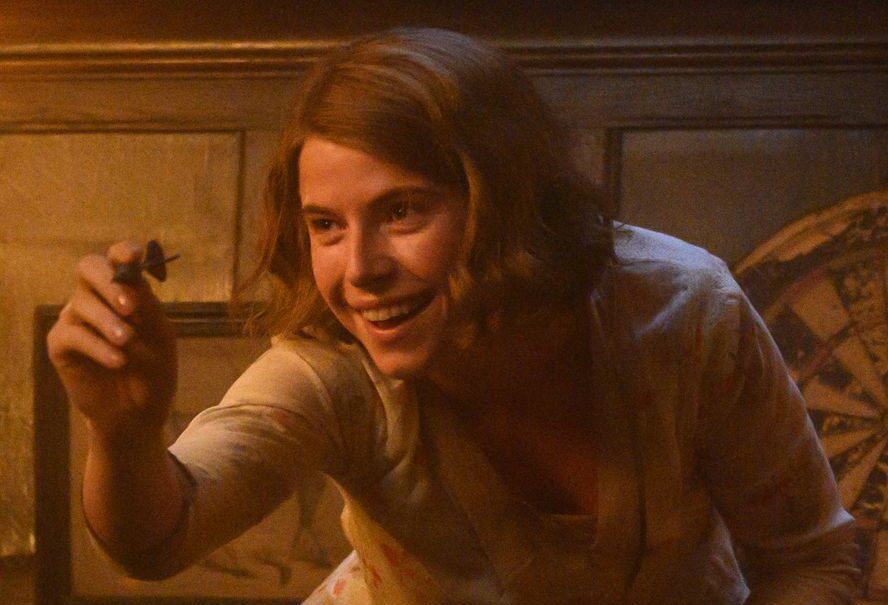
Photo caption: Jessie Buckley in WICKED LITTLE LETTERS. Courtesy of Sony Pictures Classics.
Jessie Buckley sparkles in the comedy Wicked Little Letters, about a contretemps between English neighbors that erupted into scandal. It’s 1920, and, though although no longer technically in the Victorian (or even Edwardian ) Period, Victorian social mores prevailed, and the stuffiness, repression and classism make easy targets for Wicked Little Letters.
Buckley plays Rose, a vibrant single mom who may or may not be a war widow. Foul-mouthed and a joyous carouser, Rose is decidedly tot adhering to the social and sexual mores of the time. Her ultrareligious and ridiculously proper neighbor Edith, (Olivia Colman) on the other hand, could be a poster girl for devout virginity; Edith lives under the tyranny of her father Edward (Timothy Spall), a bullying, racist, patriarchal prig.
The two women start out friendly, but inevitably fall out. Edith is shocked to received a series of profane, obscene and vituperative letters. Edward brings in the police, and soon Rose is on trial for sending the letters, although she denies it. What will happen to Rose? Who really sent the poison pen letters? Wicked Little Letters‘ story closely follows a true story, which you can read about if you Google “Littlehamption Letters Scandal“.
Here’s the most interesting aspect of Wicked Little Letters. We are used to watching people who are sexually and/or socially repressed acting out perversely (see the TV preacher or right wing politician scandal du jour). But here, we have someone who is so angry about BEING repressed, that the perverse behavior comes out of her rage.
This really isn’t much of whodunit, because the authorities, blinded by their own stupidity and classism, and ignorant of forensic tools like handwriting analysis (not to mention the scientific method), keep missing the obvious solution. A fictional young female cop (Anjana Vasan) is the stand-in for the 21st century audience and can see what her superiors miss. Once it’s revealed who is really sending the letters, Wicked Little Letters finishes a little too slowly.
But we get to enjoy a charismatic performance by Jessie Buckley, deploying a deliciously crooked grin as she brings a devil-may-care woman to life. Buckley is so good as troubled characters (Beast, Wild Rose, The Lost Daughter, Women Talking), and it’s great to see her letting loose as a fun-loving character.
Olivia Colman, of course, is superb as Edith, a woman who is not nealy as one-dimensional as she first appears. The great actor Timothy Spall (who has lost a reported 100 pounds over the past several years) has fun with a character who has no nuance whatsoever, unless you count varying shades of bigotry and entitlement.
I caught Wicked Little Letters very late in its its theatrical run and I expect that it will be leaving theaters soon; I’ll let you know when it is available to watch at home.
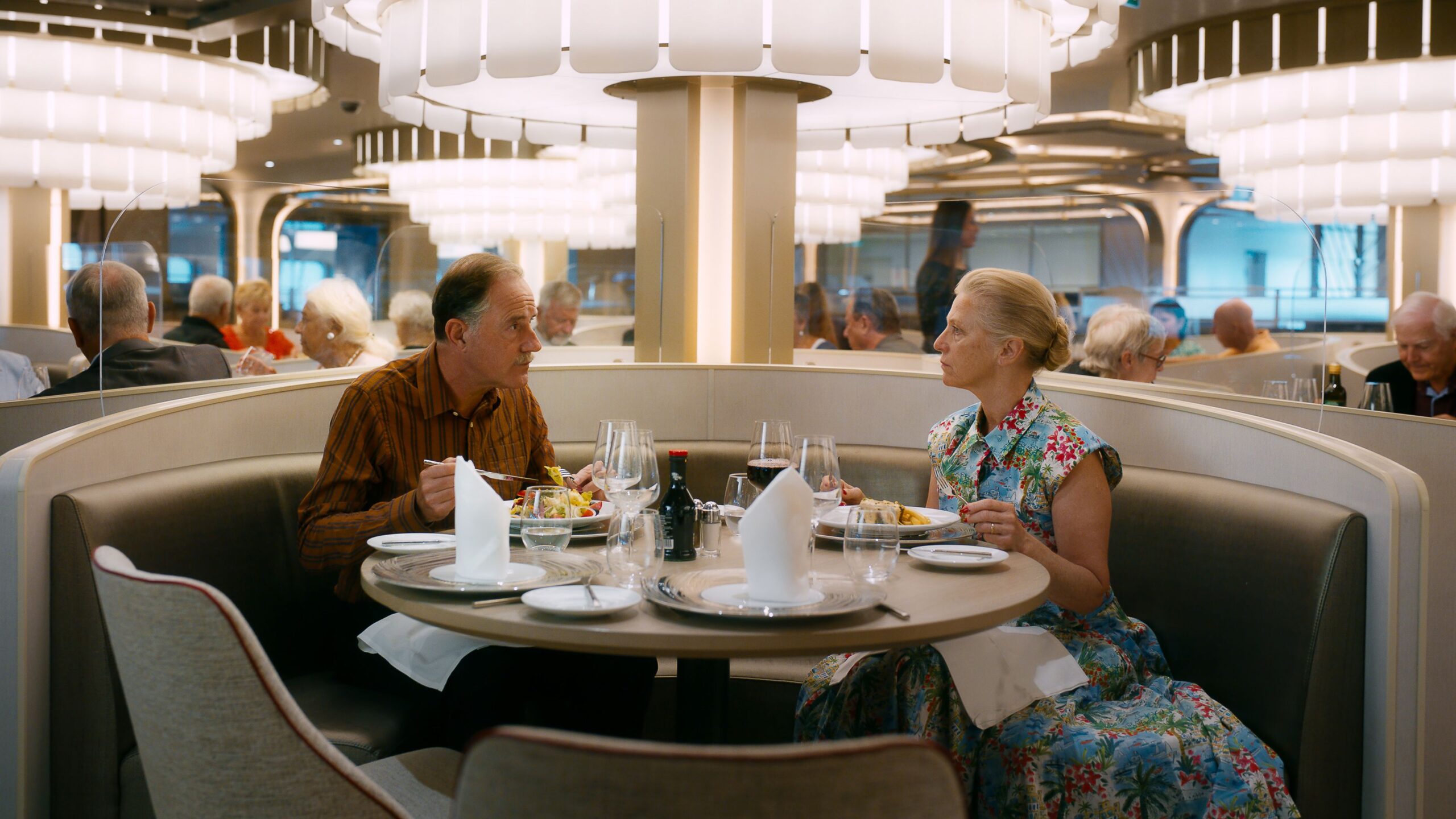
Photo caption: Stefan Kurt and Esther Gemsch in GOLDEN YEARS. Courtesy of Music Box Films.
The Swiss dramedy Golden Years begins as Peter (Stefan Kurt) turns 65 and retires. His wife Alice (Esther Gemsch) has been eagerly awaiting this day, which she sees as an opportunity for travel and to rekindle intimacy with Peter. In contrast, Peter doesn’t seem to have been thinking about it at all, but he begins to be consumed with his physical health and suddenly transforms himself into a mountain biking, vegan workout king. Alice wants to downsize, but he wants to stay in their house. Travel doesn’t interest Peter, but he feels trapped into joining Alice on a Mediterranean cruise that their adult children have gifted them.
Esther’s best friend unexpectedly dies, and Peter impulsively invites her heartbroken husband to join them on the cruise, which appalls Esther, who wants Peter to herself on the cruise. Esther has read her late friend’s hidden cache of letters and has stumbled on an explosive secret. Esther’s annoyance from Peter’s inattention simmers until it boils over into she staggers Peter by embarking on her own adventure.
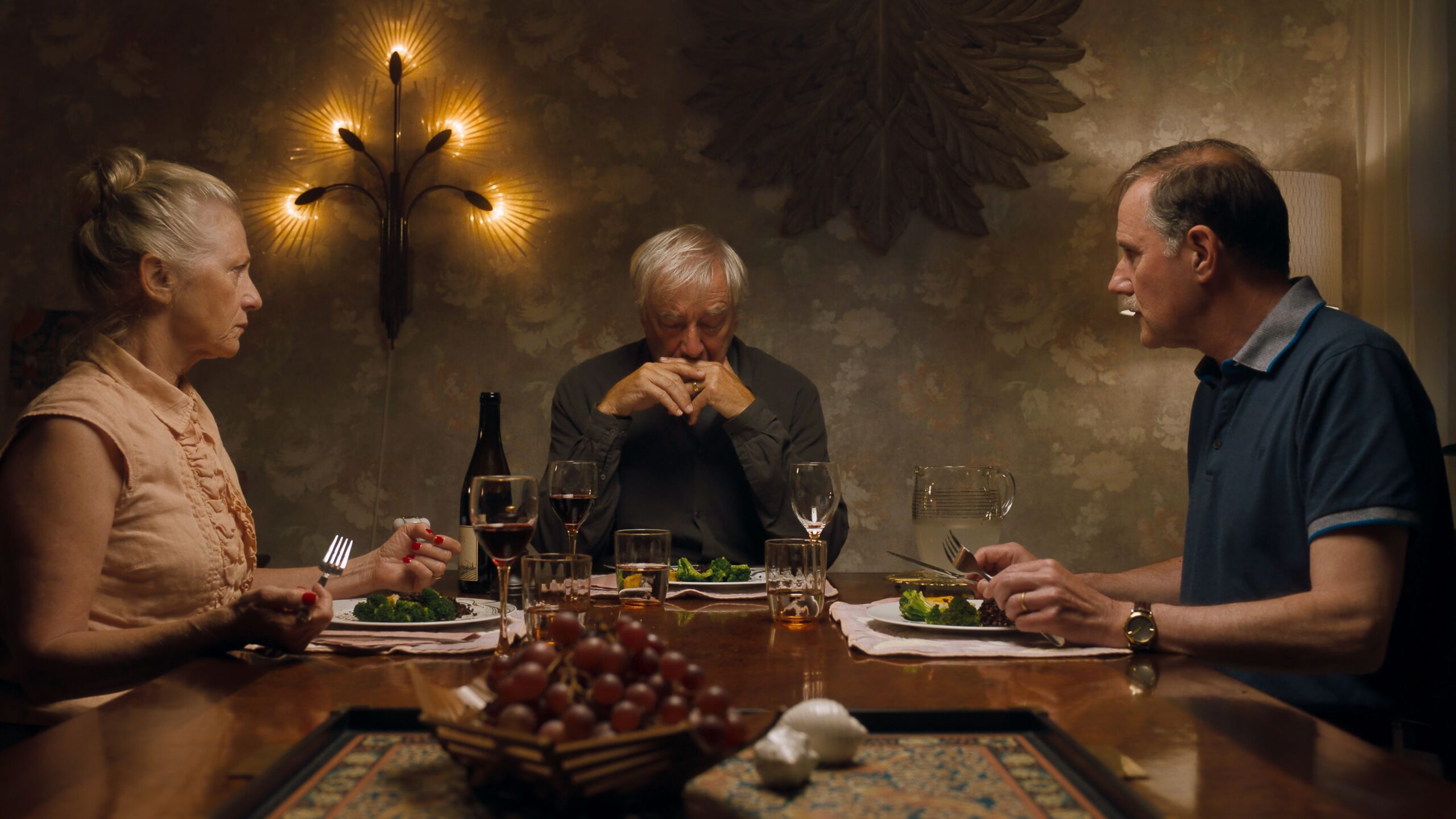
Esther Gemsch, Ueli Jaggi and Stefan Kurt in GOLDEN YEARS. Courtesy of Music Box Films.
At this point, Golden Years departs from a comedy of manners into an exploration of dual self-discoveries. Indeed, there are Men-are-from-Mars moments when Peter is a clueless dunderhead about Esther’s expectations. But Peter’s needs have evolved, too, and Esther has also mistakenly assumed that he will want to do want she wants to do.
We all know couples who drift totally apart after decades of marriage, and there must be some couples who age with identical interests. Many couple have different, but complementary aspirations, or can build a new life together around some core commonality. The question that Alice and Peter face is, where are they on this continuum?
Will Alice and Peter compromise? Will they be able to accommodate each others’ needs? Will they live separate lives? Is there a Win Win?
Screenwriter Petra Volpe (The Divine Order) probes these questions in a consistently funny and engaging movie with a minimum of senior citizen tropes or cheap geezer cheap jokes. (It is very funny, though, when Peter’s Gen X co-worker brightly tells him that his old office will become a server room.)
Esther Gemsch in GOLDEN YEARS. Courtesy of Music Box Films.
Director Barbara Kulcsar keeps the story sprightly paced and maintains just the right balance between comedy and the more serious issues. Alice is the primary focus of the story, and the performance of actress Esther Gemsch is especially strong.
Golden Years can now be streamed from Amazon, Vudu and YouTube.
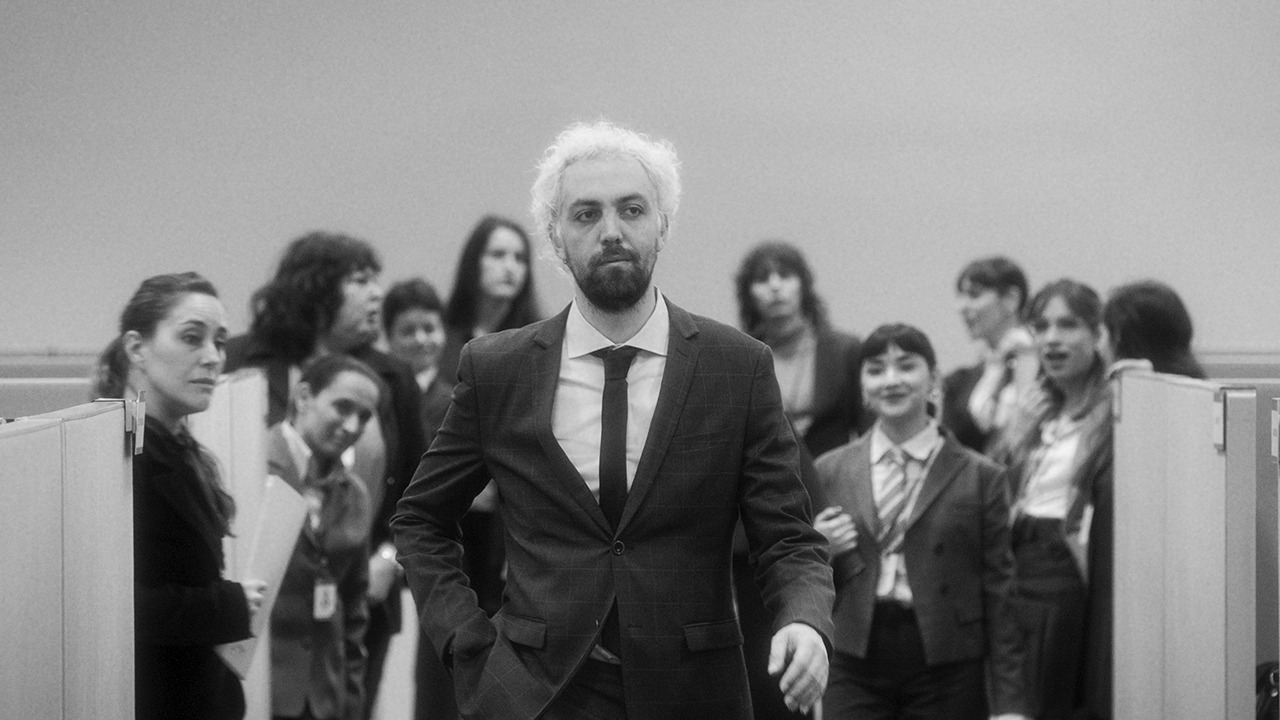
Pedro De Tavira (center) in HUMAN RESOURCES. Courtesy of Cinequest.
In the dark, dark Argentinian comedy Human Resources, Gabriel Lynch (Pedro De Tavira) is an alienated office worker, in an absurdly alienating workplace. Gabriel is a low-level supervisor on an anonymous lower floor of a corporate hive with too many layers of management and an oppressive, top-down culture. It’s also oversexed, with a carousel of Inappropriate office liaisons. And, we’ll soon see, is shockingly tolerant of what we would see as the most horrifying workplace violence.
Gabriel, an Iago with a sick sense of humor, begins a ruthless, unhinged campaign against those who offend him. Alienation leaks out in how her treats everyone. Mischievous, mean-spirited and completely unashamed, he’s very fun to watch. And, as venal as Gabriel is, he is matched, step-for-step, by Veronica from Finance (Juana Viale).
Around the 41-minute mark, Gabriel makes his grievance explicit (followed by a great drone shot)
“I’ve lived like the secret son of a king for a long time, waiting for a courtier to rescue me. Of course, nobody rescued me. Nobody rescues anybody.”
Human Resources is the creation of writer-director Jesús Magaña Vázquez. I’ve rarely seen a more cynical comedy.
Cinequest hosts the US premiere of Human Resources, which I highlighted in my Best of Cinequest.
I love the Spanish language trailer, even without English subtitles:
Megan Seely in PUDDYSTICKS. Courtesy of Cinequest.
In the good-hearted and original comedy Puddysticks, Liz (Megan Seely) is a puddle of anxiety. She is a workaholic game developer for an enterprise whose company culture, despite its mission statement, could not be more anti-fun.
Liz stumbles on a self-help group, led by the ever blissed-out Sylvester (Dan Bakkedahl of Veep, Sword of Trust), where each participant must reveal their innermost secret. It’s cultlike and filled with psychobabble, but it seems to work for Megan and the others. And then Megan learns someone else’s secret…
Puddysticks is a scathing satire of tech workplace culture and the self-help movement, somehow without a hint of meanness.
Puddysticks is written and directed by Megan Seely (who also stars) in her first feature. Cinequest hosts the world premiere of Puddysticks.
Photo caption: Stefan Kurt and Esther Gemsch in GOLDEN YEARS. Courtesy of Music Box Films.
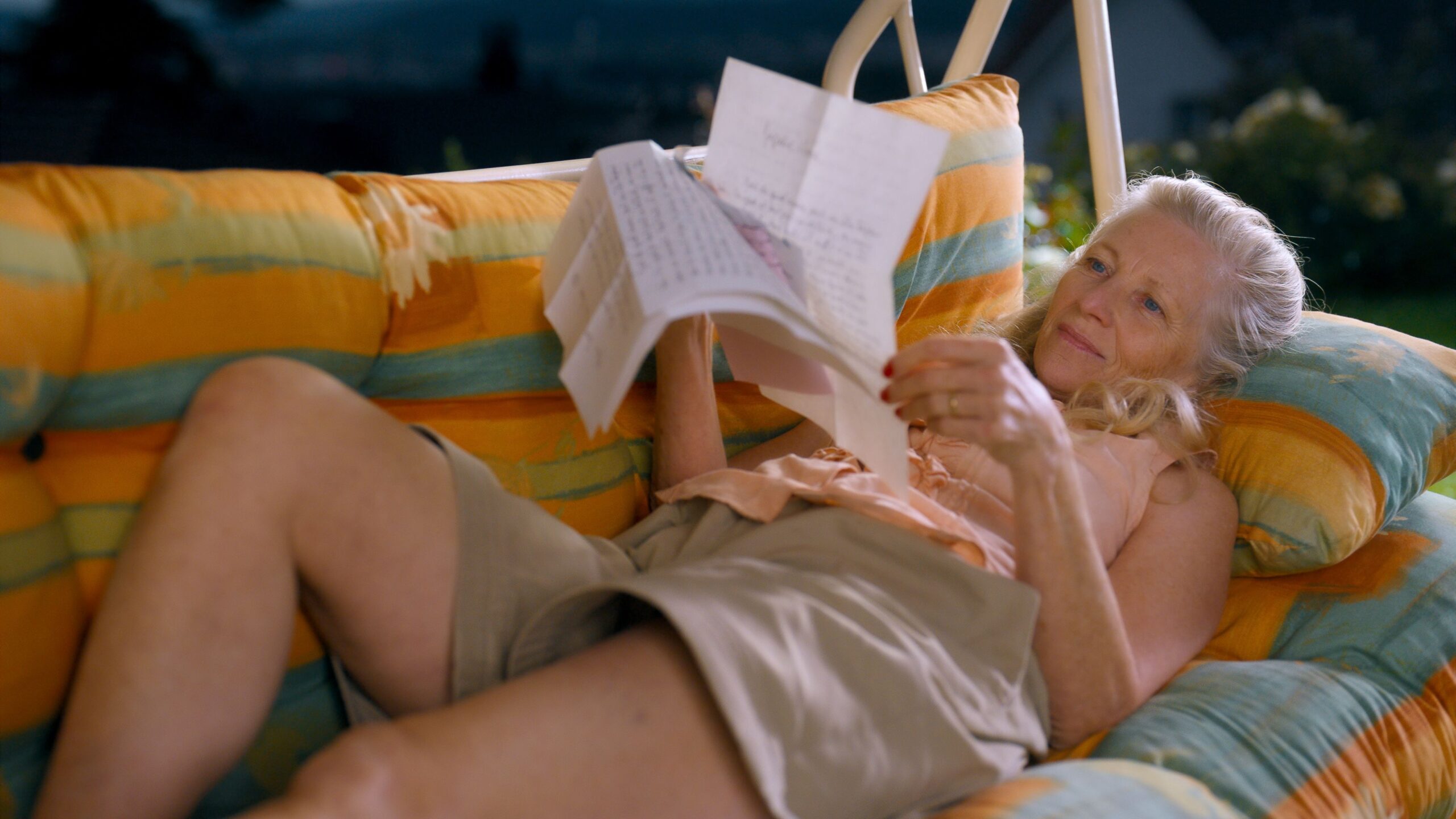
The Swiss dramedy Golden Years begins as Peter (Stefan Kurt) turns 65 and retires. His wife Alice (Esther Gemsch) has been eagerly awaiting this day, which she sees as an opportunity for travel and to rekindle intimacy with Peter. In contrast, Peter doesn’t seem to have been thinking about it at all, but he begins to be consumed with his physical health and suddenly transforms himself into a mountain biking, vegan workout king. Alice wants to downsize, but he wants to stay in their house. Travel doesn’t interest Peter, but he feels trapped into joining Alice on a Mediterranean cruise that their adult children have gifted them.
Esther’s best friend unexpectedly dies, and Peter impulsively invites her heartbroken husband to join them on the cruise, which appalls Esther, who wants Peter to herself on the cruise. Esther has read her late friend’s hidden cache of letters and has stumbled on an explosive secret. Esther’s annoyance from Peter’s inattention simmers until it boils over into she staggers Peter by embarking on her own adventure.
Esther Gemsch, Ueli Jaggi and Stefan Kurt in GOLDEN YEARS. Courtesy of Music Box Films.
At this point, Golden Years departs from a comedy of manners into an exploration of dual self-discoveries. Indeed, there are Men-are-from-Mars moments when Peter is a clueless dunderhead about Esther’s expectations. But Peter’s needs have evolved, too, and Esther has also mistakenly assumed that he will want to do want she wants to do.
We all know couples who drift totally apart after decades of marriage, and there must be some couples who age with identical interests. Many couple have different, but complementary aspirations, or can build a new life together around some core commonality. The question that Alice and Peter face is, where are they on this continuum?
Will Alice and Peter compromise? Will they be able to accommodate each others’ needs? Will they live separate lives? Is there a Win Win?
Screenwriter Petra Volpe (The Divine Order) probes these questions in a consistently funny and engaging movie with a minimum of senior citizen tropes or cheap geezer cheap jokes. (It is very funny, though, when Peter’s Gen X co-worker brightly tells him that his old office will become a server room.)
Esther Gemsch in GOLDEN YEARS. Courtesy of Music Box Films.
Director Barbara Kulcsar keeps the story sprightly paced and maintains just the right balance between comedy and the more serious issues. Alice is the primary focus of the story, and the performance of actress Esther Gemsch is especially strong.
Golden Years opens in select theaters, including the Laemmle Town Center in LA, on February 23. I’ll remind you when the film arrives nationwide on digital on March 26.
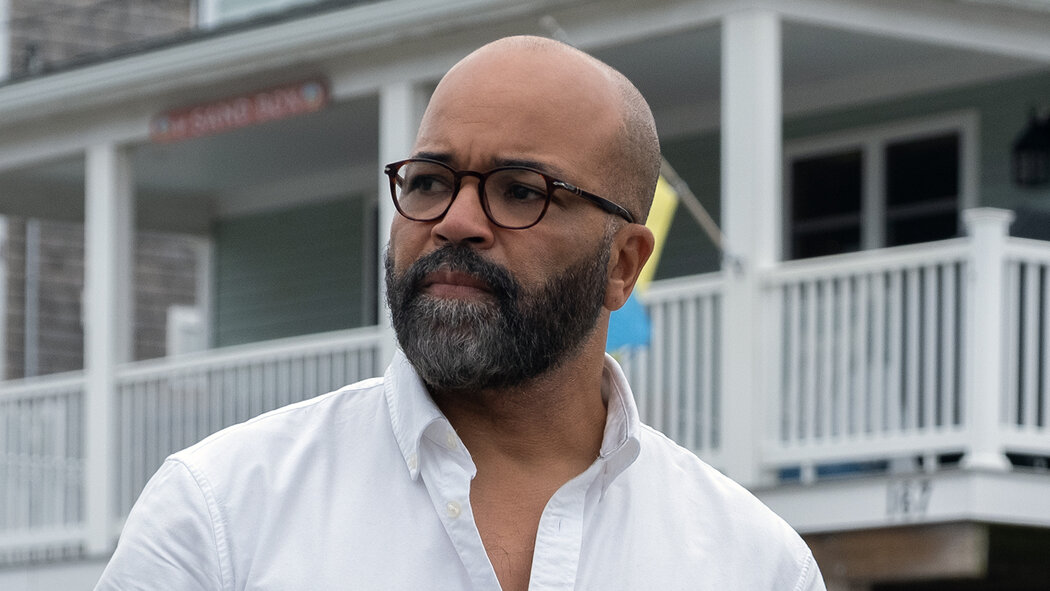
Photo caption: Jeffrey Wright in AMERICAN FICTION. Courtesy of MGM.
In the sharply funny American Fiction, Monk (Jeffrey Wright) is an academic and a novelist, the kind who wins literary awards, not the kind who people read on the airplane or on the beach. He is also African-American, named Thelonious Monk Ellison at birth, and his father and both siblings are physicians. His literary agent (John Ortiz) has not found a publisher ready to buy Monk’s latest high-falutin manuscript, an updating of Aeschylus.
Monk’s sensibilities are offended whenever he is pigeon-holed as a Black Writer. But he is enraged by books and movies that portray everyday African-American life as driven by deadbeat dads, crack addicts, and getting shot by the police. Monk, himself financially stressed by circumstance, goes ballistic when a Black writer (Issa Rae) gets a best seller by penning a story crammed with negative tropes.
Monk, in his cups, goes all in, adopting the pseudonym Stagg R. Leigh, and cramming every offensive stereotype into a volume initially titled My Pafology (until it gets an even worse new title). Monk demands that his agent submit it to publishers, and they are shocked when publishing houses and movie studios vie over the rights.
The joke here is that, far from ignoring black voices, the New York and Hollywood cultural gate-keepers, not a Trump voter among them, are eager to embrace black artists and black content – as long as the work conforms to the stereotypes with which they are comfortable. American Fiction sends up the white intelligentsia for incentivizing black creatives to perform in a new, but equally disgusting, form of black face. It’s wickedly funny.
While American Fiction is a successful social parody, it includes heartfelt threads of family dynamics and personal self-discovery. (There’s even a wedding.)
Jeffrey Wright is wonderful as a Monk who is pompous and curmudgeonly when we first meet him, but who becomes more complicated as we learn more about his upbringing. Tracee Ellis Ross (Blackish), Sterling K. Brown and Erika Alexander are each remarkably winning as Monk’s siblings and love interest, respectively. Leslie Uggams is downright brilliant as Monk’s mother. The entire cast is excellent, including the actors playing powerful white nitwits, especially Miriam Shor and Adam Brody
American Fiction is the directorial debut of its screenwriter, Cord Jefferson, who won a Primetime Emmy for Watchmen. It is a brilliant screenplay; Jefferson adapted it from the book Erasure by Percival Everett.
American Fiction is nominated for the Best Picture Oscar. Jefferson’s screenplay, Laura Karpman’s score, Jeffrey Wright and Sterling K. Brown are also Oscar-nominated. This is one of my Best Movies of 2023.
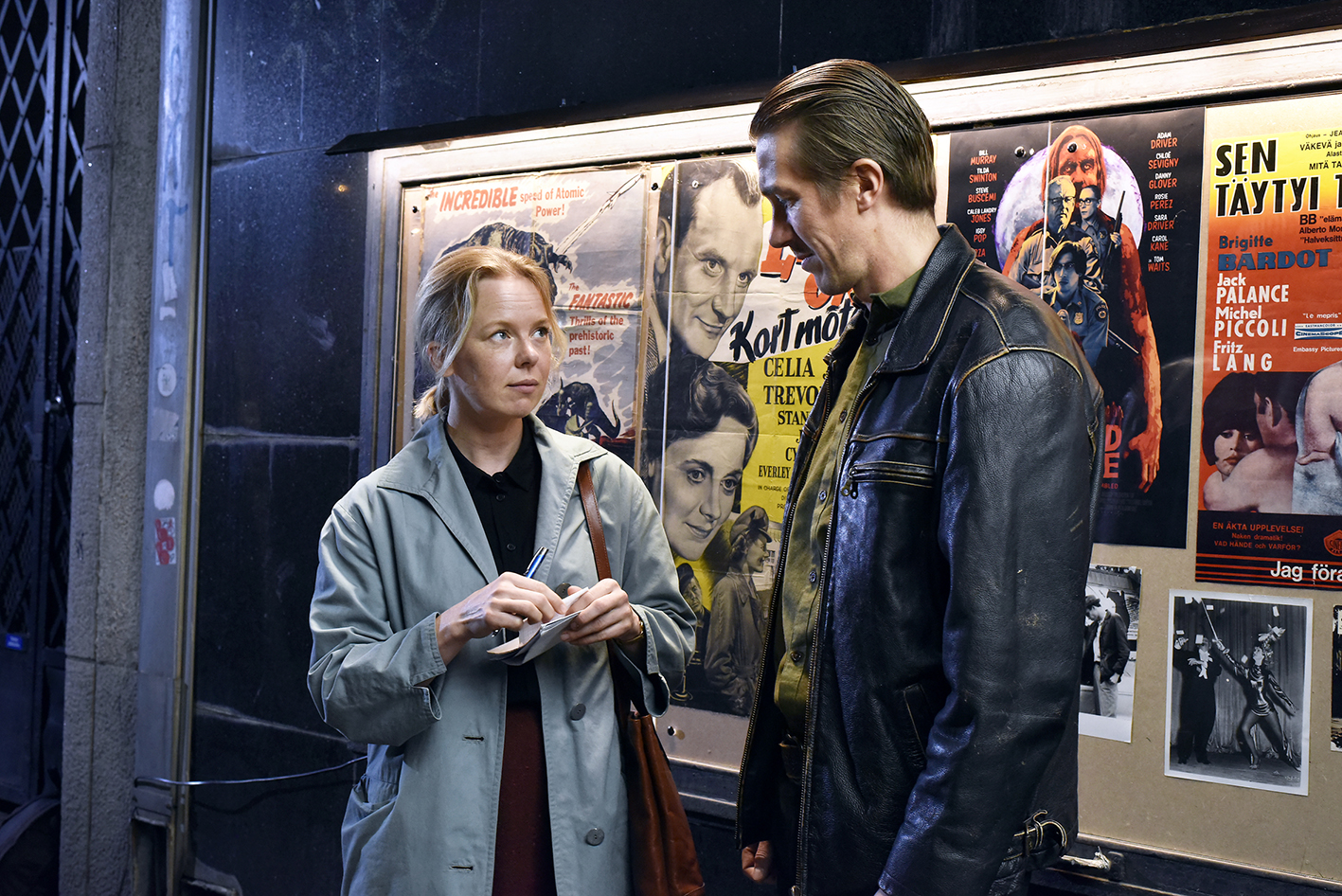
Photo caption: Alma Pöysti and Jussi Vatanen in FALLEN LEAVES. Courtesy of The Match Factory.
The Finnish deadpan comedy Fallen Leaves is the story of two fortyish singles navigating a blue collar world that is filled with disappointment, despite low expectations. We first meet the no-nonsense Ansa (Alma Pöysti) working in a supermarket, and then the sarcastic loner Holappa (Jussi Vatanen), working in a metal scrap yard. Fallen Leaves depicts Finnish middle-managers as tyrannical idiots, so neither Ansa or Holappa get any satisfaction from their work. Neither has much of social life, although they spot each other when accompanying friends to a karaoke bar.
These are two lonely people. But, not only don’t Ansa and Holappa meet CUTE, they keep not meeting AT ALL. Holappa’s shyness precludes an introduction at the karaoke bar, and then happenstance (and Holappa’s drinking) make them keeping missing each other, until a promising encounter is frustrated again.
We know that eventually, Ansa and Holappa will find the opportunity to launch a relationship. The impediment will be Holappa’s alcoholism. Here’s a public service from the Movie Gourmet: If you answer two or more of the following questions in he affirmative, then it is likely you have a problem with alcohol:
Have you been fired more than once for drinking on the job?
Have you passed out at a bus stop?
Do you regularly order three shots with a beer chaser?
Does a bartender tell you “[insert your name}, It’s time to go home so you can come back in the morning“?
Writer-director Aki Kaurismäki creates a humorously grim world for our droll heros and their pals. The dreariest of soulless dive bars, with the barmaid in curlers, is aspirationally named the California Pub. Holappa’s buddy tells him that he is no tough guy, “but maybe you could be a tough guy in Denmark”. Kaurismäki fills the screen with lots of Finns standing very still.
Fallen Leaves is not a Must See, I but I enjoyed the yearning for connection and intimacy, framed in the driest of humor. Many critics have describe the film as bittersweet; I see it as film with humor that is bitter-tinged, and then ultimately purely sweet.
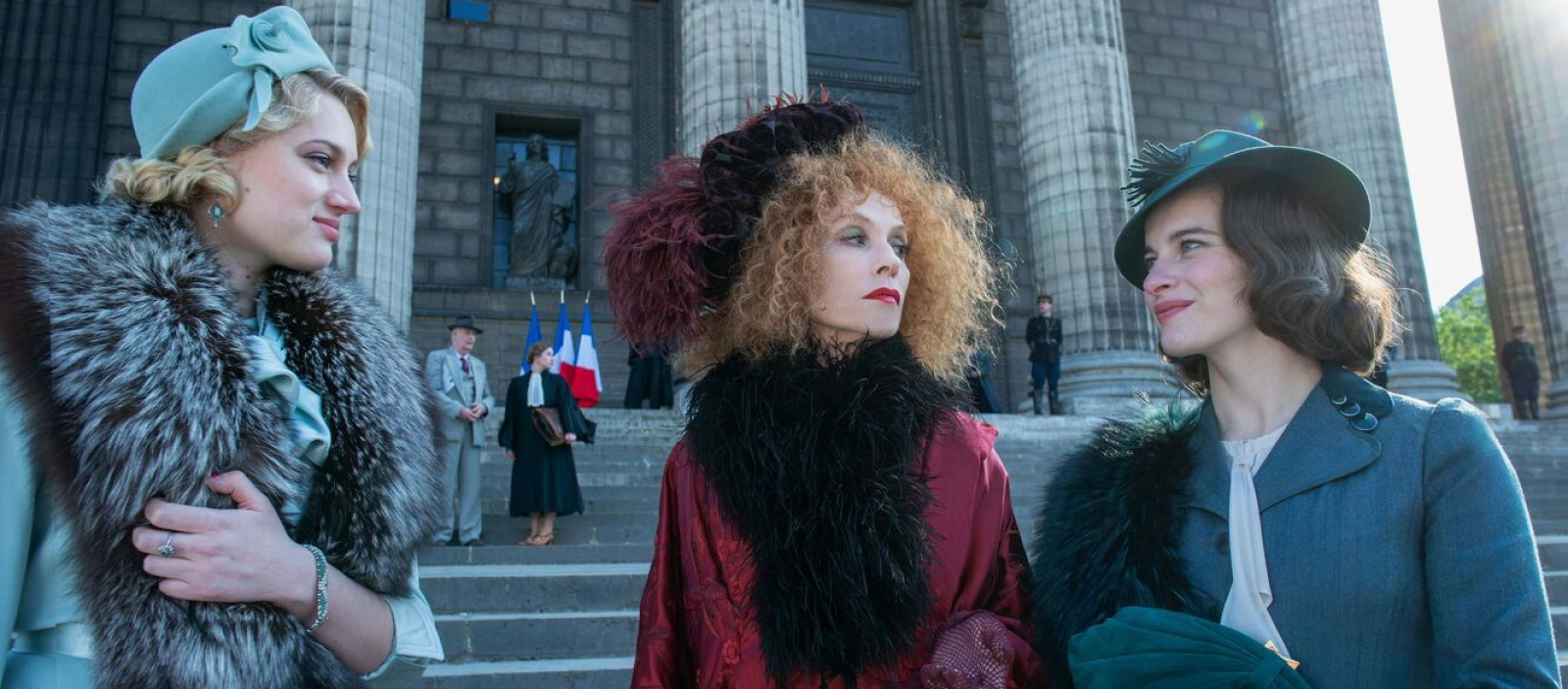
Photo caption: Nadia Tereszkiewicz, Isabelle Huppert and Rebecca Marder in THE CRIME IS MINE. Courtesy of Music Box Films.
Set in 1930s France, the breezy French comedy The Crime Is Mine is a proto-feminist farce. Madeleine (Nadia Tereszkiewicz of Only the Animals) is an actress struggling to find jobs because she won’t submit to the casting couch. Her roommate Pauline (Rebecca Marder) is a lawyer who law firms will not hire because of her gender. Madeleine seems to be the last person seen with a murder victim, a lecherous producer, and falls under police suspicion.
Pauline “defends” Madeleine with an ingenious strategy – confess to a killing that she didn’t commit, claim self-defense and ride the resultant wave of publicity to fame and riches.
The central joke, of course, is that a protagonist is trying to be proven guilty for a crime that she did not commit. The other novelty is that, in a decidedly non-feminist time and place, two young women without means must survive with dignity by their own cleverness and moxie.
I found all this mildly amusing until mid-film, when Isabelle Huppert shows up, playing a once famous diva of the silent screen. This character is unashamedly venal, and Huppert, as we can always expect, goes all in. She’s hilarious.
French comedian Dany Boone is a talented comic actor, and makes another welcome appearance here in a supporting role.
Director François Ozon is known for his light comedies like In the House and Potiche (as well as his recent drama Summer of 85),
As funny as Huppert’s performance is, the overall experience of watching The Crime Is Mine is more cerebral than emotionally engaging. The Crime Is Mine releases into theaters on December 25.