WHAT SHE SAID: THE ART OF PAULINE KAEL – the drive for relevance

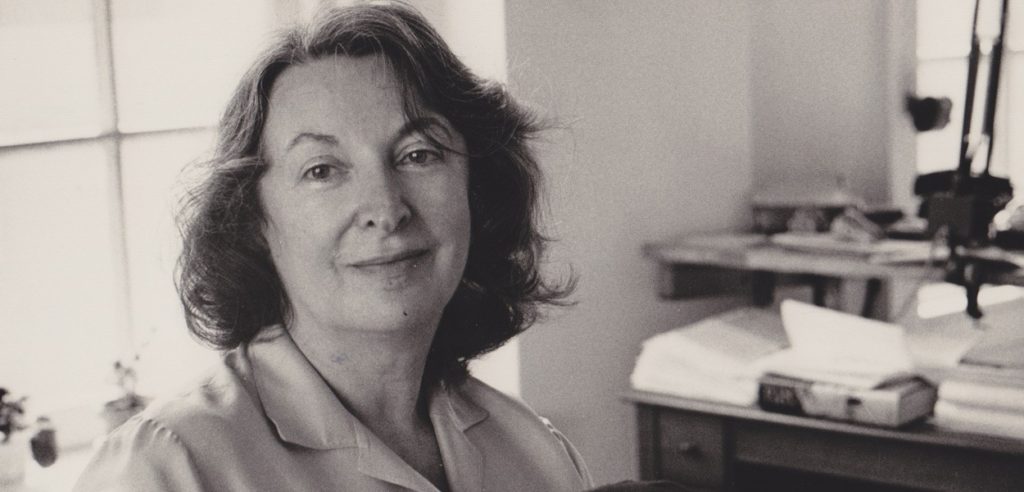
Pauline Kael in WHAT SHE SAID: THE ART OF PAULINE KAEL

What She Said: The Art of Pauline Kael is the remarkably thorough and insightful biodoc of the iconic film critic Pauline Kael and her drive for relevance.

Documentarian Rob Garver has sourced What She Said is well-sourced with the memories of Kael’s colleagues, rivals and intimates. Garver’s portrait of Kael helps us understand her refusal to conform to social norms as she basically invented the role of a female film critic and what today we might call a national influencer on cinema.

Of course, one of Kael’s defining characteristics was her all-consuming love of movies, a trait shared by many in this film’s target audience. Fittingly, Garver keeps things lively by illustrating Kael’s story with clips from the movies she loved and hated. Garver’s artistry in composing this mosaic of evocative movie moments sets What She Said apart from the standard talking head biodocs.

Kael was astonishingly confident in her taste (which was not as snooty as many film writers). For the record, I think Kael was right to love Mean Streets, Band of Outsiders, Bonnie and Clyde, and, of course, The Godfather. It meant something to American film culture that she championed those films. She was, however, wrong to love Last Tango in Paris. She was also right to hate Limelight, Hiroshima Mon Amour and The Sound of Music. But Kael was just being a contrarian and off-base to hate Lawrence of Arabia and Shoah.

Kael was by necessity an intrepid self-promoter and filled with shameless contradictions. She famously dismissed the auteur theory but sponsored the bodies of work of auteurs Scorsese, Peckinpah, Coppola and Altman. She loved – even lived – to discover and support new talent.

Most of the people we like and admire possess at least some bit of selflessness and empathy. Kael’s daughter Gina James says that Kael turned her lack of self awareness into triumph,. This observation, of course, cuts both ways.

I saw What She Said: The Art of Pauline Kael at the 2019 San Francisco Jewish Film Festival. It’s now playing in theaters in San Francisco and Berkeley.
Stream of the Week: SAMMY DAVIS, JR.: I’VE GOTTA BE ME – a needy talent through complicated times

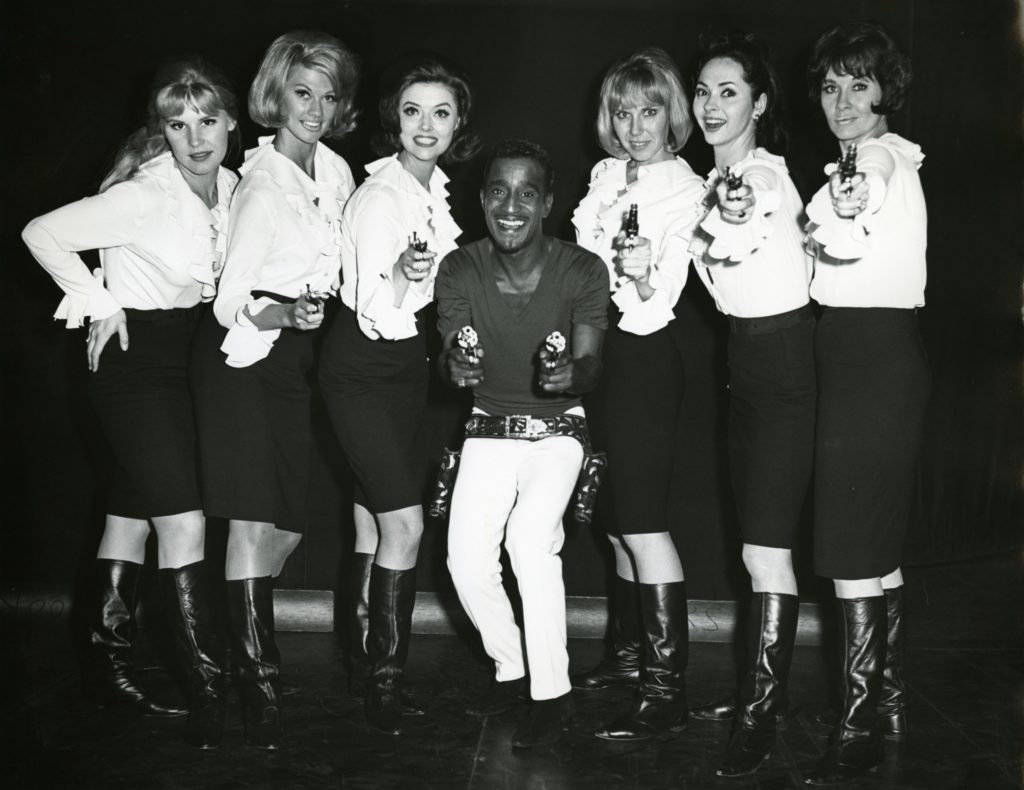
Still from SAMMY DAVIS JR.: I’VE GOTTA BE ME. Photo courtesy JFI.

Sammy Davis Jr.: I’ve Gotta Be Me is now available to stream (and free on Amazon Prime).  As a Baby Boomer who had dismissed Sammy Davis Jr. from the moment he publicly hugged Richard Nixon, I found this to be the most surprising doc (and my favorite) at last year’s San Francisco Jewish Film Festival. I learned that Sammy’s 61-year career as a professional entertainer began at age three (with his first movie credit at age 7), a working childhood that  left emotional needs  It turns out that Sammy was a very, very talented but needy artist,, an uncomplicated man navigating several very complicated times.

Sammy’s life of entertainment began at 3.  We get to see a clip of him in the 1933 Rufus Jones for President.  All that professional work took away his childhood and engraved upon him a need to please.  That and his generation produced the 50s showbiz style that seemed so insincere to us Baby Boomers.  And, of course that embrace of Nixon seemed to be the ultimate sell-out moment.

Sammy Davis Jr.: I’ve Gotta Be Me also poses whether he was demeaned by Rat Pack humor? Were Frank and Dino laughing at Sammy, or with him?

But this was  an immensely talented man, a masterful dancer with a remarkable crooner’s voice and a gift for mimicry.  He was the first American entertainer of color to do impersonations of white celebrities.   BTW there is some unbelievable dancing in Sammy Davis Jr.: I’ve Gotta Be Me.  We get to see Sammy’s 60th anniversary in showbiz celebrated among a host of celebrities – he still had his dancing chops.

Sammy Davis Jr.: I’ve Gotta Be Me is the story of a man whose success condemned him to a career that spanned generations – none of which fit him comfortably.  It’s a fine and insightful film. It can streamed on Amazon (included with Prime, iTunes, Vudu, YouTube and Google Play.

[Random note: This film title may contain the most different punctuation marks of any movie title: a comma, a period, a colon and an apostrophe.]

Stream of the Week: MAKING MONTGOMERY CLIFT – exploding the myths

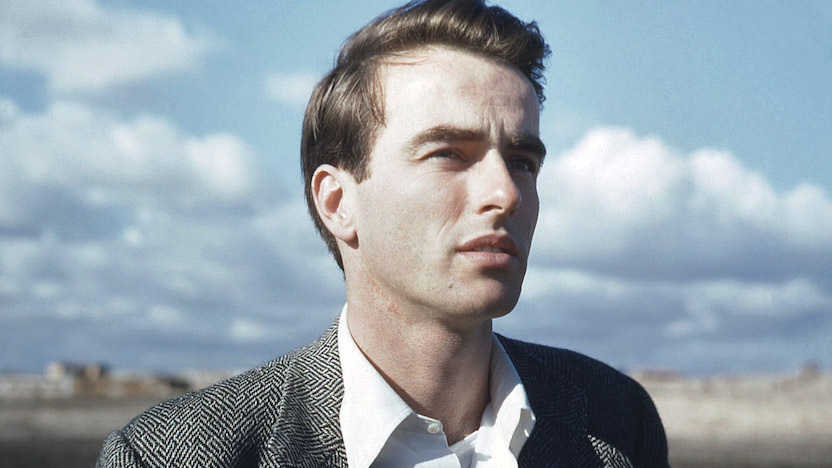
MAKING MONTGOMERY CLIFT, directed by Robert Anderson Clift and Hilary Demmon

The best documentary in this year’s Frameline festival was Making Montgomery Clift, from directors Robert Anderson Clift and Hilary Demmon. It’s an unexpectedly insightful and nuanced probe into the life of Clift’s uncle, the movie star Montgomery Clift. And it explodes some of the lore that has shaped popular understanding of Montogomery Clift.

Clift is the son of Brooks Clift, Montgomery Clift’s brother and archivist. The younger Clift never met his uncle Monty, but had access to his father’s vast collection of Monty memorabilia and to the memories of family, friends and previous biographers.

Many of us think we know the arc of Montgomery Clift’s life: success as a 1950s movie heartthrob is torpedoed by the inner torment of his closeted homosexuality; then alcoholic self-medication and disfigurement from an auto accident propel him into drunken despair and an early death. It turns out to be a much, much more nuanced story.

It turns out that some in the Clift family indulged in secret audio taping to a jaw-dropping degree. Directors Clift and Demmon take full advantage of the actual conversations of Monty and others. Their gift is to drop in the most startling revelations without lingering or even emphasizing them. To watch Making Montgomery Clift is a constant exercise in “wait…WHAT?” Demmon’s brisk editing helps, too.

How tormented was Monty by his sexuality (which we learn was a robust bisexuality)? Witnesses – who would know – let us know that Monty was comfortable in his own skin and fairly open – for the times – about his sexuality. This wasn’t Rock Hudson or Tab Hunter.

We learn that Montgomery Clift’s refusal to sign a studio contract was to preserve BOTH his artistic independence and his sexual independence (avoiding being forced into faux marriage and the like).

Making Montgomery Clift also discredits the view that Monty sank into depression after the accident changed his looks. His personally most satisfying performances came AFTER the accident.

The insights into Monty’s artistic process are unique and significant. We hear the actual conversation between Montgomery Clift and director Stanley Kramer about Clift’s riveting cameo in Judgment at Nuremberg. Monty’s intentionality in shaping the scene dispels the myth that, instead of giving a performance, he had an actual breakdown before the camera. Yes, he was acting it, and it was spectacular.

There has been a handful of recent showbiz biodocs made by younger relatives of the famous artists. Usually, these films add some personal family anecdotes, but are so fond of their subjects that they’re not especially insightful. Making Montgomery Clift is not that – it ascends above the pack – and should change how all of us understand Monty Clift.

Making Montgomery Clift is available to stream on Amazon.

THE QUIET ONE: resisting flamboyance

Bill Wyman in THE QUIET ONE

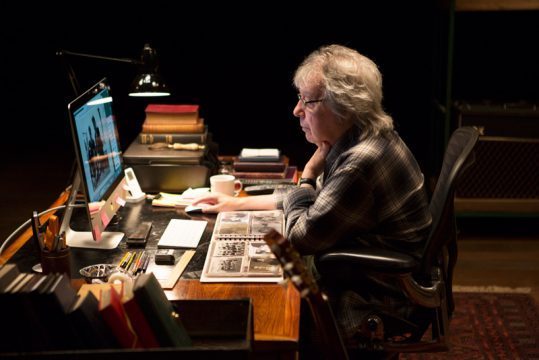
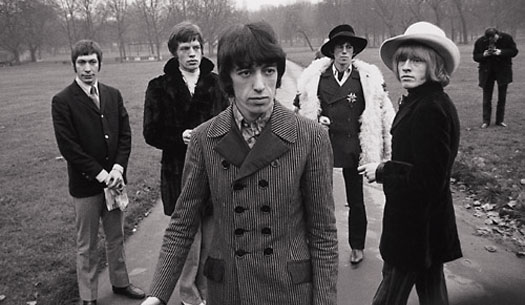
The title character in the documentary The Quiet One is the Rolling Stones bass player Bill Wyman. Wyman is an anti-flamboyant person at the very core of a circus of hedonistic excess and self-promotion.

Wyman is also an obsessive collector of memorabilia, and, at age 83, he now burrows into his irreplaceable archive of home movies and concert posters. What’s especially interesting in The Quiet One is the history of the Rolling Stones from his sober and humble perspective.

One famous associate says, “Bill never started acting like he’s famous”. Wyman himself says, “I suppose if you looked at my bookshelves you would understand me better.” What we do see is an astonishingly down-to-earth person, seemingly barely changed by stardom. He is honest about two marriage mistakes, one of them fairly appalling.

In the sweetest scene, we get to see today’s Wyman as a devoted fan, choking up while recalling an encounter with Ray Charles.

The Quiet One is a low key movie about a low key guy, and I recommend it to those interested in rock and roll history. The Quiet One is available to stream on Amazon, iTunes, Vudu, YouTube and Google Play.

Bill Wyman and associates in THE QUIET ONE

LINDA RONSTADT: THE SOUND OF MY VOICE: the icon who never played it safe

LINDA RONSTADT: THE SOUND OF MY VOICE

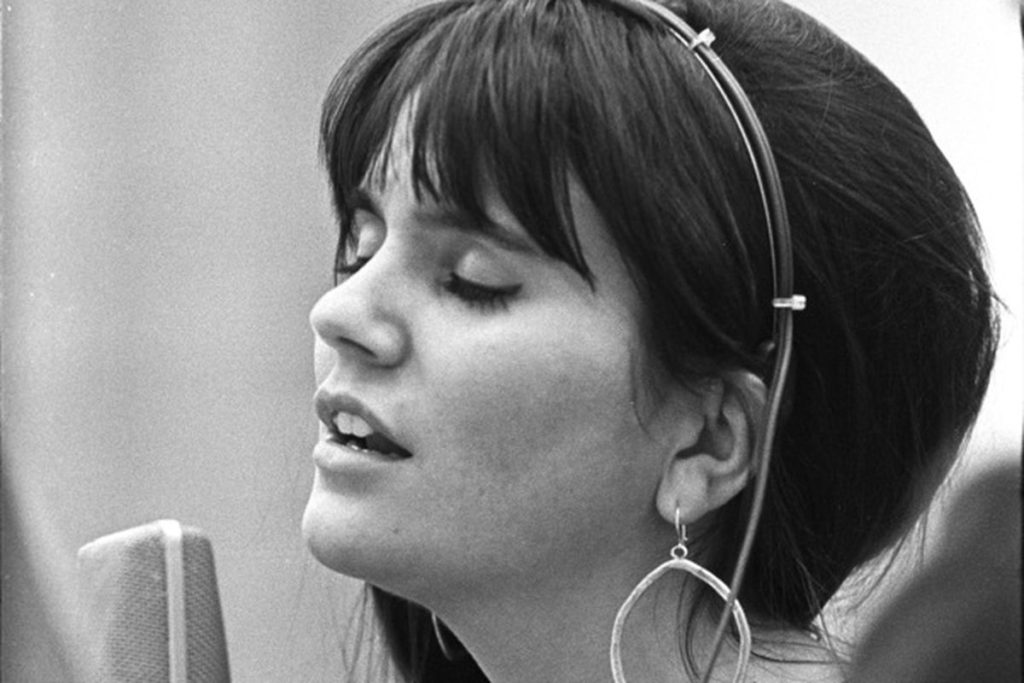
Linda Ronstadt: The Sound of My Voice is the insightful biodoc, based on Ronstadt’s own memoir, and narrated by Ronstadt herself. Ronstadt was the first female mega-rock star, and her story touches on feminism, the Counterculture and pivotal changes in the music industry. The film is comprehensive, tracing her upbringing and her romances with songwriter JD Souther and Governor/Presidential candidate Jerry Brown. The story is also poignant – her Parkinson’s disease has kept her from singing since 2007.

Ronstadt has been the auteur who is able to take someone else’s song and make it into her own art. She’s not a mere cover singer. I recommend listening to the Everly Brothers’ When Will I Be Loved, the Eagles’ Desperado, Dee Dee Warwick’s You’re No Good, Buddy Holly’s It’s So Easy and Little Feat’s Willin’ – and then matching them with Ronstadt’s versions.

Ronstadt is also unusual in that her interests and talent span the genres of pop and rock and country, various subgenres of Mexican music (earning Grammies across musical types) and even Gilbert and Sullivan (Tony nomination).

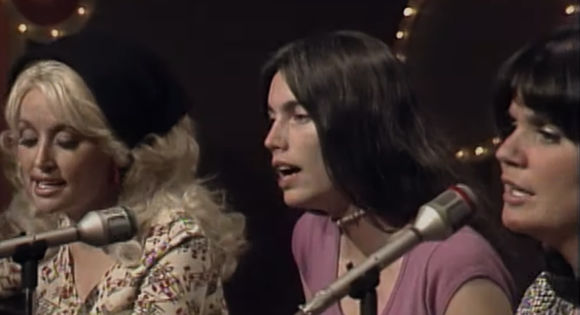
Dolly Parton, Emmylou Harris and Linda Ronstadt in LINDA RONSTADT: THE SOUND OF MY VOICE

Linda Ronstadt: The Sound of My Voice brings us a deep reservoir of witnesses: Ronstadt family members, Souther, former bandmates Don Henley and Waddy Wachtel, friends and collaborators Emmylou Harris and Dolly Parton. Both Emmylou and Dolly credit Ronstadt with helping them in critical career moments, Emmylou when she was paralyzed by grief and shock from the death of Gram Parsons.

Here’s a wonderful nugget from the film: Ronstadt had grown up in a family that sang Mexican music together, but her interest was rekindled by listening to the late night canciones of Harry Dean Stanton who was living in the garage behind Ronstadt and Souther.

It’s hard to imagine someone who wouldn’t enjoy Linda Ronstadt: The Sound of My Voice. And about that final scene of Linda with her nephew and cousin in the living room – just try to hold back the tears.

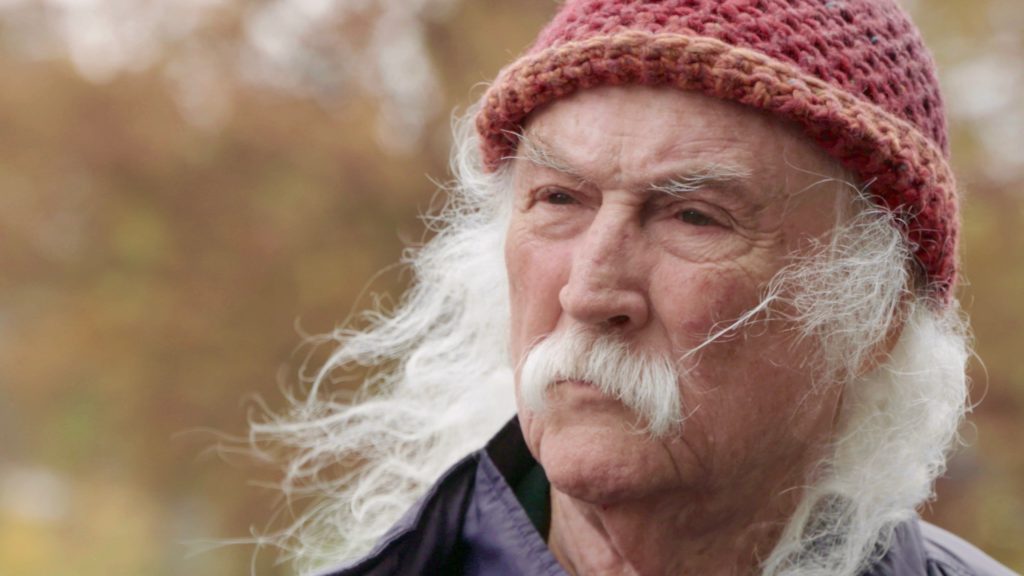
DAVID CROSBY: REMEMBER MY NAME: all the bridges I have burned

David Crosby in DAVID CROSBY: REMEMBER MY NAME
Photo by Edd Lukas and Ian Coad. Courtesy of Sony Pictures Classics

The notoriously irascible Robert Altman and a drinking buddy once amused themselves by inventing titles of fake country-western songs; Altman came up with I’m Swimming Through the Ashes of All the Bridges I Have Burned. That’s the experience of watching the biodoc David Crosby: Remember My Name.

Most of the doc is a series of interviews with Crosby as he goes on yet another concert tour at age 76; before leaving, he cruises around his old haunts on Sunset Boulevard and Laurel Canyon. Remember My Name’s producer, the director Cameron Crowe, replays an interview with Crosby from 1974, when Crowe was the wunderkind rock writer portrayed in Crowe’s film Almost Famous. Crosby reacts with a telling observation about his friendships.

With the perspective of age, Crosby reflects on his musical achievements, his addiction and recovery and his trail of relationship carnage. He notes that “all” of his intimate collaborators – Roger McGuinn, Graham Nash, Steven Stills and Neil Young – “hate me”, and ruefully observes, “if it were just one, it could be an accident”. The film includes clips of McGuinn, Nash and Young (plus Stills’ emphatic silence) to corroborate.

Crosby’s well-known battle with cocaine and heroin came into play with his estrangements. I would reflect that recovery from addiction will generally IMPROVE behavior, but is no guarantee of ACCEPTABLE behavior. The drugs certainly didn’t help Crosby avoid his “two or three heart attacks” eight cardiac stints, his liver transplant and his diabetes.

Contemplations aside, David Crosby: Remember My Name does an excellent job of tracing Crosby’s musical career and personal life. We get his side of his romance with Joni Mitchell, and the story of getting dumped by Mitchell in front of all their friends – with a song Mitchell composed for the occasion. There’s an wonderful telling of the writing and recording of Neil Young’s great song Ohio.

And here’s an odd note for movie fans: Crosby’s father was Floyd Crosby, a prolific but usually pedestrian cinematographer whose career topper was his Golden Globe-winning work in High Noon. I compared the father-son career paths and found that in 1964-65, when David was starting with the Byrds and hanging out with the Beatles and Miles Davis, Floyd was cranking out Bikini Beach, Pajama Game, Beach Blanket Bingo, How to Stuff a Wild Bikini and Beach Ball. While David was in the vanguard of the 1960s Counterculture, Floyd was winding up the Annette Funicello/Frankie Avalon teen culture that had been hanging on from the 1950s.

MAKING MONTGOMERY CLIFT: exploding the myths

MAKING MONTGOMERY CLIFT

The best documentary in this year’s Frameline festival may be Making Montgomery Clift, from directors Robert Anderson Clift and Hilary Demmon. It’s an unexpectedly insightful and nuanced probe into the life of Clift’s uncle, the movie star Montgomery Clift. And it explodes some of the lore that has shaped popular understanding of Montogomery Clift.

Clift is the son of Brooks Clift, Montogmery Clift’s brother and archivist. The younger Clift never met his uncle Monty, but had access to his father’s vast collection of Monty memorabilia and to the memories of family, friends and previous biographers.

Many of us think we know the arc of Montgomery Clift’s life: success as a 1950s movie heartthrob is torpedoed by the inner torment of his closeted homosexuality; then alcoholic self-medication and disfigurement from an auto accident propel him into drunken despair and an early death. It turns out to be a much, much more nuanced story.

It turns out that some in the Clift family indulged in secret audio taping to a jaw-dropping degree. Directors Clift and Demmon take full advantage of the actual conversations of Monty and others. Their gift is to drop in the most startling revelations without lingering or even emphasizing them. To watch Making Montgomery Clift is a constant exercise in “wait…WHAT?” Demmon’s brisk editing helps, too.

How tormented was Monty by his sexuality (which we learn was a robust bisexuality)? Witnesses – who would know – let us know that Monty was comfortable in his own skin and fairly open – for the times – about his sexuality. This wasn’t Rock Hudson or Tab Hunter.

We learn that Montgomery Clift’s refusal to sign a studio contract was to preserve BOTH his artistic independence and his sexual independence (avoiding being forced into faux marriage and the like).

Making Montgomery Clift also discredits the view that Monty sank into depression after the accident changed his looks. His personally most satisfying performances came AFTER the accident.

The insights into Monty’s artistic process are unique and significant. We hear the actual conversation between Montgomery Clift and director Stanley Kramer about Clift’s riveting cameo in Judgment at Nuremberg. Monty’s intentionality in shaping the scene dispels the myth that, instead of giving a performance, he had an actual breakdown before the camera. Yes, he was acting it, and it was spectacular.

There has been a handful of recent showbiz biodocs made by younger relatives of the famous artists. Usually, these films add some personal family anecdotes, but are so fond of their subjects that they’re not especially insightful. Making Montgomery Clift is not that – it ascends above the pack – and should change how all of us understand Monty Clift.

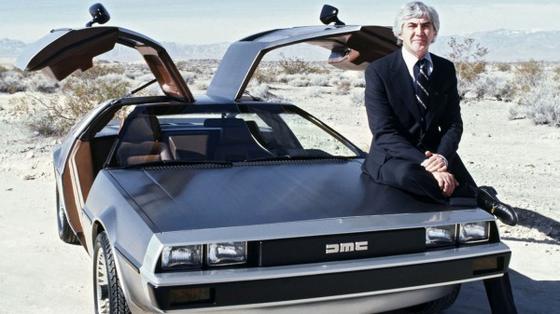
FRAMING JOHN DELOREAN: a pulpy story, partly rehashed

John DeLorean in FRAMING JOHN DELOREAN

Ever since the myth of Icarus, we have understood that audacity can take you only so far – but it often makes for a great story. The biodoc Framing John DeLorean tells PART of the story of a man whose audacious risk-taking invented the muscle car, propelled a meteoric corporate career, led him to found an automaker and to become a global celebrity and to marry a supermodel. And then to stumble into criminal prosecution, bankruptcy and divorce.

Framing John DeLorean leads through the familiar DeLorean story of his rise and flame-out and General Motors, the founding of the DeLorean Motors Company and the FBI videotaping him in a hotel room with $6.5 million of cocaine. We hear from Bill Collins – DeLorean’s engineering whiz for the Pontiac GTO and the DeLorean – and from DeLorean’s son and daughter. (But not from Cristina Ferrare, DeLorean’s celebrity trophy spouse). There a few unfamiliar nuggets, like DeLorean’s getting cosmetic surgery to enhance his jaw – and make him look like the swashbuckler that he was.

However, there’s a massive hole in Framing John DeLorean. A sketchy deal with a company called GPD is mentioned, but even with a forensic accountant as a talking head, the film doesn’t answer, or even pose, some questions that come immediately to mind. This article in Car and Driver provides more insight into the real story than does Framing John DeLorean.

The actor Alec Baldwin claims that DeLorean himself once suggested that Baldwin play him on screen. Framing John DeLorean has Baldwin play DeLorean in re-enactment scenes (along with Josh Charles as Bill Collins). The scenes with Baldwin add nothing to the film. I suspect that these Baldwin scenes were added only to use Baldwin’s drawing power to create a more marketable, not a better, film.

Framing John Delorean repeatedly asks why a narrative feature film has not been made about DeLorean and his pulpy story. But there isn’t a clear answer, and asking that question should be left to the audience of any documentary.

If you don’t know anything about John DeLorean, Framing John DeLorean is a decent primer. If you already know the story, I’d recommend the Car and Driver article instead. Framing John DeLorean is available to stream from Amazon, iTunes, Vudu, YouTube and Google Play.

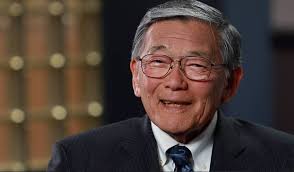
AN AMERICAN STORY: NORMAN MINETA AND HIS LEGACY

AN AMERICAN STORY: NORMAN MINETA AND HIS LEGACY

An American Story: Norman Mineta and His Legacy traces the life and times of Norman Mineta, who amassed a startling number of “firsts” and other distinctions in America history:

  • The first Asian-American mayor of a major U.S. city.
  • The first Japanese American member of Congress elected from the 48 Continental states.
  • A Cabinet Secretary in both Democratic and Republican Administrations.
  • The nation’s longest-serving Transportation Secretary.

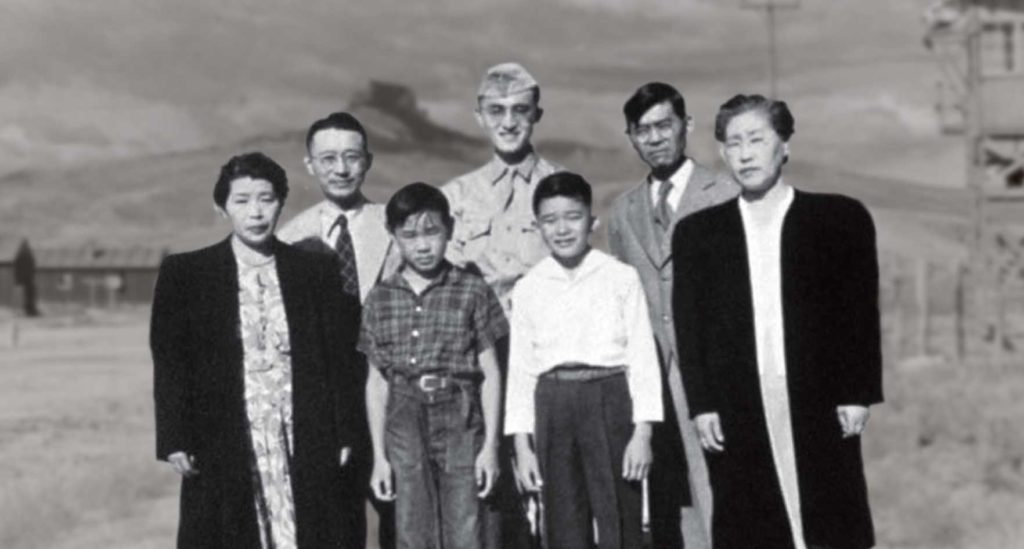
The achievements were even more remarkable given that, as a child, Mineta was imprisoned by his own US government in a WW II internment camp. And given that his political base had, during his career, an Asian-American population of far less than ten percent.

This didn’t happen by accident.  Norm Mineta is a driven man. At the same time, his ambition and will is tempered by his buoyancy and ebullience.

Documentarians Dianne Fukumi (director and co-producer) and Debra Nakatomi (co-producer) embed the story of Japanese-Americans, from immigration through internment, and on to reparations.

AN AMERICAN STORY: NORMAN MINETA AND HIS LEGACY

The defining event for Mineta’s Nissei generation was the WW II internment of 120,000 Americans by their own government. The central thread in the Mineta story is that the injustice of Mineta’s internment informed George W. Bush’s resistance to treating American Muslims that same way in the aftermath of the 9/11 attacks.

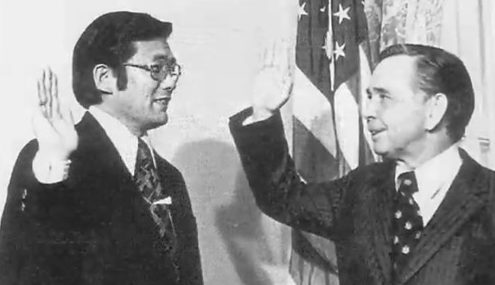
Mineta being sworn into the US House of Representatives by House Speaker Carl Albert in AN AMERICAN STORY: NORMAN MINETA AND HIS LEGACY

The film’s most delightful moment may be the octogenarian Mineta sunnily taking his luggage through security at Norman Y. Mineta San Jose International Airport.

[Full disclosure: I have known Norm since I served in his 1974 primary campaign and interned for him on Capitol Hill in the mid 70s.]

I saw An American Story: Norman Mineta and His Legacy at an October 2018 special screening with Norm Mineta, Fukumi and Nakatomi in San Jose. A brisk 60 minutes, it will be broadcast on PBS in May 20.

https://vimeo.com/266805068

MEETING GORBACHEV: uncritical but humanizing

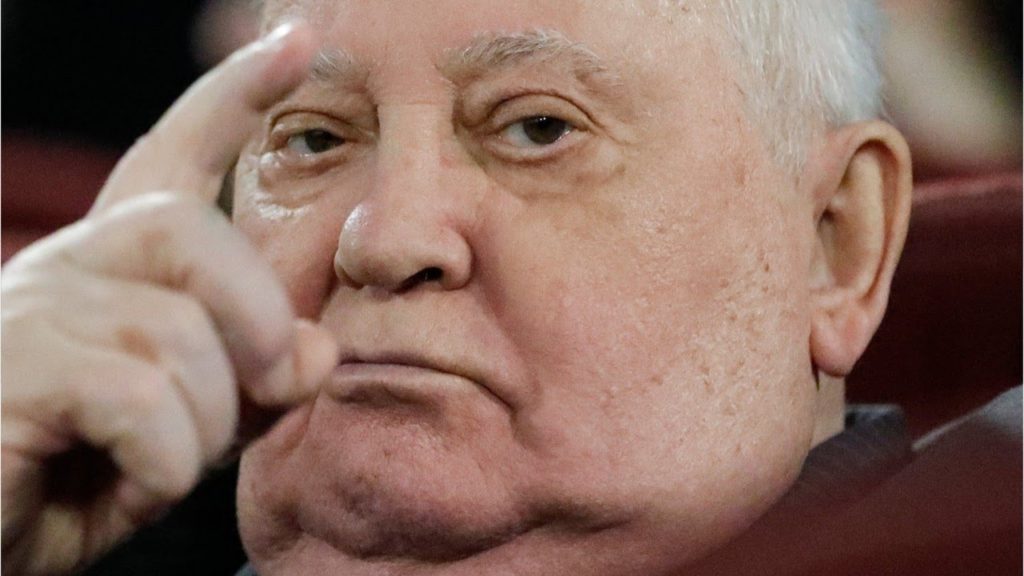
Mikhail Gorbachev in MEETING GORBACHEV

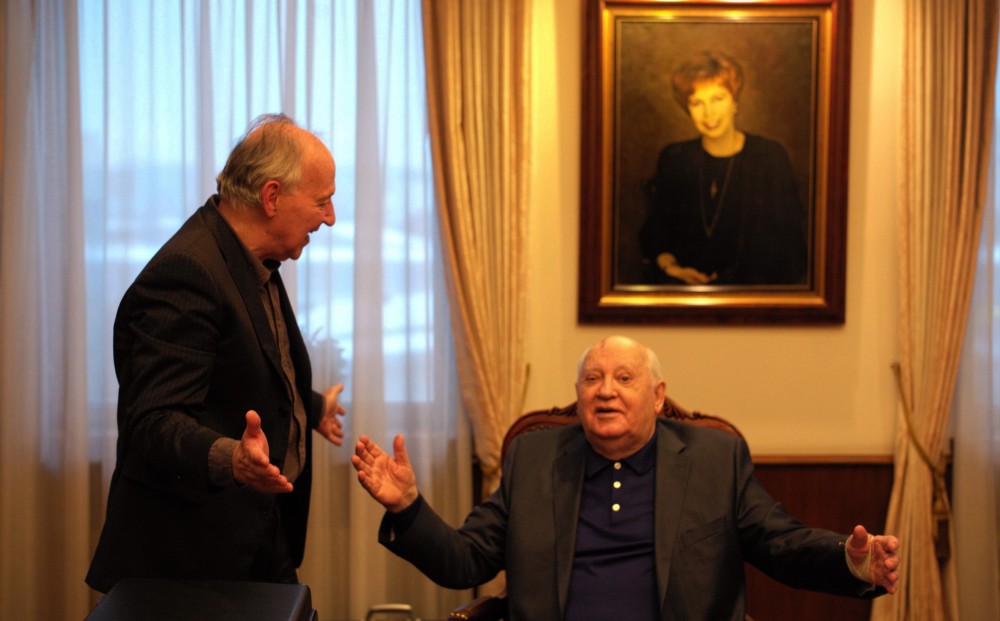
Meeting Gorbachev is Werner Herzog’s admiring biodoc of Mikhail Gorbachev, unquestionably one of the 20th century’s most pivotal figures. Herzog filmed three conversations with the then 87-year-old Gorbachev in 2018.

Gorbachev is revered in Germany – particularly by Werner Herzog – for allowing the peaceful, and startlingly quick, reunification of Germany. This biodoc is, to a fault, uncritical. At one point, Herzog even tells Gorbachev, “I love you”.

As the leader of the USSR, Gorbachev’s concepts of Perestroika and Glasnost transformed the political, economic and foreign policy of the Cold War superpower. More than any other individual, Gorbachev can claim credit for ending the Cold War, abolishing and destroying mid-range and short-range nuclear weapons, and the unchallenged independence of the Iron Curtain countries.

Gorbachev is also a tragic figure of Shakespearean proportions. He was intending to reform the USSR, not to destroy it. A coup by fossilized communists knocked him out of power but couldn’t be sustained, spinning out of control and leading to a chaos taken advantage of by the strong man Putin,.

Herzog’s film is excellent in its well-researched and well-told story of the rise of Gorbachev from a modest agricultural backwater – a talented achiever on the rise. Herzog’s irreverent sense of humors, as always, peeks through in the state funerals of Gorbachev’s predecessors, each more absurdly funny than the last.

The greatest gift of Meeting Gorbachev is, as the title suggests, is the unfiltered Gorbachev himself – now a grandfatherly raconteur. We get to appreciate his intellectual curiosity and his clarity of thought and direction. His charm and charisma, even at 87, help us understand how he rose to world leadership.

Werner Herzog and Mikhail Gorbachev in MEETING GORBACHEV

Herzog was a charismatic and innovative leader of German New Cinema. Between 1972 and 1982, he created the art house hits Aguirre:The Wrath of God, Strozek Nosferatu the Vampyre, and Fitzcarraldo.

In 1997, Herzog switched gears with the underrated documentary Little Dieter Needs to Fly and followed it with great docs like Grizzly Man and Encounters at the End of the World. Most remarkably, Herzog has also become one of the greatest narrators of English language documentaries; somehow, his German-accented narrations are hypnotic. (In 2007, Herzog slipped in Bad Lieutenant: Port of Call New Orleans with Nicholas Cage in the Klaus Kinski wild man role and cinema’s funniest iguana hallucination.)

Meeting Gorbachev played at the San Francisco International Film Festival (SFFILM). I saw Meeting Gorbachev at Silicon Valley’s Cinema Club.