HUMAN RESOURCES: Iago with a sick sense of humor

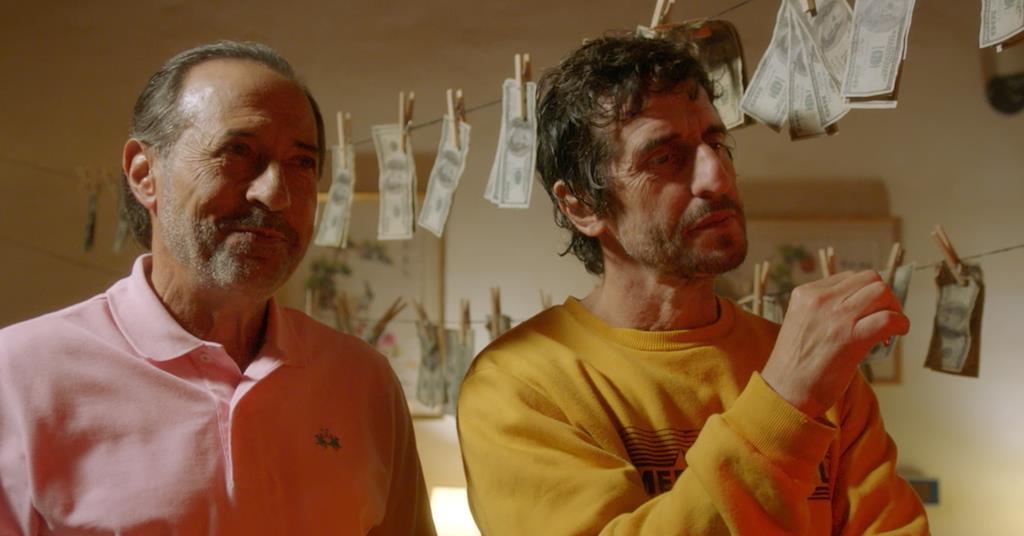
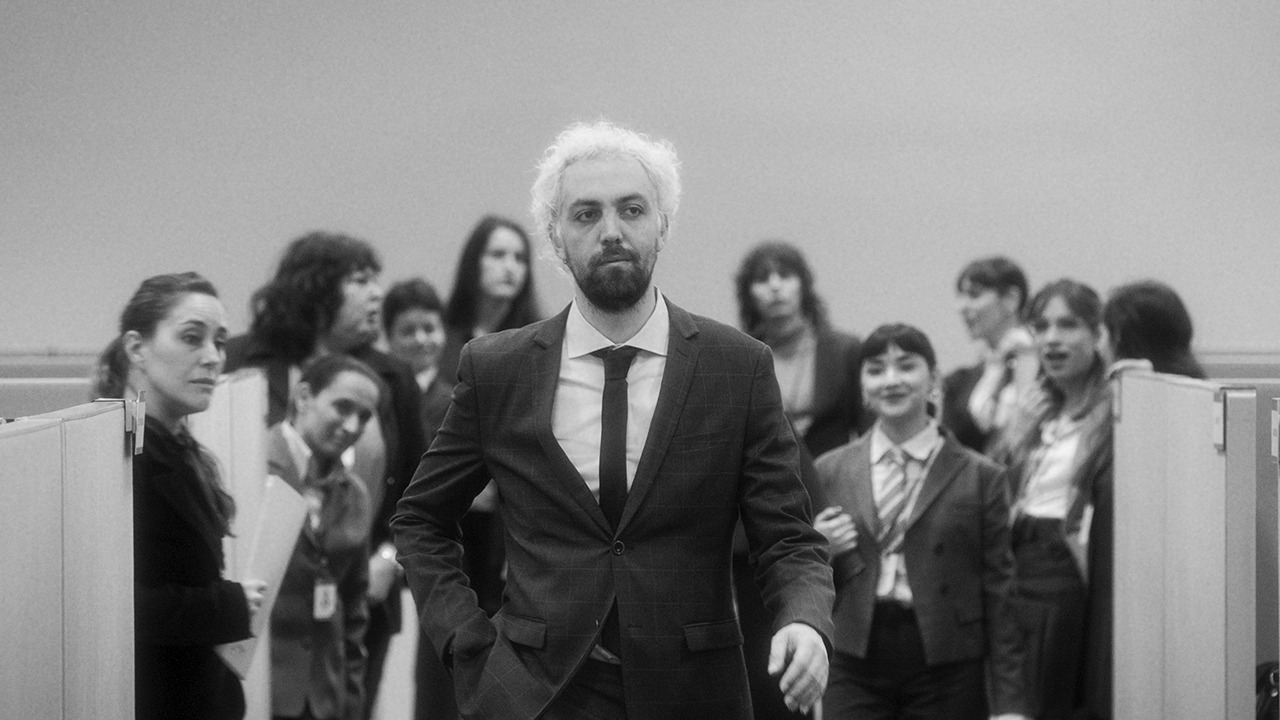
Pedro De Tavira (center) in HUMAN RESOURCES. Courtesy of Cinequest.

In the dark, dark Argentinian comedy Human Resources, Gabriel Lynch (Pedro De Tavira) is an alienated office worker, in an absurdly alienating workplace. Gabriel is a low-level supervisor on an anonymous lower floor of a corporate hive with too many layers of management and an oppressive, top-down culture. It’s also oversexed, with a carousel of Inappropriate office liaisons. And, we’ll soon see, is shockingly tolerant of what we would see as the most horrifying workplace violence.

Gabriel, an Iago with a sick sense of humor, begins a ruthless, unhinged campaign against those who offend him. Alienation leaks out in how her treats everyone. Mischievous, mean-spirited and completely unashamed, he’s very fun to watch. And, as venal as Gabriel is, he is matched, step-for-step, by Veronica from Finance (Juana Viale).

Around the 41-minute mark, Gabriel makes his grievance explicit (followed by a great drone shot)

“I’ve lived like the secret son of a king for a long time, waiting for a courtier to rescue me. Of course, nobody rescued me. Nobody rescues anybody.”

Human Resources is the creation of writer-director Jesús Magaña Vázquez. I’ve rarely seen a more cynical comedy.

Last year’s Cinequest hosted the US premiere of Human Resources, which I highlighted in my Best of Cinequest. Human Resources is now streaming on Hulu. There are many recent movies with a similar title; make sure you’re watching the 2023 Recursos Humanos directed by Magana and starring Pedro De Tavira.

I love the Spanish language trailer, even without English subtitles:
KILL THE JOCKEY: surrealism in the stables

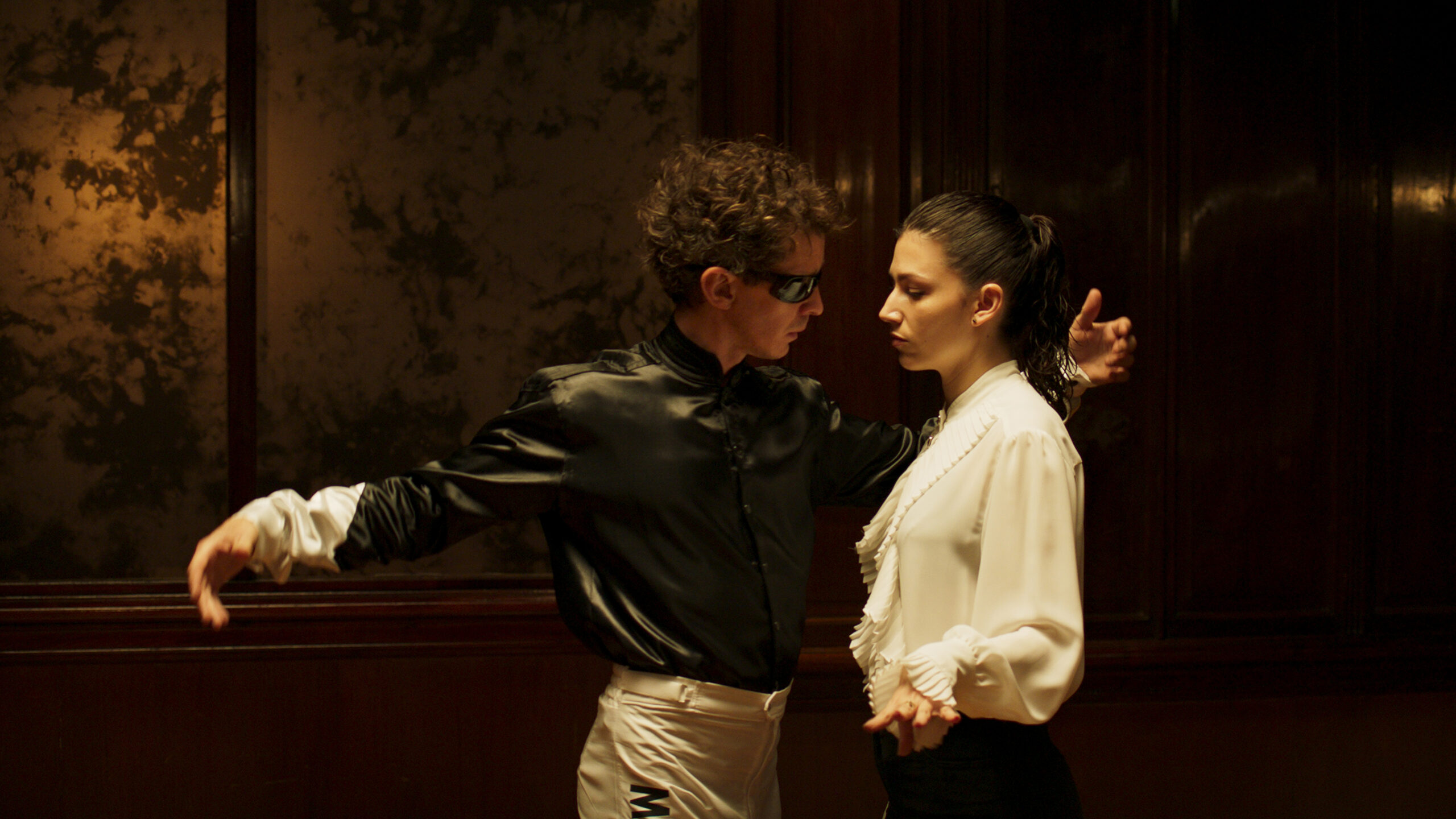
Photo caption: Nahuel Perez Biscayart and Ursula Corbero in KILL THE JOCKEY. Courtesy of Music Box Pictures.

In the surreal Argentine comedy Kill the Jockey, Remo (Nahuel Perez Biscayart) is a once-champion jockey, who is zealously self-sabotaging his career; self-medicating with alcohol and even swiping the racehorses’ drugs and the booze left on a good luck altar, he has become utterly unreliable. Remo can only emerge from his narcosis to demonstrate his passion for his wife Abril (Ursula Corbero). Abril is also a jockey, and her racing career is on the upswing, although she will soon have to pause it to have their baby.

Both Remo and Abril ride for a mobster (Daniel Jimenez Cacho), who, against all available evidence, has concluded that Remo can still win a big race. As a result, Remo suffers a brain injury, which spurs catatonia and, eventually, a major change in his identity. Remo leaves the hospital without being discharged, and wanders the city in a walking stupor, unaware that both a frantic Abril and the mobster’s murderous goons are searching for him. At this point, Remo is not an ideal gunowner, but he gets a pistol, and the lives of Remo, Abril and the mobster take significant twists. Kill the Jockey morphs into a fable of identity.

Nahuel Perez Biscayart in KILL THE JOCKEY. Courtesy of Music Box Pictures.

Director and co-writer Luis Ortega tells this story with plenty of droll absurdism. Inexplicably, the mobster usually carries an infant, a mounted brass band suddenly appears, the possessions of a coat pocket include a live fish, and there’s ceiling-walking. Kill the Jockey has its share of LOL moments in the first half of the film.

Early in the film, Abril launches a celebratory dance, is soon joined by Remo, and the two move together as unhinged marionettes. It’s as if figures in a Dali painting broke into a sensuous dance. This is a spellbinding scene, the best one in Kill the Jockey and, possibly, in any movie this year so far.

Unfortunately, the second half of Kill the Jockey, with more Remo and less Abril, is not as compelling. Ortega keeps throwing in the entertainingly bizarre, but the film loses momentum as Remo transforms.

I first saw Nahuel Perez Biscayart as the star of the psychological Holocaust thriller Persian Lessons. He’s a good choice to play the tragicomic Remo, a broadly funny character that morphs into a heartfelt one. But the most interesting performance in Kill the Jockey is Ursula Corbero’s as Abril – brimming with charisma and vitality; Abril must navigate her life and Remo’s as Remo’s condition keeps changing dramatically.

Kill the Jockey is Argentina’s submission for the Best International Feature Film Oscar and has been nominated for significant awards, including the Goya (best Iberoamericano film) and the best film at Venice Film Festival. It releases into theaters this weekend, including the Laemmle NoHo in LA, the Roxie in San Francisco and the Smith Rafael Film Center in San Rafael.

HUMAN RESOURCES: Iago with a sick sense of humor

Pedro De Tavira (center) in HUMAN RESOURCES. Courtesy of Cinequest.

In the dark, dark Argentinian comedy Human Resources, Gabriel Lynch (Pedro De Tavira) is an alienated office worker, in an absurdly alienating workplace. Gabriel is a low-level supervisor on an anonymous lower floor of a corporate hive with too many layers of management and an oppressive, top-down culture. It’s also oversexed, with a carousel of Inappropriate office liaisons. And, we’ll soon see, is shockingly tolerant of what we would see as the most horrifying workplace violence.

Gabriel, an Iago with a sick sense of humor, begins a ruthless, unhinged campaign against those who offend him. Alienation leaks out in how her treats everyone. Mischievous, mean-spirited and completely unashamed, he’s very fun to watch. And, as venal as Gabriel is, he is matched, step-for-step, by Veronica from Finance (Juana Viale).

Around the 41-minute mark, Gabriel makes his grievance explicit (followed by a great drone shot)

“I’ve lived like the secret son of a king for a long time, waiting for a courtier to rescue me. Of course, nobody rescued me. Nobody rescues anybody.”

Human Resources is the creation of writer-director Jesús Magaña Vázquez. I’ve rarely seen a more cynical comedy.

Cinequest hosts the US premiere of Human Resources, which I highlighted in my Best of Cinequest.

I love the Spanish language trailer, even without English subtitles:

THE HEIST OF THE CENTURY: improbable, ingenious and all too human

Guillermo Francella and Diego Peretti in THE HEIST OF THE CENTURY. Photo courtesy of Mill Valley Film Festival.

The Heist of the Century, a delightful crime tale from Argentina, tells a story that would be unbelievable – except it all really happened.

Most improbably, one of the masterminds is Fernando (Diego Peretti), a dope-smoking, new agey martial arts instructor. He has an idea for One Big Score – a bank robbery that will take hours, during daylight, in the middle of the city, and is certain to mobilize the entire police force. Fernando enlists a highly disciplined, professional criminal Luis Mario (Guillermo Francella); initially skeptical of and resistant to both Fernando and the job, Luis Mario joins Fernando in planning and assembling a team.

The planning is meticulous, including unexpected elements like studying the SWAT Team manual on hostage negotiations and attending acting class. Three of their solutions to defeating the bank’s security demonstrate undeniable genius.

The heist itself, with the seconds ticking and the bank surrounded by an army of police, is thrilling. The thieves have a formidable opponent in the police negotiator Sileo (an excellent Luis Luque); he is a wise and solid pro surrounded by lesser minds – and he doesn’t appreciate being made to look like Wiley Coyote.

However, what looks like a triumph might come to ruin – because of the most human of foibles. The ending is amazing.  

The Heist of the Century is the true story of the 2006 Banco Rio robbery in Acassuso, Argentina, a seaside suburb of Buenos Aires. Fernando Araujo, the original mastermind, is credited as one of the screenwriters.

The Heist of the Century is directed by Ariel Winograd, who emphasizes the contrasting personalities of Fernando and Luis Mario and creates a perfect balance between the humor and the thrills. Winograd spices the soundtrack with music ranging from The Kinks, spaghetti westerns to Motown and opens with a cheesy James Bondesque tune.

Guillermo Francella, who plays Luis Mario, played Ricardo Darin’s drunk assistant in The Secrets of Their Eyes. In this movie, Francella’s real life daughter Ana plays Mario Luis’ daughter Lu.

I screened The Heist of the Century for the Mill Valley Film Festival in October 2020. Now you can stream it from HBO Max, Amazon, Vudu and YouTube.

coming up on TV – THE BITTER STEMS, a lost masterpiece, rediscovered

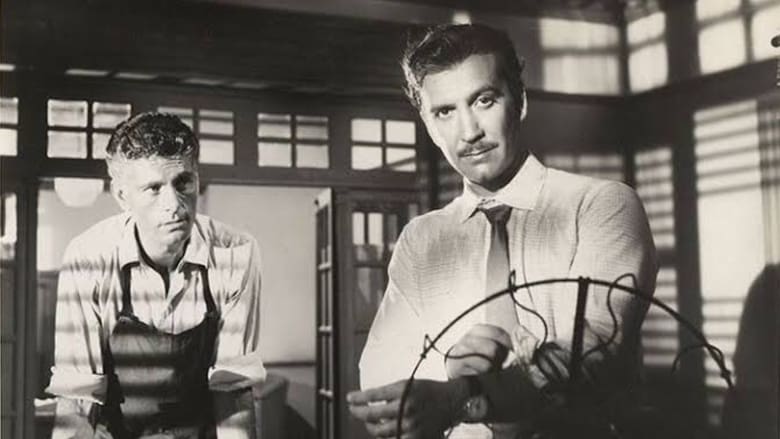
Photo caption: Vassili Lambrinos and Carlos Cores in BITTER STEMS

Turner Classic Movies brings us a rare treat this Saturday and Sunday, July 17-18, the recently recovered Argentine masterpiece of film noirThe Bitter Stems (Los tallos amargos). TCM will air it on Eddie Muller’s Noir Alley.

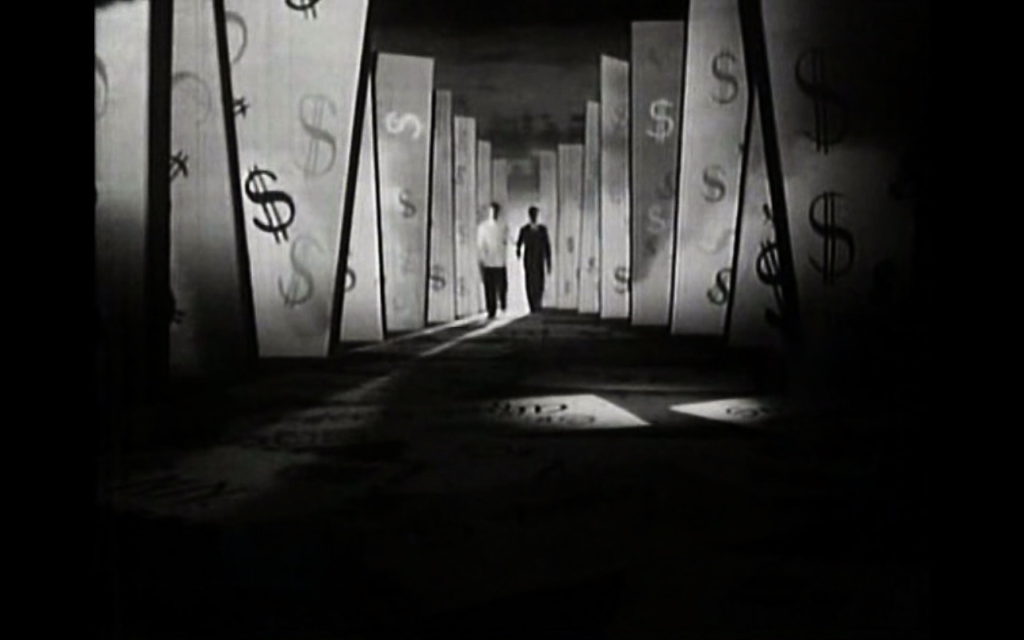
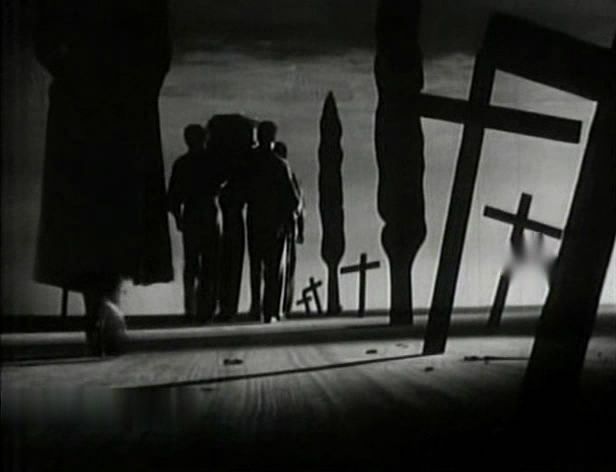
The Bitter Stems was listed as one of the “50 Best Photographed Films of All-Time” by American Cinematographer. It won the Silver Condor (the Argentine Oscar) for both Best Picture and Best Director (Fernando Ayala).

The Bitter Stems was thought to be lost until a print was discovered in a private collection in 2014 and restored with the support of Muller’s Film Noir Foundation. I saw it – and was enthralled – at the 2016 Noir City film festival in San Francisco. That was probably The Bitter Stem’s US premiere and probably the first time that it was projected for any theater audience in over fifty years.

There is often an Icarus theme in film noir, with protagonists who over-reach and risk a lethal fall. Here, Gaspar (Carlos Cores), a grasping Argentine journalist, conspires with Hungarian immigrant Liudas (Vassili Lambrinos) to concoct a fraud that will make them a quick and easy fortune. Unfortunately, the scheme requires a hamster-in-the-wheel effort to stay ahead of collapse – and everything must go just right…

Lambrinos’ performance is particularly sui generis.

This was a very early film for director Fernando Ayala, who went on to establish himself as one of Argentina’s major directors. Cinematographer Ricardo Younis had studied under Greg Toland, who originated the groundbreaking techniques in Citizen Kane. Ayala and Younis combined to create the film’s storied dream sequence – one of the most surreal in cinema (see images below).

The Bitter Stems (Los tallos amargos) is a masterpiece, but almost nobody has seen it in over fifty years. Don’t miss it this time – set your DVR.

From SFFILM: ROJO – bobbing in a sea of moral relativism

Benjamin Naishtat’s ROJO. Courtesy of SFFILM.

The San Francisco International Film Festival (SFFILM) was set to open tomorrow before it was cancelled for the COVID-19 emergency, so in tribute, here’s a film from SFFILM’s 2019 program.

Rojo is Argentine writer-director Benjamín Naishtat’s slow burn drama.  Rojo is set just before the 1970s coup that some characters expect – but no one is anticipating how long and bloody the coup will be.  Several vignettes are woven together into a tapestry of pre-coup moral malaise.

A prominent provincial lawyer Claudio (Darío Grandinetti) is invited to participate in a scam. There’s a scary encounter of lethal restaurant rage. It looks like Claudio, bobbing on a sea of moral relativism, may well remained unscathed, but the arrival of crack detective becomes a grave threat.

As Claudio weaves through his life, his society shows signs of crumbling. There’s a failed teen seduction, an emotional breakdown at a formal reception and a natural metaphor – a solar eclipse.

It’s funny when the audience finally connects the dots and understands who the character nicknamed “the Hippie” is. And Naishtat and Grandinetti get the most out of the scene where Claudio finally dons a toupee.

We know something that the characters don’t know – or at least fully grasp – how bloody the coup will be. Watch for the several references to desaparecido, a foreboding of the coup. Argentina’s coup was known for the desaparecidos – the disappeared – thousands of the regime’s political opponents went missing without a trace, having been executed by death squads. In Rojo, a very inconvenient madman dies and his body is hidden, there’s a disappearing act in a magic show, and a would-be boyfriend vanishes.

This is a moody, atmospheric film that works as a slow-burn thriller. I saw Rojo earlier a year agoat the San Francisco International Film Festival (SFFILM). Rojo made my list of 10 Overlooked Movies of 2019. Stream from Amazon, iTunes and Vudu.

ROJO: bobbing in a sea of moral relativism

ROJO. Courtesy of SFFILM.

Rojo is Argentine writer-director Benjamín Naishtat’s slow burn drama.  Rojo is set just before the 1970s coup that some characters expect – but no one is anticipating how long and bloody the coup will be.  Several vignettes are woven together into a tapestry of pre-coup moral malaise.

A prominent provincial lawyer Claudio (Darío Grandinetti) is invited to participate in a scam. There’s a scary encounter of lethal restaurant rage. It looks like Claudio, bobbing on a sea of moral relativism, may well remained unscathed, but the arrival of crack detective becomes a grave threat.

As Claudio weaves through his life, his society shows signs of crumbling. There’s a failed teen seduction, an emotional breakdown at a formal reception and a natural metaphor – a solar eclipse.

It’s funny when the audience finally connects the dots and understands who the character nicknamed “the Hippie” is. And Naishtat and Grandinetti get the most out of the scene where Claudio finally dons a toupee.

We know something that the characters don’t know – or at least fully grasp – how bloody the coup will be. Watch for the several references to desaparecido, a foreboding of the coup. Argentina’s coup was known for the desaparecidos – the disappeared – thousands of the regime’s political opponents went missing without a trace, having been executed by death squads. In Rojo, a very inconvenient madman dies and his body is hidden, there’s a disappearing act in a magic show, and a would-be boyfriend vanishes.

This is a moody, atmospheric film that works as a slow-burn thriller. I saw Rojo earlier this year at the San Francisco International Film Festival (SFFILM) and it opens this weekend in Bay Area theaters.

ZAMA: the corruption of colonialism (as if we needed to know)

Daniel Giménez-Cacho in ZAMA

The protagonist of Zama is a colonial magistrate in the late 1700s, a low-level functionary of the Spanish crown in a remote backwater of South America. A pretty decent guy for a colonizer who enslaves other humans, Diego de Zama (Daniel Giménez-Cacho) has been loyally performing his duties, and his sole ambition is to get a transfer and return to his family.

But his bosses just won’t give him that transfer, even when he performs a morally painful task. Worse than that, his life is an unending sequence of indignities. While de Zama can’t get relieved, the underling who has been fired for insubordination gets the assignment of his choice; de Zama lusts for the Spanish colonial woman who teases him, but she only will bed the same insubordinate underling. De Zama can’t even get his indigenous mistress to wash his shirt.

The Wiley Coyote of Spanish colonialism, De Zama is frustrated, humiliated – and finally, far worse. Zama’s descent leads to his final act of refusing to give what he sees as false hope to even his tormentors. As the indignities pile up on Zama, the absurdity becomes wry; I kept thinking of the Job-like misfortunes of the protagonist in the Coen brothers’ A Serious Man, which is funny as hell, unlike Zama.

The finest screen actors are best when they are silently watching, observing and assessing their own situations. The Spanish-born Mexican actor Giménez-Cacho is particularly adept at this, and throughout the film we see “I am so screwed” in his eyes.

This is all meant to show us the fundamental corruption of colonialism, and that colonialism ultimately destroys the colonizer as well as the colonized. (Yes, this really hasn’t been controversial for the past 50 years.)

This is a one-note movie. Zama has a score of 89 from Metacritic and is beloved by many admirable critics, including the great Manohla Dargis. But the repetitive tedium and the Message worn on its sleeve didn’t pay off for me. You can stream it if you insist.

Cinequest: AMATEUR

Jazmín Stuart in AMATEUR

The taut Argentine thriller Amateur reminds us of Psycho, but with more grisly killing and sexual perversity.  A new hire at a television station is combing through some old tapes and discovers a sex tape (hence the title).  He becomes obsessed with the woman in the tape and later meets her in real life. As in Psycho, a serial killer suddenly takes over the story, and Amateur plunges into tales of blackmail, kidnapping and a sordid back story of sexual exploitation.  Trying to solve the first murder, the police stumble along as the bodies pile up.

The original sex tape is only the first layer of voyeurism in Amateur. More and more characters video record and view the actions of others.

Jazmín Stuart is very good as a woman that the audience is likely to underestimate at the beginning of the film  There is a moment in Amateur when she has just had a consensual sexual encounter but her eyes start to signal that something is terribly wrong; it’s unforgettable.

Alejandro Awada is perfectly cast as a guy who seems formidable at first; we keep learning that he has more and more assets, including his trophy wife.  His easy-going affect of geniality and confident charm is an effective juxtaposition to the monster he is revealed to be.  Awada delivered another excellent supporting performance in the overlooked neo-noir The Aura.

The veteran producer Sebastian Perillo makes his writing and directing debuts with Amateur.  The US premiere of Amateur is at Cinequest.

Cinequest: PARABELLUM

PARABELLUM
PARABELLUM

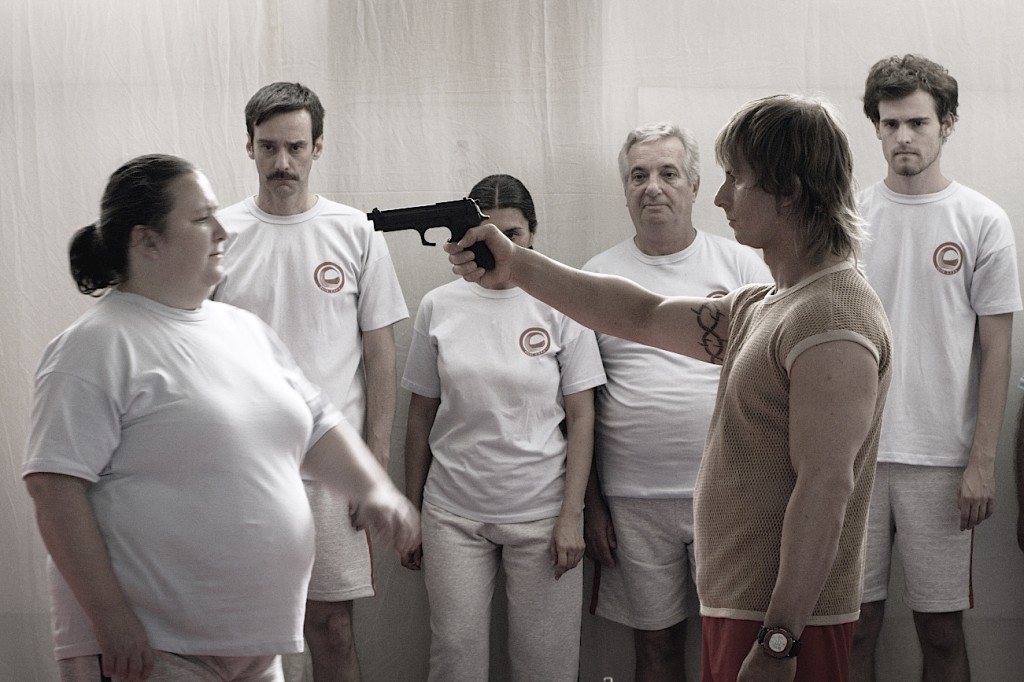
The Argentine drama Parabellum is a trippy movie unlike anything that you’ve seen.  Set in a pre-apocalyptic near future, cities are crumbling into disorder and meteors are plunging into the Earth with alarmingly increased frequency.  Clearly everyone should be panicking, but no one is.

Instead, the characters in Parabellum don blindfolds and are motored up a jungle river to a secret adventure resort where they learn survivalist skills – kind of Camp Heart of Darkness.  The most life-and-death exercises are addressed matter-of-factly, with an absurdly calm determination that makes Parabellum seem like something out of Buñuel.

Parabellum’s measured pace seems so at odds with the impending disaster (whatever it will be), that it’s part of the joke.  What the hell is going on and what are these people thinking?  Beautifully shot, engrossing and witty – Parabellum is a wacky treat.