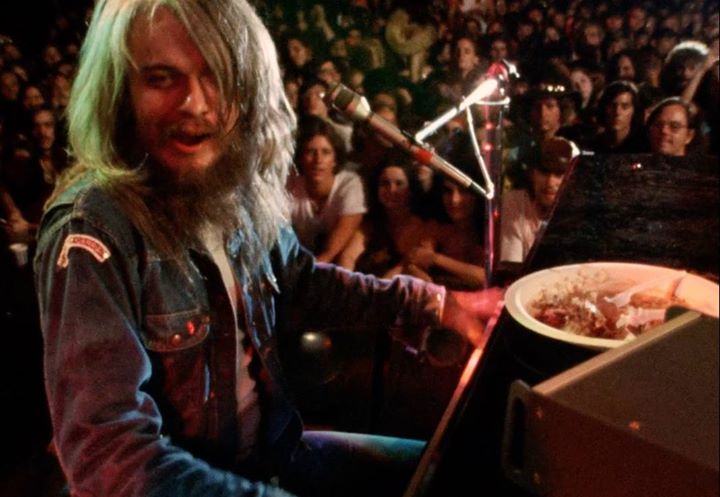
I first noticed the musician Leon Russell with his distinctive top hat in the concert movie Mad Dogs and Englishmen. In another (and really, really good) concert film, The Concert for Bangladesh, I wondered, “who is this long-hair, and why is he the bandleader in a band with George Harrison, Bob Dylan, Eric Clapton and Ringo Starr?”. (The Concert for Bangladesh, organized by George Harrison, broke ground as the first big benefit concert with a collection of mega-stars.) I soon became a big fan of Leon’s solo career, and I’m saddened by his death this morning.
You can enjoy lots of unfiltered 1972-74 Leon, both on- and off-stage in the documentary A Poem is a Naked Person. A Poem Is a Naked Person has been a bit of a Lost Film – until recently only shown at screening where Blank was present. Now you can stream it on Amazon Instant, Vudu, YouTube and Google Play. The Concert for Bangladesh is available to rent on DVD from Netflix.
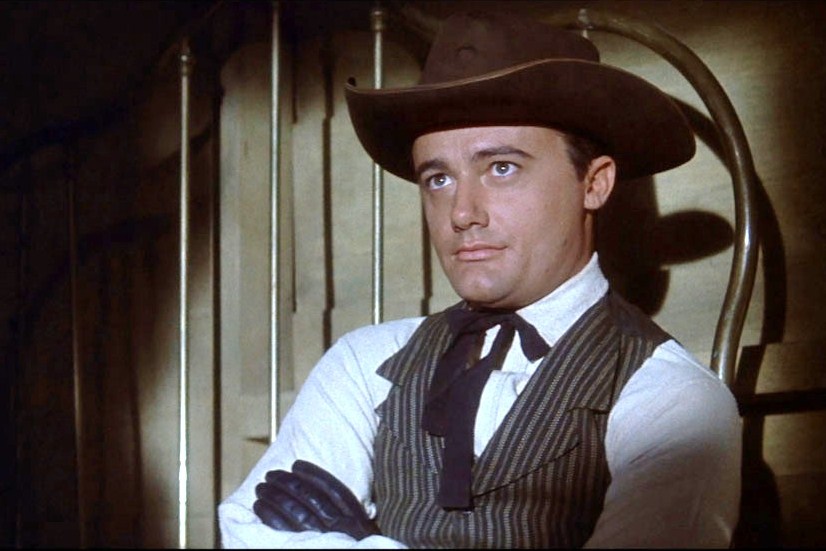
The actor Robert Vaughn has died. Vaughn left a body of work with 226 screen credits, mostly on television. He was nominated for a Supporting Actor Oscar for The Young Philadelphians, but I think his most enduring feature film role was as one of The Magnificent Seven.
Of course, for us Baby Boomers, Vaughn will always be remembered as Napoleon Solo in the Bond spy spoof The Man from U.N.C.L.E., which absolutely dominated television briefly in the mid-1960s.
Not an actor with a lot of range or depth, Vaughn’s greatest attribute was his presence – a very cool presence. Not cool as in “hip”, but cool as in “icy”. That presence served him well in action films. And his unremitting dead pan was PERFECT for a parody like U.N.C.L.E.
His NYT obit indicates that, in real life, he was noted for his militant rejection of any artistic pretension whatsoever and for his liberal politics.
We’re diving into a very promising Fall movie season . Critical favorites Moonlight, The Handmaiden,Certain Women,Aquarius, and Loving are already out. Arrival (already an Oscar favorite along with Loving) and The Eagle Huntress open today. Top choices:
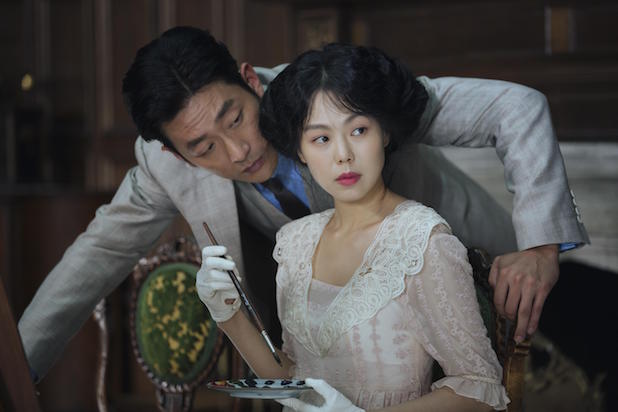
The Korean period con artist movie The Handmaiden is gorgeous, erotic and extraordinarily entertaining.
Sonia Braga is still luminous in the character-driven Brazilian drama Aquarius.
John Travolta, Ethan Hawke and Jumpy the dog sparkle in the spaghetti western In a Valley of Violence.
Mascots is the latest mockumentary from Christopher Guest (Best in Show) and it’s very funny. Mascots is playing in very few theaters, but it’s streaming on Netflix Instant, too.
Also in theaters or on video:
The remarkably sensitive and realistic indie drama Moonlightis at once a coming of age tale, an exploration of addicted parenting and a story of gay awakening. It’s almost universally praised, but I thought that the last act petered out.
Not much happens in the talented and idiosyncratic filmmaker Kelly Reichardt’s Certain Women, but it’s well-acted and feels real.
The indie drama Men Go to Battle is an insightful tale of two brothers that exceptionally illustrates the QUIET of pre-electric and pre-motorized North America. Men Go to Battle is available to stream from Amazon Instant, iTunes, Vudu, YouTube and Google Play.
If you are entertained by the epically disgusting, you can catch the horror comedy The Greasy Strangler before it hits the midnight cult movie circuit. The Greasy Strangler can be streamed from Amazon Instant, iTunes, Vudu, YouTube and Google Play.
The end of the thriller The Girl on the Train (starring Emily Blunt) is indeed thrilling. But the 82 minutes before the Big Plot Twist is murky, confusing and boring.
My Stream of the Week is the emotionally affecting and authentic indie drama Five Days in Maine, the impressive debut of writer-director Marin Curran. I saw Five Days in Maine at the San Francisco International Film Festival. It’s now available to stream on Amazon Instant, Vudu, Google Play, YouTube and DirecTV.
On November 13, Turner Classic Movies is screening two very different but wonderful movies from the same director, Richard Fleischer. First, there’s the overlooked film noir masterpiece The Narrow Margin(1952), a taut 71 minutes of tension. Growly cop Charles McGraw plays hide-and-seek with a team of hit men on a claustrophobic train. Marie Windsor is unforgettable as the assassins’ target. It’s highly recommended on my list of Overlooked Noir.
Then, TCM brings us the 1973 cult sci-fi classic Soylent Green, which was utterly under appreciated until the past decade or so. Set in a dystopian future (like those so popular in today’s sci-fi), humans have pretty much destroyed the environment and most are impoverished, even homeless. The dietary staple is a green pellet provided by a mega-corporation. Charlton Heston is surprisingly effective as a jaded and solitary cop, whose investigation leads him to a horrifying discovery. The cast is very good, including Edward G. Robinson in his final performance. Soylent Green was directed by the versatile Richard Fleischer, 21 years after The Narrow Margin.
Waking up to a nation where everyone else has been infected by a rage virus
Imagine waking up to a nation where everyone else has been infected by a rage virus. You too?
It’s all reminded me of Danny Boyle’s 2002 post-apocalyptic thriller 28 Days Later... Cillian Murphy plays a guy who awakens from a coma and learns that almost everyone on the island of Britain has become infected by a rage virus that drives them to kill the uninfected. He finds a hidden band of the uninfected (Naomie Harris of Moonlight, Our Kinf of Traitor and Skyfall and Brendan Gleeson of In Bruges and The Guard) who decide to risk a dash through zombie territory to a reported safe haven to the north.
These zombies don’t shamble – they are amped up on adrenaline and they can outrun you. Accordingly, they are way more terrifying that a regular shambling zombie.
Technically, the “zombies”are not zombies (reanimated dead people), but are live people who are infected with the rage virus. However, they fulfill the role of zombies in the plot, and Boyle has acknowledged that scenes in 28 Days Later… reference scenes in the George A. Romero Dawn of the Dead series. 28 Days Later… is consequently on various zombie movie lists. As in the rest of the genre, the zombies are trying to hunt down the people, a person who is bitten will become a zombie, and, to survive, the heroes need to massacre hordes of zombies.
Director Danny Boyle (Trainspotting, Slumdog Millionaire, 127 Hours) is known for his visually arresting movies, and here he creates a spectacular post-apocalyptic Britain – menacingly dark and deserted except for the lethally crazed.
It’s on my list of Zombie Movies for People Who Don’t Like Zombie Movies. You can rent 28 Days Later… on DVD from Netflix or stream it from Amazon Instant, iTunes, Vudu, YouTube, Google Play and a variety of other sources.
David Oyelowo and Dianne Wiest in FIVE NIGHTS IN MAINE. Photo courtesy of San Francisco Film Society
An Atlanta man (David Oyeowlo) suddenly loses his wife to an auto accident and is completely shattered by the depth and the jarring abruptness of his loss. Pushed by his sister out of his paralysis, he drives up to Maine to visit his wife’s mother (Dianne Wiest). She is a person who is generally harsh, judgemental and irritating at all times, but is more so now that her own health is failing. His experience with her becomes the antithesis of the comfort and support that one would expect. As she probes and spars with him, the two are each driven to their own catharsis. The end of Five Nights in Maine also comes abruptly, leaving us to reflect on the lessons learned by the leading characters and how their grief is resolved.
Five Nights in Maine uses a handheld camera and LOTS of close-ups. This was a conscious choice by first-time writer-director Maris Curran, who sought a “closing in” effect because “grief is claustrophobic”.
Dianne Wiest’s performance is an awards-worthy tour de force. Flashing fiery looks and shooting piercing remarks from an invariably rigid posture, she commands our attention every moment that she is on-screen. As we would expect, Oyewolo is outstanding, especially in the early scenes where he collapses into shock. Rosie Perez, not as sassy, but every bit as appealing, as usual, is rock solid in the supporting role as the mother’s nurse. As the sister, Tenoyah Parris (Chi-Raq, Dear White People, Mad Men) gives yet another flawless performance.
I saw Five Nights in Maine at the 59th San Francisco International Film Festival (SFIFF), where Director Maris Curran, producer Carly Hugo and actor David Oyelowo appeared at the screening. Curran said she was motivated to write a story about loss as her own marriage was falling apart; when the ground was pulled out from under her, she created a protagonist in that situation.
Aiming for a sensual look for an emotional film, Curran was able to snare Tunisian cinematographer Sofian El Fani, fresh from his exquisite work in from Blue Is the Warmest Color, for his first American film. Budgeted for a 19-day shoot, the crew finished in only 18.
Oyewolo, happily married for 18 years, found exploring the territory of losing his wife to be very uncomfortable. Five Nights in Maine was shot right after Selma, so his exhaustion from Selma helped him find this “hollowed-out” character. Oyewolo sees Five Nights in Maine as a fish out of water story – not just geographically but emotionally (a man not used to or prepared for grief). Oyewolo prefers women directors because he “wants to be part of stories that are emotionally challenging”.
Fortunately, Curran leavens this dark-themed story with bits of sharp humor. It’s an emotionally affecting and authentic movie. Five Nights in Maine is available to stream on Amazon Instant, Vudu, Google Play, YouTube and DirecTV.
It’s the eve of the Presidential election, and we need to find some relief from the current soul-sucking campaign in historical or fictional politics. So here are three great movies about political campaigns:
The Candidate (1970): Probably the best political movie of all time. Robert Redford stars as an activist ideologue who resists following his father’s path into electoral office. Once he’s in, he embraces winning with the help of a savvy consultant (Peter Boyle). Anyone who has run a campaign will relate to this roller coaster. Especially if you’ve set up an event with a bad sound system. Or if you’ve been late to live television appearance. Or if you’ve swiped an opponent’s literature when door-hanging. Some scenes were shot on location in the Bay Area, including a banquet in a San Francisco hotel and a speech in San Jose’s Eastridge Mall. The Candidate is available to rent on DVD from Netflix and to stream from Amazon Instant, iTunes, Vudu, YouTube and Google Play.
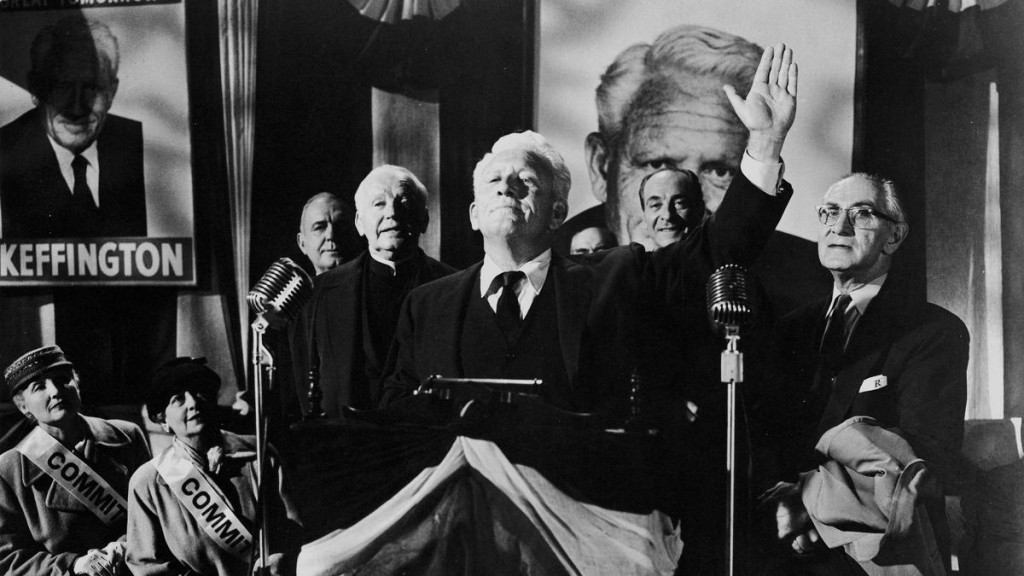
The Last Hurrah (1958): The master director John Ford is famous for westerns, but this portrait of an embattled incumbent is a classic of political cinema. Spencer Tracy plays the leader of an urban political machine. He’s got years of accomplishments and a machine in his favor, but his newspaper-owning antagonist is running an empty suit against him in a campaign increasingly fought on the newfangled medium of television. He’s been so successful for so long that his ward heelers have become complacent, and he’s smelling the campaign getting away from him. The Last Hurrah is available to rent on DVD from Netflix and to stream from Amazon Instant, iTunes, Vudu, YouTube and Google Play.
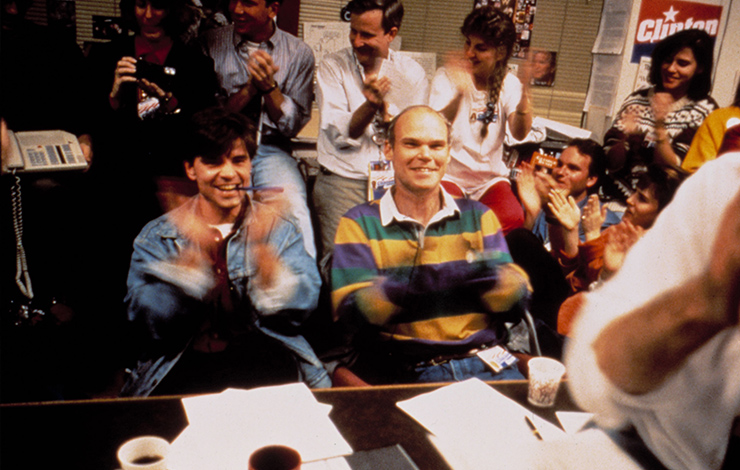
The War Room(1993): the brilliant documentary of the FIRST successful Clinton for president campaign. We get to watch from the inside as the first Baby Boomer takes out a sitting President from the Greatest Generation, aided by the new masters of the spin and the newly emerged 24-hour news cycle. Remember – this was the campaign steered by the on-again-off-again-on-again whims of H. Ross Perot. What seemed at the time as cut throat tactics are quaint today. And viewers will become wistful for time when you could kill a news story, no matter how sensational, if it were unverified or untrue. The War Room is available to rent on DVD from Netflix and to stream from Amazon Instant, iTunes and Hulu (subscription).
Plus tonight, Turner Classic Movies brings us two brilliant political documentaries:
Primary documents the Wisconsin Democratic primary election campaign in 1960. This was a key stepping stone in John F. Kennedy’s road to the White House because it was a chance for him to demonstrate that he appealed to voters outside the Northeast. Kennedy’s rival Hubert Humphrey was favored because Wisconsin neighbors Humphrey’s home state of Minnesota. Primary is both a time capsule of 1960 politics and an inside look at the Kennedy family unleashed in a campaign. There’s an amazing scene where Humphrey appeals to a handful of flinty farmers in a school gym – he’s giving his all and he ain’t getting much back. Only 60 minutes long, Primary has been selected for preservation in the National Film Registry. The great documentarian D.A. Pennebaker, who went on to direct Monterey Pop and The War Room, shot, edited and recorded sound for Primary.
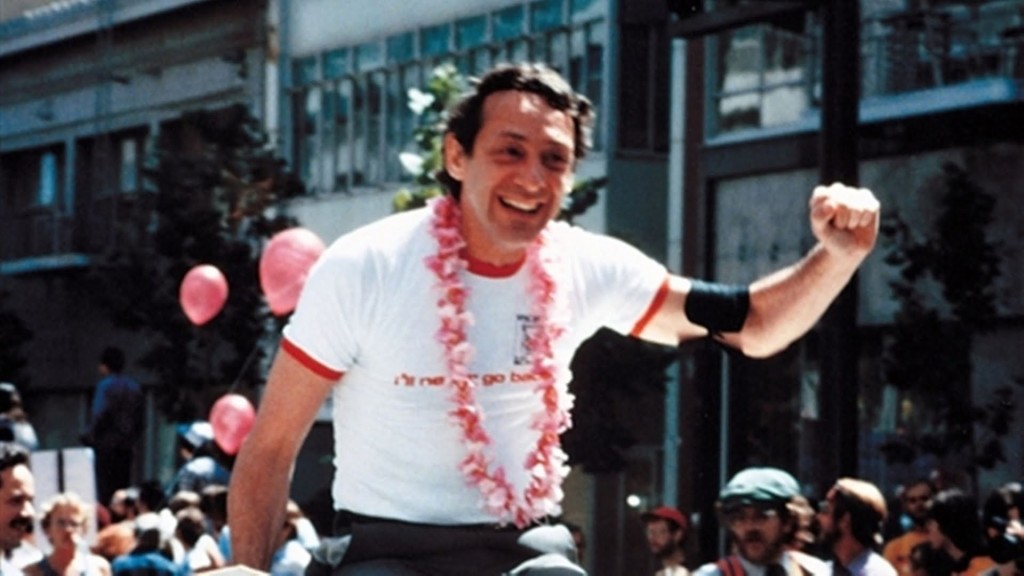
The Times of Harvey Milk – the documentary Oscar winner from 1984. It’s the real story behind the 2008 Sean Penn narrative Milk – and with the original witnesses. If you pay attention, The Times of Harvey Milk can teach you everything from how to win a local campaign to how to build a societal movement. One of the best political movies ever. And watch for the dog poop scene!
We’re at the beginning of a very promising Fall movie season. Critical favorites Moonlight, The Handmaiden and Certain Women are already out. Aquarius, Mel Gibson’s Hacksaw Ridge and, possibly, Loving open today in theaters. Arrival (already an Oscar favorite along with Loving) and The Eagle Huntress open in a week. Top choices:
The Korean period con artist movie The Handmaiden is gorgeous, erotic and extraordinarily entertaining.
Sonia Braga is still luminous in the character-driven Brazilian drama Aquarius.
John Travolta, Ethan Hawke and Jumpy the dog sparkle in the spaghetti western In a Valley of Violence.
Mascots is the latest mockumentary from Christopher Guest (Best in Show) and it’s very funny. Mascots is playing in very few theaters, but it’s streaming on Netflix Instant, too.
Also in theaters or on video:
The remarkably sensitive and realistic indie drama Moonlightis at once a coming of age tale, an exploration of addicted parenting and a story of gay awakening. It’s almost universally praised, but I thought that the last act petered out.
Not much happens in the talented and idiosyncratic filmmaker Kelly Reichardt’s Certain Women, but it’s well-acted and feels real.
The indie drama Men Go to Battle is an insightful tale of two brothers that exceptionally illustrates the QUIET of pre-electric and pre-motorized North America. Men Go to Battle is available to stream from Amazon Instant, iTunes, Vudu, YouTube and Google Play.
If you are entertained by the epically disgusting, you can catch the horror comedy The Greasy Strangler before it hits the midnight cult movie circuit. The Greasy Strangler can be streamed from Amazon Instant, iTunes, Vudu, YouTube and Google Play.
The end of the thriller The Girl on the Train (starring Emily Blunt) is indeed thrilling. But the 82 minutes before the Big Plot Twist is murky, confusing and boring.
My Stream of the Week is Meet the Patels, a documentary funnier than most comedies. Meet the Patels is available to stream from Netflix Instant, Amazon Video, iTunes, Vudu, YouTube and Google Play.
On November 7, the eve of the Presidential election, Turner Classic Movies brings us two brilliant political documentaries:
Primary documents the Wisconsin Democratic primary election campaign in 1960. This was a key stepping stone in John F. Kennedy’s road to the White House because it was a chance for him to demonstrate that he appealed to voters outside the Northeast. Kennedy’s rival Hubert Humphrey was favored because Wisconsin neighbors Humphrey’s home state of Minnesota. Primary is both a time capsule of 1960 politics and an inside look at the Kennedy family unleashed in a campaign. There’s an amazing scene where Humphrey appeals to a handful of flinty farmers in a school gym – he’s giving his all and he ain’t getting much back. Only 60 minutes long, Primary has been selected for preservation in the National Film Registry. The great documentarian D.A. Pennebaker, who went on to direct Monterey Pop and The War Room, shot, edited and recorded sound for Primary.
The Times of Harvey Milk – the documentary Oscar winner from 1984. It’s the real story behind the 2008 Sean Penn narrative Milk – and with the original witnesses. If you pay attention, The Times of Harvey Milk can teach you everything from how to win a local campaign to how to build a societal movement. One of the best political movies ever. And watch for the dog poop scene!
The talented and idiosyncratic filmmaker Kelly Reichardt’s Certain Women is another of her languorous observations of real people in the Northwest. It’s a classic Slice Of Life movie, with three slices, actually. Reichardt adapted the screenplay from short stories by Maile Meloy, and we have three barely interlocking tales of three women around the hamlet of Belfry, Montana. There’s the lawyer (Laura Dern) struggling to make her brain addled client (Jared Harris) understand and accept that he has no adequate legal recourse for a work injury. There’s a part-year resident (Michelle Williams) with a husband trying to reconnect with her and a very “teenage” teenager. And there’s a horse handler (Lily Gladstone) who gets a crush on a night school teacher (Kristin Stewart).
Not much happens. None of the main characters is in a substantially different place at the end of the film, although Gladstone’s rancher has learned a lesson about attraction. I’m going to blow right through my usual reticence about spoilers and tell you that Michelle Williams’ character gets her pile of rocks.
As a director, Reichardt is a brilliant observer, always picking up on the little awkward moments that are a part of life. She’s the perfect filmmaker to show Gladstone’s horse tender walking through downtown Livingston, where she knows no one, at night and peering in windows at people dining and getting their hair cut. Not only is there a solitary light bulb on a lonely character’s ceiling, but no one has finished the taped-and-mudded sheet rock around the bulb.
All three major actresses are very good. The performances by Lily Gladstone, Jared Harris and Rene Auberjonois (as an old man having trouble staying focused) are especially indelible.
I was a huge fan of Reichardt’s Old Joy, less so of her western misfire Meek’s Cutoff, and I thought that her Wendy and Lucy is a masterpiece. (BTW Certain Women is dedicated “For Lucy”, the dog in Wendy and Lucy.) If you are a patient moviegoer and/or a fan of Reichardt’s, then you should see Certain Women. But renting her Wendy and Lucy would be a better choice.
After a few minutes of The Handmaiden, we learn that it’s a con artist movie. After 100 minutes, we think we’ve watched an excellent con artist movie, but then we’re surprised by a huge PLOT TWIST, and we’re in for two more episodes and lots of surprises in a gripping and absorbing final hour. It’s also one of the most visually beautiful and highly erotic films of the year.
Director and co-writer Chan-wook Park sets the story in 1930s Korea during Japanese occupation (Japanese dialogue is subtitled in yellow and Korean dialogue in white). A young heiress has been secluded from childhood by her guardian uncle, who intends to marry her himself for her fortune. A con man embarks on a campaign to seduce and marry the wealthy young woman to harvest her inheritance himself. The con man enlists a pickpocket to become handmaiden to the heiress – and his mole. I’m not going to tell you more about the plot, but the audience is in for a wild ride.
The Handmaiden takes its time revealing its secrets. Who is conning who? Who is attracted to whom? How naive is the heiress? How loyal is the handmaiden? Who is really Japanese and who is really Korean? What’s in those antique books? What’s in the basement? Is the uncle perverted or REALLY perverted? And what legendary sex toy will show up in the final scene?
THE HANDMAIDEN
Chan-wook Park’s 2003 US art house hit Oldboy is highly sexualized, trippy and disturbing. The Handmaiden is much more mainstream and accessible than Oldboy, but its sexuality packs a punch.
Gorgeous and erotic, The Handmaiden is one of the most gloriously entertaining films of the year.
In the Brazilian character-driven drama Aquarius, Sonia Braga plays Clara, the last owner of a beachfront condo who hasn’t sold out to a developer who owns the rest of the condos. The conflict is between Clara, who refuses to sell and those her want her to. But Aquarius is really about Clara, and it takes its time setting up her character; it’s 26 minutes before we even see the developers. We must understand her to understand her motivation – and her will.
Aquarius moves through scenes with a lifeguard at the beach, with girlfriends at club, at family parties, not to move the plot, but to invest in revealing aspects of Clara’s character. Having conquered cancer, lost her husband, raised children and built an artistic career, Clara has some mileage on her – enough to know what she wants and needs. Having earned the authority to live her life as she pleases, Clara is a wilful free spirit. And, as everyone finds out, she is absolutely fearless.
It’s a career-capping performance for Sonia Braga, still luminous 40 years after Donna Flor and Her Two Husbands. Mid movie, there’s a scene when Clara’s adult children try to have an awkward conversation about the financial benefits of selling the apartment. She doesn’t make it easy for them, and their long-submerged feelings about their father and their mother surface. With piercing observations and cold-eyed disappointment, Clara is as masterful over her children as when they were infants. It’s hard to imagine a better movie scene this year. Braga is brilliant.
The young Brazilian television actor Humberto Carrão is exceptional as Clara’s ever smiling foil Diego, whose youth and punctilious civility mask a capacity to engage in any tactic, even very dirty tricks.
I viewed Aquarius at the Mill Valley Film Festival.
Aquarius is critical of the political status quo, and the Brazilian government’s refusal to submit it for the Best Foreign Language Picture Oscar has created a controversy detailed in this New York Times article.