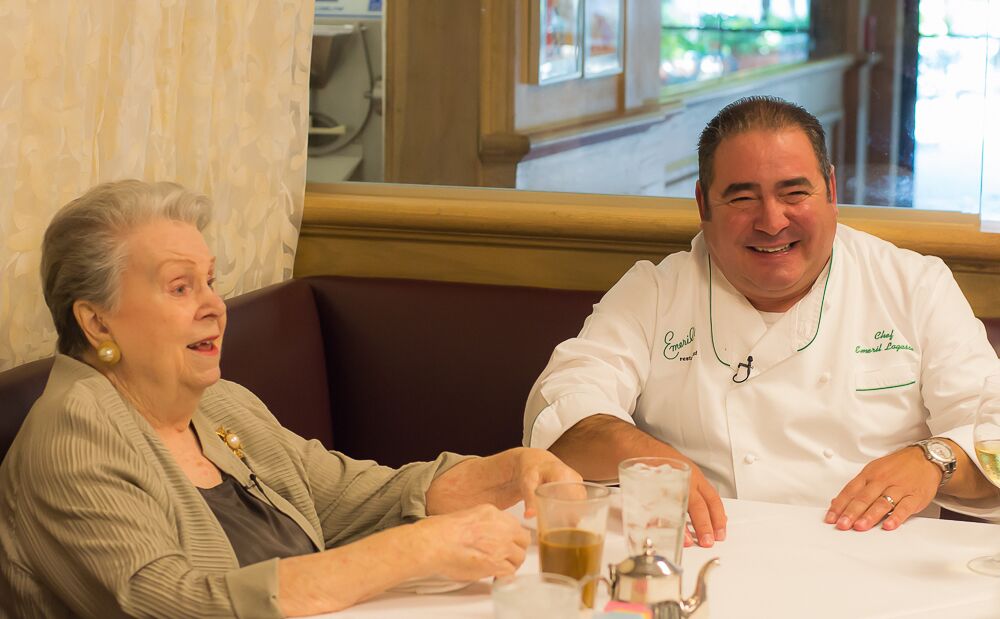
The documentary Ella Brennan: Commanding the Table tells the story of the New Orleans powerhouse restaurateur – and it’s one compelling story.
Ella Brennan is a woman who, before she was thirty, started running restaurants in the pre-feminist 1950s. Ella Brennan started as the little sister and became the matriarch of the famous New Orleans restaurant family. She launched Brennan’s and Commander’s Palace, the latter still the greatest of New Orleans Creole restaurants. On her journey, she had to overcome Mad Men-era sexism, a slew of business cycles and hurricanes – and even family betrayal.
We see a woman with old-fashioned obsession with detail and very high standards. We also see culinary and marketing creativity that can only be described as genius. Ella Brennan is responsible for Bananas Foster, the Jazz Brunch and a host of food trends. Along the way, she mentored the celebrity chefs Paul Prudhomme, Emeril Lagasse and Jamie Shannon. Here’s a New York Times profile of Ella Brennan that mentions this film.
I saw Ella Brennan last fall at the Mill Valley Film Festival. Ella Brennan: Commanding the Table can be streamed from Netflix Instant.
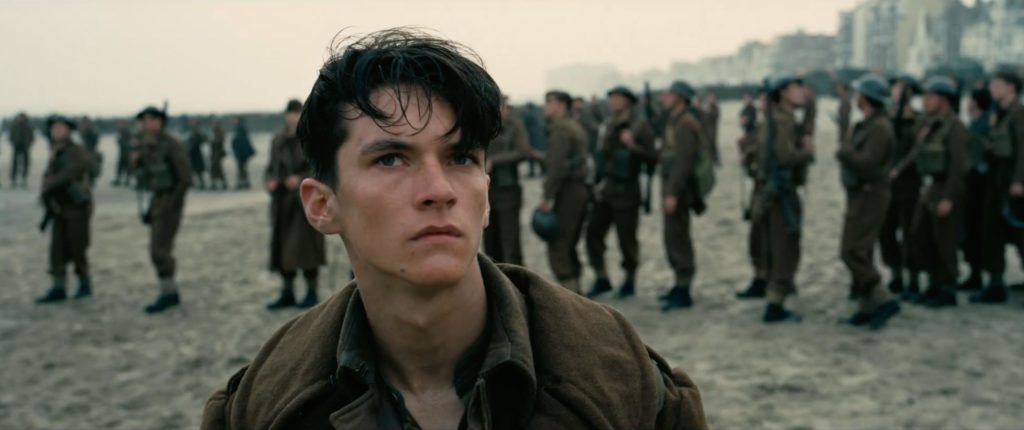
In Dunkirk, Christopher Nolan has written and directed a gripping historical thriller, somehow both personal and vast. It’s a remarkable achievement of both storytelling and filmmaking. Nolan chooses to tell us the story through the lenses of a few minor participants without losing any of the epic sweep of the event.
Dunkirk is the story of one of World War II’s most pivotal events. It’s May, 1940 – over a year before Hitler invaded Russia and over a year-and-a-half before the US entered the war. German forces have swept across Europe and now control the entire continent. It’s very thinkable that Germany will invade Britain. Germany is winning, and it’s more plausible than not that Germany will win the war.
The Germans have trapped a British/French army of 400,000 on a beach in France, certain to be captured or annihilated. The British navy has the capacity to evacuate 40,000 of them in the best case. But the best case can’t be operationalized because, when the British load 800 soldiers on a destroyer, German bombers and submarines sink it. So the British resort to a desperate measure by enlisting 700 small civilian boats – fishing boats, pleasure craft, trawlers, ferries and tugs – to cross the English Channel and pick up the soldiers from an active battle zone. Amazingly, it worked and 340,000 of the troops were rescued, saving them to deter a German invasion of Britain.
Nolan shows us every conceivable peril faced by the rescuers and the rescued, from aerial bombardment to submarine attack. He starts us following a couple of ordinary infantrymen (Fionn Whiteheand and Aneurin Barnard). When they find a wounded man on the beach, they look at each other wordlessly, toss him on a stretcher take off at the full run for a waiting naval vessel; it’s not spelled out, but they aren’t being selfless – they are trying to jump the line to the ship and get evacuated before hundreds of thousands of other men. They learn that getting off the beach isn’t that easy. Soon, Nolan weaves in a determined civilian heading his tiny boat across the English Channel (the great actor Mark Rylance) and the RAF fighter pilots (the commander played by Tom Hardy) who try to protect the beaches and the evacuation vessels. It’s a race against time for each of the characters as they navigate hazard after hazard, and the experience throbs with intensity
Dunkirk is very historically accurate, although the story has been compressed to a couple of days, and the actual evacuation took over a week. Nolan jumbles his timelines, and sometimes we are jarred by moving from daytime in one story thread to nighttime in another. But the threads eventually converge.
In particular, the depiction of aerial warfare is extraordinary, including what it must have been like inside a cockpit that is hit by enemy fire. Dunkirk contains probably the best ever movie shot of a plane ditching in the ocean. We see what it must have been like to be on a ship sunk by submarine torpedo (hint: much less romantic than Titanic‘s sinking). The Germans employed a Stuka dive bomber, which was outfitted with sirens to terrify its victims on the ground or sea; Dunkirk actually replicates the scream of the Stuka’s sirens very convincingly.
Rylance is superb and the rest of the cast does very well, including Cillian Murphy as a shell-shocked soldier and Kenneth Branagh as an embattled naval commander.
Near the end of Dunkirk, a fighter plane runs out of fuel and glides across the beachfront in one of the most beautiful series of shots in recent cinema.
Dunkirk is that rare breed – a white knuckler with relateable characters and historical integrity. It’s one of the very best films of 2017.
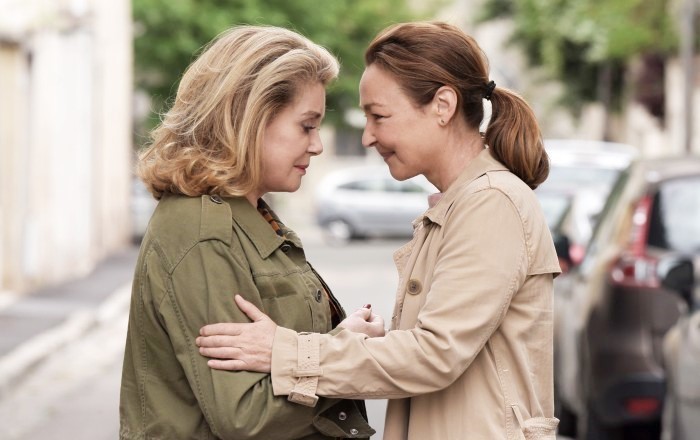
Catherine Deneuve and Catherine Frot in THE MIDWIFE
A woman’s life is utterly disrupted – for better and for worse – by the unexpected appearance of someone from her past. Claire (Catherine Frot) is a middle-aged Paris midwife who lives a completely contained life, focused only on her passion for childbirth. Her other only other devotion is to her son, who, between med school and his girlfriend, she doesn’t see much of. Claire is so abstemious that she must be the only non-recovering and non-Muslim resident of France who eschews even a glass of wine.
Suddenly Béatrice (Catherine Deneuve) shows up and, in a most unwelcome development, intrudes on Claire’s life. Thirty years before, Béatrice was Claire’s father’s mistress when Claire was a teenager. After dragging Claire’s father into financial ruin, Béatrice suddenly disappeared, and he committed suicide. Now Béatrice, for the first time in thirty years, expects to pick up the relationship with Claire as though none of this had happened.
Béatrice is an irascible libertine and hedonist with champagne tastes and a gambling habit. She’s a master manipulator who has survived by flitting between rich boyfriends, but now she’s down – really down – on her luck. Béatrice has adopted “depending on the kindness of strangers” as her personal creed.
The Midwife is a welcome showcase for the veteran French actress Catherine Frot, whom we don’t get to see enough of in the US, despite her 96 screen credits (most recently in Haute Cuisine). Frot perfectly portrays the generally strong-willed woman who is ultimately unable to resist, bit by bit, the changes to her world.
One of the striking aspects of The Midwife is the opportunity for the great Catherine Deneuve to depart from her often icy and imperious roles. Béatrice is out of control and uncontrollable.
Paul, a simple and lusty long haul trucker shows up and show interest in Claire. Paul is played by Olivier Gourmet from the great Dardennes Brothers movies Rosetta, The Son, L’enfant and The Kid with a Bike. This is a much less brow-furrowing role, and Gourmet gets to unleash a delightful measure of gusto.
The Midwife is written and directed by Martin Provost, the actor who has recently written and directed Seraphine, The Long Falling and Violette. quite brilliantly edited and his editor Albertine Lasta – (one of the editors on Blue Is the Warmest Color) know just when to end a scene – down to the nano-second. This is a very effectively edited film.
The Midwife is a film to settle into and to meet and understand Claire, then to watch her life change.
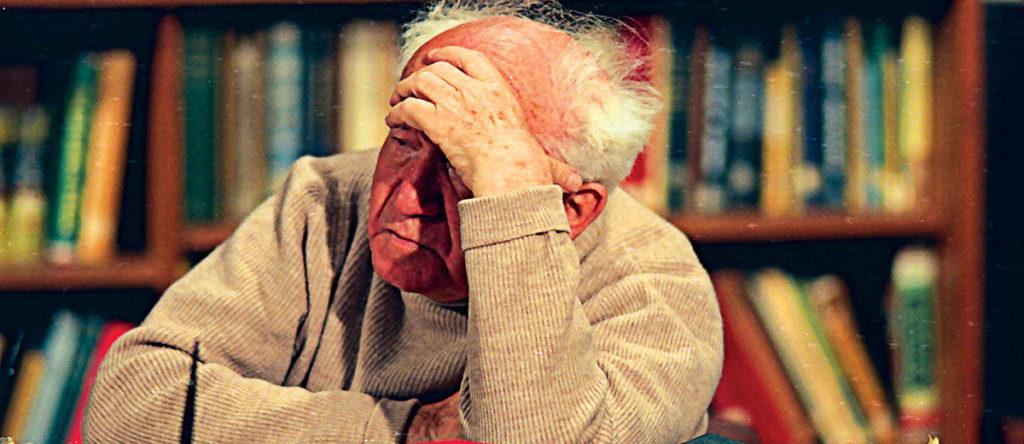
In Ben-Gurion, Epilogue, footage from a recently discovered video interview allows us to hear from Israel’s founding leader in his own words. In 1968, David Ben-Gurion was 82 years old and had been retired from public office for five years. Living on a remote kibbutz in the Negev Desert, he still had a lot to say.
Ben-Gurion was interviewed for seven hours over several days, but the video was lost until recently. First the images were found, which triggered a search for the sound. The result is Ben-Gurion, Epilogue, with the seven hours distilled down to one hour. Director Yariv Moser gets out of the way and lets Ben-Gurion speak for himself. The result is an important document of 20th Century history.
Not a guy who naturally “holds forth”, Ben-Gurion is prodded into revealing his inside view of his controversial acceptance of German reparations. We also get his take on the Zionist movement (not exactly what you’d expect) and, of course the Big Question: land for peace. There are also telling insights into his marriage.
The SFJFF runs from July 20 through August 6 at theaters in San Francisco, Palo Alto, Albany, San Rafael and Oakland. You can peruse the entire program and buy tickets and passes at San Francisco Jewish Film Festival.
Israel was created as a home for refugees. What happens when African refugees overwhelm a neglected Tel Aviv neighborhood is the subject of the topical documentary Levinsky Park.
Director Beth Toni Kruvant takes us to Tel Aviv’s hardscrabble Hatikva neighborhood, now burdened with an influx of African refugees from sub-Saharan Africa. The refugees aren’t Jewish, they don’t speak Hebrew and they sure aren’t white. Discouraged from working legally, the refugees encamp on the streets and do what they need to survive. The Israeli government senses a lose-lose media profile on the issue and tries to duck it entirely.
So how do the local Israelis react? There is a wide spectrum. Some welcome and try to help people fleeing for their lives. Others tag the newcomers with the loaded pejorative “infiltrators” and try to kick them out. We see some ugly, overt racism in Levinsky Park, but nothing unlike what we’ve seen in the US in the Trump Era.
It’s the same question that confronts all countries in the West about political asylum-seekers – who will actually invite them in? What’s different about Levinsky Park, of course, is that this is Israel – the one nation created by and for refugees.
A leader emerges from the refugees, the charismatic and articulate Mutasim Ali. He frames their plight as a movement, and they strive to regain some control over their own futures. Levinsky Park is a compelling real-life story and screens at the SFJFF:
Castro (San Francisco), Thursday, July 27 11:15 AM
Albany Twin (Albany), Friday, August 4 4:05 PM.
The SFJFF runs from July 20 through August 6 at theaters in San Francisco, Palo Alto, Albany, San Rafael and Oakland. You can peruse the entire program and buy tickets and passes at San Francisco Jewish Film Festival.
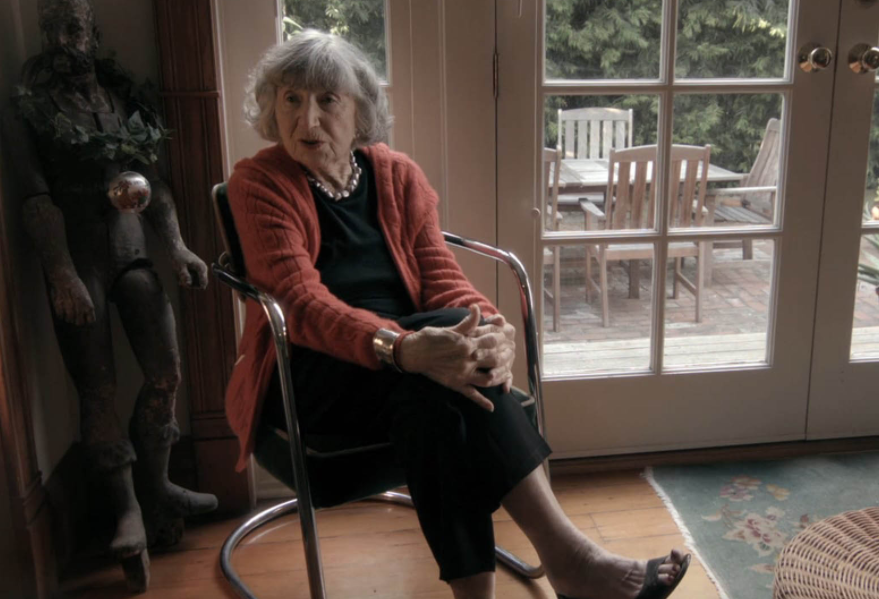
The delightful bio-doc A Classy Broad chronicles the amazingly resilient life of Marcia Nasatir, the first woman production vice-president at a major Hollywood studio. Nasatir is now 91 years old and still pitching movies.
Nasatir has lived a singular life. I won’t spoil her hometown, but it’s not a place that is known for producing Jewish Hollywood execs. As a young single mom in New York, she started at the bottom of the publishing trade, and climbed to a position selling the movie rights of literary properties. She moved to representing authors as an agent, which resulted in the motion pictures Butch Cassidy and the Sundance Kid and Chinatown.
Nasatir burst through the glass ceiling as a studio exec at UA, where she greenlit One Flew Over the Cuckoo’s Nest, Rocky, Carrie and Apocalypse Now! Dumped by the other suits, she became an independent producer and brought The Big Chill to the screen after it had been rejected by seventeen other companies.
Nasatir’s legacy is a huge chunk of Hollywood’s auteur era of the late 1960s through the early 1980s. The “classy” in the movie title references an episode where she got fired when the moguls thought her movie taste was too elevated to make money for the studio.
Nasatir demonstrated enormous confidence for a woman of her era, and is the very paragon of resilience. She met every challenge with her two-word slogan (and epitaph-to-be): “Done. Next!”
A Classy Broad screens three times at the SFJFF:
Cinearts (Palo Alto), Saturday, July 22 3:50 PM
Castro (San Francisco), Sunday, July 23 1:35 PM
Albany Twin (Albany), Sunday, August 6 12:15 PM
The SFJFF runs from July 20 through August 6 at theaters in San Francisco, Palo Alto, Albany, San Rafael and Oakland. You can peruse the entire program and buy tickets and passes at San Francisco Jewish Film Festival.
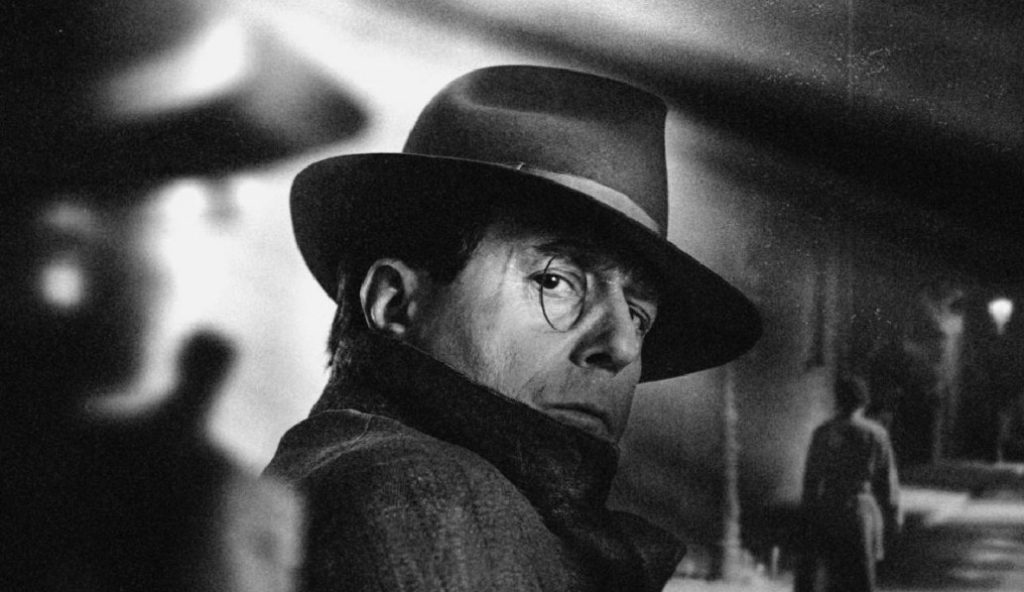
If you’re making a dark crime movie, what better protagonist than Fritz Lang, the creator of the masterpiece M and a founding auteur of film noir? Fritz Langimagines Fritz Lang (Heino Ferch) gathering research for M by tracking and interviewing a real serial killer, all while under police suspicion for his own past.
Writer-director Gordian Maugg sets Fritz Lang at after he has triumphed with the sci-fi epic Metropolis. Most directors are worried about transitioning from silent movies to talkies, but Lang is consumed pivoting from the grand epic to the personal – he aims to focus each film on the inner struggles of one individual. He begins work on his next film (what will become M) and hides from his agent, producer and even from second wife and co-writer Thea von Harbou.
Lang travels to research a real serial killer. We see him visualizing scenes for M (and actual snippets from M are inserted in Fritz Lang). He is confronted by the detective chasing the serial killer, who still suspects Lang of murdering Lang’s first wife.
Indeed, in real life, police were summoned to find Lang’s first wife dead of a gunshot wound to her chest. Lang and von Harbou explained that the wife had discovered them in frangrante delicto, rushed to get Lang’s pistol and killed herself. Because there was no forensic evidence to contradict the two eyewitnesses, no one was charged. But who commits suicide by shooting herself IN THE CHEST?
Also in real life, von Harbou warmed to the Nazis. Lang saw that the Nazis would eventually learn of his Jewish mother, and a troubling meeting with Joseph Goebbels caused Lang to leave von Harbou in Germany. The real Fritz Lang went on to become one of the pioneering masters of American film noir, creating a classic body of work: Scarlet Street, House by the River, The Blue Gardenia, The Big Heat, Human Desire, While the City Sleeps and Beyond a Reasonable Doubt.
The fictional narrative Fritz Lang explores Lang’s creative process, particularly in the creation of M, still one of the most unsettling examples of cinema. Heino Ferch (Albert Speer in Downfall, the crime boss Ronnie in Run Lola Run) is very good as an imperious but tortures Lang.
Fritz Lang will play the SFJFF at:
Castro (San Francisco), Thursday, July 27 9:30 PM
Albany Twin (Albany), Thursday, August 3 8:30 PM.
The SFJFF runs from July 20 through August 6 at theaters in San Francisco, Palo Alto, Albany, San Rafael and Oakland. You can peruse the entire program and buy tickets and passes atSan Francisco Jewish Film Festival.
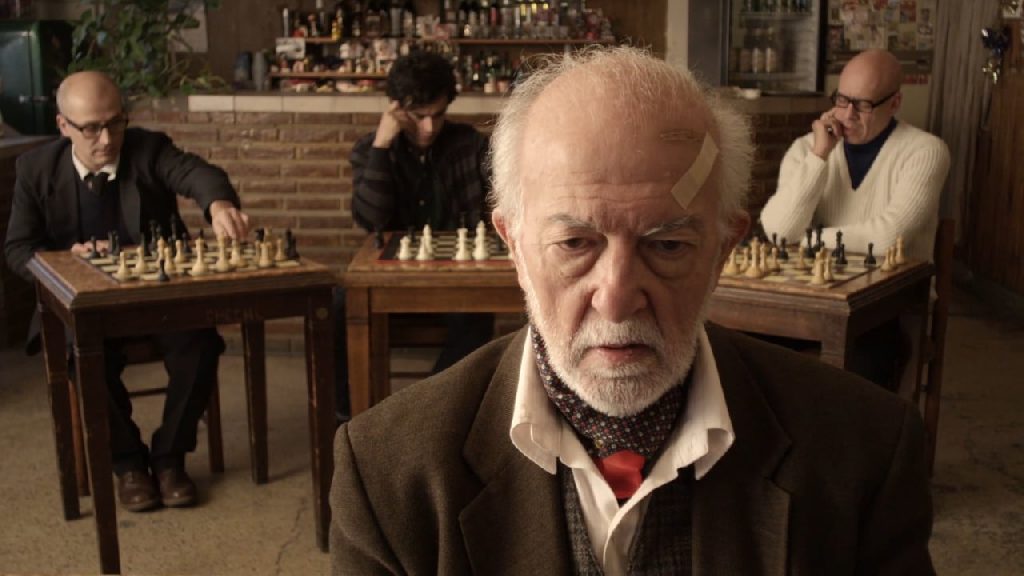
Subte-Polska is an Argentine gem about a nonagenarian chess master addressing his own memory, vitality and the need to find closure with his past. A promising first feature for writer-director Alejandro Magnone, Subte Polska is the sleeper Must See at this year’s SFJFF.
Great movie. Off-putting title.
Tadeusz (Hector Bidonde) is a working class nonagenarian chess master. He’s still able to win several simultaneous chess matches, but his age is catching up to him and he has periods of confusion and memory loss. His doc has prescribed meds that counteract the memory loss, but he refuses to take them because they…wait for it…diminish his sexual performance.
His adult adopted son (Marcelo Xicarte) is understandably frustrated because he has to keep tracking down an unnecessarily (from his perspective) addled old man. And the son is in a touchy period in his own marriage.
Tadeusz is a Communist Jew who left Poland, his family and his girlfriend to fight fascism in the Spanish Civil War. He found another lover in Spain, but he left her,too, when they were defeated by Franco. Tadeusz’ family didn’t survive Hitler. That’s a lot of loss, and Tadeusz dealt with it by emigrating to Argentina and LITERALLY going underground. To avoid triggering painful memories, he gets a job constructing and then working in the Buenos Aires subway system. He sets up his son as a subway driver, and his best buddies also work in the subway, including the guy who runs the underground newsstand (Manuel Callau).
As Subte-Polska unfolds, Magnone explores our sense of memory, and how we consciously and subconsciously handle both the cherished memories and the devastating ones. As he takes and abstains from taking his meds, Tadeusz’s short-term memory ebbs and flows. This is a guy who has framed his entire life to suppress the memories of his youth, but he begins to remember his youth more and more vividly. As he remembers, he feels a need to find closure.
Tadeusz is a strong-willed person, and Subte-Polska is pretty funny as he causes consternation in his son, doctor and friends – in everybody except his well-serviced girlfriend and his ball-busting old friend from their first days underground. Marcelo Xicarte and Manuel Callau both prove to be excellent comic actors.
Speaking of acting, Hector Bidonde delivers a magnificent lead performance. Bidonde plays someone who has always been determined to do what he wants, stubborn to his core, still confident in his beliefs, mental acuity and sexual prowess, but occasionally shaken by moments of confusion.
You have three chances to catch Subte-Polska at the San Francisco Jewish Film Festival:
Cinearts (Palo Alto), Sunday, July 23 4:25 PM
Castro (San Francisco), Wednesday, July 26 4:05 PM
Albany Twin (Twin), Tuesday, August 1 6:30 PM.
The SFJFF runs from July 20 through August 6 at theaters in San Francisco, Palo Alto, Albany, San Rafael and Oakland. You can peruse the entire program and buy tickets and passes at San Francisco Jewish Film Festival.
Subte-Polska is funny, insightful and moving. I’m still mulling it over. This film deserves a US distributor – and a US distributor who changes the title. After all, it’s a subtitled movie about a 90-year-old; ya gotta help the audience want to see this. It’s the under-the-radar Must See at this year’s SFJFF.
The Must See romantic comedy The Big Sick is the closest thing to a perfect movie this summer. Kumail Nanjiani (Dinesh in Silicon Valley) plays a Pakistani-American stand-up comedian whose parents insist on arranging a marriage with a Muslim Pakistani woman. He falls for Emily (Zoe Kazan), who is neither Muslim nor Pakistani. Kumail is too cowardly to make a choice between Emily and his family, so he keeps delaying the decision by lying to both. At a critical moment in his relationship with Emily, she suddenly and mysteriously becomes very ill and is placed in a medically induced coma. Kumail waits out the coma in the hospital with Emily’s out-of-town parents (Holly Hunter and Ray Romano), whom he is meeting for the first time. The parents have relationship issues of their own.
How can Kumail and Emily’s parents weather the stress of an unconscious loved one on a respirator? Will Emily’s parents accept Kumail? Will Emily’s parents stay together themselves? Will Kumail’s parents kick him out of the family? Will Emily wake up, and what will she think of Kumail if/when she does?
The coma may seem contrived, so it’s important that you know that THIS REALLY HAPPENED to Kumail Nankiani’s real-life wife Emily V. Gordon. Nanjiani and Gordon co-wrote this screenplay, with support from producer Judd Apatow.
The Big Sick is hilarious (and not just for a coma movie). The humor comes from the characters, and how they must individually deal with life’s struggles. Kumail is cowardly delaying a choice between Emily and his own family by lying to both; we know that’s it’s only a matter of time before somebody finds out, and the clock is ticking. The Big Sick is flawlessly directed by comedy writer and television director Michael Showalter.
Zoe Kazan, the very talented screenwriter (Ruby Sparks) and actress, makes us fall in love with Emily along with Kumail. Kazan nails the heartbreaking scene when she finds out that Kumail hasn’t been straight with her. It’s a pretty remarkable performance, especially given that she’s in a coma for most of the movie.
The casting of Holly Hunter and Ray Romano as Emily parents is inspired. Each of them brings unusual depth and texture to their characters, the tightly wound mom and the conflict-avoidant dad. Each has at least one of the Big Scenes that bring Oscar nominations
The Big Sick is the best American movie of the year so far and the best romantic comedy in years. You’ll laugh, you’ll cry, you’ll fall in love.
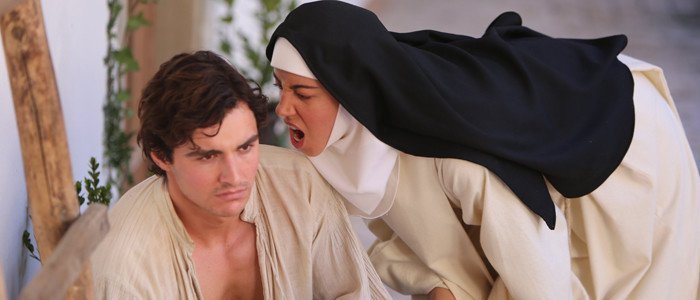
The amusingly naughty but forgettable comedy The Little Hours is based on the dirty fun in your Western Civ class, Boccaccio’s The Decameron. A hunky young lad goes on the lam after cuckolding a local lord and hides out in a nunnery, pretending to be a deaf-mute. He is then serially molested by the young over sexed nuns. There is lots of sexual activity in The Little Hours, all played for laughs and none of it erotic.
It’s the 1300s but the potty-mouthed nuns speak as though it was 2017. Aubrey Plaza is particularly funny as an unceasingly fierce nun with a knife-to-the-throat fetish and a secret life as a witch.
There are lots of low-grade laughs in The Little Hours, including an ancient nun so intent on her embroidery that she is oblivious to enthusiastic sex in the same room and communion made more challenging by a priest’s palsied hand. Comedy stalwarts John C. Reilly, Nick Offerman, Fred Armisen and Molly Shannon all sparkle.