In the heartfelt family dramedy The Farewell, Awkwafina plays Billi, a Chinese-American woman whose grandmother in China is diagnosed with a terminal illness. The Chinese wing of the family decides not to tell the grandmother the bad news, and opts to rush a wedding as a pretext to gather the extended family to say farewell. The American branch of the family is not OK with the deception, but goes along, in varying degrees of reluctance.
Writer-director Lulu Wang based the story on her own family, and opens the film with the title, “Based on an actual lie“.
Indeed, ALL of the family members are constantly telling lies to each other, mostly to avoid conflict or social awkwardness. Is the film’s central Big Lie to avoid unpleasantness? To foster denial? Or, as one uncle posits, to let the entire family absorb the burden of the grandmother’s illness?
Naturally, there’s all the usual forms of family conflict, enhanced – when the grandmother isn’t present – by the stress of grieving. When the grandmother IS present, we have all these very sad people acting artificially happy with ridiculous enthusiasm. The Japanese bride doesn’t understand Chinese, and her reactions to what’s going on are frequently hilarious.
Awkwafina is a tremendous talent; she’s very good here, but underutilized. She only gets one brief, emotionally powerful speech, and the role could have been written into an acting tour de force (like Virginia Madsen’s in Sideways). Too bad. The rest of the cast, especially Hong Lu as the pepper pot grandma, is excellent, too.
Still, this is a very funny and emotionally evocative film. The family dynamics in The Farewell are authentic and universal, and this is a sure-fire audience-pleaser.
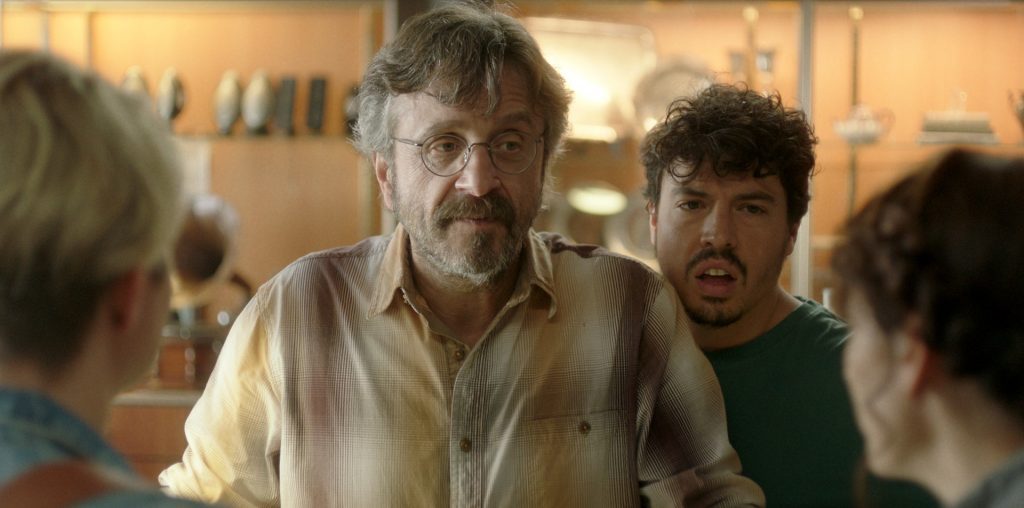
In Lynn Shelton’s brilliant comedy Sword of Trust, Mel (Marc Maron) runs a Birmingham, Alabama, pawnshop with his worthless Millennial assistant Nathaniel (Jon Bass – very funny). Cynthia (Jillian Bell) has returned to Alabama, with her partner Mary (Michaela Watkins), to claim an inheritance that disappointingly turns out to be a single antique sword. But the grandfather’s incoherent letter about the sword fits the Internet ravings of a White supremacist cult called the “Provers” (like “Truthers”), who are hunting for artifacts that “prove” that the Conderacy really won the Civil War. The four resolve to cash in an a windfall by dealing the sword to the scary underground racist cult. Comic situations, naturally, ensue.
There’s plenty of grist for comedy here, and Shelton bores in on the widespread absence of critical thinking that meshes with the Internet to give platforms to crackpot conspiracy theories. From Anti-vaxxers to Truthers, folks are now somehow comfortable with denying scientific or historical fact to fit a narrative that they prefer. In Sword of Trust, that idiocy ranges to denying the Union victory in the Civil War and even the roundness of the Earth.
Sword of Trust is very successful as a comedy, but there’s another, very emotionally powerful story in here. Mel’s ex Deirdre drops by the shop in an attempt to extract some cash for a modest ring. It’s clear that Deidre has had a toxic and near-ruinous impact on Mel’s life that he can’t – and perhaps won’t – escape. This story takes up less than ten minutes, essentially book-ending the sword comedy, but it’s the meat of Maron’s performance and the heartfelt core of the film.
Maron’s performance as Mel is a tour de force. When Mel first sees Diedre, he silently freezes for an instant and takes the long way around the shop to gather himself before reaching the counter. He listens to Deidre’s story with a knowing weariness in his eyes. When Deidre says “I’m good for it” and Mel replies, “No, you’re not”, it is with the quiet certainty of a man scarred. Later, Maron’s Mel relates his own back story, and it’s all the more heartbreaking because of his matter-of-factness. This is one of the best performances of the year.
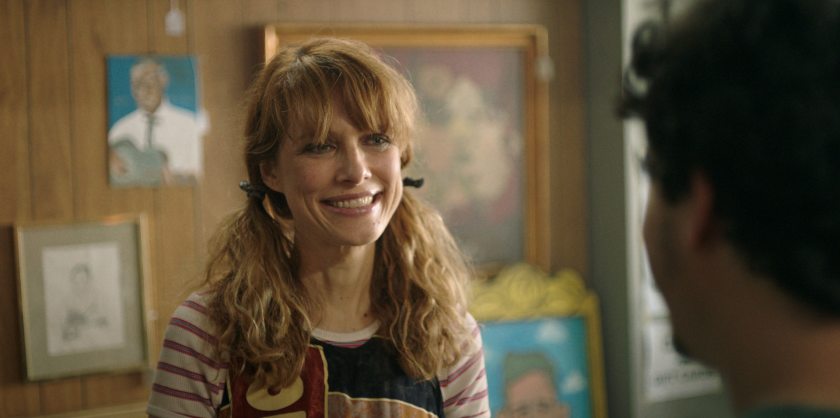
Lynn Shelton in SWORD OF TRUST
And, Deidre, what a mess! The fidgety desperation just underneath her sad story du jour just nails the manipulative addict. I made a note to look up the actress playing Deidre with such compelling authenticity – and it is Lynn Shelton herself.
The entire cast is good, especially Dan Bakkedahl (Life in Pieces) as the White supremacist kingpin and prolific character actor Toby Huss as his henchman.
Sword of Trust is a very smart and funny comedy with a bonus – a rich and moving character study.
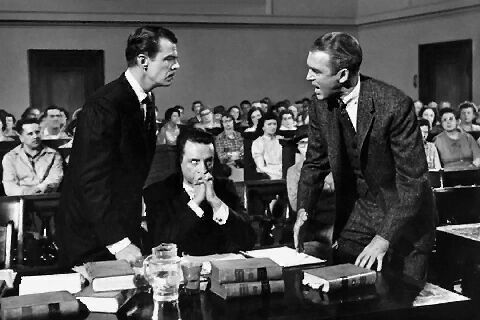
George C. Scott (center) seethes while James Stewart (right) lawyers in ANATOMY OF A MURDER
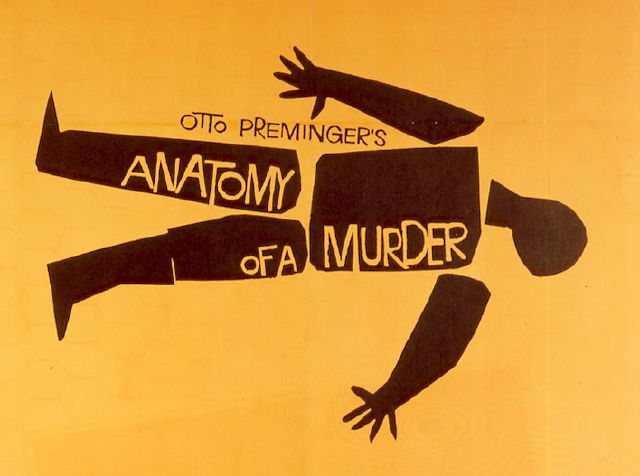
Turner Classic Movies is broadcasting Anatomy of a Murder on July 27. I love this film for its great courtroom scene, for the great performances by James Stewart, George C. Scott, Ben Gazzara and Lee Remick, and for its exquisite pacing by director Otto Preminger.
Jimmy Stewart plays a lawyer who has exiled himself to the remote Upper Peninsula of Michigan precisely to avoid the high-pressured rat race by settling into a leisurely rural practice. But circumstances force him into an all-consuming, high-stakes trial. It’s a murder case, and he must defend a hot-tempered soldier who has killed a local businessman. The defendant is not sympathetic (Ben Gazzara at his most smoldering). The defense – rage at the rape of his wife – rests on whether there WAS a rape, and the wife (a sizzling Lee Remick) isn’t an ideal witness, either. The local DA brings in a hotshot, big city prosecutor (George C. Scott) to nail down the conviction.
You take your clients and facts as you find them, and this makes for a gripping courtroom battle. The canny local lawyer pulls out all the stops. The cynical ending plants Anatomy of a Murder firmly into the film noir/neo-noir genre.
The supporting performances, especial Arthur O’Connell and Eve Arden as Jimmy’s team, are remarkably good.
The prolific character actor Murray Hamilton plays Al the bartender, and this is my favorite Murray Hamilton performance. Hamilton is best known for his performances as Mr. Robinson in The Graduate and as the mayor in Jaws. Here, his line reading of “bare-legged” practically cries ” SLUT SLUT SLUT”.
Real-life lawyer Joseph Welch plays the judge. In the televised McCarthy hearings, Welch emasculated the bullying Joseph McCarthy with “Have you no sense of decency, sir? At long last, have you left no sense of decency?“
I also recommend Anatomy of a Murder for its great jazz soundtrack by none other than Duke Ellington. It’s one of the few movie soundtrack CDs that I own. The music perfectly complements the story of a murder investigation that reveals more and more ambiguity as it proceeds. Stewart’s character relaxes by dabbling in jazz piano, and Duke himself has a cameo leading a bar band in the Upper Peninsula of Michigan (of all places).
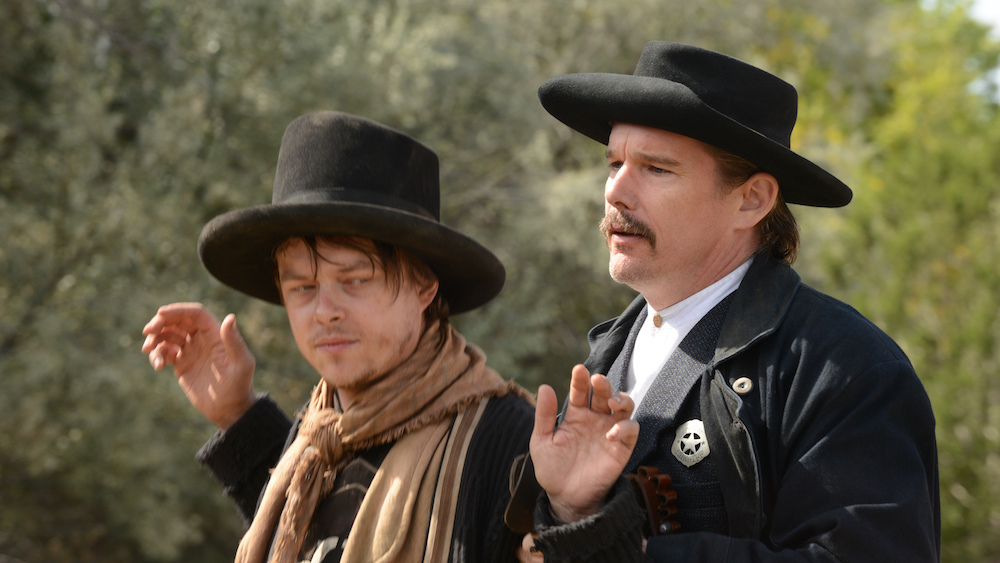
In Vincent D’Onofrio’s western The Kid, a boy (Jake Schur) escapes with his sister from a murderous uncle, but runs right into the Billy the Kid-Pat Garrett finale. The core is the lesson that the boy learns from his relationships with both Western icons – Billy (Dane DeHaan) and Pat (Ethan Hawke).
I recommend this Vincent D’Onofrio /Film interview, in which he discusses how the boy’s relationships with Billy and Pat echo the male role models from his own childhood.
The fine actor Dane DeHaan is the first movie Billy the Kid that I’ve seen who actually looks like Billy the Kid; he also behaves as I imagine the real Billy the Kid to behave – as a charismatic but psychopathic punk. No handsome, sardonic Kris Kristoffersson or misunderstood Paul Newman here. Ethan Hawke, of course, is excellent as a man imparting an important truth to a boy – that life may be complicated, but that reliability is always damn important.
The Kid is a little movie that works, chiefly because of DeHaan’s performance, for fans of Westerns. The Kid can be streamed from Amazon, iTunes, Vudu, YouTube and Google Play.
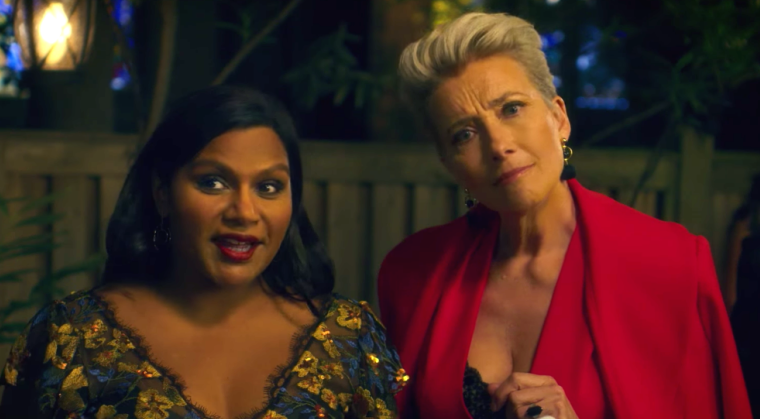
In Mindy Kaling’s very smart comedy Late Night, Emma Thompson plays Katherine Newberry, the host of late night television talk show that has become, along with Katherine herself, an institution; the problem is that institutions tend to get stale, and networks eventually dump stale shows.
A woman in an almost all-male niche, Katherine has achieved by being brusque and exacting (and Emma Thompson nails the part). But is she still genuine? And is she still even trying? Katherine brings the inexperienced striver Molly Patel (Kaling) into her writers’ room as a diversity hire – and Molly can tell her the truths that others fear to tell Katherine.
Late Night skewers male privilege and affluent class privilege, and takes on slut shaming, too. Kaling has spent time as the only woman or only POC in writers’ rooms, and she clearly knows of what she writes. Kaling doesn’t pull any punches, but the wit makes it an easy, and perhaps instructive, watch for any audience.
It’s also worth watching Late Night for a secondary thread – the relationship between Katherine and her husband (John Lithgow). It’s such an authentic portrayal of a longtime partnership, based on affection and trust – the only venue in which Katherine allows herself to be vulnerable. Lithgow’s performance is powerful and heartbreaking.
The best joke involves Katherine Newberry coining the word, “catharticissistic”, a witticism that convulsed The Wife, but totally escaped the Millennial woman seated next to her.
Amy Ryan plays the network CEO, and at first we think it’s going to be a stereotypical the-suits-trample-the-creatives character. But Ryan’s CEO is the age and gender peer who calls Katherine on her shit. Ryan’s performance sparkles.
Ike Barinholz is ickily superb as the shallow, gross-out comic pegged to replace Katherine. Denis O’Hare is also excellent as Katherine’s loyal but enabling producer.
I haven’t been a big fan of Kaling’s performances, but Late Night is her triumph as a writer. This is a comedy with laughs and social criticism. And the supporting turns by John Lithgow and Amy Ryan are special,
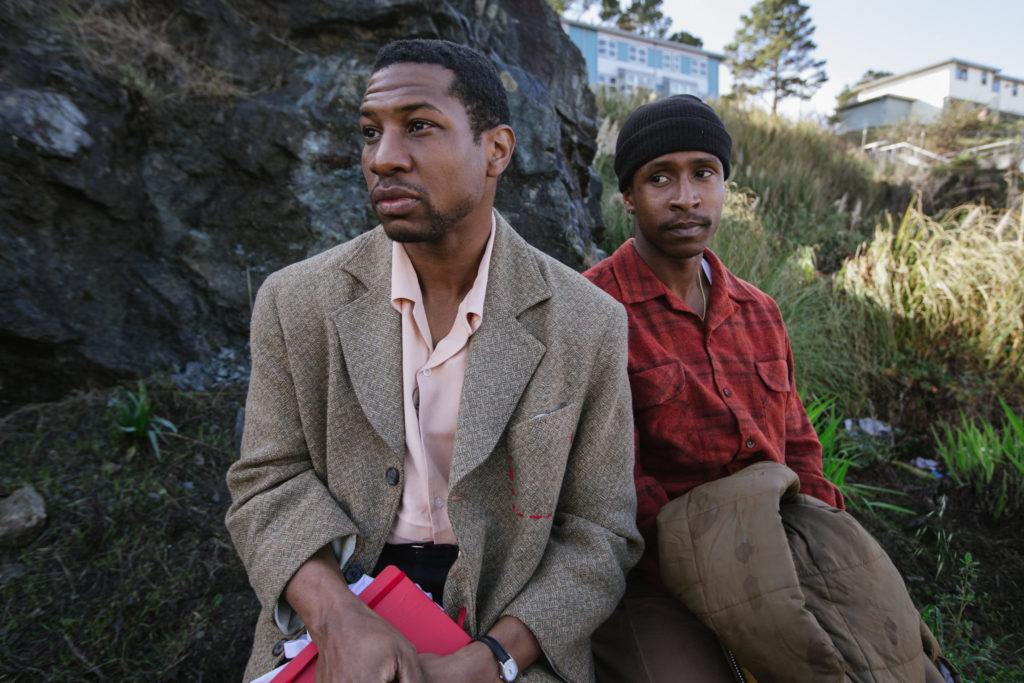
Jonathan Majors and Jimmie Fails in THE LAST BLACK MAN IN SAN FRANCISCO. Photo: Peter Prato/A24
The Last Black Man in San Francisco is an absorbing exploration of the inner lives of two friends as they react to their changing city – and it’s one of the best films of the year.
Jimmie Fails (played by the film’s co-writer Jimmie Fails) shares a cramped room with his best friend Mont (Jonathan Majors) in Mont’s grandfather’s tiny bungalow in San Francisco’s downscale Bayview-Hunter’s Point. Both have low-skill, low-wage jobs and live to explore San Francisco together, Jimmie on his beloved skateboard and Mont more ecumenical in mode of transportation. Mont is writing a play.
Jimmie worships his childhood home, a Victorian that his grandfather settled in the postwar 1940s, when the Fillmore District was a vibrant black working class neighborhood and a national jazz mecca. The neighborhood has changed since Jimmie’s parents lost the home decades ago, and the current white middle class owners can’t keep up the property to Jimmie’s standards. Understandably, they don’t appreciate Jimmie’s guerilla painting and gardening at their house. When the owners are also forced out, Jimmie moves into the vacant house; of course, he has no legal right to the house and he can’t afford even a fraction of its $4 million price tag.
Is Jimmy living a fantasy? Or living a lie? Is he clinging to a city that no longer exists? Can he demand a place in the new version of San Francisco?
Here’s what sets The Last Black Man in San Francisco apart. That which is imagined (Jimmy’s “ownership” of the house and Mont’s play) is depicted with stark reality. That which is real (both the harshly sobering and the pedestrian) is often dreamlike. The effect of The Last Black Man in San Francisco is that of watching someone’s dream. Of course, much about San Francisco is surreal.
Director and co-writer Joe Talbot, only 28 years old, is clearly a major talent. Effective use of the musical montage is rare these days, but his montage to San Francisco (Be Sure to Wear Flowers in Your Hair) is spell-binding and provocative. In this Rolling Stone interview, Talbot discusses his lifelong friendship with Fails and the genesis of the film.
This is a love letter to San Francisco – but a clear-eyed one. San Francisco’s beauty and quirks are celebrated; our heroes skateboard down the hills before a backdrop of architectural charm and famous vistas. But the beautiful interior woodwork of the Fillmore Victorian is juxtaposed against the barren and toxic waterfront of Bayview-Hunters Point. Many movies are set in San Francisco – this is the one that best captures the current 2019 evolution, with its demographic and economic changes and their societal and cultural costs. Bay Area residents will especially enjoy inside references like the Segway tours for tourists (with the guide impeccably played by Jello Biafra).
Since the Gold Rush, San Francisco’s cultural ethos has been to be supremely tolerant of eccentricities, even to a to a fault. It has proudly stood as a welcoming refuge for individuals to express their non-mainstream lifestyles and as a muse to creatives, homegrown and otherwise. Now the city has been made ideal for a culturally mainstream young business class and tourists. The working class – white, Latino and especially African-American – has been priced out.
The social criticism is often pointed. There’s the character of Clayton, a native San Franciscan who is embracing and profiting from gentrification; he’s a St. Ignatius grad of Irish stock with slick charm and slicker hair – check out his surname. And there’s a gang of drunken tech bros on a faux cable car party bus; they expose their invaders’ vulture culture by their reaction to a Naked Guy.
Jimmie Fails, who has the advantage of essentially playing himself, is so good that it’s surprising that he’s a first-time actor. It’s Fails’ inventive writing, however, that is even more impressive.
Jonathan Majors is a promising discovery. Mont toggles between being the sensible one who tempers Jimmy’s house-related compulsions to caring deeply, perhaps over-caring. Majors’ Mont is an uncommon man, and we’re never quite sure if his passions are entirely healthy. Majors studied at Yale Drama and will play Bobby Seale in Aaron Sorkin’s upcoming Trial of the Chicago 7.
There’s a Greek Chorus of street guys in Bayview-Hunters Point who spend their time insulting each other and passersby. These guys are like buoys – anchored to the ocean floor but powerless to affect anything on the ocean surface. Mont later describes one of the chorus, Kofi, as having been “born into a box”, living a life without viable choices.
Once, Mont “directs” the street guys as if they performing a play. A hostile situation is defused by their bewilderment; the play, of course, is in Mont’s head.
The Greek Chorus is played by non-actors. Danny Glover is superb as Mont’s blind grandfather. Rob Morgan soars as Jimmie’s simmering dad.
The Last Black Man in San Francisco is a startlingly original Must See.
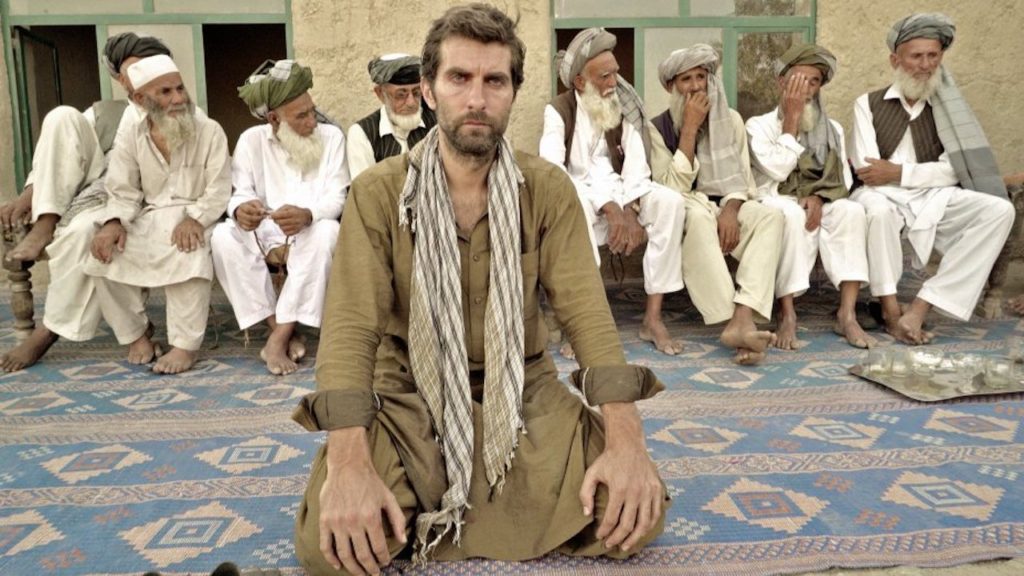
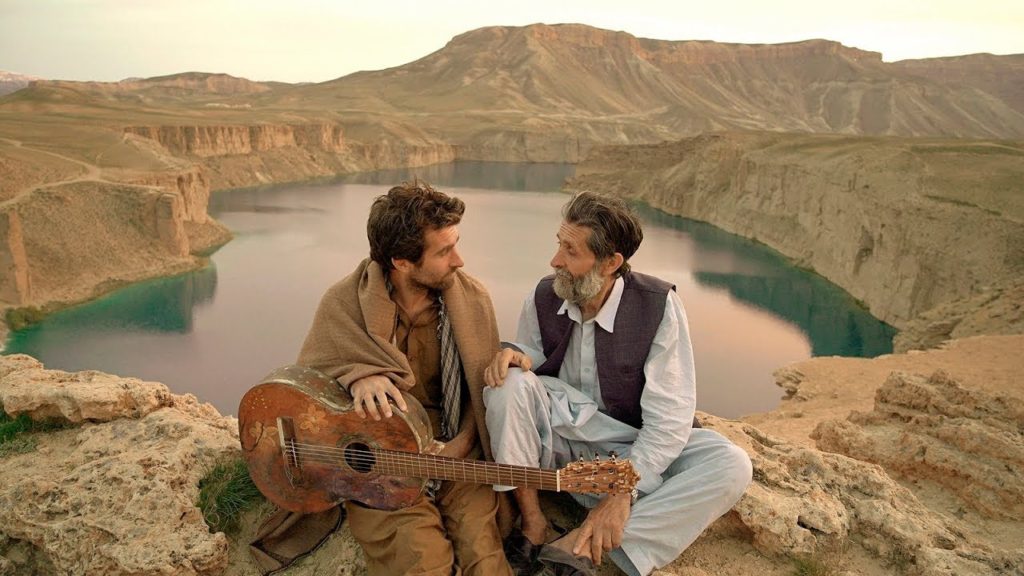
In Jirga, the Australian soldier Mike (Sam Smith) returns alone to Afghanistan three years after his tour of duty. Mike begins a quest that takes him into the stark desolation of the hinterlands, where he must survive both the unforgiving elements and the Taliban. We don’t know his objective until it is revealed 44 minutes into the film. What we do immediately understand is that the stakes are very high.
The tension builds as we wonder if Mike will survive, but Jirga is a contemplation. How do you redress a wrong that you’ve committed? By paying compensation? By asking for forgiveness? By an act of atonement? Or of self-sacrifice?
The Afghanistan in Jirga is as dramatic a desolate landscape as I’ve ever seen, often starkly beautiful. At one point, Gilmour relieves the severity of the desert by dropping in a totally incongruous and unexpected paddle boat in the form of a pastel swan.
Sam Smith is in almost every frame of Jirga, and his performance is impeccable.
Jirga is a notable achievement in filmmaking. Gilmour had received permission to film among the Pashtun in Pakistan’s tribal areas, but was frustrated (and finally harassed) by the ISI, Pakistan’s notorious intelligence force. Gilmour bought a small Sony camera in Islamabad and flew himself and Smith to Kabul. There, under the constant protection of bodyguards, Gilmour was able to shoot the film on the fly; conditions were safe enough to shoot during 20 days of a two-month sojourn. Only two of the Afghan cast had ever been in a movie. Gilmour’s previous film Son of a Lion was also set among the Pashtun and is available on Amazon Prime.
JIRGA
I saw Jirga at Cinema Club Silicon Valley, with a Q&A with writer-director-camera operator Benjamin Gilmour. Gilmour got the idea for the film in his other work as a paramedic, encountering the PTSD of Australian veterans of the Middle East wars.
Gilmour observed that “male bravery is taught as how well you can fight”, and focused Jirga on Mike’s non-violent courage in risking – and even offering -his life. Gilmour developed Mike’s story so the “moral injury he suffered doesn’t take the tragic path” of alcoholic self-medication or suicide that Gilmour has observed firsthand in combat vets.
Jirga was Australia’s submission to the Academy Awards. It has secured a late July limited release in NY and LA. I’ll let you know if Jirga opens in Bay Area theaters and when it is available to stream.
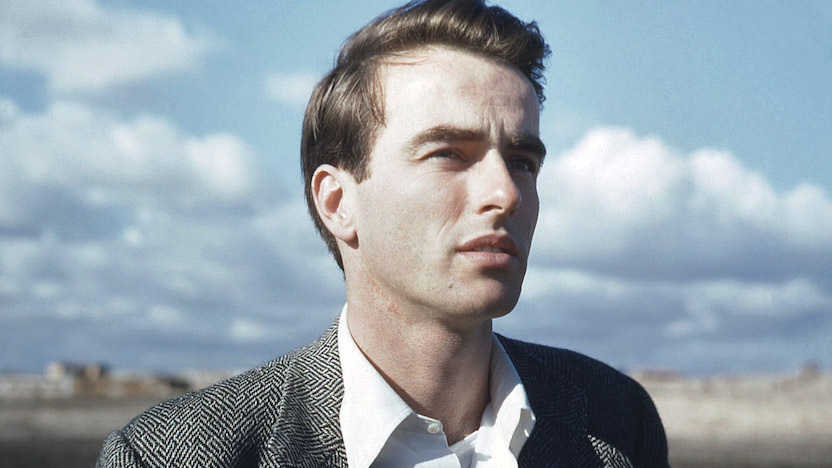
The best documentary in this year’s Frameline festival may be Making Montgomery Clift, from directors Robert Anderson Clift and Hilary Demmon. It’s an unexpectedly insightful and nuanced probe into the life of Clift’s uncle, the movie star Montgomery Clift. And it explodes some of the lore that has shaped popular understanding of Montogomery Clift.
Clift is the son of Brooks Clift, Montogmery Clift’s brother and archivist. The younger Clift never met his uncle Monty, but had access to his father’s vast collection of Monty memorabilia and to the memories of family, friends and previous biographers.
Many of us think we know the arc of Montgomery Clift’s life: success as a 1950s movie heartthrob is torpedoed by the inner torment of his closeted homosexuality; then alcoholic self-medication and disfigurement from an auto accident propel him into drunken despair and an early death. It turns out to be a much, much more nuanced story.
It turns out that some in the Clift family indulged in secret audio taping to a jaw-dropping degree. Directors Clift and Demmon take full advantage of the actual conversations of Monty and others. Their gift is to drop in the most startling revelations without lingering or even emphasizing them. To watch Making Montgomery Clift is a constant exercise in “wait…WHAT?” Demmon’s brisk editing helps, too.
How tormented was Monty by his sexuality (which we learn was a robust bisexuality)? Witnesses – who would know – let us know that Monty was comfortable in his own skin and fairly open – for the times – about his sexuality. This wasn’t Rock Hudson or Tab Hunter.
We learn that Montgomery Clift’s refusal to sign a studio contract was to preserve BOTH his artistic independence and his sexual independence (avoiding being forced into faux marriage and the like).
Making Montgomery Clift also discredits the view that Monty sank into depression after the accident changed his looks. His personally most satisfying performances came AFTER the accident.
The insights into Monty’s artistic process are unique and significant. We hear the actual conversation between Montgomery Clift and director Stanley Kramer about Clift’s riveting cameo in Judgment at Nuremberg. Monty’s intentionality in shaping the scene dispels the myth that, instead of giving a performance, he had an actual breakdown before the camera. Yes, he was acting it, and it was spectacular.
There has been a handful of recent showbiz biodocs made by younger relatives of the famous artists. Usually, these films add some personal family anecdotes, but are so fond of their subjects that they’re not especially insightful. Making Montgomery Clift is not that – it ascends above the pack – and should change how all of us understand Monty Clift.
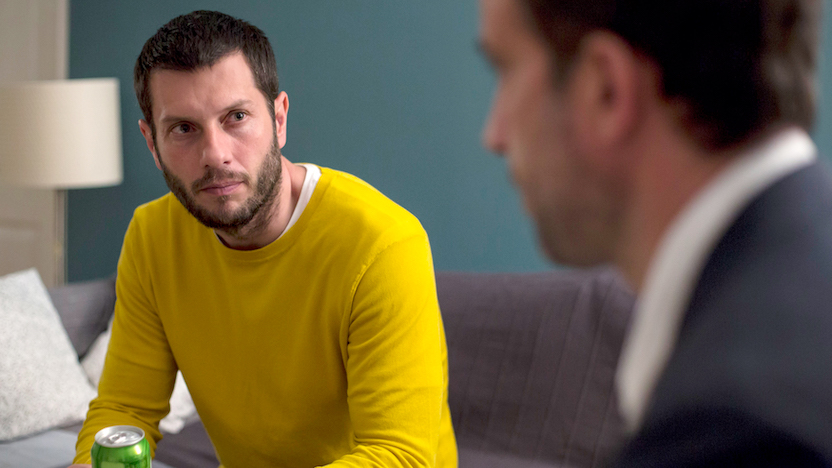
In the ambitious and innovative Monsters., writer-director Marius Olteanu unspools his story one chapter at a time. First we follow Dana (Judith State), a morose woman whose behavior is bewildering her cab driver – and the audience. In the second chapter, we meet two men, one of them Arthur (Christian Popa), and try to figure out the connection to the first chapter. The third and final chapter weaves the stories together into a romantic tragedy. (And, yes, there is a period in the film’s title.)
[MILD SPOILER: The movie is about a couple in love who want to have a conventional marriage, but whose relationship cannot succeed in that form.]
Monsters. is Olteanu’s feature film debut. Stylistically, Monsters. is typical of Romanian Slow Cinema, long takes and all, and it depicts a 24-hour story in under two hours.
Olteanu is an ambitious and fearless filmmaker. The beginning and most of Monsters. is in an unfamiliar, vertical aspect ratio; right away, we know that we’re watching something different. And, just when we’ve settled in, Olteanu CHANGES the aspect ratio to make points about the content. This dynamic aspect ratio and the film’s structure are self-conscious, but it’s clear that Oltenau is aspirational and innovative. I’m looking forward to what he has in store for us next.
Both lead actors are very good. State is up to the challenge of playing a sad character who is always aggrieved without becoming tiresome. Serban Pavlu is especially excellent as an off-puttingly meticulous Grindr hookup.
Frameline hosts the North American premiere of Monsters..
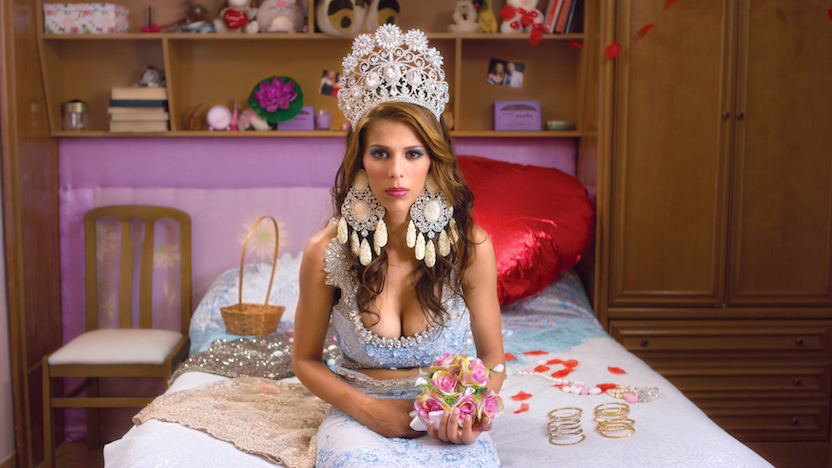
Carmen y Lola is a sexual coming of age story set among urban Romani people in contemporary Spain. 16-year-old Lola (Zaira Romero) is a smart, talented and feisty kid; she knows that she likes girls and wants a career; how she can do either within her traditional Romani culture is a dilemma. Buoyant 17-year-old Carmen (Rosy Rodriguez) embraces her future – being married off to a handsome young Roma man – but meeting Lola awakens her to other choices – and to her own sexual preference.
I’ve seen movies about the Romani people (widely known as Gypsies) before – usually historical period pieces and always with itinerant Romani. There are no wagons or RVs in Carmen y Lola; these characters live in the hardscrabble suburbs of Madrid. (Almost 2% of Spain’s population is Romani.)
We also get to see the ugly face of anti-Romani prejudice (which I’ve just learned is called antiziganism). Carmen y Lola is unsparing in its point of view that the Romani are held down by both external racism and some of their own patriarchal and anti-education Roma traditions.
There’s also a welcome element of cultural tourism here. We get to watch a Romani betrothal ritual, a Romani evangelical church service and an all-female flamenco party.
Carmen y Lola is the directorial debut of Arantxa Echevarria. It’s one of the successful first features showcased in this year’s Frameline film festival.