SPACESHIP EARTH: Last Stand of the Renaissance Man?

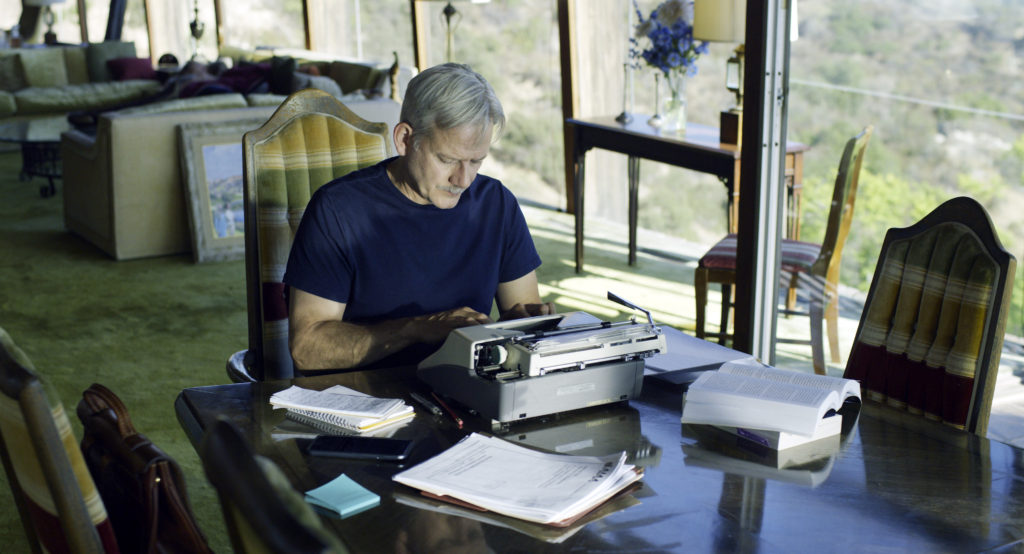
SPACESHIP EARTH, Photo courtesy of NEON.

The latest from Silicon Valley native documentarian Matt Wolf, Spaceship Earth traces an audacious scientific quasi-experiment of the 1990s, the Biosphere 2, perhaps the Last Stand of the Renaissance Man.

A few months ago, Wolf released Recorder: The Marion Stokes Project. He is the son of Cinequest documentary screener Sandy Wolf; in this recent profile of Sandy, I also highlight Matt Wolf’s career (scroll down).

How ambitious was Biosphere 2? (Biosphere 1 is Earth.) It was the construction of an enormous structure – big enough to host a series of ecosystems – jungle, desert, etc. And to fill it, like Noah’s Ark, with an array of plant and animal species. And then sealing a team of eight humans inside for two years to survive (don’t underestimate Job 1 in this experimental artificial environment), tend the agriculture and conduct scores of scientific experiments. The promise was to learn about how humans could survive in future space colonies.

Biosphere 2 in SPACESHIP EARTH.. Courtesy of ecotechnics.edu and Spaceship Earth.

Scientists quibble about how closed and controlled the experiments really were. Ultimately, the experiment itself is not as meaningful a story as who did it and why. Wolf could have made this a procedural, or an expose about a cult or a fiasco.

Instead, Wolf made the inspired choice to begin 25 years earlier, with the San Francisco hippie commune that became the core leadershop of Biosphere 2. Led by the charismatic John Allen and a cadre of very smart and able women, they moved to rural New Mexico, then Berkeley and then around the world. These were unusually highly functioning hippies because they didn’t dive into drugs, and they focused on tangible projects like building a seaworthy ship and a hotel in Nepal – and always experimental theater.

Along the way, billionaire-with-a-B Ed Bass took a shining to Allen and the group and became their benefactor and sponsor. That made it possible for a pipe dream about sustainability to become a real project with a budget in the hundreds of millions.

SPACESHIP EARTH, Courtesy of Spaceship Earth

Here’s what is stunning about this story. If someone, say NASA, had undertaken to create an Earth-like closed environment in preparation for space colonization, these are the LAST people who would have been asked to be involved. None of these hippies had academic or professional credentials or experience that even remotely would qualify them, in an objective sense. But they got there first with the idea and with Ed Bass’ money.

That’s what I found so amazing about the folks behind Biosphere 2 – they weren’t specialists, like the folks who build spaceships. Think of the generalist Renaissance Man who works across disciplines. These folks had a profound commitment to sustainability and said “what if?”, much like Da Vinci designing buildings, bridges and fortification, conceptualizing parachutes, helicopters and deep sea diving bells while painting great art. Or like the 18th Century gentleman inventors/scientists/industrialists/collectors.

The resultant 1990s media circus, certainly enough to scar the participants, seems almost quaint today. With an instantaneous and never ending news cycle, tribal and agenda-driven commentary and viral social media, God help them if they tried this today. It didn’t turn out to be the New Age Garden of Eden that was advertised.

Of course, there was hubris and tone deaf PR from the organizers, and the inevitable personality clashes between any eight nonconformists locked up together in a fish bowl for twp years. And then there was that sudden soaring of the CO2 level, threatening the lives of many species, including the humans.

What happened? In Spaceship Earth, it’s not treated as a catastrophe or a self-immolation or a betrayal, although you could make the argument for any of those characterizations. What’s more important is what these folks aspired to do and how far they got.

This was a genuine quest for sustainability, with some valid scientific experiments embedded in grand performance art.

Just released this weekend, Spaceship Earth can be streamed from iTunes, Vudu, YouTube and Google Play.

COLD CASE HAMMERSKJOLD: a historical mystery and a quirkier investigation

Cold Case Hammarskjöld

Mads Brügger’s eccentric and irresistible documentary Cold Case Hammarskjöld purports to solve a historical mystery. In 1961, Secretary-General of the United Nations Dag Hammarskjöld was flying to cease-fire negotiations near the Congo-Rhodesia border when his plane crashed, killing all aboard. There has never been a satisfactory explanation of why or how the plane crashed.

Danish filmmaker Brügger enlists the Swedish private investigator Göran Björkdahl, who has been researching the Hammarskjöld crash, and heads off to Africa in search of witnesses and clues. Björkdahl is dead serious. Brügger is, well, entertaining. With an ironic wink at the audience, Brügger begins by equipping the two with pith helmets for their African exploration.

The two come across a very plausible conspiracy that the Hammarskjöld plane was targeted. And, as they move among the shady world of South African reactionaries, they encounter an even more shocking conspiracy theory. But Brügger is a story-teller, not a historian; fortunately, he doesn’t have to deliver a smoking gun.

Idiosyncratically, Brügger chooses to narrate his film by dictating the “script” to two African secretaries. Midway, he admits that what really drives him is the excuse to hop around Africa talking to aged fixers and mercenaries. And it’s a rich collection of scoundrels that he finds, some revealing old secrets, some covering them up and some apparently spinning wild tales.

That’s the fun of Cold Case Hammarskjöld, now available from all the usual streaming services.

ASHES AND DIAMONDS: a killer wants to stop

Zbigniew Cybulski in ASHES AND DIAMONDS

Coming up tomorrow night on Turner Classic Movies, a masterful director and his charismatic star ignite the war-end thriller Ashes and Diamonds, set amidst war-end treachery. It’s one of my Overlooked Noir.

It’s the end of WW II and the Red Army has almost completely liberated Poland from the Nazis. The future governance of Poland is now up in the air, and the Polish resistance can now stop killing Germans and start wrestling for control. Maciek (Zbigniew Cybulski) is a young but experienced soldier in the Resistance. His commanders assign him to assassinate a communist leader.

Maciek is very good at targeted killing, but he’s weary of it. As he wants out, he finds love. But his commander is insisting on this one last hit.

This is Zbigniew Cybulski’s movie. Often compared to James Dean, Cybulski emanates electricity and unpredictability, Unusual for a leading man, he often wore glasses in his screen roles. He had only been screen acting for four years when he made Ashes and Diamonds. Cybulski died nine years later when hit by a train at age forty,

Zbigniew Cybulski in ASHES AND DIAMONDS

Andrzej Wajda fills the movie with striking visuals, such as viewing Maciek’s love interest, the waitress Krystyna (Ewa Krzyzewska), alone amidst the detritus of last night’s party, through billows of cigarette smoke. Wajda’s triumphant signature is, literally, fireworks at the climax; the juxtaposition of the celebratory fireworks with Maciek’s emotional crisis is unforgettable.

Ewa Krzyzewska in ASHES AND DIAMONDS

Wajda adapted a famous 1948 Polish novel into this 1958 movie. In the adaptation, the filmmaker changed the emphasis from one character to another.

Ashes and Diamonds was the third feature for Andrzej Wajda, who became a seminal Polish filmmaker and received an honorary Oscar. US audiences may remember his 1983 art house hit Danton with Gerard Depardieu.

TCM will be preceding Ashes and Diamonds with the documentary Wadja by Wadja, which I haven’t seen, but I will be recording. Ashes and Diamonds can be streamed from Amazon and iTunes. It was featured at the 2020 Noir City film festival.

Zbigniew Cybulski in ASHES AND DIAMONDS

Three more days to enjoy these films from SXSW – included with Amazon Prime

FACE TO FACE TIME

This year’s SXSW Film Festival, set to play in March, was cancelled due to COVID-19, but SXSW and Amazon are teaming to showcase over thirty of the films through this Wednesday, May 6. I’ve seen six of them (five shorts and a feature) that I can recommend.

Fate to Face Time is a 7-minute comedy about how any date can lead to misadventure, even a remote one. She’s gone out with him twice and is looking to accelerate things with a surprise FaceTime call, but he may not be that much into her…

We’ve all over-invested in a certain date (and, since teenage years, we’ve all known better, but have done it anyway). Face to Face Time begins as a cringe comedy, but the finale is a howler.

Face to Face Time is written and directed by (and stars) Izzy Shill. As Shill herself notes in the intro, this short is especially timely while we are all sheltering at home and many are dating remotely.

Here are some some more recommendations from Prime’s SXSW 2020 Film Festival Collection:

  • Quilt Fever – an affectionate documentary abou the Olympics of quilting, held annually in Paducah, Kentucky (who knew? And who knew that there was a Quilting Channel?) (16 minutes.)
  • No Crying at the Dinner Table – Filmmaker Carol Nguyen recorded separate interviews with her mom, dad and adult sister about losses they have suffered but never talked about, and then shared all three interviews with all three family members. It’s authentic, and it’s a weeper. (16 minutes)
  • The Voice Inside Your Head – a bizarre comedy is which the inner voice that is stripping you of confidence and self worth is personified in a guy who follows you around all day. (12 minutes).
  • Daddio – Casey Wilson of SNL wrote, directed and stars in this comic short about how she and her zany dad (Michael McKean) navigated their grief after the death of her mom. (18 minutes.)
  • Selfie – This French feature film is a collection of astute parodies that comment on digital online culture, from obsession with view/likes on social media to Internet dating to security breaches. Some of the vignettes are smarter and funnier than others. I especially enjoyed the guy who is bragging about how his life is made better by targeted ads (the algorithms really get him!) until he receives a targeted ad for Viagra. (1 hour 48 minutes.)

Search on Amazon for the title of the film – or “SXSW” for the entire menu of 2020 SXSW films on Amazon Prime thru May 6. If you have Amazon Prime, they’re free.

CAPITAL IN THE TWENTY-FIRST CENTURY: behind the one percent

CAPITAL IN THE TWENTY-FIRST CENTURY. Courtesy of Kino Lorber.

Documentarian Justin Pemberton brings alive Thomas Piketty’s bestselling Capital in the Twenty-First Century, a critique of the concentration of wealth. There’s no more fundamentally important political topic than inequality, and this theme has resonated through the best of recent cinema, including Parasite and Knives Out.

Pinketty traces the economics of wealth from feudal times to the present, and Pemberton keeps all the economic history lively with plenty of eye candy. Capital in the Twenty-First Century covers a lot of ground – globalization and movable capital, deregulation and privatization, defanging of organized labor, China state capital, and the impact on today’s youngest generations.

Piketty’s proffered solutions are simple and intellectually sound (stopping off-shore tax dodges, taxing inheritance, incentivizing wealth to be invested in productive risk instead of moving around a closed-loop of financial instruments). But, given the political power of great wealth, this is a very heavy political lift.

CAPITAL IN THE TWENTY-FIRST CENTURY. Courtesy of Kino Lorber.

Capital in the Twenty-First Century pops along fairly briskly, but, as an entertaining popularizer, it’s no The Big Short or An Inconvenient Truth. Still, about an hour in, there’s a jaw-dropping psych experiment in which people benefiting from pure luck believe and act as though they are entitled.

During its Bay Area virtual run at the Roxie, you can stream Capital in the Twenty-First Century at Roxie Virtual Cinema, or at distributoe Kino Lorber’s new virtual platform Kino Marquee.

PANDEMIC NOIR: too soon?

Jack Palance in PANIC IN THE STREETS

Is it too soon for pandemic noir? Actually, these two movies from 1950 are about outbreaks and epidemics, not really pandemics. But heroic public health officers are central in both, just like in today’s COVID-19 pandemic. Both Panic in the Streets and The Killer that Stalked New York are among my Overlooked Noir.

First, there’s irector Elia Kazan’s noirish thriller Panic in the Streets This Kazan’s OTHER movie set in a gritty waterfront, and he shot it on location in New Orleans. In his screen debut, Jack Palance plays a hoodlum who commits a murder and unknowingly becomes infected with pneumonic plague. Richard Widmark plays the public health expert who is trying to prevent an epidemic by tracking down Patient Zero (Palance) without causing a panic in the city. Of course, the cops are trying to solve the murder, and the man hunt for the murderer will lead them to the same target. Jack Palance was nothing if not intense, and he brings the right combination of vicious thuggery and escalating desperation to his performance.

Evelyn Keyes in THE KILLER THAT STALKED NEW YORK

You might have difficulty imagining a movie procedural of Public Health officers quelling an epidemic being described as “lurid”, but then there’s The Killer that Stalked New York.  The star is Evelyn Keyes, who plays Sheila, a Typhoid Mary of smallpox.  Sheila has made a very bad choice in boyfriends – a guy for whom she has taken one fall already and is now helping with a delivery of stolen jewelry.  She’s on the run from the cops until she can deliver the loot – and bad boyfriend (Charles Korvin) wants that loot right away, too.  And she’s not feeling well…

Sheila has smallpox, so she’s zipping furtively around NYC infecting people.  So the Public Health Department is also tracking her down as Patent Zero.  The Killer that Stalked New York is about these two overlaid ticking bombs – the jewelry caper and the smallpox – all while Sheila is getting sicker and sicker.  Fortunately, a dreamy Public Health doc (William Bishop) is drawn to save her.

Evelyn Keyes is the best thing about the movie, although she has to play a pretty overwrought role.  And she is made up to look worse and worse in the course of the plot, getting really sweaty and finally sporting pustules.

Visit my posts on Panic in the Streets and The Killer that Stalked New York for more discussion, images and a trailer. The Killer That Stalked New York has played on Turner Classic Movies. It’s not currently available to stream, but the DVD is available to purchase. The better movie, Panic in the Streets, plays frequently on Turner Classic Movies and can be streamed from iTunes, Vudu, YouTube and Google Play.

Richard Widmark and Paul Douglas in PANIC IN THE STREETS

THE WHISTLERS: walking a tightrope of treachery

Catrinel Marlon and Vlad Ivanov in THE WHISTLERS

In the absorbing crime thriller The Whistlers, Cristi (Vlad Ivanov) is a shady Romanian cop who is lured into a dangerous plot by the rapturously sexy Gilda (Catrinel Marlon) and the promise of a fortune. A lethal Spanish mafia is planning a Perfect Crime to recover the loot stolen by Gilda and her Romanian partner, Zsolt. Only Zslot knows where the treasure is, and he’s been jailed by Cristi’s colleagues. To beat the omnipresent surveillance of Romanian state security, Cristi is sent to La Gomera, an island in the Spanish Canary Islands to learn a whistling language.

A whistling language? Indeed, residents of La Gomera can communicate by whistling in code. The language is called Silbo Gomera and it was already being used in ancient Roman times. The whistling can be heard for up to two miles, which allows the locals to communicate across the impassable ravines on the mountainous island.

The plan to spring Zsolt depends on Cristi learning Silbo Gomera and then implementing an intricate plan in which nothing can go wrong. Even if the plan goes right, Cristi and Gilda run the very real risk of being killed by the pitiless Spanish mafia or by the corrupt and unaccountable Romanian cops. Cristi and Gilda are walking a tightrope of treachery.

Vlad Ivanov in THE WHISTLERS

The Whistlers is written and directed by Corneliu Porumboiu, who is a master of the deadpan. Two of his earlier films became art house hits in the US, 12:08 East of Bucharest and Police, Adjective. Both of those films explored fundamental corruption in Romanian society as a legacy of the communist era..

Cristi is played by Romanian actor Vlad Ivanov. Ivanov is best known for the Romanian masterpiece 4 Days, 3 Weeks and 2 Days, in which he played one of cinema’s most repellent characters – Mr. Bebe, the sexual harassing abortionist. American audiences have also seen Ivanov’s performances in Police, Adjective and Snowpiercer.

Ivanov excels in playing Everyman piñatas, which serves him well in The Whistlers. Ivanov delivered a tour de force in the 2019 Cinequest film Hier, as a man more and more consumed by puzzles, and increasingly perplexed, dogged, battered and exhausted.

For The Whistlers to work, Catrinel Marlon must make Gilda quick-thinking and gutsy, and she pulls it off. She is very good, as is Rodica Lazar as Cristi’s coldly ruthless boss Magda.

This is a Romanian film with dialogue in Romanian, English, Spanish and, of course, whistling. The Whistlers, a top notch crime thriller, can be streamed from Amazon, Vudu, YouTube and Google Play.

BE NATURAL: THE UNTOLD STORY OF ALICE GUY-BLACHE: every cinephile should know this

The documentary Be Natural: The Untold Story of Alice Guy-Blache pulls us out of ignorance about one of the most important pioneers of cinema. Alice Guy was one of the first movie directors, one of the first producers and one of the first studio heads. She was one of the inventors of movie comedy, use of color, special effects and a host of other aspects of filmmaking that we take for granted today. She worked in all three centers of early filmmaking – Paris, Fort Lee, New Jersey and Hollywood. And she was a woman.

Alice Guy had been almost erased from history precisely because – and only because – she was a woman. But if we don’t know about Alice Guy, we are as ignorant as if we didn’t know about the Lumieres and D.W. Griffith. This is essential movie history.

Fortunately, more and more of her films are being rediscovered – found, properly credited and preserved. At the bottom of this post, you can watch one of her films, The Consequences of Feminism. I didn’t even know that the word “feminism” was extant 114 years ago, but the film still has #MeToo topicality. It’s a withering parody of gender roles and male entitlement. In the film, men and women have taken each others’ conventional gender roles. Men perform the thankless household drudgery while the women smoke, drink and play pool. Throughout, the women are outrageously sexually harassing the men, kind of like Mad Men in reverse. Of course, the men finally rebel at all the mistreatment.

Be Natural: The Untold Story of Alice Guy-Blache is currently free on WATCH TCM and can be streamed from Amazon, iTunes, Vudu, YouTube and Google Play.

Here’s the entire seven minute film from 1906: The Consequences of Feminism:

RECORDER: THE MARION STOKES PROJECT: it seemed crazy at the time…

. Marion Stokes in RECORDER: THE MARION STOKES PROJECT, directed by Matt Wolf. Photo credit: Eileen Emond and courtesy of Zeitgeist Films.

The excellent documentary Recorder: The Marion Stokes Project, is about an eccentric woman who did something that seemed crazy, but turned out to be be important. For over 30 years, 24 hours per day, on multiple channels, Marion Stokes everything that was on TV – local news, commercials, network shows – the whole enchilada. She left a collection of 70,000 videotapes, Recorder explains the How and the Why.

It turns out that, before digital technology, TV stations did not preserve what they broadcast. So, what Stokes compiled is essential and irreplaceable – a unique archive of broadcasting and of American culture as it has been reflected by television.

Now, this was – and had to be – the project of an obsessive. Stokes’ son sagely observes that the difference between collecting and hoarding is the perceived value of the objects.

Stokes was one of those people whose cause was so important to them that it is prioritized above, for example, family relationships. I found the testimony from Stokes’ household staff – essentially her chosen family – most insightful and touching.

It’s a fascinating story. Stokes was that rare radical activist who both understood the power of media and had the financial means of recording and storing all of these broadcasts. She was an early adopter (her first tapings were on Betamax!), and became an Apple enthusiast.

Director Matt Wolf unspools this story perfectly. He is the son of Cinequest documentary screener Sandy Wolf; in this recent profile of Sandy, I also highlight Matt Wolf’s career (scroll down).

Recorder: The Marion Stokes Project is streamable on Amazon, iTunes, Vudu, YouTube and Google Play.

THE WILD GOOSE LAKE: vivid nights in the underworld

THE WILD GOOSE LAKE. Photo courtesy of Film Movement.

In the atmospheric neo-noir The Wild Goose Lake, Zenong Zhou (Ge Hu) is a small time hood who unintentionally kills a cop. He goes on the run in a downscale lakeside resort known as a lawless no mans zone. Not only is he hunted by hundreds of police, the local criminal gangs are chasing him, too, to collect the price on his head. A mysterious woman, Aiai Liu (Lun-mei Kwei), shows up and purports that she has been sent by his gang to help him escape.

As the double crosses mount, and Aiai Liu confesses that she has really been assigned to betray him, we wonder if she will. The two of them slink around the resort area, trying to lay low, until the gangs and the police converge for a climactic scene just before the satisfying epilogue.

THE WILD GOOSE LAKE. Photo courtesy of Film Movement.

Director Yi’nan Dian has delivered a beautifully and inventively shot film. We first see the femme fatale thru a plastic umbrella. Much of the action is at night, and the colors in those nighttime scenes are vivid, even sometimes breathtaking. I especially liked a brief shot of the locals line dancing with glow-in-the-dark shoes.

Visually, The Wild Goose Lake reminded me of Long Day’s Journey into Night, a Chinese film that made my Best Movies of 2019 along with Ash Is Purest White. Overall, The Wild Goose Lake‘s screenplay and performances keep it from being as good as those films, but its cinematography by Jingsong Dong matches up.

Liao Fan (Ash is Purest White) plays the cop commanding the man hunt. Fan doesn’t have much to do for most of the film except to calmly issue orders, but we’re glad he’s around for the final scene.

Even before the hunters close in on their prey, The Wild Goose Lake contains some very effective set pieces, including an in-service training for gang members on how to steal motorbikes and then a contest billed as the “Olympic games of theft“.

More of an art movie than a crime thriller, The Wild Goose Lake is a beautifully shot fable from China’s underworld. You can support San Francisco’s Roxie Theater by buying a ticket to stream The Wild Goose Lake from the Roxie Virtual Cinema.