A BEAUTIFUL DAY IN THE NEIGHBORHOOD: Mr. Rogers pries open a soul

Matthew Rhys and Tom Hanks in A BEAUTIFUL DAY IN THE NEIGHBORHOOD

The Wife and I finally got around to streaming the pleasantly entertaining A Beautiful Day in the Neighborhood, with Tom Hanks as Mr. Rogers. I had already seen the recent documentary Won’t You Be My Neighbor?, which I’ll touch on a few paragraphs later.

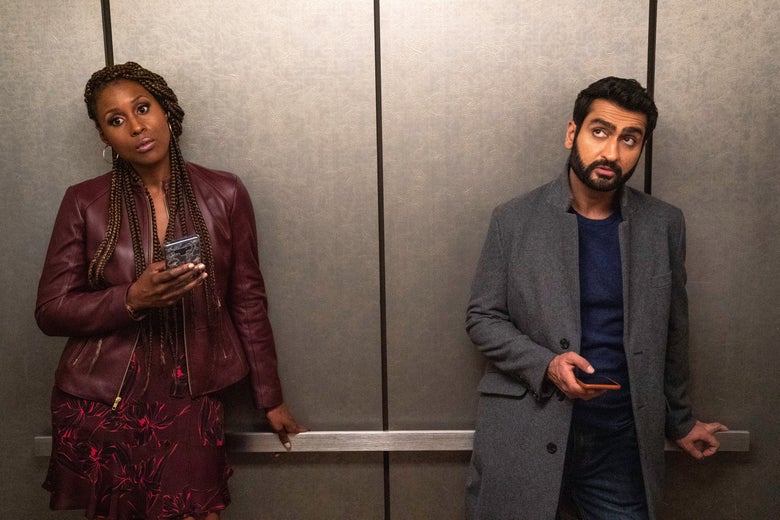
In A Beautiful Day in the Neighborhood, the investigative journalist Lloyd Vogel (Matthew Rhys) is a notch-on-his-belt guy, who revels in bringing down the famous. When the subjects of his profiles read his articles about them, it’s the worst day of their lives. Despite his professional success, a smart and sexy wife (Susan Kelechi Watson) and a new baby, he’s profoundly unhappy. We learn that much of this stems from unresolved anger at his father (Chris Cooper).

To his disgust, Vogel is assigned to write a brief puff piece on that icon of niceness, Mr. Rogers. The movie is about Mr. Rogers trying to disarm Vogel’s cynicism by excavating Vogel’s daddy issues.

As written, Vogel’s emotional journey is a little too predictable for A Beautiful Day in the Neighborhood to be a great movie, but it’s emotionally satisfying.

Of course, Tom Hanks is a perfect Mr. Rogers. Rhys is okay.

If you want to appreciate a great actor’s work, watch the very first time we see Chris Cooper. He signals that he is intoxicated with a slightly unsteady step backwards, and goes on to a perfectly realistic drunk performance, without ever lapsing into a Foster Brooks broadness,

Susan Kelechi Watson is very winning as Vogel’s wife, not a particularly complex part, but her charisma makes me want to see more of her.

This is the best work so far from director Marielle Heller (Diary of a Teenage Girl, Can You Ever Forgive Me?). She adds just the perfect dashes of magical realism (dropping Vogel into the sets and among the characters of the TV show), which is a difficult thing to get right.

We get to meet the real Fred Rogers in the recent biodoc Won’t You Be My Neighbor? What is so surprising is that Rogers’ sometimes laughably gentle affect sprang from such internal ferocity. It turns that Rogers was a man who hated, hated, hated the moral emptiness and materialism of commercial children’s television.

In theaters, Won’t You Be My Neighbor submerged audiences in their hankies. I did choke up three times during A Beautiful Day in the Neighborhood, but Won’t You Be My Neighbor? was pretty much one long ugly cry for me.

Streaming Won’t You Be My Neighbor? is included with subscriptions to HBO and DirecTV, and the stream can be purchased for $14.99 from all major streaming platforms. A Beautiful Day in the Neighborhood is available to stream from all the usual outlets; I paid Amazon $2.99.

St. Paddy’s Day – THE COMMITMENTS

THE COMMITMENTS

There’s a rich assortment of movies about Ireland that you can watch on St. Patrick’s Day: Waking Ned Devine, Brooklyn, Finian’s Rainbow, Once, Ryan’s Daughter, Widow’s Peak and The Guard. (Or you can go dark and pick from my Best Films About the Troubles.)

But my choice is the warmly funny The Commitments (1991), the affectionate tale of an unlikely aspiration and an unnecessary fiasco. Not content to wallow in generational poverty, a young lad, Jimmy Rabbitte (Robert Arkins) decides to gather a motley crew of his fellow North Dublin young folks and to form them into a soul band.

Now, North Dublin may be the most melanin-deprived place on the planet. So, why soul music? Jimmy, a natural leader, says:

Do you not get it, lads? The Irish are the blacks of Europe. And Dubliners are the blacks of Ireland. And the Northside Dubliners are the blacks of Dublin. So say it once, say it loud: I’m black and I’m proud. ”

With the guidance of an older musician who has worked in the US, they improve, and even start to catch on. Unfortunately, these folks have never experienced success and are totally ill-equipped to handle it. Soon, the band is hanging together by a thread. If only Wilson Pickett, touring across town, can show up and help them with publicity…

The Commitments is adapted from a Roddy Doyle novel steeped in working class Irish verisimilitude. Director Alan Parker looked to local Dublin musicians and came up with a cast of first-time actors. Ironically, the one experienced actor and non-musician in the cast was Johnny Murphy as Joey “The Lips” Fagan.

The cast performed a 20-year reunion show. What have they been doing since they made this movie?

  • Andrew Strong, who played the immensely gifted but thuggish lead singer Deco Cuffe, has spent decades as a rock singer within Europe, mostly with his band the Bone Yard Boys.
  • Angeline Ball, who played the big-haired tart, Imelda Quirke, swept the Irish equivalent of Oscar/Emmy for best actress in a film and best actress in a TV drama in the same year, 2003.
  • Maria Doyle Kennedy, another backup singer, went on to a significant musical career in Ireland where she is a renowned singer-songwriter. She also played Catherine of Aragon in The Tudors and Vera Bates in Downton Abbey.
  • Glen Hansard, who played the busking guitarist, had some recording success as a solo artist and with his band The Frames. He also starred in an even better movie than The Commitments – the singer-songwriter romance Once.
  • Colm Meany, who played the Elvis-worshiping dad, went on to a career in major films ranging from The Last of the Mohicans to Star Trek: The Next Generation. Meany also starred in two more movies stories based on Roddy Doyle stories The Snapper and The Van; neither film was bad, but neither was as magical as The Commitments.

Alan Parker also directed the musicals Fame and Pink Floyd: The Wall. He was nominated for the best directing Oscar for Midnight Express and Mississippi Burning. (The Academy overlooked his lurid and trashy Angel Heart.)

The Commitments can be streamed from Amazon, iTunes, YouTube and Google Play, usually for less than the cost of a pint of Guinness.

THE BURNT ORANGE HERESY: old dogs Jagger and Sutherland light up a talky neo-noir

Klaes Bang and Elizabeth Debicki in THE BURNT ORANGE HERESY. Photo courtesy of Cinequest.

In the neo-noir The Burnt Orange Heresy, a shady art critic (Klaes Bang) picks up an adventuresome hottie (Elizabeth Debicki) and is enlisted by a menacing zillionaire (Mick Jagger) to scheme out a painting from a reclusive painter (Donald Sutherland). This being a neo-noir, things don’t go as the critic has planned and it takes him too long to realize that he is the sap in the story.

Klaes Bang (The Square) is just made to play that handsome charmer who is just Up To No Good, the kind of role that would have gone to Zachary Scott in the 1940s. But in The Burnt Orange Heresy, Debicki, Sutherland and Jagger are each so compelling, and their characters are so rich, that they completely overshadow Bang’s critic.

This is also a very talky movie, too much so. All the yakking and Bang’s unrelatability drag down The Burnt Orange Heresy and keep it from engaging the audience. relatibility

Sutherland has such a sparkle as the mischievous painter, and it may be easier to spot it now in the aged actor than forty years ago in MASH or Animal House.

Mick Jagger in THE BURNT ORANGE HERESY

The real surprise here is Mick Jagger. This character, a rich and utterly masterful string-puller, is well within Jagger’s acting range and he nails it. After all, as an actor in fictional narratives, he is best known for two of the very worst movies of 1970: Ned Kelly and Performance. But here, Jagger employs his unmatched worldliness to inform this performance (and he makes great use of his trademark sneer and predatory smile, too). Jagger and Sutherland are probably the two best reasons to see this movie.

I saw The Burnt Orange Heresy at Cinequest. I expect it to be released theatrically in the Bay Area in the next few weeks.

THUNDERBIRD: unoriginal and, finally, insipid

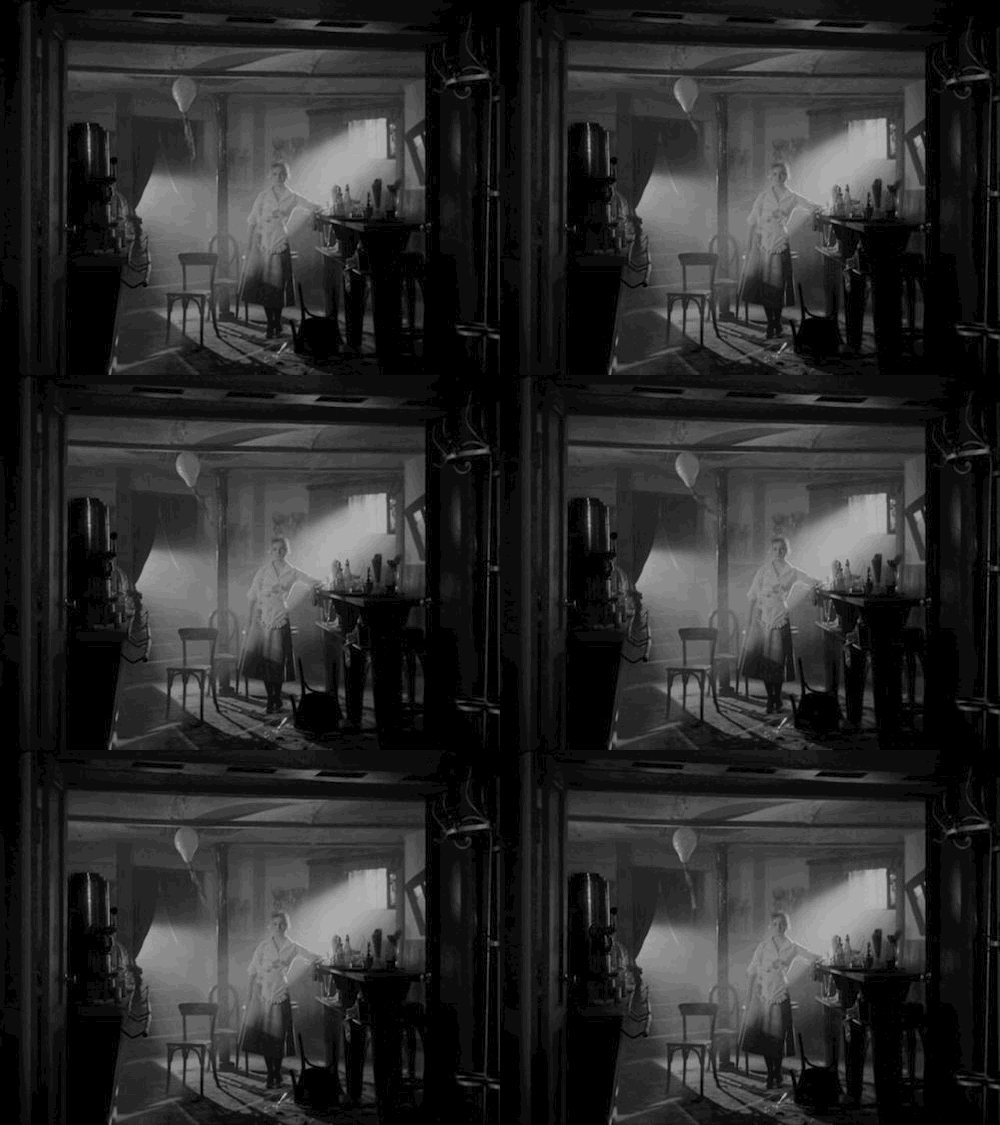
This is a two-second shot in THUNDERBIRD which has nothing much to do with the plot. Photo courtesy of Cinequest.

In the unremarkable Canadian mystery Thunderbird, a city detective visits a backwoods hamlet to unspool a mystery involving damaged young adults from a local tragic family. Thunderbird has the feel of a typical TV whodunit procedural with a trippy supernatural angle slapped on.

If you’ve ever watched a TV or movie drama, you will have already heard every line of dialogue in Thunderbird.  

There’s also an insufferable dose of noble indigenous spiritualism.

I thought I was watching an especially insipid ending, but then was surprised with the real ending, even more insipid.

Cinequest hosted the US premiere of Thunderbird.

TWELVE DAYS OF CHRISTMAS: party, party, party, angst

TWELVE DAYS OF CHRISTMAS. Photo courtesy of Cinequest.

In the comedy Twelve Days of Christmas, high school friends reunite when they’re home for their first college Christmas break. They all get down to some serious partying, but two of them must deal with a serious issue.

These characters act like they are refugees from some mythical colleges that are devoid of booze and drugs. The partying is so purposeful, it brought to my mind the Joe Ely song Everybody Got Hammered. The one blow-out party is very impressive, especially compared to my own first-college-break experience: Round Table pizza, cans of beers and a bottle of rum.

The core of the story is the angst of unrequited love; one character has obviously been in love with his best friend, who hasn’t noticed his yearning for her. And that’s the weakness of Twelve Days of Christmas. Although this guy is fun, witty, loyal and dependable, she knows that he is kinda weak-willed, so it’s evident that she could never see him has a partner.

Most of the cast is very good, although I never got away from being distracted by all the actors seeming at least 4-5 years older than the 19-year-old characters.

Director Michael Boyle and editor Carter Feuerhelm have enough faith in their audience and skill to drop in some split-second gags, all the more effective without lingering on them.

Cinequest hosted the world premiere of Twelve Days of Christmas.

THE MIMIC: surreal battle of wits

Jake Robinson and Thomas Sadoski in THE MIMIC. Photo courtesy of Cinequest.

In the offbeat and cerebral comedy The Mimic, a widowed screenwriter (Thomas Sadoski) becomes obsessed with his own sociopathic character – and the a person JUST LIKE the character (Jake Robinson) materializes in his life. The two embark on a surreal battle of wits.

Is the new acquaintance a real person, or is he the character in the screenplay? Is the sociopathic character miming the writer? Or is the writer exploring his own sociopathy?

The Mimic is an intellectual exercise, with more knowing chuckles than knee-slappers. Ultimately, it is more clever than it is engaging or entertaining.

The Mimic is basically a two-hander, but it’s rich in cameos. There’s a priceless turn by Gina Gershon as a cougar bar fly. M. Emmet Walsh, Marilu Henner and Jessica Walter show up, too, along with the always-welcome Austin Pendleton (whom I’ve enjoyed since his Francis Larabee in What’s Up, Doc?).

Cinequest hosted the world premiere of The Mimic.

SMALL TIME: innocence among the addicted

Audrey Grace Marshall in Niav Conty’s SMALL TIME, premiering at Cinequest. Photo courtesy of Cinequest.

Filmmaker Niav Cinty explores rural America’s opioid crisis through its impact on one little girl in Small Time. Emma (Audrey Grace Marshall) is growing up among damaged and ill-prepared adults who are modeling the worst possible lessons about drug use, parental responsiblity, handling firearms, choice of language and taking things that belong to someone else. This is an opioid-ravaged world in which the one character who actually saves two lives is the local abusive drug dealer. Emma sees things that no child should see.

Emma is spirited, smart and has a child’s pureness of heart.  Amidst the adult chaos, she’s baking cookies and thinking about the tooth fairy. But we have to ask, what is the shelf life of innocence? When will her environment take its toll?

Nobody is comfortable watching a child in bad situations, so why isn’t Small Time unwatchable? Writer-director Conty has mastered the tone by making Emma such a spirited, hopefully indomitable protagonist. And Conty embeds just enough humor in scenes with the local lunkheads playing the board game Risk and Emma turning the doctrinal tables on a priest, forcing him to resort to bluster.

The child actress Audrey Grace Marshall is very good. Conty shot Small Time over three years as Audrey ranged from seven to ten. Small Time was filmed on location in north central Pennsylvania.

Cinequest hosts the world premiere of Small Time.

WILLOW: a mother’s heartbreak, a mother’s joyous triumph

WILLOW. Photo courtesy of Cinequest.

Willow is a triptych by Oscar-nominated master Macedonian filmmaker Milcho Manchevski that plumbs the heartaches and joys of having children. Willow contains the stories of three mothers and the heartache of childlessness, the heartbreak of losing a child and the emotional roller coaster of parenting. In Willow, a mother’s love can bring devastating grief and triumphant joy.

There’s a scene in the final vignette with a mother and son in a car that is one of the most amazing scenes I’ve ever seen.

There’s also a woman who is drawn to a man when she watches him act with profound decency – even though he doesn’t know anyone else is watching him. That launches a deeply beautiful love story.

Just about every parent has had a child vanish at the turn of one’s head, and plunges into panic, desperation and terror until the child is found. There is more than one of these scenes in Willow, and they are uncomfortable.

As a World Cinema bonus, we are introduced to the Macedonian phrase, “wash the bananas”.

Manchevski’s Before the Rain was nominated for the Best Foreign Language Oscar in 1994. Most recently, he directed my choice as the best film of the 2017 Cinequest, Bikini Moon.

Cinequest hosts the North American premiere of Willow.

VOID: grasping a most ironic lifesaver

VOID. Photo courtesy of Cinequest.

In the Finnish dark comedy Void, a noted author is struggling in his fifth year of a writer’s block. For better or worse, his wife’s career as a film actress is blooming. As he crumbles under deadline pressure and self-loathing despair, it’s less and less likely that he will hold on to his wife. To reset himself, he tries a sailing adventure and then a visit to a remote hunting cabin to visit a much less-talented author. There, a very unusual circumstance may relaunch his career…and it’s the very opposite of creativity.

Void is filled with the dryest Scandinavian humor. The artistic malaise in Void covers the territory of 8 1/2 and The Shining, but not as compellingly. Void does deliver an inventive lifesaver for the writer to grasp, along with an arch Finnish observation of Hollywood.

Void is mostly photographed in black-and-white. There are four cinematographers credited, and the black-and-white cinematography is stunning.

Cinequest hosts the North American Premiere of Void.

THE QUICKSILVER CHRONICLES: two bohemians in a ghost town – and life happens

Kate Woods in THE QUICKSILVER CHRONICLES. Photo courtesy of Cinequest.

The documentary The Quicksilver Chronicles introduces us to the 60ish brother and sister Kemp and Kate Woods, who live a bohemian existence in a ghost town that they have to themselves. In other times, Kemp and Kate might have been labeled eccentrics or Free Thinkers.

Kate is raucously voluble. She is never without a cigarette, espouses her love of Mexican ballads and has an opinion on everything. Her friend, photographer Tom Chargin, has been taking pictures of Kate for decades.

Most of Kemp and Kate’s lives seem to involve dogs and cigarettes. The Quicksilver Chronicles is only 75 minutes long, which gives the filmmakers the freedom to pace the film slowly – that allows us to settle in and let these characters and their lifestyle wash over us. Just when you think we’re just watching these two putter around in the boonies, a major life event DOES happen.

They are living in Idria, California, population 2. This is the site of the long-defunct New Idria Mine, once America’s second biggest mercury mine (after San Jose’s New Almaden Quicksilver mine), In the California Gold Rush, mercury was used to extract gold from ore. There’s a mountainful of naturally occurring mercury at Idria, and the disturbances from the mining have made this a Superfund site.

As the crow flies, Idria is remarkably close to Silicon Valley. But, to get there, you first have to drive the 45 minutes to Hollister and then ANOTHER 2 hours past the tiny crossroads of Paicines, Panoche and Mercey Hot Spings.

Documentarians Ben Guez and Aleksandra Kulak shot The Quicksilver Chronicles over four years of visits to New Idria.

Cinequest hosts the US premiere of The Quicksilver Chronicles, my favorite documentary at this year’s festival.