THE EYES OF TAMMY FAYE: some dignity for the clown

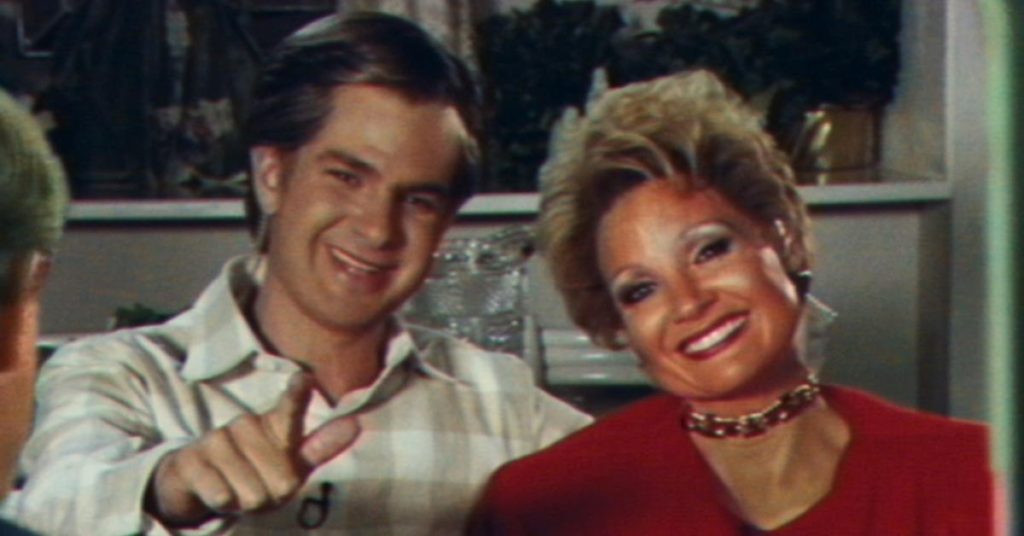
Photo caption: Andrew Garfield and Jessica Chastain in THE EYES OF TAMMY FAYE

Jessica Chastain’s powerhouse performance in The Eyes of Tammy Faye humanizes and brings dignity to a disgraced celebrity. Tammy Faye, of course, is Tammy Faye Bakker, married to televangelist Jim Bakker of the PTL Club. The relentlessly upbeat couple eschewed fire-and-brimstone for a happy talk ministry based on “Jesus loves you” and “God wants you to be rich”.

Jim Bakker was the preacher and talk show host. Tammy Faye was the singer, puppeteer and sidekick. Tammy Faye’s on-her-sleeve emotions, swinging between pep talks and ready tears – were especially popular (and revenue-inducing) with the PTL Club’s audience.

Of course, the ministry empire was a Ponzi scheme, which eventually sent Jim into federal prison; a sex scandal precipitated the collapse. The story is well-chronicled in the excellent 2000 documentary, also titled The Eyes of Tammy Faye, upon which this movie is based (available to stream on Amazon, AppleTV, Vudu and YouTube).

Jim Bakker (and certainly not Tammy Faye) was the mastermind of the fraud. But Tammy Faye, with her increasingly grotesque makeup and her flamboyant persona, had also become a figure of widespread ridicule, and her fall from grace was also very harsh.

Chastain’s convincing performance is centered on Tammy Faye’s EverReady Bunny exuberance and naive good intentions. Reportedly, she had to spend several hours each day getting outfitted wih prosthetics and daubed with makeup.

Andrew Garfield perfectly captures Jim Bakker’s smarminess and ambiguous sexuality.

Tammy Faye’s mother is played by Cherry Jones (Transparent), who always gives a strong performance. Here she plays a character who starts out seeming to be an emotionally distant, kill-the-dream stick-in-the-mud, but who evolves into the story’s moral anchor.

The one false note in The Eyes of Tammy Faye is Vincent D’Onofrio, who is supposed to be playing Jerry Falwell. Falwell, of course, was rarely seen without his smug grin. Onofrio plays him as a hulking, never smiling menace and with a much different accent and speech pattern than Falwell’s. It’s as if D’Onofrio had never seen Falwell, and his performance completely misses the insincerity and hypocrisy behind Falwell’s veneer of affability.

The Eyes of Tammy Faye is now in theaters.
KANSAS CITY BOMBER: self-discovery at the roller derby track

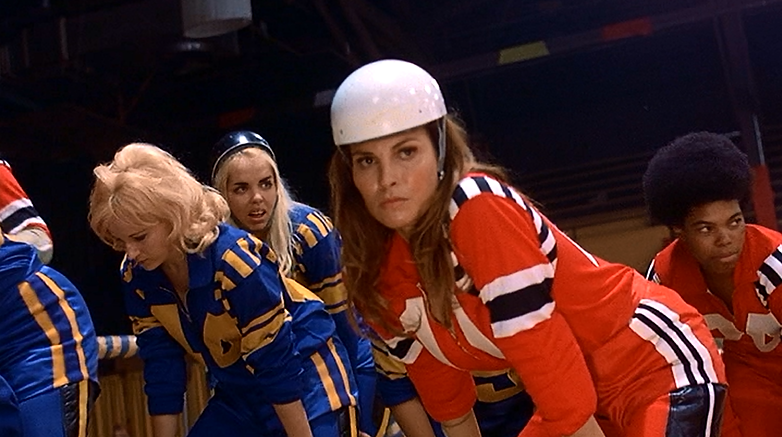
Raquel Welch (right) in KANSAS CITY BOMBER

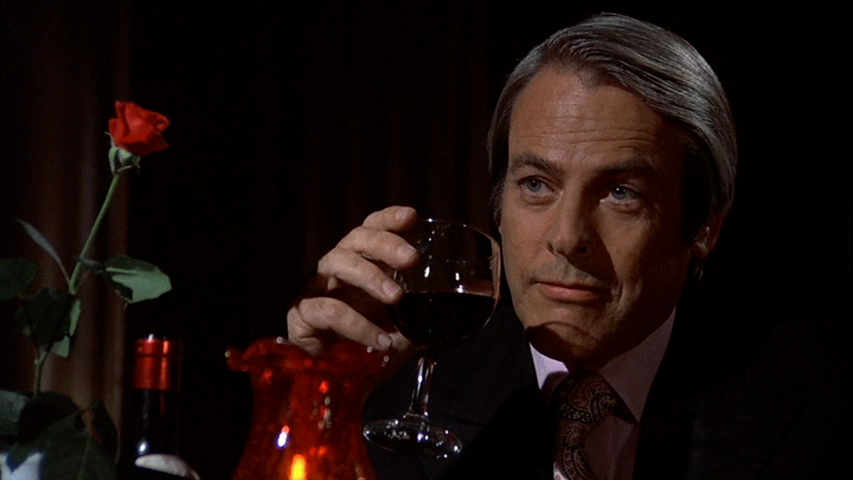
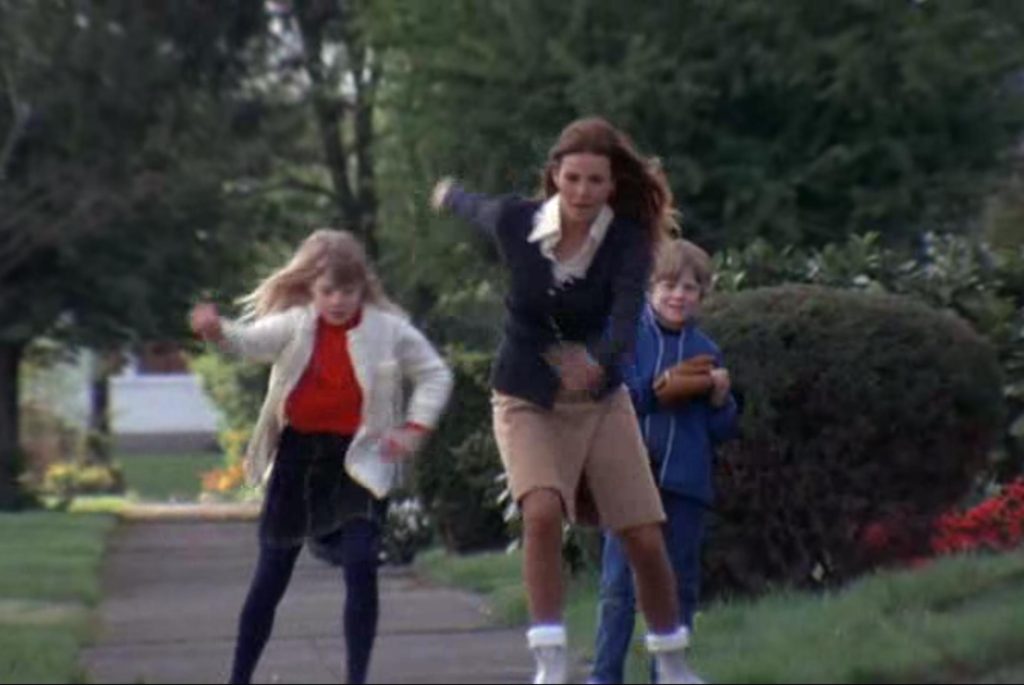
Kansas City Bomber, which plays September 23 on Turner Classic Movies, is a hella entertaining, kickass 1970s tale of female self-discovery. Raquel Welch plays a single mom scraping by, who skates in the roller derby at night. She and her daughter (Jodie Foster in only her second feature film film) move to a new city, and she joins the local roller derby team. She becomes the team’s star, and the team owner (Kevin McCarthy) is eager to date her (she’s Raquel Welch!) and use her to leverage his next business expansion.

There is a significant power imbalance between the skater and the owner – for starters, she’s broke in a new town, and he’s her boss. He expects both to have her sexually and to cynically profit from her talent. Will she be exploited or not? Is she another of his pawns?

Kevin McCarthy in KANSAS CITY BOMBER

In 1972, Raquel Welch was thought of more as a novelty movie star than as an actress. She had become instantly recognizable for displaying her spectacular figure in a skintight spacesuit (Fantastic Voyage), a doe-skin bikini (One Billion Years B.C.), a star spangled bikini (Myra Breckenridge), and flimsy undergarments (100 Rifles). Although the poster of her cavewoman bikini had gone viral, she hadn’t gotten the chance to show that she could act.

The role of the hard scrabble single mom in Kansas City Bomber was perfect for Welch. Welch had two kids by the time she was 21 and was divorced at 24. While trying to make it in showbiz, she bounced between jobs as a department store model, cocktail waitress and TV “weathergirl”.

In her performance in Kansas City Bomber, Welch nails the character of a woman committed to raising her kid while facing one indignity and bad choice after another. She also was up to the physicality of a character who competes in a contact sport where fisticuffs are common. Raquel reportedly has that said that Kansas City Bomber was the first of her films that she actually liked. And, as in The Three Musketeers a few years after, she got to show her acting chops.

Trivia digression: Welch’s father was Bolivian, and her cousin was the first female president of Bolivia.

Jodie Foster and Raquel Welch in KANSAS CITY BOMBER

Kansas City Bomber is a genre film that works because, along with the subtext of feminist self discovery, the action is really good. Besides mixing it up on the track, Welch’s character beats up some male attackers, too.

Kansas City Bomber has real professional roller derby skaters and includes actual roller derby action and crowd reactions. The actors were roughed up during the shoot, and Raquel said “Skating is a batchy, sweaty, funky life.” Verisimilitude abounds. Kansas City Bomber is indisputably the best-ever roller derby movie. (My own favorite childhood team was the Bay Bombers with Joanie Weston and Charlie O’Connell.)

Raquel Welch and Helena Kallianiotes in KANSAS CITY BOMBER

Helena Kallianiotes plays the rival roller derby star in the Big Race at the finale. Kallianiotes was unforgettable as the unbearably negative hitchhiker in Five Easy Pieces (her first credited role); this is one of only ten feature films in her career. Bill McKinney, one of the the infamous “Squeal Like a Pig” hillbillies in Deliverance, also appears.

Besides catching it on TCM this week, you can stream Kansas City Bomber from Amazon, AppleTV, Vudu and YouTube.

Raquel Welch in KANSAS CITY BOMBER

THE CARD COUNTER: a loner, his code and his past

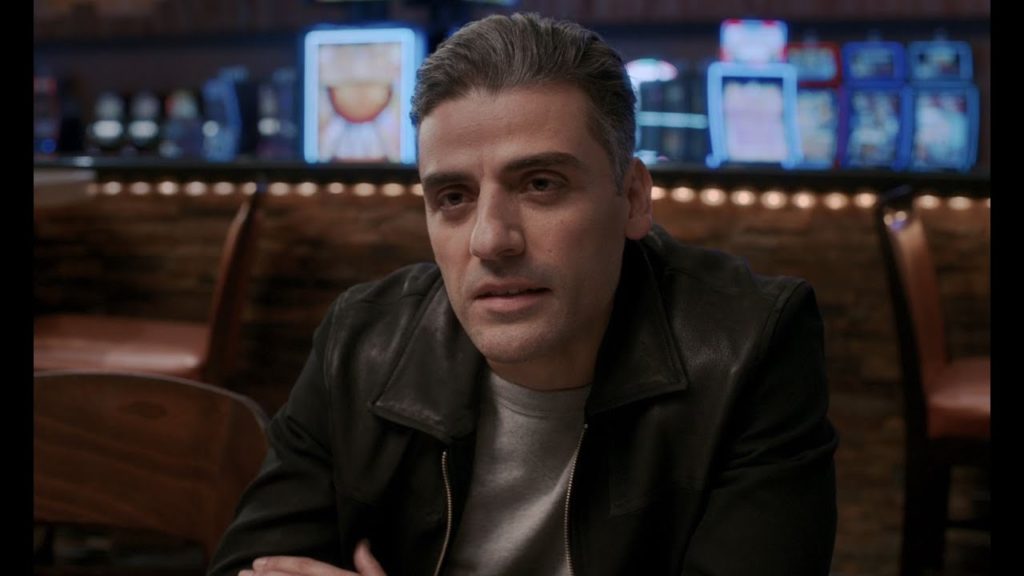
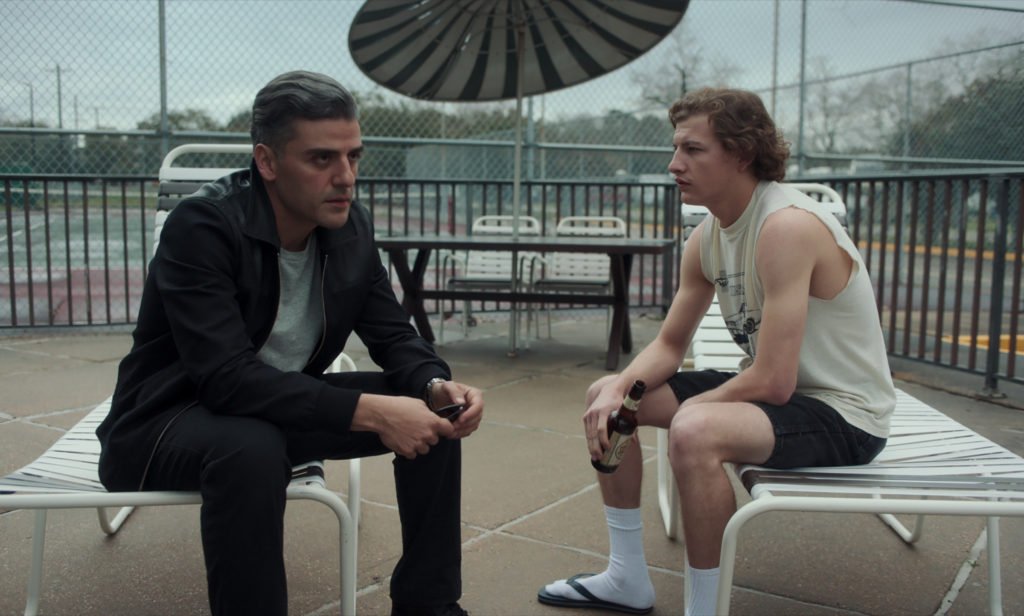
Photo caption: Oscar Isaac in THE CARD COUNTER. Photo courtesy of Focus Features / ©2021 Focus Features, LLC

Oscar Isaac stars in Card Counter, Paul Schrader’s dark portrait of a highly disciplined loner who lives by a code but can’t submerge his past. Isaac’s character, improbably named William Tell, is a professional gambler, who lives in an endless string of motels and casinos.

The first thing we learn about William Tell is his rigid sense of self-discipline – in an OCD display of entering a new motel room and covering each piece of furniture in twine-bound sheets. This is an expert who can win free money at casinos, but resists winning too much, so he doesn’t get kicked out. He prefers anonymity to acclaim. More than anything, William Tell invests in keeping his head down.

It turns out that Tell has been traumatized by things he did as an army guard at Abu Ghraib – and the consequences. It’s no surprised that yet another solitary, emotionally damaged character has sprung from the dark mind of Paul Schrader (Taxi Driver, First Reformed).

Oscar Isaac and Tye Sheridan in THE CARD COUNTER. Photo courtesy of Focus Features / ©2021 Focus Features, LLC

Above all, Tell is a man with a code. He meets a young man (Tye Sheridan), also haunted by the aftereffect of Abu Ghraib, who is consumed by a revenge fantasy. Although Tell avoids social entanglements, he is compelled to save the kid from himself.

Although most of The Card Counter takes place in casinos, it’s really not gambling movie. There is some card play and some gaming procedure. This is a character-driven story – and it’s not about who wins or how much. Schrader playfully hints at a big poker showdown, but it’s a red herring.

The role of this intense and obsessive man is perfect for Oscar Isaac and his piercing gaze. I usually don’t warm to Isaac, although he has been proficient in some films that I love: Ex Machina, The Two Faces of January. Maybe I don’t see a sense of humor in there? Anyway, he is stellar here.

Tye Sheridan is excellent as the young man bent on revenge. Tiffany Haddish plays a woman who runs a stable of professional gamblers and lives off her emotional intelligence; it’s a delight every time she is on-screen. The great Willem Dafoe appears in a brief but pivotal role.

I haven’t ever seen a movie character like William Tell, which makes The Card Counter an excellent watch.

BEST SELLERS: orneriness goes viral

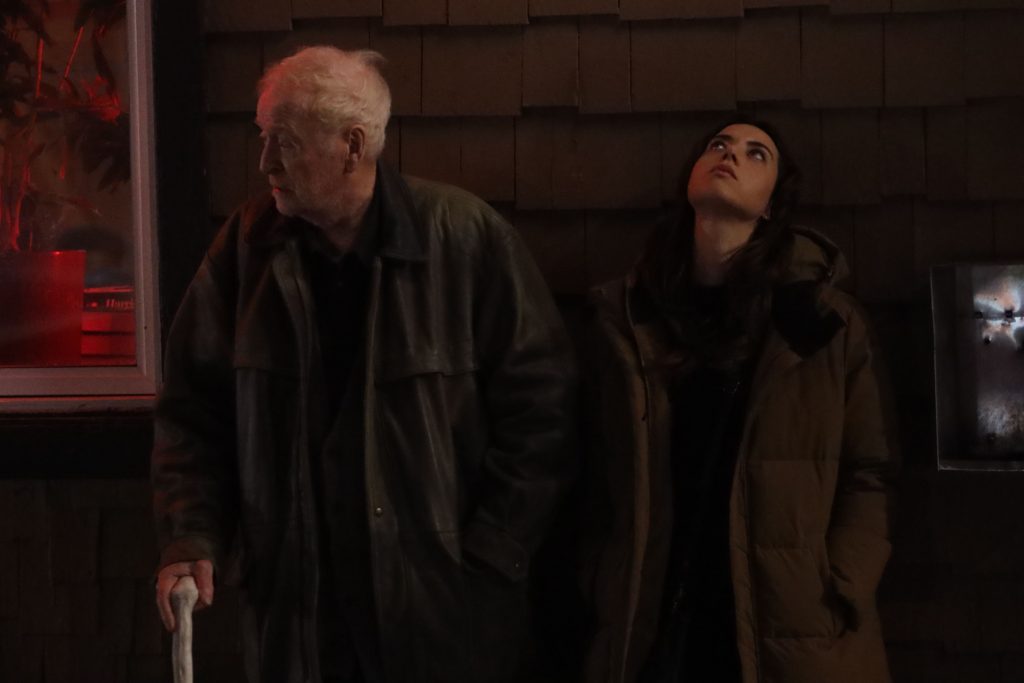
Sir Michael Caine and Aubrey Plaza in BEST SELLERS. Photo courtesy of Screen Media Films.

Michael Caine and Aubrey Plaza star in the breezy comedy Best Sellers. Plaza plays Lucy Stanbridge, who has inherited a publishing company on the verge of insolvency. She discovers one remaining possible lifeline – the company is still owed one book by a famous author in its stable. Unfortunately, that author is Harris Shaw (Caine), an anti-social, elderly alcoholic.

Harris Shaw’s anti-sociability is anything but passive, which challenges Lucy as she drags a manuscript out of him and takes him, brimming with hostility, on a book tour.

Just when the audience is settled in for a madcap, odd-couple-on-the-road comedy, Best Sellers adds a topical layer. Harris Shaw’s bad public behavior is so extreme that, instead of sabotaging the book’s marketing campaign, it makes him a viral sensation on social media. In an even more wickedly funny turn, Shaw’s sudden popularity is with consumers who do not buy books; “you should be selling t-shirts”, mutters one fan.

Both Sir Michael Caine and Aubrey Plaza (Parks and Recreation) are funny here, in roles that do not challenge them. In particular, the character of Lucy isn’t written to take advantage of Plaza’s capacity to be simultaneously funny and dangerous (Black Bear).

Best Sellers is the first feature for director Lina Roessler. Although Lucy and Harris develop a friendship and face Harris’ end of life, Roessler manages to keep Best Sellers from becoming pretentious or maudlin.

Best Sellers opens September 17 in theaters and on VOD.

BEING A HUMAN PERSON: this is what I mean

Roy Andersson in BEING A HUMAN PERSON

In the documentary Being a Human Person, we meet the filmmaker Roy Andersson as he makes what he acknowledges to be his final film at age 76. Andersson is an auteur who makes very, very odd movies that are humanistic, deeply profound and mostly funny. The movies, like A Pigeon Sat on a Branch Contemplating Existence and this year’s About Endlessness, are comprised of apparently random tableaus in which ordinary-looking Scandinavians do very little.

In thinking about Being a Human Person, I was initially going to recommend it to folks who have seen Andersson’s films. But then it occurred to me that it really a perfect vehicle to introduce newbies to Andersson’s work.

Now, I treasure watching Andersson’s films, but if you’re looking for movies that immediately make sense, then Andersson, most assuredly, is not your guy. In each film, Andersson curates a range of human behavior and lets the audience try to connect the dots. But when he is interviewed for Being a Human Person, he’s happy to tell you what he intends the movies to mean.

Andersson does not equate success and happiness. A wunderkind, Andersson directed a hit movie at age 28, and then plunged into depression. He bought a central Stockholm warehouse in 1981 to “develop my own language”. He built his studio inside and lives in an apartment above.

Andersson’s process is as peculiar as are his movies. He builds the set for each vignette one at a time in his studio. He expertly deploys a range of old school techniques like trompe-l’œil.

Andersson’s movies are about the foibles of everyday humans. They show people’s moments of fragility, vulnerability, confidence and lack thereof. One of his colleagues observes, “Roy sees people who aren’t in the movies.  It’s people who who haven’t been very successful in life. He gives them dignity .” For research, Andersson sits in sidewalk cafes to people-watch (“so I can see the menu“).

Andersson himself notes, “When you think there’s no escape, you are a prisoner in your own mortality.“ Overusing alcohol to combat boredom, Andersson struggles to finish his movie.

Director Fred Scott made excellent use of his access to Andersson, Andersson’s coworkers and family to tell this story. Being a Human Person is streaming from Laemmle.

THE UNKNOWN SAINT: a shrine to really bad luck

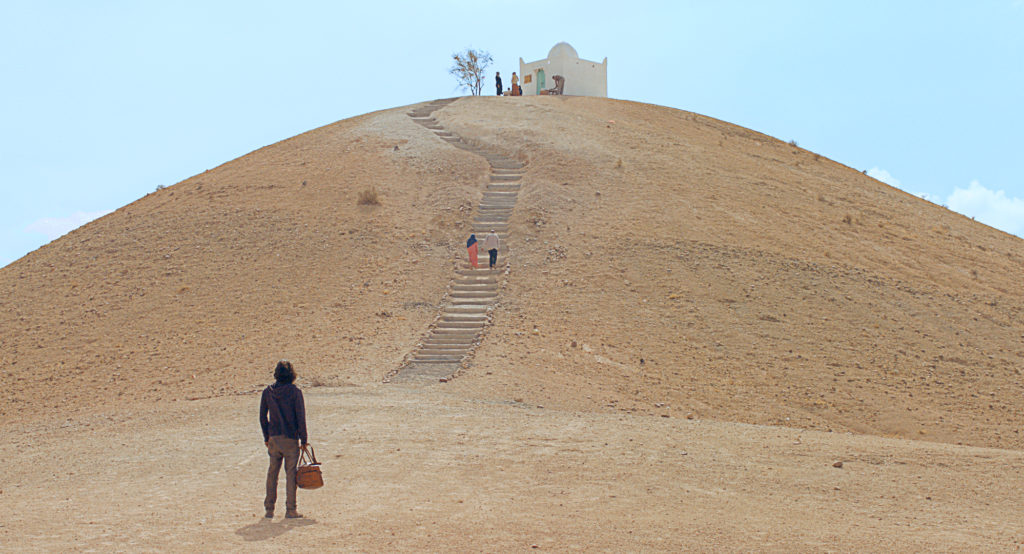
Photo caption: THE UNKNOWN SAINT. Photo courtesy of The Match Factory.

Here’s the premise of the crime comedy The Unknown Saint: a thief is being hunted down in the vast Moroccan desert. Just before capture, he buries his loot on a sandy hilltop and disguises it to look like a grave. After serving time in prison, he returns to dig up his loot. But he finds that some people, believing the “grave” to be that of a saint, have built a mausoleum over the grave. Even worse, an entire village has sprung up to support pilgrimage commerce, and the shrine is guarded around the clock.

The thief (Younes Bouab) starts plotting to sneak in and dig up the loot, but he’s got to overcome, among other obstacles, the night watchman’s canine corps. It doesn’t help when he brings in an accomplice so stupid that he doesn’t get that his prison nickname of “Ahmed the Brain” is ironic. And he is surprised when he is not the only nighttime tomb raider.

The thief has to wait in a village filled with eccentrics and small timers on the hustle. The dispensary has a bored young doctor, an aged nurse with a wicked sense of humor, and a waiting room full of “patients” putting on a charade of medical need.

Younes Bouab in THE UNKNOWN SAINT. Photo courtesy of The Match Factory.

The Unknown Saint is relentlessly deadpan, as all the characters plunge ahead with profound cynicism or earnest absurdity, with at least one critic likening it to Fargo. It’s all very, very funny, especially an unexpected triumph of dog dentistry involving the town barber.

The Unknown Saint is the first feature for writer-director Alaa Eddine Aljem, and it is an auspicious debut. Aljem knows how to use the vastness of the desert to express human futility and how to wring laughs out of human foibles.

The Unknown Saint is Morocco’s submission for this year’s Best International Feature Oscar. The Unknown Saint is streaming from Netflix.

BOB ROSS: HAPPY ACCIDENTS, BETRAYAL & GREED: improbability squared

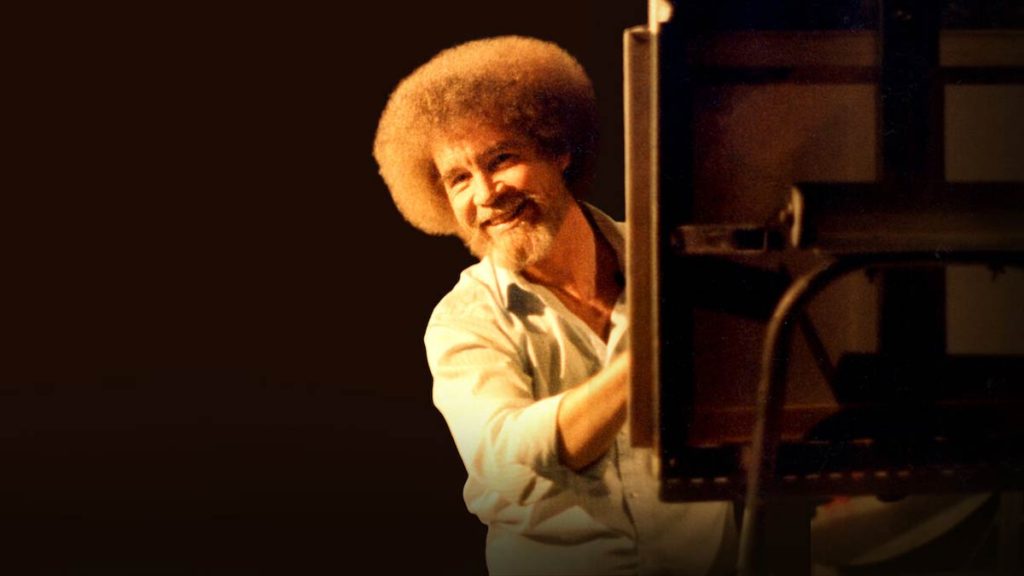
Photo caption: BOB ROSS: HAPPY ACCIDENTS, BETRAYAL & GREED. Photo courtesy of Netflix.

The documentary Bob Ross: Happy Accidents, Betrayal & Greed tells two improbable stories. The first is how Bob Ross, the soft-talking painting instructor on PBS, could become such a cultural phenomenon. It’s hard not to smile when thinking of the signature permanent adorning Ross, at once ridiculous and kind of innocent, and big enough to warrant its own zip code. [Come to think of it, can you imagine ANY personality who sounded like and looked like Ross, Julia Child or Fred Rogers starring on commercial TV?]

In any event, Bob Ross: Happy Accidents, Betrayal & Greed lets us glimpse the secret sauce that Ross used to make a mundane craft into something singular and indelible. By all accounts, Ross was a very sweet guy. The edgiest thing anyone says about him is that he could tell “ornery jokes”.

The Betrayal and Greed in the title relates to the bone-picking after his death to exploit his legacy. This is a sordid tale, in sharp juxtaposition to Ross’ own career and persona.

Bob Ross: Happy Accidents, Betrayal & Greed is streaming on Netflix.

499: the legacy of Mexico’s Original Sin

499. Photo courtesy of Cinema Guild.

In director and co-writer Rodrigo Reyes’ highly original docu-fable 499, one of Hernán Cortés’ soldiers (Eduardo San Juan Breñais) is transported centuries into the future and plunged into contemporary Mexico. The movie’s title reflects a moment 499 years after Cortés’ conquest of the Aztecs in 1520; the conquistador and the audience discover that the dehumanization inherent in colonialism has persisted to plague modern Mexico.

I’m calling Reyes’ medium a “docu-fable” because it is all as real as real can be (the documentary), except for the fictional, 500-year-old conquistador (the fable).

Cast upon a Veracruz beach after a shipwreck (but 500 years later), the conquistador is terribly disoriented, and retraces Cortés’ march from Veracruz to Tenochtitlan/Mexico City. Seeing everything with a 500 year old lens, he is initially disgusted that the Indians that he conquered are now running things.

Soon he finds a Mexico reeling from narco terror. He meets Mexicans who have been victimized by the cruel outrages of the drug cartels, those risking their lives to hop a northbound train, and those in prison. In the emotional apex of 499, one mother’s account of a monstrous atrocity, clinical detail by clinical detail, is intentionally unbearable.

Reyes wants the audience to connect the dots from Mexico’s Original Sin – a colonialism that was premised on devaluing an entire people and their culture. Will the conquistador find his way to contrition?

499, with its camera sometimes static, sometimes slowly panning, is contemplative. Cinematographer: Alejandro Mejía’s work won Best Cinematography at the 2020 Tribeca Film Festival.

499 opens at San Francisco’s Roxie on September 3 with Rodrigo Reyes in attendance, and will play the Roxie for a week before its national rollout.

THE LOST LEONARDO: is it a hustle? does it matter?

THE LOST LEONARDO

The insightful and thought-provoking documentary The Lost Leonardo starts out as a mystery. We learn that there are “sleeper hunters” in the art world, who seek unrecognized or mislabeled art and buy them on speculation. Our two sleeper hunters buy a beat up, old painting for $1100 to find out if is a long lost original Leonardo da Vinci painting, “the male Mona Lisa”. So, the initial question is, is this a real Leonardo painting, of which only 15 are known to exist?

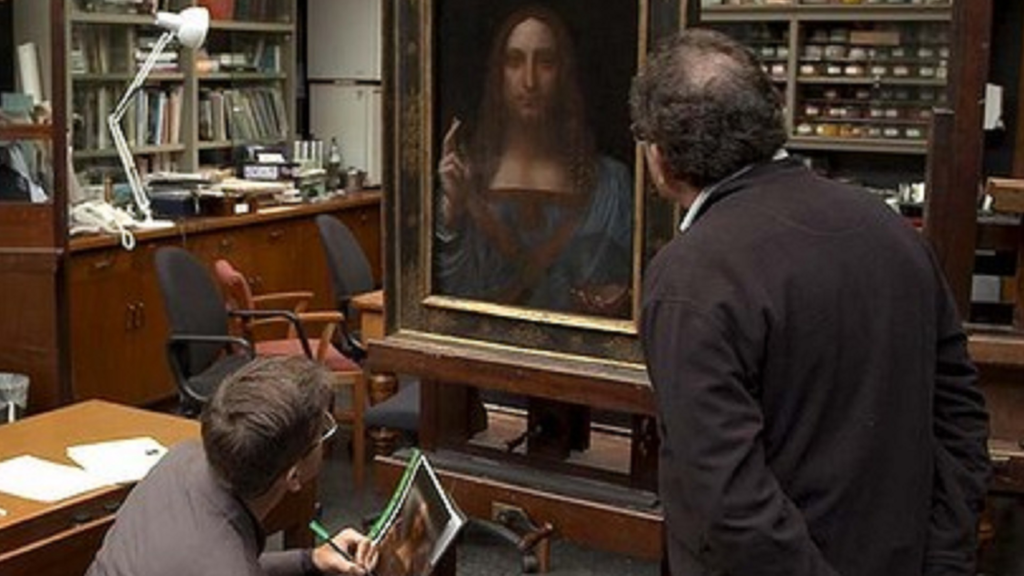
Around 1500, Leonardo painted a Jesus portrait titled Salvator Mundi (The Savior of the World), of which many copies were made by others. The speculators send their painting to the world’s top restorer of Renaissance masterpieces to query whether this could be the original. Then they approach the National Gallery of Art, which has the painting scrutinized by three leading world experts in Leonardo’s work.

The initial findings are promising. The transition between the lip and the upper lip resembles only one other painting – the Mona Lisa. Removal of patchwork paint reveals that Jesus’ thumb has been repositioned, which was a common practice by Renaissance masters, but is never is seen in a copy.

But questions remain for some. Why would Leonardo, who was meticulous, choose a piece of wood with a knothole that would assuredly eventually cause a disfiguring crack? Worse, how could a 600-year-old Leonardo show up in New Orleans with no provenance?

Both the proponents of the painting’s authenticity and those who would discredit it agree that the restorer contributed up to 85% of the actual paint on the current painting. So, even if Leonardo painted it in 1500, is it now just a masterpiece by the restorer?

The story diverts to an amazing con job that is unrelated to the painting’s authenticity. A shrewd and audacious French businessman bilks a Russian billionaire out of $45 million by pretending to be negotiating the purchase of a painting that that he has already bought. And, as the Frenchman later notes ruefully, you don’t want to piss off a Russian oligarch.

At this point, The Lost Leonardo takes us into a record-breaking $450 MILLION art sale (in which the purchaser is revealed by the CIA – yes, the CIA) with implications for global politics. Implicitly, The Lost Leonardo poses a second question – does it matter whether the Salvator Mundi is real or not? It certainly doesn’t need to be proven to those who would benefit from it being a real Leonardo – the sellers, the National Gallery of Art, Christie’s auction house – or to those who are emotionally moved by it as a piece of art.

The Lost Leonardo peels back the onion on an ever surprising tale of discovery, scholarship, fraud, commerce and politics in the refined and pretentious art world. It’s a good watch.

SEARCHING FOR MR. RUGOFF: the best movie taste in any barbarian

Photo caption: SEARCHING FOR MR. RUGOFF. Photo courtesy of Deutchman Company.

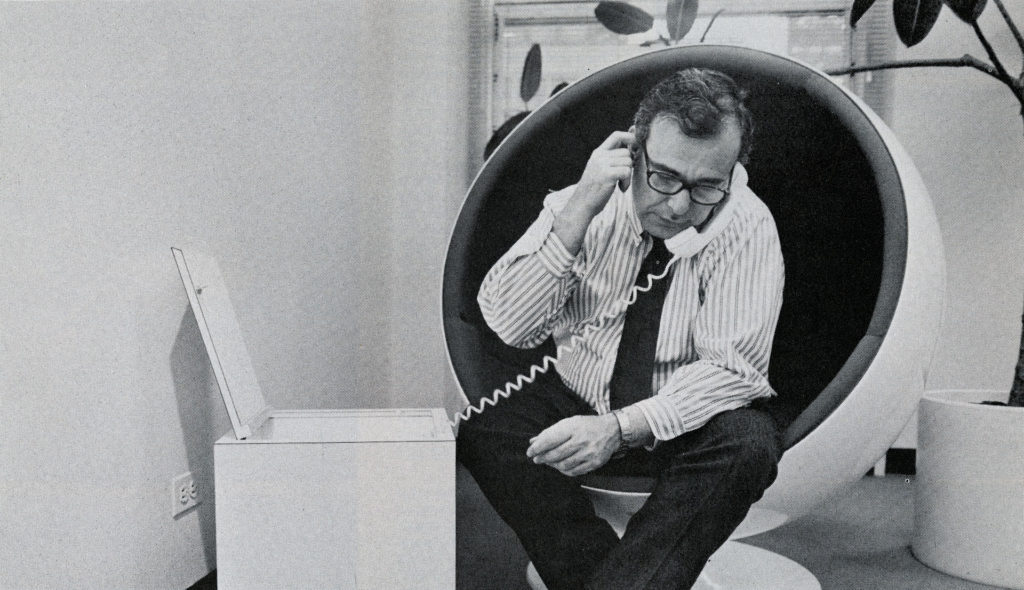
The documentary Searching for Mr. Rugoff is the story of a now-unknown giant in independent cinema. I was drawn to learn more about Donald Rugoff, whom I hadn’t heard of, because he was responsible for the US distribution of a slate of essential foreign and independent films that were the spine of American art house cinema:

  • Bruce Brown’s seminal surf movie Endless Summer (1965)
  • Milo Forman’s international breakthrough The Fireman’s Ball (1966)
  • Robert Downey, Sr.’s iconoclastic Putney Swope (1968)
  • Costa-Gavras’ double Oscar winning Z (1968) and State of Siege (1972)
  • The Mayles’ Rolling Stones-at-Altamont doc Gimme Shelter (1970)
  • De Sica’s The Garden of the Finzi-Continis (1970)
  • the great doc about a child faith healer grown up, Marjoe (1972)
  • one of the funniest movies I’ve ever seen, The Tall Blond Man with One Black Shoe (1972)
  • Bergman’s Scenes from a Marriage (1973)
  • Monty Python and the Holy Grail (1975)
  • Barbara Kopple’s Oscar winning Harlan County, USA (1976)
  • and more films by Ken Loach, Marcel Ophüls, Lina Wertmüller, Werner Herzog, Agnes Varda, François Truffaut and Satyajit Ray.

As we learn in Searching for Mr. Rugoff:

From 1965 to 1978 [Rugoff’s company] Cinema 5 received 25 Oscar nominations and 6 Oscars. 16 nominations were for foreign language films, 6 were for documentaries.

Ira Deutchman made this film when he heard that Rugoff, his first boss, had ended up buried in a pauper’s grave; (watch the movie to discover the truth on that).

However, Donald Rugoff was notoriously disheveled and unpleasant.  He always had two secretaries posted outside his office because of the high probability that one would quit at any time. He was so volatile that many of his associates incorrectly believed that he had a steel plate in his head that affected his behavior. His own son describes him as a “toxic figure” in the home.

So, there we have it – the guy with the best possible movie taste and the most elevated artistic sensibilities was personally a barbarian.

He was, however, also a mad genius of PT Barnum-like promotion. Until times changed and he wasn’t. Rugoff’s life was a wild ride – and it was critical to an important moment in cinema.

Searching for Mr. Rugoff is opening in person at and streaming from the Roxie. I streamed it from Laemmle.