THE MENU: immune from pretension

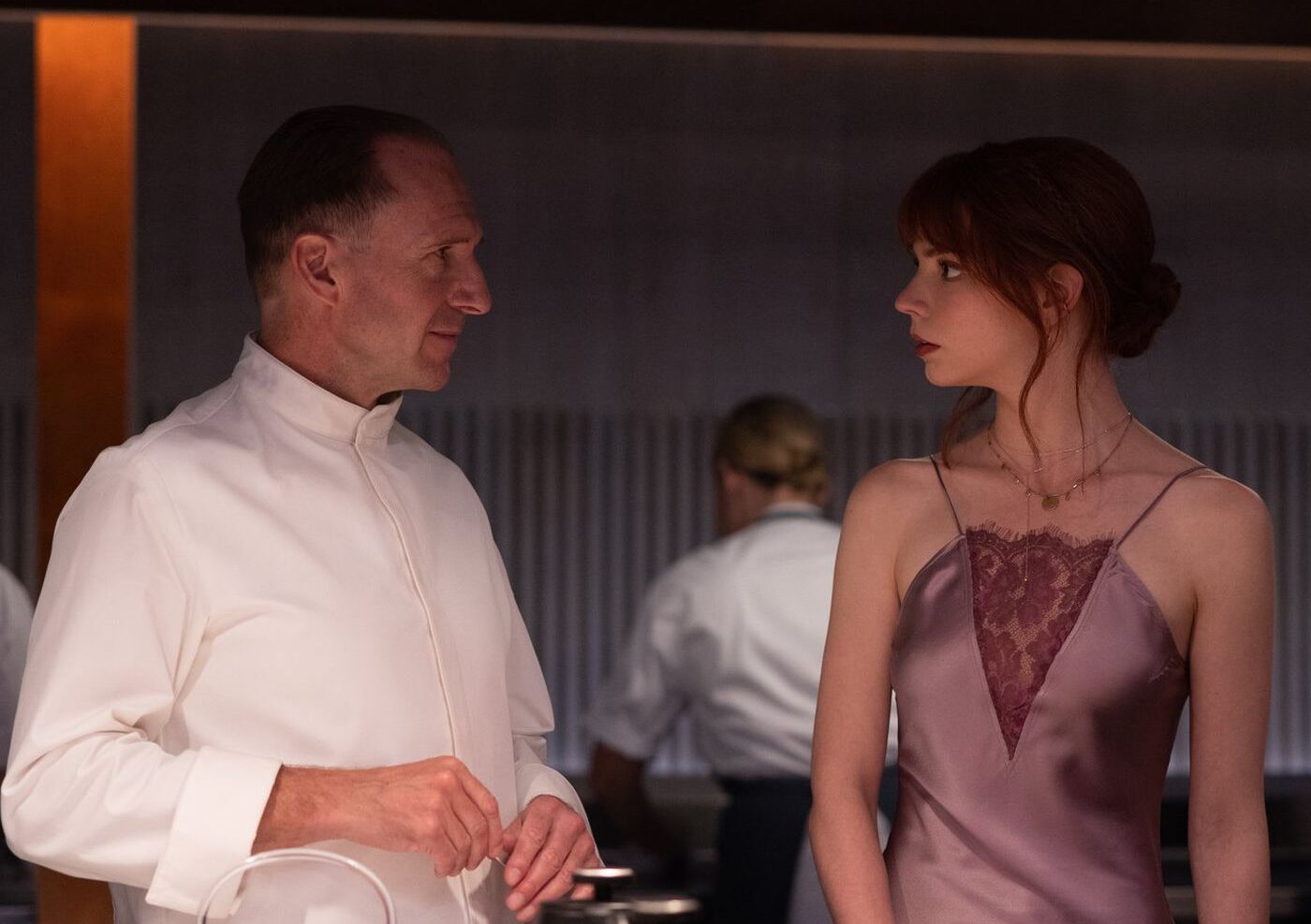
Photo caption: Ralph Fiennes and Ana Taylor-Joy in THE MENU. Courtesy of Searchlight Pictures.

The darkly funny horror film The Menu is a battle of wits set in absurd foodieism. This isn’t the kind of horror film with a lot of jump scares, although one sudden event shocks and disgusts the diners (though some think that it’s all part of the show). The Menu builds a sense of dread, a situation where it looks like survival is impossible.

Chef Slowik (Ralph Fiennes) presides over a restaurant on its own island in the Pacific Northwest, with its own carefully curated gardens and aquaculture and a staff as cultish as The People’s Temple. The restaurant has 12 seats and each evening’s prix fixe goes for $1250.

Slowik seems like a self-important and officious kitchen tyrant, but unsettlingly high strung. That signals, and this is really not a significant spoiler, that he’s a balls out psycho intending to slaughter all his guests.

Creepily, it is revealed that tonight’s customers have been carefully selected by Slowik. The one exception is Margot (Ana Taylor-Joy), the last minute substitute date of Tyler (Nicholas Hoult) an obsequious celebrity chef groupie.

I’m a foodie myself; after all, I named my blog The Movie Gourmet. But, as much as I enjoy fine dining experiences and my own amateur cooking, I look askance on a $60 small plate of foam. The Menu is a wicked, The-Emperor-Has-No-Clothes sendup of that kind of culinary silliness. Each of the courses of Chef Slowik’s meal (and each wine pairing) is its own very funny comment on food fads. The best is the “breadless bread”, which I guess is not a “deconstructed” dish, but an “unconstructed” one. The Tyler character gets funnier as he ignores the escalating horrors to laser in on the avant-garde flavor combinations.

The key to the story is that Margot is immune to pretension. Margot never buys into the extreme food scene, and she has street smarts, which equip her for an epic psychological showdown with Slowik.

Ana Taylor-Joy is one of my very favorite actors, endlessly watchable with as she projects her unique blend of intelligence and danger, I first discovered her in Thoroughbreds, and have enjoyed her in The Queen’s Gambit, Last Night in Soho and even the blah Amsterdam.

Ralph Fiennes is really cast perfectly as an ego monster with a telling insecurity or two. Hoult is a hoot, and Hong Chau, is a master of deadpan as Slowik’s henchwoman.

The Menu is only the fourth feature for veteran television director Mark Mylod (Game of Thrones, Succession). The screenplay – and it;s a damn good one – is by Seth Weiss and Will Tracy, who come out of The Onion. These guys, with Ana Taylor-Joy and Ralph Fiennes, have made a pointedly acid and entertaining movie.
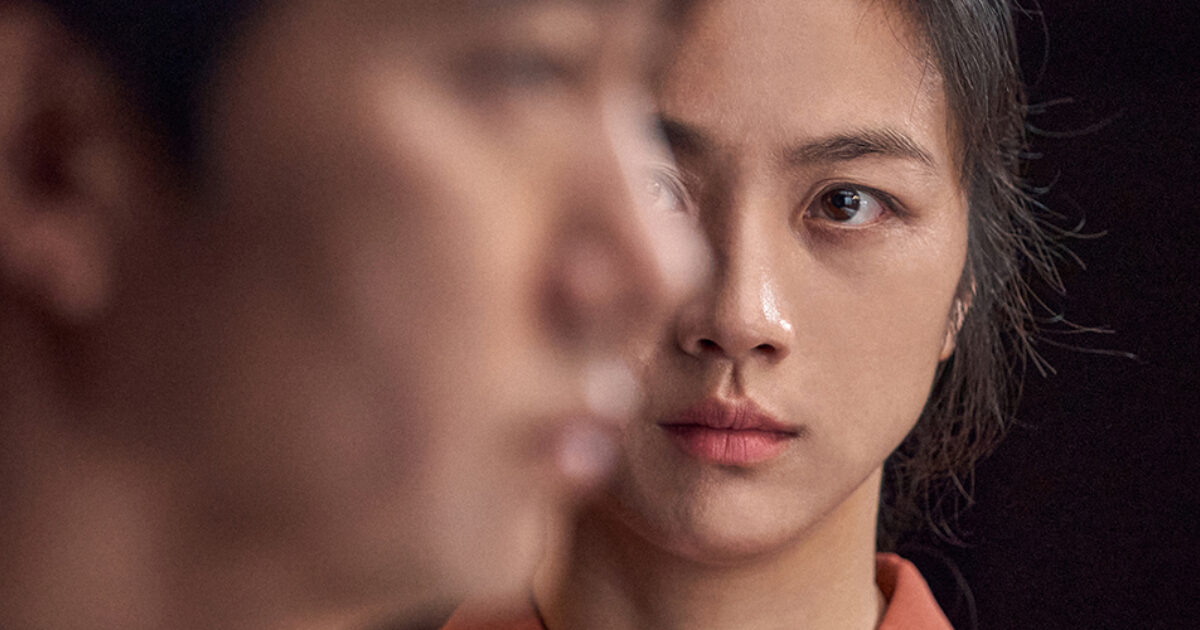
DECISION TO LEAVE: he’s obsessed, and she asks, “Am I so wicked?”

Photo caption: Park Hae-il and Tang Wei in DECISION TO LEAVE. Courtesy of MUBI.

In the roller coaster neo-noir Decision to Leave, detective Hae-joon (Park Hae-il) is already an obsessive personality, whose agonizing over unclosed cases has given him chronic insomnia, He and his wife have an apartment near her job, but he works in a different city, and the walls of his piedàterre  are covered with crime scene photos from the unsolved cases, just so he can stew about them even more. For his wellbeing, this is the very last guy who should be exposed to a mysterious femme fatale.

He investigates a death in the mountains, which could be a mountain climbing accident or suicide – or perhaps a brilliantly configured murder. He suspects the victim’s much younger Chinese wife, Seo-rae (Tang Wei) a woman with a past, but she has an airtight alibi. He interrogates her and surveils her, which she seems to enjoy, and he becomes more and more fascinated with her. He is utterly beguiled, and Decision to Leave becomes ever more the page turner as the sexual tension escalates. This evolves into a perverse battle of wits that Hae-joon may not be destined to win.

Decision to Leave is the work of writer-director Park-chan Wook, who made the brilliantly erotic The Handmaiden. Like The Handmaiden, Decision to Leave doesn’t end when the audience expects it to. And, like in The Handmaiden, not everything is as it seems.

Tang Wei is exceptional as she unpeels the onion that is Seo-rae. When we first meet Seo-rae, the effect is nothing like the stunning introductions of Barbara Stanwyck’s Phyllis Diedrichson, Jane Greer’s Kathie or Rita Hayworth’s Gilda; we underestimate her. We watch as she cleverly and somewhat conventionally captivates Hae-joon. But nothing prepares us for her revealing just how twisted a mastermind she turns out to be. She’s a femme fatale for the ages.

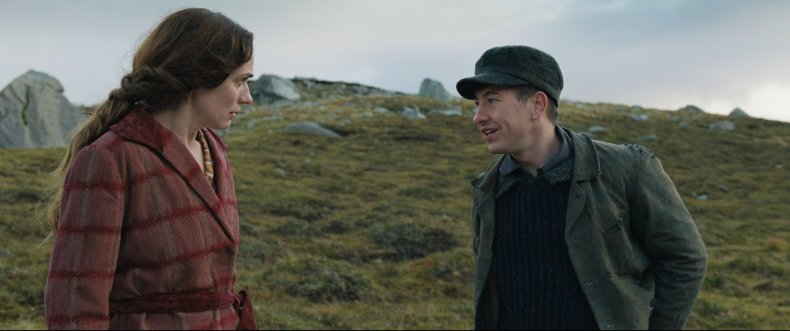
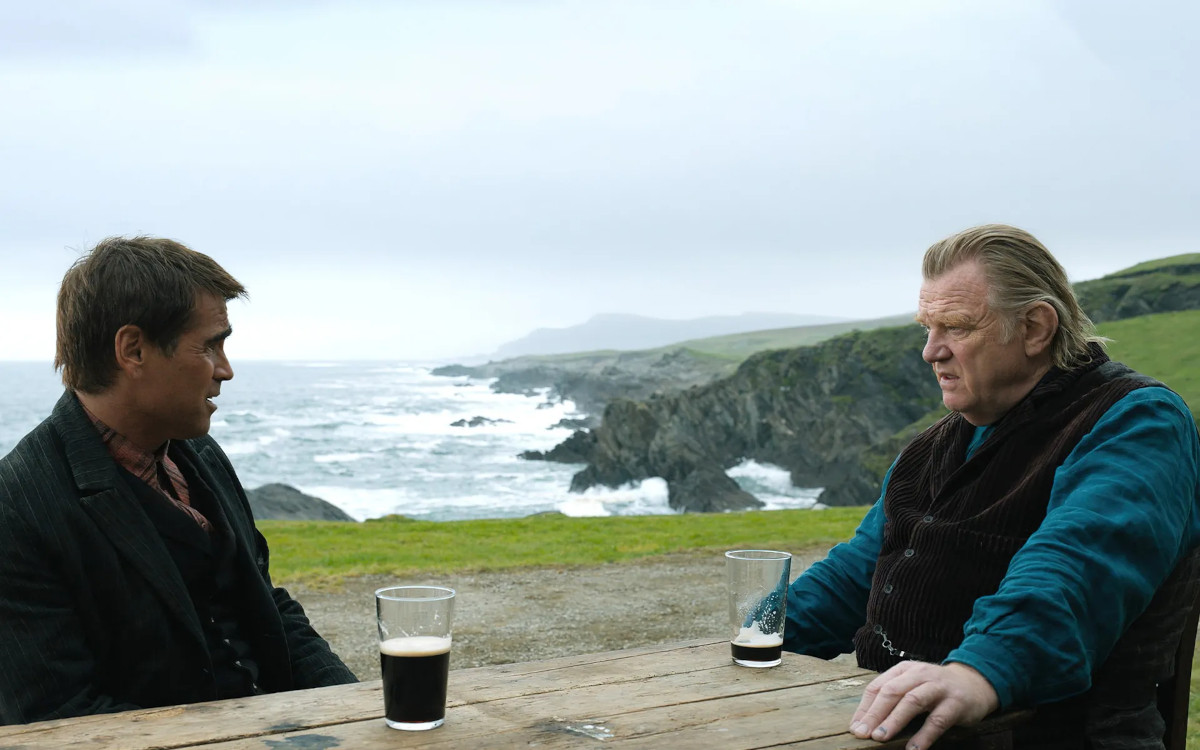
THE BANSHEES OF INISHERIN: a contest of absurd stubbornness

Photo caption: Colin Farrell and Brendan Gleeson in THE BANSHEES OF INISHERIN. Courtesy of Searchlight Pictures.

The Banshees of Inisherin is set in 1923 on a fictional Irish island literally detached from the mainland and its Irish Civil War. Pádraic (Colin Farrell), who raises some livestock, and Colm (Brendan Gleeson), a fiddler, are lifelong buddies. There’s not much to do on the island, other than look forward to meeting up at the local pub. So, Pádraic is shocked when Colm announces that he no longer wishes to chat with Pádraic at the pub. Colm is facing his own mortality and reckons that shooting the breeze with Pádraic is taking away valuable focus from composing Irish music, Colm’s only chance at an immortal legacy. Unlike Colm, Pádraic is not a man of ideas, and Pádraic is hurt and baffled.

Colm is polite but very firm and clear about his request to be left alone. But Pádraic desperately needs human connection, and he cannot leave Colm alone. Colm throws down an ultimatum, and Pádraic, to the dismay of the other islanders, blunders right through the stop sign. Actions escalate, and the two men become mired in a contest of absurd stubbornness.

One thing is for sure, I will always remember this movie when I hear a thunk on my window or door (not a knock, but a THUNK).

As serious as are the consequences of the men’s squabble, Irish wit abounds, and The Banshees of Inisherin is a funny movie. It may contain the funniest confession booth scene in the history of cinema.

The Banshees of Inisherin is written and directed by Martin McDonagh, whose Three Billboards Outside Ebbing, Minnesota won two Oscars. Banshees reunites McDonagh, Gleeson and Farrell fourteen years after their In Bruges, a masterpiece of comic neo-noir that I just rewatched last week (to my renewed delight).

This is an acting showcase for the considerable acting talents of Gleeson and Farrell. Gleeson, whose Colm is ever polite but even more resolute, has an amazing body of work: Into the West, Braveheart, The General, Gangs of New York, The Guard, Albert Nobbs, The Grand Seduction, Calvary, The Tragedy of Macbeth and a few Harry Potter movies.

Farrell has demonstrated that seeks out auteur directors; he’s worked with Steven Spielberg (Minority Report), Joel Schumacher (Phone Booth, Valerie Guerin), Yorgos Lanthimos (Lobster, The Killing of a Sacred Deer), Terrence Malick (The New World), Sofia Coppola (The Beguiled) and Kogonada (After Yang). Farrell’s Pádraic takes dim affability to an unmatched level of self-destructive obnoxiousness.

Kerry Condon and Barry Keoghan in THE BANSHEES OF INISHERIN. Courtesy of Searchlight Pictures.

But the best two performances in this exceptionally well-acted film are those by Kerry Condon as Pádraic’s sister Siobhan and by Barry Keoghan as the intellectually challenged young islander Dominic. Condon’s longsuffering Siobhan is bright and spirited – and the only islander with a lick of common sense. The longer the two men’s struggle progresses, the more the movie becomes Siobhan’s as she tries to mitigate their madness and at least protect herself from it. Condon is the youngest actor to play Ophelia for the Royal Shakespeare Company and has amassed a considerable body of work in episodic television: Rome, Ray Donovan, Better Call Saul.

Keoghan is always a splashy actor and he has a lot of fun with the unpredictable and irritating Dominic. His lakeside scene with Condon is heartbreaking.

There’s been plenty of Oscar buzz for Gleeson, Farrell and Keoghan – and there should be for should be for Condon.

Now how good a movie is this? The humor and gripping story kept me wanting to see the pages turned, the acting is magnificent and the cinematography is beautiful. But what is McDonagh trying to say, if anything? Is this some kind of a parable, or just a portrait of two individuals’ stubbornness? I’m really not sure, but it’s a good thing that The Banshees of Inisherin made me care about the answer.

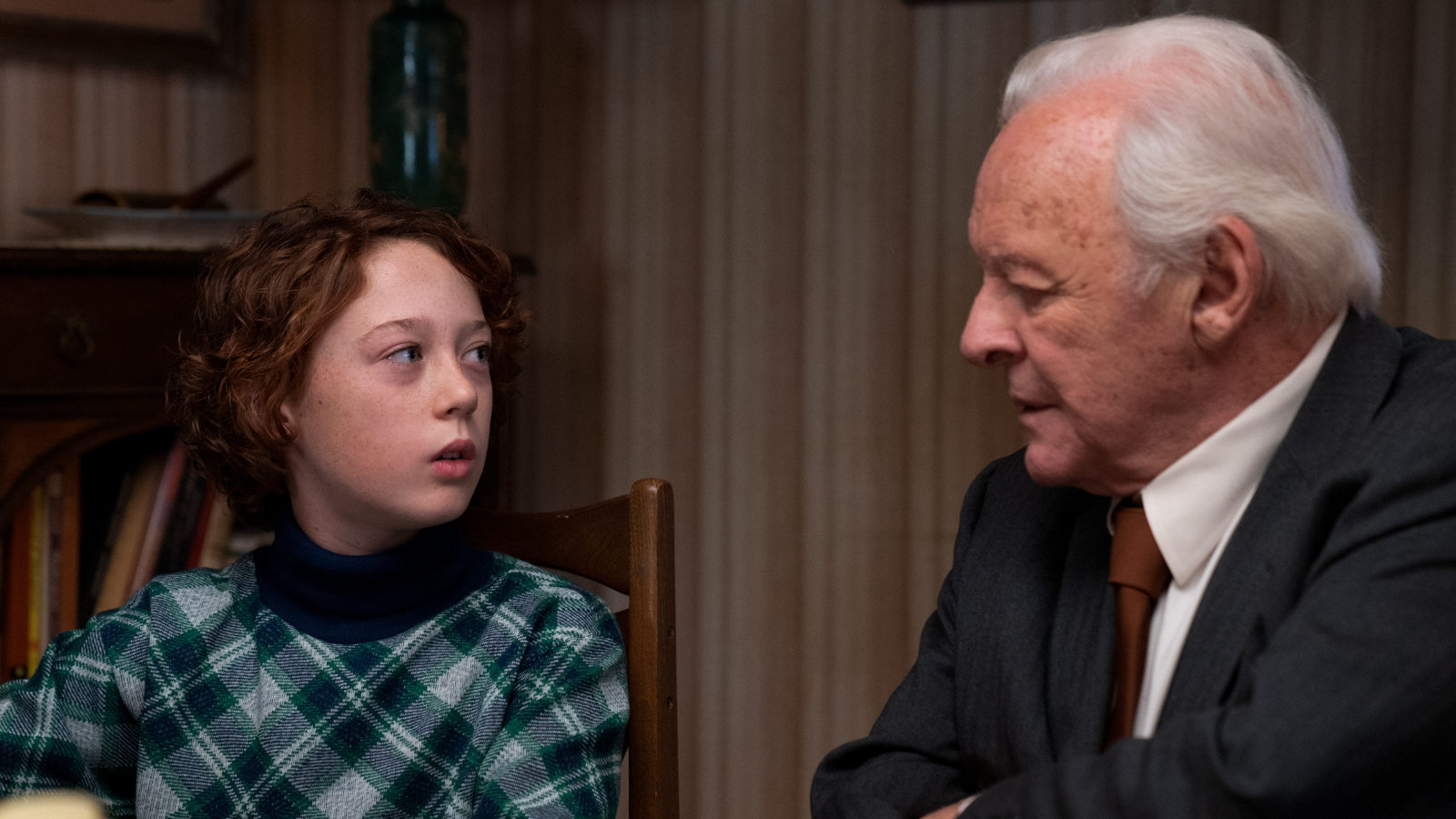
ARMAGEDDON TIME: coming of age – right into a moral choice

Photo caption: Banks Repeta and Anthony Hopkins in ARMAGEDDON TIME. Courtesy of Focus Features.

The thought-provoking Armageddon Time, centers on Paul (Banks Repeta), a 6th grade boy in 1980, who, besides grappling with all the regular coming of age issues, must face issues of conscience. Paul and his new school friend, Johnny (Jaylin Webb), have their interests, but the adults at school miss the opportunity to harness the boys’ passions, instead trying to force square pegs into round holes; of course, these smart and spirited lads act out and get into trouble. That’s less of a problem for Paul, who has been sheltered by his affluent family, but Johnny is African-American and poor and already has a more clear-eyed view of the world.

On a day-to day basis, Paul is raised by his tightly wound mom (Anne Hathaway), but she defers to the family’s men when something really big must be confronted. Paul’s male role models are his venerable grandfather (Anthony Hopkins) and his grouchy, stressed-out dad (Jeremy Strong). The grandfather’s point of view has been shaped by his own mother’s having escaped a Ukrainian pogrom and having experienced anti-Semitic college quotas himself. He has survived to build a family and business success.

The grandfather is the anchor of the family, and his moral stance is absolute – a person must act with justice and decency in every situation, no mater how difficult. The dad, who views life as a continuous struggle to keep one’s head above water, is more pragmatic – one must do what is necessary to get along. The grandfather despises privilege; the dad wants to leverage any privilege that might fall his way.

The kid actors, Banks Repeta and Jaylin Webb, are excellent. (For some reason, Repeta’s facial features kept reminding me of Molly Parker).

Anthony Hopkins is a treasure, and we should appreciate every performance he continues to bring us, even an unchallenging one like this.

Jeremy Strong is such a strong actor, and he’s such a chameleon that I never seem to recognize him until the closing credits, as he shows up as Jerry Rubin, Lee Harvey Oswald, Abraham Lincoln’s secretary John Nicolay and the like. Here, he seems like a one-dimensional brute for most of this film, until the story reveals his fears and hopes.

Reportedly, writer-director James Gray, who just re-invented the adventure epic with The Lost City of Z, peppered this story with his own childhood experiences. Maybe that’s why Fred Trump and Maryanne Trump appear as characters. Maryanne Trump (Donald’s much more sympathetic sister) shows up in a Jessica Chastain cameo, and lays out the narrative that the privileged are actually meritorious.

I wasn’t wowed upon leaving the theater, but, the more I noodle about this film, the more I admire it.

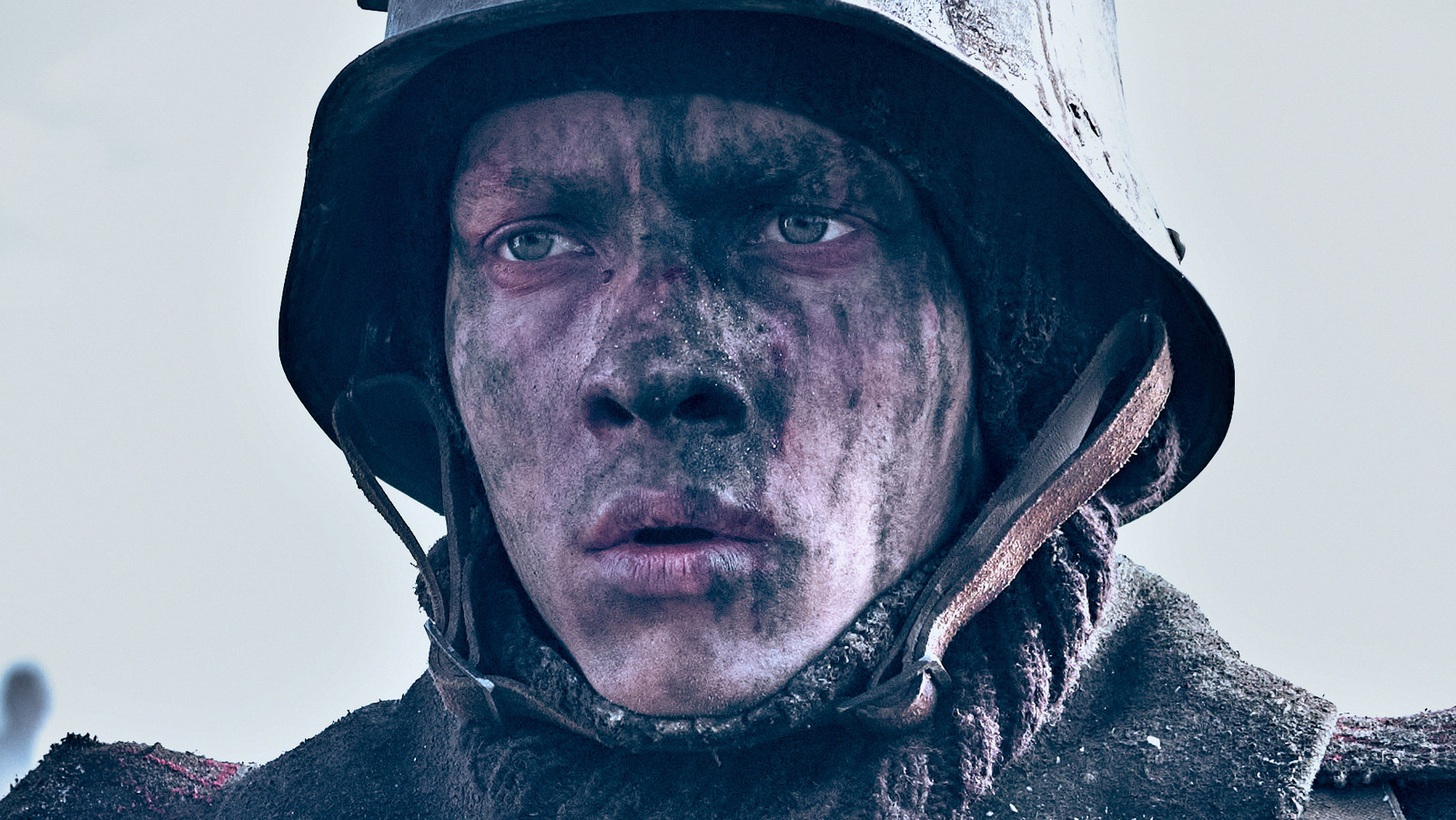
ALL QUIET ON THE WESTERN FRONT: the trauma of war

Photo caption: Felix Kammerer in ALL QUIET ON THE WESTERN FRONT. Courtesy of Netflix.

The anti-war epic All Quiet on the Western Front unforgettably makes two points: war, in general, is a traumatizing experience and WW I, in particular, was disgustingly senseless.

The screenplay was adapted from the famous Erich Maria Remarque novel, as was the 1930 Lewis Milestone cinematic masterpiece. Since the story is told from the point of view of a German infantry recruit, Netflix commissioned a German director and cast for this version. That director is German filmmaker Edward Berger, who has been working in US television over the past decade. The actors may be German and Austrian, but they speak English in this movie.

Paul (Felix Kammerer) is a callow youth who, with his friends, is swept away by patriotic fervor and enlists in the German Army just in time to participate in the last few months of WW I. Both sets of belligerents have been grappling for years in the mire of trench warfare, suffering mass casualties for the sake of a few hundred yards here and there. The conditions between battles are horrific, and the battles are more so. Paul endures the terror of bombardment, gas attacks, invulnerable enemy tanks and charges across no-man’s land in the face of machine gunfire. The hand-to-hand combat is especially savage.

Kammerer, in his first screen role, is exceptional as an Everyman who experiences physical and mental exhaustion, dread, panic, shock, guilt and hopelessness.

The battle scenes are superbly photographed by cinematographer James Friend, who has 71 screen credits, not a one suggesting that he was capable of anything this masterful.

War may be traumatizing, but this eminently watchable film is not. All Quiet on the Western Front is streaming on Netflix.

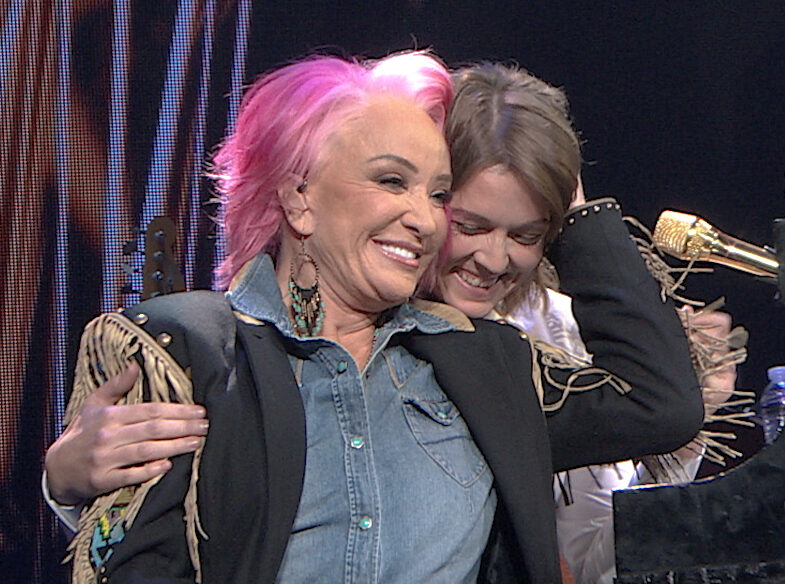
THE RETURN OF TANYA TUCKER: FEATURING BRANDI CARLILE: she’s still a handful

THE RETURN OF TANYA TUCKER.: FEATURING BRANDI CARLILE. Courtesy of Sony Pictures Classics.

The Return of Tanya Tucker: Featuring Brandi Carlile is a portrait of a music legend with sapped confidence, whose career is jumpstarted by admiring younger musicians. The audience gets a glimpse into the creative process of writing of a song, an Emmy winner at that.

Tanya Tucker, in showbiz from age 9, exploded onto the country music scene with the monster hit Delta Dawn at 13. After stardom in her teen years and a Wild Child period in her twenties, her career dipped, setting up a comeback in her thirties. Now sixty, by 2019 she hadn’t released any recording for 17 years.

In 2019, Shooter Jennings began a project to showcase Tucker’s talent with new material (a la Rick Rubin and Johnny Cash) and invited Brandi Carlile to help. Carlile, a huge Tanya Tucker fan, became central to the project, coaxing Tucker along, pumping up her confidence and riding the roller coaster of Tucker’s reliability issues. The Return of Tanya Tucker is essentially a “making of” documentary about the project.

Now 60 and looking older, Tucker has a lot of mileage on her (and has launched her own brand of tequila, named with the Spanish translation of Wild Thing). Carlile finds out that Tucker is a handful.

Tucker is still a formidable song stylist, though, with a distinctive cry-in-her-beer break in her voice. The project goes better than anyone could have expected, and there’s a Feel Good ending. The Wife particularly enjoyed this film.

I screened The Return of Tanya Tucker: Featuring Brandi Carlile for the Nashville Film Festival. It is now in theaters.

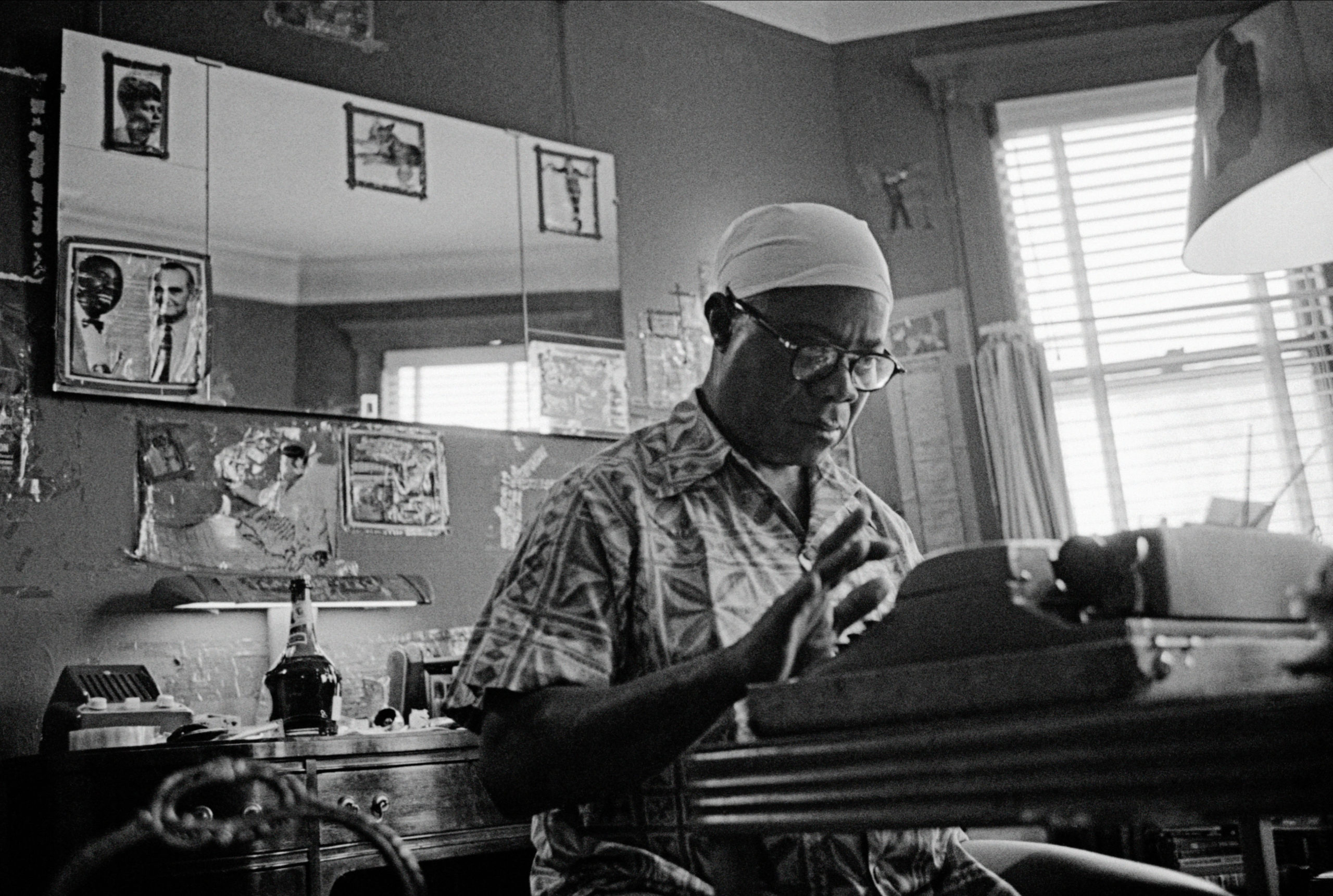
LOUIS ARMSTRONG’S BLACK & BLUES: what Armstrong was really thinking

Photo caption: LOUIS ARMSTRONG’S BLACK & BLUES. Courtesy of AppleTV.

Louis Armstrong’s Black & Blues affirms my observation that, ideally, a satisfying documentary requires a great subject and great source material. For decades, apparently focused on his historical legacy, Louis Armstrong audiotaped his conversations with visiting friends, preserving his candid thoughts and reflections on his life and times. His family has made those taped conversations available to the filmmakers and Armstrong’s own words are a revelation.

Armstrong’s public Satchmo persona, perpetually upbeat and non-threatening, made White Americans comfortable and seemed Uncle Tom-like to younger Black Americans. Armstrong’s own words in private (he preferred being called Pops) leave no doubt about his own complicated thoughts. Armstrong, who was raised in the South at the height of the lynching period, was clear-eyed and resolute about American racism. His perception of personal safety and commercial viability intentionally guided his self-invented image and, also, the roles in the Civil Rights movement that he adopted and that he declined.

Louis Armstrong’s Black & Blues also lays out Armstrong’s pivotal influences on impact on vocal popular music, on jazz and on American music. We also see Armstrong’s private personality with his family and intimates.

Louis Armstrong’s Black & Blues, which closed this year’s Nashville Film Festival, is steaming on AppleTV.

THE GREATEST BEER RUN EVER: a blowhard plans a stunt, gets an education

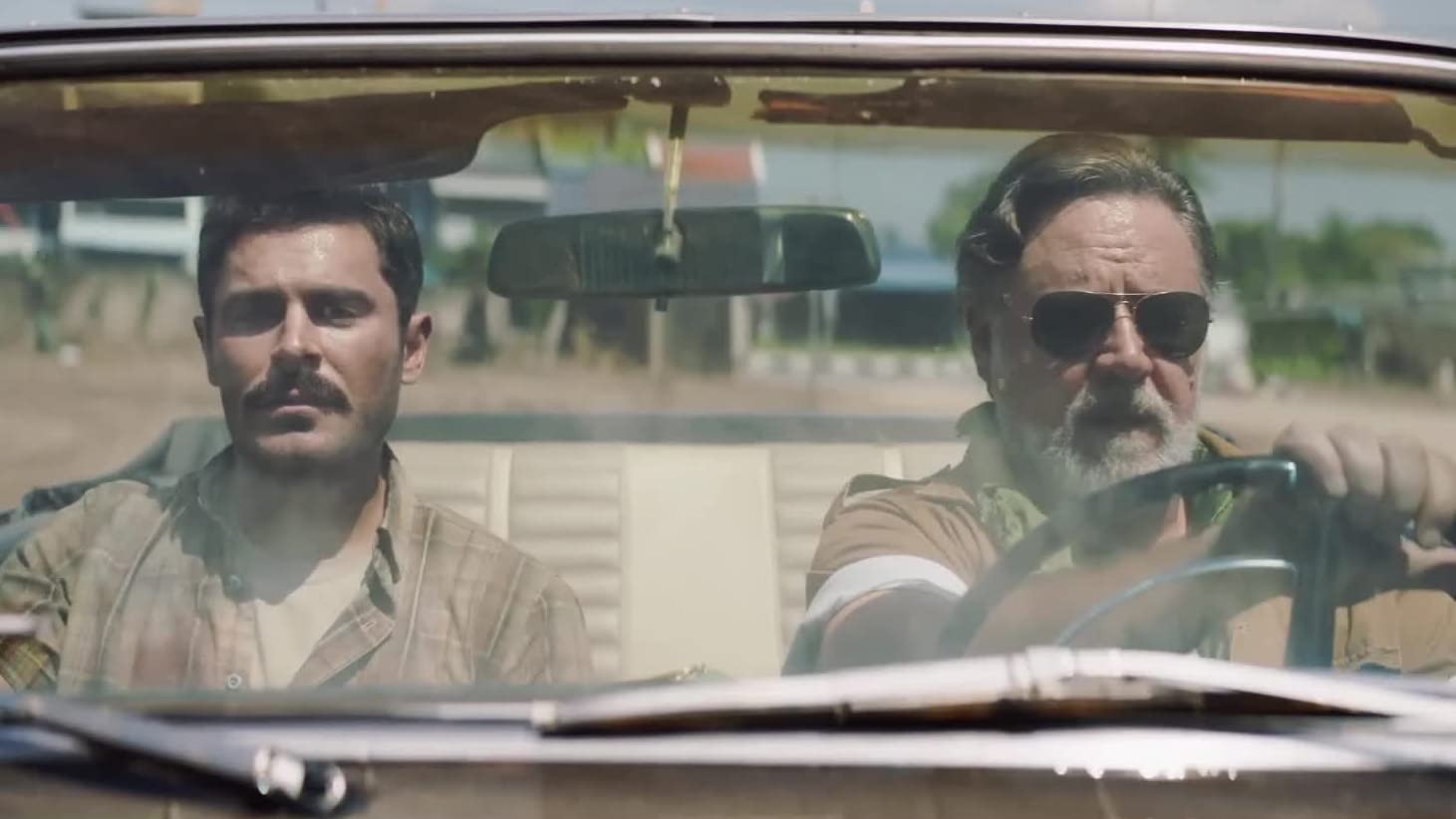
Photo caption: Zak Efron and Russell Crowe in THE GREATEST BEER RUB EVER. Courtesy of AppleTV.

In the surprisingly thoughtful anti-war comedy The Greatest Beer Run Ever, an ignorant blowhard’s neighborhood pals are serving in the Vietnam War, and he thinks he can uplift their spirits by bringing them beer. It’s a plot too idiotic to be credible – except that it really happened.

Our protagonist is Chickie (Zak Efron), a slacker ne’er-do-well (although we didn’t call them slackers back then) who has the intellectual curiosity of a stump. Offended by non-rah rah media coverage of the Vietnam War and by the burgeoning anti-war protest movement, he thinks a simplistic gesture is in order. As a merchant marine, he actually has means to GET TO Vietnam – by signing on a freighter. So, off he goes, with a duffel packed with cans of beer.

Once he is on the ground in country, of course, he sees that press is accurately reporting that the war is not going well and that the LBJ Administration and the military commanders are indeed lying about it. He learns that not all Vietnamese welcome Americans. And that war is very, very dangerous and very, very scary. Nor do his pals all welcome his crazy stunt.

A lesser director could have made this film as an empty-headed Bro comedy, only about the stunt itself. But Peter Farrelly, as he did with the Oscar-winning Green Book, has made an entertaining movie about a serious human experience.

And give Farrelly credit for something rarely seen in a Hollywood Vietnam War movie – Vietnamese characters are more than cardboard cutouts. Chickie has interactions with a goofy traffic cop, a savvy bartender and, most stirringly, a peasant mother and her young daughter in the countryside. The carnage and grieving among Vietnamese of all persuasions is depicted, too.

That being said, The Greatest Beer Run Ever is a very funny film, with most of the humor stemming from Chickie’s dunderheadness and the military characters all assuming that an American civilian asking for a helicopter ride into a combat zone MUST be CIA.

The very underrated Zak Efron carries the movie as Chickie gets force fed a life-changing reality check. Russell Crowe is excellent as a world-weary war correspondent. Bill Murray, without a single wink at the camera, is perfect as the lads’ bar owner, a WW II vet who just doesn’t get it. Matt Cook is very funny as a junior Army officer who idolizes the CIA.

Make sure you watch the closing credits.

The Greatest Beer Run Ever is streaming on AppleTV.

AMSTERDAM: a star-studded thriller without the thrills

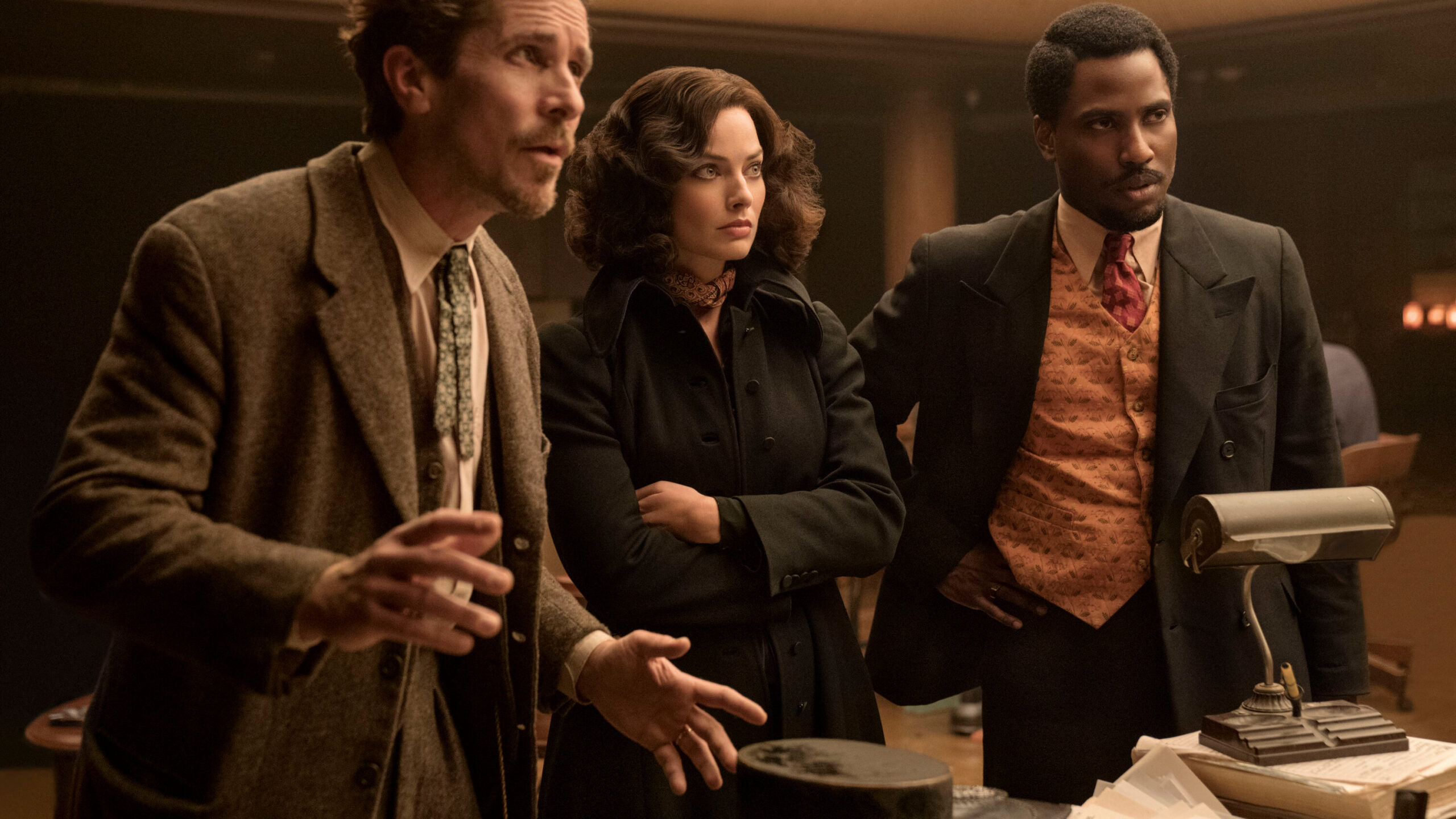
Christian Bale, Margot Robbie and John David Washington in AMSTERDAM. Courtesy of 20th Century Studios

Amsterdam, which wants to be a star-studded paranoid thriller, is only star-studded.

Burt (Christian Bale) and Harold (John David Washington) met as American soldiers in WWI, and stay in Europe after the war, sharing an Amsterdam apartment and a bohemian lifestyle with another spirited American expat, Valerie (Margot Robbie). As Amsterdam the movie opens, Burt, now a shady physician, and Harold, now a lawyer, have returned to New York City, and the two share a commitment to helping other WWI veterans. The two are called to investigate a suspicious death, which they determine to have been a murder, and then there’s another murder, for which they are framed. Off they go to find the real murderers and clear themselves, becoming entangled in a convoluted conspiracy and re-encountering Valerie in the process.

Despite Bale, Washington and Robbie delivering solid performances, the story never pops. That’s the fault of a remarkably disappointing screenplay by director David O. Russell (Silver Linings Playbook, American Hustle). We’re never surprised, never waiting for the next page to be turned, and not particularly invested in the characters.

The movie’s stars aside, Russell also wastes the talents of a ridiculously deep cast: Robert De Niro, Rami Malek, Andrea Riseborough, Ana-Taylor-Joy, Chris Rock, Michael Shannon, Zoe Saldana, Mike Myers, Timothy Olyphant, Taylor Swift, Matthias Schoenaert, Alessandro Nivola. There’s not a bad performance in the lot, but they just don’t get much to do. Michael Shannon and Mike Myer bring some laughs, but Schoenaert and Nivola have roles that could have been played by cardboard cutouts. Two weeks later, I can’t even remember Olyphant’s character. After winning an Oscar for wearing horse teeth and NOT singing like Freddie Mercury, Rami Malek seems to have settled into a career playing reptilian villains.

Here’s an example of bad storytelling . [SPOILER ALERT] The movie’s climax is an attempted assassination in an auditorium, like in The Manchurian Candidate. Burt is staggered by a bullet in the torso. Then there’s a fracas in which the shooter is apprehended. There’s a melee with uniformed Nazi sympathizers. Malek and Taylor-Joy’s characters are exposed, and the conspiracy is explained. Ten minutes later, as everyone leaves the auditorium, Burt removes his jacket and reveals that the bullet had only struck his back brace, and he doesn’t have a gunshot wound after all. By this time, I had FORGOTTEN THAT HE HAD BEEN SHOT.

An allusion to a real historical conspiracy is only a half-hearted political statement because this movie’s plot is just like that of every fictional paranoid conspiracy.

I recommend skipping Amsterdam and watching American Hustle again.

TRIANGLE OF SADNESS: more subtlety, please

Photo caption: Charlbi Dean and Harris Dickinson in in TRIANGLE OF SADNESS. Courtesy of NEON.

The biting satire Triangle of Sadness is very funny and is at its best in the first, most subtle moments. Yaya (Charlbi Dean) and Carl (Harris Dickinson) are a couple, both professional models. Because of Yaya’s status as an influencer, they are comped a cruise on a luxury yacht. This puts them amidst a boatful of superrich fellow passengers, and Triangle of Sadness, like Parasite and Knives Out is Eat-The-Rich cinema. It’s fun to laugh at the rich, with their entitlement, tone deafness and absurd customer requests.

The cruise starts going horribly awry, even before the formal captain’s dinner is scheduled during a ship-tossing storm. Eventually, things get all Lord of the Flies. The tone of Triangle of Sadness evolves from pointedly witty to all-out comic mayhem, a la the Marx Brothers, I Love Lucy or The Hangover. As the humor gets broader, there are belly laughs, but the humor is no longer as smart. And Triangle of Sadness would be more watchable if it were shorter than 2 1/2 hours, too.

The sly beginning of the film is brilliant, with a memorable and telling scene about picking up the check in a restaurant. And funny little Easter Eggs abound, like the first names of an elderly British couple and the dramatic express delivery of a mysterious case that we learn contains jars of Nutella.

Triangle of Sadness was written and directed by Ruben Ostlund. His first notable film, Force Majeure, was a masterpiece of subtle humor. Having lessened the subtlety, his next two inferior satires, The Square and Triangle of Sadness have each won the Palme d’Or at the Cannes Film Festival. Go figure. Anyway, I recommend that you watch Force Majeure on Amazon, AppleTV, Vudu or YouTube.

The cast is very good. Charlbi Dean is excellent as the vivacious, frivolous and admittedly manipulative Yaya; (Dean died suddenly of a viral infection before the film’s theatrical release). I really admired Harris Dickinson’s performance as the dim and spineless Carl. Vicki Berlin is very good as the put-upon head steward. Zlatko Buric soars as a Russian fertilizer magnate, the self-described “King of Shit”. Woody Harrelson is very funny as the yacht’s alcoholic, Marxist captain, who does not suffer fools.

The most memorable performance is by Dolly DeLeon, who plays a character almost invisible until the final act, when she becomes pivotal and gives DeLeon the movie’s best opportunity for a killer line reading. She nails it.

I enjoyed most of Triangle of Sadness, less so as it became broader (and longer). It’s always fun to kick the rich, and Ruben Ostlund is a caustic observer of their frailties.