PERSIAN LESSONS: walking the tightrope

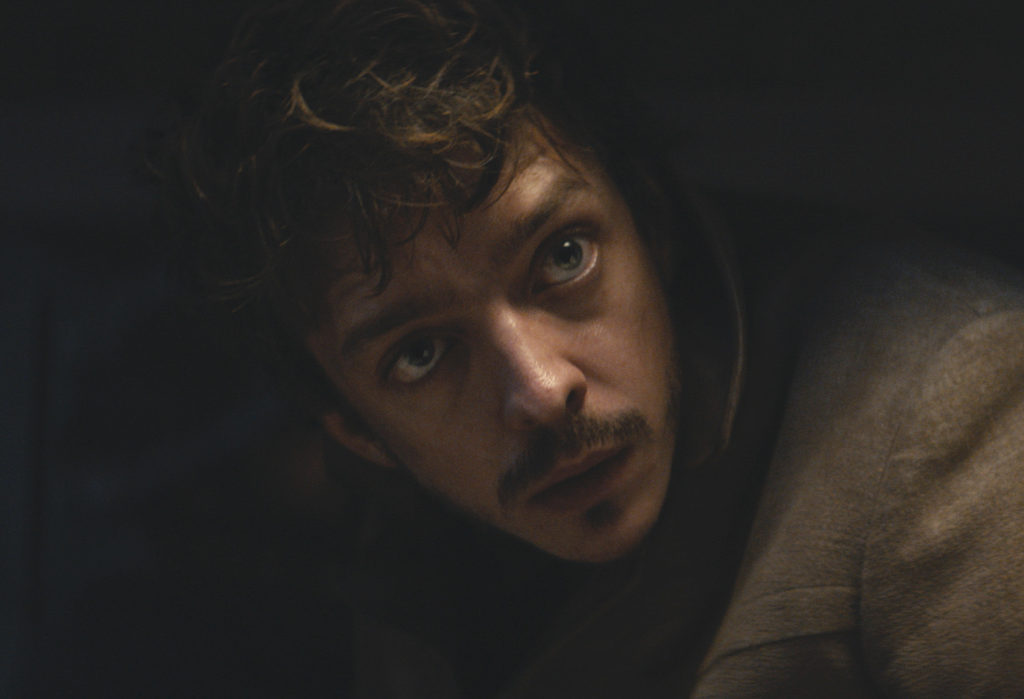
Photo caption: Nahuel Pérez Biscayart in PERSIAN LESSONS. Photo courtesy of Cohen Media Group.

The Holocaust thriller Persian Lessons walks a tightrope of tension, and the ending is very emotionally powerful. Gilles (Nahuel Pérez Biscayart) is a Belgian Jew sent to a German concentration camp. He seeks to avoid death by claiming to be Persian named Reza. He is not anticipating that a Nazi officer will demand to be taught Farsi. That officer, Koch (Lars Eidinger), aspires to a postwar future as a Tehran restaurateur.

Gilles/Reza, who doesn’t know ANY Farsi, must invent an entire faux Farsi language, word-by-word, and remember it. All the while, he’s sweating out the likelihood that his ruse will be discovered.

The blustery Koch, with his Persian fixation, is an oddball. A chef when he opportunistically joined the Nazi Party, he’s not a True Believer, although he is very comfortable with genocide. In another time or place, he could have easily been a corrupt official or a mafioso. While Gilles/Reza is the protagonist, the story rises and falls on Koch’s whims, and Eidinger’s performance is excellent.

Nazis were bullies at their core, and some of Persian Lessons’ lighter moments are when Gilles/Reza is offscreen and the Nazis’ own foibles, with their sexual peccadilloes and their petty internal power plays, are on display. There’s an especially funny scene when Koch gets a leg up on his boss, the camp’s Commandant.
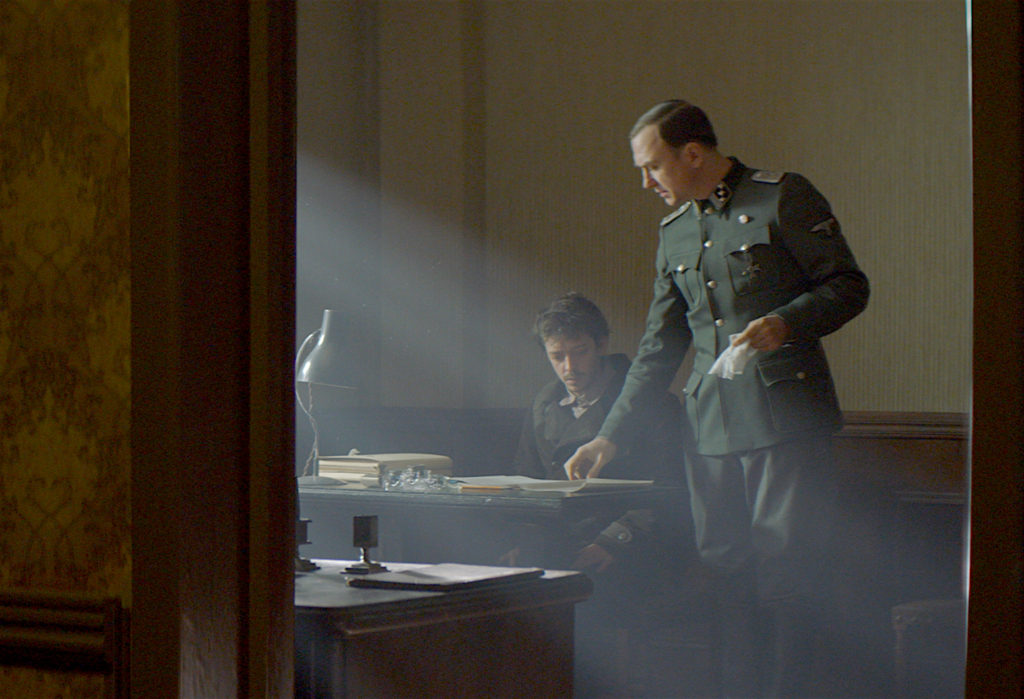
Nahuel Pérez Biscayart and Lars Eidinger in PERSIAN LESSONS. Photo courtesy of Cohen Media Group.

Persian Lessons was directed by Ukrainian-born Vadim Perelman (2003’s Oscar nominated House of Sand and Fog). Belarus tried to submit Persian Lessons for an Academy Award, but it was too international to qualify as a Belarus film. IMDb catalogues it as a Russian/German/Belarus film; Biscayart is Argentine, Eidinger is German, and screenwriter Ilja Zofin is Russian.

I screened Persian Lessons for its North American premiere at the San Francisco Jewish Film Festival in July 2021. It opens June 9 at the Laemmle Royal in LA and more widely on June 16, including San Francisco’s Opera Plaza and the Landmark Pasadena.
SAM NOW: solving a mystery…only part of the story

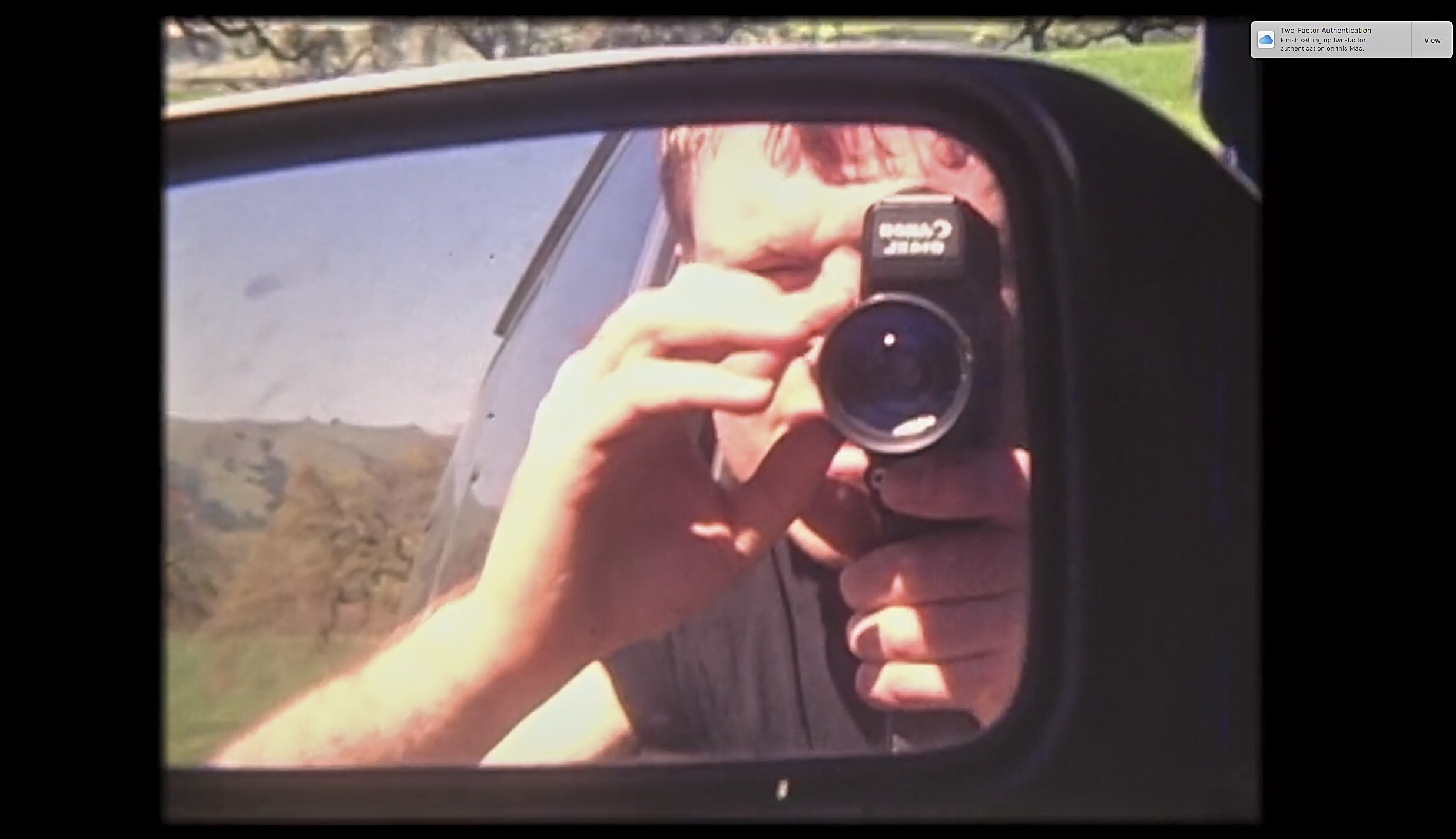
Reed Harkness in SAM NOW. Courtesy of HA/HA Productions.

In the surprisingly complex documentary Sam Now, two brothers go on a road trip to solve a family mystery – but that’s only part of the story. Beginning as a teenager, writer-director Reed Harkness spent his teen years shooting movie projects that starred his younger half-brother Sam. Reed and Sam grew up in a blended family of spirited brothers, a family with one striking anomaly – Sam’s mother had suddenly vanished.

Shortly after the disappearance, the family learned that the mom was alive, having left of her own volition. She was choosing to live elsewhere secretly, severing all contact with her family. Reed and Sam’s family went on with their lives, and the subject of the missing mom was no longer discussed.

Years later, as young men, Reed and Sam decide to get in the car with Reed’s cameras and track down Sam’s mom. Will they find her? Why did she abandon her children? Can they resume/salvage their relationship or work out a new one?

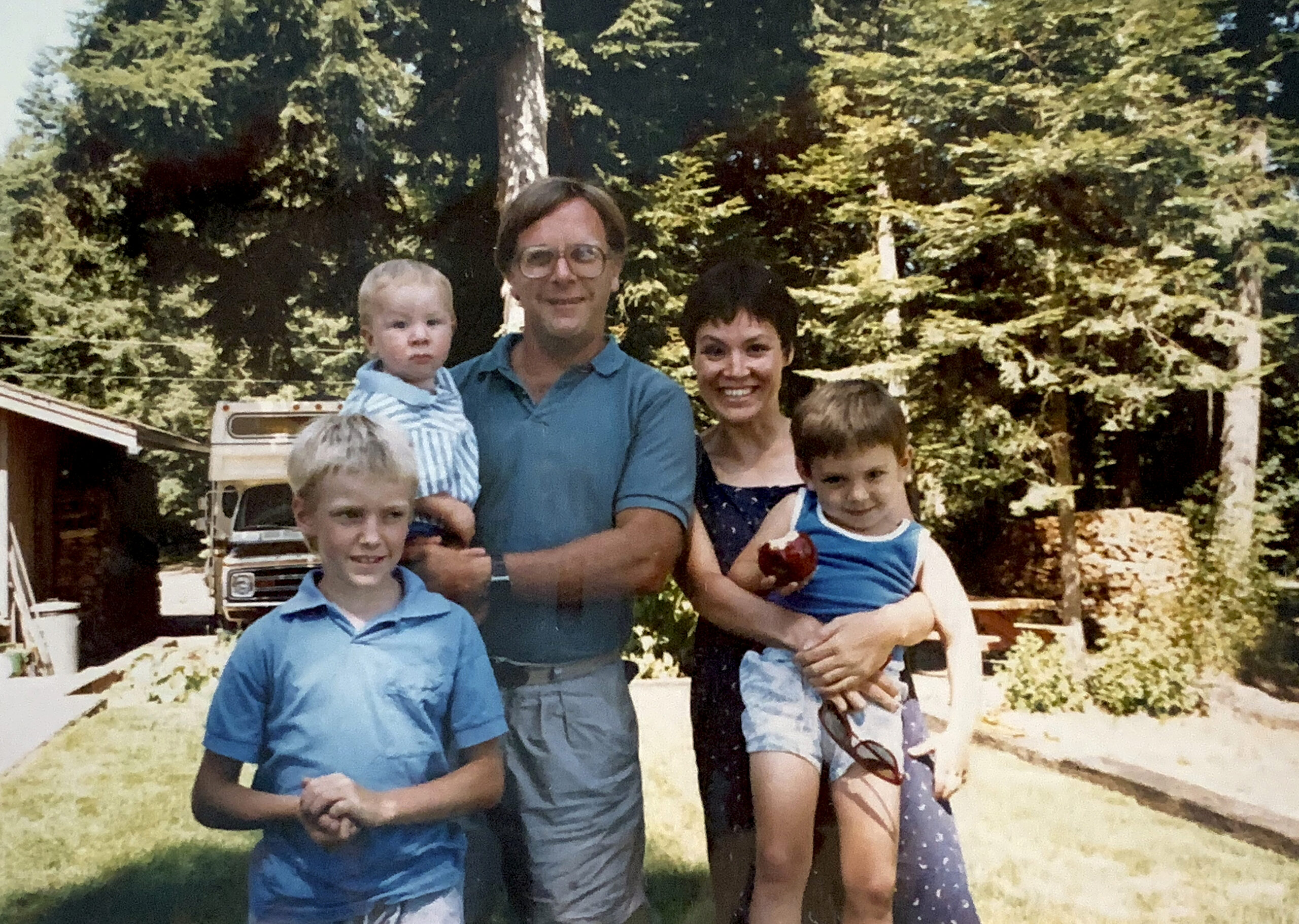
The subject Harkness famiy in SAM NOW. Courtesy of HA/HA Productions.

Those are compelling questions, but the quest to find the mom isn’t the whole movie. Once the initial mystery is solved, Reed Harkness kept his camera focused on the participants over the next decade.

Beginning with home movies when the brothers were kids, Sam Now documents 25 years of family life and individual personal growth. It’s all complicated, as we might expect with multigenerational trauma.

Reed Harkness’ use of music in Sam Now is particularly strong. Reed and Sam’s rowdy boyhood and the brother’s road trip is accented with boisterous garage rock. More contemplative music accompanies the personal reflections later in the film.

Sam Now garnered various film fest awards, aired on PBS’ POV, and releases on streaming platforms, including Amazon and Vudu, on June 6.

32 SOUNDS: a concept movie, and the concept is kinda boring

32 SOUNDS. Courtesy of Abramorama.

The documentary 32 Sounds strives to be an immersive dive into sounds of all types and the impact of sounds on humans. It’s an anthology of 32 bits, each related to sound in different way.

The immersive quality is where 32 Sounds falls short. After seeing the trailer, I made an effort to see 32 Sounds in a theater with surround sound. But, after the filmmakers address the audience at the beginning, the surround sound is not really necessary to enjoy (or, in my case, NOT enjoy) the film.

The two most powerful scenes don’t have much to do with the technical or artsy stuff that comprise much of 32 Sounds. In one, a scientist listens to a long-forgotten letter to his future self that he taped as an 11-year-old. Later, a man muses on “ghost voices” – how he can ALMOST recall the voices of his dead loved ones.

Overall, the 95 minutes I invested in slogging thru 32 Sounds was wasted, except for the ten minutes that I drifted into a deep, blissful nap.

DEALING WITH DAD: two serious topics in an ok comedy

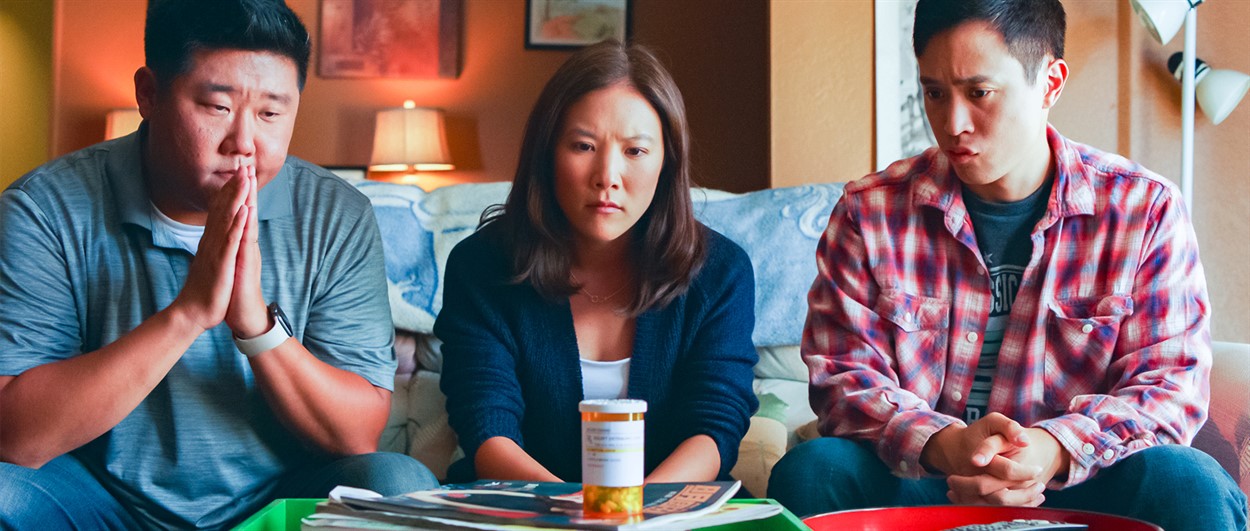
Peter S. Kim, Ally Maki and Hayden Szeto in DEALING WITH DAD. Courtesy of 1091 Pictures.

Dealing with Dad is a topical family comedy with an Asian-American cast. Three adult siblings – the super-achiever oldest sister, the passive middle brother and the infantilized youngest brother, a gaming slacker – meet at their parents’ home. The dad, whose harsh and never-bending expectations battered them as kids, has become paralyzed (and defanged) by severe depression.

Although Dealing with Dad is a comedy, its strengths are in addressing two serious subjects – depression and the issues that many second-generation Asian-Americans face because of their immigrant parents’ parenting styles.

The differences between the siblings spawn lots of laughs, but I found the banter a bit too sit-commy for my taste.

Bay Area audiences will appreciate that Dealing with Dad is set in MILPITAS.

I screened for the 2022 Cinequest. It started rolling out in theaters on May 19.

BEING MARY TYLER MOORE: you might just make it after all

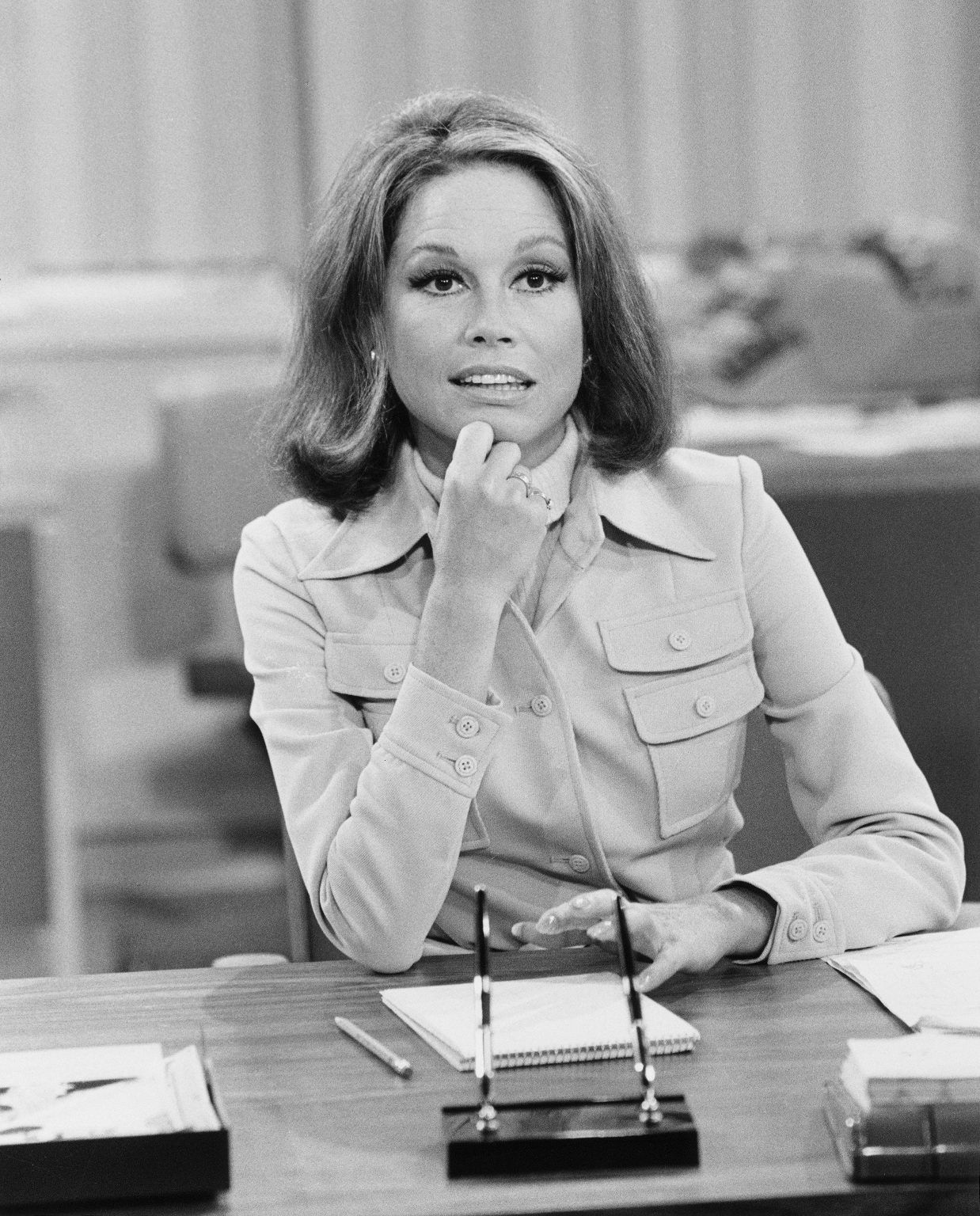
Photo caption: BEING MARY TYLER MOORE. Courtesy of HBO.

The showbiz biodoc Being Mary Tyler Moore traces the career and life of an important trailblazer who captivated American TV audiences for decades. The ever-relatable Mary Tyler Moore pioneered the fictional single woman on TV, an important cultural moment.

While she was playing the archetypal single career woman, Moore was a wife and mother. She and husband Grant Tinker created some of the best TV ever – The Bob Newhart ShowWKRP in CincinnatiHill Street Blues, and St. Elsewhere – and pioneered the TV spinoff with Rhoda. It bears remembering that CBS’ Saturday evening 8-11 pm slate in the fall of 1973 was the best nightly TV lineup ever: All in the FamilyM*A*S*H, The Mary Tyler Moore ShowThe Bob Newhart Show and The Carol Burnett Show

Being Mary Tyler Moore traces the lesser known aspects of Moore’s life, including her childhood and retirement years. Of course, there’s a clip from the Mary Tyer Moore Show’s unforgettable Chuckles the Clown episode.

Incidentally, I highly recommend Joan Jett’s version of the MTM Show theme Love Is All Around, which you can find on YouTube.

Being Mary Tyler Moore is streaming on HBO, beginning May 26. I screened it for the SFFILM in April.

is in the Air.

THE BLIND MAN WHO DID NOT WANT TO SEE TITANIC: wow – laughs, thrills, love

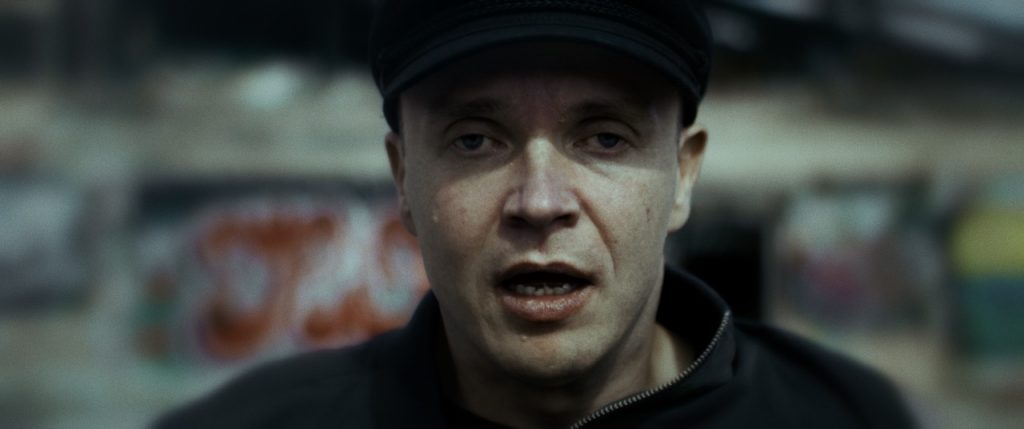
Photo caption: Petri Poikolainen in THE MAN WHO DID NOT WANT TO SEE TITANIC. Courtesy of Cinedigm Entertainment Group.

Wow. The Finnish indie The Blind Man Who Did Not Want to See Titanic is a rare nugget of complete originality that takes us into a unfamiliar world filled with unexpected laughs, suddenly turns into a thriller, and finishes as a moving love story. It’s unlike any movie I’ve seen.

Our protagonist, Jaako (Petri Poikolainen), is blind and confined to a wheelchair. Writer-director Teemu Nikki tells his story, in that most visual of media – cinema, from the perspective of a blind person. We either see Jaako’s face or the blurs that Jaako sees.

Jaako is a movie nerd, secure in his cultural taste. He rejects pity and strives to maintain his dignity with his sarcastic humor. (He has renamed his caregiver after two sadistic movie nurses – Annie Wilkes and Nurse Rached.) He’s a very, very funny guy.

Jaako has a girlfriend, Sirpa (Marjaana Maijala), that he’s never met. She is also housebound with a disability, but in another city. Sirpa has a sense of humor that can match his, and the two bond on the telephone, each bringing the other some delight each day. One day, Sirpa is devastated by some bad medical news, and Jaako resolves to travel by himself, unaided, across Finland to comfort her. Jaako and we go forth on an eventful journey. I don’t think that a person can display real courage until they are really afraid, and Jaako learns this. too.

Like Jaako, lead actor Petri Poikolainen is also a blind man with multiple sclerosis.

What Teemu Nikki has created here is astounding. There are layers upon layers of newness and originality in The Blind Man, etc: the character of Jaako, the procedural of living independently with both MS and blindness, and cinema from the POV of the blind person. The film’s overriding achievement is empathy.

The Blind Man Who Did Not Want to See Titanic won an audience award at Venice Film Festival. It’s one of the Best Movies of 2023 – So Far. The Blind Man Who Did Not Want to See Titanic is available to stream from Amazon, AppleTV, Vudu and YouTube.

RODEO: roller coaster on two wheels

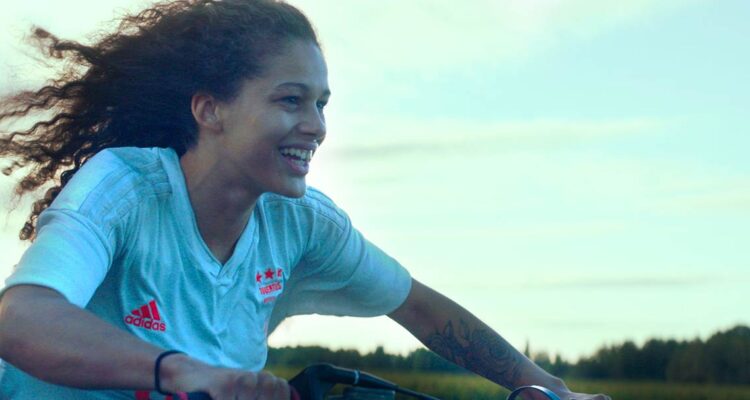
Photo caption: Julie Ledru in RODEO. Courtesy of Music Box Films.

In the ever-kinetic Rodeo, a remarkably fierce young woman invites herself into a crew of dirt riders. Rodeo is set with remarkable verisimilitude in a subculture of young bikers from France’s hardscrabble immigrant communities. It’s an edgy scene, and Julia (newcomer Julie Ledru) penetrates it only because she’s a little scary herself.

Julia is a force of nature, and she is able to back off guys with an explosive hostility. When she is ready to adopt a dangerous new passion on two wheels, no one can stand in her way. Off she rides, on a journey with life-and-death stakes.

Rodeo is the first feature for French director Lola Quivoron, who is the real star of this roller coaster of a movie. If she wants to, Quivoron will be making big Hollywood action films like The Fast and the Furious.

Rodeo won the Un Certain Regard coup de coeur prize at Cannes, and I screened it for the SLO Film Fest. Rodeo is now available to stream from Amazon, Apple TV and Vudu.

FANNY: THE RIGHT TO ROCK: triple-threat trailblazers

Photo caption: Fanny in FANNY: THE RIGHT TO ROCK. Courtesy of PBS.

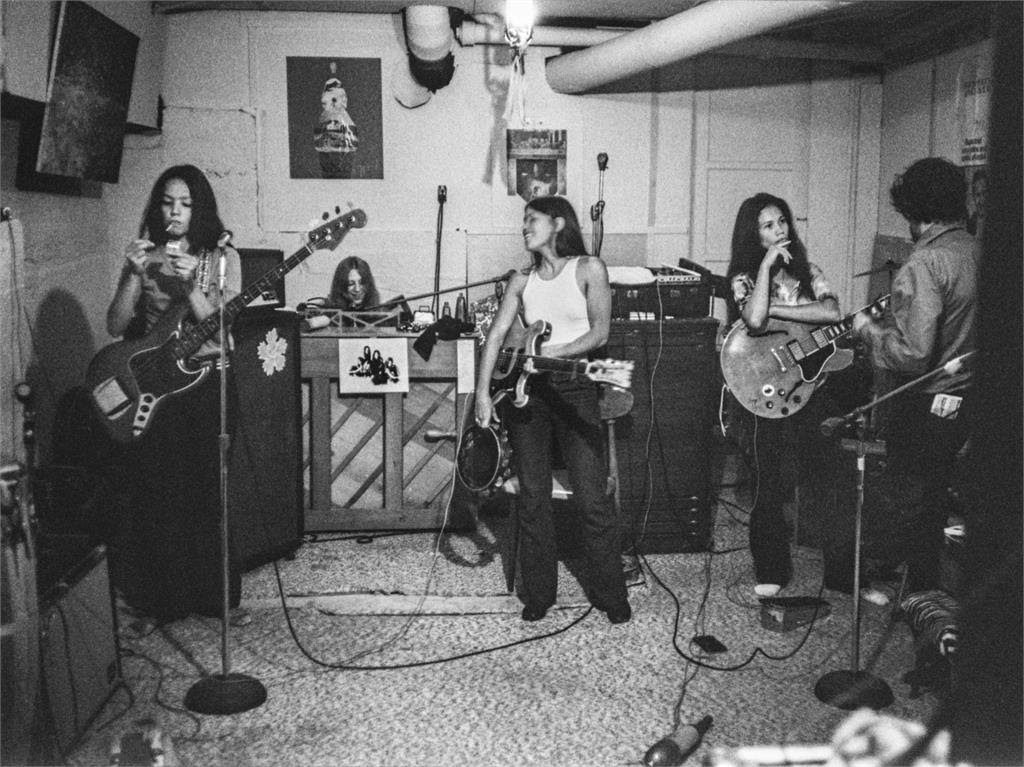
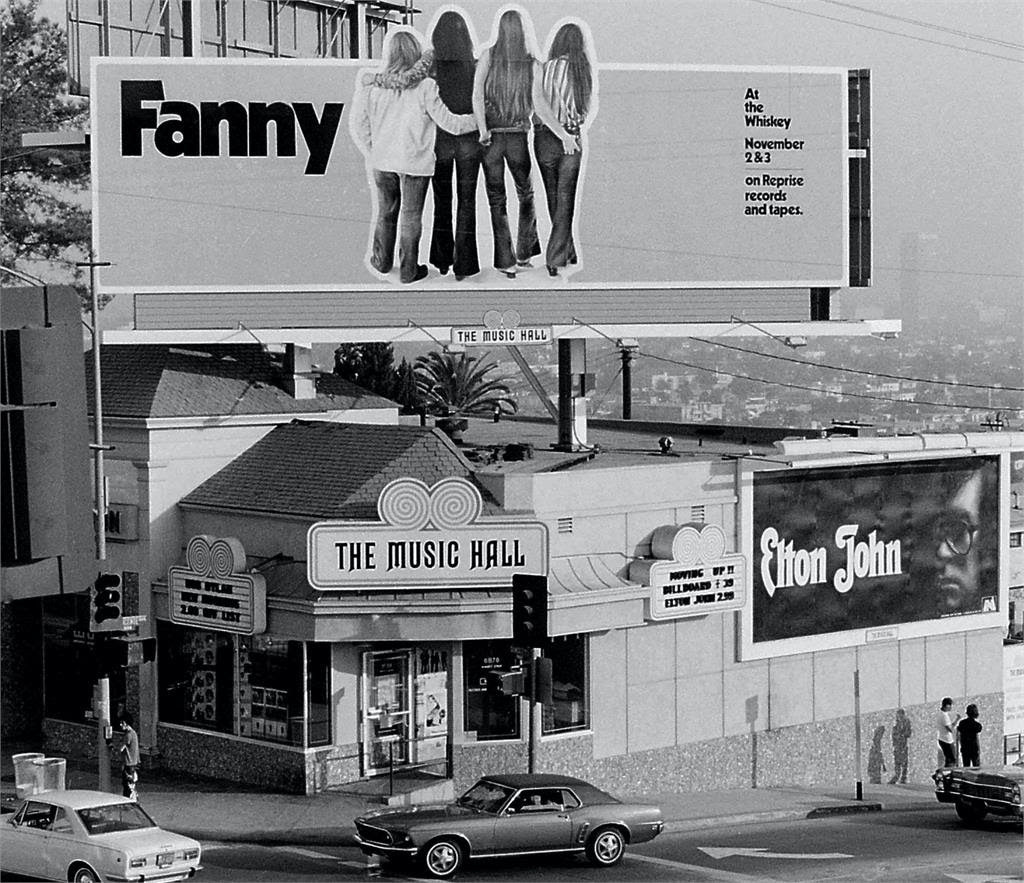
Fanny: The Right to Rock documents the first all-female rock band to get signed by a major record label and churn out five albums. Fifty years ago, the band Fanny was breaking ground for women musicians – and for lesbians and Filipinas. Women rockers were a novelty in the early 1970; imagine layering on LGBTQ identity and Asian-American heritage.

Although you probably haven’t heard of them, this was no garage band. They had a major label record deal, European tours, and hung out with big name peers. Unlike many male bands of the period, Fanny didn’t crash and burn due to drug use or clashing egos. They just never caught on with record-buyers.

FANNY: THE RIGHT TO ROCK. Courtesy of PBS.

It’s pretty clear that sexism in the music industry and media, combined with maybe being a little ahead of their time to deny Fanny stardom. Too bad – I would have loved to listen to them in their heyday.

Their music fits right into the stuff I was listening to in the 1970s. I’m guessing that the reason why I hadn’t heard of them is that they didn’t get played on FM radio in the Bay Area.

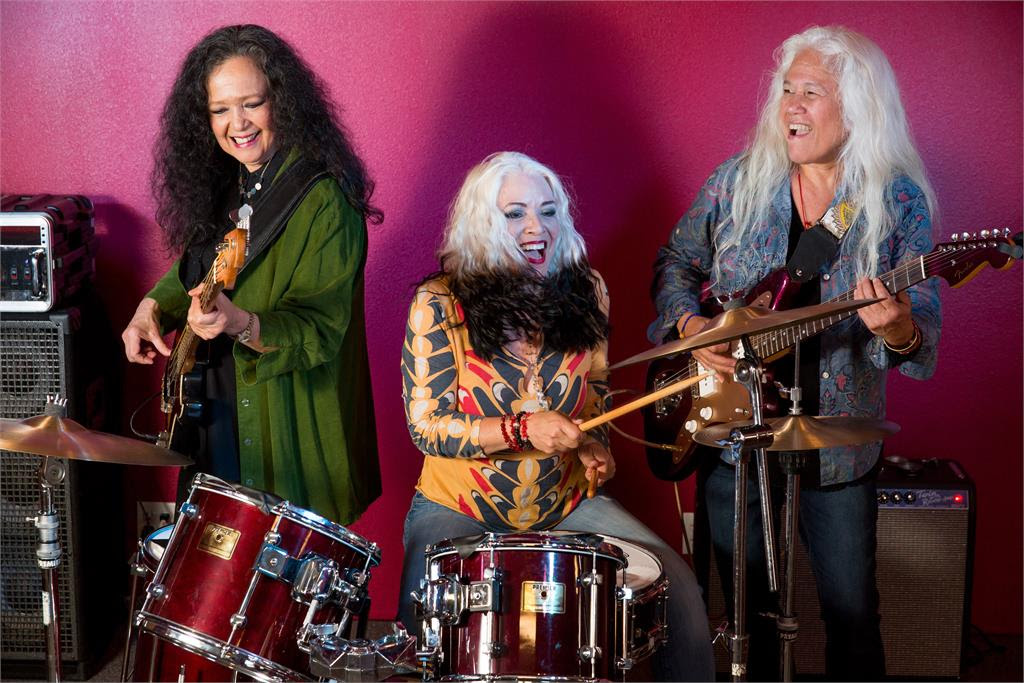
These women can still really rock in their 70s, and they’re a hoot. Tomorrow night, May 17, they’ll perform for one time at the Whisky A-Go-Go to commemorate the 50 year anniversary of their now infamous club performance at the Whisky.

Fanny in FANNY: THE RIGHT TO ROCK. Courtesy of PBS.

Fanny: The Right to Rock is filled with colorful anecdotes from back in the day. Todd Rundgren, an important early associate of Fanny, and Bonnie Raitt appear as eyewitnesses. Cherie Curry of the Runaways, Cathy Valentine of the Go-Go’s and Kate Pierson of the B-52s testify to Fanny’s trailblazing status.

I screened Fanny: The Right to Rock last year at the Nashville Film Festival. On May 22, you can watch it on your very own television when It will be broadcast on PBS and begin streaming on on PBS.ORG and the PBS APP.

LAND OF GOLD: the kid is very good, anyway

Caroline Valencia and Nardeep Khurmi in LAND OF GOLD. Courtesy of Land of Gold.

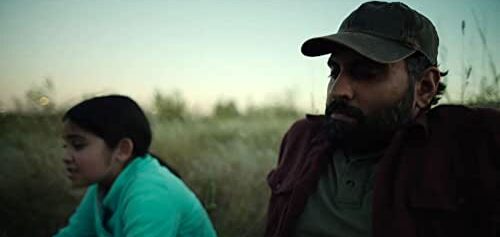
In the indie drama Land of Gold, Kiran (Nardeep Khurmi, also the film’s writer and director) is a Punjabi truck driver in Southern California who is mere days away from becoming a father for the first time – and he’s panicking. To the dismay of his wife, he decides to take on a long haul to the East Coast (and risks not being present for the birth). Of course, he’s really running away from the pressure. Part way across the country, he discovers that there’s a stowaway in his truck – a ten-year-old girl, whom he deduces is undocumented.

Kiran’s family are also immigrants, so he understands that presenting her to the authorities would have consequences. It turns out that she is on the run, too, but toward a family connection. The two continue their road trip, and Kiran learns enough from her to address his personal crisis.

The girl is played by Caroline Valencia, and she’s exceptional. Khurmi’s screenplay handles the kindling of their relationship and the girl’s determination adeptly and with authenticity.

Land of Gold is certainly not a bad movie, but it didn’t engage me when Caroline Valencia was off-screen. That’s because I never bought into Kiran’s own angst.

I screened Land of Gold for the SLO Film Fest, where it won the audience award for Best Narrative Feature. It begins streaming on HBO on May 15th.

BLACKBERRY: woulda, coulda, shoulda

Photo caption: Jay Baruchal in BLACKBERRY. Courtesy of IFC Films.

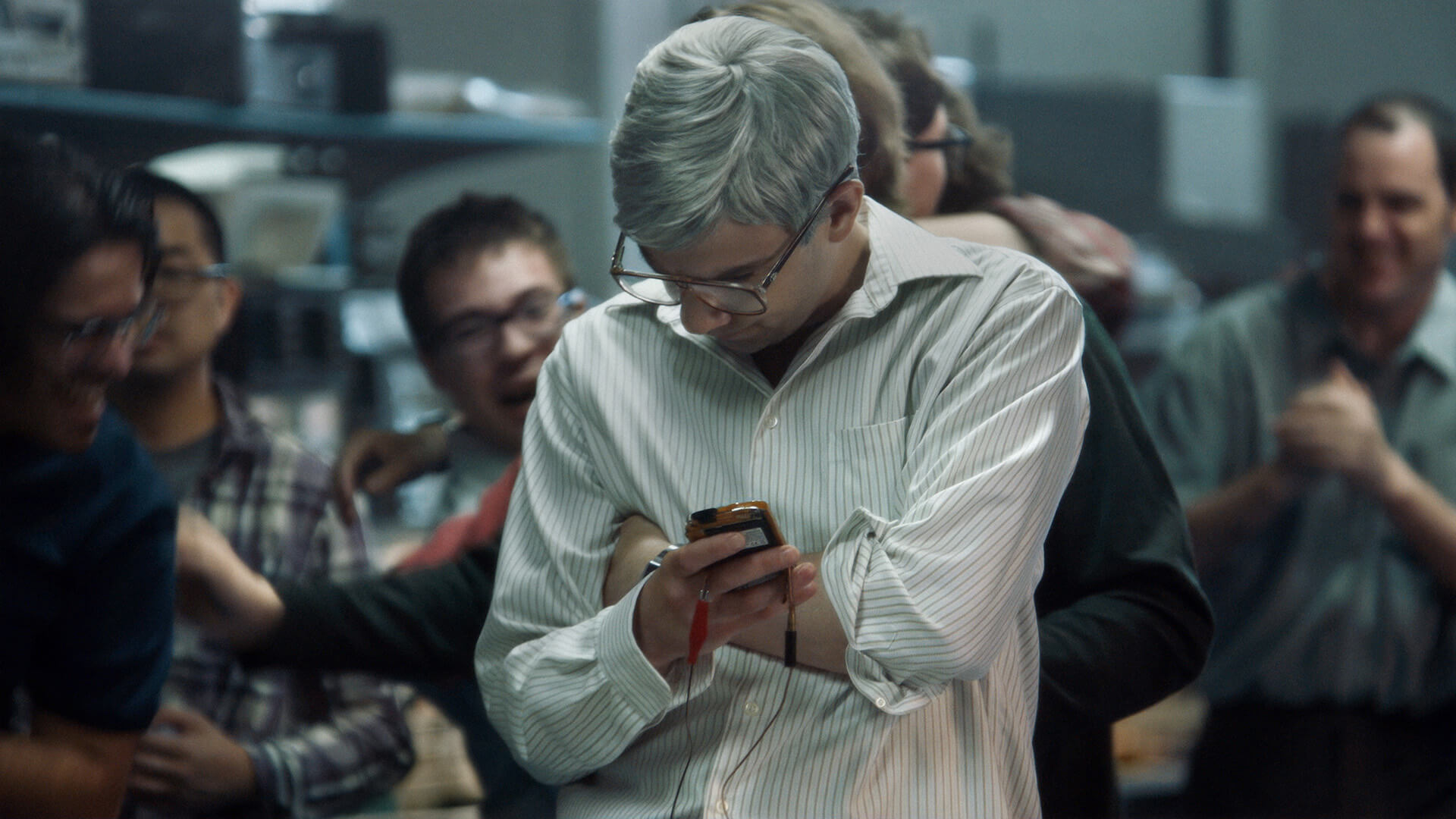
BlackBerry is the funny true story of Canadian geeks who find themselves suddenly dominating the nascent smartphone market…but not for long. The improbable rise of BlackBerry’s parent company is a tale of the Odd Couple partnership co-CEOs, Mike Lazaridis (Jay Baruchal), who ran the engineering side, and Jim Balsillie (Glenn Howerton), who managed finance and sales.

Mike Lazaridis solved the technical challenge that had kept cell phones from becoming the email machines that they have been since. As played by Baruchal, Lazaridis is reserved, even shy, supremely confident in all things tech and not all confidant with other humans.

Lazaridis needed a pitchman, and that was the hard charging Balsillie, who, as played by Howerton ranged between hard-charging and abusive. A tech exec I knew in Silicon Valley was described to me as having “too much testosterone” and that’s Howerton’s Balsillie.

Lazaridis’ engineering brilliance, combined with Balsillie’s sheer will and audacity, allowed the company to nimbly pivot through various product cycles. Balsillie’s hubris even began to leak into Lazaridis. But then came an advance in product design that Lazaridis hadn’t anticipated, and Balsillie had cut one too many corners in finance.

I’ve mostly seen Baruchal in much more broadly funny roles (Tropic Thunder, This Is the End). Here, Baruchal successfully carries the leading role with a much more subtle and textured performance. One nice (and slyly underplayed) touch is that when Baruchal’s character transitions from the CEO of a start-up to the CEO of a company with a massive market cap, his haircut transitions, too.

For much of the movie, we see Howerton playing Balsillie as a one-note, hard charger. He refuses to acknowledge any obstacle, until, in a wonderful moment of performance, his face shows when knows he’s finally been had.

BlackBerry was directed by Matt Johnson, who also co-adapted the screenplay and plays one of company co-founders.

Make sure you watch the end credits to see what happened to the real guys.

I screened BlackBerry for the San Luis Obispo Film Festival, where it won the audience award for Best of Fest. BlackBerry opens in theaters tomorrow, and it’s a surefire audience-pleaser.