The Angel’s Share: a heartwarming surprise

THE ANGEL'S SHARE

The Angel’s Share is an endearing tale of a hard luck guy’s life changing after a visit to a Scotch whisky distillery.  Released back to hardscrabble Glasgow after doing prison time, a young man becomes a father and determines to change his life.  As focused as he is, that wouldn’t be possible without the encouragement of the guy who leads his community service work crew and the prodding of his girlfriend.  The odds are against him, but he gathers an oddball team from the work crew and devises an ingenious (and funny) heist.

The story begins with a clever court sentencing montage that only gradually settles our attention on the protagonist.  This young man (Paul Brannigan) is terse and always potentially destructive, yet we root for him because of his single-minded commitment to acting on his good intentions.  His potential is not apparent to any other characters (or to the audience for a long time).  His mentor (John Henshaw) has seen it all, but isn’t so jaded as to write off every unemployed and unemployable ex-con; more complex than he seems, he lives a lonely life, sparked by a single hobby.

The movie’s accessible tone surprised me because militant British director Ken Loach is known for far grimmer socialist realist films; here, Loach’s filmmaking skills and his unvarnished depiction of Glasgow slums enhance his warm story and hopeful characters. 

Fortunately, because the Glaswegian accent is very difficult for we Americans to follow, The Angel’s Share is subtitled.  The Angel’s Share is a fun and heartwarming movie that a wide audience will enjoy.
The Prowler: Van Heflin takes a dark turn

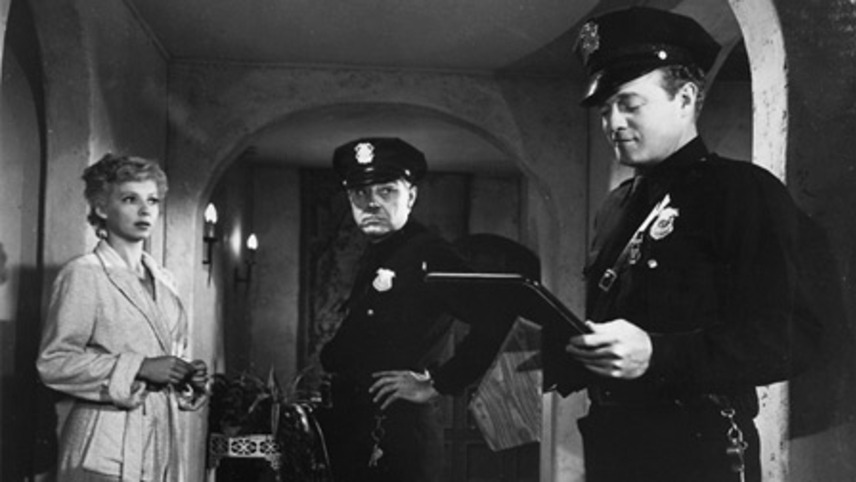
Van Heflin (right) in THE PROWLER

On April 30, Turner Classic Movies will be broadcasting the oft overlooked 1951 film noir The Prowler, starring usually sympathetic good guy Van Heflin as the twisted bad guy.  Heflin is a beat cop responding to a call – a woman has reported a prowler outside her house.  By the time Heflin and his partner arrive, the prowler is long gone, but Heflin is lusting after the comely woman (Evelyn Keyes), who is home alone every night because her husband works as an all-night DJ.  Under the ruse of making sure that the prowler has vamoosed, Heflin returns and overcoming her reticence, seduces her.  As befits a film noir, once he finds out about the husband’s insurance policy, sleeping with the guy’s wife just isn’t enough anymore.

It’s a strong screenplay, penned by the blacklisted screenwriter Dalton Trumbo (who also provides the voice of the DJ).  Heflin sheds his usual decency to cast a predatory eye at another man’s wife and stuff.   This isn’t the Double Indemnity film noir sap who does the bidding of the femme fatale; it’s all his idea, and she just triggers his rapaciousness.  Keyes plays a woman who wants to pretend she’s on the level, but kinda knows what’s going on.

And of course, the cop has figured out how to get away with the scheme…except for one thing.

The Prowler has been restored by the Film Noir Foundation and the UCLA Film & Television Archive.  It’s an underrated noir thriller.

Sun Don’t Shine: shaky cam noir

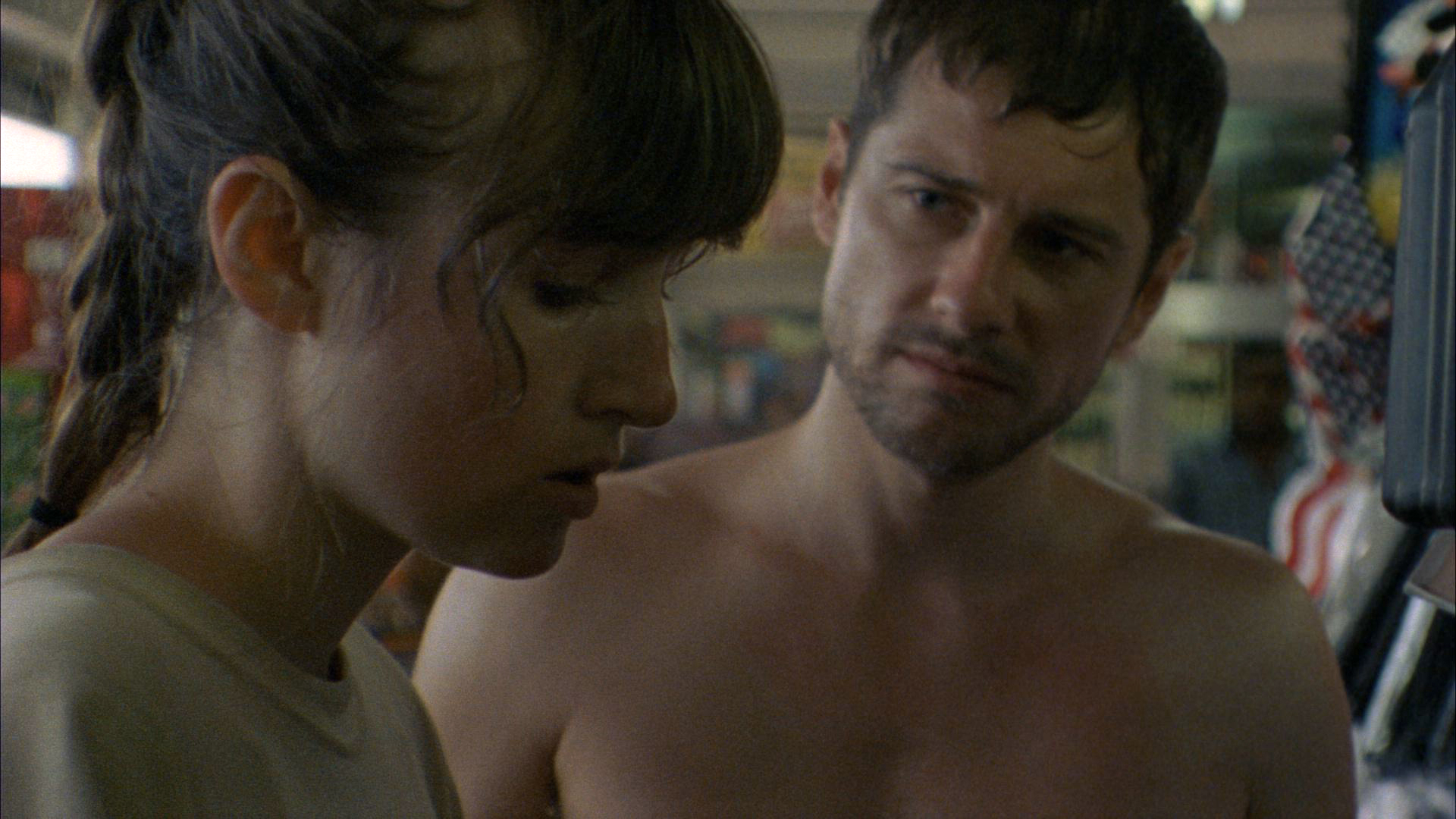
Kate Lyn Shein and Kentucker Audley in SUN DON'T SHINE

Thirtyish Crystal and Leo are on the run and coaxing his weathered (and probably uninsured) sedan through central Florida.  Crystal is a white-hot mess.  I was going to describe her as needy and erratic, but those adjectives seem inadequate.  She is a unfiltered, explosive bundle of nerves, filled with impulses that are unfailingly ruinous.  The suspense in Sun Don’t Shine stems from whether Leo can navigate an escape path through her emotional minefield; we can tell from the neo-noir undercurrent that she’s going to bring him down no matter what.

In her first feature, writer-director Amy Seimetz combines a command of pacing with a Malickesque visual sense.   Watching her sweaty characters, we can feel both the Floridian humidity and the relief from air conditioning in a tourist trap. (A promising actor, Seimetz just turned in a compelling performance in the controversial Upstream Color.)  

The strength of the screenplay is that the audience only gradually learns why the two are on the run, from what and to where.  However, those revelations are not surprising.  Fortunately, Seimetz has chosen not to send her characters on yet another hyper-violent nihilistic crime spree.

But why doesn’t Leo leave Crystal on the side of the road and drive the hell away?  After about fifteen minutes, we know that’s his only chance.  He’s not very bright, but he is grounded in reality, and we wonder why he is so drawn to this wackadoodle. It may be a fim noir, but she sure isn’t Mary Astor’s Brigid O’Shaughnessy in Maltese Falcon

Watching Sun Don’t Shine is a 96-minute simulation of having an annoyingly clingy and scarily volatile girlfriend.  Long ago my friend Steve advised me, “Never sleep with anyone crazier than you are”.  Sage words, my friend.

Sun Don’t Shine is available for streaming from Amazon Instant and other VOD outlets, and is beginning a limited theatrical release.

Upstream Color: “enigmatic” is an understatement

UPSTREAM COLOR

I have never been as ambivalent about a movie as I am about Upstream Color.  (More about that later.)

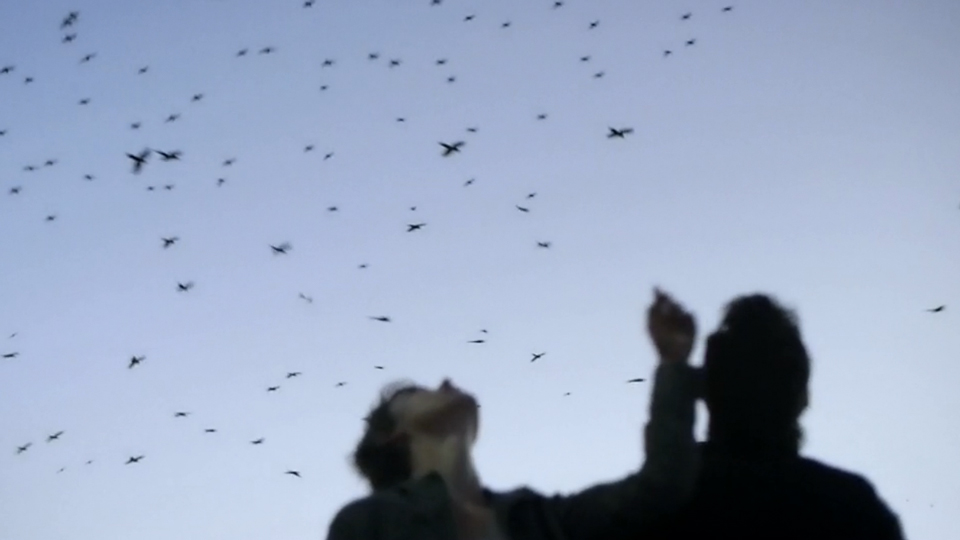
A character named Thief concocts a drug from corpulent worms, doses a woman and scams her out of her savings.  Another character, named Sampler, deworms her in a surgical tent at a pig farm.  This experience washes away her memory, and she happens into a relationship with a man, another loner trying to move on from a traumatic episode.  Along the way, we see vividly colorful shots of the human bloodstream and riparian ecology.  Sampler periodically reappears to solemnly observe the goings on and experiment with sound recordings, and he spends lots of time with the herd of pigs.

Yes, this is one trippy movie.  The worming and deworming scenes could fit in a sci-fi or horror movie.  The second half has the air of a romantic thriller.  The overall tone is of an art film or experimental film.  Upstream Color is written, directed, produced and co-edited by Shane Carruth, who also plays the male lead and composed the score.  Indeed, the cinematography and Carruth’s editing and music are strikingly unique and effective.

Even viewers who admire Upstream Color find it baffling.  What’s going on and what’s it all mean?  Halfway through, I put it all together:  Sampler represented the writer himself who was imagining – and trying on – different characters, plot elements and settings.   So I thought this was a brilliant film about the creative process.  But then Carruth himself set me straight.  At the screening Q & A, Carruth said that I was wrong about Sampler, that the film is about how people might relate if their identities are stripped away, and that Upstream Color is intended to be a coherent narrative.

So here’s my problem –  it’s not a coherent narrative – not even close.  If Sampler is merely an observer, how can he play a critical part in the plot by deworming the woman?  Why are the characters doing the same thing simultaneously at the pig farm and in the highrise? And what gives with the bearded guy and his wife (seemingly unrelated to the other plot threads)?  So I don’t think that Upstream Color is a success on the filmmaker’s own stated terms.  But my interpretation did work for me, and the music, visuals, editing, and lead actress Amy Seimetz combined to make the overall experiece worthwhile.

Amy Seimetz is excellent as this haunted and confused character.  (Seimetz is a director in her own right and is getting enough acting parts now to demonstrate that she has the chops of a potentially significant actress.  (BTW 25 years ago, Lindsay Crouse would have played this role.)

If you like your movies understandable, stay away from Upstream Color – you will hate it.  If you want a unique art film experience, go with it.

The Central Park Five: a sense of outrage

THE CENTRAL PARK FIVE

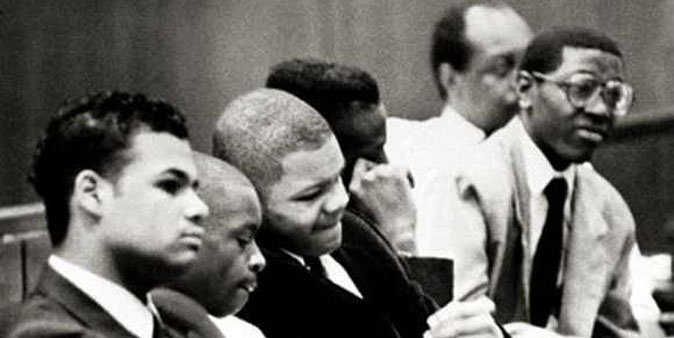
PBS is now broadcasting the excellent documentary The Central Park Five, about the media-driven rush to wrongly convict five young men of the rape attack upon the Central Park Jogger.  The film is co-directed and co-written by famed documentarian Ken Burns (The Civil War, Baseball) , his daughter Sarah Burns and her husband David McMahon from Sarah’s book of the same name.  The Central Park Five is just as credibly researched as Ken Burns’ previous work but has more of a bite, more of a sense of outrage.

The Central Park Five begins with the actual perpetrator of the crime, so we immediately are reminded that the Central Park Five teens are innocent, which helps us absorb their experience through their eyes.  That’s critical for us to understand how they could have been browbeaten into confessing to crimes that they did not commit.

We see their video confessions and hear from the Five and their families today.  We also hear from lawyers, politicians and journalists, but not from the police or prosecutors.

The story of The Central Park Five is remarkably compelling.  It’s also an important film.  Viewers will never assess confessions induced by police interrogations in the same way again.

The Place Beyond the Pines: the sins of the fathers visited upon the sons

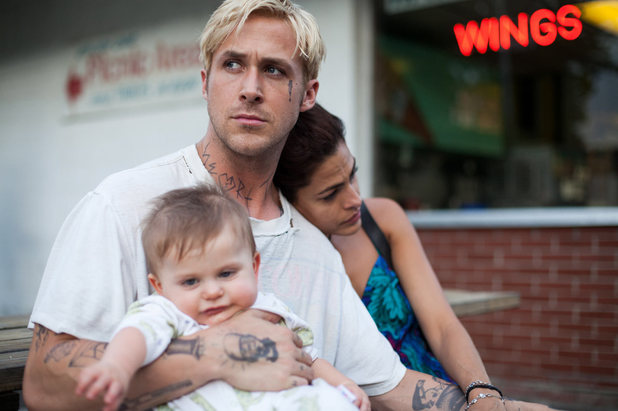
Ryan Gosling and Eva Mendes in THE PLACE BEYOND THE PINES

According to the Old Testament, “the iniquity of the fathers shall be visited upon the sons”.  Indeed, the successes and flaws of fathers, and the choices they make, impact their sons.  And sons are often driven to be like or unlike their fathers, to match them or to surpass them.  That is the territory explored in writer-director Derek Cianfrance’s intelligent drama The Place Beyond the Pines.  (The story is set in Schenectady, New York, and the title refers to the Mohawk origin of the town’s name.)

At first, the story follows a familiar path for a crime drama – a motorcycle trick rider (Ryan Gosling) turns to bank robbery and has an encounter with a cop on patrol (Bradley Cooper).  But the screenplay embeds nuggets about how both men feel about their fathers and how those feelings drive their actions. Both men have infant sons, and the father-son theme becomes more apparent as the story resumes fifteen years later with a focus on their own sons as teenagers.

I can’t remember a recent performance by Ryan Gosling that hasn’t been compelling, and he’s outstanding here, too.  But the unexpected gem is Bradley Cooper, who shows us acting depth and range that we haven’t seen in his earlier work.  Especially in scenes with a police psychiatrist and when forced to ask his father for advice, Cooper exposes the naked vulnerability of his character.

The Place Beyond the Pines is replete with excellent performances.  Eva Mendes plays the mother of Gosling’s baby, and her performance stands up to Gosling’s – no small feat.  Harris Yulin is superb as Cooper’s canny father.  The wonderful Australian actor Ben Mendelsohn (Animal Kingdom, Killing Them Softly) plays Gosling’s crime partner.  Ray Liotta, who often plays shady characters, has never been so menacing.

I found the character of Cooper’s son to be very unsympathetic; he is supposed to be a kid messed up by his parents’ divorce and father’s inattention, and I think that the story would have worked better if it were easier to look past his obnoxiousness to appreciate his damaged nature.  Still, it’s a film that I’m still pondering a day later.  Cianfrance made Blue Valentine, the hard-to-watch but starkly authentic story of an unraveled relationship, an acting showcase for Gosling and Michele Williams.  The Place Beyond the Pines is just as thoughtful and more accessible than Blue Valentine. Pines is an ambitious and mostly successful film.

Beyond the Hills: a bleak tragedy by a masterful filmmaker

The two lead characters in Beyond the Hills grew up together in a Romanian orphanage where they were subjected to privation and worse – and where they became lifelong soulmates.  They aged out of the orphanage, and, now 24, Alina has been working menial jobs in Germany while Voichita has joined a local monastery.  The monastery is a small rural compound with a rigidly dogmatic provincial priest, a compassionate but simple mother superior and a dozen nuns who run the gamut from devout to superstitious.

Alina craves Voichita’s companionship and viisits the monastery to convince Voichita to leave and join her in Germany.  Voichita resists, and tries to get Alina to join the religious order.  They’re both emotionally damaged from childhood experiences.  There’s a strong bond between the two, and each is unable to let the other go.  But each is strong willed and stubborn.

Then Alina suffers a psychotic breakdown.  Now, since the worst place to treat such a condition would be a community of religious fanatics that is intentionally devoid of modernity, bad things happen. The priest and nuns are not monsters, but ill-equipped to avoid making a series of monstrous choices.  We can only watch as the story moves unrelentingly to its awful conclusion. Sadly, the story is based on actual events at a Moldavian monastery a decade ago.

Beyond the Hills is compelling, in an oft excruciating and uncomfortable way.  But those who commit to its 2 1/2 hours will see some remarkable film artistry from its real star – director Christian Mungiu.  Munghiu’s thriller 4 Months, Three Weeks, 2 Days won the top prize at the Cannes Film Festival (and made #3 on my Best Movies of 2007).   Beyond the Hills won Canne’s screenwriting award.

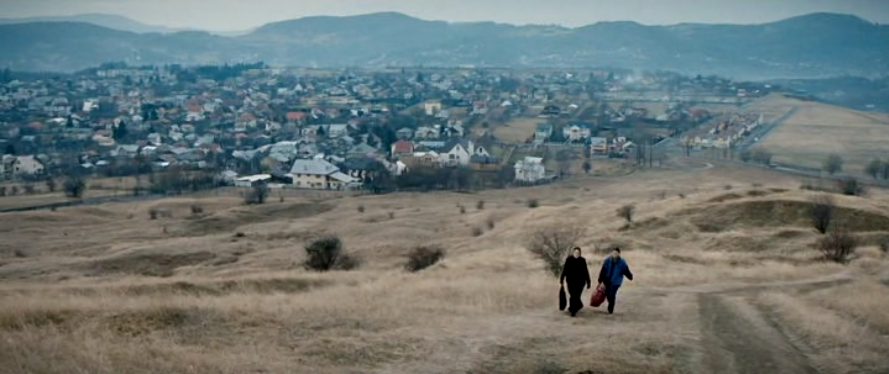
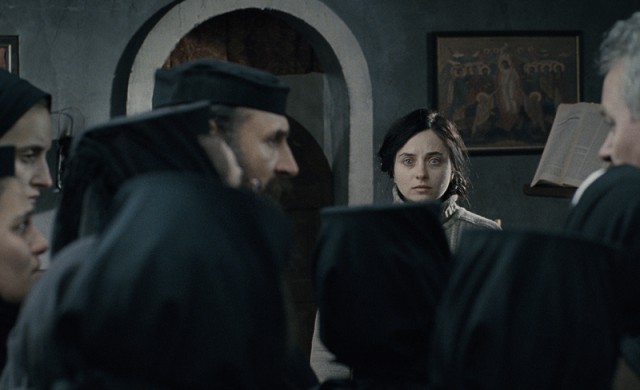
Munghiu fills Beyond the Hills will one dramatic shot after another.  Early in the film, we see Voichita and Alina hike up a hillside in the Romanian countryside (see photo at top); when they reach the top, the camera swings behind them, and we see the monastery on the next rise.  At the climax, the camera stays fixed on a crowd of characters (see photo below); the action and dialogue is between the two men in the foreground, but our attention is on the reactions of Voichita in the background.  The length and patience of the shot allow our attention to settle on Voichita, and her eyes tell us what she has concluded.  It’s an absolutely gripping moment.

Beyond the Hills is a tough movie by a major film artist.

The Sapphires: irresistible

TTHE SAPPHIRES

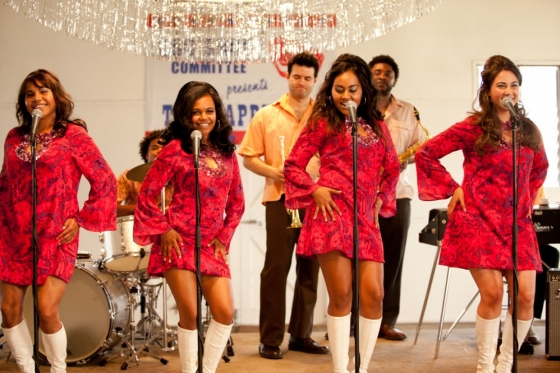
The Sapphires is  a triumph of a Feel Good Movie.  Set in the 1960s, a singing group from an Australian Aboriginal family faces racial obstacles at home, but blossoms when the girls learn Motown hits to entertain US troops in Vietnam.  Remarkably, Tony Briggs based the screenplay on his mother’s real experience – make sure you stay for the Where Are They Now end credits.

The ever amiable Chris O’Dowd (one of the best things about Bridesmaids)  is funny and charming as the girls’ dissolute manager.  Jessica Mauboy, who plays the lead singer, has a great voice for soul music.  A surprisingly beautiful song by the girls’ mom, played by veteran actress Kylie Belling, is an especially touching moment.

The Sapphires is not a deep movie, but it is a satisfying one.  It’s predictable and manipulative, but I can’t think of anyone who wouldn’t enjoy it.  I saw it at this year’s Cinequest, and predict that it will become a word-of-mouth hit.   The Sapphires is a guaranteed good time at the movies.

Ginger & Rosa: a friendship faces a fork in the road

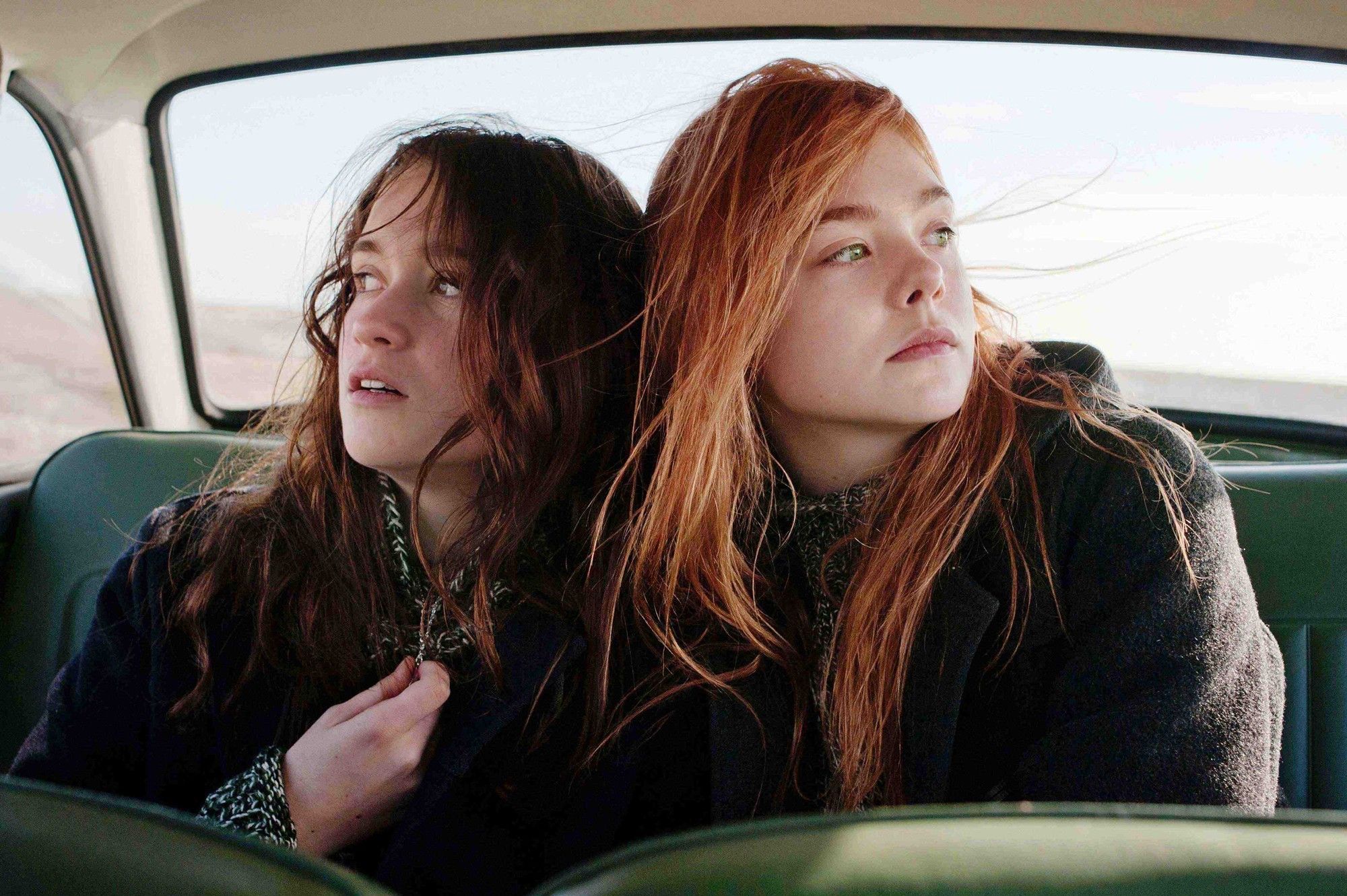
Alice Englert and Elle Fanning in GINGER & ROSA

The title characters in Ginger & Rosa are 17-year-old best friends in 1962 London.  Through each stage of childhood, they have been inseparable companions and are now, as teens, fierce allies against their mothers. But at 17, Ginger’s intellectualism and Rosa’s romanticism are becoming more pronounced.  Ginger is obsessed with the British nuclear disarmament movement and Rosa is boy crazy. Ginger & Rosa is a solid dramatic snapshot of the moment when this friendship plunges into crisis.

Another important character is Ginger’s unreliable dad (Alessandro Nivola), a political pamphleteer once jailed for his pacifism who justifies his anarchic lifestyle as resistance to authority.  This is political statement, conveniently, serves as a rationale for doing whatever he wants to do, whatever the impact upon others.

The truth tellers in the story are the most constant adults in Ginger’s life,  gay couple and their arch friend played by Timothy Spall, Oliver Platt and Annette Bening.  These three actors are always welcome in a movie, and are outstanding in Ginger & Rosa.

The American actress Elle Fanning is excellent as the always-observant Ginger.  Her performance here marks her as someone who could have an extraordinary career.  Remarkably, Fanning played this 17-year-old character when she was only 14.  The less demanding role of Rosa is well-played by director Sally Potter’s daughter Alice Englert.

Potter gets the period exactly right – from the girls’ ironing their hair to their discovery of turtleneck sweaters.  But, along with Fanning’s stellar performance, is that enough for a satisfying movie?  At the end of the day, it’s a well-crafted, character-driven little movie – but not a Must See.

Letters from the Big Man: Sasquatch is her stalker

Employing magical realism like Electrick Children, Letters from the Big Man is a completely original movie.  A young woman of fierce independence has left a career with the US Forest Service to do art.  Upended by a bad breakup, she takes an assignment from her former employer that conveniently requires her to do what she really needs to do – make a solo backpacking trip deep into the southern Oregon forests.

The opening quarter of the movie establishes two things.  First, the ancient Oregon forest is awesomely beautiful and inspires reflection.  Second, this woman’s wilderness skills are beyond impressive – she hikes, kayaks, chops wood, makes camp and kindles fire with great ease.  It’s clear that she is extremely experienced in the wild, and she exudes confidence.  She recognizes every plant species, snorkels to count the horns on a sturgeon and wades into streams to measure the siltation. And she can handle a handgun, too.  Wow. (Later in the movie, we see her matter-of-factually rig her bike to recharge her laptop battery with pedal power.)  She comes to realize that someone/something is following her, a thought that may terrify the audience (especially at night), but which only annoys and intrigues her.

As the young woman, Lily Rabe carries the film with her physicality and strength of will.  (Rabe is the daughter of the late Jill Clayburgh.)  Her character is also prickly, which keeps us from warming to her right away.  But she attracts the attention of two males.  The first is another backpacker, who turns out to be an environmental activist at odds with the Forest Service and ready for female company.  The second is a Bigfoot, who rages against logging in his forest, but who melts at the sight of our heroine and leaves her piles of twigs as tokens of his affection (this is the magical realism).  The movie turns on her response to her two suitors.

Writer-director Christopher Munch has created a movie of uncommon beauty, and he has the balls to include a lovelorn Bigfoot.  The magical realism works because he presents it absolutely straight, as if having a Sasquatch in the story is as normal as a squirrel.  Most of the rest of the story is extremely realistic, especially the interactions between officials of the Forest Service, environmentalist activists and loggers.  The one exception is an unnecessarily farfetched conspiracy theory about military intelligence.

Letters from the Big Man is one of the best looking and best sounding movies of the year.  Visually, it’s like trekking through wilderness (but without the insects).  And the sound track is exquisite, centered on the natural sounds of rushing water and animal calls, occasionally augmented with an ensemble’s reverential music.

Will Sasquatch get the girl?  It’s worth finding out.  Letters from the Big Man is available on VOD, including on Amazon Instant.