A Coffee in Berlin: slacker minus coffee equals plenty of laughs

A COFFEE IN BERLIN (OH BOY)

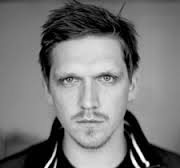
Ranging from wry to hilarious, the German dark comedy A Coffee in Berlin hits every note perfectly.  Opening tomorrow, it’s the debut feature for writer-director Jan Ole Gerster, a talented filmmaker we’ll be hearing from again.

Jan Ole Gerster
Jan Ole Gerster

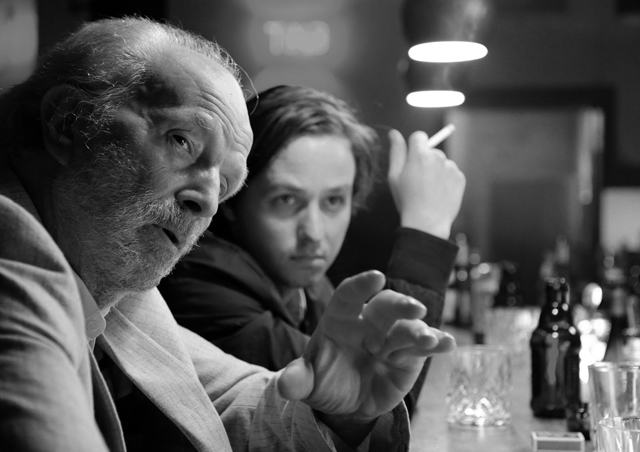
We see a slacker moving from encounter to encounter in a series of vignettes.  Gerster has created a warm-hearted but lost character who needs to connect with others – but sabotages his every opportunity.  He has no apparent long term goals, and even his short term goal of getting some coffee is frustrated.

As the main character (Tom Schilling) wanders through contemporary Berlin, A Coffee in Berlin demonstrates an outstanding sense of place, especially in a dawn montage near the end of the film. The soundtrack is also excellent – the understated music complements each scene remarkably well.

I saw A Coffee in Berlin (then titled Oh Boy) at Cinequest 2013 and singled it out as one of the three most wholly original films in the festival and as one of my favorite movie-going experiences of the year.  A Coffee in Berlin was snagged for the festival by Cinequest’s film scout extraordinaire Charlie Cockey.

DVD/Stream of the Week: Caesar Must Die

caesar must die
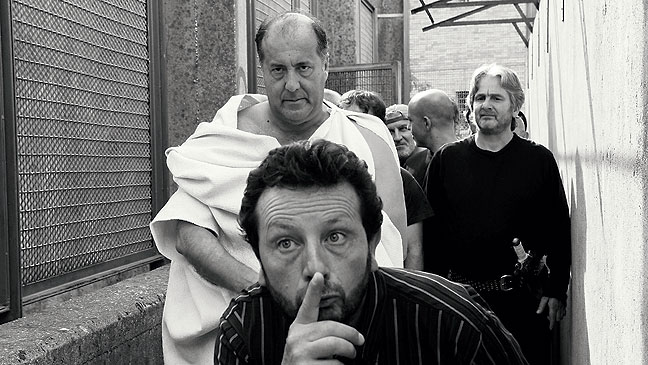
In the taut 76 minutes of Caesar Must Die, convicts in an Italian maximum security prison put on a performance of Shakespeare’s Julius Caesar.  Every year, there’s a drama laboratory at this prison.  It turns out that Julius Caesar is a perfect choice.

Julius Caesar is, most of all, a play about high stakes.  And high stakes, where a decision can result in life or death or power or failure or freedom or incarceration, is something these guys profoundly understand – and have time to reflect upon.  During rehearsal, one actor snaps at the director, “I’ve been in here for 20 tears, and you’re telling me not to waste time?”.  When Cassius states that he has wagered his life on the outcome of one battle and lost, the line is more powerful because we know the actor playing Cassius is himself a lifer.

When the prisoners audition, we learn that their sentences range from 14 years to “life meaning life”.  Most of them are naturalistic and very effective actors.  The guy who plays Caesar is especially powerful in his acting and reacting.

The Julius Caesar story unfolds in black-and-white as the prisoners rehearse and then play the early scenes in the contemporary prison setting.  Segments from the performance itself – about 15 minutes – are filmed in color.

It all works very well as a very successful Shakespeare movie – and as a prison movie, too. Caesar Must Die is available on DVD from Netflix and streaming on Netflix Instant, Amazon, iTunes, Vudu and Hulu.

We Are the Best!: friendship at the age of moroseness and exuberance

WE ARE THE BEST!
WE ARE THE BEST!

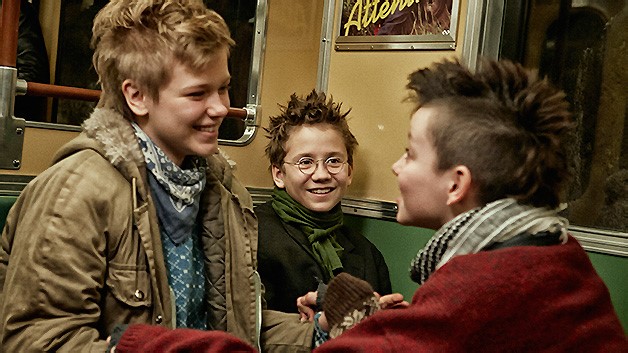
We Are the Best! is about Swedish thirteen-year-old girls in 1986 – and the most important descriptor here is “thirteen-year-old”.  It’s perhaps the age where friendship is most important.  It’s the age when the needle flips back and forth between moroseness and exuberance.  When you feel like your peers despise you, when you’re skittish about your own body, you’re exploring feelings about the opposite gender and you are certain that your parents are the most embarrassing on the planet – you really need someone on your own team to check in with.

In We Are the Best!, we have two girls with punk hair who are NOT the popular kids in school. Trying to stake out some personal dignity, they find themselves claiming to be a punk band, despite not owning or knowing how to play any musical instruments. They reach out to the other social outcast at their school, a serious practicing Christian who plays classical guitar, and she soon sports a punk haircut, too.  Together, they test the bonds of friendship and navigate the adventures that all thirteen-year-olds encounter.  As it explores the value of teen friendship, We are the Best! is funny, poignant and charming.

The Final Member: the Icelandic penis documentary – not so much about penises

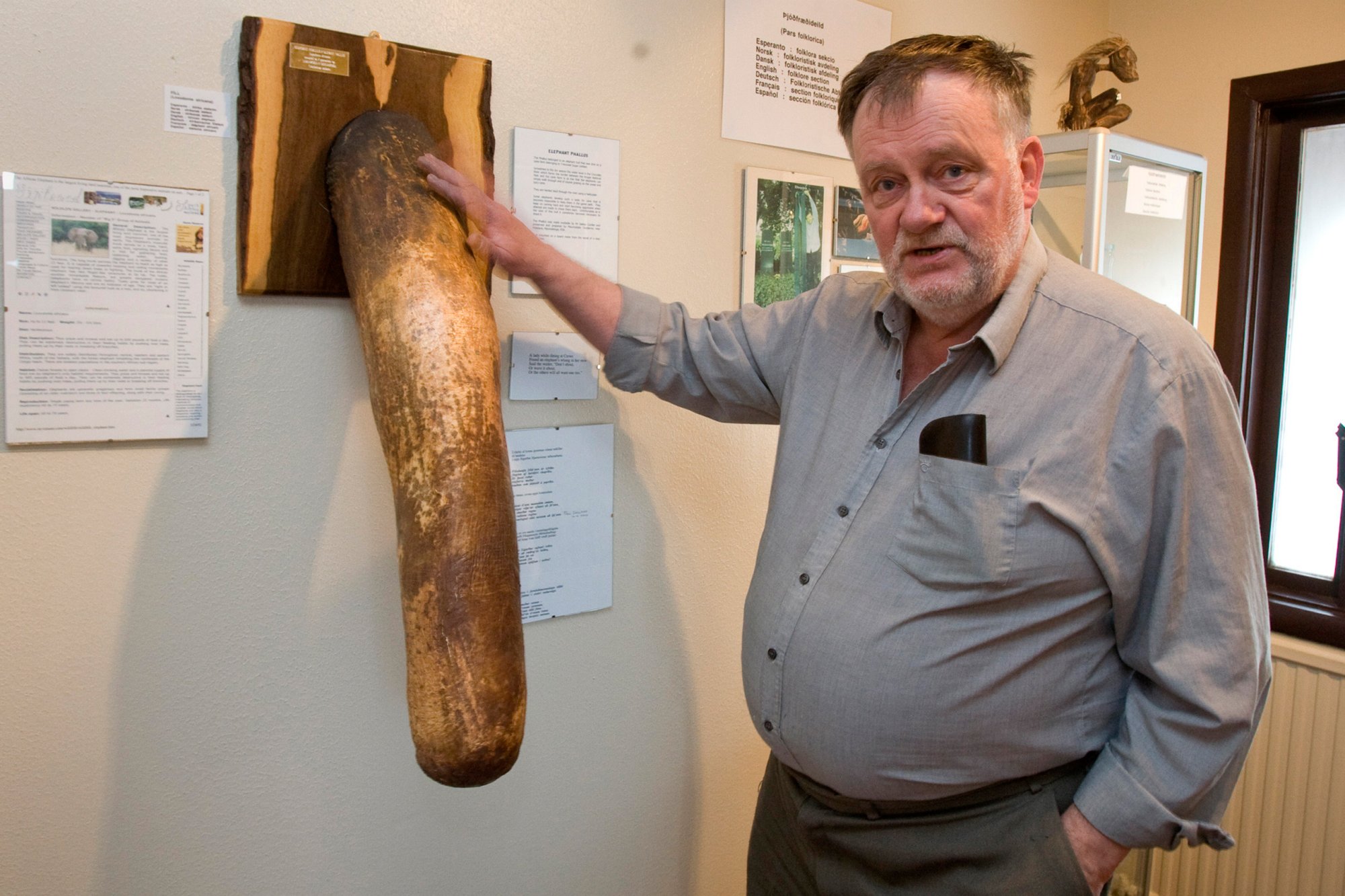
final chapter“Of course you are” is what The Wife says when I answer one of her questions with something like, “I’m watching the Icelandic penis documentary”.  Indeed, the documentary The Final Member is about the curator of the Icelandic Phallological Museum.  He has collected and displays sample penises from every mammalian species from hamster to sperm whale.   THAT’S NOT THE WEIRD PART.

The museum still lacks a sample from Homo Sapiens.  It’s the curator’s quest – and the men vying to contribute their own organs – that is central to The Final Member.   Like the
Errol Morris films Days of Heaven (pet cemetery) and Tabloid (Mormon missionary, cloning dogs), it’s not that the OBJECT of obsession is so funny – it’s the obsession itself.  It’s that the documentary presents people who are SO OBSESSED and SO EARNEST about the topic.  Of course, it is pretty funny when guys are each striving to put their penises on museum display.

In fact, the lengths to which one guy is willing to go for penis fame and fortune is astounding and, for male viewers, wince-inducing.  I’m working on a list of Jawdropping Documentaries, and – believe me – The Final Member is gonna make that list.  I recommend The Final Member for its 75 minutes of “he said WHAT?” LOL moments.

BTW that’s one-third of a sperm whale penis in the image at the top of this post.  (And the very last shot in The Final Member is a very wry filmmaking joke, too.)

The Final Member is now streaming on Amazon and iTunes.

The Grand Seduction: funniest movie of the year so far

THE GRAND SEDUCTION
THE GRAND SEDUCTION

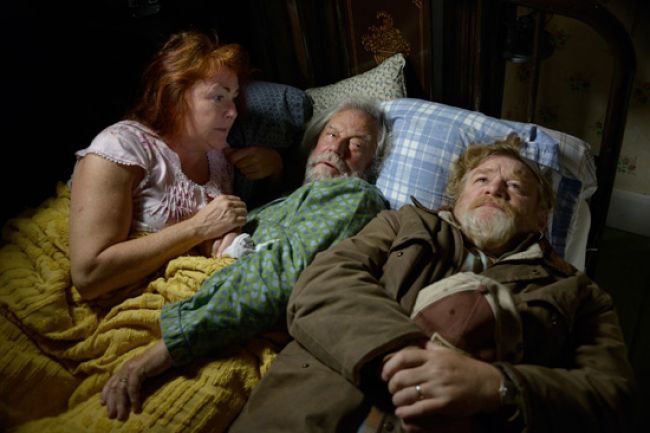
The Canadian comedy The Grand Seduction is the funniest movie of the year so far.  It’s a MUST SEE.

Brendan Gleeson (In Bruges, The Guard, The General, Braveheart) and Gordon Pinsent (Away from Her) play isolated Canadians try to snooker a young doctor (Taylor Kitsch of Friday Night Lights) into settling in their podunk village. They enlist the entire hamlet in an absurdly elaborate and risky ruse, and the result is a satisfying knee-slapper that reminds me of Waking Ned Devine with random acts of cricket.

The Grand Seduction opened this year’s Cinequest on an especially uproarious note. The audience, including me and The Wife, rollicked with laugh after laugh.   Like Ned Devine, I think that The Grand Seduction can become a long-running imported art house hit like The Best Exotic Marigold Hotel or The Full Monty.

Neighbors: an actress gets to have fun in a low brow comedy

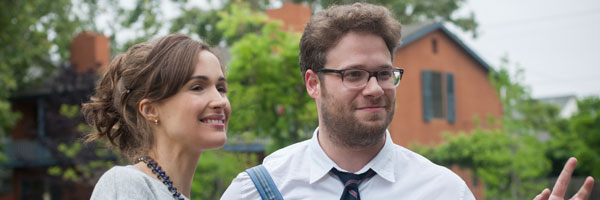
Rose Byrne and Seth Rogen in NEIGHBORS

In Neighbors, Rose Byrne and Seth Rogen play a couple of new parents whose world is rocked when a fraternity (led by Zach Ephron) moves in next door.  Neighbors begins with a more-or-less realistic tone for a comedy that escalates into a demented farce as Byrne and Rogen get more and more desperate to force the frat out of the neighborhood.

We know that Seth Rogen and Zach Ephron (Liberal Arts) can be funny, but Rose Byrne is the pleasant surprise.  Unlike in most of the current crop of bromance and gross-out comedies, the female character relishes, is not a nag and can be outrageous and unrestrained herself.  Byrne is also a good sport in a scene with a gross-out sight gag for the ages (that seeks to match the “hair mousse” in There’s Something About Mary, etc.).

This isn’t a Must See – and it doesn’t aspire to cinematic greatness.  But Neighbors is not a bad choice if you’re in the mood for a low brow comedy: solid cast, a darkening sensibility and a good role for the gal.

Words and Pictures: unusually thoughtful romantic comedy

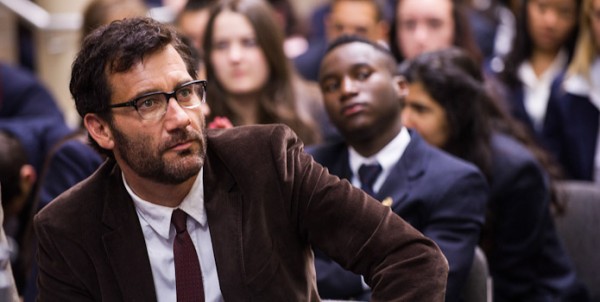
words picturesIn the unusually thoughtful romantic comedy Words and Pictures, Clive Owen and the ever-radiant Juliette Binoche star as sparring teachers. The two play world-class artists – Owen a writer and Binoche a painter – who find themselves in teaching jobs at an elite prep school. As they spiritedly disagree over whether words or pictures are the most powerful medium of expression, they each admire and are drawn to the other’s talent and passion.

Words and Pictures contains the wittiest movie dialogue in many moons and reminds us that real wit is more than some clever put downs. Owen’s English teacher worships the use of language to evoke original imagery and also revels in pedantic wordplay – the more syllables the better. When his boss asks him, “Why are you always late?”, he retorts “Why are you always dressed monochromatically?”.

The reason that he IS always late is that he’s an alcoholic hellbent on squandering his talent and alienating his friends and family. This is a realistic depiction of alcoholism and of its byproducts – unreliability, broken relationships and fundamental dishonesty. In an especially raw scene, he expresses his self-loathing by using a tennis racquet and balls to demolish his own living space. Top notch stuff.

Binoche plays a woman of great inner strength and confidence who has been shaken by the advances of a chronic illness. According to the credits, Binoche herself created her character’s paintings.

Words and Pictures sparkles until near the end. When the students make the debate over words vs pictures explicit in the school assembly, the intellectual argument loses its force and the tension peters out. So it may not be a great movie, but Words and Pictures is still plenty entertaining and a damn sight smarter than the average romantic comedy.

I saw Words and Pictures earlier this year at Cinequest.

Locke: a thriller about responsibility

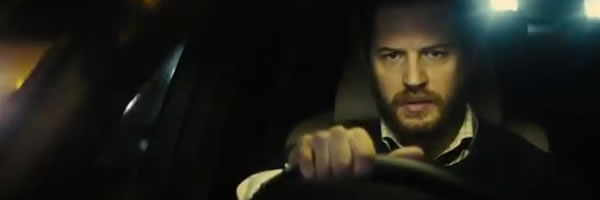
lockeThe thriller Locke is about an extremely responsible guy (Tom Hardy) who has made one mistake – and he’s trying to make it right.  But trying to do the responsible thing in one part of your life can have uncomfortable consequences in the others.  The title character drives all night trying to keep aspects of his life from crashing and burning.

In fact, he never leaves the car and, for the entire duration of the movie, we only see his upper body, his eyes in the rearview mirror, the dashboard and the roadway lit by his headlights.  All the other characters are voiced – he talks to them on the Bluetooth device in his BMW.  Sure, that’s a gimmick – but it works because it complements the core story about the consequences of responsibility.

Locke is written and directed by Steven Knight (Dirty Pretty Things, Eastern Promises).  The story is actually a domestic drama – there are no explosions to dodge, no one in peril to rescue and no bad guys to dispatch.  But it’s definitely a thriller because we care about whether Locke meets the two deadlines he will face early the next morning.

It’s a masterful job of film editing by Justine Wright (Touching the Void, The Last King of Scotland).  After all, her cuts help keep us on the edge of our seats, despite her working with a very finite variety of shots (Locke’s eyes, the dashboard, etc.).

Hardy, who’s known as an action star, is excellent at portraying this guy who must try to keep his family, biggest career project and self-respect from unraveling at the same time, only armed with his ability to persuade others.  It’s a fine film.

Ida: best movie of the year so far

IdaOpening more widely tomorrow, the Polish drama Ida, which I saw at this year’s Cinequest, is the best movie I’ve seen this year.

The title character is a novice nun who has been raised in a convent orphanage. Just before she is to take her vows in the early 1960s, she is told for the first time that she has an aunt. She meets the aunt, and Ida learns that she is the survivor of a Jewish family killed in the Holocaust. The aunt takes the novice on an odd couple road trip to trace the fate of their family.

The chain-smoking aunt (Agata Kulesza) is a judge who consumes vast quantities of vodka to self-medicate her own searing memories. But the most profound difference isn’t that the aunt is a hard ass and that the nun is prim and devout. The most important contrast is between their comparative worldliness – the aunt has been around the block and the novice is utterly naive and inexperienced (both literally and figuratively virginal).  The young woman must make the choice between a future that follows her upbringing or one which her biological heritage opens to her.  As Ida unfolds, her family legacy makes her choice an informed one.

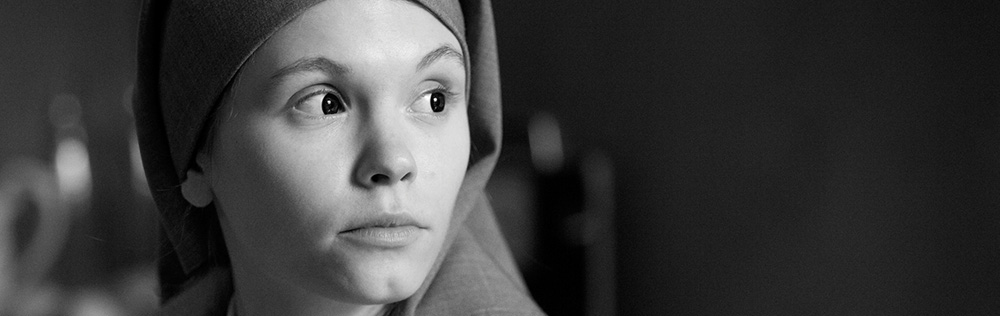
The novice Ida, played by newcomer Agata Trzebuchowska, is very quiet – but hardly fragile. Saying little, she takes in the world with a penetrating gaze and a just-under-the-surface magnetic strength.

Superbly photographed in black and white, each shot is exquisitely composed. Watching shot after shot in Ida is like walking through a museum gazing at masterpiece paintings one after the other.  Ida was directed and co-written by Pawel Pawlikowski, who also recently directed the British coming of age story My Summer of Love (with Emily Blunt) and the French thriller The Woman in the Fifth (with Kristin Scott Thomas and Ethan Hawke).  He is an effective and economic story-teller, packing textured characters and a compelling story into an 80 minute film.

Ida is also successful in avoiding grimness. Pawlikowski has crafted a story which addresses the pain of the characters without being painful to watch. There’s some pretty fun music from a touring pop/jazz combo and plenty of wicked sarcasm from the aunt.

Ida won the International Critics’ Award at the Toronto International Film Festival.  Ida was my pick as the best film at Cinequest, where it won the Jury Prize for Best Narrative Feature.

Finding Vivian Maier: hiding her own masterpieces

vivian maier1
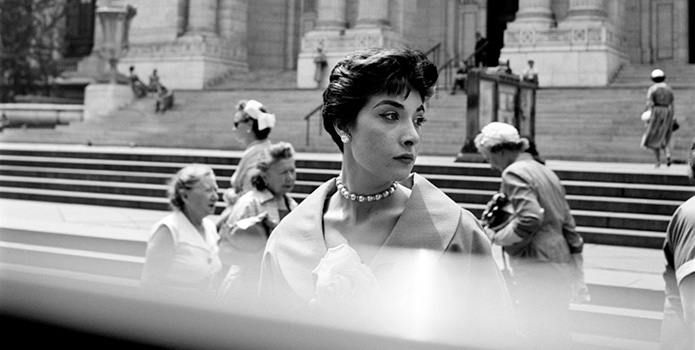
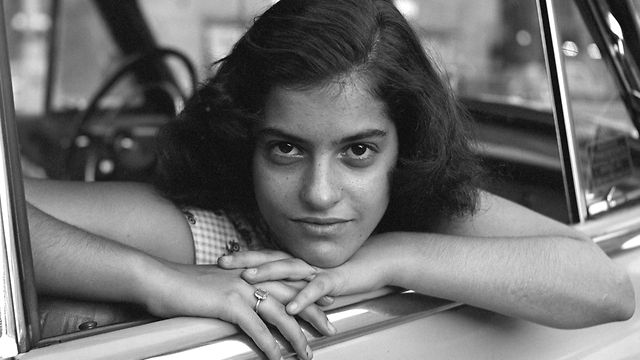
The engrossing documentary Finding Vivian Maier begins with the death of a Chicago woman so obscure that none of her neighbors knew her name.  She was a standoffish hoarder, and when a box of her junk is acquired at an estate auction, the buyer, a picker named John Maloof, finds lots and lots of photographs.  He posts some of them on the Internet, and it turns out that the woman was, hitherto undiscovered, one of the great 20th Century photographers.  So Maloof acquires the other boxes from the auction and embarks on a quest to find out who she was, why she took over 100,000 images and why she never showed them. Fortunately, we get to come along.

We quickly learn that her name was Vivian Maier, and that she worked as a nanny.   As Maloof’s journey of discovery takes us to another city and then to another country, we begin to piece together her life.  Because Maier lived with families to raise their children, we meet some of her former charges. We are able to construct what she looked and sounded like, how she dressed and walked and about her array of eccentricities.  We learn about a very disturbing dark side.

But Maier remained secretive even inside the families’ homes, so some of the puzzle pieces remain undiscovered.  We can infer that a pivotal event happened during her childhood.  We conclusively find out that she was obsessively private, but we can only guess why.

Vivian Maier is no longer obscure.  Her work is now shown widely in museums and galleries.  As a photographer, she had an uncommon gift to connect personally with her subjects and to document the humor and tragedy of the most human moments.  In the guise of a detective story, Finding Vivian Maier does her justice.


vian maier2