When Michel Houellebecq, one of the most well-known writers in France, disappeared for a few weeks recently, there were media rumors that he had been kidnapped. The Kidnapping of Michel Houellebecq is an absurdist mockudrama in which Houellebecq himself plays himself in an imagined kidnapping. Once Houellebecq’s captors hide him in a farmhouse, the interactions between the characters become very funny.
The humor is all very droll and stems from the characters’ reactions to what Houellebecq finds to be an absurd situation. He is kept in the frilly room of a little girl, complete with large doll. And we see one of France’s leading public intellectuals and his less gifted captors fully engaged in existential discussions on topics such as “Does Poland exist?”.
Unfortunately, The Kidnapping of Michel Houellebecq opens with an almost intolerably slow segment BEFORE he is kidnapped. In fact, the pace of the entire film is pretty slow, so The Kidnapping of Michel Houellebecq is not for everyone.
But if you fast forward over the beginning and settle into observing the writer and his motley crew of kidnappers, you’ll find some laughs. The Kidnapping of Michel Houellebecq is available streaming on Netflix Instant, Amazon Instant Video, iTunes, Vudu, YouTube and Google Play.
In the very satisfying horror film Unfriended, it’s the one-year anniversary of a teenage girl’s suicide, and her bullying peers convene via webcams on social media. But their computers are hijacked by an Unknown Force who starts wreaking revenge. The kids become annoyed, then worried and, finally, panicked for their lives.
Here’s something I’ve never seen before: the entire movie is compiled of the characters’ screenshots. The critic Christy Lemire says that “Unfriended is a gimmick with a ridiculous premise, but damned if it doesn’t work”, and she’s right. Writer Nelson Greaves and Director Levan Gabriadze came up with this device, and their originality pays off with a fun and effective movie. Unfriended is available to rent on DVD from Netflix and Redbox and streaming from Amazon Video, iTunes, Vudu, YouTube, Google Play and Flixster.
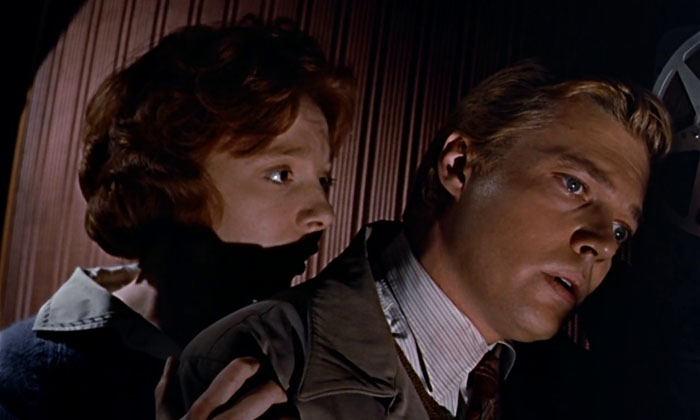
Here is the best-ever psycho serial killer movie. Peeping Tom was released in 1960, the same year as Psycho. The British film critics didn’t know what to make of a thriller where the protagonist was so disturbing, and they trashed Peeping Tom so badly that its great director Michael Powell (The Life and Death of Colonel Blimp, Stairway to Heaven, Black Narcissus, The Red Shoes) wasn’t able to work again in the UK. But I think Peeping Tom is an overlooked masterpiece and even better than its iconic counterpart Psycho.
Karlheinz Böhm plays a mild-mannered urban recluse who most people find socially awkward, but wouldn’t necessarily suspect to be a serial killer. The very innocent downstairs neighbor (Anna Massey) finds him dreamy and in need of saving – not a good choice.
Two aspects elevate Peeping Tom above the already high standards of Hitchcockian suspense. First, he’s not just a serial killer – he’s also shooting the murders as snuff films. Second, we see the killer watching home movies of his childhood – and we understand that ANYONE with his upbringing would be twisted; he’s a monster that repels us, but we understand him.
Until the last decade, Peeping Tom was unavailable, but you can find it now on DVD from Netflix and streaming from Amazon Instant Video, iTunes, YouTube, Google Play and Xbox Video. HIGHLY RECOMMENDED.
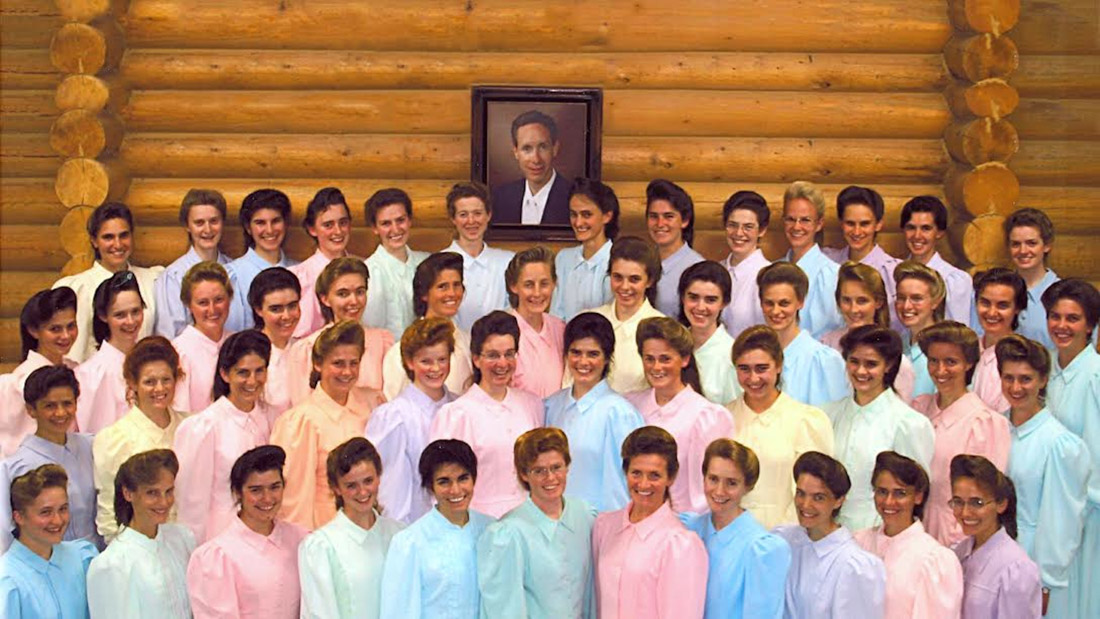
The Showtime documentary Prophet’s Prey takes us deep into the world of renegade Mormon polygamist leader Warren Jeffs, now behind bars for sexual assault on young girls. In 1986, Jeff’s father Rulon Jeffs became the patriarch of the Fundamentalist Church of Latter Day Saints (FLDS), a polygamous cult that straddles the barren borders of Utah and Arizona. When Rulon became in firm, Warren Jeffs took control and, upon Rulon’s death, became the Church’s leader, a position of unencumbered and accountable power within the Church.
Fundamentalist polygamy, as practiced by Rulon and others, often involves older men taking on underage girls as multiple wives, which is discomfiting enough. But Warren is a sociopath and a child sexual predator, who, when given total power as leader became a monster of unspeakable proportions. Reportedly, at least 24 of Warren Jeff’s “wives” were under 17 and as young as 12.
As in any effective documentary, the source material is top rate. Filmmaker Amy Berg directed Prophet’s Prey from the book of the same name by Sam Brower (who also appears in the film) the private eye who dogged Jeffs. We hear from Warren Jeff’s “wife” #63 Janet. We meet his brother Warren (once head of FLDS security) and his sister Elaine and his nephews Brent and Lyle. There’s even amazing surveillance camera footage of Jeffs in his cell.
Prophet’s Prey’s writer-director Amy Berg previously directed Deliver Us from Evil about pedophile Catholic priests in California’s Central Valley, which ranked in the top ten on my list of Best Movies of 2006. She’s well on her way to cornering the market on docs about sexually deviant religious leaders. Prophet’s Prey is narrated by the musician Nick Cave.
Prophet’s Prey is currently playing on Showtime and DirecTV PPV.
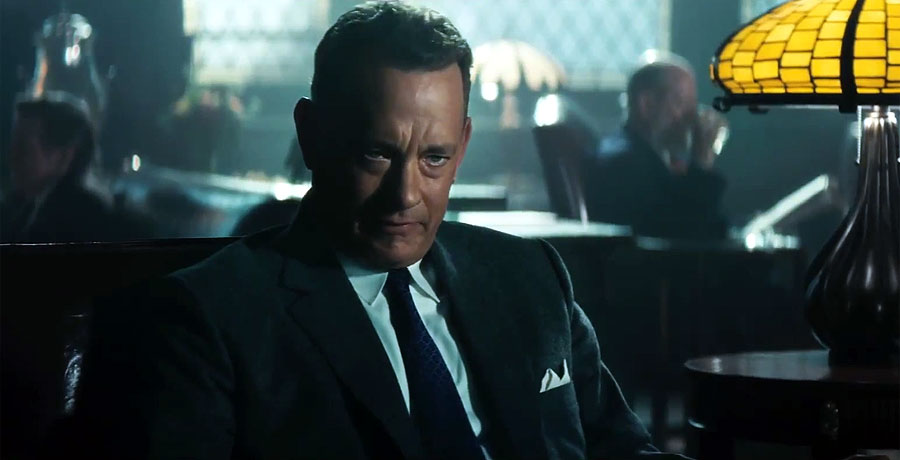
In Steven Spielberg’s true-to-life espionage thriller Bridge of Spies, Tom Hanks plays James B. Donovan, the insurance lawyer who went on a Cold War secret mission to negotiate the trade of a captured Russian spy for the captured US spy plane pilot Francis Gay Powers. That Russian spy was Rudolph Abel, played by Mark Rylance – himself perhaps the best reason to see this movie.
Rylance is a top echelon Shakespearean actor from the UK – best known in the US for his star turn as the dour Thomas Cromwell in the television miniseries Wolf Hall. In a remarkably minimalist yet evocative performance, Rylance reveals a man who lives by a code and is doggedly loyal to his own misguided cause – with absolutely no expectations of fairness or mercy from anyone else. The effect is to make us sympathize with a guy who is trying to give our most menacing enemy our dearest nuclear secrets. As my friend Karyn noted about Rylance, “less is more”.
This is not a great movie. Sure, Spielberg is the master of entertainment (complete with sentimentally swelling music at the end). After the movie’s riveting opening sequence of spy craft, we settle into a sometimes ponderous segment showing the Abel trial and the U-2 missions. Bridge of Spies takes off again when Hanks’ Donovan must head behind the Iron Curtain.
[SPOILER ALERT – After seeing the film, I was compelled to research James B. Donovan to see if he really represented Abel and negotiated both the Abel-for-Powers deal AND the release of over a thousand Cuban prisoners from the Bay of Pigs fiasco. Indeed, he did – all of the acts depicted in the movie seem to be factual. But the real James B. Donovan was not the Everyman portrayed by Spielberg and Hanks. Before going into private practice, Donovan served a stint as the General Counsel of the OSS – the predecessor of the CIA. While slipping off to East Berlin to barter for Powers, he was on the New York City Board of Education. And, instead of returning to obscurity after bringing Powers back to the US, he ran for US Senate from New York.]
The space adventure The Martian delivers what the best big Hollywood movies can offer – a great looking movie that convincingly takes us to a place we’ve never been, inhabited by our favorite movie stars at their most appealing.
In The Martian, Matt Damon plays Mark Watney, a member of a scientific expedition to Mars who is (understandingly) left for dead when his team must make an emergency escape from the Red Planet. The next manned mission to Mars is scheduled to land four years later 1000 miles away and he only has a four months supply of food, so his chances don’t look promising. But Mark Watney is a character of irrepressible resilience, with a wicked sense of humor, and he immediately embarks on solving the many individual problems that stand between him and survival. NASA leadership (Jeff Daniels, Chiwetel Ejiofor, Kristen Wiig, Sean Bean and more) and his team en route back to Earth (Jessica Chastain, Kate Mara, Michael Pena) all try to help.
Directed masterfully by Ridley Scott, The Martian pops along and there’s never a dull moment. It helps that the character of Watney is very funny.
I’m not highly scientifically literate, but the science in The Martian seemed to be at least internally consistent. I do think that – in real life – the NASA team would have immediately come to the solution thought up in the movie by the geek in the Jet Propulsion Lab.
The awesomely desolate Marscapes are fantastic. It’s all CGI, but you can’t tell – it looks like it is shot on location.
Here’s why The Martian isn’t a great movie:
Other than Damon’s Mark Watney, the other characters are types, getting all of their authentic texture from the performances instead of from the writing.
Never for a moment does the audience think there’s any chance that The Martian is really going to kill off Matt Damon.
But, overall, The Martian is so entertaining, it’s a Must See – even for folks that usually pass on science fiction.
The first two-thirds of Alex Gibney’s documentary Steve Jobs: The Man in the Machine provides us with remarkable insight into the personal life of Apple co-founder Steve Jobs. We see plenty of evidence that Jobs was obsessively driven, a marketing genius, consumed by self-absorption and a nasty bully.
Gibney brings us an interview with the mother of Jobs’ first daughter (who he initially refused to acknowledge). We also hear from their roommate (and presumably Apple’s #3 employee), who articulates the movie’s theme:
How much of an asshole do you need to be, to be successful?
There’s no question that Jobs qualifies as a jerk of singular proportions – grudgingly agreeing to $500/month in child support at the moment his wealth zoomed to $200 million. And calculating the IPO stock awarded to his former roommate (“How about I give him zero?”).
We hear from the daughter herself (off-camera), with whom Jobs eventually kindled a relationship. And we hear from the members of the executive team responsible for Apple’s resurgence, including the guys who brought us the iPod and iPhone. We do not see Apple co-founder Steve Wozniak or the family from Jobs’ second marriage.
How did he get to be so driven? There are insights in what molded him, especially his feelings about his adoption. What made him a genius? Not so much on that one.
In the final third of the film, Gibney piles on. But it’s not a shock to hear about a Silicon Valley CEO enriching himself by back-dating stock options or exploiting Chinese workers. It ‘s more telling to find out Jobs reveled in parking in handicapped spaces.
There’s a major Hollywood biopic about Jobs coming out in just two weeks: Danny Boyle’s Steve Jobs, starring Michael Fassbender in the titular role.
Alex Gibney is one our very, very best documentarians. He won an Oscar for Taxi to the Dark Side, and he made the superb Casino Jack: The United States of Money, Enron: The Smartest Guys in the Room, Client 9: The Rise and Fall of Elliot Spitzer,Mea Maxima Culpa: Silence in the House of God and Going Clear: The Prison of Belief. Man in the Machine doesn’t rise to the level of those films, but it’s worthwhile to those already interested in its subject.
Steve Jobs: The Man in the Machine is in theaters and also available streaming from Amazon, Vudu, YouTube, Google Play, and, of course, iTunes.
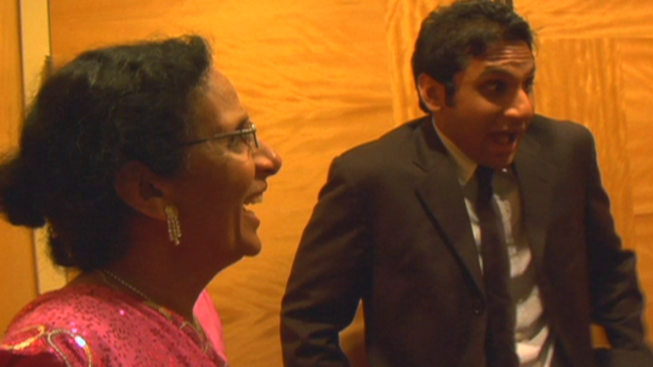
Meet the Patels is both a documentary and a comedy – and ultimately, a satisfying crowd-pleaser. Over several years, filmmaker Geeta Patel filmed her own brother Ravi and their parents in their quest to find a wife for Ravi. Ravi and Geeta’s parents were born in India, had a traditional arranged marriage which has resulted in decades of happiness. Their American-born kids, of course, reject the very idea of an arranged marriage. But Ravi finds the pull of his Indian heritage compelling enough to dump his redheaded girlfriend and try to find a nice Indian-American girl. His parents try to help him with unbounded and unrelenting enthusiasm.
Meet the Patels is very funny – much funnier than most fictional comedies. It’s always awkward when parents involve themselves in their child’s romantic aspirations. That’s true here, and produces some side-splitting moments. It helps that the Patel parents are very expressive, and downright hilarious. The dad is so funny that I could watch him read a telephone book for 90 minutes, and the mom is herself a force of nature.
We learn that the Patels of Gujarat have adapted an entire menu of marriage opportunities to American society: a matchmaking profile system called “biodata”, matrimonial fairs, “the wedding season” and more.
Meet the Patels has its share of cultural tourism and the clash of generations. But is so damn appealing because it’s much more than that – it’s a completely authentic saga of family dynamics, dynamics that we’ve all experienced or at least observed. The family members’ mutual love for each other drives family conflict and, finally, family unity.
I saw Meet the Patels at the Camera Cinema Club earlier this year, and it opens in the Bay Area tomorrow. It’s hilarious and heart-warming. Go see it.
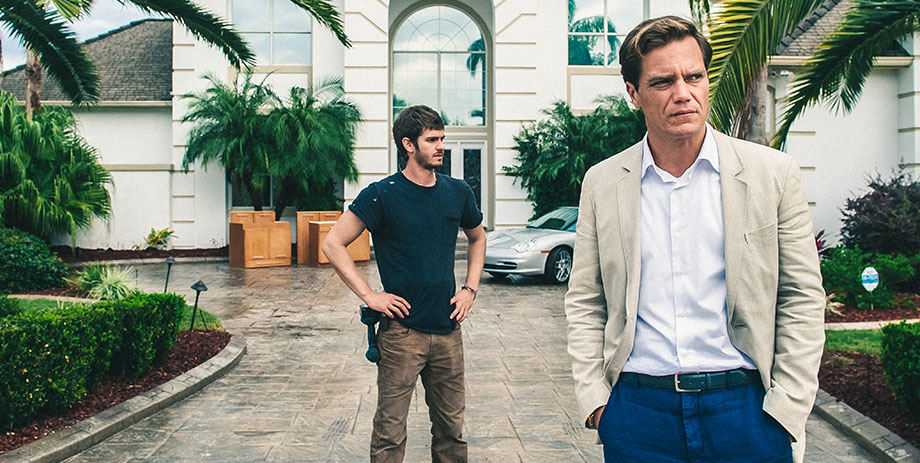
The opening scene of the brilliant psychological drama 99 Homes illustrates the life-and-death stakes of our nation’s foreclosure crisis. It’s a topical film, but 99 Homes is emotionally raw and as intense as any thriller. Dennis Nash (Andrew Garfield) is a working class single dad, down on his luck. He loses his home to foreclosure and then must make a Faustian choice about supporting his family. Can he live with his choice, and what are the consequences?
With capitalism, where there are losers, there are also winners who have bet against the losers. Rick Carver (Michael Shannon) has built a prosperous real estate business on legitimate evictions and flips, supplemented with schemes to defraud federal home loan agencies, housing syndicates and individual homeowners. His world view is defined in a monologue about this nation bailing out the winners, not the losers – a cynical, but perceptive, observation.
Director Ramin Bahrani is a great American indie director, with a knack for drilling into the psyches of overlooked subsets of our society – immigrants (Chop Shop, Man Push Cart, Goodbye Solo), industrial farmers (At Any Price) and now the victims and profiteers of the Mortgage Bubble.
As foreclosure inexorably approaches, Garfield’s Nash is absorbed by dread, then desperation and, finally, to panic. His mom (Laura Dern) takes a different tack, settling firmly into denial and then erupting in hysteria. That denial recurs again and again in 99 Homes among those about to be evicted. These are people who have bought homes and can’t believe/grok/internalize that one day they will actually be forced out of them. One of the strongest aspects of 99 Homes is the use of non-actors who have lived through the nightmare. Some of the individual stories, especially one with a confused old man, are so wrenching as to be hard to watch.
This may be Andrew Garfield’ strongest cinema performance. Dennis Nash is a decent man incentivized to do the indecent. Garfield takes this good man through an amazing internal journey. Nash is forced to accept the failure resulting from his attempts to do what is right, juxtaposed with the success from conduct that he finds repulsive. Bahrani’s arty shot of the reflection of a swimming pool shimmering in a sliding glass door makes it look like Garfield is under water – which he metaphorically is at this point in the film.
Michael Shannon, one of my very favorite actors, is superb as a guy completely committed to pursuing his own survival/prosperity strategy – no matter that it is based on ruining the lives of other humans. Unlike Nash, Shannon’s Carver has accepted the incentives to act badly and has overcome any qualms about either moral ambiguity or even stark amorality.
Veteran television actor Tim Guinee is remarkable as homeowner Frank Green. Laura Dern is excellent in a pivotal role. The character actor Clancy Brown proves once again that he can grab the screen, even when he’s only visible for a minute or two.
With its searing performances by Garfield and Shannon, 99 Homes is unsparingly dark and intense until a final moment of redemption. It opens on Friday.
The excellent crime drama Black Mass tells the true life story of how gangster James “Whitey” Bulger built his Boston Irish gang into a major crime empire under the protection of the FBI. As if we needed an illustrative example, Bulger is proof that psychopathy and ambition is a really nasty combination. And, as Black Mass points out with the FBI characters, even ambition alone can prove to be a vulnerability.
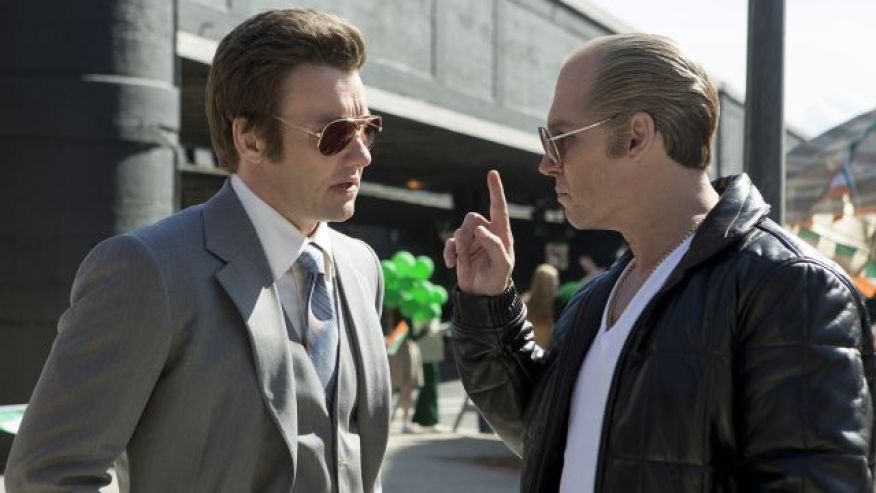
Here’s what really happened: Bulger (Johnny Depp), the ruthless leader of the Winter Hill Gang in South Boston was approached by FBI agent John Connolly (Joel Edgerton) for help in eradicating Boston’s Italian Mafia. Connolly was as ambitious as Bulger, and the two men shared Southie roots. It was in Bulger’s interest to rid himself of the competition, and he parlayed Connolly’s career-climbing grasping into a de facto amnesty that allowed Bulger to expand his murderous enterprises throughout Boston and beyond – even to Florida jai alai and gun running to Northern Ireland.
It’s an amazing tale, and director Scott Cooper (Crazy Heart) tells it very well, letting Depp and Edgerton drive the story by inhabiting a pair of characters that become a toxic mixture. With an erect swagger and some of the coldest eyes in cinema history, Johnny Depp is superb as the feral Bulger. The trailer below includes his life lesson to a small boy around the family breakfast table that shows his world view. When the eyes go cold, Depp’s Bulger can terrorize with a touch, a word or even just a glance.
Joel Edgerton is equally effective as the corrupted FBI agent Connolly, who uses Southie bombast and bluster to escape the snares of office politics. Alas, it all finally catches up to him when a new prosecutor directs fresh eyes on Boston’s crime scene. Until recently, I’ve known Edgerton as an Australian action star (he was the the Navy Seal team leader in Zero Dark Thirty and one of the thugs in Animal Kingdom). Edgerton recently wrote, directed and stared in the excellent psychological thriller The Gift, and his performance in Black mass reinforces that he’s a very talented and versatile filmmaker.
The cast is very deep and uniformly excellent, including Julianne Nicolson, Juno Temple, Kevin Bacon, Benedict Cumberbatch, Corey Stoll (Midnight in Paris and House of Cards) and Dakota Johnson. Besides Depp and Edgerton, three other actors popped off the screen for me:
Rory Cochrane plays Bulger’s partner Steve Flemmi. Cochrane is a veteran actor whose most memorable role is probably as the pothead Slater in Dazed and Confused. Now filled out in middle age, he plays a guy who is about half of Depp’s scenes, but says very, very little. As they say, the best acting is reacting, and Cochrane just chews gum and observes, letting his eyes tell us what he is thinking and feeling.
David Harbour plays Connolly’s FBI partner, a guy who becomes entangled in a web not of his own doing. One of the most riveting scenes in Black Mass, he becomes terrorized about, of all things, a recipe for a steak marinade. Harbour is a reliable veteran, but this is among his very best work.
Peter Sarsgaard is always brilliant, and here he gets to become a tweaked out lowlife who involuntarily giggles when he thinks that getting handed a valise full of cash is a good thing when it’s not.
Black Mass is a top rate crime story very well-told. No more and no less.
One more thing: there is a string of up-close-and-personal murders depicted here, including two by strangulation and a host of gunshot executions. It’s not particularly gruesome by the standards of modern crime movies, but DON’T TAKE YOUR 4-YEAR-OLD. A couple at my screening did just that. What are people thinking?