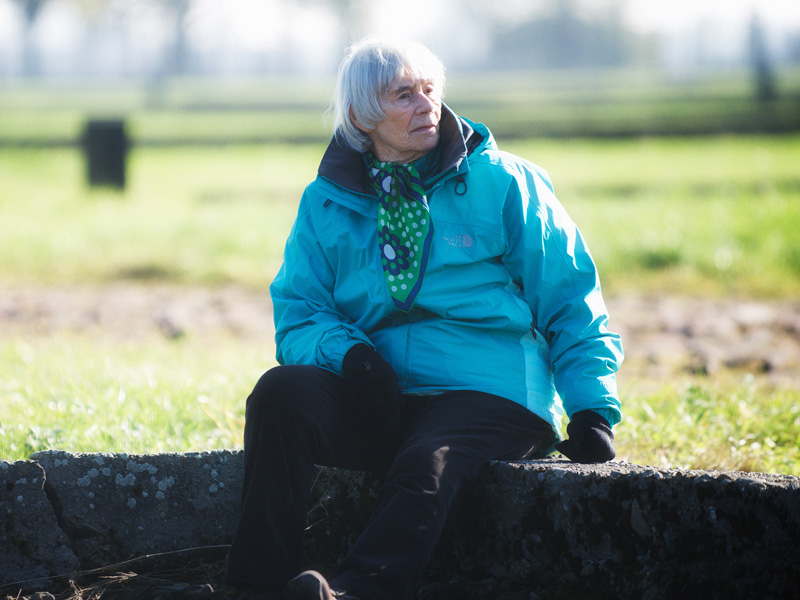
Kitty Hart-Moxon is an elderly Holocaust survivor now living in the UK. In One Day in Auschwitz, she takes two seventeen-year-old girls – the same age that she entered the famed Nazi concentration camp – to Auschwitz. She guides them around the camp and narrates her experiences there. We already know about the horrors, but her matter-of-fact testimony helps us appreciate the extra lengths that the Nazis took to dehumanize, in addition to murdering, their victims. It’s a very personal account and a compelling one.
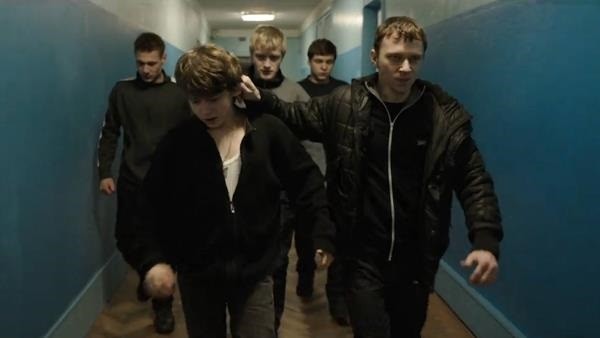
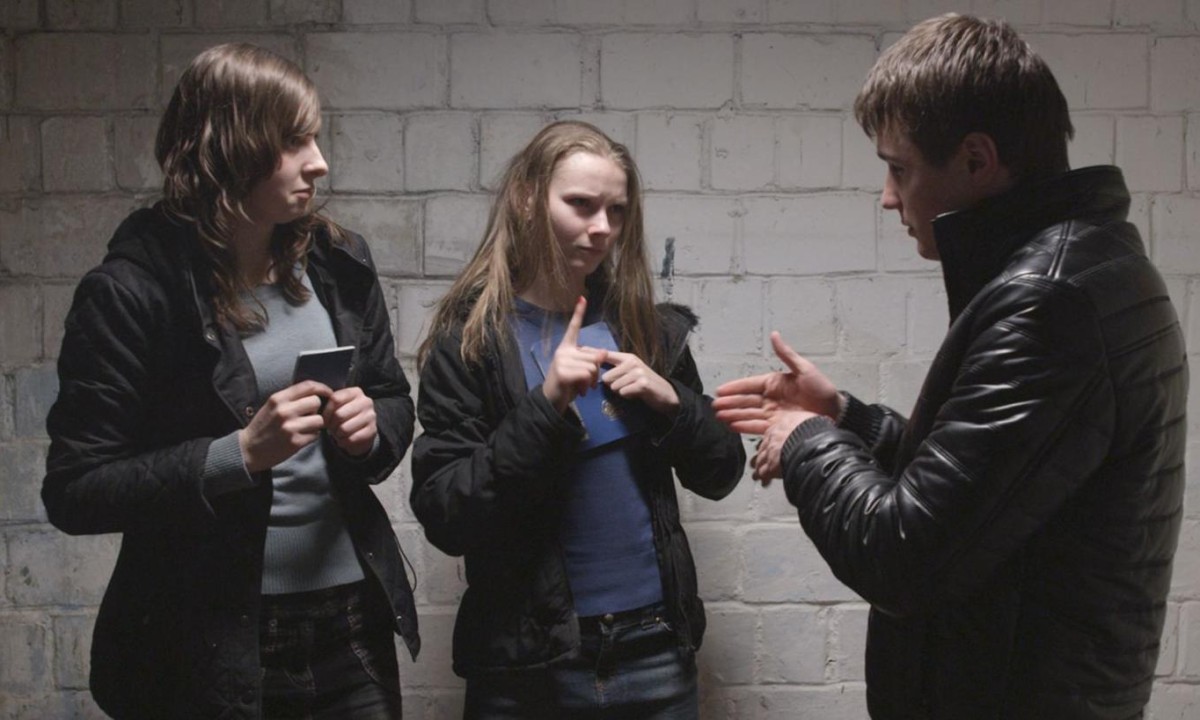
The Wife often mocks my taste in obscure or challenging foreign cinema, like the “Romanian abortion movie” and the “Icelandic penis movie”. So I was looking forward to regaling her about the “Ukrainian deaf movie” The Tribe, which sparked much notice at the Toronto and Sundance film fests. Indeed, The Tribe is a singular cinematic experience – both absorbing and exhausting.
Right away, the movie tells us that, although the The Tribe comes from Ukraine, we’re not going to hear any Ukrainian. Nor will we see any English subtitles. It’s set in a residential high school for the deaf, and the entire movie is in sign language. It’s novel for the hearing to experience an entire movie in which we hear only the sound of ambient noises – footsteps, creaking doors and the like – and we know that these sounds are NOT heard by the movie characters.
Writer-director Miroslav Slaboshpitsky also employs fixed-camera shots of very, very long duration. which enhance the feeling that we’re watching something that we haven’t seen before.
At first, The Tribe delivers what we might expect in a teen coming of age film: the new kid in school, practical jokes and high jinks, the boring classroom, the class clown and raging teen hormones. The kids sneak off campus at night to prowl and party. But soon we are shocked to realize that we’re not seeing normal teen rowdiness and delinquency – these kids are operating an organized crime ring!
The Tribe is clearly meant to be a comment on the profoundly rooted corruption of post-Soviet society. Unfortunately, Slaboshpitsky piles on so much horrible behavior and brutality that it becomes distracting. There’s even an unsparing clinical depiction of a back alley abortion in real time; at my screening, I could feel the entire audience, at first frozen and then squirming in our seats. It’s a very unpleasant scene – and meant to be. And after the extreme violence at the very end of the movie, the audience exited with nervous laughter at having endured it.
Two final warnings: Women viewers should be prepared for the squat toilets in the the public restroom – not exactly a travelogue high point for Ukraine. And THIS IS NOT A DATE MOVIE – despite lots of explicit sex, no one is going to want to have sex after watching this!
[SPOILER ALERT – The ending is both a cinematic achievement and barely watchable: all in one camera shot, the protagonist climbs five flights of stairs and commits four individual up-close-and-personal and especially brutal murders.]
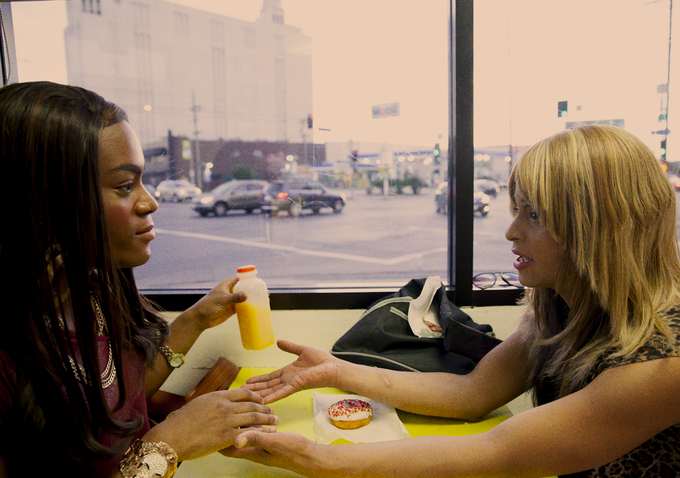
Two transgender hookers walk into a donut shop in Hollywood…that’s not the start of a joke, but it’s the start of this pretty funny movie. The raucous and raunchy high energy comedy Tangerine centers on Alexandra and Sin-Dee, played respectively by the non-actors Mya Taylor and Kitana Kiki Rodriguez. Sin-Dee takes them on a quest to track down her wayward pimp/boyfriend, and, although Alexandra makes her promise “no drama”, you know that’s not gonna happen. Alexandra is focused on her own goal – her singing performance tonight at a local club. We also meet the Armenian cabbie Razmik (Karren Karagulian), who has his own secret. And did I mention that it’s Christmas Eve?
The two leads are wonderfully appealing and their misadventures are very funny. A confrontation between an Armenian mother-in-law on the warpath, all the main characters and a pimp is wonderfully madcap. The movie’s ending is surprisingly moving.
Tangerine was shot on an iPhone. This is not a gimmick. The intimacy and urgency of this character-driven movie is a good fit with the iPhone. There really isn’t any call for helicopter shots or the like. The richness of the colors has been enhanced in post-production, so the iPhone cinematography isn’t any distraction at all. (See the shot below.)
You can stream Tangerine on Amazon Instant, iTunes, Vudu, YouTube, Google Play and some cable/satellite PPV. (Or you can buy the DVD from a retailer.)
TANGERINE
To follow the beginning of the film, it helps to know that “fish” is transgender slang for a person born with female anatomy.
There’s also an extremely funny cameo by Clu Gulager(!) as a loquacious taxi passenger.
Tangerine is written and directed by Sean Baker, who made Starlet, another indie about marginal Angelenos that I admired.
Tangerine is available to stream from Amazon Instant, iTunes, Vudu, YouTube and Google Play.
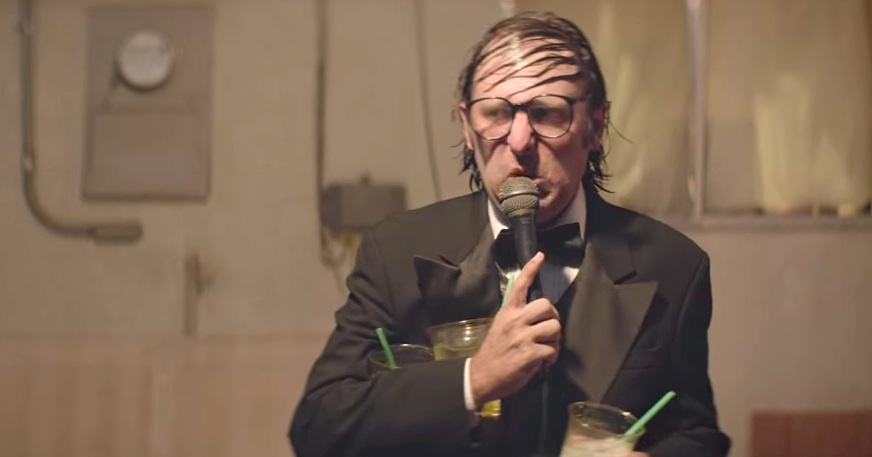
I can’t imagine who would enjoy writer-director Rick Alverson’s movie Entertainment. Gregg Turkington plays the world’s saddest and least funny professional comedian, who is bouncing around loser gigs in the Mohave Desert (starting at a state prison). Even with his flamboyant comb-over, he’s walking buzz kill. He is increasingly a puddle of despair until he has a full-fledged breakdown while performing at a pool party. Turkington’s portrayal of a protagonist who ranges between dour and nasty is frankly not that all interesting.
Two scenes in particular are unwatchable – a birth scene in a public restroom and the comedian heaping especially vile invective on a bar patron (the filmmaker Amy Seimetz – what is SHE doing in this mess?). The young actor Tye Sheridan (Mud, The Tree of Life, Joe) is good as a clown who opens for the comedian, but his turn doesn’t justify spending any time watching this hateful blight.
It’s a sad comparison to The Entertainer genre of movies about sad sacks trying to hang on to a place in show business and to their own identities. Some critics have been taken in by the “unflinching” aspect of this work, but they’ve missed the pointlessness of the whole unpleasant experience. Entertainment may well be the worst movie-viewing experience of 2015. Available streaming.
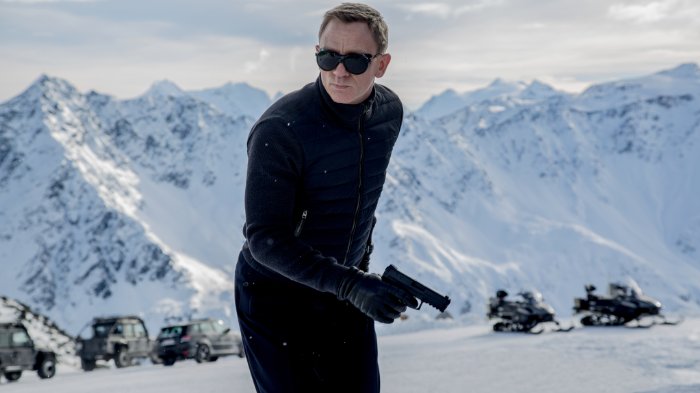
If you’re a James Bond fan (which I’m not), you’ve probably already seen Spectre, the latest in the franchise. For me, though, Daniel Craig’s Bond, along with the spectacular action set pieces, trumped the silliness and made this a worthwhile trip to the movies. Here’s why:
Six actors have played James Bond (seven if you count David Niven in the first Casino Royale) – and Daniel Craig is the only one who can match Sean Connery. Craig plays it straight; his only winks to the audience are not with his face, but with his fingers, when he adjusts his cuffs or re-buttons his jacket after a fight to the death.
Craig’s Bond has been increasingly despairing and a lost soul until Spectre, when he emerges determined, re-energized and cheeky; this time he’s motivated by good, old-fashioned revenge.
Director Sam Mendes has crafted some brilliant set pieces. The opening sequence, set in Mexico City on the Day of the Dead, is the most exciting several minutes in movies this year.
Christoph Walz, as one would expect, makes for a brilliant Bond Supervillain.
This time, the major Bond Girl is not just beautiful, but she’s also a superb actress – Léa Seydoux (Blue is the Warmest Color, Inglorious Basterds, Midnight in Paris).
In the movies, going to jail for your principles is overrated. But in the historical drama Trumbo – about the 1950s Hollywood blacklist – we get to see the real extent of the sacrifices made by the principled man and his family.
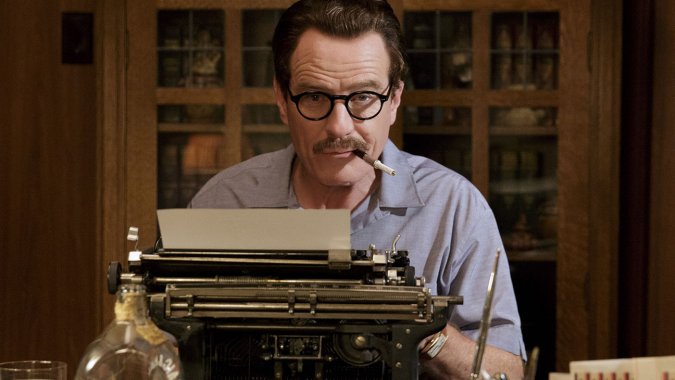
Dalton Trumbo (Bryan Cranston) was a novelist and Hollywood screenwriter who was named as a Communist, was sent to prison for contempt of Congress and then blacklisted by the Hollywood studios. After prison, Trumbo had to earn his living by writing without credits (the credit going to other writers as “fronts” or to fictional “writers”). He received no screen credit for the Oscar-winning screenplays for Roman Holiday and The Brave One. Nor for the noir classics Gun Crazy and The Prowler. Eventually, the end of the blacklist period was signaled when Trumbo received screen credits for his work on Exodus and Spartacus.
It’s a compelling story and Trumbo was a very compelling character – flamboyant, full of himself, wily but sometimes politically naive. Cranston is really quite brilliant in capturing Trumbo’s wit, signature eccentricities and his emotional turmoil.
Families are often collateral damage, and that was the case here. We see the impact on Trumbo’s wife (Diane Lane) and daughter (Elle Fanning) – not just the financial and social hardships, but in living with a man under so much stress.
To tell the story of this historical period, some characters are compressed – but not distorted. Hedda Hopper (Helen Mirren) is portrayed as the leader of the blacklist (which would have flattered her), and John Wayne’s (David James Elliot) role is prominent. There’s a composite character who represents the other victims of the blacklist, played by Louis C.K. (another really fine performance from C.K.). Edward G. Robinson (Michael Stuhlbarg) represents the good liberals who caved under pressure and named names. Kirk Douglas (Dean O’Gorman) and Otto Preminger (Christian Berkel) are historical good guys (but not without self-interest). John Goodman has a hilarious turn as a low budget producer. The entire cast does a fine job, but Cranston, Stuhlbarg, C.K. and Fanning are extraordinary.
We see also actual file footage of Ronald Reagan, Robert Taylor and Joe McCarthy, along with some still photos of the ever-ominous Richard Nixon.
Trumbo is a very successful and insightful historical study, and Cranston’s performance is Oscar Bait.
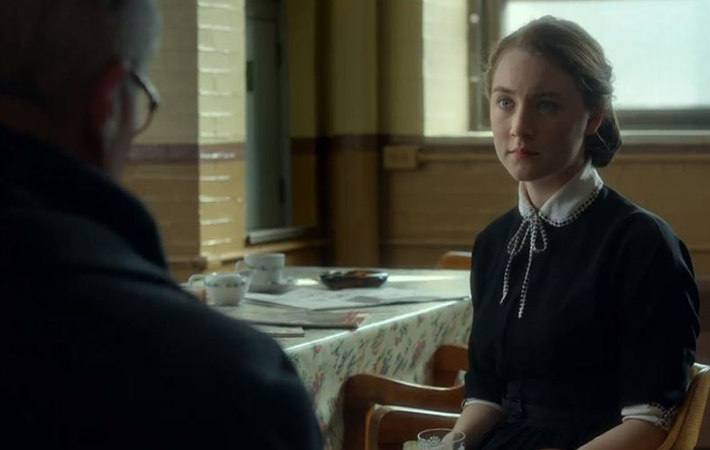
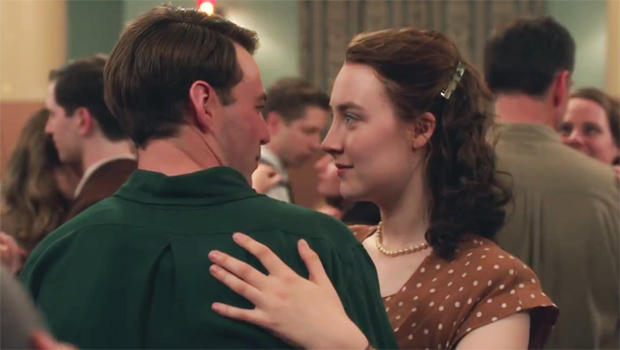
Saoirse Ronan brings alive the satisfying mid-century romantic drama Brooklyn. Ronan plays a very young woman who leaves her Irish small town in 1952 and, after a difficult start, builds a life in Brooklyn. When she must return to Ireland for a visit, things gets complicated. It’s a coming of age story and a romance and a study of the loneliness that comes with immigration.
Ronan’s performance is exquisite. Her character is neither talky nor expressive, yet Ronan conveys her wit and profound feelings in every situation. An uncommon acting talent, Ronan burst on the scene in the pivotal role as the little sister in Atonement, filmed when she was just 12. Since then, she’s made the girl power action flick Hannah and the wry The Grand Budapest Hotel (she was the relentlessly loyal girlfriend with the birthmark of Mexico on her cheek), along with a variety of other films that illustrate her versatility. She will be nominated for Best Actress for this performance in Ronan, which at times rises to the profound.
Saoirse Ronan in BROOKLYN
The director John Crowley has done an excellent job here. Brooklyn looks great – watch for the differing color palettes in the Irish and Brooklyn scenes, and it’s remarkably well-paced. Crowley is an excellent story-teller – I loved his early Irish indies Intermission and Boy A (one of my Best Movies of 2008). The Irish scenes in Brooklyn were shot in the real town of Enniscorthy, County Wexford, where the story is set. There’s an especially moving scene with an Irish song – brilliant.
The supporting cast is excellent, especially the always reliable Jim Broadbent. Brid Kelly nails the role of Miss Kelly, a shopkeeper who is remarkably enthusiastic about her own malevolent small-mindedness. If Ronan’s performance weren’t so brilliant, Julie Walters would steal this movie as our heroine’s Brooklyn landlady. Jessica Paré (Mad Men) is also very good (and has Brooklyn’s biggest laugh line). And child actor James DiGiacomo is unforgettable.
With its focus on the protagonist’s relationships with her family members and girlfriends and the question of which suitor she’ll pick, Brooklyn is a “woman’s picture” (not that there’s anything wrong with that). Well-crafted and satisfying, Brooklyn is a safe bet to have wide audience appeal and to earn Ronan an Oscar nod.
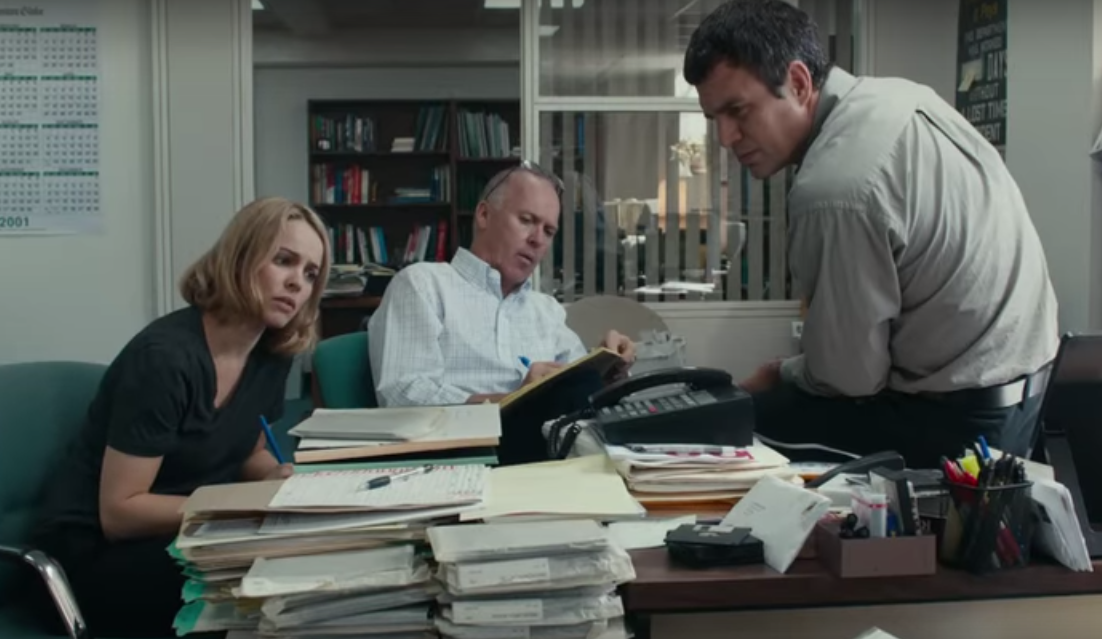
Rachel McAdams, Michael Keaton and Mark Ruffalo in SPOTLIGHT
Bolstered with some superb supporting performances, filmmaker Tom McCarthy turns a journalistic procedural into the riveting. edge-of-your-seat-drama Spotlight. The story centers on a team of Boston Globe investigative reporters (Michael Keaton, Rachel McAdams, Mark Ruffalo, Brian d’Arcy James, John Slattery and LievSchrieiber) as they untangle the sex abuse scandal in the Boston Archdiocese. Starting with the already-known Father Geoghan case, they uncover sexual abuse by two Boston priests, then four, then thirteen and soon an unthinkable magnitude, all intentionally covered up by the Church. Reminiscent of All the President’s Men, the team’s shoe leather efforts nets the Big Story.
We already are familiar with the horrible and disgusting revelations. But writer-director Tom McCarthy builds suspense and keeps us totally engaged in this brilliantly paced movie. McCarthy also wrote and directed the brilliant, character-driven fictional films The Visitor and The Station Agent.
Michael Keaton, coming off his tour de force in Birdman, is especially good here, especially in a reflective scene near the end. McAdams and Schreiber are also solid. Ruffalo has the most showy part, as a frenetic and volatile reporter.
But this most compelling acting comes from several of the supporting players, especially Michael Cyril Creighton, Jimmy LeBlanc and Anthony Paolucci as survivors of sexual abuse. The ever-reliable Jamey Sheridan is superb as a diocesan lawyer. Richard O’Rourke is affecting as an addled pedophile priest. Paul Guilfoyle, so convincing as true blue guys in CSI and Primary Colors, gets to play convincingly smarmy here. I don’t see Richard Jenkins in the credits, but the voice of an expert psychotherapist sure sounds like him.
At the end, McCarthy uses epilogue titles to effectively show the extent of the horrors revealed.
All in all, Spotlight is the first top rate movie of the Fall.
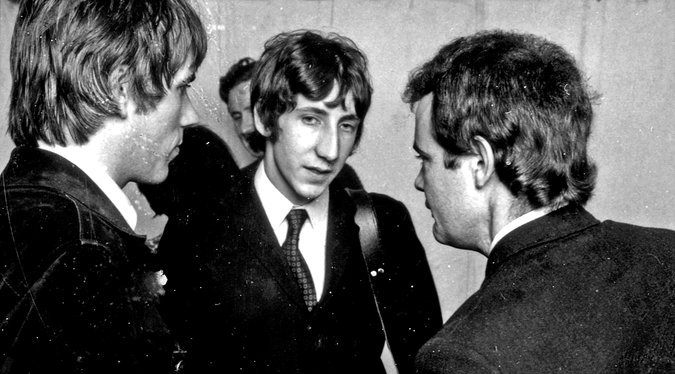
Chris Stamp, Pete Townsend and Kit Lambert in LAMBERT & STAMP
The documentary Lambert & Stamp is the story of the two guys, Chris Stamp and Kit Lambert, who managed The Who to rock immortality. It’s an interesting odd couple story: hardscrabble and posh, straight and gay. There’s also this improbable but actual premise – in a quest to become movie directors, Lambert and Stamp decided to find a rock group to manage, film themselves managing the group and then use the resulting film as their filmmaking calling card. Of course, because they stumbled on a struggling band named The High Numbers and turned them into The Who, they never got to make the movie.
Chris Stamp survives, along with The Who members Pete Townsend and Roger Daltrey, and we get to hear the story from their lips, and there’s plenty of film from the 60s and 70s, too. (The actor Terence Stamp is in the movie, too – he’s Chris Stamp’s big brother.)
However, rich source material can be too much of a good thing if you use more of it than you need. It’s interesting to see Lambert hold forth in German and French with European journalists, but not on and on and on. Lambert & Stamp is a little too long for me to recommend to a general audience, but to people interested in rock history or fans of The Who, it’s a Must See.
Lambert & Stamp is available streaming on Amazon Instant Video, Vudu, YouTube and Google Play.
The stars of 3 STILL STANDING: Larry “Bubbles” Brown, Johnny Steele, Will Durst
The San Francisco comedy club scene of the 1980s was a Golden Age for the art form of stand-up comedy – and its practitioners do consider it an art form, not just an entertainment product. That Bay Area scene launched major careers: Robin Williams, Dana Carvey, Paula Poundstone, Ellen DeGeneres, Bobby Slayton, Kevin Pollack, Whoopi Goldberg and Rob Schneider. The documentary 3 Still Standingtells the story of three of their comedy peers who flourished in the 1980s but chose not to “go to LA” and how they’ve dealt with the “downsizing”, when cable TV killed the market for stand-up comedy in clubs.
The three comics – Will Durst, Larry “Bubbles” Brown and Johnny Steele – are what make 3 Still Standing so compelling. Durst is a master of sharp political comedy in a society that is now more interested in vacuous celebrities. Steele’s observations are too subversive for a mainstream that is less hip and a whole lot less smart. Brown, whose appearances on Letterman were 21 years apart, is no longer young enough for the decision-makers who book comedy. But they’re all experts in their craft, and their material is hilarious.
Larry “Bubbles” Brown is a revelation. His comic persona is based on his half-empty world view and his self-deprecating view of his looks.
“It’s been a great day for me. Haven’t passed any blood.”
“I’m in the medical textbooks as one of the major causes of vaginal dryness”.
“Giving me Viagra is like giving a doorbell to a homeless guy.”
We’ve seen the global and technological economic changes that end once-promising career paths and force us to adapt or else. Here, the catalysts are both techno-economic (the supplanting/absorption of the comedy market by cable television) and cultural (the continued dumbing-down of our society). But it’s rare that the aging victims among us are so damn fun to watch as these three artists.
Filmmakers Donna Locicero and Richard Campos started the project “as a Valentine to the era that we enjoyed so much”. That would have been an entertaining movie. But 3 Still Standing gained more depth and texture when it evolved into the character-driven story of these three guys and their plight. In a post-screening Q & A, Campos also noted that “the San Francisco Bay Area is a character in the film”.
Robin Williams and Dana Carvey are prominent parts of 3 Still Standing. Locicero said that Williams had seen several versions of the film, including the final cut – all to ensure that his segments didn’t overshadow the story of the three principals.
3 Still Standing opens on November 12 at Camera 3 in San Jose. On November 11, the San Jose Improv will host a screening with outtakes from the movie and live appearances by Durst, Brown and Steele.
Durst, Brown and Steele are inventive originals and important artists. They prove that you can be on the wrong side of the marketplace and still be on the right side of history. I saw 3 Still Standing at the Camera Cinema Club.