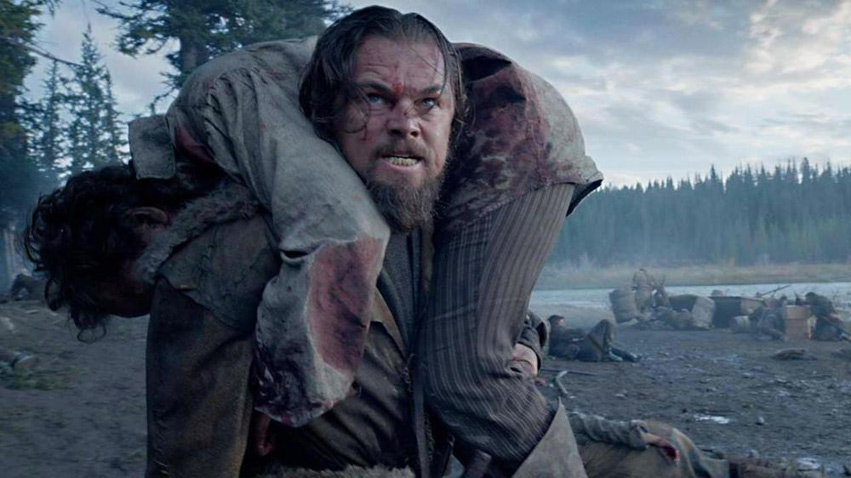
THE REVENANT: authentic and awesome

Leonardo DiCpario in THE REVENANT
Leonardo DiCaprio in THE REVENANT

Not just a compelling movie, The Revenant is an experience for the audience and a marvel of filmmaking.  Oscar-winner Alejandro Gonzalez Iñárritu (21 Grams, Babel, Biutiful, Birdman) may be the director doing the most groundbreaking work in today’s cinema, and The Revenant, with its long shoot in hostile conditions, is his triumph over the seemingly impossible.

The Revenant is based on the historical episode of mountain man Hugh Glass, who was fur trapping in the Missouri River watershed of the Dakotas in 1823, when the area was completely unspoiled and inhabited only by nomadic bands of Native Americans.  Glass was severely injured in a bear attack, left for dead by his companions and crawled 200 miles to safety.   A “revenant” is a re-animated corpse, and Glass essentially returned from the dead.

Leonardo DiCaprio plays Glass, and his performance is extraordinary.   For one thing – the most obvious – DiCaprio is a human piñata who actually must stand and then submerge in a freezing river, get bounced around by a CGI bear, chew on raw bison liver, crawl across uneven ground, and on and on; he takes a licking and keeps on ticking.  And, in at least two-thirds of the movie, Glass either isn’t able to speak or has no one to talk to.  So DiCaprio must convey his terror, grief, determination to survive and seek revenge with his physicality.

There are also solid performances by Tom Hardy (being villainous) Will Poulter and Domhnall Gleeson (a good year for him – also Ex Machina, Brooklyn and Star Wars).

There probably isn’t a more overused word in the current culture than “awesome”.   But it’s precisely the right word to describe the depiction of Glass’ ordeal.  The dazzling scenery as photographed Iñárritu‘s equally brilliant cinematographer  Emmanuel “Chivo” Lubezki is awesome, as is the overall filmmaking challenge.  In particular, the bear attack and an extended one-shot of a Native American attack with the camera moving by and forth among the combatants are brilliant and unforgettable. Showing off, Iñárritu even throws in an actual avalanche as a background shot.

The result is an utterly authentic film.  Now I think I know what it looks like when a bear attacks and when an Indian band raids. DiCaprio shows us convincingly how it looks when a man grieves.

The Revenant is also exhausting – in a good way.  As the film opens, we see men creeping through a primordial forest that has been flooded by a river.  They are tense and so are we.  We can’t tell whether they are hunting or hunted or both.  We soon come to understand that their heightened alertness and intense concentration is required to survive a dangerous environment.  That level of intensity remains throughout the film, and it wears down the characters and the audience.

History buffs will appreciate that Glass was part of Ashley’s Hundred, an enterprise that included many mountain men (Jim Bridger, Jedediah Smith, Kit Carson) who would later become guides and explorers with central roses in the history of the American West.

I also recommend Sheila O’Malley’s insightful comments on survival movies, in particular the very compelling Touching the Void.

This is one of the very best survival movies.  See The Revenant, and make sure that you see on the Big Screen.

 

JOY: disappointingly empty

Jenifer Lawrence in JOY

The disappointingly empty dramedy Joy traces the story of housewife Joy Mangano (Jennifer Lawrence), who invented the Miracle Mop sold on QVC and became a business success despite the gravity pull of her dysfunctional family.

Why doesn’t this movie work?  One pivotal scene illustrates the problem. At this point, her business has imploded, she’s entangled in a hopeless legal morass, and everyone is urging her to file for bankruptcy.  She’s facing family disgrace, and she tells her daughter that she’s giving up.  But WE KNOW there’s no chance that Joy is really going to give up.  We know that Jennifer Lawrence is going to kick ass to a triumphant conclusion.  So there’s no tension, and therefore no drama.

Lawrence is very good, and I can generally watch her read a telephone book.  The rest of the cast, which includes Bradley Cooper in a brief role, is just fine.  But Joy’s slalom course through all her emotionally unhealthy relatives just isn’t very compelling.

Director David O. Russell has previously made two brilliantly entertaining movies with Jennifer Lawrence, Bradley Cooper and Robert DeNiro – Silver Linings Playbook and American Hustle. This ain’t them.

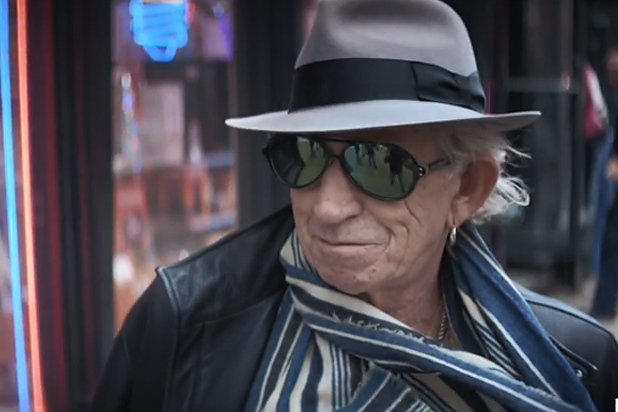
KEITH RICHARDS: UNDER THE INFLUENCE: jolly stories from a great raconteur

KEITH RICHARDS: UNDER THE INFLUENCE

Keith Richards: Under the Influence is a good enough excuse to spend time with the ever genial Keith Richards.  Keith is not just a rock icon and a medical marvel, he’s a great raconteur – ever genial, with an omnipresent cigarette-hacking chuckle.

Keith drops many a nugget while relating his own musical journey and much about American music of which he is a devotee:

  • About meeting Muddy Waters at Chess Records.
  • That he considers himself a better bass player than a guitar player.
  • How the intro licks to Street Fighting Man were recorded when only he and Charlie Watts came early to a recording session to mess around.
  • How his bass line with Charlie’s drumming sped up the pace to Sympathy with the Devil from a lament to really rockin’.
  • “I’m no longer a pop star and I don’t want to be one”.
  • A sharp observation that White “rock” can seem like a march, and “I prefer the ‘roll'”.
  • His period of not working with Mick Jagger in 1985-89 was “World War III”.
  • And there’s a VERY funny Johnny Cash-in-a-hotel-room story.

Here’s challenge – try to spell out Keith’s raspy chuckle. It’s something like “Huh-whey-whey-heh-heh”.

Keith Richards: Under the Influence has the feel of an infomercial for Richards’ book and newest solo album.  But, no matter, it’s time well spent.  Keith Richards: Under the Influence is available to stream from Netflix Instant.

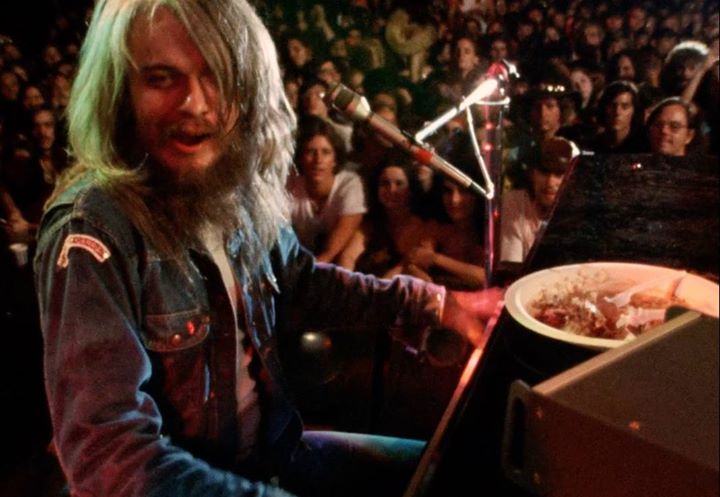
A POEM IS A NAKED PERSON: Leon Russell in his prime

Leon Russell in A POEM IS A NAKED PERSON

During the years 1972-4, documentarian Les Blank hung out and filmed around Leon Russell’s Oklahoma recording studio, and A Poem Is a Naked Person is the result.

This was the period when Russell produced two of my very favorite albums, Leon Live and Hank Wilson’s Back, so I especially enjoyed the music.  There’s also a nice snippet of Willie Nelson (pre-beard and pigtails) singing Good Hearted Woman.

In fact, all of the Leon Russell parts (both talking and performing) are great. The problem is that Blank filmed everybody and everything in the neighborhood, including a tractor pull, the demolition of a building and a seemingly deranged and snake-obsessed artist.  There’s also a lot of conversation between people who are very stoned.  Getting stoned is a lot more fun than listening to stoned people talk.

The documentary’s puzzling title originates from liner notes on a Bob Dylan album.

A Poem Is a Naked Person has been a bit of a Lost Film, until recently only shown at screening where Blank was present.  Now you can stream it on Amazon Instant, Vudu, YouTube and Google Play.

THE DANISH GIRL: some highlights but overall meh

Eddie Redmayne in THE DANISH GIRL

The melodramatic docudrama The Danish Girl is based on the real life of Einar Wegener/Lili Elbe, one of the first people to receive sexual reassignment surgery.  We begin with a devoted and playful young married couple of Danish painters in the 1920s (Eddie Redmayne and Alicia Vikander).  He is a moderately successful landscape painter, and she is a struggling portraitist.  As they experiment with sexual role-playing, his self-identification as a woman named Lili is revealed, and their journey continues though his-to-her transgender metamorphosis through the groundbreaking surgery.

There’s a point when he starts acting out his gender identification in ways that are not okay with her, and this is the best part of the film.  Vikander plays a woman who is sexually ahead of her time, but anyone would be knocked for a loop when their partner switches genders.  It doesn’t help when Lili addresses her very real yearnings with a substantial degree of selfishness.

But then The Danish Girl starts dragging and then ultimately grinds into boredom and predictability.  The movie keeps hammering us with the wife’s devoted support of her transforming spouse, the secret they strive to maintain, yada yada.  Tom Hooper, the director of The King’s Speech and the literally miserable Les Miserables, is technically quite good; he also knows how to make a movie pretentious and ponderous.  There’s probably a better 90-minute movie embedded in The Danish Girl’s 119 minutes.

Vikander is just outstanding as the wife.  Redmayne also nails his role, a part every bit as showy as in The Theory of Everything.  Matthias Schoenaerts, Amber Heard and Ben Whislaw are excellent in supporting roles.  Sebastian Koch, who is always good, is also solid in a secondary role.

The costumes in The Danish Girl are exquisite.  The early hints as to his gender identification come with his attraction to the fabric and design of fine clothes.  Then Lili  expresses her femininity through ever more ravishing and flamboyant fashion.  All of the clothes are beautiful to look at, from Vikander’s new nightgown to the dapper suits and cravats on Matthias Schoennaerts.   In the second half of the film, Vikander wears a turquoise dress with a vertical decorative panel that is a masterpiece of art deco design.

Excellent acting, phenomenal costumes and some riveting early scenes.  Then meh.

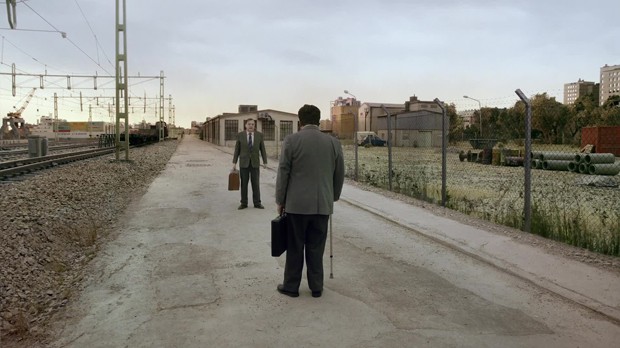
A PIGEON SAT ON A BRANCH CONTEMPLATING EXISTENCE: deadpan doesn’t begin to describe this movie

A PIGEON SAT ON A BRANCH CONTEMPLATING EXISTENCE

Some viewers are going to hate, hate, hate the droll Swedish existentialist comedy A Pigeon Sat on a Branch Contemplating Existence, but it’s kind of a masterpiece.   For most of its 101 minutes, dull Swedes sit and stand talking about dull things.  It’s no secret that the Scandinavians (who The Wife refers to as “Your people”) are not the most lively bunch.  Filmmaker Roy Andersson uses this trope to probe the meaning of life itself.

Salon.com critic Andrew O’Hehir has accurately described this film as “extreme-deadpan”.  It is made up of vignettes filmed in static shots where people hardly move for 1-4 minutes – a looooong time.  There is nothing on the walls of any of the bleak rooms.  The characters converse in empty social conventions, talking about weather and such.  Everyone says, “I’m happy to hear that you’re doing fine” because they can’t think of anything else to say.  The highlight of their lives is when a comely young woman removes a stone from her shoe.  In one bus stop discussion about what day of the week it is, we have the theme distilled: “it would be chaos” if we didn’t follow the routine. All of these people need more than a little chaos.

This is the third movie in a trilogy by Andersson. (I’ve seen and relished one of the prior films, Songs from the Second Floor).  Like Pigeon, Songs is very funny, but Pigeon is more ambitious and digs deeper.

In the primary recurring thread, we follow a pair of sad sack novelty salesmen, who see their hopeless mission as “to help people have fun”.  The joke is there may not be any value/fun/point to life but ESPECIALLY if you are a brooding Swede.

During the end credits, there is a final contrast, juxtaposing the unrestrained American rockabilly music set against an image of mordant Swedes.

There are absurdist episodes where 18th Century King Carl XII rides his steed into a modern Swedish cafe.  (It helps to know that Carl spurned the company of women and that his defeat in the Battle of Poltava signaled the end of Swedish empire.)

And then there is a horrifyingly surreal dream sequence that illustrates the horrors of European colonialism.  It is about inhumane brutality that Andersson believes still haunts Europe until forgiveness is sought; there is a reference to Sweden’s brief colonial past. This segment is less evocative (and even unnecessary) for US viewers unless we relate it to our own legacy of slavery.

Is the movie pointless? Or is the point that life is pointless?  We do see some brief tender moments of a couple at a window and another in a meadow.  The foe, it seems, is loneliness.  We have only each other.

A Pigeon Sat on a Branch Contemplating Existence is available to stream from Netflix Instant, Amazon Video, iTunes, Vudu, YouTube and Google Play.

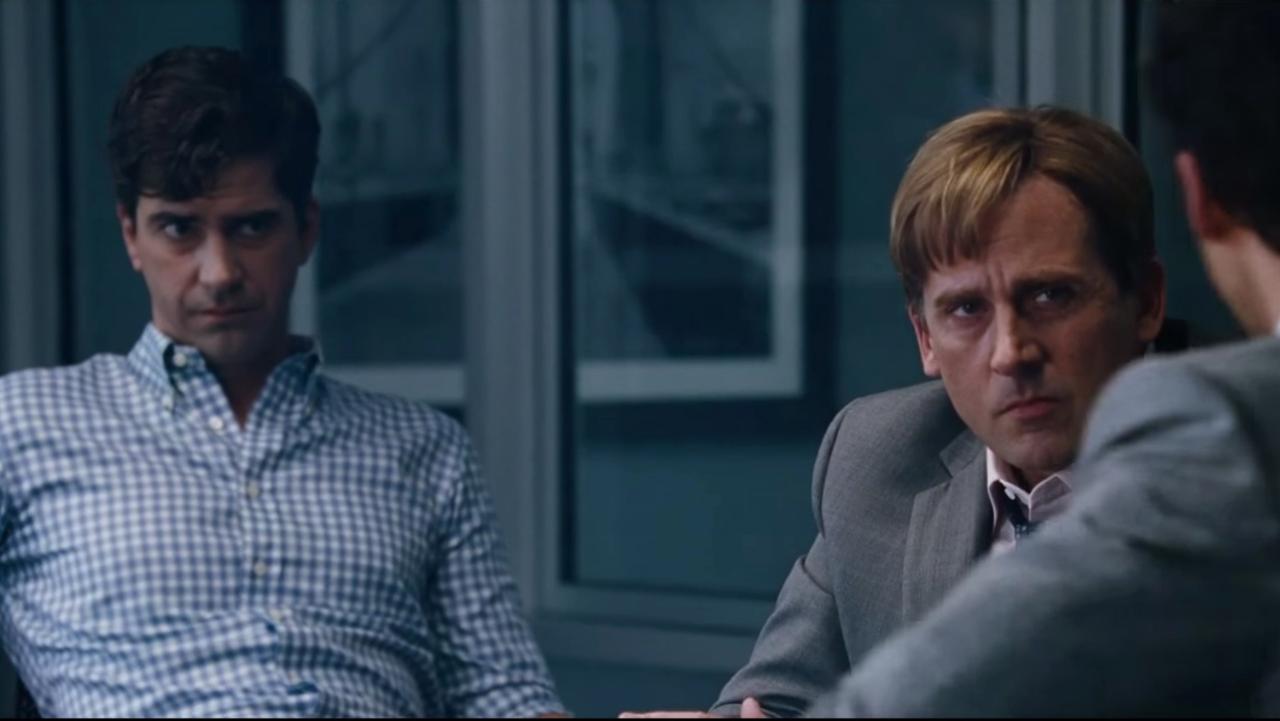
THE BIG SHORT: we laugh and then we get mad

Steve Carell (right) in THE BIG SHORT

It’s history.  Now we all know that the subprime mortgage scam blew up in 2007 and brought global banking to its knees by September 2008.  The supremely entertaining The Big Short takes us back to before the financial collapse, when only a few quirky smarty pants saw it coming.  Director Adam McKay personalizes the crisis into an irreverent character driven drama with both whodunit and ticking bomb elements.  It all adds up to an exciting, funny and anger-provoking experience.

The Big Short follows the parallel stories of the not-so-merry few who discovered the worthlessness of securities comprised of bad subprime loans. There’s a San Jose doctor-turned-fund manager (Christian Bale), a renegade Wall Street hedge fund manager (Steve Carell) and a couple of boy wonder investors in Boulder, Colorado.  It’s a very unlikely bunch of prospective heroes.  Bale’s doctor is so socially impervious that he seems to belong somewhere on the autism spectrum.  Carell’s trader attends anger management group therapy, which is not helping him a damn bit.  And the Boulder kids – well this IS their first rodeo.

The real star here is Adam McKay, whose previous work has been in low-brow comedies, most notably the Ron Burgundy movies.  Remember, this is the story of guys in front of their computers figuring out the current and future values of other people’s home mortgages.  McKay has turned this into an edge-of-your-seat thriller.  That is remarkable.

McKay’s first challenge is helping us understand all the financial gobbledygook.  McKay immediately breaks the Fourth Wall, with an opportunistic Wall Street banker (Ryan Gosling) opening the movie by speaking directly to the camera and explaining how home mortgages are securitized – and it turns out that we can understand it, after all.  Throughout the film, McKay keeps interrupting the action with very funny cameos, so unexpected personalities can explain various financial instruments.  I’m not going to reveal them, because much of the fun is the delightful surprise.  But I will say that no one has ever explained something complicated with more clarity than a pop star, an economist and a crowd in a casino when they combine to illuminate us about the “synthetic CDO”.

As cynical and iconoclastic as they are, none of our heroes can imagine the breadth of the corruption and the scale of the impending financial meltdown.  As Carell’s character digs deeper, he unearths the incentives for the bankers, insurers, rating agencies and mortgage retailers to lie and cheat and defraud – all built into the system.  Carell’s face is filled with a combination of disgust and terror as he connects the dots.  The Big Short opens with the Mark Twain quote: “It ain’t what you don’t know that gets you into trouble. It’s what you know for sure that just ain’t so.”  No truer words…

Carell and Bale are brilliant in The Big Short; both performances are awards-worthy.  Gosling, Brad Pitt and Melissa Leo are all also excellent, as is Adepero Oduye (12 Years a Slave). I especially loved Jeremy Strong’s performance as Carell’s hyper intense right hand man. Strong has a particular gift for being memorable in historical dramas: Lincoln, Zero Dark Thirty, Selma and as Lee Harvey Oswald in the overlooked Parkland.

Now we know that these guys were right when everyone else – including ALL the figures of authority – were saying that they were wrong.  It’s an amazing story to watch.


MUSTANG: repression challenged by the human spirit

MUSTANG
MUSTANG

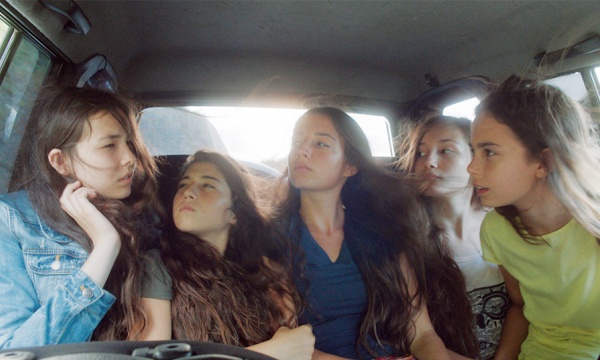
Mustang is about five exuberant Turkish teenage girls who challenge the repression of traditional culture.  It’s a triumph for writer-director Deniz Gamze Ergüven, and one of the best films of the year.

The five parentless sisters are living with their uncle and aunt on the Turkish coast “a thousand kilometers from Istanbul”.  They’re a high-spirited bunch, and their rowdiness – innocent by Western standards – embarrasses their uncle.  Overreacting, he tries to protect the family honor by pulling them out of school, taking away their electronics, putting them in traditional dresses (evoking the dress wear of fundamentalist polygamist Mormons) and conniving to marry them off as soon as possible.  The uncle turns their home into a metaphorical prison that becomes more and more literal.  The girls push back, and the stakes of the struggle get very, very high.

Our viewpoint is that of youngest sister Lale (Günes Sensoy), who is a force of nature, ever watchful (often fiercely).  The poster girl for indomitability, Lale is one of the great movie characters of 2015.

Mustang is a film of distilled feminism, without any first world political correctness.  These are people who want to marry or not, who they want, when they want and to have some control over their lives.  They want protection from abuse.  That is not a high bar, but because they are female, the traditional culture keeps these basic rights from them.

Although Mustang is set and filmed in Turkey by a Turkish writer-director, the actors are Turkish and all the dialogue is Turkish, it is technically a French movie.   Director Ergüven works in France and the film was financed and produced in France.  In fact, it is France’s official entry for the Best Foreign Language Picture Oscar (over the Cannes winner Dheepan and the Vincent Lindon drama The Measure of a Man).

I happened to be in Sevilla, Spain for the first weekend of the Sevilla European Film Festival and saw Mustang there.  I’ll be rooting for Mustang to win an Oscar.

LIFE: James Dean without the charisma

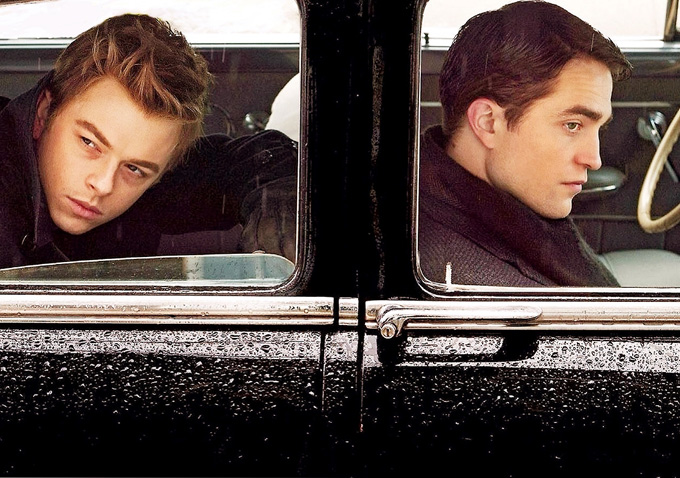
Dane DeHaan and Rovert Pattinson in LIFE
Dane DeHaan and Robert Pattinson in LIFE

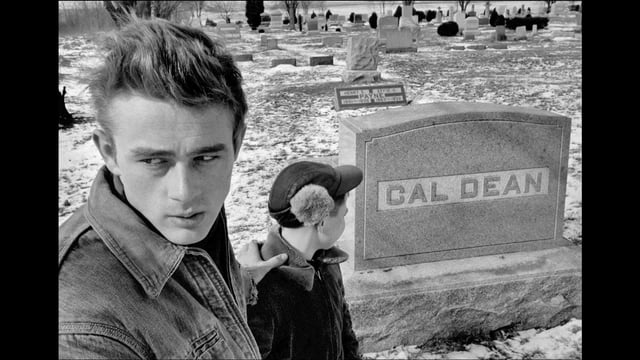
In 1955, James Dean wasn’t yet an icon.  East of Eden was in the can but hadn’t been released, and Dean was trying to get cast in Rebel Without a Cause.   To the extent he was known in popular culture, it was as Pier Angeli’s red carpet date at movie premieres.  The free-lance photographer Dennis Stock was convinced that Dean was fascinating, and Stock followed Dean around New York and to Dean’s Indiana home town.  The resulting photos in LIFE magazine (one is below) were indeed iconic, and the film LIFE follows the two men in this episode.

LIFE is moderately interesting because Dean was such a character. And it’s an interesting time in cinema and we get glimpses of Angeli (Alessandra Mastronardi), Nicholas Ray, Natalie Wood, Julie Harris, Elia Kazan and Lee Strasberg.  Ben Kingsley has a fun turn as Jack Warner, a mogul who has dealt with many a temperamental artist and is more than a match for any of them.

The problem with LIFE is that it’s about one of the most charismatic actors in film history.  Dane DeHaan captures Dean’s mannerisms very well, and we see Dean as interesting, charming, insecure, infuriating, bratty and striving.  But we don’t see him suck all of the oxygen out of the room.  We don’t experience Dean’s charisma.

Now I am a big fan of Dane DeHaan, who was absolutely brilliant in Kill Your Darlings.  He’s a fine, fearless and promising actor and a real original.  It’s not his fault that he’s not James Dean.

Robert Pattinson plays James Stock, and his stoniness sure doesn’t help.  I still don’t understand why Twilight fans find him to be so dreamy.  Kelly McCreary of Grey’s Anatomy plays Eartha Kitt, the one character whose dazzling persona pierces this otherwise bland movie.

LIFE is available to stream from Amazon Video, Vudu, YouTube and Google Play.

Dennis Stock photo of James Dean

YOUTH: a glorious cinematic meditation on life

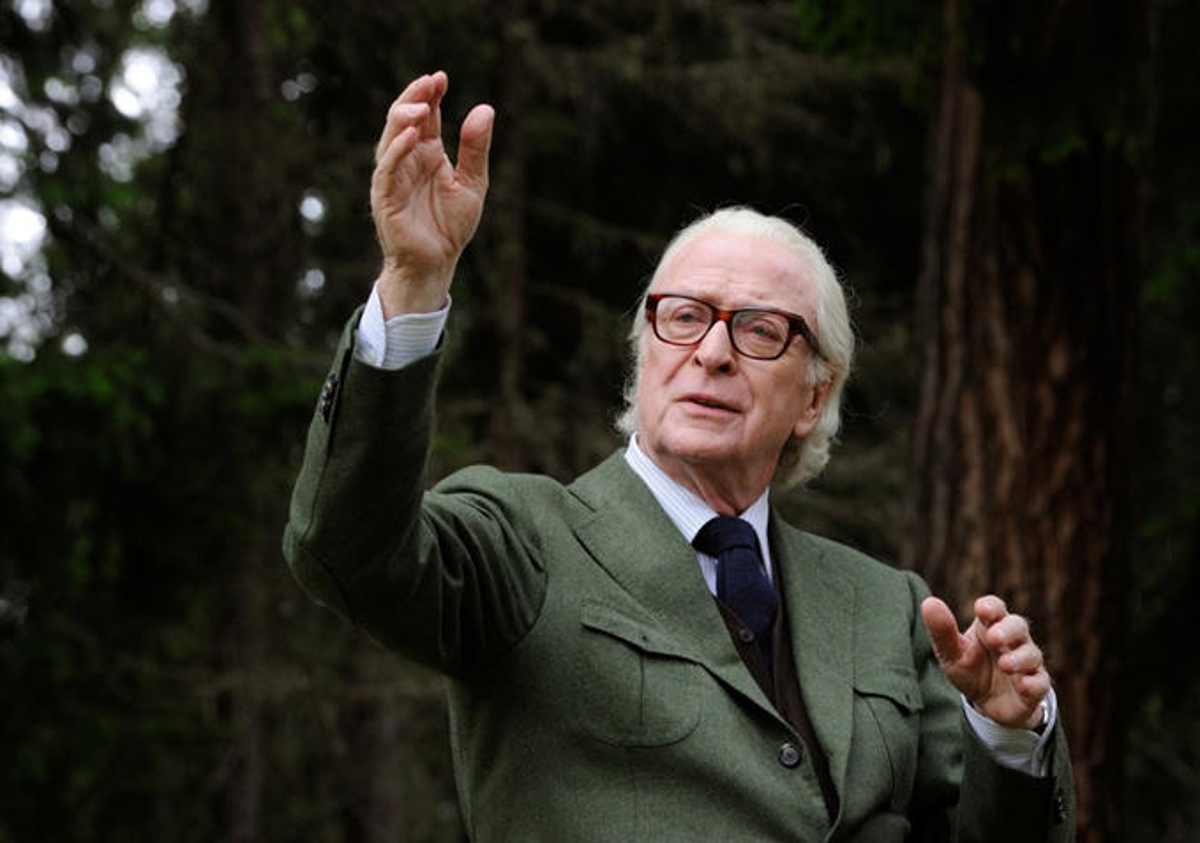
Michael Caine in YOUTH

Youth is filmmaker Paolo Sorrentino’s glorious cinematic meditation on life.  A resolutely retired composer (Michael Caine) is staying once again at a luxurious spa resort in the Swiss Alps – the kind of place where towels are folded into the figures of swans.  Also at the resort are his adult daughter and assistant (Rachel Weisz), an old friend who is a film director (Harvey Keitel),  a movie star (Paul Dano) and a host of other characters.

The composer meanders through his daily massages and medical check-ups, and there really isn’t what most of us would think of as a plot.   But stuff happens to each of the characters, and the composer and others reflect on their lives – the accomplishments, the disappointments, the betrayals, the intense experiences of love.  They contemplate what they remember and what they can’t remember.  Ultimately, they consider both life’s deepest meanings and life’s pointlessness.  All of this builds and kinda sneaks up on the audience.

Some stories may be best told in the form of novels or short stories or photography or ballet.  Sorrentino knows that his story – as was the one in his exquisite The Great Beauty – is best suited for cinema.  And Sorrentino takes full advantage of his medium.  Youth is a beautiful film to watch – with the spectacular alpine landscapes and the artsy interior shots (some very Felliniesque).  The music (as fitting a story about a composer) is entrancing, too; no one left my screening until the music for closing credits had ended and the house lights came back up.  There are several dream (and daydream) sequences which are close to genius.

There’s a lot of wry humor in Youth – a silent couple (who have some surprises ready for the audience), an obese South American (Roly Serrano) who resembles Diego Maradona, a forlorn young escort, the pop star Paloma Faith as a vulgar version of herself and a punctiliously insistent emissary from the Queen.  And then there’s Jane Fonda as an aging movie queen in grotesque makeup.

Caine, Keitel, Weisz and Dano each have wonderfully moving monologues.  I also very much enjoyed the mountaineering instructor  (Robert Seethaler) and the braces-wearing masseuse (Luna Mijovic).

Those who need their movies linear and tightly resolved might look elsewhere.  But Youth looks great, sounds great and is superbly acted.  If you settle in and let it envelop you, you won’t regret it.  I’m still thinking about Youth several days after seeing it.