In the Brazilian character-driven drama Aquarius, Sonia Braga plays Clara, the last owner of a beachfront condo who hasn’t sold out to a developer who owns the rest of the condos. The conflict is between Clara, who refuses to sell and those her want her to. But Aquarius is really about Clara, and it takes its time setting up her character; it’s 26 minutes before we even see the developers. We must understand her to understand her motivation – and her will.
Aquarius moves through scenes with a lifeguard at the beach, with girlfriends at club, at family parties, not to move the plot, but to invest in revealing aspects of Clara’s character. Having conquered cancer, lost her husband, raised children and built an artistic career, Clara has some mileage on her – enough to know what she wants and needs. Having earned the authority to live her life as she pleases, Clara is a wilful free spirit. And, as everyone finds out, she is absolutely fearless.
It’s a career-capping performance for Sonia Braga, still luminous 40 years after Donna Flor and Her Two Husbands. Mid movie, there’s a scene when Clara’s adult children try to have an awkward conversation about the financial benefits of selling the apartment. She doesn’t make it easy for them, and their long-submerged feelings about their father and their mother surface. With piercing observations and cold-eyed disappointment, Clara is as masterful over her children as when they were infants. It’s hard to imagine a better movie scene this year. Braga is brilliant.
The young Brazilian television actor Humberto Carrão is exceptional as Clara’s ever smiling foil Diego, whose youth and punctilious civility mask a capacity to engage in any tactic, even very dirty tricks.
I viewed Aquarius at the Mill Valley Film Festival.
Aquarius is critical of the political status quo, and the Brazilian government’s refusal to submit it for the Best Foreign Language Picture Oscar has created a controversy detailed in this New York Times article.
The indie drama Moonlight brings us a glimmer of gentle humanity in the crack-plagued inner city. Centered on a nine-year-old African-American boy named Chiron (pronounced shy-RONE) in South Florida, Moonlight is at once a coming of age tale, an exploration of addicted parenting and a story of gay awakening.
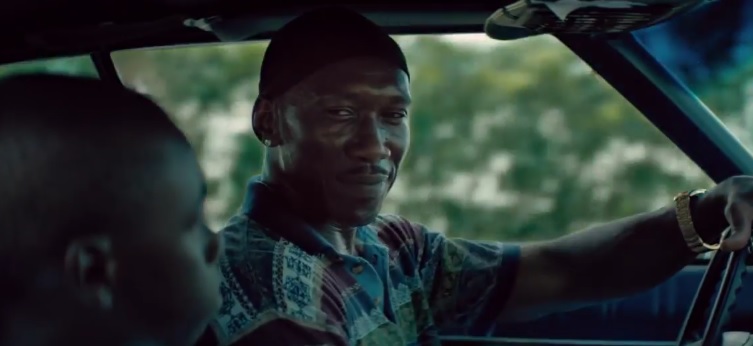
Chiron is a sensitive kid who is left to raise himself by his crackhead mom. Hiding from the neighborhood toughs, he is taken in by the local drug lord (Mahershala Ali – Remy in House of Cards) and his girlfriend. Given the mean streets and the neglectful mom, that actually turns out to be a good thing. The older man becomes a surrogate father and dispenses helpful advice like, “Don’t sit with your back to the door”. We also see Chiron at 17 (working on the “Questioning” part of LGBQT), and at 27, when he finally decides to address the pivotal events of his youth.
Moonlight’s director Barry Jenkins wrote the screenplay from the story by Terrell McCraney. Jenkins and McCraney did not know each other as kids, but grew up in the same period in the Miami area, and both had parents touched by the crack epidemic.
No matter how hard parents try to protect and control their kids, much of their growing up will be outside the parents’ field of vision. Kids will discover things with, learn from and be influenced by their peers. As unsettling as that is, the only alternative is to move off the grid and home school them (at the expense of socialization). The scenes in Moonlight of the 9-year-old and the 17-year-old Chiron with his friends outside the view of adults are unusually realistic narrative cinema.
Jenkins structured Moonlight in three acts, with different actors playing Chiron at age 9 (Alex Hibbert), age 17 (Ashton Sanders) and age 27 (Travante Rhodes). Likewise, Chiron’s friend Kevin is played by Jaden Piner, Jharrel Jerome and André Holland. To understand the third act (and the vanity plates on Chiron’s car), it’s important to remember that it’s Kevin who gives Chiron the nickname “Black” when everyone else calls him “Little”.
The 9-year-old Chiron’s mom is complicated – she makes him read instead of watching TV, but still ditches him when she entertains a gentleman caller. Young Mr. Hibbert’s eyes are eloquent when he looks back at his mother – he already knows that this is not the way it’s supposed to be (and she hates that he knows). The teenage Chiron’s mom has lost all control and is her son’s worst nightmare – a totally consumed crackhead like Samuel L. Jackson’s Gator in Jungle Fever.
The best aspect of Moonlight is its treatment of bullying and Chiron’s sexual questioning and awakening. We feel, even relive, the dread of childhood bullies. Moonlight’s treatment of growing up gay, especially gay and African-American is extraordinarily sensitive and even revelatory.
This is an important film, but its effectiveness grinds down in the third act. The first, 9-year-old segment is absorbing. The second, teenage sequence does an adequate job on the bullying and a stellar job on the sexuality. To that point, we really care about Chiron, and we’re on the edges of our seats rooting for his survival. But then Travante Rhodes takes over the character of Chiron as a grown man who is trying to be the Mahershala Ali character but looks and walks like Mike Tyson; Rhodes’ eyes and face don’t bring us in as do the younger actors. The lifestyle choice that Chiron has made after his teens and his roadtrip to self-discovery are interesting but not compelling, and Moonlight’s urgency peters out.
I’m a contrarian here: Moonlight has gotten rapturous acclaim, notably, from the critics that I respect the most, A.O. Scott, Mick LaSalle, Sheila O’Malley, Richard Roeper, Tim Sika and others. It has Metacritic rating of NINETY-NINE! But, leaving the theater, The Wife’s first comment was, “I feel like I just ate my broccoli,” and I agreed with her.
The casting is ALMOST perfect. Young Hibbert and Jerome are exceptional and all the Chiron/Kevin actors are good, except for Rhodes. Mahershala Ali’s drug dealer moves with a lion’s top-of-the-food-chain insouciance, but his moment when the young Chiron asks him “Does my mom do drugs?” and a very direct follow-up question is heartbreaking. The very sleek British actress Naomie Harris (Some Kind of Traitor) is unrecognizable as the crackhead mom – a very strong performance. The singer Janelle Monáe is very appealing in her turn as the drug dealer’s girlfriend.
Moonlight deserves praise for its realism and insight, but loses its punch in the final twenty-five minutes.
So here’s the thing with every movie ghost story – either the ghost is real or the protagonist is crazy enough to hallucinate one. The beauty of The House on Pine Street is that the story is right down the middle – ya just don’t know until the end when the story takes us definitively in one direction – and then suddenly lurches right back to the other extreme.
Jennifer (Emily Goss) is a very pregnant urbanist, who reluctantly moves from her dream life in Chicago back to her whitebread hometown in suburban Kansas. Unlike Jennifer, her husband hadn’t been thriving in Chicago, and Jennifer’s intrusive and judgmental mother (Cathy Barnett – perfect in the role) has set up an opportunity for him in the hometown. They move to a house that is not her dream home AT ALL, “but it’s a really good deal”. Jennifer overreacts to some crumbling plaster.
Jennifer is pretty disgruntled, and, generally for good reason – her mom’s every sentence is loaded with disapproval. Her mom’s housewarming party would be a social nightmare for anyone – but it’s too literally nightmarish for her. One of the guests, an amateur psychic (an excellent Jim Korinke), observes, “the house has interesting energy”.
Then some weird shit starts happening: knocks from unoccupied rooms, a crockpot lid that keeps going ajar. And we ask, is the house haunted or is she hallucinating? Her sane and sensible and skeptical BFF comes from Chicago to visit as sounding board, and things do not go well.
Co-writers and co-directors Aaron and Austin Keeling keep us on the edges of our seats. Their excellent sound design borrows from The Conversation and The Shining – and that’s a good thing.
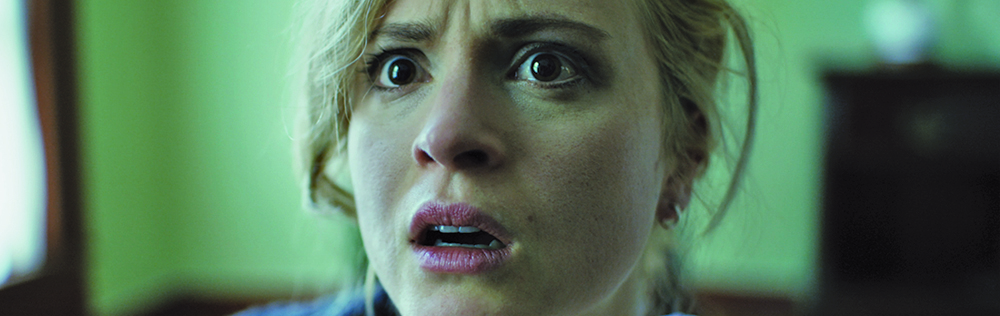
The Keelings also benefit from a fine lead – Emily Goss’ eyes are VERY alive. She carries the movie as we watch her shifting between resentfulness, terror and determination.
The total package is very successful. I saw The House on Pine Street at Cinequest, and now it can be streamed from Amazon Instant, iTunes, Vudu, YouTube and Google Play.
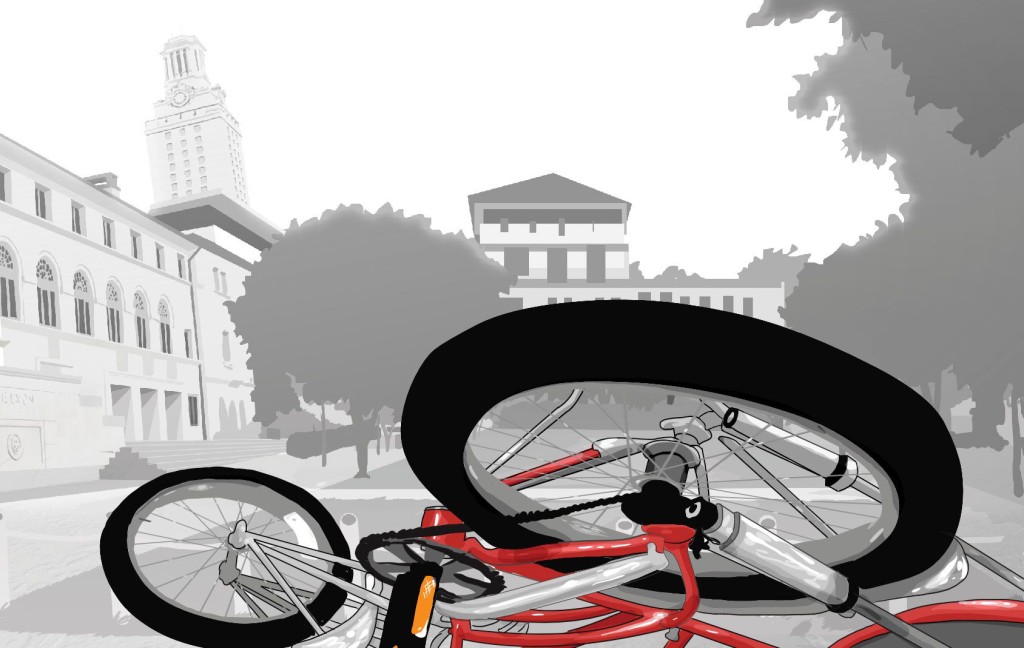
Toweris a remarkably original retelling of the 1966 mass shooting at UT Austin. Tower is a tick-tock of the 96 minutes when 49 people were randomly chosen to be shot by a gunman in the landmark tower 240 feet above the campus. That gunman is barely mentioned (and may not even be named) in the movie.
Tower is director Keith Maitland’s second feature. What makes Tower distinctive and powerful it’s the survivors who tell their stories, reenacted by actors who are animated by a rotoscope-like technique (think Richard Linklater’s Waking Life). Telling this story through animation, dotted with some historical stills and footage, is captivating.
Since 1966, we’ve suffered through lots of mass shootings. The UT Tower shooting was especially shocking at the time and prompted the questions about what drove the “madman” to his deed. But, fifty years later, what’s really important today is how the event affected the survivors – what was what like to live through this experience and how it lives with them today. That’s the story that Maitland lets them tell us – and in such an absorbing way.
I saw Tower at the Mill Valley Film Festival. It opens theatrically in the Bay Area today at the Landmark Shattuck in Berkeley.
In the indie drama Men Go to Battle, it’s 1861 and two bachelor brothers are sharing an especially unprosperous farmstead in rural Kentucky. Brash and loudmouthed, brother Francis (David Maloney) confidently plunges into one foolhardy scheme after another. His quiet practical brother Henry (Timothy Morton) picks up the pieces. Not one to use words to express his feelings, Henry has finally had enough of Francis and simply leaves for the Civil War without notice.
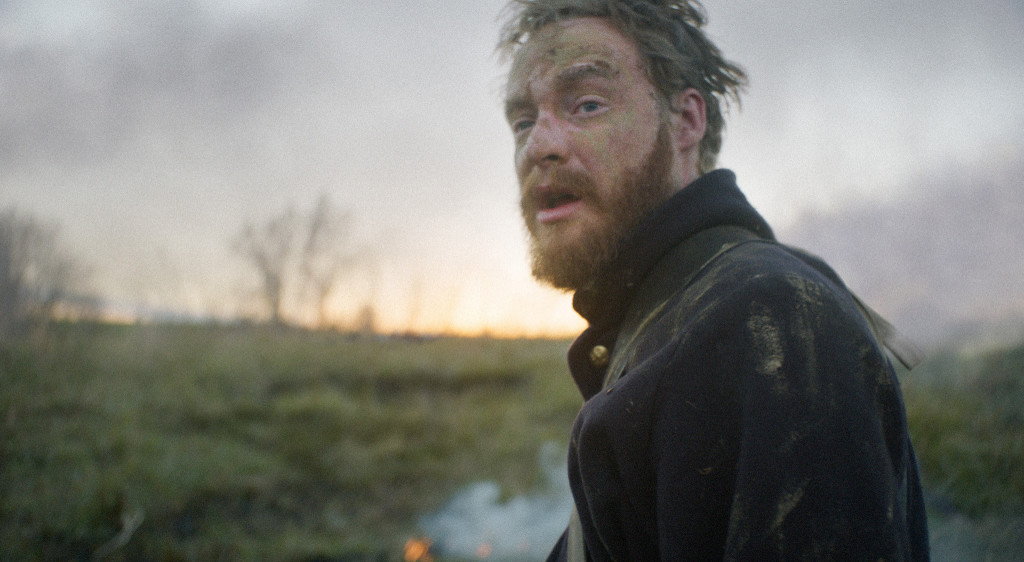
Observing Francis is plenty amusing, because of his unerringly wrongheaded impulses. But the stone faced Henry, for whom still waters run deep, is much more interesting – we wonder what he is thinking and what he is going to do. Once he’s made up his mind, he is decisive and resolute. In a remarkably powerful scene on the morning after the Battle of Stones River (Perryville), he wordlessly decides about war and about his part in it.
Men Go to Battle is the first feature for director and co-writer Zachary Treitz. His co-writer is the actress Kate Lyn Sheil (Sun Don’t Shine, House of Cards), who has a small acting part (as does indie director Amy Seimetz).
Visually, much of movie is way too dark (as in you can’t see what is going on). But Men Go to Battle does an exceptional job of illustrating the QUIET of pre-electric and pre-motorized North America.
[Note: Some critics have described this movie s “Civil War Mumblecore”. Indeed, it’s a low-budget indie made by thirty-somethings and the male actors DO mumble a lot. But I despise the Mumblecore genre because the stories are about underachieving slackers who are navel gazing and whining about first world problems. That’s not the case here. This movie is about a real family relationship, and there is no entitlement or snivelling, so it’s NOT Mumblecore.]
Men Go to Battle is available to to stream from Amazon Instant, iTunes, Vudu, YouTube and Google Play.
THE GREASY STRANGLER (title character on the right)
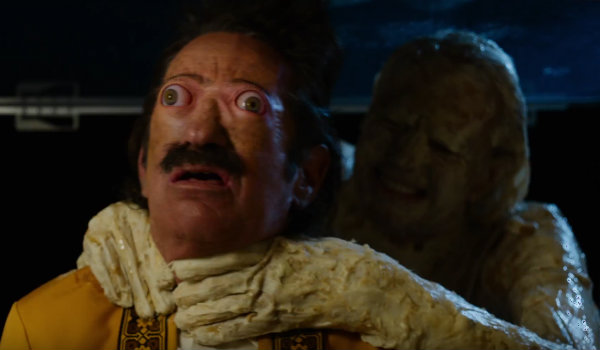
There’s been a lot of buzz about the gross-out spectacular The Greasy Strangler – weirdest movie of the year, blah blah. But the first feature from British writer-director Jim Hosking is really pretty easy to deconstruct – it’s manufactured to become popular at the midnight cult movie shoes, joining the rotation along with Rocky Horror, Eraserhead, The Room, etc. The Greasy Strangler will draw in the midnight crowd with its meals prepared with industrial grease, the prosthetic penises of varying sizes and a heavy dose of sex between naked grotesques. It’s made for audience participation with signature lines for the audience to repeat along with the characters, like “You’re a bullshit artist” and “Hootie tootie disco cutie”.
This is not to say there aren’t some clever touches in The Greasy Strangler. Believe me, you’ve never seen a car wash used in this way before. And there’s a priceless male disco outfit with a cutout in exactly the wrong place.
Sky Elobar and Michel St. Michaels in THE GREASY STRANGLER
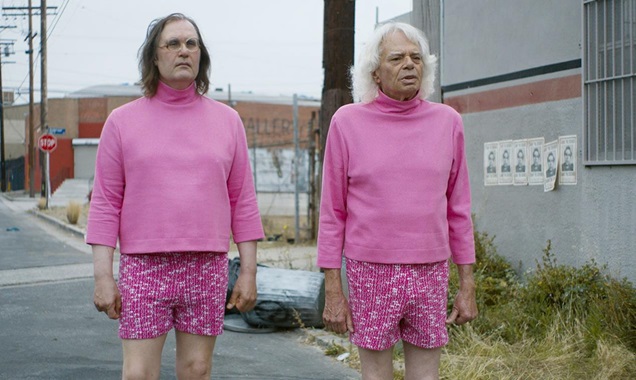
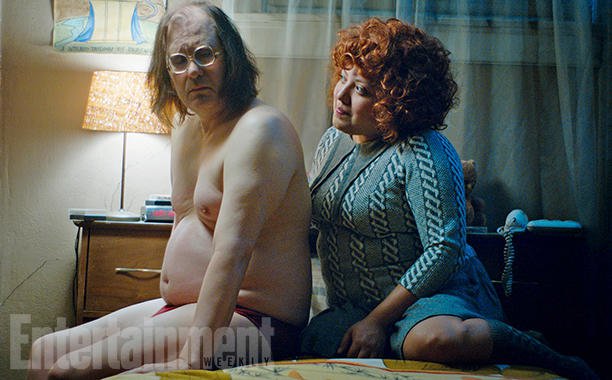
The plot is pretty simple: a virginal nerd boy (Sky Elobar of Don Verdean) is living with his omni-disgusting father (Michael St. Michaels), a cranky cretin who constantly demands copious amounts of grease added on to his food – even movie popcorn butter and street vendor chili dogs. Will the younger man finger his dad as the local serial killer, the Greasy Strangler? And will the father alienate the affections of his son’s new sweetheart (Elizabeth Del Razzo)? Nightly, the Greasy Strangler immerses himself in a 55 gallon drum of grease and then zombie-walks through town in search of victims.
If you are not entertained by the epically disgusting, this movie is not for you – after all, that’s the whole point. The Greasy Strangler can be streamed from Amazon Instant, iTunes, Vudu, YouTube and Google Play. Or you can catch it in the decades of midnight screenings ahead.
Sky Elobar and Elizabeth Del Razzo in THE GREASY STRANGLER
Writer-director Ti West brings some new touches to the spaghetti western in his mostly successful In a Valley of Violence. Ethan Hawke plays Paul the drifter, passing through town with his fly-catching dog Abbie. He runs afoul of the local bully, which unleashes bloody (and, in one instance, gruesome) revenge.
Right away, the music and the opening titles tell us that we’re watching a spaghetti western. The dramatic rock formations and thirsty scrub of New Mexico work, too. But this is a 21st Century take on the genre, with a protagonist suffering from PTSD. Guilt-wracked, he becomes bent on revenge but remains ambivalent about the killing that his vengeance will require. There’s also a bad guy with a conscience (but not enough of one). And the superb final shootout is unlike any that you seen in another dusty street.
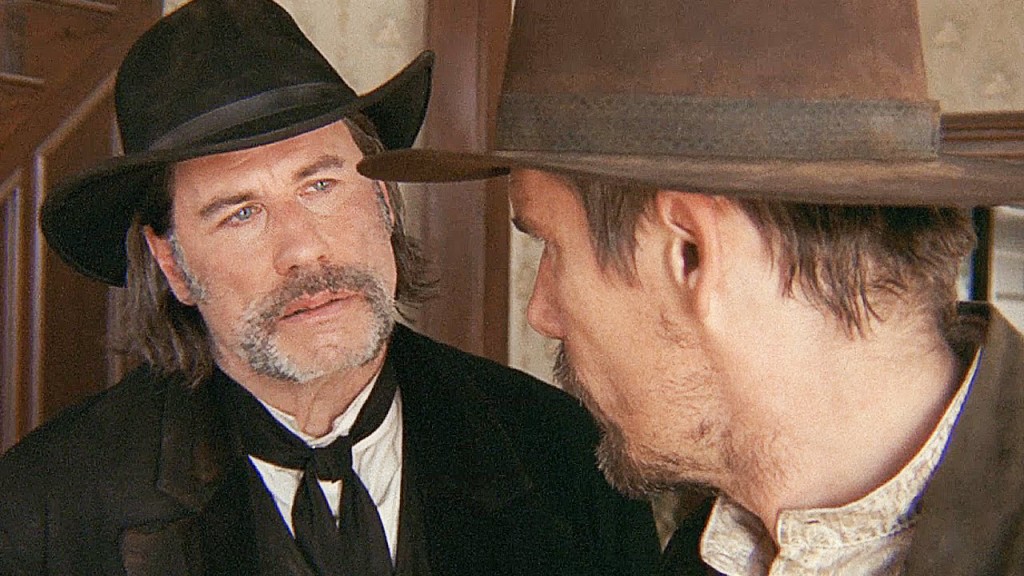
John Travolta is exceptional as the town marshal, burdened by wisdom enough to know that he is surrounded by idiots and perhaps to be entangled in their fates. The marshal is well-seasoned and perceptive. He reads every character with pinpoint accuracy. He is one tough, crafty and ruthless hombre, but his actions are motivated by what must be done, not by empty machismo.
As befits a spaghetti western, the end of In a Valley of Violence (including the really violent parts) are filled with dark humor. James Ransome is very funny as the compulsively foolish town bully, springing relentlessly from one bad choice to another. One of the bad guys picks the most nail-biting moment to resist fat-shaming: “Don’t call me Tubby – my name is Lawrence”. The film’s highlight may be the LOL dialogue between Hawke and Travolta as they try to navigate not killing each other, all while stalking each other through the back streets.
Abbie the dog (played by Jumpy) is especially endearing and fun to watch. She even rolls herself up in her blanket by the campfire. In a Valley of Violence’s credits include the Dog Trainer, three Animal Wranglers and a Vulture Handler
In a Valley of Violence isn’t a perfect film. The event that motivates the vengeful onslaught is predictable and upsetting to dog lovers. And, other than Travolta and Hawke, the actors seem like they are modern folks dragged out of a Starbucks and dressed up in cowboy gear.
For what it’s worth, In a Valley of Violence’s climactic gunfight is historically consistent. Contrary to the tradition in movie Westerns, very few of the Old West gunfights were of the “quick draw” variety. The real cowboys, outlaws and lawmen tended to sneak up on each other and fire from cover. When they did approach each other in the street (as here), their guns were usually already drawn.
I’ll watch ANY spaghetti western, but I found In a Valley of Violence to be a particularly successful one. The dark humor and the performances by Hawke, Travolta and Jumpy are plenty reason to see In a Valley of Violence.
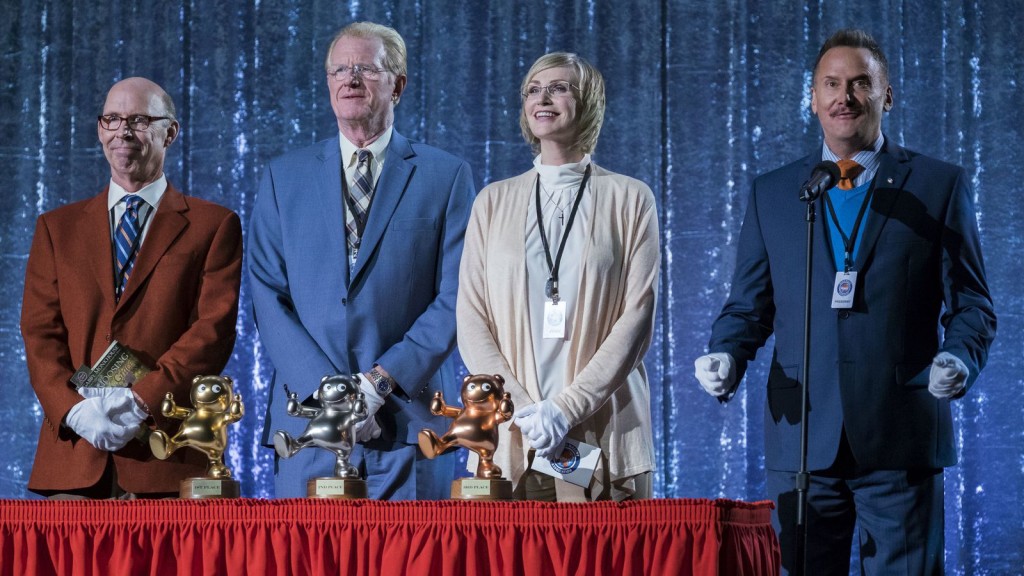
Don Lake, Ed Begley, Jr., Jane Lynch and Michael Hitchcock in MASCOTS
Mascots is the latest from Christopher Guest, the king of the mockumentary. After co-writing This Is Spinal Tap, Guest wrote and directed Waiting for Guffman, Best in Show (his masterpiece), A Mighty Wind, For Your Consideration, and ten years after For Your Consideration, Mascots. Guest has set his stories in the worlds of amateur theater, competitive dog shows, the folk singing moment of the 1960s and indie filmmaking. His comedy is based on people taking their passions way too seriously. This time, in Mascots, he has set the story in a world that NO ONE could take seriously – a fictional championship competition among mascots for sports teams.
Guest doesn’t really make fun of the subject matter as much as the human behavior that is exposed and accentuated by competition, especially Big Fish In Little Pond competition: officiousness, self-importance, striving, insecurity and self-delusion.
Guest brings along his repertory company of master-improvisers: Parker Posey, Ed Begley, Jr., Fred Willard, Jane Lynch, Don Lake, John Michael Higgins, Jim Piddock, Bob Balaban, Jennifer Coolidge, Michael Hitchcock, Harry Shearer and Guest himself. They all play their characters with complete commitment – these folks are earnestly devoting their entire lives to the silliest possible passion.
This time, he’s added the always hilarious Zach Woods (Silicon Valley) and Chris O’Dowd. Another mockumentary newcomer, Susan Yeagley is especially good as the gum-chomping, nymphomaniacal sister of Alvin the Armadillo.
The Jack the Plumber routine must be seen to be believed, there’s a surprise Bollywood number, and a very sly running gag about furries.
Mascots is playing in a few theaters but easier to find streaming on Netflix Instant, where I viewed it.
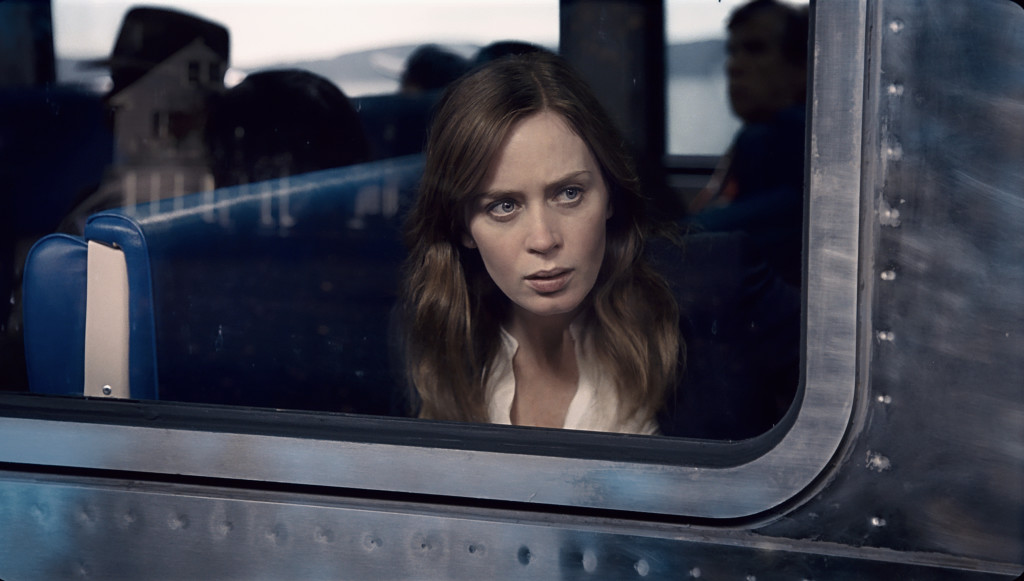
The end of the thriller The Girl on the Train, adapted from the popular novel by Paula Hawkins, is indeed thrilling. It’s about a woman (Emily Blunt) who is a complete mess, a black-out drunk who has clearly gone off the deep end in many ways. We watch her stagger from one dysfunctional moment to the next until she is entangled in a missing person case, serial marital infidelity and a murder. A Big Plot Twist near the end reshuffles the deck, and we find out that we are watching a different story than we had supposed.
The last 30 minutes of The Girl on the Train rocks, but I found the murky first 82 minutes to be confusing and boring. The Wife, however, enjoyed the whole thing. Neither of us had finished the novel and knew to expect the Big Plot Twist.
Blunt is very good as the protagonist. Justin Theroux, Lisa Kudrow and Edgar Ramírez (Carlos) stand out as well. Allison Janney is wonderful as a jaded, Seen It All police detective; at the end, her grin reveals “wait until I tell the guys that this really happened”.
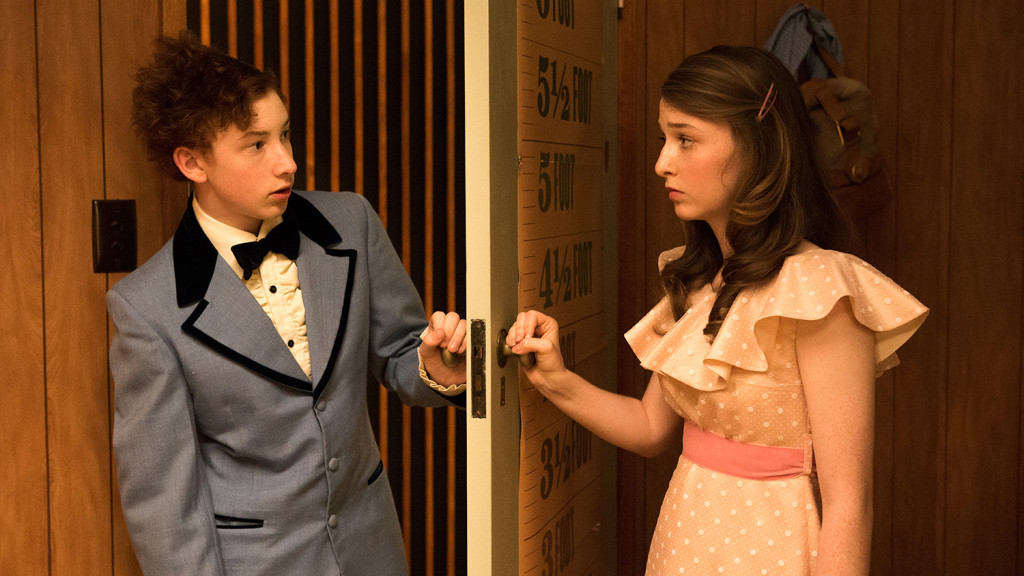
I’ve seen plenty of teen coming of age movies, but none like Girl Asleepfrom Australia and first-time director Rosemary Myers. The arc of the story may be familiar – a new school, an excruciatingly awkward boy and an encounter with Mean Girls. The anxiety for our teen protagonist Greta (Bethany Whitmore) is crowned by her parents doing what must be the most embarrassing thing for a teenager – the parents putting on a party for her and inviting everyone at her new school. As the story is set up, we see some glimpses of magical realism. Then, when the party maximizes Greta’s stress, the story is immersed into a trippy Alice in Wonderland parallel universe. It’s all an allegory for the perils of the adolescent journey.
Greta’s batty parents are played with gleaming resolve by Amber McMahon and screenwriter Mathew Whittet. Harrison Feldmore’s total commitment to his role as Greta’s suitor is admirable; he’s not just geeky but enthusiastically so, plunging headlong into a profound geeky totality. Director Myers also has fun with the 1970s milieu, taking particular glee with the short shorts worn by the male characters.
The movie is pretty funny, and you won’t find a trippier coming of age flick. Girl Asleep opens tomorrow in the Bay Area at Camera 3 in San Jose and at the Roxie in San Francisco. Girl Asleep screens with the short film Pickle, a deadpan comedy.