TRAVEL BAN: MAKING AMERICA LAUGH AGAIN: using comedy to explore the uncomfortable

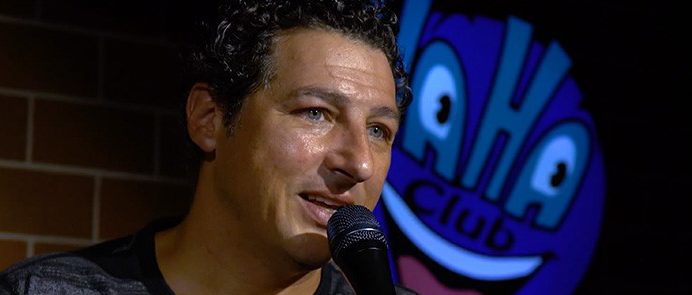
Comic Aron Kader in TRAVEL BAN: MAKE AMERICA LAUGH AGAIN

Since medieval court jesters tweaked royal courts, we’ve used comedy to explore difficult conversations.  In the documentary Travel Ban: Making America Laugh Again, comedians confront the misunderstanding, bigotry and hatred faced by Americans who are Muslim and by Americans whose families come from the Middle East.

One unfortunate aspect of our culture is the impatience with and resistance to accepting nuance and complication.  Many Americans are content to accept a world in which “the Middle East” is a nation – one entity that is ever-hostile to the United States and ever evil-intentioned to all Americans.

Muslims and Middle Easterners have always endured negative stereotypes, made worse by 9/11.  But, this has worsened in the Trump Era because Trump empowers and licenses the open spewing of hate speech into our national discourse.

In response, Comics Aron Kader, Raz Jobrani and Ahmed Ahmed, who performed on the Arabian Knights and Axis of Evil comedy tours, mobilized even more stand-up comics for the Travel Ban tour.

Travel Ban includes the on-stage and off-stage banter of over a dozen American comics of Middle Eastern heritage or Muslim religion.  As one would expect, some are far funnier than others. My favorite is Feraz Ozel, who also has the movie’s funniest line in response to “Why don’t the good Muslims get together and fight the bad Muslims?”  (You’ll have to watch the movie for to get the devastating punchline.

Travel Ban is NOT purely a concert film; we do see performances, but the comics also discuss their experiences off-stage.  For context, there are some bracing videos of actual hate crimes and hateful rants by ignorant “real Americans”.  And Travel Ban brings in some key factual tidbits; for example, zero Americans have been killed by anyone from any of the countries targeted by Trump’s travel ban.

This is a serious film with some hilarious comedy.   As one of the comics says off-stage, “a good comedian makes people laugh, a great comedian makes them think”.

Cinequest hosts the world premiere of Travel Ban: Making America Laugh Again.

https://vimeo.com/292645468

TABOO: the uncomfortable line between empathy and making funny

TABOO

Many will cringe at the promise of the Belgian reality show Taboo:  humorist Philippe Geubels spends time with four dying people and then hosts an entire audience full of terminally ill people for his stand-up comedy show – about their situation. It’s surprisingly empathetic and touching.

Cinequest hosts the North American premiere of Taboo in the television section of the fest.  Taboo is likely to be one of the most controversial – and one of the most popular – entries in the festival. My complete review will appear when Taboo is released in the US.

STEAMBOAT BILL, JR.: silent comedy, still at its best

STEAMBOAT BILL, JR.

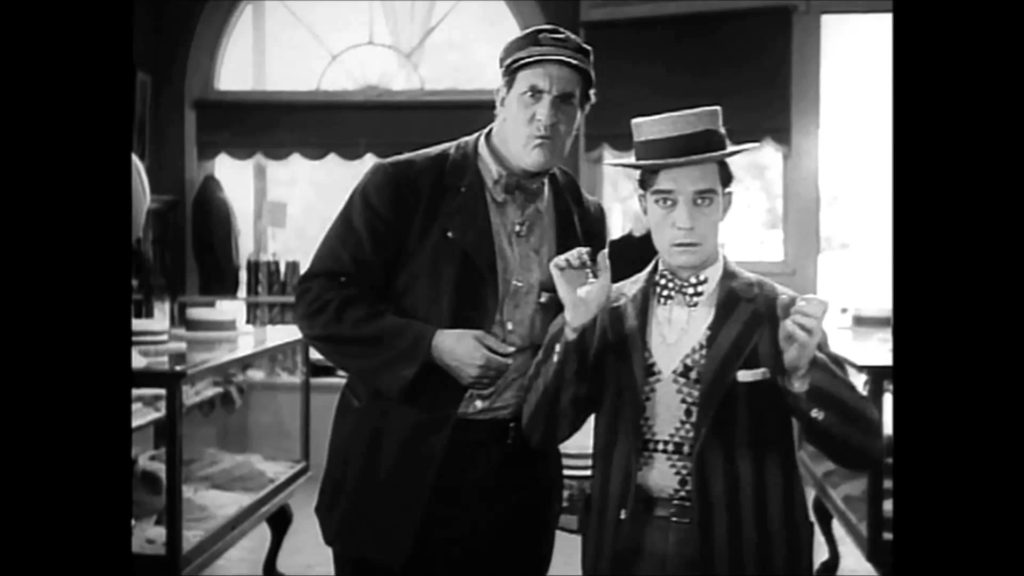
Every year, through the sponsorship of the Stanford Theatre Foundation, Cinequest presents a silent film. This year’s choice is Buster Keaton’s Steamboat Bill, Jr.

Keaton plays a wimpy young man returning home from college to help his father, who operates an old-fashioned and weathered paddle steamer. The father is burly and testosterone-fueled – and immediately aghast at his effete and callow son. The business is threatened by competition from a magnate’s newer, more well-equipped riverboat. Comic situations ensue from the business rivalry, a Romeo-and-Juliet subplot and the odd couple pairing of father and son.

But it’s all just the launching pad for Keaton’s comic genius, with its irresistible combination of deadpan slapstick and daring physical stunts. Steamboat Bill, Jr. contains one of the greatest movie stunts EVER – and one of the most dangerous – the entire front of a house blows over but fails to crush Buster because he emerges from a window opening.

Steamboat Bill, Jr. came in 1928 near the end of Keaton’s greatest work: Sherlock, Jr. (1924), The Navigator (1924), Seven Chances (1925), The General (1926) and The Cameraman (1928). After The Cameraman, Keaton’s new studio took away his creative control, and his career (and personal life) crashed.

I also recommend Peter Bogdanovich’s fine 2018 biodoc of Keaton, The Great Buster: A Celebration. It’s not yet streamable, but I expect it to be available soon.

Cinequest presents its silent films on the big screen of a period movie palace, the California Theatre, accompanied by world-renowned Dennis James on the Mighty Wurlitzer organ. James traveled with Lillian Gish as accompanist when she would present movies. I recommend Sal Pizarro’s excellent profile of Dennis James in the Mercury News.

Cinequest will present Steamboat Bill, Jr. along with the 20 minute Keaton short The High Sign (which I haven’t yet seen).

A SHELTER AMONG THE CLOUDS: a simple man regards the rest of humanity

A SHELTER AMONG THE CLOUDS

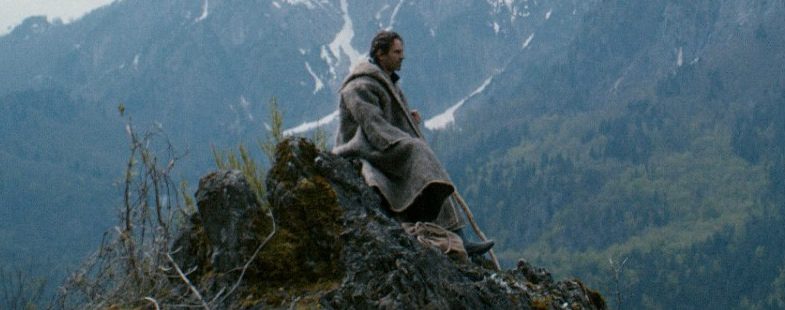
“People love God but not each other,” observes Besnik, the protagonist of the Albanian drama A Shelter Among the Clouds. It’s a simple sentiment from a simple man, but that doesn’t mean it isn’t profound.

Besnik tends a herd of goats in a mountainous village that is remote even by Albanian standards. A devout Muslim, Besnik is more spiritual than most people. He discovers an ancient Christian mural in the ancient local mosque. That makes him a hero to the village Catholics, but the new development is very unwelcome to his imam. All of the villagers  – Catholic and Muslim – are suspicious of the team of experts sent by the national government to study and restore his discovery.

Besnik has been caring for his dying father, and when his Greek Orthodox brother and Muslim sister return to visit and to position themselves over the upcoming inheritance, things get tense.  In contrast to the remarkable landscape beauty of the harsh mountains, small mindedness and selfishness abound with most of the locals and within Besnik’s family. The guileless Besnik is baffled when people react less generously than the Koran prescribes.

This is a visually beautiful exploration of human behavior. Arben Bajraktaraj delivers a pure performance as Besnik. Writer-director Robert Budina, with his second feature, has delivered a moving and beautiful film. Note: This is an especially unhurried film, so settle in and let it wash over you.

Cinequest is hosting the North American premiere of A Shelter Among the Clouds, one of the World Cinema highlights of this year’s festival.

PRINCESS OF THE ROW: charismatic child as caregiver

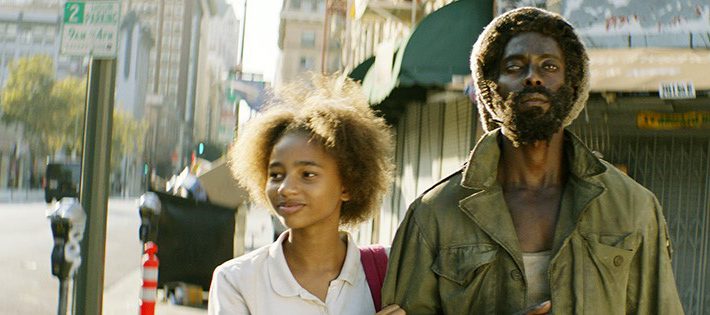
Tayler Buck and Edi Gathegi in PRINCESS OF THE ROW

In the well-crafted indie drama Princess of the Row, Alicia is a 12-year-old living with her homeless dad on LA’s skid row.  The dad is a brain-injured vet who veers between catatonic and paranoid episodes, unable to care for himself or his daughter.  Princess of the Row follows Alicia’s harrowing journey through homelessness and the child welfare system.

Alicia is played by Tayler Buck, a charismatic and uncommonly gifted actress.  The character of Alicia, both streetwise and innocent, suspicious of those offering help, is a complex one with a rich inner life. This is child as caregiver to the parent, sacrificing her own aspirations – and even safety.  Tayler Buck makes us care about Alicia so much that one scene in which she is imperiled is very hard to watch.   Buck’s performance is the most compelling reason to see Princess of the Row.

Edi Gathegi is also captivating as the dad, a volatile cauldron of what appears to be paranoid schizophrenia.  Gathegi plays a guy with some remnants of lucidity buried very deeply inside and barely perceptible.

Princess of the Row is the first narrative feature for director Van Maximilian Carson, and it’s a promising debut.  Martin Sheen and Ana Ortiz are excellent in supporting parts.

Cinequest hosts the world premiere of Princess of the Row.

MINE 9: betting your life…every day

MINE 9

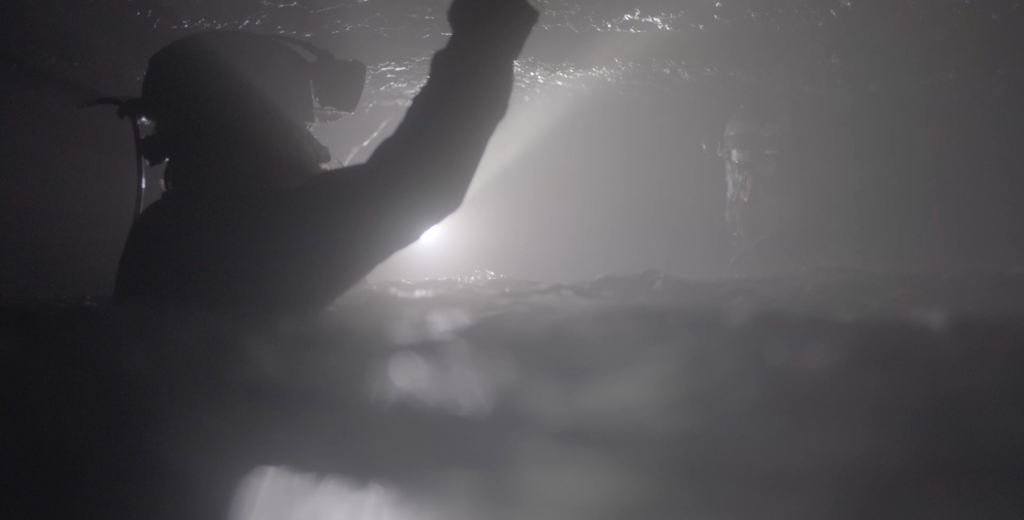
The superb thriller Mine 9 opens with men at work in a dangerous workplace – a coal mine two miles under their hometown.  Something goes wrong, but the men, under the confident, expert direction of their Section Leader Zeke (Terry Serpico), demonstrate their training and quickly quell the emergency.  Once on the surface, Zeke thinks that methane levels have made the mine too dangerous; but his crew demand to return to the mine because they can’t afford the lost paychecks.  They are betting their lives for those paychecks.

To keep the crew – his friends and family members – as safe as possible, Zeke reluctantly leads them back underground.  Then a methane explosion traps them deep underground.  They must find a way out and soon – they only have a one-hour supply of oxygen and time is ticking away.  What happens next is a gripping page-turner.

Mine 9 is the second feature for writer-director Eddie Mensore.  A major reason it’s so successful is that Mensore has delivered remarkable verisimilitude;  he has created what we accept to be a specific claustrophobic workplace.  Mine 9 is both a mine safety exposé and a mining procedural.  I can’t think of another movie that shows the underground safety protocols and the use of real modern mining machinery.

Mine 9 is also an exploration of – and contemplation on – the inherent danger of coal mining.  These miners come from a local and family tradition of mining, so they accept dangers that the rest of us would not; if these men lived somewhere else, they would have safer jobs – but they haven’t seen any opportunity to move out of coal country.

And then there’s the economic imperative.  In Mine 9, the miners understand that the mine has become more dangerous than usual.  But the fear of missing even one paycheck outweighs what we would see as a crazy risk.

One of the crew, the 18-year-old son and nephew of the miners, is going underground for the first time, so the audience is able to see the work environment through his lens, without the more experienced miner’s earned sense of comfort.  He is quickly shown an undecipherable diagram of the mine and told, if anything goes wrong, go here.  Good luck with that.

All of the performances are very good, especially those of Terry Serpico as Zeke and Erin Elizabeth Burns as the on-site mine manager Teresa.  Movies often portray the non-college educated working class, especially in Appalachia, as ridiculous, dumbass rednecks or with some artificial nobility.  As written by Mensore and played by Serpico and Burns, Zeke and Teresa, both smart and inventive under pressure, also appreciate how the business environment has taken away their best options to protect the workers.

Mine 9′s soundtrack, which can be sampled here,  is filled with haunting Appalachian music that helps give the film a sense of place.  This is a culture that recognizes, even in its music  that death is always near.

Cinequest hosts the world premiere of Mine 9, the best thriller at this festival.  Stay through the end credits to meet some real coal miners.

LITTLE HISTORIES: Historical events changing our lives…and not

LITTLE HISTORIES (HISTORIAS PEQUEÑAS)

Sometimes the great events of history affect – and even change – our lives.  And sometimes those events are merely the backdrop to our own personal dramas.  This is explored in the Venezuelan anthology Little Histories (Historias Pequenas).

The vignettes in Little Histories are set in a four-day period of national upheaval in April 2002.  A popular attempted coup d’état removed Hugo Chavez from his presidency for 47 hours, until he was restored by the military. Throughout Little Histories, we watch Venezuelans from all walks of life as they lead their ordinary lives through the national tumult – or try to. Live news reports about the coup are always on the televisions, ubiquitous in every home and office. Some characters hear gunfire or breathe tear gas, and some have riots break out on the street where they live.

All this is just background noise for an affluent professional couple whose marriage is rocked by one adulterous episode too many. But the turmoil becomes all too present for a homeless guy and a drug-addled hooker when the rioting finds the spot on the street that they habituate. And, for a mid-level military officer and his volatile girlfriend, all becomes unraveled when the coup threatens to expose a corruption scam, and he is being hung out to dry as the fall guy.

Actress Assiak Oviedo is superb as a housekeeper in the governmental palace, steadfastly mopping the marble floors as the nation’s leaders rise and fall and rise again around her. There’s a wonderful scene where a jubilant elite celebrates the takeover; behind them, a journalist, a security guy, two waiters and the housekeeper watch impassively, without having a stake in the outcome.

This is the first narrative feature for writer-director Rafael Marziano Tinoco, and his insights into the overlay between personal and societal crises are original and sometimes profound. Cinequest is hosting the world premiere of Little Histories.

LAST SUNRISE: racing into darkness

LAST SUNRISE

In the gripping Chinese sci-fi thriller Last Sunrise, we’re in a super-hi tech future, powered almost totally by solar energy – which doesn’t look as blissful as it sounds.  As befits a dystopian story, there’s a disaster, and this one is just about the worst one conceivable – the death of our Sun.

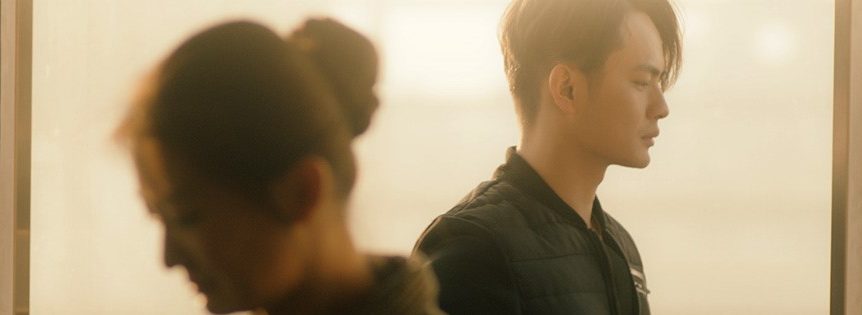
Wang Sun (Zhang Jue) is very serious astronomy nerd with no apparent non-scientific interests.   He doesn’t really know Wu Chen (Zhang Yue), although she lives in a neighboring apartment, and it doesn’t appear that she’s ever thought about anything profound.  When the catastrophe happens, the two are forced on the road together in a race for their lives.

Last Sunrise is real science fiction about a plausible (and inevitable) future occurrence, and it’s about real ideas.  This isn’t just blowing stuff up in space, which too often passes for sci-fi today.

Losing the sun is pretty bad – it gets dark, the temperature is plunging and humans are running out of oxygen.  There may be refuges, but there’s little remaining battery power to fuel people’s escapes.  Of course, it doesn’t take long for social order to break down.  Last Sunrise becomes a ticking bomb thriller as the couple tries to find a refuge in time.

Of course, with no sun lighting the earth and moon, it is very dark and many more stars are visible.  The f/x of the starry skies in Last Sunrise are glorious.

The two leads are appealing,  especially Zhang Yue, whose Wu Chen is revealed more and more as film goes on.

The life-and-death thriller is leavened by witty comments on the consumerist, hyper connected culture (pre-disaster).  There are very funny ongoing references to instant noodles.  And Wang Sun, who is a bit of a hermit, doesn’t appreciate how devoted he is to his digital assistant ILSA (not Ilsa, She Wolf of the SS, just ILSA).

This is the first feature, an impressive debut, for director and co-writer Wen Ren.  Cinequest hosts the North American premiere of Last Sunrise, the sci-fi highlight of the festival.

HORIZON: the man who loved too much

HORIZON

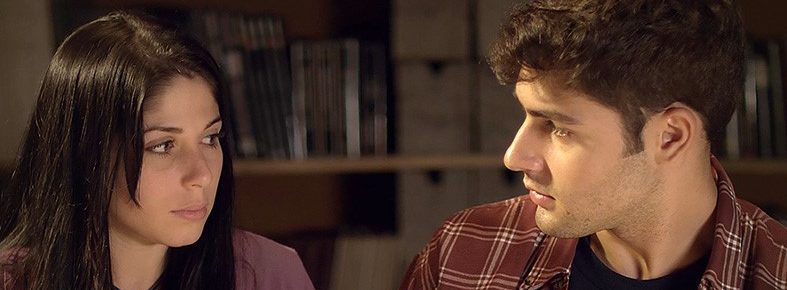
The sensitive Georgian drama Horizon (Horizonti) is about a man who loves too much. A talented Tbilisi designer, Giorgi is a deeply decent guy – he just can’t let go of his ex, Ana. The kids are living with her, and they have an amiable relationship, but Giorgi yearns to rekindle their romance.   She’s not into reunification, but she doesn’t freak out when Giorgi lets himself in her apartment unannounced or when he delivers an unwanted nuzzle on her neck. She’s open about her new boyfriend, but Giorgi isn’t internalizing the cues.

Giorgi moves to a lakeside cabin out in the boondocks. He is a city guy, and this is an environment where there isn’t anything to do except to hunt, fish and chase the chickens back into their pen.  Is he there to escape from the emotional pain? Or to keep his own behavior under control? He makes friends with two elderly residents, their housekeeper and a neighboring guy his age with whom he shares no interests.

Will Giorgi’s isolation cure his heartbreak?

Horizon is the second feature for female writer-director Tinatin Kajrishvili. The screenplay is devoid of the heavy-handedness that plagues many films on this subject. Ana is filled with ambivalence; she really cares for Giorgi – she is deeply fond of him, she just wants to be married to someone else. At one point, Giorgi behaves poorly, but it doesn’t define him as a stalker or a harasser; he is not motivated by the need to dominate and control, just the yearning to be with the partner he adores.

Near the end of the film, one character tells a blatant falsehood that is startling to the audience; this lie is a remarkably generous one because it relieves a grief-stricken character of what could have become life-paralyzing guilt.

Giorgi Bochorishvili is excellent as Giorgi, and Ia Sukhitashvili is even better in the supporting role of Ana.

Cinequest hosts the US premiere of Horizon.

HIER: riddle, mystery, enigma, brilliant

Vlad Ivanov (left) in HIER

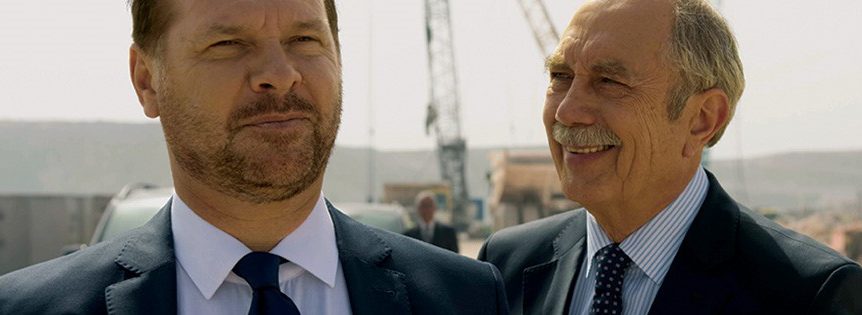
In the brilliant and original drama Hier, middle-aged Victor Ganz has built a successful global engineering enterprise.  He takes what he thinks is a quick trip to Morocco to quell an apparent hiccup in one of his construction projects.  But when he arrives, he finds that the problem with his project doesn’t exist after all, but a mysterious stranger appears and threatens him about something else altogether.  Decades before, Victor had worked in Morocco as an adventuresome young man; incomplete memories of that experience are revived and begin to obsess him.  He becomes a detective but doesn’t fully understand what he is looking for in his own past.

Soon Victor is immersed in puzzling déjà vu.  Is he going crazy?  Is he imagining something in his past or his present?  Who is the woman he is driven to find again?  And why does Victor keep getting beaten up like a human piñata?

Referring to Russian unpredictability, Winston Churchill said, ” It is a riddle, wrapped in a mystery, inside an enigma.”  He might have just watched Hier. as Victor’s confusion becomes ever more trippy.

Ganz is played by Romanian actor Vlad Ivanov in a tour de force.  As Ivanov ‘s Victor is more and more consumed by the puzzles,  he becomes increasingly perplexed, dogged, battered and exhausted.

Ivanov is best known for the Romanian masterpiece 4 Days, 3 Weeks and 2 Days, in which he played one of cinema’s most repellent characters, Mr. Bebe, the sexually harrassing abortionist. American audiences have also seen Ivanov’s performances in Police, Adjective and Snowpiercer.

This is a Hungarian film, but it takes place in Morocco, Some of the dialogue is in English, most is in subtitled French, with some in unsubtitled Arabic (because the protagonist is not fluent in Arabic).

The film’s original Hungarian title is Tegnap, the word for “Yesterday”; the international title is the French word for “yesterday”, Hier (a marketing mistake IMO).  Of course, the protagonist’s obsession is an episode in the past – yesterday – that he remembers and understands only in fragments.

Hier is an impressive first feature for writer-director Bálint Kenyeres. Cinequest hosts the North American premiere of Hier, which is one of the world cinema highlights of the festival.