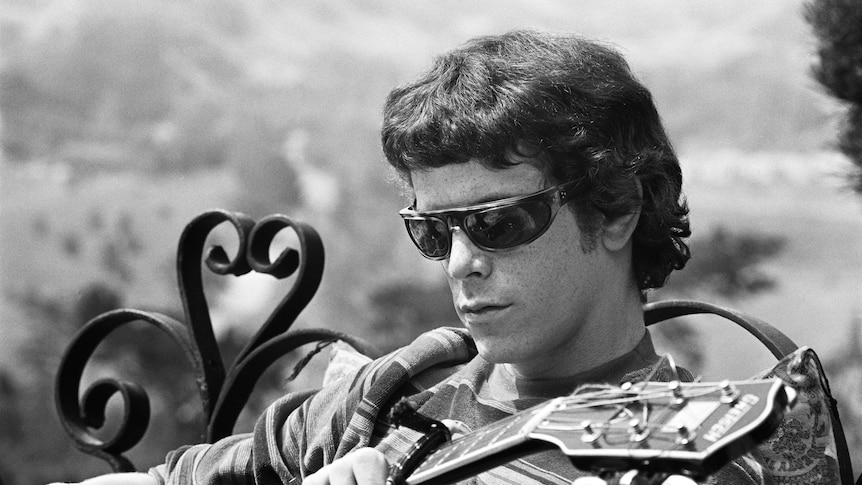
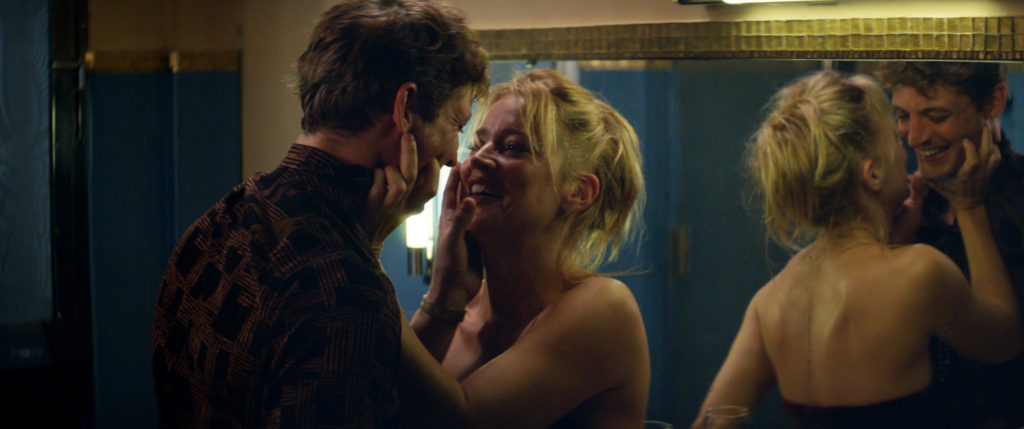
Photo caption: Lou Reed in THE VELVET UNDERGROUND. Courtesy of AppleTV.
It’s rare for a documentary film to immerse the audience as deeply into a time and place as does Todd Haynes’ The Velvet Underground. Even if you’re not a fan of the band, you’ll appreciate this sensory dive into a cultural moment.
Haynes takes the time to bio the two artistic driving forces of the Velvet Underground, the avant-garde musicologist John Cale and the troubled song-writing prodigy Lou Reed. Equally essential is the world of Andy Warhol’s The Factory.
The Velvet Underground is exceptionally richly sourced, with load of file footage and photos and a host of eyewitnesses, especially the surviving band members John Cale and Maureen Tucker. and in this cultural moment.
But it’s the LOOK and FEEL and SOUND of the film which is so singular. That’s because Haynes, a filmmaker known for the lush and evocative Far from Heaven and Carol, has brought his sensibilities to bear on a documentary. And because the artists in Warhol’s circle left such a film record.
The Velvet Underground is in theaters and streaming on AppleTV.
My Halloween recommendation is to stream Borgman, a scary movie for adults. If you’re venturing into a movie theater, for my money, the best choices are the unsettling fable Lamb or the James Bond blockbuster No Time to Die.
Mama Weed: it’s always fun when Huppert gets outrageous. Laemmle.
ON TV
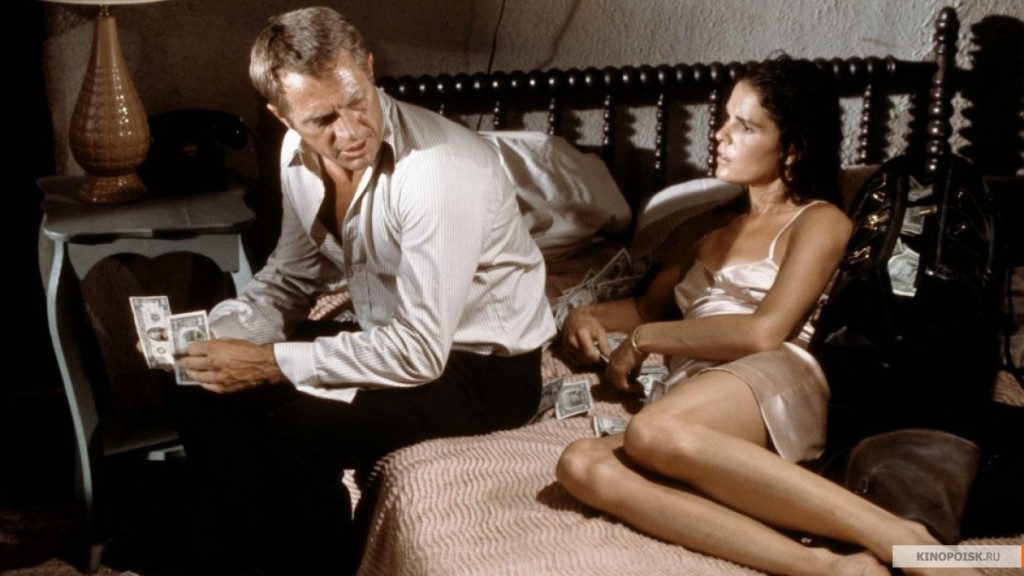
Steve McQueen and Ali MacGraw in THE GETAWAY
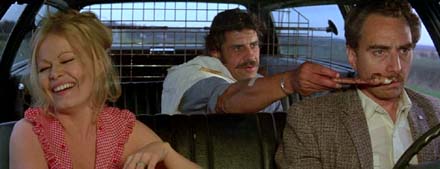
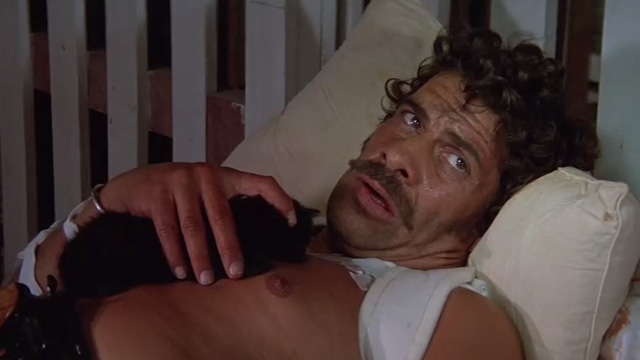
On November 3, Turner Classic Movies presents The Getaway, a 1972 crime thriller starring the charismatic Steve McQueen and his real-life squeeze Ali MacGraw. McQueen and MacGraw are delightful to watch as they move between violent clashes and double- and triple-crosses. As befits a Sam Peckinpah film, there’s an intense shootout at the end. The grossly underrated character actor Al Lettieri (Sollozzo the Turk in The Godfather) gets to play perhaps his most delicious villain; when he comes across a oddly matched married couple – the nubile Sally Struthers and the nerdy Jack Dodson (county clerk Howard Sprague in The Andy Griffith Show). Lettieri layers on some glorious sexual perversity.
Sally Struthers, Al Lettieri and Jack Dodson in THE GETAWAY
Speaking of character actors, we also get to enjoy the crew of Peckinpah favorites: Ben Johnson, Slim Pickens, Dub Taylor, Bo Hopkins and Richard Bright. My friend Sandy lets Ali McGraw’s lack of acting range get in the way of enjoying The Getaway, but IMO Al Lettieri more than makes up for it.
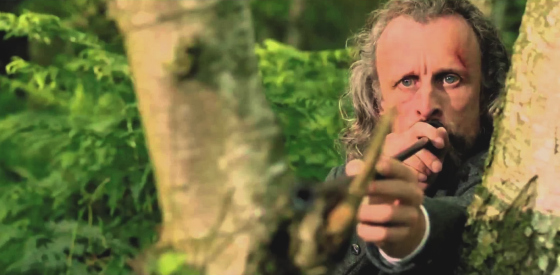
Technically, the Dutch thriller Borgman is a horror film, but it’s horror for adults, without the gore and with lots of wit. The shock doesn’t come from monsters unexpectedly lurching out of nowhere. The entertainment comes from the OMG moments of the “don’t ask the weird guy into your house!” and “don’t let the sinister guys watch your kids!” variety.
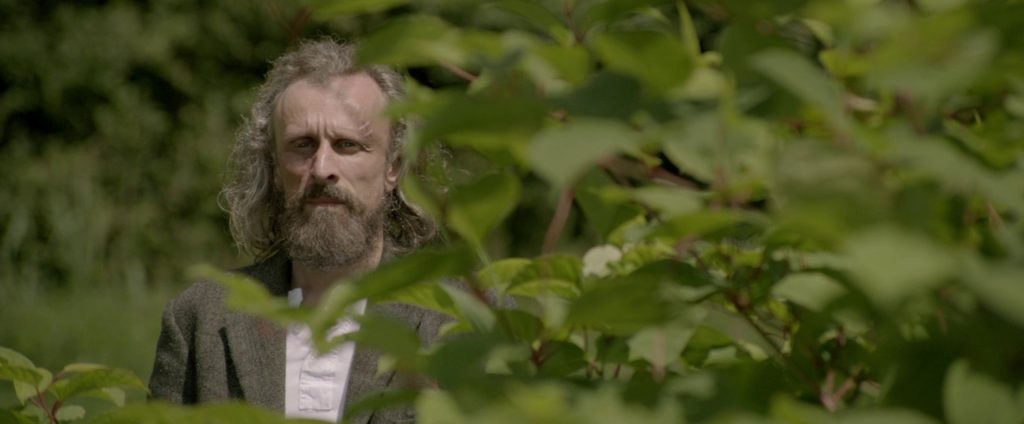
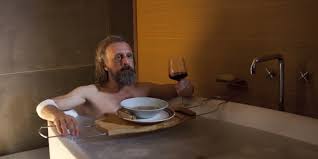
The setting is the architecturally striking and well-tended home of an affluent Dutch family and their Danish nanny. The husband is an aggro corporate schemer and a real scumbag – selfish, racist and chauvinistic, with the capacity for a violent rage. His wife Marina is repressed and neurotic. But they are highly functional until a homeless guy, Camiel Borgman, happens by, and circumstances compel them to put him up. Borgman feels entitled to more and more outrageous impositions – and soon it’s apparent that he’s even more sinister than he is obnoxious.
What if Charles Manson wasn’t a drug addled hoodlum, and his deranged charisma worked on the affluent mainstream? Borgman leads a crew of normal looking but murderous henchmen, who operate with the ruthless efficiency of Navy Seals. (Watch for the scar near the younger woman’s shoulder-blade.) Vaguely gifted with mind control, he can apparently create dreams by squatting naked and gargoyle-like above Marina while she slumbers with her husband. There is violence aplenty, but it tends to come through a bonk on the head or some poison in a glass.
Dark comedy stems from the matter-of-factness of the murders and body disposal (as in tossing corpses into a lake and then diving in for a relaxing swim). Every once in a while, there’s a hilariously sinister moment, like the supremely random appearance of some whippets that seem more like hellhounds.
BORGMAN
The acting is uniformly excellent, including the kids, but Jan Bijvoet as Borgman and Hadewych Minis as Marina are stellar.
Some questions are never answered (who are those three guys at the beginning and why are they hunting the homeless guys?). Is this a cult or aliens or what? The audience needs to accept some ambiguity. But the overall story arc is clear – no good is going to come of these people once they meet Camiel Borgman and his friends.
There is a subtext here: is this family so bourgeois that it deserves its fate? Fortunately, this subtext isn’t as in-your-face as in some recent self-loathing Eurocrap like Happy Days or Finsterworld, so it’s not at all off-putting. But Borgman can be enjoyed without going there at all.
Borgman is superbly written and directed by Alex van Warmerdam, a 62-year-old Dutch actor with only a handful of writing and directing credits.
I don’t often recommend a horror movie, but I’m all in on Borgman. Take it from me – you haven’t seen this movie before, and it’s endlessly entertaining. Borgman is available to stream from Amazon, iTunes, Vudu, YouTube, Google Play and Hulu.
Photo caption: BECOMING COUSTEAU. Courtesy of National Geographic.
The educational if not scintillating biodoc Becoming Cousteau traces the world-changing career of Jacques-Yves Cousteau.
This was an important man. Before Cousteau, we looked at the oceans the way that humans had regarded them for centuries – based on what was on their surface and at their edges. The vastness of the oceans gave them a mask of invulnerability.
Becoming Cousteau tells how Cousteau, a pilot recovering from a motoring accident, became one of one three free divers in France before WWII, and how he was involved with or responsible himself for the invention of the aqualung, undersea stations, the underwater movie camera and his scientific ship Calypso.
Fortunately, Cousteau’s second passion was cinema, which allowed him to reveal the undersea world to the general public. He strongly preferred to call his work adventure film instead of documentary. (The cinematographer for Cousteau’s breakthrough 1956 film was Louis Malle, only two years before Malle’s own breakthrough masterpiece Elevator to the Gallows.)
That allowed Cousteau to become the great popularizer of ocean science through his ABC series The Undersea World of Jacques Cousteau.
Becoming Cousteau shows us how, at first, Cousteau had the explorer’s outlook of conquering the elements – but evolved into an ecologist. Cousteau canoodled with the oil industry in the 1950s, which he regretted in the 1970s. The preservation of Antarctica may be his enduring legacy.
Becoming Cousteau is dotted with some revealing tidbits such as how his first wife Simone was in love with Calypso and lived there, while Cousteau was on the road and their sons were in boarding school.
I am usually entranced by documentaries as superbly sourced and revelation-filled as Becoming Cousteau, but I found it a bit of a yawner. Twice Oscar-nominated director Liz Garbus packs a lot into 94 minutes, but it seems longer. Vincent Cassel voices Cousteau’s written words.
Valeria Bruni Tedeschi and Nadia Tereszkiewicz in ONLY THE ANIMALS. Courtesy of Cohen Media Group.
The ever-surprising Only the Animals is no ordinary mystery. After an opening sequence with a most unusual piggy-back ride, a wealthy woman (Valeria Bruni Tedeschi) disappears among the wintry cattle farms in France’s mountainous and sparsely inhabited Lozere highlands. We meet a series of local characters, each of whom may hold the key to the puzzle, as may the young hustler Armand (Guy Roger ‘Bibisse’ N’Drin), a world away in Côte d’Ivoire.
The intricately constructed story reveals elements of the mystery, from each character’s perspective in sequence. The first French character we meet is Alice (Laure Calamy) – cheery, good-hearted and goofy, with atrocious taste in men; Alice’s neediness leads her to make a poor decision. Then the others, whose behavior is motivated variously by obsessive infatuation, misdirected passion and psychotic delusion, plunge completely off the rails. Their individually random acts collect into a pool of perversion.
By the time we reach the satisfying conclusion, the audience has learned the what and the why (which the investigating police will never uncover), and the most seemingly disparate story lines have intersected.
The story comes from a novel by Colin Niel, adapted by Only the Animals’ director Dominik Moll, with Gilles Marchand. Moll and Marchand were nominated for the César (France’s Oscar equivalent) for adapted screenplay. (Niel himself has a cameo at the agricultural coop’s store counter.)
Laure Calamy and Denis Ménochet in ONLY THE ANIMALS. Courtesy of Cohen Media Group.
The story is the real star of Only the Animals, but the cast is superb. Tedeschi is marvelous as the worldly woman with a private reason to get away to her husband’s rural getaway, especially when she flashes the briefest instant of anger. Calamy, recently in Sibyl and My Donkey My Lover and I, is one of my favorite international comic actresses. Denis Ménochet, César-nominated for Custody, perhaps the best ever domestic violence drama, plays Alice’s boorish and secretive husband Michel. Damien Bonnard plays Joseph, a damaged loner with an underestimated psychosis.
Nadia Tereszkiewicz plays the young waitress Marion, who turns a one night stand into a disturbing infatuation. This is only the fifth feature and third significant movie role for 25-year-old Tereszkiewicz. She now has four films in production or pre-production, including one directed by Tedeschi.
Guy Roger ‘Bibisse’N’Drin (left) in ONLY THE ANIMALS. Courtesy of Cohen Media Group.
N’Drin and the other key Ivorian players – Perline Eyombwan, and Christian Ezan – are also excellent.
The surprises keep popping up until the final shot. Only the Animals opens this weekend in a limited theatrical release, which will soon include the Bay Area’s Landmark Shattuck.
Thanks to the Film Noir Foundation, two newly restored classics of film noir are available on DVD. Both are from Argentina – and one of them is a masterpiece.
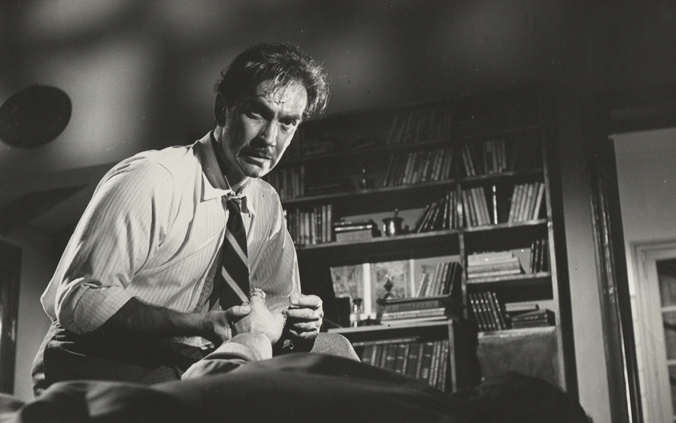
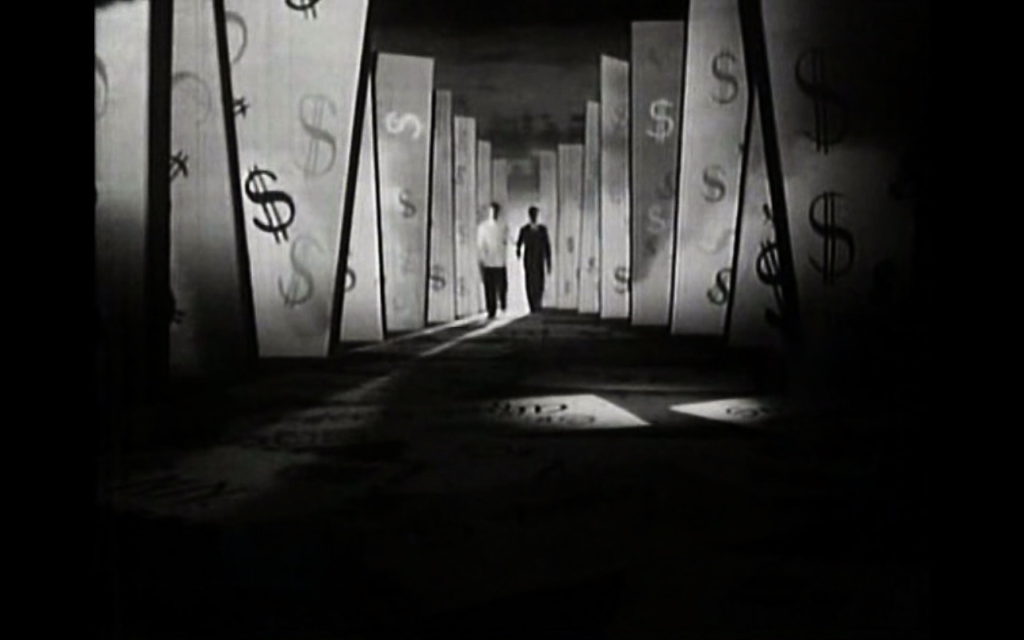
The masterpiece isLos tallos amargos(The Bitter Stems), one of the most imaginative and psychological movies of the classic film noir era. Because of his insecurities, a man invents imagined threats, but his real nemesis is himself. The shocking and ironic ending that would have been far too dark for any Hollywood film of the era.
Los tallos amargos was listed as one of the “50 Best Photographed Films of All-Time” by American Cinematographer. Its storied dream sequence is one of the most surreal in cinema. Los tallos amargos won the Silver Condor (the Argentine Oscar) for both Best Picture and Best Director (Fernando Ayala).
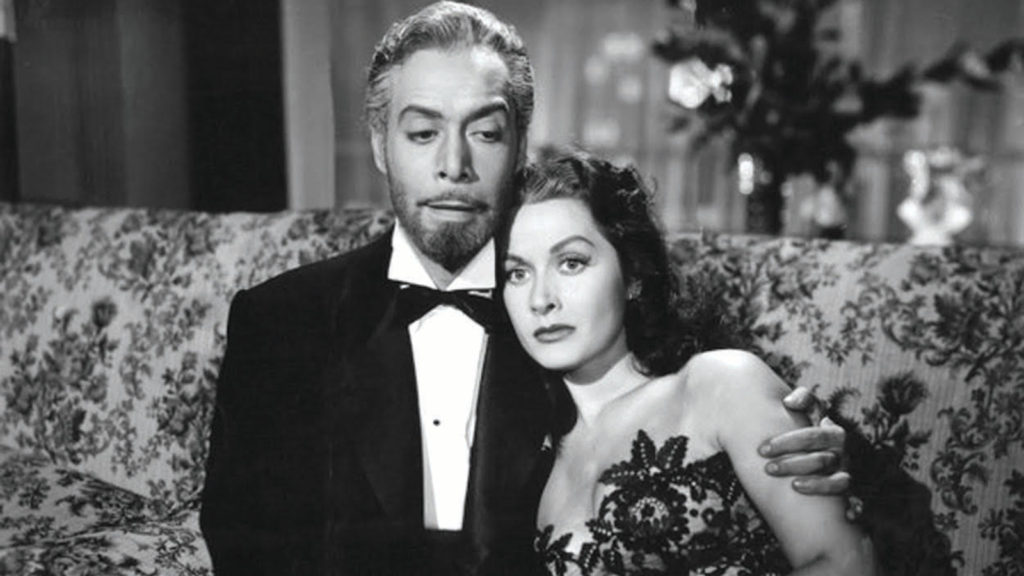
Narciso Ibáñez Menta and Laura Hidalgo in THE BEAST MUST DIE
The other film newly available on DVD is The Beast Must Die, which begins with the murder of a man so despicable that every other character has at least one motive for killing him. A visiting detective novelist becomes a murder investigator. As he peels back the onion, the whodunit revolves around which motive propelled the act of murder. There is a big reveal and a shocking ending.
The Los tallos amargos and The Beast Must Die DVDs can be pre-ordered from the Film Noir Foundation, and they will ship beginning November 2, 2021.
Sibyl: The filmmaking is so exquisite that it masks the delicious trashiness of the story. This sex-filled melodrama is now widely available to stream (Amazon, AppleTV, Vudu, YouTube).
The most eclectic watch-at-home recommendations you’ll find ANYWHERE:
Mama Weed: it’s always fun when Huppert gets outrageous. Laemmle.
ON TV
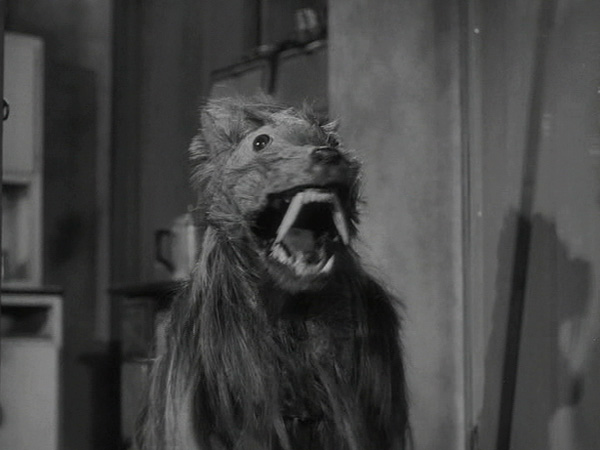
THE KILLER SHREWS – this is a dog in a fright mask
This being Halloween Week, Turner Classic Movies starts out with some of the more outlandish movie monsters on October 26, First. we have carnivorous rabbits the size of horses in Night of the Lepus. Then we have a classic from my list of Least Convincing Movie Monsters, – it’s The Killer Shrews, where the filmmakers have put fright masks on dogs, and then applied shaggy patches to the sides of the dogs and ropy rat tails to their backs.
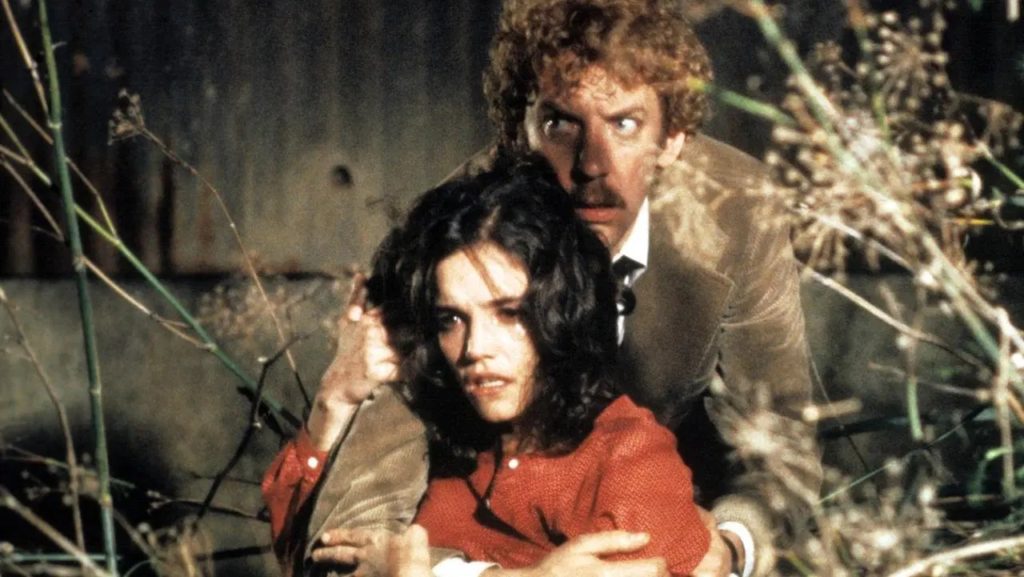
Then, on October 29, TCM brings us a REALLY scary movie, Philip Kaufman’s 1978 Invasion of the Body Snatchers. Donald Sutherland and Brooke Adams must figure out that humans are being replicated by floating pods from outer space. Leonard Nimoy plays the chillingly confident and authoritative Dr. David Kibner – not everybody can be menacing in a turtleneck. The final shot is spine tingling.
Btooke Adams and Donald Sutherland in INVASION OF THE BODY SNATCHERS
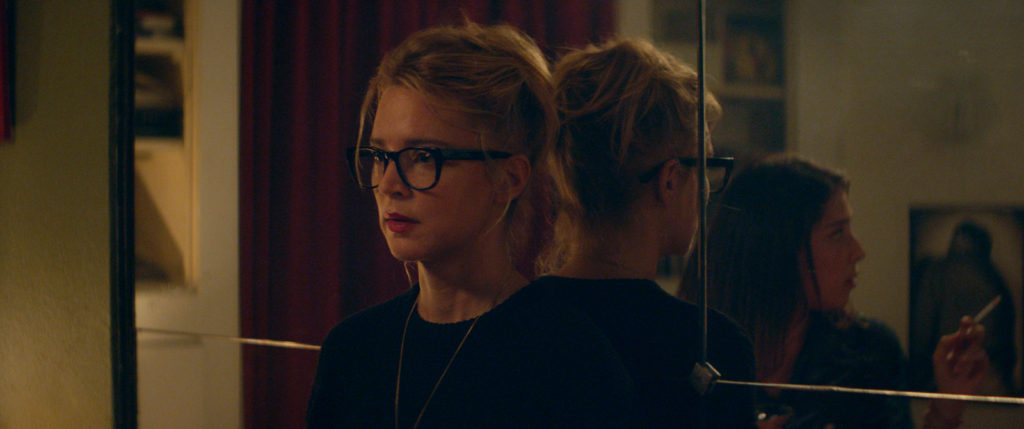
In director Justine Triet’s sex-filled (and sometimes darkly funny) melodrama Sibyl, the psychotherapist Sibyl (Virginie Efira) decides to phase out her practice and return to her primary obsession – novel writing. Sibyl is changing the trajectory of her own life, and she reflects on the one true love in her past (Niels Schneider), her sobriety, her parenting and the family of her sister (Laure Calamy).
While off-loading most of her patients, Sibyl picks up a new one – a needy young actress (Adèle Exarchopoulos from Blue Is the Warmest Color). The actress is about to jump start her movie career, but she’s having an affair with the other lead actor (Gaspar Ulliel), who is inconveniently married to the director Sandra Hüller (Toni Erdmann).
Each of these threads is its own melodrama, and Triet braids them together into an always entertaining story. We are our choices – and we can be our impulses.
Sibyl may be a psychotherapist, but she hasn’t mastered the concept of boundaries. Most egregiously, she doesn’t hesitate to use the personal secrets of her patients as fodder for her novels. Yikes! And she doesn’t resist rampant boundary-crossing by the actress, the actor and the director, either, and she’s used by all of them.
The characters, especially Sibyl, fill the camera lens with passionate sex – on the floor, up against a door, on the beach, on an apartment bathroom’s sink, on the deck of a boat, but not, to the best of my recollection, on a bed.
Niels Schneider and Virginie Efira in SIBYL
There’s lots of sly, dark humor, beginning with the over-intellectualized mansplaining in the very first scene. The sister is hilarious, especially when she coaches her niece on how to manipulate her mother. At one point, the director of the film-within-the-film responds to a lover’s meltdown on the set: “Guys, let’s keep the drama fictional if you don’t mind.“
The scene where the director first meets the actress who has just been impregnated by the director’s husband is another comic masterpiece from Hüller.
Many of us so revere French cinema that we forget that one of the things French filmmakers do well is trashy. And Sibyl is every bit as trashy as Fifty Shades of Grey. However, the editing (Laurent Sénéchal) and the acting are so exquisite that it masks the trashiness of the story.
I originally streamed Sibyl on Virtual Cinema at Laemmle. It’s now available on Amazon, AppleTV, Vudu, YouTube and DVD.
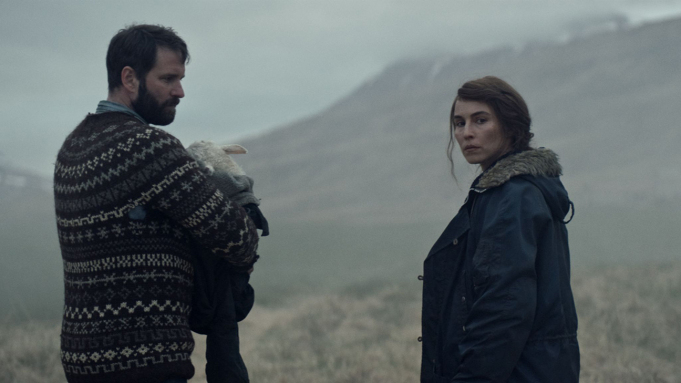
Photo caption: Ingvar Hilmir Snær and Noomi Rapace in LAMB. Courtesy of A24.
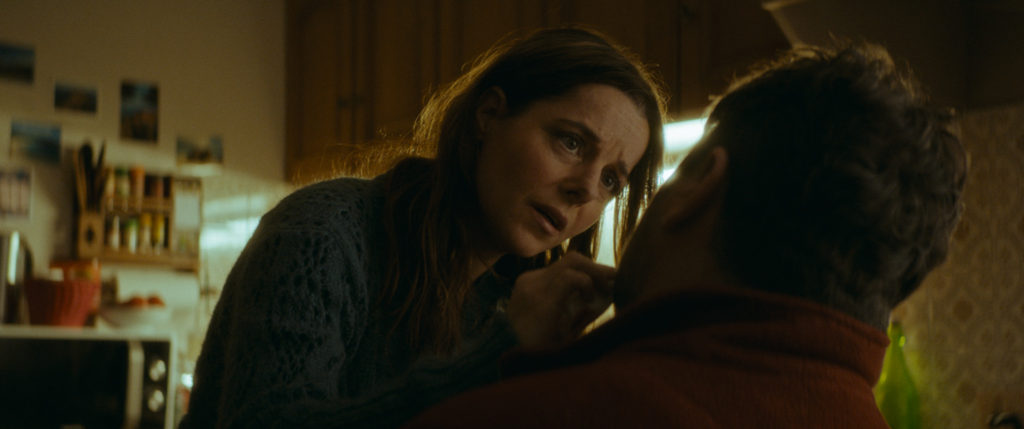
The very quiet drama Lamb is one of the most gripping films of the year, and one of the most unsettling. I’ve seen Lamb described as a horror film, but it is very unlike most of today’s horror films. I would rather label it as a dark, cautionary fable of karma with some supernatural elements.
It’s difficult to imagine a more pastoral setting than Lamb’s remote Icelandic sheep farm. Maria (Noomi Rapace) and Ingvar (Hilmir Snær Guðnason) run the farm with studied competence, caring for the sheep and maintaining their tractor. No neighbors are in sight. Neither the routine nor the isolation burdens them; they are comfortable with and enjoy each other’s company.
One of their routine tasks is birthing lambs. We see that Maria and Ingvar have an established division of labor and confidence. We think we know what to expect until a lamb is birthed and Maria and Ingvar’s reaction shows that this newborn is anything but normal.
It’s remarkable that the two never debate what to do or consult experts. They both immediately fall into behaving in complete alignment. But we suspect that they are not behaving as most people would.
Writer-director Valdimar Jóhannsson is such an able story-teller, that he doesn’t show us the lamb’s body right away, and we have to surmise what’s going on by the reactions of the characters. When Ingvar’s nogoodnik bother Petur (Björn Hlynur Haraldsson) shows up uninvited, he brings with fresh eyes and asks WTF?
Jóhannsson uses the starkly beautiful but menacing Icelandic landscape to fill us with foreboding. Something is not right here. And there will come a reckoning.
Lamb drove me to the dictionary to review the meanings of the word monster. In Lamb, there is a creature who fits under the definition, but which is pure and sweet. Another creature is the terrifying kind of monster. And a human takes an action that is normal from a human point of view, but from a monster’s perspective is, well, monstrous.
The cast (and this is really a three-hander) is excellent. You may recognize Rapace as the pierced-and-inked Lisbeth Salander in the Swedish Girl with the Dragon Tattoo franchise.
Lamb is the first feature for Valdimar Jóhannsson – and it is a superb debut. You haven’t seen anything like this movie before.
This week, we have familiar favorites – Daniel Craig’s final fling as James Bond and Tony Soprano’s origin story. Plus, the Mill Valley Film Festival is underway through this weekend – here’s my festival preview.
Time for a rant: yesterday I saw Lamb at a midday show in a 209-seat theater auditorium. When I bought my ticket, someone had already purchased a ticket for seat P9, almost at the top of the room. I purchased seat C8, in the middle of the third row. As the trailers ended, a third patron seated himself – in seat C10 – with only one seat buffering us. This guy chose between 207 available seats and picked one only two feet from me – in a pandemic. What a tool! He probably encroaches at the urinals, too.
IN THEATERS
No Time to Die: Daniel Craig returns one last time as his world-weary James Bond – and it’s epic. No disposable women this time.
The Many Saints of Newark: This prequel of The Sopranos shows us what formed the teenage Tony Soprano, especially his role model “uncle”, Dickie Moltisanti (Alessandro Nivola). Also on HBO Max.
Mama Weed: it’s always fun when Huppert gets outrageous. Laemmle.
ON TV
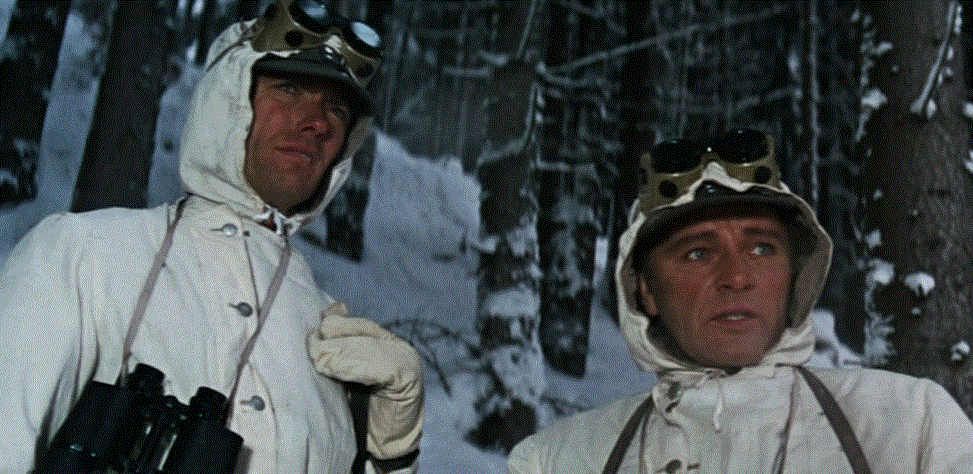
Clint Eastwood and Richard Burton in WHERE EAGLES DARE
On October 16, Turner Classic Movies presents Where Eagles Dare, a crackerjack thriller from the WWII commando subgenre (think The Guns of Navarone and The Dirty Dozen). The seemingly impossible target is a cliff-side Nazi stronghold only accessible via a funicular. And not all the commandos understand the true mission. The oddly matched stars are Richard Burton (nearing the end of his second marriage to Elizabeth Taylor) and Clint Eastwood (after the Leone spaghetti westerns but before his Dirty Harry franchise). It all works.