Movies to See Right Now

Photo caption: Idella Johnson, Sivan Noam Shimon and Hannah Pepper in Marion Hill’s film MA BELLE, MY BEAUTY. Courtesy of SFILM.

This week – an expectation-busting documentary in theaters and two new audience-pleasers to watch at home.

IN THEATERS

499: Photo courtesy of Cinema Guild.

499: In this critique of contemporary Mexico, director Rodrigo Reyes has invented the medium of “docu-fable”. It is all as real as real can be (the documentary), except for the fictional, 500-year-old conquistador (the fable). Opens today at San Francisco’s Roxie with Reyes in attendance and plays through September 8.

Also in theaters:

ON VIDEO

The Unknown Saint: I loved this crime comedy from Morocco. It’s a deadpan dive into human foibles and really, really bad luck. Netflix.

Bob Ross: Happy Accidents, Betrayal and Greed. This doc tells two improbable stories. The first is how Bob Ross, the soft-talking, permanent-coiffed painting instructor on PBS, could become such a cultural phenomenon. The second is a sordid tale of bone-picking exploitation. Netflix.

The most eclectic watch-at-home recommendations you’ll find ANYWHERE:

ON TV

Clint Eastwood in THE GOOD, THE BAD AND THE UGLY

On September 6, Turner Classic Movies gives us a helluva choice, depending on how you prefer your movie violence. For stylized movie violence (and stylized movie music, camerawork and everything else, there’s The Good, the Bad and the Ugly. Then there’s the serious-as-a-heart-attack Battle of Algiers.

The Good, the Bad and the Ugly completes Sergio Leone’s hugely influential triad of Clint Eastwood spaghetti westerns. The wonderfully idiosyncratic score by Ennio Morricone is indelible.

The Battle of Algiers is the story of 1950s French colonialists struggling to suppress the guerrilla uprising of Algerian independence fighters.  Although it looks like a documentary, it is not.  Instead, filmmaker Gillo Pontecorvo recreated the actual events so realistically that we believe that we are watching strategy councils of each side. Among the great war films, it may be the best film on counter-insurgency.  In 2003, the Pentagon screened the film for its special operations commanders.

THE BATTLE OF ALGIERS

THE UNKNOWN SAINT: a shrine to really bad luck

Photo caption: THE UNKNOWN SAINT. Photo courtesy of The Match Factory.

Here’s the premise of the crime comedy The Unknown Saint: a thief is being hunted down in the vast Moroccan desert. Just before capture, he buries his loot on a sandy hilltop and disguises it to look like a grave. After serving time in prison, he returns to dig up his loot. But he finds that some people, believing the “grave” to be that of a saint, have built a mausoleum over the grave. Even worse, an entire village has sprung up to support pilgrimage commerce, and the shrine is guarded around the clock.

The thief (Younes Bouab) starts plotting to sneak in and dig up the loot, but he’s got to overcome, among other obstacles, the night watchman’s canine corps. It doesn’t help when he brings in an accomplice so stupid that he doesn’t get that his prison nickname of “Ahmed the Brain” is ironic. And he is surprised when he is not the only nighttime tomb raider.

The thief has to wait in a village filled with eccentrics and small timers on the hustle. The dispensary has a bored young doctor, an aged nurse with a wicked sense of humor, and a waiting room full of “patients” putting on a charade of medical need.

Younes Bouab in THE UNKNOWN SAINT. Photo courtesy of The Match Factory.

The Unknown Saint is relentlessly deadpan, as all the characters plunge ahead with profound cynicism or earnest absurdity, with at least one critic likening it to Fargo. It’s all very, very funny, especially an unexpected triumph of dog dentistry involving the town barber.

The Unknown Saint is the first feature for writer-director Alaa Eddine Aljem, and it is an auspicious debut. Aljem knows how to use the vastness of the desert to express human futility and how to wring laughs out of human foibles.

The Unknown Saint is Morocco’s submission for this year’s Best International Feature Oscar. The Unknown Saint is streaming from Netflix.

BOB ROSS: HAPPY ACCIDENTS, BETRAYAL & GREED: improbability squared

Photo caption: BOB ROSS: HAPPY ACCIDENTS, BETRAYAL & GREED. Photo courtesy of Netflix.

The documentary Bob Ross: Happy Accidents, Betrayal & Greed tells two improbable stories. The first is how Bob Ross, the soft-talking painting instructor on PBS, could become such a cultural phenomenon. It’s hard not to smile when thinking of the signature permanent adorning Ross, at once ridiculous and kind of innocent, and big enough to warrant its own zip code. [Come to think of it, can you imagine ANY personality who sounded like and looked like Ross, Julia Child or Fred Rogers starring on commercial TV?]

In any event, Bob Ross: Happy Accidents, Betrayal & Greed lets us glimpse the secret sauce that Ross used to make a mundane craft into something singular and indelible. By all accounts, Ross was a very sweet guy. The edgiest thing anyone says about him is that he could tell “ornery jokes”.

The Betrayal and Greed in the title relates to the bone-picking after his death to exploit his legacy. This is a sordid tale, in sharp juxtaposition to Ross’ own career and persona.

Bob Ross: Happy Accidents, Betrayal & Greed is streaming on Netflix.

499: the legacy of Mexico’s Original Sin

499. Photo courtesy of Cinema Guild.

In director and co-writer Rodrigo Reyes’ highly original docu-fable 499, one of Hernán Cortés’ soldiers (Eduardo San Juan Breñais) is transported centuries into the future and plunged into contemporary Mexico. The movie’s title reflects a moment 499 years after Cortés’ conquest of the Aztecs in 1520; the conquistador and the audience discover that the dehumanization inherent in colonialism has persisted to plague modern Mexico.

I’m calling Reyes’ medium a “docu-fable” because it is all as real as real can be (the documentary), except for the fictional, 500-year-old conquistador (the fable).

Cast upon a Veracruz beach after a shipwreck (but 500 years later), the conquistador is terribly disoriented, and retraces Cortés’ march from Veracruz to Tenochtitlan/Mexico City. Seeing everything with a 500 year old lens, he is initially disgusted that the Indians that he conquered are now running things.

Soon he finds a Mexico reeling from narco terror. He meets Mexicans who have been victimized by the cruel outrages of the drug cartels, those risking their lives to hop a northbound train, and those in prison. In the emotional apex of 499, one mother’s account of a monstrous atrocity, clinical detail by clinical detail, is intentionally unbearable.

Reyes wants the audience to connect the dots from Mexico’s Original Sin – a colonialism that was premised on devaluing an entire people and their culture. Will the conquistador find his way to contrition?

499, with its camera sometimes static, sometimes slowly panning, is contemplative. Cinematographer: Alejandro Mejía’s work won Best Cinematography at the 2020 Tribeca Film Festival.

499 opens at San Francisco’s Roxie on September 3 with Rodrigo Reyes in attendance, and will play the Roxie for a week before its national rollout.

Movies to See Right Now

Photo caption: Jennifer Hudson as Aretha Franklin in RESPECT.

Five new movies this week, plus a seminal neo-noir on TV.

IN THEATERS

Ma Belle, My Beauty: This simmering romantic drama is a gorgeous, sexy, character-driven film. I screened Ma Belle, My Beauty at the 2021 SFFILM.

Respect: Jennifer Hudson is up to the challenge of portraying Aretha Franklin in this revealing biopic, especially her struggles to wrest command of her own creativity from both well-intentioned and ill-intentioned men. A little too long, but then there’s I Never Loved a Man (Like the Way I Love You), Respect, Think, Natural Woman and Amazing Grace.

The Lost Leonardo: This documentary peels back the onion on an ever surprising tale of discovery, scholarship, fraud, commerce and politics in the refined and pretentious art world. Is a rediscovered Renaissance masterpiece authentic, and does it matter?

Searching for Mr. Rugoff: The story of a now-unknown giant in independent cinema – a guy with the best possible movie taste and the most elevated artistic sensibilities who was personally a barbarian. Will also be streaming from the Roxie.

Eugenio Derbez in CODA

Also in theaters:

ON VIDEO

Curiosa: This French romantic drama is set in the Belle Epoque, when the Eiffel Tower was new and sexual liberation was burgeoning among literati. It would be more erotic if we cared about the characters. Laemmle.

The most eclectic watch-at-home recommendations you’ll find ANYWHERE:

ON TV

Lee Marvin in POINT BLANK

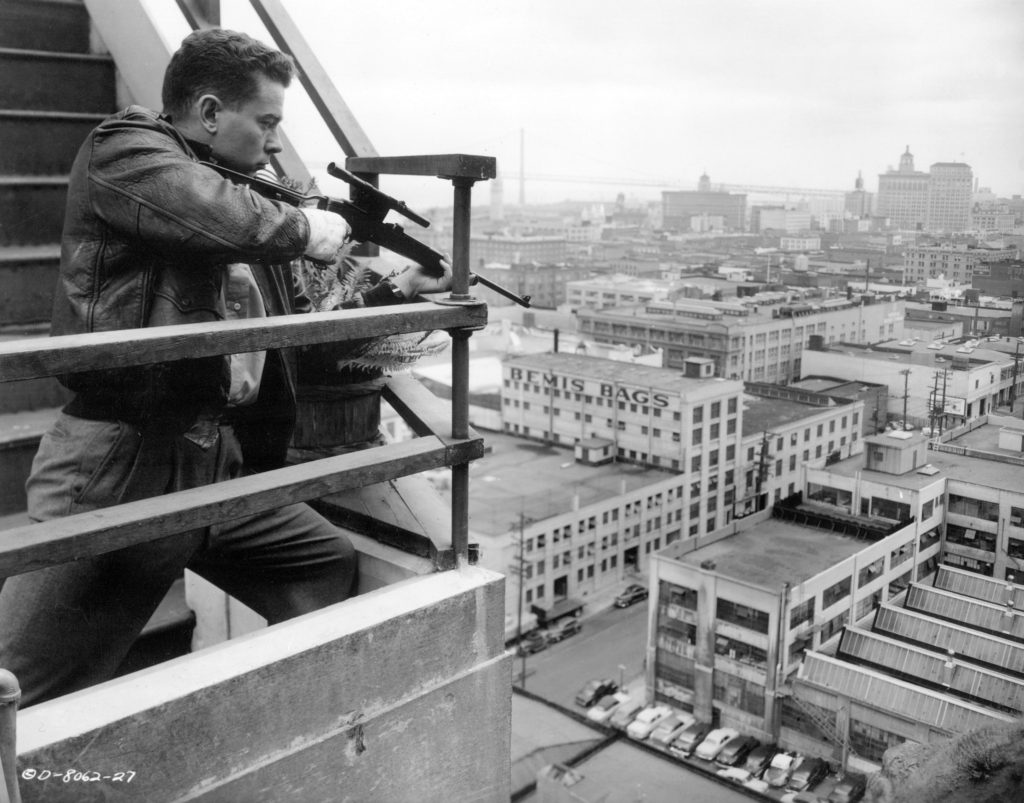
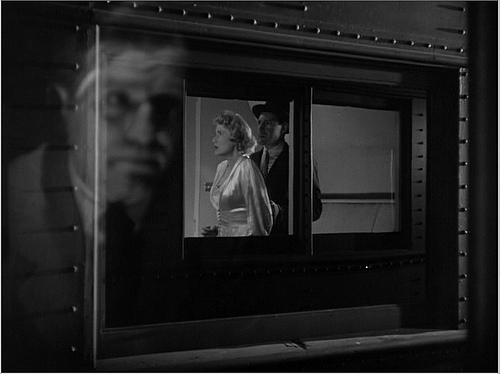
On August 28, Turner Classic Movies presents the seminal 1960s neo-noir Point Blank, starring Lee Marvin. Marvin stars as Walker, a heist man who is shot and left for dead by his partner Reese (John Vernon, Animal House’s Dean Wormer), who absconded with Walker’s share of the loot and Walker’s wife. When Walker recovers, he is hellbent on revenge, aided by his sister-in-law Chris (Angie Dickinson).

It turns out that Walker needs to trace the money through a cavalcade of Mr. Bigs (Lloyd Bochner, Keenan Wynn, Carroll O’Connor). There’s a great set piece where Walker invades a highrise penthouse, despite the heavily guarded elevator being the only entrance. It all ends in a thrilling nighttime finale at Fort Point.

Walker is a very uncomplicated character, all he wants is to kill Reese and reclaim his $93,000. Anyone in Walker’s situation would be pissed off, but Lee Marvin plays Walker in a constant state of cold rage. Lee Marvin’s unique charisma animates this relentless killing machine.

Marvin, just coming off The Dirty Dozen and having won an Oscar for Cat Ballou, was at the peak of his stardom. Marvin’s other contribution to the film was handpicking the then unheralded John Boorman to direct; (this was five years before Boorman’s masterpiece Deliverance). Boorman intentionally delivered a morally bleak story in the most deserted of locations: empty parking lots, the Los Angeles River channel. and San Francisco’s two icons of abandonment – Alcatraz and Fort Point.

Lee Marvin in POINT BLANK

If you’re wondering why Angie Dickinson was a movie star, Point Blank is for you. Angie was ballsy, sexy and always unashamedly very direct, and she rocked midcentury fashion. (She plays one unforgettable scene in a dress with bold horizontal stripes in the colors of Denny’s restaurants.)

Watch for James B. Sikking as the professional sniper; Sikking became well-known as the supercilious SWAT team commander Lt. Howard Hunter in Hill Street Blues. Future horror icon Sid Haig pops up as the security guard in the penthouse lobby.

Angie Dickinson and Lee Marvin in POINT BLANK

THE LOST LEONARDO: is it a hustle? does it matter?

THE LOST LEONARDO

The insightful and thought-provoking documentary The Lost Leonardo starts out as a mystery. We learn that there are “sleeper hunters” in the art world, who seek unrecognized or mislabeled art and buy them on speculation. Our two sleeper hunters buy a beat up, old painting for $1100 to find out if is a long lost original Leonardo da Vinci painting, “the male Mona Lisa”. So, the initial question is, is this a real Leonardo painting, of which only 15 are known to exist?

Around 1500, Leonardo painted a Jesus portrait titled Salvator Mundi (The Savior of the World), of which many copies were made by others. The speculators send their painting to the world’s top restorer of Renaissance masterpieces to query whether this could be the original. Then they approach the National Gallery of Art, which has the painting scrutinized by three leading world experts in Leonardo’s work.

The initial findings are promising. The transition between the lip and the upper lip resembles only one other painting – the Mona Lisa. Removal of patchwork paint reveals that Jesus’ thumb has been repositioned, which was a common practice by Renaissance masters, but is never is seen in a copy.

But questions remain for some. Why would Leonardo, who was meticulous, choose a piece of wood with a knothole that would assuredly eventually cause a disfiguring crack? Worse, how could a 600-year-old Leonardo show up in New Orleans with no provenance?

Both the proponents of the painting’s authenticity and those who would discredit it agree that the restorer contributed up to 85% of the actual paint on the current painting. So, even if Leonardo painted it in 1500, is it now just a masterpiece by the restorer?

The story diverts to an amazing con job that is unrelated to the painting’s authenticity. A shrewd and audacious French businessman bilks a Russian billionaire out of $45 million by pretending to be negotiating the purchase of a painting that that he has already bought. And, as the Frenchman later notes ruefully, you don’t want to piss off a Russian oligarch.

At this point, The Lost Leonardo takes us into a record-breaking $450 MILLION art sale (in which the purchaser is revealed by the CIA – yes, the CIA) with implications for global politics. Implicitly, The Lost Leonardo poses a second question – does it matter whether the Salvator Mundi is real or not? It certainly doesn’t need to be proven to those who would benefit from it being a real Leonardo – the sellers, the National Gallery of Art, Christie’s auction house – or to those who are emotionally moved by it as a piece of art.

The Lost Leonardo peels back the onion on an ever surprising tale of discovery, scholarship, fraud, commerce and politics in the refined and pretentious art world. It’s a good watch.

SEARCHING FOR MR. RUGOFF: the best movie taste in any barbarian

Photo caption: SEARCHING FOR MR. RUGOFF. Photo courtesy of Deutchman Company.

The documentary Searching for Mr. Rugoff is the story of a now-unknown giant in independent cinema. I was drawn to learn more about Donald Rugoff, whom I hadn’t heard of, because he was responsible for the US distribution of a slate of essential foreign and independent films that were the spine of American art house cinema:

  • Bruce Brown’s seminal surf movie Endless Summer (1965)
  • Milo Forman’s international breakthrough The Fireman’s Ball (1966)
  • Robert Downey, Sr.’s iconoclastic Putney Swope (1968)
  • Costa-Gavras’ double Oscar winning Z (1968) and State of Siege (1972)
  • The Mayles’ Rolling Stones-at-Altamont doc Gimme Shelter (1970)
  • De Sica’s The Garden of the Finzi-Continis (1970)
  • the great doc about a child faith healer grown up, Marjoe (1972)
  • one of the funniest movies I’ve ever seen, The Tall Blond Man with One Black Shoe (1972)
  • Bergman’s Scenes from a Marriage (1973)
  • Monty Python and the Holy Grail (1975)
  • Barbara Kopple’s Oscar winning Harlan County, USA (1976)
  • and more films by Ken Loach, Marcel Ophüls, Lina Wertmüller, Werner Herzog, Agnes Varda, François Truffaut and Satyajit Ray.

As we learn in Searching for Mr. Rugoff:

From 1965 to 1978 [Rugoff’s company] Cinema 5 received 25 Oscar nominations and 6 Oscars. 16 nominations were for foreign language films, 6 were for documentaries.

Ira Deutchman made this film when he heard that Rugoff, his first boss, had ended up buried in a pauper’s grave; (watch the movie to discover the truth on that).

However, Donald Rugoff was notoriously disheveled and unpleasant.  He always had two secretaries posted outside his office because of the high probability that one would quit at any time. He was so volatile that many of his associates incorrectly believed that he had a steel plate in his head that affected his behavior. His own son describes him as a “toxic figure” in the home.

So, there we have it – the guy with the best possible movie taste and the most elevated artistic sensibilities was personally a barbarian.

He was, however, also a mad genius of PT Barnum-like promotion. Until times changed and he wasn’t. Rugoff’s life was a wild ride – and it was critical to an important moment in cinema.

Searching for Mr. Rugoff is opening in person at and streaming from the Roxie. I streamed it from Laemmle.

MA BELLE, MY BEAUTY: a simmering romantic reunion

Idella Johnson, Sivan Noam Shimon and Hannah Pepper in Marion Hill’s film MA BELLE, MY BEAUTY. Courtesy of SFILM.

In the beginning of the simmering romantic drama Ma Belle, My Beauty, the New Orleans musicians Bertie (Idella Johnson) and Fred (Lucien Guignard) receive a surprise visitor. Fred, the band leader and Bertie, the vocalist, have married and relocated their jazz band to a rambling French farmhouse owned by Fred’s parents. Both the marriage and the move were Bertie’s idea, but now she’s depressed and no longer working with the band.

We learn that Bertie, while involved with Fred, had a simultaneous relationship with Lane (Hannah Pepper), until Lane starting dating another woman. Now Lane is single again, and Fred, hoping to shake Bertie out of her depression, has invited Lane to visit and surprise Bertie.

A surprise it is, and not altogether welcome. Bertie tells Hannah that Bertie’s happiness does not depend on either Fred or Lane – but is that true? And is Lane really willing to accept a non-exclusive relationship? And who is whose creative muse?

Bertie and Hannah spar, Hannah has a noisy fling with another guest, sexual tensions simmer, and before you know it, somebody is harnessing on the strap-on.

Almost all the action takes place at the farmhouse and the setting is sumptuous – Grade A Travel Porn. The farm is located in Anduze, France, at the very edge of the Rhone Valley, nestled in the foothills of the Cévennes.

Ma Belle, My Beauty is the first feature by writer-director Marion Hill, and it won an audience award at Sundance. I screened Ma Belle, My Beauty at SFFILM, and, in the Q&A, Marion Hill said that she was seeking to shoot a film in this idyllic French location, along with aspiring to explore the post-breakup dynamics of polyamorous women.

There’s a touch of jazz in Ma Belle, My Beauty, and Idella Johnson’s vocal performance shine.

The setting may be languid, but we know that Hill’s characters may erupt in passion at any moment. Ma Belle, My Beauty is a gorgeous, sexy, character-driven film. I screened Ma Belle, My Beauty at the 2021 SFFILM.

CURIOSA: erotic, but do we care?

Noémie Merlant and Niels Schneider in CURIOSA. Photo courtesy of Memento Films.

The French romantic drama Curiosa is set in the Belle Epoque, when the Eiffel Tower was new and sexual liberation was burgeoning among literati.

The saucy Marie (Noémie Merlant) is in love with Pierre (Niels Schneider), but marries the more financially established Henri (Benjamin Lavernhe). Pierre is a libertine (and, if British, would have been called a “rake”). Pierre returns to Paris from Algeria with a girlfriend unencumbered with inhibitions and an obsession with erotic photography. Marie instantly begins an affair with Pierre, and, boy, does she start losing her inhibitions, too.

Merlant and others spend much of Curiosa in various states of undress, so much so that teenage boys will have difficulty fast forwarding between them. Impressively, the distributor was able to find and cobble together 1 minute and 38 seconds worth of mostly clothed action. for the trailer below. It bears mention that Curiosa was co-written and directed by a female filmmaker, Lou Jeunet.

The characters are “based loosely” on the writings and photographs of real literary figures. We do know that Marie de Heredia married Henri de Régnier, had an affair with Pierre Louÿs and posed for his erotic photographs.

The cinematography by Simon Roca is beautiful, and this movie filled with attractive, naked people should be more engaging. The problem is that it is difficult to relate to or care about any of the characters.

I streamed Curiosa from Laemmle.

RESPECT: struggling to take command of her own artistry

Jennifer Hudson in RESPECT

Aretha Franklin was, if anything, formidable, and Jennifer Hudson reaches formidability as Aretha in Respect. Hudson (handpicked by Aretha to star in her own biopic) is sensitive enough to play the ambitious but confidence-challenged young Aretha and brassy enough to soar as the diva that Aretha became.

Respect concentrates on three stages of Aretha’s life – her childhood in the 1950s, her uncertain career at Columbia Records in 1960-65 and her creative partnership with Jerry Wexler, beginning in 1967, that led to stardom. The film culminates with the1972 live gospel album that we can now watch in the 2019 film Amazing Grace.

The common thread in Respect is Aretha’s learning to push back on the attempts by men to control her artistically, financially and intimately. The film’s high point is Aretha finally getting the opportunity, in a Muscle Shoals recording session, to impose her own creativity on I Never Loved a Man (Like the Way I Love You); we’re able to watch the instant that Aretha transforms herself into an icon. Hudson also delivers killer versions of Respect, Amazing Grace, Natural Woman and (my personal favorite) Think.

During much of the film, 12-year-old actress Skye Dakota Turner, plays a ten-year-old Aretha (and she’s heartbreakingly great). Aretha’s formative years were startlingly unusual. For one thing, as the daughter of a celebrity minister dad and a celebrity gospel singer mom, she was unusually privileged for a black youngster in the 1950’s – she was spared poverty and grew up in a home where MLK himself, Dinah Washington and gospel music legend James Cleveland were frequent guests. On the other hand, her broken home was unhealthy enough that Aretha became pregnant at age 12, and again at age 14. She emerged well-connected – and severely traumatized.

Forest Whitaker is, as one would expect, excellent in the pivotal role of Franklin’s father, C.L. Franklin. The cast is uniformly excellent including Audra MacDonald as Aretha’s mom, Kimberly Scott as her grandmother, Marc Maron as Jerry Weinberg, Marlon Wayans as her seamy first husband, and Mary. J. Blige as Dinah Washington.

Respect is 2 hours, 25 minutes long, and could have been better if 15-20 minutes shorter. Nevertheless, it gives us a sound view of the factors that molded Aretha Franklin’s personality, and her struggles to take command of her own artistry.