Previewing the Nashville Film Festival

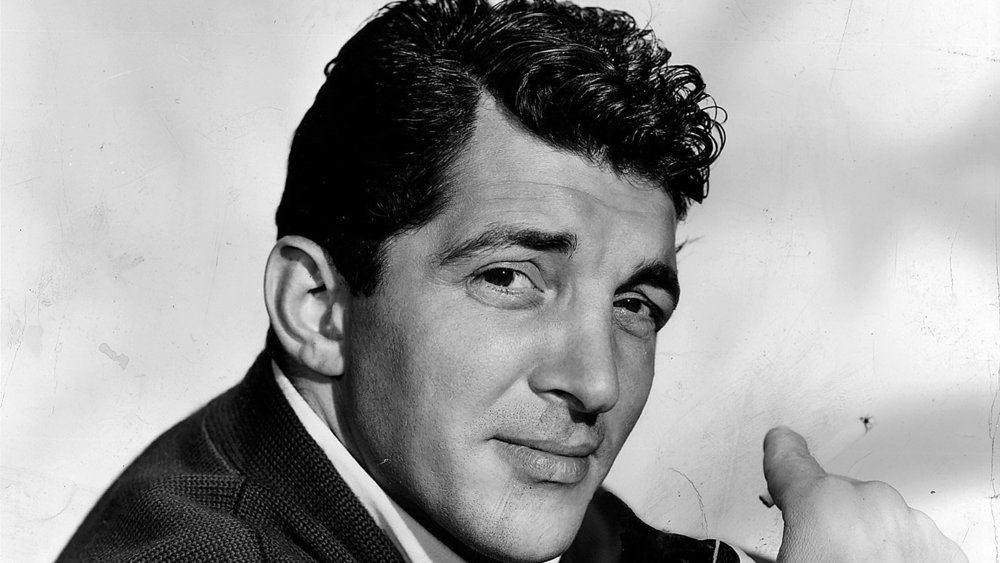
Brian Wilson in BRIAN WILSON: LONG PROMISED ROAD. Photo courtesy of Nashville Film Festival

The Nashville Film Festival opens on Thursday, September 30 and runs through October 6 with a diverse menu of cinema, available both in-person and on-line. I have already seen over a dozen films in the program, and I’m impressed so far. I’m am heading back to Nashville for my first in-person film festival coverage since March 2020.

The Nashville Film Festival is the oldest running film festival in the South and is an Academy Award qualifying festival. The program includes a mix of indies, docs and international cinema, including world and North American premieres.

This year’s fest opens strong with the in-person screening of Brian Wilson: Long Promised Road, an unusual documentary about an unusual man.  The Beach Boys’ songwriting and arranging genius weighs in on his life and work.  The extremely terse Brian Wilson would not be the ideal subject for a conventional interview documentary.  Instead, the filmmakers have Wilson’s old and trusted friend, rock journalist Jason Fine, drive him around important places in Wilson’s life; it’s the format of Comedians in Cars Drinking Coffee, and it pays off in with emotional revelations.  It turns out that Wilson is remarkably open about his travails and his creative process – and we get to see which of his songs that Brian himself listens to when he is feeling grief or nostalgia.   

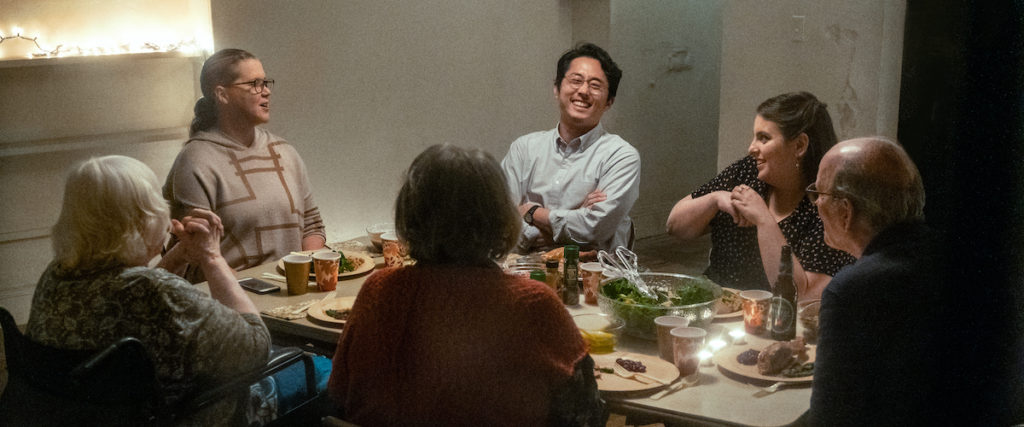
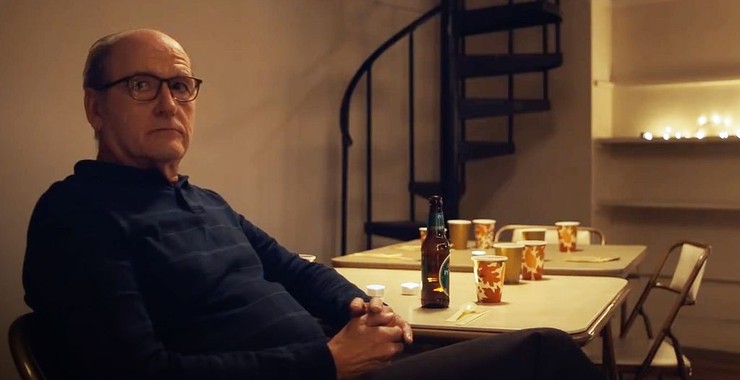
The fest closes with The Humans, Stephen Karam’s film version of his Tony Award-winning play. It’s a family drama with Steven Yuen, Beanie Feldstein, Richard Jenkins, Amy Shumer and June Squibb. I haven’t seen it, but it got promising buzz at Toronto and is slated for a theatrical release by A24.

Lauren Ponto, Nashville Film Festival’s Director of Programming, says, “The 2021 Nashville Film Festival will be a different experience than our audiences are historically accustomed to and our team is excited for the community to be a part of it. The reimagined 52nd Festival will include 150 films ranging in categories from narratives, documentaries, new twists on horror, US Indies, eclectically bold Music Documentaries and much more.

Ponto continues, “It’s been invigorating to program the Festival this year, knowing that we will be able to showcase a select group of films in person. The content is stronger than ever and very intentional.

The Nashville Film Festival embraces its home in Music City and emphasizes films about music. Besides Brian Wilson: Long Promised Road, the program includes

  • Fanny: The Right to Rock documents the first all-female rock band to get signed by a major record label and churn out five albums. Fifty years ago, the band Fanny was breaking ground for women musicians – and for lesbians and Filipinas. These women can still really rock in their 70s, and they’re a hoot.
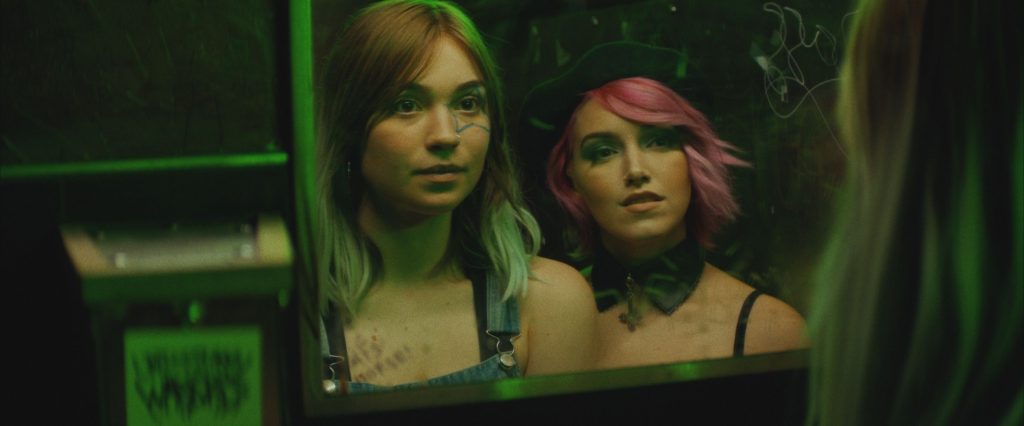
  • Poser (my favorite film in the festival) is set in the underground music scene of Columbus, Ohio’s Old North and is packed with original music. It’s a dark psychological portrait of an artistic wannabe among real artists.
  • Fable of a Song (a film that I haven’t seen yet) is a documentary about the writing of a song; this film was originally intended to document the creative process, but real life intervenes both to stagger the artists and to impact the very meaning of the song’s lyrics.
  • Hard Luck Love Song (another film that I haven’t seen yet) is a portrait of a troubled, self-sabotaging musician. Inspired by singer-songwriter Todd Snider’s song Just Like Old Times.

See it here first: Old Henry, Hard Luck Love Song, Luzzu, Beta Test, Flee, The Humans, Clara Sola, The Tale of King Crab and Poser have all secured distribution and will be available to theater and/or watch-at-home audiences. Before just anybody can watch them, you can get your personal preview at the Nashville Film Festival.

Check out the program and buy tickets at the festival’s Film Guide. Watch this space for Nashville Film Festival recommendations (both in-person and on-line) and follow me on Twitter for the latest.

Sylvie Mix and Bobbi Kitchen in POSER. Photo courtesy of Nashville Film Festival.

Movies to See Right Now

Photo caption: Jessica Chastain in THE EYES OF TAMMY FAYE

This week, there are a few good choices in theaters, and it may be your last chance to catch The Lost Leonardo until it streams. Plus more watch-at-home choices. Stay tuned for my preview coverage of the Nashville Film Festival – both in-person and virtual cinema.

IN THEATERS

The Eyes of Tammy Faye: Jessica Chastain’s powerhouse performance in humanizes and brings dignity to the disgraced, over-made-up televangelist.

Also in theaters:

ON VIDEO

Kansas City Bomber: self-discovery at the roller derby track. Amazon, AppleTV, Vudu and YouTube.

What She Said: The Art of Pauline Kael: the remarkably thorough and insightful biodoc of the iconic film critic Pauline Kael and her drive for relevance. On TCM on September 26, and rentable from Amazon, AppleTV, Vudu and YouTube.

The most eclectic watch-at-home recommendations you’ll find ANYWHERE:

ON TV

88 years ago, only four years into the Talking Picture Era, there were dramedies (even though the word dramedy had yet to be coined). On September 26, Turner Classic Movies airs George Cukor’s Dinner at Eight, an all-star 1933 Hollywood dramedy that mostly still stands up today. Jean Harlow is hilarious as the trophy bride of the course noveau-millionaire played by Wallace Beery. Marie Dressler is at least as funny as a former star yearning to relive an old romance. John Barrymore adds a heartbreaking performance as a man facing disgrace. If all this weren’t enough, we also get Lionel Barrymore, some ditziness from Billie Burke and a splash of sarcasm from quick-patter artist Lee Tracy. Harlow, who died at 26, is usually remembered as a platinum blonde sex symbol, but Dinner at Eight reminds us of her comic brilliance.

THE EYES OF TAMMY FAYE: some dignity for the clown

Photo caption: Andrew Garfield and Jessica Chastain in THE EYES OF TAMMY FAYE

Jessica Chastain’s powerhouse performance in The Eyes of Tammy Faye humanizes and brings dignity to a disgraced celebrity. Tammy Faye, of course, is Tammy Faye Bakker, married to televangelist Jim Bakker of the PTL Club. The relentlessly upbeat couple eschewed fire-and-brimstone for a happy talk ministry based on “Jesus loves you” and “God wants you to be rich”.

Jim Bakker was the preacher and talk show host. Tammy Faye was the singer, puppeteer and sidekick. Tammy Faye’s on-her-sleeve emotions, swinging between pep talks and ready tears – were especially popular (and revenue-inducing) with the PTL Club’s audience.

Of course, the ministry empire was a Ponzi scheme, which eventually sent Jim into federal prison; a sex scandal precipitated the collapse. The story is well-chronicled in the excellent 2000 documentary, also titled The Eyes of Tammy Faye, upon which this movie is based (available to stream on Amazon, AppleTV, Vudu and YouTube).

Jim Bakker (and certainly not Tammy Faye) was the mastermind of the fraud. But Tammy Faye, with her increasingly grotesque makeup and her flamboyant persona, had also become a figure of widespread ridicule, and her fall from grace was also very harsh.

Chastain’s convincing performance is centered on Tammy Faye’s EverReady Bunny exuberance and naive good intentions. Reportedly, she had to spend several hours each day getting outfitted wih prosthetics and daubed with makeup.

Andrew Garfield perfectly captures Jim Bakker’s smarminess and ambiguous sexuality.

Tammy Faye’s mother is played by Cherry Jones (Transparent), who always gives a strong performance. Here she plays a character who starts out seeming to be an emotionally distant, kill-the-dream stick-in-the-mud, but who evolves into the story’s moral anchor.

The one false note in The Eyes of Tammy Faye is Vincent D’Onofrio, who is supposed to be playing Jerry Falwell. Falwell, of course, was rarely seen without his smug grin. Onofrio plays him as a hulking, never smiling menace and with a much different accent and speech pattern than Falwell’s. It’s as if D’Onofrio had never seen Falwell, and his performance completely misses the insincerity and hypocrisy behind Falwell’s veneer of affability.

The Eyes of Tammy Faye is now in theaters.

WHAT SHE SAID: THE ART OF PAULINE KAEL – the drive for relevance

Pauline Kael in WHAT SHE SAID: THE ART OF PAULINE KAEL

What She Said: The Art of Pauline Kael is the remarkably thorough and insightful biodoc of the iconic film critic Pauline Kael and her drive for relevance. It’s coming up September 26 on Turner Classic Movies.

Documentarian Rob Garver has sourced What She Said is well-sourced with the memories of Kael’s colleagues, rivals and intimates. Garver’s portrait of Kael helps us understand her refusal to conform to social norms as she basically invented the role of a female film critic and what today we might call a national influencer on cinema.

Of course, one of Kael’s defining characteristics was her all-consuming love of movies, a trait shared by many in this film’s target audience. Fittingly, Garver keeps things lively by illustrating Kael’s story with clips from the movies she loved and hated. Garver’s artistry in composing this mosaic of evocative movie moments sets What She Said apart from the standard talking head biodocs.

Kael was astonishingly confident in her taste (which was not as snooty as many film writers). For the record, I think Kael was right to love Mean Streets, Band of Outsiders, Bonnie and Clyde, and, of course, The Godfather. It meant something to American film culture that she championed those films. She was, however, wrong to love Last Tango in Paris. She was also right to hate Limelight, Hiroshima Mon Amour and The Sound of Music. But Kael was just being a contrarian and off-base to hate Lawrence of Arabia and Shoah.

Kael was by necessity an intrepid self-promoter and filled with shameless contradictions. She famously dismissed the auteur theory but sponsored the bodies of work of auteurs Scorsese, Peckinpah, Coppola and Altman. She loved – even lived – to discover and support new talent.

Most of the people we like and admire possess at least some bit of selflessness and empathy. Kael’s daughter Gina James says that Kael turned her lack of self awareness into triumph. This observation, of course, cuts both ways.

I first screened What She Said: The Art of Pauline Kael for the 2019 San Francisco Jewish Film Festival. Again, TCM will air it on September 26, and you can rent it from Amazon, AppleTV, Vudu and YouTube.

KANSAS CITY BOMBER: self-discovery at the roller derby track

Raquel Welch (right) in KANSAS CITY BOMBER

Kansas City Bomber, which plays September 23 on Turner Classic Movies, is a hella entertaining, kickass 1970s tale of female self-discovery. Raquel Welch plays a single mom scraping by, who skates in the roller derby at night. She and her daughter (Jodie Foster in only her second feature film film) move to a new city, and she joins the local roller derby team. She becomes the team’s star, and the team owner (Kevin McCarthy) is eager to date her (she’s Raquel Welch!) and use her to leverage his next business expansion.

There is a significant power imbalance between the skater and the owner – for starters, she’s broke in a new town, and he’s her boss. He expects both to have her sexually and to cynically profit from her talent. Will she be exploited or not? Is she another of his pawns?

Kevin McCarthy in KANSAS CITY BOMBER

In 1972, Raquel Welch was thought of more as a novelty movie star than as an actress. She had become instantly recognizable for displaying her spectacular figure in a skintight spacesuit (Fantastic Voyage), a doe-skin bikini (One Billion Years B.C.), a star spangled bikini (Myra Breckenridge), and flimsy undergarments (100 Rifles). Although the poster of her cavewoman bikini had gone viral, she hadn’t gotten the chance to show that she could act.

The role of the hard scrabble single mom in Kansas City Bomber was perfect for Welch. Welch had two kids by the time she was 21 and was divorced at 24. While trying to make it in showbiz, she bounced between jobs as a department store model, cocktail waitress and TV “weathergirl”.

In her performance in Kansas City Bomber, Welch nails the character of a woman committed to raising her kid while facing one indignity and bad choice after another. She also was up to the physicality of a character who competes in a contact sport where fisticuffs are common. Raquel reportedly has that said that Kansas City Bomber was the first of her films that she actually liked. And, as in The Three Musketeers a few years after, she got to show her acting chops.

Trivia digression: Welch’s father was Bolivian, and her cousin was the first female president of Bolivia.

Jodie Foster and Raquel Welch in KANSAS CITY BOMBER

Kansas City Bomber is a genre film that works because, along with the subtext of feminist self discovery, the action is really good. Besides mixing it up on the track, Welch’s character beats up some male attackers, too.

Kansas City Bomber has real professional roller derby skaters and includes actual roller derby action and crowd reactions. The actors were roughed up during the shoot, and Raquel said “Skating is a batchy, sweaty, funky life.” Verisimilitude abounds. Kansas City Bomber is indisputably the best-ever roller derby movie. (My own favorite childhood team was the Bay Bombers with Joanie Weston and Charlie O’Connell.)

Raquel Welch and Helena Kallianiotes in KANSAS CITY BOMBER

Helena Kallianiotes plays the rival roller derby star in the Big Race at the finale. Kallianiotes was unforgettable as the unbearably negative hitchhiker in Five Easy Pieces (her first credited role); this is one of only ten feature films in her career. Bill McKinney, one of the the infamous “Squeal Like a Pig” hillbillies in Deliverance, also appears.

Besides catching it on TCM this week, you can stream Kansas City Bomber from Amazon, AppleTV, Vudu and YouTube.

Raquel Welch in KANSAS CITY BOMBER

Movies to See Right Now

Photo caption: Oscar Isaac and Tye Sheridan in THE CARD COUNTER. Photo courtesy of Focus Features / ©2021 Focus Features, LLC

I’ve got about eight solid movie-going options in theaters for you this week. I’ll be seeing at least three more new movies this week, so stay tuned for yet more recommendations.

IN THEATERS

The Card Counter: Oscar Isaac stars in Paul Schrader’s dark portrait of highly disciplined loner who lives by a code but can’t submerge his past.

Best Sellers: Michael Caine and Aubrey Plaza star in a breezy comedy about a marketing campaign that takes off when bad behavior goes viral on social media.

Also in theaters:

REMEMBRANCE

Nino Castelnuovo in THE UMBRELLAS OF CHERBOURG

Actor Nino Castelnuovo matched up with the then 20-year-old Catherine Deneuve for a doomed romance in the innovative French musical The Umbrellas of Cherbourg (1964). In the epilogue, when Castelnuovo gazes out the window of his gas station, it’s one of the great weepers in cinema history.

ON VIDEO

The most eclectic watch-at-home recommendations you’ll find ANYWHERE:

ON TV

Gloria Grahame and Broderick Crawford in HUMAN DESIRE

On Saturday and Sunday, Turner Classic Movies’ Noir Alley features Human Desire with Gloria Grahame. Grahame is one of the enduring figures of film noir because of her performances In a Lonely Place and The Big Heat. But she’s at least as good in this less well-known turn. Grahame plays Vicki, married to a brutish wife-beater (Broderick Crawford). Vicki is no saint – she accompanies hubby on a murder and helps him cover his tracks by coming on to a hunky railroad engineer (Glenn Ford). Vicki then suggests to her lover that if only her husband were dead…But Vicki, while morally flexible, isn’t bad to the core. She’s complicated. TCM will provide an Intro and Outro by Eddie Muller, the Czar of Noir.

And, on September 21, TCM airs the little seen All Night Long, one of my Overlooked Neo-noir. It’s Shakespeare’s Othello, set in the jazz world of 1962 London – and with music performed by Charles Mingus, Dave Brubeck and other real jazz musicians.

Patrick McGoohan and Paul Harris in ALL NIGHT LONG

THE CARD COUNTER: a loner, his code and his past

Photo caption: Oscar Isaac in THE CARD COUNTER. Photo courtesy of Focus Features / ©2021 Focus Features, LLC

Oscar Isaac stars in Card Counter, Paul Schrader’s dark portrait of a highly disciplined loner who lives by a code but can’t submerge his past. Isaac’s character, improbably named William Tell, is a professional gambler, who lives in an endless string of motels and casinos.

The first thing we learn about William Tell is his rigid sense of self-discipline – in an OCD display of entering a new motel room and covering each piece of furniture in twine-bound sheets. This is an expert who can win free money at casinos, but resists winning too much, so he doesn’t get kicked out. He prefers anonymity to acclaim. More than anything, William Tell invests in keeping his head down.

It turns out that Tell has been traumatized by things he did as an army guard at Abu Ghraib – and the consequences. It’s no surprised that yet another solitary, emotionally damaged character has sprung from the dark mind of Paul Schrader (Taxi Driver, First Reformed).

Oscar Isaac and Tye Sheridan in THE CARD COUNTER. Photo courtesy of Focus Features / ©2021 Focus Features, LLC

Above all, Tell is a man with a code. He meets a young man (Tye Sheridan), also haunted by the aftereffect of Abu Ghraib, who is consumed by a revenge fantasy. Although Tell avoids social entanglements, he is compelled to save the kid from himself.

Although most of The Card Counter takes place in casinos, it’s really not gambling movie. There is some card play and some gaming procedure. This is a character-driven story – and it’s not about who wins or how much. Schrader playfully hints at a big poker showdown, but it’s a red herring.

The role of this intense and obsessive man is perfect for Oscar Isaac and his piercing gaze. I usually don’t warm to Isaac, although he has been proficient in some films that I love: Ex Machina, The Two Faces of January. Maybe I don’t see a sense of humor in there? Anyway, he is stellar here.

Tye Sheridan is excellent as the young man bent on revenge. Tiffany Haddish plays a woman who runs a stable of professional gamblers and lives off her emotional intelligence; it’s a delight every time she is on-screen. The great Willem Dafoe appears in a brief but pivotal role.

I haven’t ever seen a movie character like William Tell, which makes The Card Counter an excellent watch.

BEST SELLERS: orneriness goes viral

Sir Michael Caine and Aubrey Plaza in BEST SELLERS. Photo courtesy of Screen Media Films.

Michael Caine and Aubrey Plaza star in the breezy comedy Best Sellers. Plaza plays Lucy Stanbridge, who has inherited a publishing company on the verge of insolvency. She discovers one remaining possible lifeline – the company is still owed one book by a famous author in its stable. Unfortunately, that author is Harris Shaw (Caine), an anti-social, elderly alcoholic.

Harris Shaw’s anti-sociability is anything but passive, which challenges Lucy as she drags a manuscript out of him and takes him, brimming with hostility, on a book tour.

Just when the audience is settled in for a madcap, odd-couple-on-the-road comedy, Best Sellers adds a topical layer. Harris Shaw’s bad public behavior is so extreme that, instead of sabotaging the book’s marketing campaign, it makes him a viral sensation on social media. In an even more wickedly funny turn, Shaw’s sudden popularity is with consumers who do not buy books; “you should be selling t-shirts”, mutters one fan.

Both Sir Michael Caine and Aubrey Plaza (Parks and Recreation) are funny here, in roles that do not challenge them. In particular, the character of Lucy isn’t written to take advantage of Plaza’s capacity to be simultaneously funny and dangerous (Black Bear).

Best Sellers is the first feature for director Lina Roessler. Although Lucy and Harris develop a friendship and face Harris’ end of life, Roessler manages to keep Best Sellers from becoming pretentious or maudlin.

Best Sellers opens September 17 in theaters and on VOD.

Movies to See Right Now

Photo caption: THE LOST LEONARDO

This week, I still like The Lost Leonardo and Ma Belle, My Beauty in theaters – and a host of watch-at-home suggestions.

REMEMBRANCES

Jean-Paul Belmondo

Jean-Paul Belmondo, with his flattened nose and a cigarette dangling from his full lips, was the personification of European cinema in the early 1960s, from the French New Wave to Jean-Paul Melville neo-noirs to Italian art films. Projecting an insouciant sexiness, he starred with Jean Seberg in Jean-Luc Godard’s Breathless, which basically kicked off the Nouvelle Vague with Truffaut’s The 400 Blows. Breathless was released in 1960, the same year that Belmondo co-starred with Oscar-winner Sophia Loren in Vittorio de Sica’s Two Women, co-starred with Jena Moreau in Seven Days, Seven Nights, and starred in four other films, to boot.

Michael Constantine in MY BIG FAT GREEK WEDDING

Super-prolific character actor Michael Constantine appeared in hundreds of television episodes (113 in Room 222 alone). I liked him in his movie comedies – as the grumpy former GI in If It’s Tuesday, It Must Be Belgium and as the Windex-obsessed dad in My Big Fat Greek Wedding.

IN THEATERS

ON VIDEO

On Being a Human Person: A documentary on Roy Andersson, an auteur who makes very, very odd movies that are deeply profound, humanistic and mostly funny. Laemmle.

The Unknown Saint: Here’s another pitch for this delightful crime comedy from Morocco. It’s a deadpan dive into human foibles and really, really bad luck. Netflix.

THE UNKNOWN SAINT. Photo courtesy of The Match Factory.

The most eclectic watch-at-home recommendations you’ll find ANYWHERE:

ON TV

Timothy Bottoms (standing) in THE PAPER CHASE

On September 14, Turner Classic Movies airs one my personal favorite movies, The Paper Chase, which traces a young man’s (Timothy Bottoms) first year at Harvard Law School and is based on the memoir of a recent grad. Although IMDb labels The Paper Chase as 1973 movie, I saw it in the summer of 1975, just as I was about to enter law school myself.   It’s such a personal favorite because just about EVERYTHING in the movie is something that I experienced myself at in my first year at Georgetown Law – everything, that is, EXCEPT dating Lindsay Wagner.  It’s a compelling story and the great producer John Houseman won an acting Oscar for his performance as the mentor/nemesis law professor; Houseman immediately cashed in with his ”They make money the old fashioned way… they EARN it” commercials for Smith Barney.

The Paper Chase is also notable as the first feature film credit for actors Craig Richard Nelson, Graham Beckel (Brokeback Mountain, L.A. Confidential)  and Edward Herrmann (known for many portrayals of FDR).  All three are stellar as members of the law school study group, and these guys have now combined for over 300 screen acting credits.  The Paper Chase is also available to stream from Amazon, Vudu and YouTube.

John Houseman in THE PAPER CHASE

BEING A HUMAN PERSON: this is what I mean

Roy Andersson in BEING A HUMAN PERSON

In the documentary Being a Human Person, we meet the filmmaker Roy Andersson as he makes what he acknowledges to be his final film at age 76. Andersson is an auteur who makes very, very odd movies that are humanistic, deeply profound and mostly funny. The movies, like A Pigeon Sat on a Branch Contemplating Existence and this year’s About Endlessness, are comprised of apparently random tableaus in which ordinary-looking Scandinavians do very little.

In thinking about Being a Human Person, I was initially going to recommend it to folks who have seen Andersson’s films. But then it occurred to me that it really a perfect vehicle to introduce newbies to Andersson’s work.

Now, I treasure watching Andersson’s films, but if you’re looking for movies that immediately make sense, then Andersson, most assuredly, is not your guy. In each film, Andersson curates a range of human behavior and lets the audience try to connect the dots. But when he is interviewed for Being a Human Person, he’s happy to tell you what he intends the movies to mean.

Andersson does not equate success and happiness. A wunderkind, Andersson directed a hit movie at age 28, and then plunged into depression. He bought a central Stockholm warehouse in 1981 to “develop my own language”. He built his studio inside and lives in an apartment above.

Andersson’s process is as peculiar as are his movies. He builds the set for each vignette one at a time in his studio. He expertly deploys a range of old school techniques like trompe-l’œil.

Andersson’s movies are about the foibles of everyday humans. They show people’s moments of fragility, vulnerability, confidence and lack thereof. One of his colleagues observes, “Roy sees people who aren’t in the movies.  It’s people who who haven’t been very successful in life. He gives them dignity .” For research, Andersson sits in sidewalk cafes to people-watch (“so I can see the menu“).

Andersson himself notes, “When you think there’s no escape, you are a prisoner in your own mortality.“ Overusing alcohol to combat boredom, Andersson struggles to finish his movie.

Director Fred Scott made excellent use of his access to Andersson, Andersson’s coworkers and family to tell this story. Being a Human Person is streaming from Laemmle.