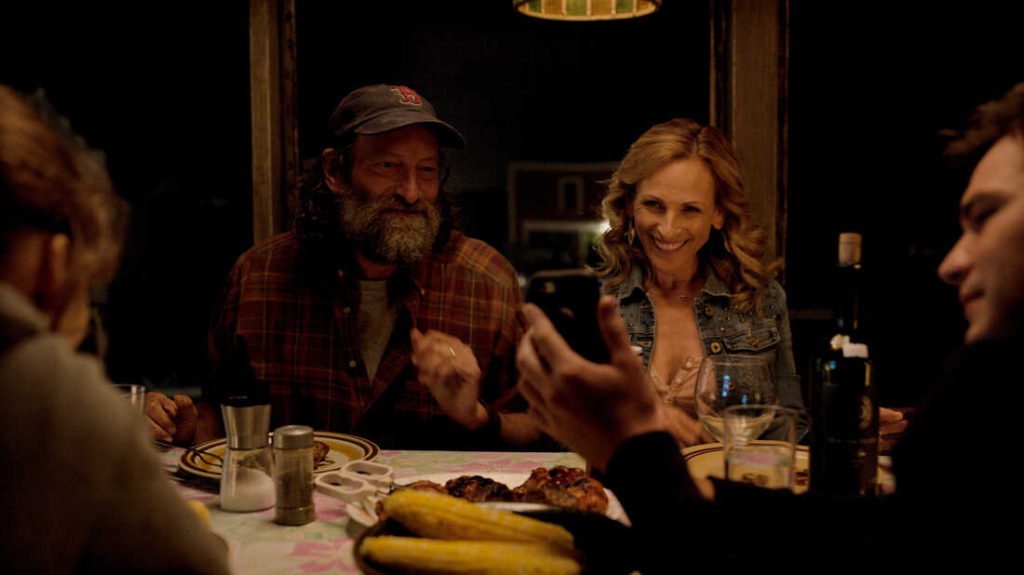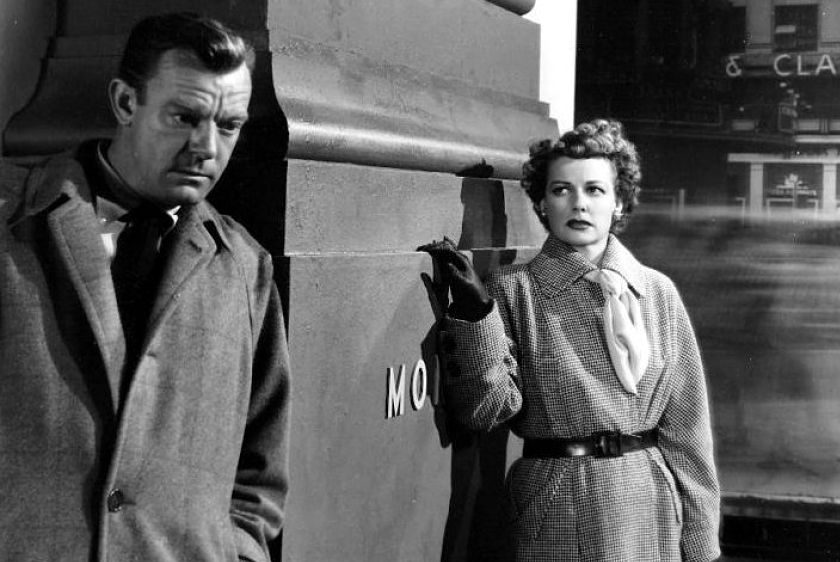
Gabino Rodriguez and Luisa Pardo in Nicolás Pereda’s FAUNA. Photo courtesy of SFFILM.
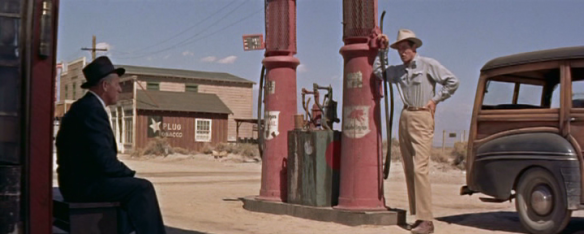
In Fauna, Luisa (Luisa Pardo) and her boyfriend Paco (Francisco Barreiro), both actors, visit Luisa’s remote Mexican hometown and meet up with her brother (Gabino Rodriguez), stepping into humor even drier than the parched landscape. They intend to visit Luisa’s parents (Teresa Sanchez and José Rodríguez López).
Paco wanders into the town, looking for some smokes. He meets an older man, who makes the encounter unnecessarily awkward. It turns out that the man was his girlfriend’s father.
Luisa runs some lines with her mom, and it’s clear to the audience that the mom is much better than the “professional actress”.
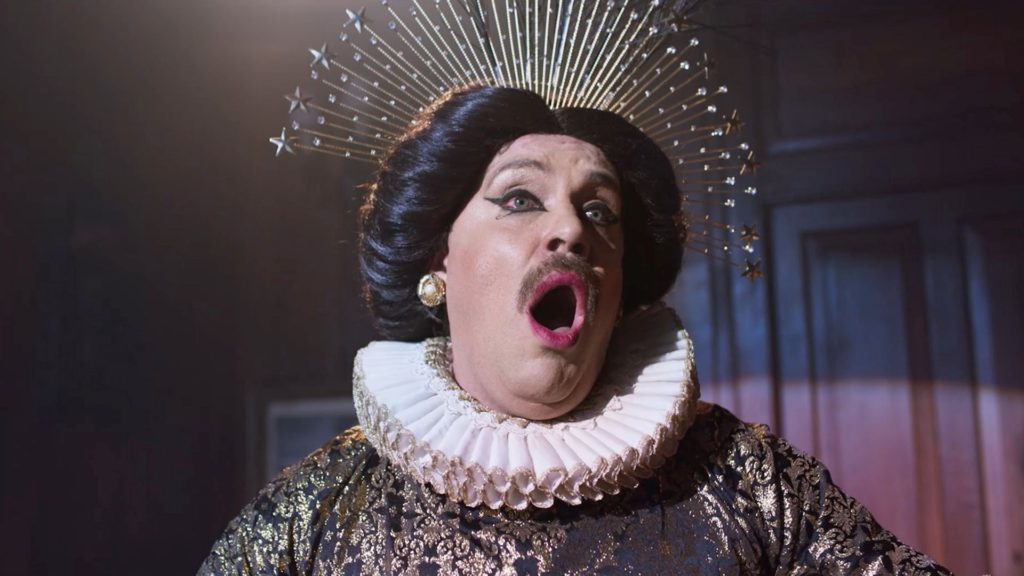
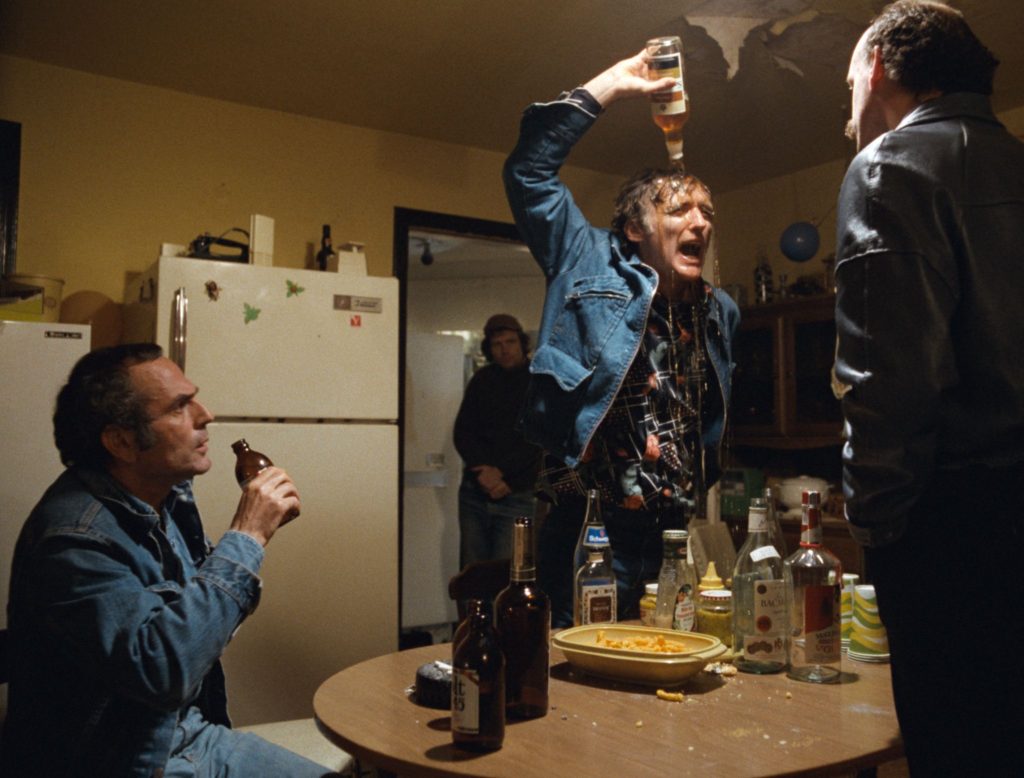
In the highlight of Fauna, the three guys go out for a beer. The dad is fascinated by Paco’s tiny role in a big episodic TV series and has him “perform” in the cantina. It’s a masterpiece of cringe humor and comic timing.
José Rodríguez López, always deadpan, is hilarious as Luisa’s dad. Where has this actor been? Despite being nominated for a 1991 Ariel (Mexico’s Oscar) for his first movie performance, Fauna is only his seventh feature film.
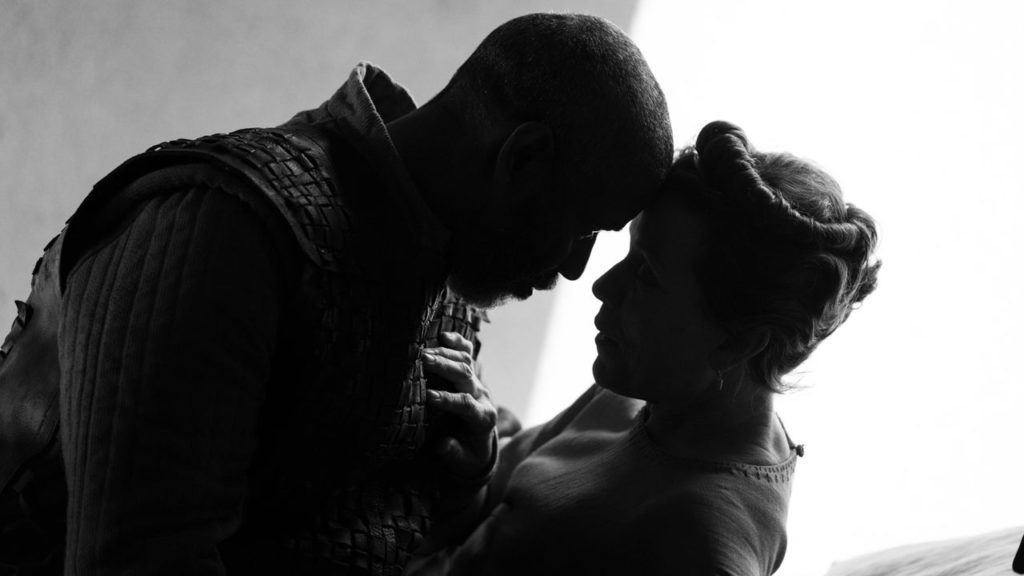
More than halfway though, Fauna pivots. Luisa’s brother has been reading a mystery , and the film begins to mirror the book. The deadpan continues throughout all of Fauna’s 70 minutes.
Mexican-born writer-director Nicolás Pereda lives in Toronto, and Fauna competed as a Canadian film at the Toronto Film Festival.
I screened Fauna at the San Francisco International Film Festival (SFFILM). It’s been released into some theaters, but is hard to find.
Cynda Williams and Billy Bob Thornton in ONE FALSE MOVE
The gripping contemporary neo-noir One False Move begins with a home invasion in Los Angeles. Two vicious professional robbers, with one’s beautiful girlfriend, steal money and cocaine, leaving a trail of corpses. The crime is solved right away – the cops know who did it and that the murderers are headed to a small town in Arkansas. The LA cops fly to Arkansas and lay in wait with the local constabulary. One False Move is a ticking time bomb as we wait for the criminals to drive across the Southwest to the inevitable confrontation.
This is a fundamentally noir story – there are guys overreaching for greed and ambition, a femme fatale, and a very dark secret. The screenplay was written by Billy Bob Thornton (before his breakthrough Sling Blade) and his writing partner Tom Epperson. One False Move was filmed in Cotton Plant, Arkansas, about two hours from where Thornton grew up, in and around Hot Springs.
The robbers are an odd couple that met in prison. Ray (Thornton) is white, an edgy, coke-fueled, brutal and not very smart gunsel, always on the verge of an epic misjudgement. Pluto (Michael Beach) is black, an ever-calculating crime machine – a cold, brilliant and bloodthirsty sociopath. They are accompanied by Ray’s beautiful black girlfriend Fantasia (Cynda Williams).
When the two seasoned LA homicide detectives (Jim Metzler and Earl Billings), arrive in Arkansas well ahead of the robbers, they encounter the local Sheriff, Dale “Hurricane” Dixon (Bill Paxton). Hurricane is overeager and over-enthusiastic, and his nickname obviously comes from his being an irrepressible force of nature. He’s comfortable as a big fish in a little pond, but now he fantasizes about being a big city cop. As he charges around thoughtlessly, he thinks that this is his big chance to be the kind of cop that he watches on TV.
This was Fantasia’s hometown, where she grew up with her given name of Lila. Dale and Lila share a significant past.
Cynda Williams in ONE FALSE MOVE
As a femme fatale, Fantasia/Lila can manipulate both Ray and Dale, although Pluto is immune to her charms. She is clearly a more decent person than Ray and Pluto, and she has one relatable vulnerability. but she does things and intends to do things that are very, very bad.
This was Cynda Williams’s second film role. She was married to Billy Bob Thornton for two years, including during the making of One False Move. She has worked consistently since (playing Halle Berry’s sister in two movies), but One False Move has certainly been her best-remembered performance.
Bill Paxton in ONE FALSE MOVE
Bill Paxton left a great body of work that included starring in the topflight episodic series Big Love and a key role in Apollo 13. Big Love and One False Move demonstrate that he should have gotten more leading roles. Paxton’s Hurricane is always bubbling over, whether it’s with ambition, naivete or good ol’ boy chumminess.
One False Move was directed by Carl Franklin. who also directed the period neo-noir Devil in a Blue Dress. Franklin has directed lots of TV, including episodes of House of Cards and Mindhunters).
America’s original sin – race – is at the core of One False Move. The entire plot is predicated on something that happened when Lila was 17 – and neither that occurrence nor any of the following events would have happened if Lila were white.
Ray and Fantasia/Lila are an interracial couple, the two LA cops are white and black, and Dale unwittingly leaks his casual racism.
One False Move is on my list of Overlooked Neo-noir and can be streamed from Amazon, AppleTV, Vudu and YouTube.
An American Story: Norman Mineta and His Legacy traces the life and times of Norman Mineta, who amassed a startling number of “firsts” and other distinctions in America history:
The first Asian-American mayor of a major U.S. city.
The first Japanese American member of Congress elected from the 48 Continental states.
A Cabinet Secretary in both Democratic and Republican Administrations.
The nation’s longest-serving Transportation Secretary.
The achievements were even more remarkable given that, as a child, Mineta was imprisoned by his own US government in a WW II internment camp. And given that his political base had, during his career, an Asian-American population of far less than ten percent.
This didn’t happen by accident. Norm Mineta is a driven man. At the same time, his ambition and will is tempered by his buoyancy and ebullience.
Documentarians Dianne Fukumi (director and co-producer) and Debra Nakatomi (co-producer) embed the story of Japanese-Americans, from immigration through internment, and on to reparations.
AN AMERICAN STORY: NORMAN MINETA AND HIS LEGACY
The defining event for Mineta’s Nissei generation was the WW II internment of 120,000 Americans by their own government. The central thread in the Mineta story is that the injustice of Mineta’s internment informed George W. Bush’s resistance to treating American Muslims that same way in the aftermath of the 9/11 attacks.
Mineta being sworn into the US House of Representatives by House Speaker Carl Albert in AN AMERICAN STORY: NORMAN MINETA AND HIS LEGACY
The film’s most delightful moment may be the octogenarian Mineta sunnily taking his luggage through security at Norman Y. Mineta San Jose International Airport.
[Full disclosure: I have known Norm since I served in his 1974 primary campaign and interned for him on Capitol Hill in the mid 70s. I saw An American Story: Norman Mineta and His Legacy at an October 2018 special screening with Norm Mineta, Fukumi and Nakatomi in San Jose.]
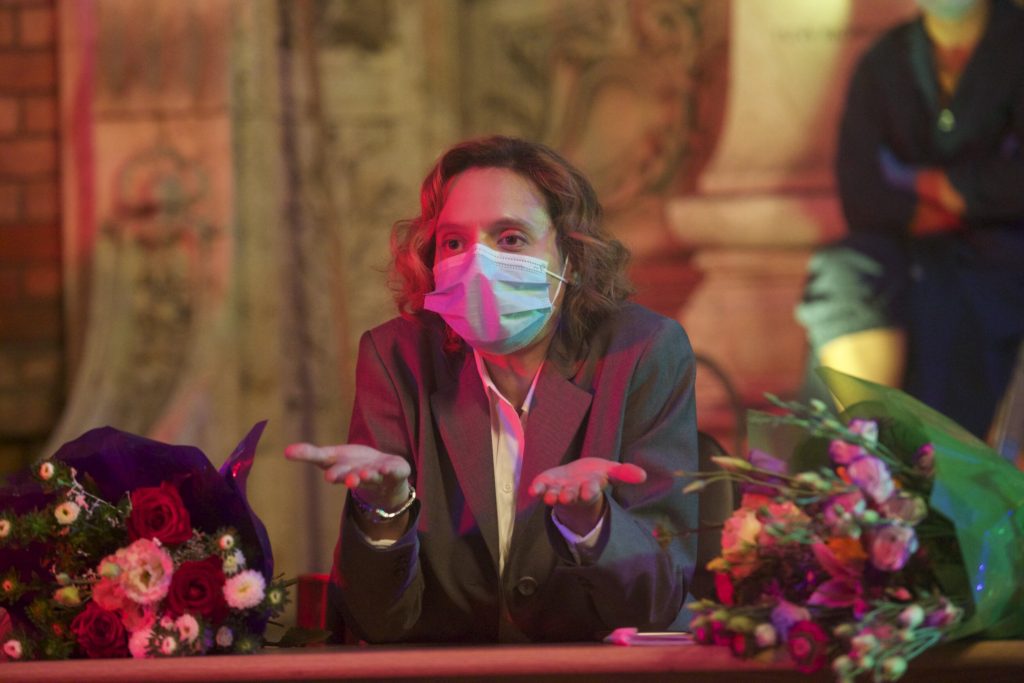
Photo caption: Valeria Bruni Tedeschi and Nadia Tereszkiewicz in ONLY THE ANIMALS. Courtesy of Cohen Media Group.
This week – four new 2021 movie recommendations and two more from the 1950s. Plus, Cinequest’s online festival CINEJOY is running through November 17, and here are my Cinejoy recommendations.
IN THEATERS
Only the Animals: The ever-surprising Only the Animals is no ordinary mystery. The intricately constructed story reveals elements of the mystery, from each character’s perspective in sequence – and each may have the key to the puzzle. Obsessive infatuation, misdirected passion and psychotic delusion collect into a pool of perversion. Opening at the Landmark Shattuck.
The Velvet Underground: It’s rare for a documentary film to immerse the audience as deeply into a time and place as does Todd Haynes’ The Velvet Underground. Richly sourced, it’s the LOOK and FEEL and SOUND of the film which is so singular. Also streaming on AppleTV.
Last Night in Soho: It’s a clever, entertaining and sometimes artsy horror movie, but in the end. it’s just a horror movie. Sure is fun to watch Ana Taylor Joy, though.
De Gaulle: This fine docudrama takes us to a pivotal two-week period in June 1940 when Hitler had all but conquered France and Charles de Gaulle was the only French leader who could imagine an Allied military victory. Laemmle.
Ashes and Diamonds: A masterful director and his charismatic star ignite this Overlooked Noir, a thriller set amidst war-end treachery. I wrote about its broadcast on TCM, but it can also be streamed from Amazon and AppleTV.
Michael Gandolfini and Alessandro Nivola in THE MANY SAINTS OF NEWARK
The most eclectic watch-at-home recommendations you’ll find ANYWHERE:
Old Henry: too late for redemption. Amazon, AppleTV, Vudu and YouTube.
Dirt Music: a gorgeous bodice-ripper with a WTF ending. Amazon, AppleTV, YouTube.
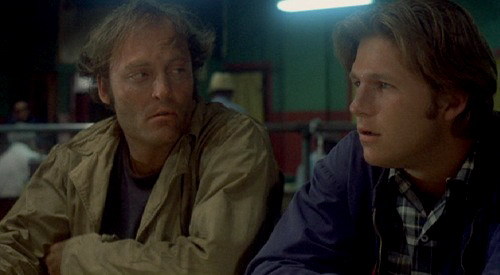
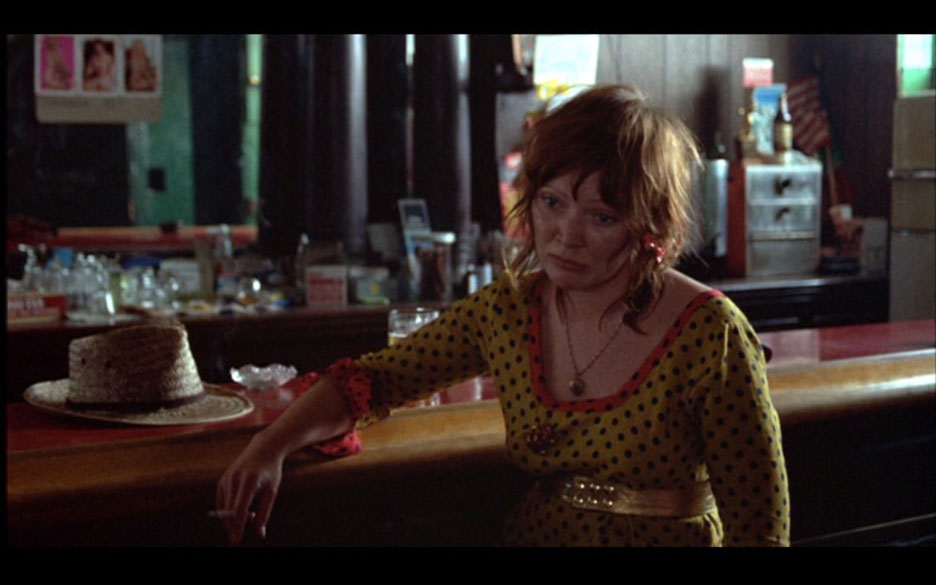
Kansas City Bomber: self-discovery at the roller derby track. Amazon, AppleTV, Vudu and YouTube.
ON TV
Paul Newman and Edmond O’Brien in THE RACK
On Veterans Day, November 11, Turner Classic Movies airs an overlooked Korean War film, The Rack (1956). A returning US army captain (Paul Newman) is court-martialed for collaborating with the enemy while a POW. He was tortured, and The Rack explores what can be realistically expected of a prisoner under duress. It’s a pretty good movie, and Wendell Corey, Edmond O’Brien, Walter Pidgeon, Lee Marvin and Cloris Leachman co-star.
Paul Newman and Walter Pidgeon in THE RACK
And on November 6, TCM plays the fine 1995 documentary The Celluloid Closet, tracing the history of LGBTQ filmmakers overdecades of don’t ask, don’t tell Hollywood.
Photo caption: Matt Smith, Thomasin McKenzie and Ana Taylor Joy in LAST NIGHT IN SOHO. Courtesy of Focus Features.
In Edgar Wright’s Last Night in Soho, the contemporary fashion student Ellie (Thomasin McKenzie) moves from a sheltered upbringing in rural Cornwall to London, but finds herself ill-suited for a boisterous college dorm. She rents her own modest digs and seems magically transported to her fantasy Mod London of the 1960s, where she finds a would-be alter ego, the cool and confident Sandy (Ana Taylor Joy). But she also finds the dark side of the London scene and a fifty-year-old violent incident that haunts her very bedsit.
Through Ellie’s eyes, the story shifts between today’s London and that of 1965. Edgar Wright brilliantly weaves Ellie and Sandy into scenes and shots together. Wright also gets the period and place just right – you just expect Oliver Reed or David Hemmings to step into the picture at any moment (or Terence Stamp).
Is Ellie in an alternative reality – or fantasizing – or hallucinating? Ellie has a rich fantasy life, as well as a “gift of seeing things?”. Of course, she’s also the right age for a psychotic breakdown, and she has a disturbing family history of mental illness.
Last Night in Soho begins as the is she going crazy? subgenre of horror, and then morphs onto a straight horror movie. Wright shrewdly waits to the last minute before revealing who the evil force really is.
Thomasin McKenzie, now age 22 after juvenile roles inLeave No Traceand Jojo Rabbit, projects an other-worldliness – so, if anyone could happen upon a portal to another time and place, it’s McKenzie
It sure is fun to watch the charismatic Ana Taylor Joy (The Queen’s Gambit, Thoroughbreds). Taylor Joy seems like the quintessential Brit, but she is of Argentine-Spanish heritage, lived her first six years in Argentina and her first language was Spanish.
Matt Smith is good as a guy with both charm and cruel lethality. Smith was superb in a much different role – the young married Prince Philip in 20 episodes of The Crown., and also did 54 episodes of Dr. Who as The Doctor.
I love Terence Stamp. Stamp, of course was a Pretty Boy star during the actual 1960s (Billy Budd, The Collector, Far from the Madding Crowd). I’ve felt that his best work has been in his middle age and since (The Hit, The Limey, The Adjustment Bureau). Here in Last Night in Soho, still ith striking features and dead-cold eyes, he looks dangerous from our first glimpse of him.
Speaking of the Swinging London of the 1960s, no woman was more symbolic than Diana Rigg, famous for her role as Emma Peel in The Avengers. Last Night in Soho was Rigg’s final screen performance.
Another 60s stalwart, Rita Tushingham (A Taste of Honey and Doctor Zhivago), also appears.
Edgar Wright broke out with the delightful Shaun of the Dead and Hot Fuzz (and the less funny The World’s End) before showing us all in Baby Driver that he was more than a low-brow funnyman.
Last Night in Soho is a clever, entertaining and sometimes artsy horror movie, but in the end, it’s just a horror movie.
Photo caption: Lambert Wilson in DE GAULLE. Courtesy of Samuel Goldwyn Films.
De Gaulle takes us to a pivotal moment in French WW II history that is no longer well-understood by most Americans. The French Army has collapsed in the face of German invasion, and the fall of Paris is both inevitable and imminent. The French government is considering asking Hitler for an armistice, seeking to end the slaughter and to repatriate its 2 million POWs.
Charles de Gaulle (Lambert Wilson) is also losing his battle to convince the government not to surrender, but to keep fighting the Nazis from outside France itself, based in France’s colonial possessions. In this moment of catastrophe, de Gaulle is virtually alone in imagining that Great Britain, joined by America’s industrial might, could someday liberate France. It doesn’t help that, for the authoritarian and anti-Semitic French military establishment, Hitler isn’t so abhorrent.
Writer-director Gabriel Le Bomin has focused De Gaulle on only two weeks of WW II history – between June 5 and June 19, 1940. Every minute counts – and the clock is ticking.
It’s a similar approach as in Darkest Hour, where all of the story takes place in May, 1940, as Churchill is facing England’s moment of existential peril. In fact, the Darkest Hour (Amazon, AppleTV, Vudu, YouTube and HBO Max) would complete an excellent double feature with De Gaulle.
The tension is enhanced with a parallel thread – the political crisis has isolated de Gaulle in London while his family, completely out of communication, is scrambling to escape the Nazis in France.
Aloof, shy and an egomaniac, de Gaulle was easily dislikeable. Le Bomin has humanized him by including his most relatable attributes – his relationship with his wife and kids, especially his daughter with Down’s Syndrome.
Le Bomin and Wilson had to meet high expectations on the portrayal of an icon. After all, De Gaulle’s appearance, speech and mannerisms are as familiar to a French audience as those of Elvis Presley, Richard Nixon, Jacqueline Kennedy and Muhammad Ali are to an American one.
I wouldn’t have immediately thought of Lambert Wilson for the role. Wilson, known for the Matrix franchise, is handsome and physically graceful. But, for starters, Wilson is tall enough, at 6-2, to play de Gaulle, just under 6-5. Prosthetics and makeup completed the physical transformation. Wilson’s acting craft took him the rest of the way – capturing de Gaulle’s stiffness and the physical awkwardness that some very tall people have.
I streamed De Gaulle on Virtual Cinema at Laemmle.
EVERYTHING IN THE END, available to stream from Cinequest’s CINEJOY.
Cinequest’s online festival CINEJOY begins on November 4 and runs through November 17. Here are my top five recommendations:
Willow: This triptych by Oscar-nominated master Macedonian filmmaker Milcho Manchevski plumbs the heartaches and joys of having children; there’s a scene in the final vignette with a mother and son in a car that is one of the most amazing scenes I’ve ever seen. Manchevski’s Before the Rain was nominated for the Best Foreign Language Oscar in 1994. Most recently, he directed my choice as the best film of the 2017 Cinequest, Bikini Moon. Special live online event: Manchevski will appear at the screening at 10:30 AM PST on November 11.
Everything in the End: The “End” in the title of this powerful think piece means, literally, the end of the world. Set in a future where climate change has made human extinction certain and imminent, the story imagines how people would react as they understand that they have only a few days left. More profound than grim, End of Everything takes the sensationalism out of the apocalypse and leaves the humanity. Set in the stark beauty of Iceland, this is a visual stunner.
Travel Ban: Make America Laugh Again: a serious film about misunderstanding and bigotry with some hilarious comedy by American Muslim stand-up comics.
Demon: On the lam from some aggressive bill collectors, Ralph hides out in an off-the-track motel. It doesn’t take long for things to get odd and then surreal. Ralph’s journey to this most mundane setting becomes nightmarish, but this darkly funny film is not really a horror movie. As the lead actor, Ryan Walker-Edwards is very appealing in his feature film debut. This is also the first feature for director and co-writer George Louis Bartlett.
Mister Candid Camera: This is an affectionate but clear-eyed biodoc of Allen Funt, who originated the iconic television show Candid Camera and, in the process, invented reality television. It’s written, directed and extremely well-sourced by Allen Funt’s son (and Camera Candid performer) Peter Funt. Peter Funt reveals the secret sauce of the show (e.g., calibrating just how mean can you be without becoming cruel). Baby Boomers will especially appreciate the insider’s look at Allen Funt himself and the nostalgic glimpses of sidekick Durwood Kirby, etc. Everyone will enjoy the classic clips, including the talking mailbox, split automobile and the hilarious utterances of little kids.
Ryan Walker-Edwards in DEMON. World premiere at Cinequest. Photo courtesy of Zersetzung Films.
Other films at CINEJOY imclude:
12 Days of Christmas: High school friends reunite when they’re home for their first college Christmas break. They all get down to some serious partying, but two of them must deal with a serious issue. I didn’t buy the unrequited love at the core of the story.
Adventures in Success: This broad comedy traces the misadventures of a self-help retreat center led by a self-described energy transformationist who claims to have experienced a 12-hour orgasm. Her movement is centered on the female orgasm, the mantra is Jilling Off, and the sessions are essentially orgies where men are not allowed to ejaculate. Opens with an impressive 28-second performance of urination art.
Agua Rosa: First-time writer-directors Miguel López Valdivia and Ca Silva use the camera brilliantly in this 71-minute Mexican relationship drama.
Closet: This offbeat dramedy is about one of those quirky only-in-Japan things, like capsule hotels and golf in highrise buildings. Reeling from a breakup, Jin gets a job with a non-sexual escort service where insomniac clients pay him to cuddle with them as they try to get to sleep. Given his recent medical and relationship traumas and the weirdness of his new job, Jin (Yosuke Minokawa) often looks bewildered.
Events Transpiring Before, During and After a High School Basketball Game: The humor in this Canadian indie comedy– along the same lines as in The Office and Parks and Recreation – just doesn’t get close to that level. Cast and screenplay were shooting for deadpan, but only reached dead.
Far East Deep South: In this genealogy documentary, a Northern California Chinese-American family is stunned to discover that they have roots in Mississippi.
Fox Hunt Drive: A woman works as a rideshare driver at night to make the rent and subsidize her futile daytime job search. She picks up a ride who may be a serial killer, and we’re all off on one wild ride. There is a gobsmacking plot twist.
Non Western: This aspirational documentary has a lot going for it: an intriguing and underseen setting (the Northern Cheyenne Reservation in Montana) and masterful cinéma vérité filmmaking by Laura Plancarte. But the film is undone by its very subjects – a talented woman with low self-esteem hitches to a guy who poses as traditional – but he’s just a dick.
See You Then: This two-hander, which could have been titled My Dinner with Kris, reunites two close college friends after a decade of estrangement. The dramatic power is undercut by a Big Reveal which is too predictable to be shocking.
Welcome to the Show: This indie comedy plunges the characters and the audience into a puzzle. Four college-age guys, always up for a party, blow off Thanksgiving with their parents to party, but the joke is on them. What is being done to them? By whom? Why? And just where the hell are they? Are they in a elaborate party game or inside a piece of performance art? Or is this a prank or something more sinister? They don’t know and neither does the audience.
Peruse the entire lineup and buy streaming tickets at CINEJOY.
Photo caption: Zbigniew Cybulski in ASHES AND DIAMONDS
Coming up tomorrow night on Turner Classic Movies, a masterful director and his charismatic star ignite the war-end thriller Ashes and Diamonds, set amidst war-end treachery. It’s one of my Overlooked Noir.
It’s the end of WW II and the Red Army has almost completely liberated Poland from the Nazis. The future governance of Poland is now up in the air, and the Polish resistance can now stop killing Germans and start wrestling for control. Maciek (Zbigniew Cybulski) is a young but experienced soldier in the Resistance. His commanders assign him to assassinate a communist leader.
Maciek is very good at targeted killing, but he’s weary of it. As he wants out, he finds love. But his commander is insisting on this one last hit.
This is Zbigniew Cybulski’s movie. Often compared to James Dean, Cybulski emanates electricity and unpredictability, Unusual for a leading man, he often wore glasses in his screen roles. He had only been screen acting for four years when he made Ashes and Diamonds. Cybulski died nine years later when hit by a train at age forty,
Zbigniew Cybulski in ASHES AND DIAMONDS
Andrzej Wajda fills the movie with striking visuals, such as viewing Maciek’s love interest, the waitress Krystyna (Ewa Krzyzewska), alone amidst the detritus of last night’s party, through billows of cigarette smoke. Wajda’s triumphant signature is, literally, fireworks at the climax; the juxtaposition of the celebratory fireworks with Maciek’s emotional crisis is unforgettable.
Ewa Krzyzewska in ASHES AND DIAMONDS
Wajda adapted a famous 1948 Polish novel into this 1958 movie. In the adaptation, the filmmaker changed the emphasis from one character to another.
Ashes and Diamonds was the third feature for Andrzej Wajda, who became a seminal Polish filmmaker and received an honorary Oscar. US audiences may remember his 1983 art house hit Danton with Gerard Depardieu.
Ashes and Diamonds can be streamed from Amazon and AppleTV. It was featured at the 2020 Noir City film festival.
Photo caption: Lou Reed in THE VELVET UNDERGROUND. Courtesy of AppleTV.
It’s rare for a documentary film to immerse the audience as deeply into a time and place as does Todd Haynes’ The Velvet Underground. Even if you’re not a fan of the band, you’ll appreciate this sensory dive into a cultural moment.
Haynes takes the time to bio the two artistic driving forces of the Velvet Underground, the avant-garde musicologist John Cale and the troubled song-writing prodigy Lou Reed. Equally essential is the world of Andy Warhol’s The Factory.
The Velvet Underground is exceptionally richly sourced, with load of file footage and photos and a host of eyewitnesses, especially the surviving band members John Cale and Maureen Tucker. and in this cultural moment.
But it’s the LOOK and FEEL and SOUND of the film which is so singular. That’s because Haynes, a filmmaker known for the lush and evocative Far from Heaven and Carol, has brought his sensibilities to bear on a documentary. And because the artists in Warhol’s circle left such a film record.
The Velvet Underground is in theaters and streaming on AppleTV.
My Halloween recommendation is to stream Borgman, a scary movie for adults. If you’re venturing into a movie theater, for my money, the best choices are the unsettling fable Lamb or the James Bond blockbuster No Time to Die.
Mama Weed: it’s always fun when Huppert gets outrageous. Laemmle.
ON TV
Steve McQueen and Ali MacGraw in THE GETAWAY
On November 3, Turner Classic Movies presents The Getaway, a 1972 crime thriller starring the charismatic Steve McQueen and his real-life squeeze Ali MacGraw. McQueen and MacGraw are delightful to watch as they move between violent clashes and double- and triple-crosses. As befits a Sam Peckinpah film, there’s an intense shootout at the end. The grossly underrated character actor Al Lettieri (Sollozzo the Turk in The Godfather) gets to play perhaps his most delicious villain; when he comes across a oddly matched married couple – the nubile Sally Struthers and the nerdy Jack Dodson (county clerk Howard Sprague in The Andy Griffith Show). Lettieri layers on some glorious sexual perversity.
Sally Struthers, Al Lettieri and Jack Dodson in THE GETAWAY
Speaking of character actors, we also get to enjoy the crew of Peckinpah favorites: Ben Johnson, Slim Pickens, Dub Taylor, Bo Hopkins and Richard Bright. My friend Sandy lets Ali McGraw’s lack of acting range get in the way of enjoying The Getaway, but IMO Al Lettieri more than makes up for it.