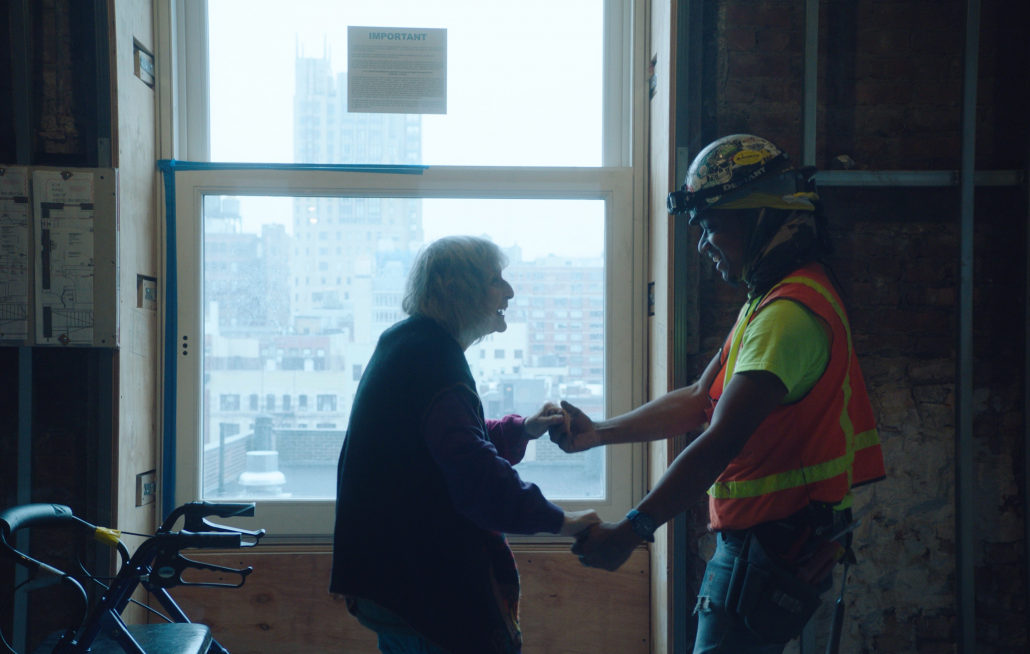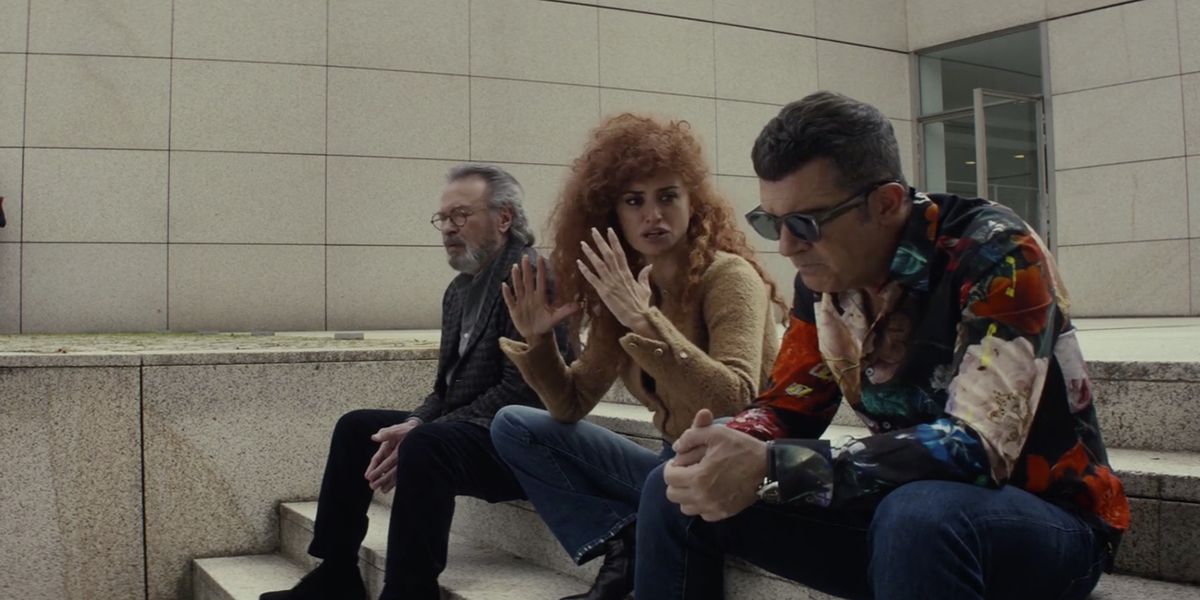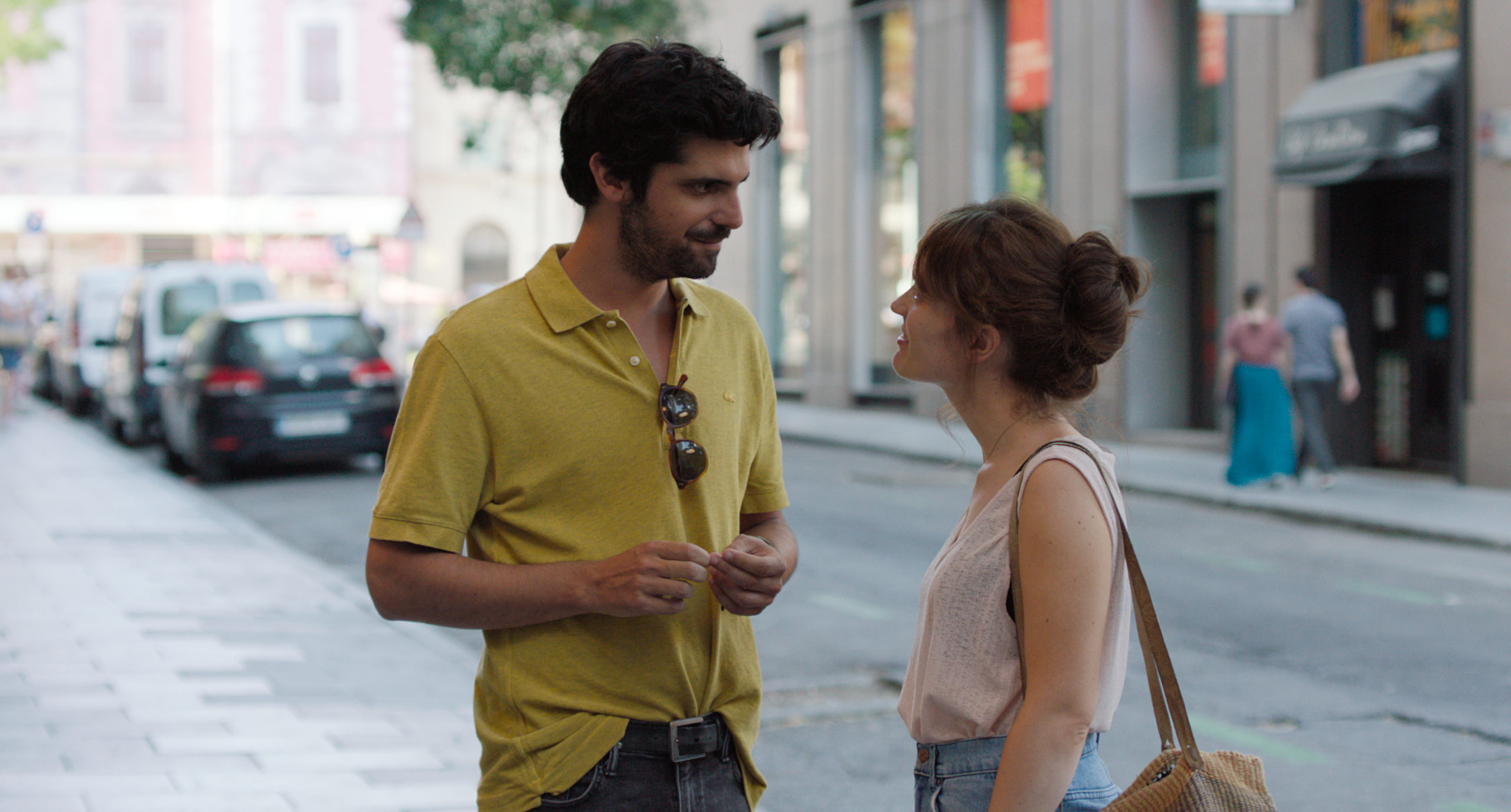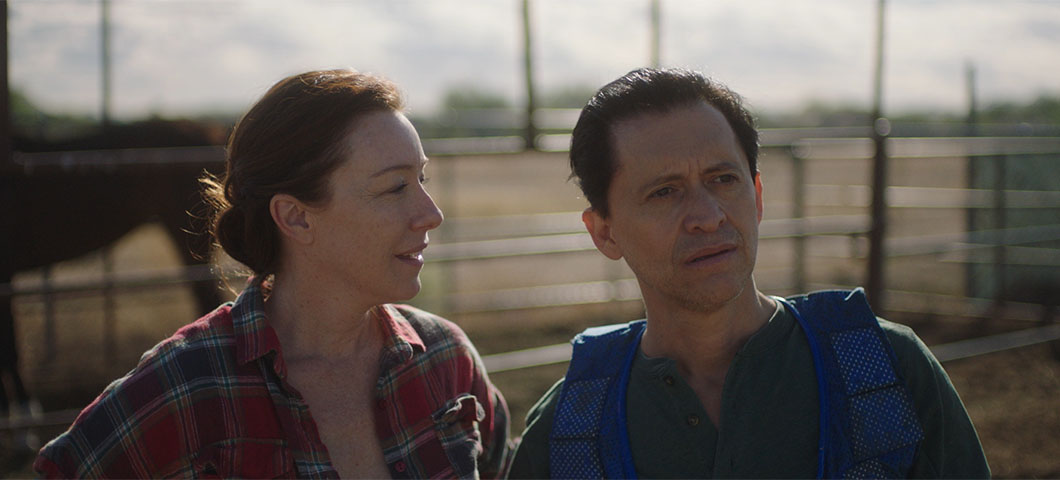
This year’s crop of Oscar films is fading into Old News, but note that Oscar winners CODA, Drive My Car and Belfast are all now available to stream.
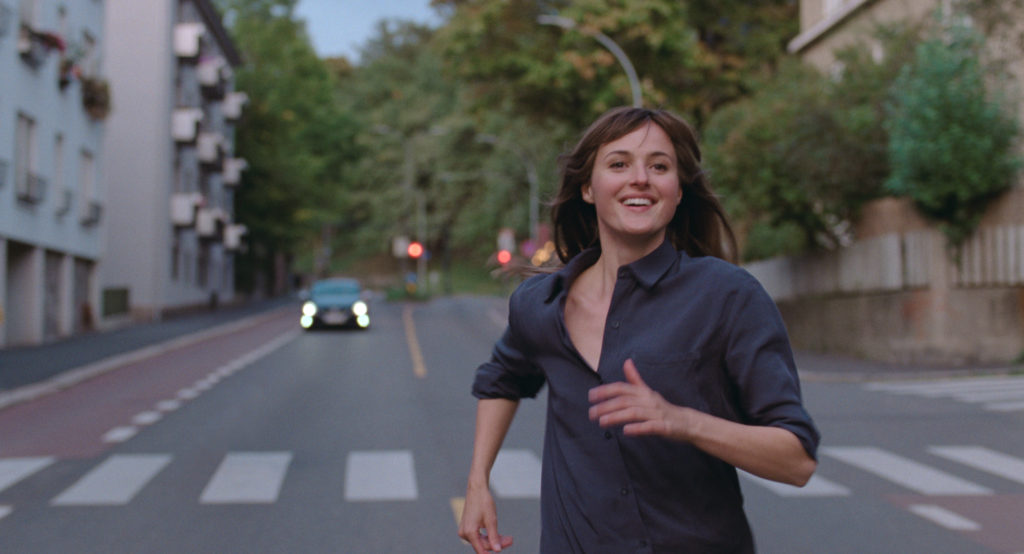
The best new film in theaters is hard to find: the insightful and unpredictable dual character study Compartment No. 6.
ON TV
Roger Livesey in THE LIFE AND DEATH OF COLONEL BLIMP
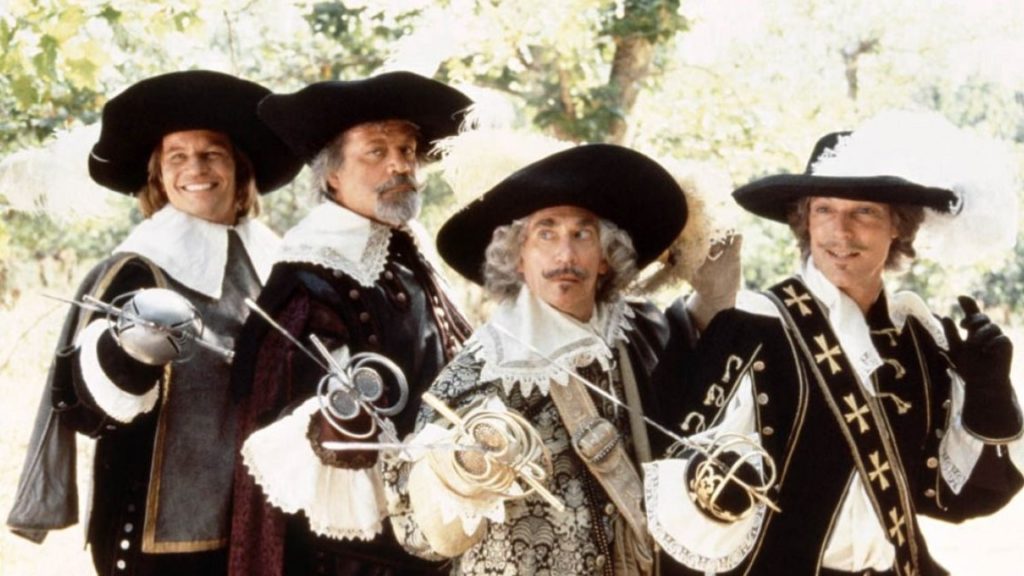
Tomorrow morning (April 30, Turner Classic Movies will air the 1943 masterpiece The Life and Death of Colonel Blimp, a remarkably textured portrait of a man over four decades and his struggles to evolve into new eras. Written and directed by the great British filmmakers Michael Powell and Emeric Pressburger, this is a movie with a sharp message to 1940s audiences about modernity, as well as a subtle exploration of privilege that will resonate today.
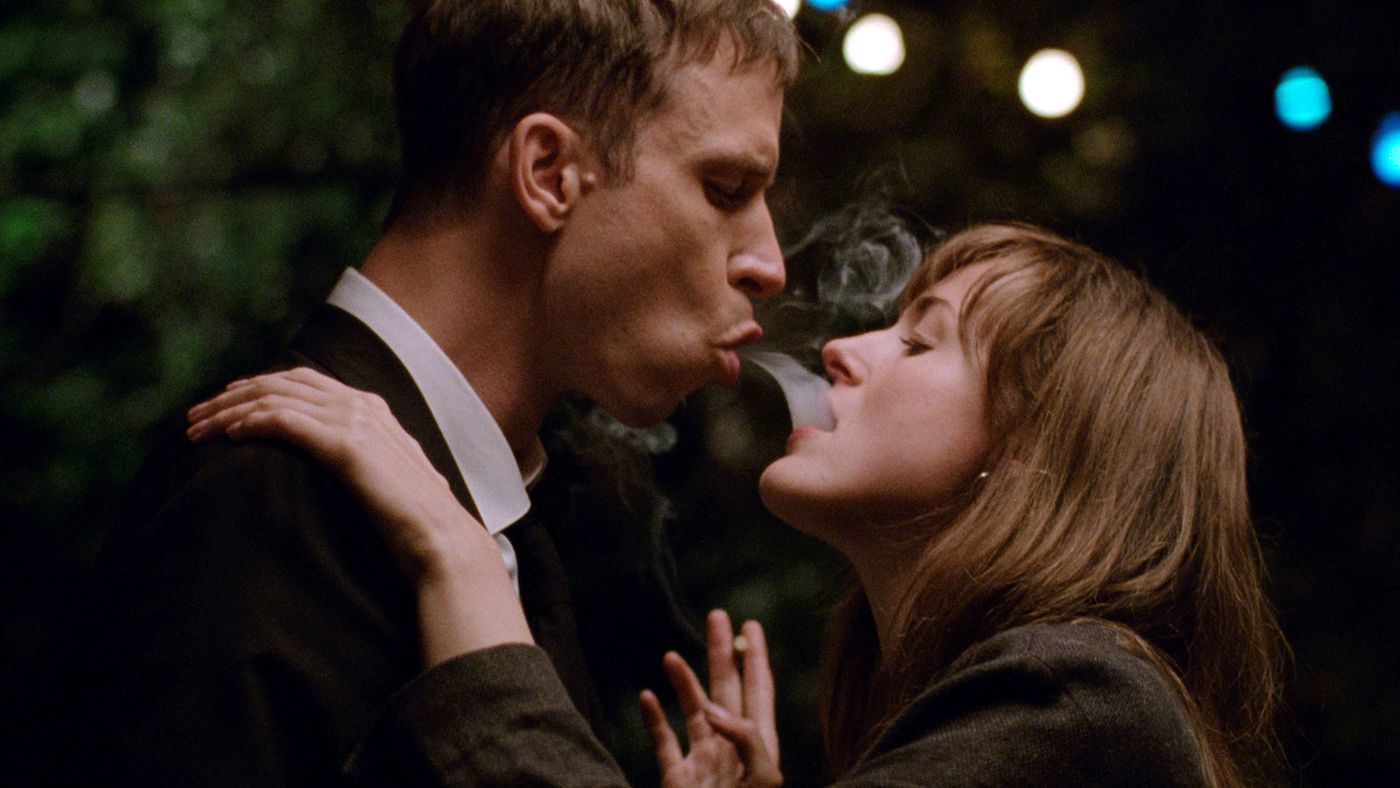
Photo caption: Seidi Haarla and Yuri Borisov in COMPARTMENT No. 6. Courtesy of Sony Pictures Classics.
In Compartment No. 6, an odd couple must share the same claustrophobic compartment in a dreadful train ride to Murmansk. She aims to see ancient petroglyphs, and he is heading to a job in a massive mining operation, but they’re really on a journey to human connection.
Compartment No. 6 won the Grand Prix, essentially the second place award, at Cannes; (in 2022, as in recent years, the Grand Prix winner is a much better movie than the winner of the more prestigious Palm d’Or).
Laura (Seidi Haarla) is a mousy Finnish college student in Russia, studying Russian language or archaeology – it’s not exactly clear. She is having a fling with a 40ish Russian professor, and Laura is more deeply invested in the relationship than is her new girlfriend. Laura is out of her depth with the girlfriend’s academic friends. The girlfriend cancels their planned trip at the last moment, and Laura, disappointed, still heads off to Murmansk on her own.
Given the discomfort of Russian train travel, this multi day trip is not for the faint-hearted anyway, but Laura is alarmed to find herself sharing a second-class compartment with a nightmare of a roommate. Ljoha (Yuri Borisov) is an obnoxious drunk, a slob leaving a trail of cigarette ashes and partially eaten sausage. This is a guy devoid of intellectual curiosity, who has never had an original thought. What he possesses in mass quantities is macho boorishness – his icebreaker is “are you traveling alone to sell your cunt?”
More restrained when he is sober, Ljoha is socially inept. As emotionally vulnerable as is Laura, so is Ljoha – he’s just trying very hard to hide it with bravado.
What is important to Laura – and to Ljoha? Fundamentally, each needs to find human connection. Compartment No. 6 takes us on their unpredictable journey. This is not a conventional hate-each-other-and-then-fall-for-each-other movie romance.
Compartment No. 6 is hardly an advert for Russian passenger trains. The train attendant is surly and officious, the running water doesn’t work, and the dining car menu is ever diminishing. The passengers are constantly smoking, and they have no ability to wash themselves. As the train winds northward, you can’t help but imagine the rancid odors.
Compartment No. 6 is the second feature for Finnish director and co-writer Juro Kuosmanen. Boy, I liked this movie.
A scene from Kentucker Audley’s and Albert Birney’s film STRAWBERRY MANSION. Courtesy of SFFILM
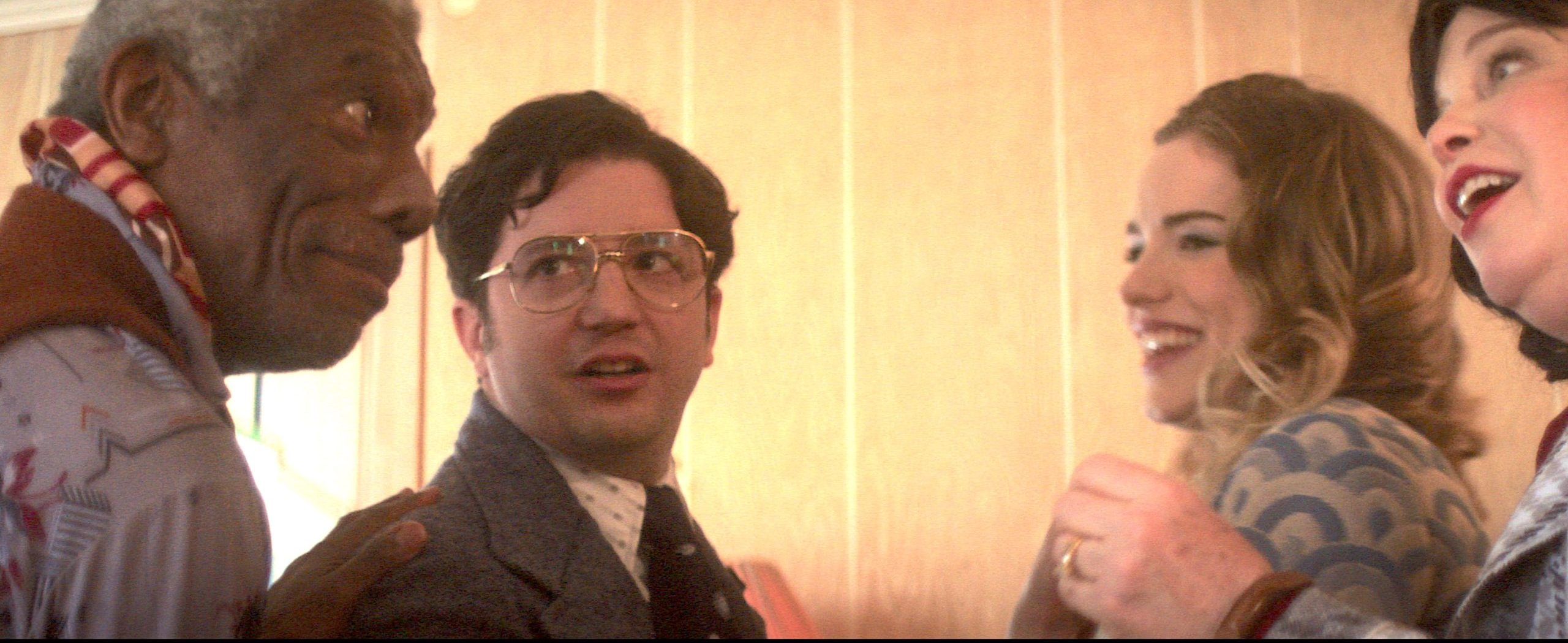
To celebrate the 2022 SFFILM, underway, now, here’s a gem from last year’s SFFILM. The very trippy and ultimately sweet fable Strawberry Mansion is set in a future where people’s dreams are taxed. Preble (Kentucker Audley), a workaday tax auditor, is assigned to audit the dreams of an elderly artist, Bella (Penny Fuller). Preble is soon plunged into an Alice in Wonderland experience with her dreams, and his dreams, and a romance to boot.
Preble puts on a gizmo to watch the dreams pf others (and comes across an even cooler gizmo that filters dreams). He even encounters Bella’s younger self (Grace Glowicki).
Strawberry Mansion is also a sharp and funny critique of insidious commercialism. A fictional brand of fried chicken keeps showing up in the story. Hilariously, Preble becomes entangled in an endless loop of upselling at a fast food drive-thru. And Preble is constantly prodded to consume by his own diabolical dream buddy (Linas Phillips). A sinister marketing plot is revealed.
A scene from Kentucker Audley’s and Albert Birney’s film STRAWBERRY MANSION. Courtesy of SFFILM
Kentucker Audley is very good as Preble, who starts out the movie mildly annoyed and evolves into various degrees of bewilderment. Audley is one of those actors who keeps showing up in something interesting (and offbeat) like Amy Seimetz’s She Dies Tomorrow and Sun Don’t Shine, or in smaller parts in especially fine films like Her Smell and Ain’t Them Bodies Saints.
As Bella, Penny Fuller radiates a contentment that ranges from ditzy to sage. Reed Birney is especially good as Bella’s sinister son.
Audley co-wrote and co-directed Strawberry Mansion with Albert Birney. They make the most of the surreal settings within dreams, and use different color palettes for each dream; the palette for Preble’s real-life bachelor apartment is pretty surreal, too.
I screened Strawberry Mansion for the 2021 SFFILM. It’s now available to stream from Amazon, AppleTV, Vudu and YouTube and can be purchased on Blu-ray after May 17.
Liu Haoran in Zhang Yi’s FIRE ON THE PLAIN. Courtesy of SFFILM.
This year’s San Francisco International Film Festival (SFFILM) has just opened and runs through May 1. The menu at SFFILM includes 130 films from 56 countries, with 16 world premieres and 10 North American or US premieres. Once again, a majority of the films were directed by female and non-binary filmmakers, and a majority of the movie in this years program have BIPOC directors. Here are my three top picks – all from international cinema.
My favorite SFFILM film so far is the character-driven neo-noir Fire on the Plain, the first film for director and co-writerZhang Yi (Ji Zhang on IMDb). Zhang takes us to northeastern China in1997, into a gritty industrial city whose tagline could be disappointment. Most of the adults seemed paralyzed by economic hopelessness. A serial killer is knocking off taxi drivers, and everyone is on edge. Shu (Liu Haoran) hangs out with his rowdy friends; he’s headed nowhere, and he’s OK with that. Only the spirited Fei (Zhou Dongyu) has a plan to escape the gloom. It looks like the story is building toward Fei emigrating with Shu, but a surprising murder occurs. The story reconvenes in 2005, and Shu and Fei are each in totally unexpected circumstances. Visually and thematically dark, Fire on the Plain winds toward a fittingly noir ending.
Julio César Chávez and Oscar De La Hoya in Eva Longoria’s LA GUERRA CIVIL. Courtesy of SFFILM.
The think piece documentary La Guerra Civil is the feature directing debut for actress (and veteran TV director) Eva Longoria. It explores issues of identity through the rivalry between boxing champions Julio César Chávez and Oscar De La Hoya. Chávez came from an impoverished Mexican childhood to dominate boxing in the late 1980s and 1990s, breaking record after record; Chávez became especially revered by Mexicans and Mexican-Americans. Exploding from East LA into the 1992 Olympics, the handsome and media savvy Oscar De La Hoya had a similar rags-to-champion profile. One might expect Mexican-Americans to embrace De La Hoya, even as he climbed toward a face-off with Chávez . But it was much more complicated than that, and De La Hoya feels the need to verbalize that he’s “Mexican enough”.
Juliet Binoche and Vincent Lindon in Claire Denis’ BOTH SIDES OF THE BLADES (FIRE). Courtesy of SFFILM.
One of the biggest films at SFFILM is anything but a first film – Both Sides of the Blade (also known as Fire) comes from French auteur Claire Denis (35 Shots of Rum, Let the Sunshine In). Sara (the ever rapturous Juliette Binoche) has built a ten-year relationship with Jean (Vincent Lindon) that has survived his prison sentence. Sara had previously been with François (Grégoire Colin), but left him because she valued Jean’s reliability, loyalty and decency. When François shows up again in their lives, Sara is drawn to him again. With Denis, Binoche and Lindon layering in all the complexities of these characters, this is not your average romantic triangle.
OSCAR MICHEAUX: THE SUPERHERO OF BLACK FILMMAKING. Courtesy of TCM.
If you don’t know who Oscar Micheaux is, you should – so watch the documentary Oscar Micheaux: The Superhero of Black Filmmaking. As writer/director/producer, the African-American Michaeux created so-called “race films” – movies made for black audiences from a black perspective during the most shameful years of American racial segregation. Michaeux himself directed 42 feature films DURING Jim Crow.
There’s a lot in Oscar Micheaux: The Superhero of Black Filmmaking:
Micheaux’s pivotal sojourn in a cabin in, of all places, the Dakotas.
His very personal and hands-on distribution methods.
His discovery of Paul Robeson’s on-screen charisma, a full eight years before Robeson’s first Hollywood film (The Emperor Jones).
Micheaux’s comfort in portraying that most incendiary topic – interracial relationships.
How he slyly bent rules to avoid censorship.
I have seen some Oscar Micheaux films, and their stories, freed of the White Hollywood lens, are eyeopening. They allowed black audiences to see big screen characters that acted like real African-American – not the degrading stereotypes in Hollywood movies.
That being said, Michaeux did not make “Noble Negro” movies. His work is authentic, and criticized, for example, black preacher-hucksters who exploit religious devotion in the African-American community for their own venal and carnal appetites.
Oscar Micheaux: The Superhero of Black Filmmaking features a solid panel of expert talking heads to explain Micheaux’s place in cinema and in African-American history. The most compelling are screenwriter Kevin Wilmott and University of Chicago cinema professor/TCM host Jaqueline Stewart.
Animation is used sparingly and effectively, including one inspired segment to Gil Scott-Heron’s The Revolution Will Not Be Televised.
I watched Oscar Micheaux: The Superhero of Black Filmmaking on Turner Classic Movies, and it is streaming on HBO Max.
Photo caption: THE GRAND BOLERO, playing at Cinequest. Courtesy of Cinequest.
This week on The Movie Gourmet – Cinequest’s online festival Cinejoy continues through this weekend. See my Best of Cinequest and all my Cinequest coverage. I’ve also honored Cinequest by highlighting two gems from recent festivals: the innovative docufictionErotic Fire of the Unattainable and the surreal Mexican masterpiece Buy Me a Gun.
CURRENT FILMS
Note: Oscar winners CODA, Drive My Car and Belfast are all now available to stream.
CODA: what’s not to like about this delightful Oscar-winning audience-pleaser? CODA’s success results from the textured supporting characters and complicated family dynamics in writer-director Sian Heder’s screenplay. AppleTV
Drive My Car: director and co-writer Ryûsuke Hamaguchi’s engrossing masterpiece about dealing with loss – and it’s the best movie of 2021. Layered with character-driven stories that could each justify their own movie, this is a mesmerizing film that builds into an exhilarating catharsis. HBO Max, AppleTV, Amazon, and Vudu.
Nightmare Alley: enough burning ambition for a thousand carnies. IHBO Max, Hulu,Amazon, AppleTV, Vudu, YouTube and redbox.
Belfast: a child’s point of view is universal. If you have heartstrings, they are gonna get pulled. Amazon, AppleTV, Vudu, YouTube and redbox.
Don’t Look Up: Wickedly funny. Filmmaker Adam McKay (The Big Short) and a host of movie stars hit the bullseye as they target a corrupt political establishment, a soulless media and a gullible, lazy-minded public. Netflix.
The Tragedy of Macbeth: No surprise here: Joel Coen, Denzel Washington and Frances McDormand deliver a crisp and imaginative version of the Bard’s Scottish Play. AppleTV.
Richard Widmark running out of luck in THE NIGHT AND THE CITY
On April 16 and 17, Turner Classic Movies is airing the under appreciated film noir classic Night in the City on Noir Alley with intro and outro by Eddie Muller. Richard Widmark is superb as Harry Fabian, a loser who tries to corner the pro wrestling business in post-war London. The one thing that Harry Fabian is good at is finding suckers, but he doesn’t realize that the biggest sucker is…Harry Fabian. It’s highly recommended on my list of Overlooked Noir.
Tp honor Cinequest, now underway, here’s the best of the over thirty films that I reviewed at the 2019 Cinequest. The searing dystopian fable Buy Me a Gun takes place in an imaginary near future, in which Mexico’s conquest by narco cartels is so complete that all other institutions have collapsed.
Buy Me a Gun’s Mexico is a bandit society run by rival warlords and their fighters – a new feudal age with automatic weapons. It’s a world of cruelty, where all the mothers and teen daughters have been taken by the cartels as sex slaves. And it’s a surreal Mexico, desolate of people, the population having dwindled due to lack of women.
The cartel fighters spend essentially all of their time in four pursuits: the drug trade, raiding for women and girls, partying and playing baseball.
We meet one surviving man who is not in a cartel. Rogelio (Rogelio Sosa) has been imprisoned by a cartel to perform as the groundskeeper of the baseball field at their base. Rogelio is addicted to drugs, and he knows that his life is subject to the whim of any of the fighters at any moment, particularly the terrifying and gender-ambiguous cartel commander (Sostenes Rojas).
While Rogelio walks the tightrope of narco murderers, he is hiding a high stakes secret in plain sight. He has a 10-year-old daughter Huck (Mathilde Hernandez) who he is protecting from the fighters by pretending that she is a boy. If the cartel fighters discover his ruse, he will certainly be killed and his daughter will certainly become a sex slave. Because he can’t escape (and there is no place to escape TO), this is Rogelio’s best option, as harrowing as it is.
Rogelio Sosa and Mathilde Hernandez in BUY ME A GUN. Photo courtesy of Cinequest.
Huck is not the only child at the narco base – she has a pack of feral friends, some horribly disfigured from the environment of violence and the cartel’s cruelty.
While in the throes of his addiction, the groundskeeper is decent, resourceful and brave – devoted to his daughter in a hopeless situation. This is an extraordinary performance by Rogelio Sosa.
One childish mistake puts the dad and daughter in jeopardy. Will she escape the danger? Buy Me a Gun turns into a heart-pounding thriller.
Buy Me a Gun is written and directed by Julio Hernández Cordón, and it’s an impressive achievement, one of the most original films I’ve seen in this decade. One scene in particular, involving a trumpet and purple smoke to illustrate smoking drugs, is genius. Along with Huck, there are child characters that Hernández Cordón has named Tom and Sawyer.
The only crappy thing about Buy Me a Gun is its title, which would better fit a shallow crime movie than such a profound fable.
I screened Buy Me a Gun the 2019 Cinequest before its theatrical release in Mexico. At the 2020 Ariel awards (Mexico’s Oscars) , it garnered eight nominations including for Best Picture, Director and Screenplay and Best Supporting Actor for Sostenes Rojas. Buy Me a Gun is now is now streaming on Amazon, AppleTV, and YouTube
Gay Walley in EROTIC FIRE OF THE UNATTAINABLE. Courtesy of Vital Productions.
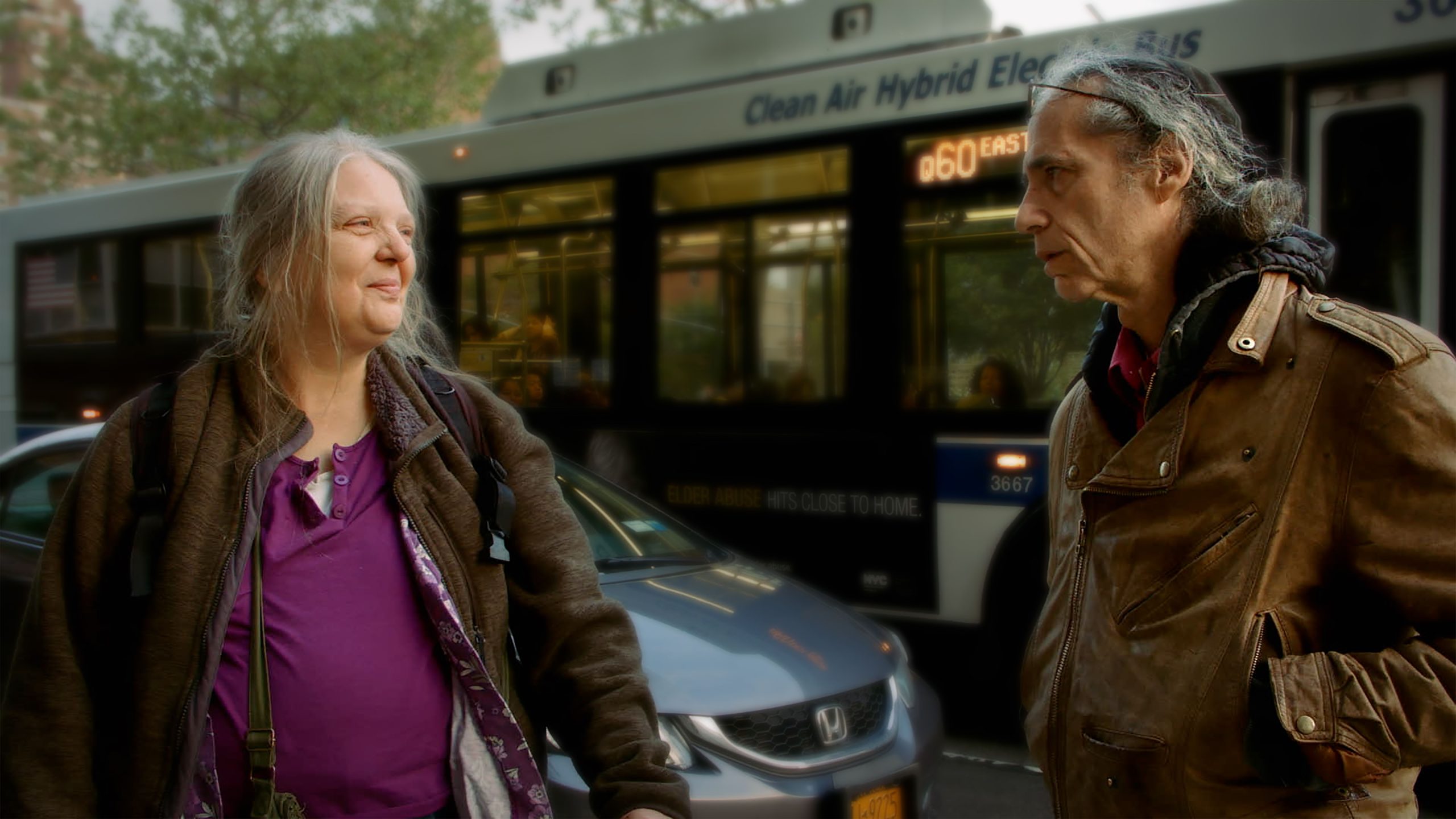
In recognition of Cinequest, now underway, here;s a gem from the 2020 Cinejoy virtual fest. Erotic Fire of the Unattainable is the captivating study of a free spirited woman of a certain age and her relationships. Gay (Gay Walley) is a NYC author in her 60s who has a boyfriend, but there are other men available to sample; she’s had a history of struggles in trying to find a guy who is the best fit.
Her relationships are all asymmetric – either she loves the man more than he loves her, or he loves her more.
We don’t see many movies about the romantic lives of women of a certain age, but assessing the relative appeal of lovers is a universal quandary. Unless you have lucked into the Ideal Partner (like I have with The Wife), there are trade offs.
As the actress Gay Walley says about the character Gay, “She is a free spirit. All the men come with strings. She clearly wants to be with someone but she can’t take the strings.”
Steve Starr and Gay Walley in EROTIC FIRE OF THE UNATTAINABLE. Courtesy of Vital Productions
Director Frank Vitale works in his own form of cinema, docufiction – “people playing themselves in stories that relate to their own real lives”. He casts non-actors and their friends, who act out stories that spring from their own real life experiences. His star, Gay Smalley, gets the screenwriting credit. Smalley, who in real life has published a novel entitled Erotic Fire of the Unattainable, plays the author Gay, who has penned a book of the same name.
He may use non-actors, but there’s nothing amateurish about Vitale’s filmmaking – Erotic Fire of the Unattainable looks great. The cinematographer is Niav Conty, who directed another Cinequest/Cinejoy gem, Small Time.
Erotic Fire of the Unattainable twas my favorite discovery at Cinequest’s 2020 online festival CINEJOY. Erotic Fire of the Unattainable is now streaming on Amazon (included with Prime) and YouTube.
Photo caption: Michael James Kelly and Elizabeth Hirsch-Tauber in 12 MONTHS, world premiere at Cinequest. Courtesy of Cinequest.
This week on The Movie Gourmet – Cinequest’s online festival Cinejoy continues and here is my Best of Cinequest and all my Cinequest coverage. I’ve also honored Cinequest by highlighting the pandemic thriller Before the Fire, a female-written and -directed film with its world premiere at a recent Cinequest.
Note: Oscar winners CODA, Drive My Car and Belfast are all now available to stream.
CODA: what’s not to like about this delightful Oscar-winning audience-pleaser? CODA’s success results from the textured supporting characters and complicated family dynamics in writer-director Sian Heder’s screenplay. AppleTV
Drive My Car: director and co-writer Ryûsuke Hamaguchi’s engrossing masterpiece about dealing with loss – and it’s the best movie of 2021. Layered with character-driven stories that could each justify their own movie, this is a mesmerizing film that builds into an exhilarating catharsis. HBO Max, AppleTV, Amazon, and Vudu.
Nightmare Alley: enough burning ambition for a thousand carnies. IHBO Max, Hulu,Amazon, AppleTV, Vudu, YouTube and redbox.
Belfast: a child’s point of view is universal. If you have heartstrings, they are gonna get pulled. Amazon, AppleTV, Vudu, YouTube and redbox.
Don’t Look Up: Wickedly funny. Filmmaker Adam McKay (The Big Short) and a host of movie stars hit the bullseye as they target a corrupt political establishment, a soulless media and a gullible, lazy-minded public. Netflix.
The Tragedy of Macbeth: No surprise here: Joel Coen, Denzel Washington and Frances McDormand deliver a crisp and imaginative version of the Bard’s Scottish Play. AppleTV.
On April 9 and 10, Turner Classic Movies airs the delightful 1956 heist film Bob le Flambeur on Noir Alley with intros and outros by Eddie Muller. In Bob le Flambeur, Bob the Gambler (Roger Duchesne) is a very decent and cool guy, whose only character flaw is that his financial planning is based on robbing a casino. The other characters, however are a uniformly amoral bunch of blackmailers, finks and pimps, all trying to betray Bob and each other in a tangle of double crosses. Still, with all its cynicism, it’s fairly cheery for a noir and even the decidedly cynical ending is fun.
Bob le Flambeur was written and directed by Jean-Pierre Melville, that rare Frenchman enamored of American culture; besides adopting the surname of the American novelist, Melville tooled around 1950s Paris in a Cadillac, wearing a Stetson. Melville went on to create a great string of neo-noirs in the 1960s starring Alain Delon, Jean-Paul Belmondo and Lino Ventura – Le Doulos, Le deuxième souffle, Le Cercle Rouge, Le Samourai and Un Flic.
Bob le Flambeur influenced the young filmmakers of the upcoming French New Wave, as well as many American filmmakers. You can also stream Bob le Flambeur from Amazon, AppleTV, Vudu and YouTube.
Photo caption: BEFORE THE FIRE. Photo courtesy of Cinequest.
To honor Cinequest, now underway, here’s the Must See from the 2020 festival; ironically, it’s a pandemic thriller which premiered at a film festival that was cut short by COVID. In the thriller Before the Fire, the only escape from an apocalyptic flu pandemic is a woman’s long-estranged rural hometown – but the scary family who traumatized her childhood is there, too. Written by its female star Jenna Lyng Adams, and the first feature by its female director Charlie Buhler, this indie thriller rocks.
Ava Boone (Adams) is a Hollywood actress who has found some success “pretending to be a vampire”, as she puts it, on a television series. As a killer flu sweeps America’s cities, her photojournalist husband (Jackson Davis) seeks to save her by tricking her into refuge with his family in their sparsely populated childhood hometown.
The problem is that growing up in a family ruled by her abusive father was deeply traumatizing. And it’s only a matter of time until her family finds out that she’s back.
As star and screenwriter Adams has said, “but what if the last place you wanted to go was the only place you could go?”
Veteran Charles Hubbell is excellent as the monstrous dad. The part is written to acknowledge that domestic abuse is about power and control – and not just physical abuse. This guy emanates physical brutality, but he is also a master manipulator.
To make things worse, the dad leads a militia of Deliverance-style yahoos, whose strategy to suppress the flu is to murder outsiders.
Ava was once – and is definitely no longer – a farm girl. For necessity’s sake, she begins repairing fences and doing the other hard, dirty and unglamorous work of the family farm run by her husband’s brother (Ryan Vigilant) and his mother (M.J. Karmi). Along the way, she physically hardens up and develops some skills with firearms.
Jenna Lyng Adams in BEFORE THE FIRE. Photo courtesy of Cinequest.
Unsurprisingly (since she wrote it), the role of Ava is a showcase for Jenna Lyng Adams (The Kominsky Files). When Ava first sees her father again, she’s terrified to her core, which tells us all we need from the back story. Adams’ performance is compelling and credible as Ava has to devise and execute her own survival plan. Adams is on-screen in almost every scene and carries the picture.
“Audiences are thirsty for unconventional, layered, and imperfect women on-screen,” said Adams. “I wanted our protagonist to find her strength by facing the darkest parts of her life in the darkest hours of the world. She reinvents herself over and over again to survive.”
“We fought to make this movie, because we felt that there was a very specific expectation about the types of stories women were able to tell,” says director Charlie Buhler. “Male directors shift between genres much more fluidly, and I think you can feel it in the types of stories that make it to the screen. But Jenna and I both love action, we both love sci-fi, so we wanted to make a female protagonist that we women could really rally behind.”
Indeed, women filmmakers shouldn’t be left to the high-falutin’ Message Pictures while the guys have all the fun with the genre movies.
BEFORE THE FIRE. Photo courtesy of Cinequest.
Before the Fire was filmed on location in South Dakota. Cinematographer Drew Bienemann (visual effects in Beasts of the Southern Wild) makes the barren wintry landscape work to illustrate the Ava’s isolation and vulnerability.
BEFORE THE FIRE. Photo courtesy of Cinequest.
I screened Before the Fire for its world premiere at Cinequest, You can stream it from Amazon, AppleTV. Vudu, YouTube and Showtime. Make sure that you have the Jenna Lng Adams film, not one of the other recent movies with the same title.