BLITZ: one brave, resourceful kid amid the horrors

Photo caption: Saiorse Ronan and Elliott Heffernan in BLITZ. Courtesy of AppleTV.

In the WW II drama Blitz, Rita (Saiorse Ronan) is a single mom who, like all Londoners, must endure The Blitz, the 8-month German terror bombing of civilian London. Over a million English city-dwellers were evacuated to the countryside, and half of them were children. Rita’s own nine-year-old son George (Elliott Heffernan) is set to be sent to safety while she remains at her job in a munitions factory.

This plan angers George, and he bolts, running amok through London. His adventures, and Rita’s terrified search for him when she finds him missing, make up the core of Blitz. It is a child-in-peril story, but not one where the adult protagonist rescues the child. Rita may be played by a big movie star, but this is George’s story and a portrait of his determination and resourcefulness.

George is multi-racial, which is hard to be in 1940 England, where he looks different that just about everyone else. As he runs a gauntlet of racist attitudes, it’s a huge relief whenever George encounters someone with even minimal kindness.
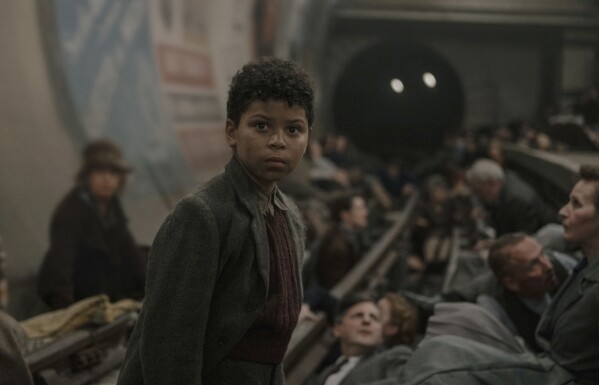
Elliott Heffernan in BLITZ. Courtesy of AppleTV.

Writer-director Steve McQueen’s biggest achievement in Blitz is to tell this story so compellingly from the child’s point of view. Sometimes George isn’t scared when he should be, and sometimes he is overwhelmed by a situation any adult could handle. McQueen certainly found the right actor to play George in Heffernan, who captures George’s vulnerabilities as well as his underlying reservoir of tenacity.

McQueen also pulls off a well-paced thriller and makes the audience feel the historical context. We’ve all seen depictions of The Blitz with the air raid sirens, blackout wardens and plucky Brits sheltering in the Underground and emerging to see the rubble, carnage and fire. But not like this. McQueen’s Blitz is vivid, uncomfortable and terrifying.

There is a spectacular scene at a ritzy hotel’s nightclub, complete with a Cab Calloway-like band and an extra-long tracking shot through the kitchen, an homage to Martin Scorsese’s famous Copacabana shot in Goodfellas. I understand that McQueen would argue that this scene sets up a brief moment later in the film, but it really isn’t necessary and McQueen is just showing off his skills (and AppleTV’s budget). It’s fun, though.

What McQueen fails to deliver, though, is multi-dimensional characters (with the exception of George). Pretty much every non-George character is just one thing – officious, bigoted, evil or saintly.

The is, however, more than a glimmer of texture in a performance by one of my favorite actors, Stephen Graham, who often plays a troubled cop or a criminal psycho in British crime shows like Line of Duty and Little Boy Blue. Graham has a small role as a depraved gang leader, and he makes the character despicable and unhinged and scary and damaged. Graham has worked in US films, too, as an Italian-American mobster in Martin Scorsese’s The Irishman, Scrum in the Pirates of the Caribbean franchise, Al Capone in Boardwalk Empire and Baby Face Nelson in Michael Mann’s Public Enemies.

Blitz is a fine adventure yarn, evocative history and a visually impressive film. Blitz is now streaming on AppleTV.
THE SETTLERS: reckoning with the ugly past

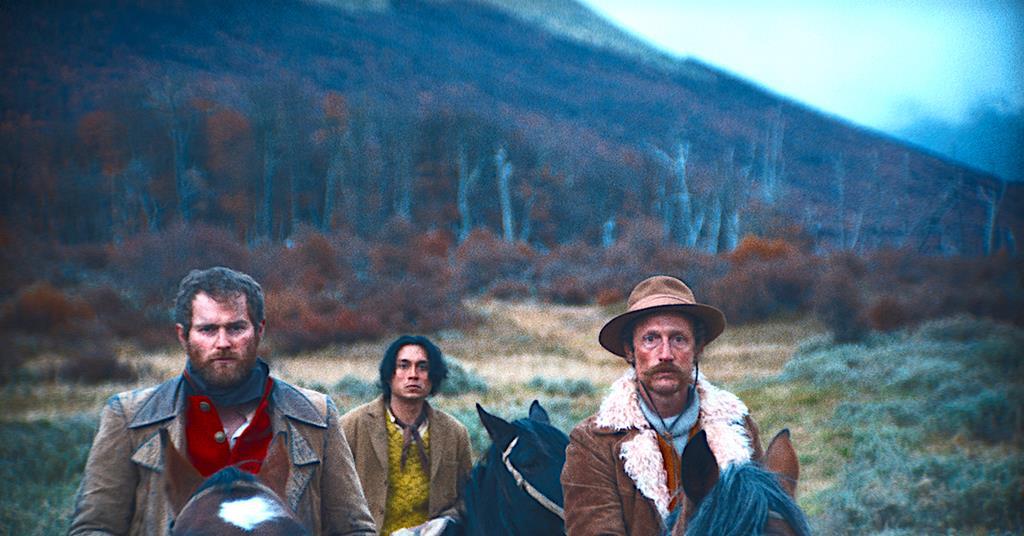
Photo caption: Mark Stanley, Camilo Arancibilia and Benjamin Westfall in THE SETTLERS.  Courtesy of MUBI.

The grimly beautiful Chilean drama The Settlers takes us to Tierra del Fuego in 1901 where Spanish tycoon Jose Menendez (Alfredo Castro) is setting up a massive sheep ranch on 250,000 acres that spans across both Chile and Argentina. Menendez assigns his foreman, a ruthless Scot former soldier, Alexander MacLennan (Mark Stanley), to clear out the indigenous residents, who are inconveniently eating some of the sheep. Melendez makes it clear to MacLennan that he wants the indigenous people exterminated. Melendez and MacLennan are real historical figures, and these events are known as the Selk’nam Genocide.

MacLennan is assigned Bill (Benjamin Westfall), an American veteran of Indian conflicts. He also brings along the half-indigenous local man Segundo (Camilo Arancibilia). Neither MacLennan or Bill sees any humanity in the indigenous, and go about their work as if they were eradicating household pests. It’s pretty awful. There is some on-screen gore, but we experience most of the horror through the reaction of Segundo.

The Settlers jumps ahead almost a decade to explore the impact of the events on some of the key characters and their loved ones. There has to be a reckoning, after all, even if it can’t be fully satisfying.

Sobering as it is, The Settlers is remarkably fine cinema, and is an impressive debut feature for director Felipe Galvez Haberle. The matter-of-fact brutality is almost dwarfed by the stark, vast expanses of Patagonia. Some of the landscape shots by cinematographer Simone D’Arcangelo (The Tale of King Crab) are absolutely breathtaking. The unsettling story is enhanced by a soundtrack reminiscent, but not derivative of, Ennio Morricone’s spaghetti western scores.

First time actress Mishell Guana is very powerful as an indigenous woman. Sam Spruell colorfully brings alive a rogue British colonel (think Kurz in Apocalypse Now!).

The Settlers played in the Un Certain Regard program at Cannes, winning the FIPRESCI prize, and has won awards at a slew of other international film festivals. The Settlers is streaming on MUBI.

Movies to See Right Now

Photo caption: Kieran Culkin and Jesse Eisenberg in A REAL PAIN. Courtesy of Searchlight Pictures.

This week on The Movie Gourmet – new reviews of Jesse Eisenberg’s A Real Pain and the indie Chasing Chasing Amy. My top recommendation in theaters this week is still Anora, and my streaming pick is The Remarkable Life of Ibelin.

REMEMBRANCE

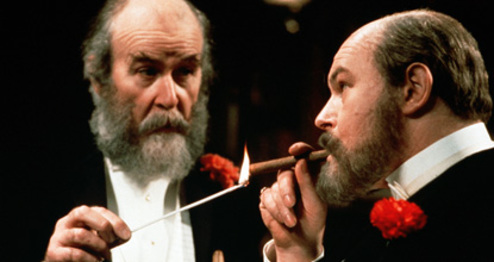
Timothy West (right) in EDWARD THE KING

British actor Timothy West became recognized in the US for his titular performance in the imported mini-series Edward the King, as the son of Queen Victoria, who simmered for decades, waiting for his chance to become King Edward VII. I loved him one of my favorite movies, Day of the Jackal. West’s 151 screen credits included three portrayals of Winston Churchill. As prolific as he was in television and the movies, he had even more of an impact on stage. He was a member of the Royal Shakespeare Company and the Prospect Theater Company, served as artistic director of the Old Vic Theater, and, at age 81, played the role of King Lear for the fourth time.

CURRENT MOVIES

ON TV

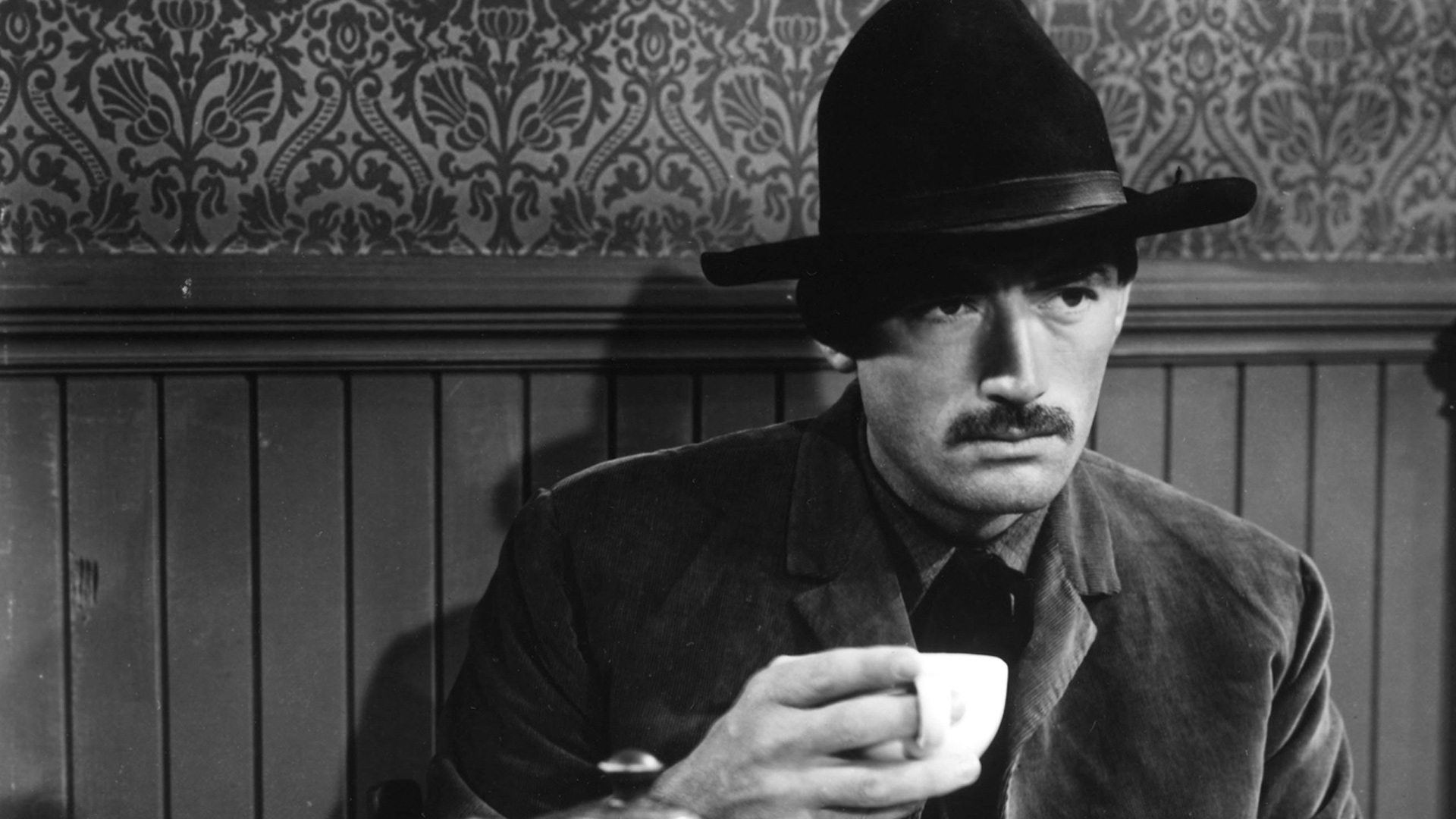
Gregory Peck in THE GUNFIGHTER.

On November 23 (tomorrow), Turner Classic Movies airs the 1950 western The Gunfighter, which I recently watched and enjoyed. Gregory Peck plays the gunfighter Jimmy Ringo, notorious throughout the West, he is a target for others who want to become famous for killing him. reconcile with his estranged wife (Helen Westcott), who has been keeping her marriage to the gunfighter a secret, The town sheriff is a gunfighting pal of Ringo’s, since reformed, concerned about the inevitable violence that follows Ringo to every town Millard Mitchell, Hollywood storytelling so well – in a taut 85 minutes, one of Peck’s best performances (right upyhere with Atticus Finch), Karl Malden, Ellen Corby, Richard Jaeckal, Alan Hale,Jr., and former child star Skip Homeier, who plays one of the best punks you’ll ever despise

CHASING CHASING AMY: origins of love, fictional and otherwise

Photo caption: Sav Rodgers in CHASING CHASING AMY. Courtesy of Level 33 Entertainment and Kino.

In the irresistible documentary Chasing Chasing Amy, filmmaker Sav Rodgers tells his own highly personal story of finding sanctuary in a romantic comedy, a movie that ultimately spurs a both a filmmaking career and his transition to trans man. Rodgers weaves in parallel tracks, the origin story of the 1997 movie Chasing Amy, and thoughtful discussion of how that film, after 25 years of cultural evolution, has aged. Chasing Chasing Amy seamlessly braids together the fictional love story in Chasing Amy with the stories of real life relationships, including his own.

Chasing Chasing Amy‘s writer-director Savannah Rodgers grew up a bullied lesbian in small town Kansas, and found lesbian representation in an old DVD of Chasing Amy, which became a lifesaver. When Kevin Smith himself heard Rodgers’ TED Talk, he connected with Rodgers and supported her (and then his) filmmaking career. All this is contained in Chasing Chasing Amy along with some revelations.

The novelty of Chasing Amy is a straight man and a lesbian as inseparable soulmates, and we learn that Kevin Smith modeled this after his real life friends, his producer Scott Mosier and the screenwriter Guinevere Turner. Turner had written the lesbian coming of age film Go Fish, which was on the festival circuit along with Smith and Mosier’s Clerks; Turner later wrote the screenplays for American Psycho and The Notorious Bettie Page.

But the core of Chasing Amy’s narrative is a love affair sabotaged by the guy’s insecurities, mirroring Smith’s own less-than-two-year relationship with Joey Lauren Adams, who plays Alyssa, the main female character.

Rodgers meets Smith himself, who becomes a mentor, and we get current on-camera interviews with Smith, Adams and other principals. There’s a shoulder-to-shoulder joint interview with Smith and Adams, followed by a sobering solo interview with Adams. Along the way, Rodgers matures from a gushing fan girl to a grownup who recognizes the personal flaws that complicate other people’s relationships. Smith comes off well here, and if Rodgers seems too adoring of Smith in most of the film, just wait until her final interview with Joey Lauren Adams.

Chasing Amy was director Kevin Smith’s 1997 masterpiece, with a groundbreaking lesbian/bi-sexual leading lady; but, after 25 years of cultural evolution, some elements now seem stale and even embarrassing. The leading male character is Holden, played by Ben Affleck. His buddy and wingman is Banky, played by Jason Lee, and Banky (to Lee’s off camera discomfort) is unspeakably vulgar and homophobic, a whirlpool of toxic masculinity. But of course, Banky is there to highlight Holden’s comparative evolved tolerance and openness. As an exasperated Kevin Smith says, ‘Banky is the idiot“. However, were Smith to make the same movie today, he would certainly still make Banky offensive, but not so over-the-top offensive.

Some viewers saw in Chasing Amy a toxic male fantasy of a “the right” straight male being able to “convert” a lesbian to heterosexuality. But Alyssa is a bisexual character, as is explicitly depicted in the movie when her lesbian friends react to her fling with Holden. She’s just a bisexual who is more than he is emotionally able to handle.

The story of Sav Rodgers winds from Kansas and the TedTalk, through her long relationship and now marriage, and final, the transitioning into a he/him trans man. Rodgers grows from a naïf into a grown ass man, albeit one that is still earnest, sweet and wears his emotions on his sleeve.

That Rodgers tells such a highly personal story along with the origin story of Chasing Amy and subsequent film and cultural criticism is impressive and ever watchable. I screened Chasing Chasing Amy for the San Luis Obispo Film Festival. It releases into theaters tomorrow.

A REAL PAIN: whose pain is it?

Photo caption: Kieran Culkin and Jesse Eisenberg in A REAL PAIN. Courtesy of Searchlight Pictures.

Jesse Eisenberg’s A Real Pain begins as an odd couple comedy and evolves into something much deeper. Cousins David (Eisenberg) and Benji (Kieran Culkin) adored their late grandmother and are honoring her by taking a pilgrimage to Poland to see her homeplace and the Nazi death camp that she survived.

The two forty-year-olds were inseparable growing up, but have drifted apart as adults. David, although he takes medication for his OCD, is highly functional; he has a solid job and lives in NYC with his beautiful wife and adorable son. Benji still hasn’t landed anywhere outside of his family’s upstate basement.

David is a little neurotic and little uptight, but his behavior is well within the normal band; he would be an amiable traveling companion. On the other hand, Benji is erratic, unfiltered and immune to embarrassment and social convention. They have signed up for a guided group tour, and Benji’s unrelenting, inappropriate antics mortify David. To the audience, it looks like Benji is the Real Pain of the title.

But, as the story is unspooled, we learn that Benji is just not quirky – he’s a very damaged human being. His emotional distress is the source of the film’s title. David is frustrated that he cannot fix Benji’s pain, and the ambiguity in the ending is very truthful.

Kieran Culkin’s performance as Benji is extraordinary. He captures all Benji’s charm, impulsiveness, empathy, and profound, underlying sadness.

The rest of the cast is very good, especially Jennifer Grey (yes, THAT Jennifer Grey) as a tour group member and Will Sharpe (White Lotus) as their guide.

Eisenberg wrote and directed A Real Pain as well as starring in it. Eisenberg has said that he was exploring the contrast between “epic pain” (e.g., the Holocaust and its continuing impact) to “more modern pain” (i.e., the real anguish of we who may be hurting personally, but don’t have to worry about survival). The grandmother’s house that David and Benji eventually find is the real former home of Eisenberg’s own relatives.

As a screenwriter, Eisenberg demonstrates real talent for subtlety, in creating a unique character and in exploring sobering topics, leavened with just enough humor. And, as a director, Eisenberg gets some credit for Culkin’s performance.

The soundtrack is almost entirely Chopin, which is both Polish and (vital for indie filmmakers) in the public domain. The Wife found it distracting, and it had a somnolent effect on me.

Watching A Real Pain does not tantalize the viewer into planning a trip to Poland.

Eisenberg’s character David is always wearing a University of Indiana baseball cap. That’s interesting because Indiana is the perennial doormat of Big Ten football and has actually lost more games than any other team in the 140-year history of college football. What Eisenberg could not have possibly known when shooting the film is that Indiana football would be having its best year ever, and, as I write this, is a shocking 10-0.

You might get the impression from the trailer below, as I did, that A Real Pain is lighter than it is. A Real Pain is now in theaters.

Movies to See Right Now

Photo caption: Mark Eydelshteyn (left) and Mikey Madison (center) in ANORA. Courtesy of NEON.

This week on The Movie Gourmet – the fall movies, many of which I’ve been waiting for since the Canes Film Festival in May, are flooding into theaters. So, The Movie Gourmet is following last week’s review of Conclave with new reviews of award-winners Anora and Emilia Pérez. The genre-busting Netflix documentary The Remarkable Life of Ibelin rounded out one of my best movie-watching weeks ever. (I also immersed myself in French cinema and rewatched Jean-Pierre Melville’s neo-noir Second Wind and introduced myself to six of Jean-Paul Belmondo’s films.)

Next week – a new review of A Real Pain, which The Wife and I saw last night.

REMEMBRANCE

I didn’t remember the name of actor Jonathan Haze, who worked in a score of Roger Corman’s low budget exploitation films.  His most memorable starring role was in Little Shop of Horrors, where his character cultivated a flesh-eating houseplant and pulled a tooth from a masochistic dental patient (Jack Nicholson).

CURRENT MOVIES

ON TV

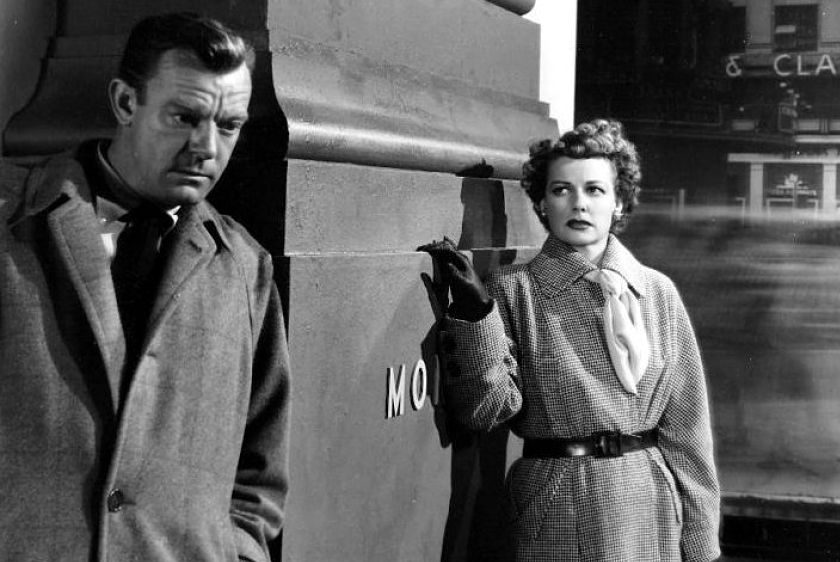
Dennis O’Keefe and Ann Sheridan in WOMAN ON THE RUN

On November 19, Turner Classic Movies presents the taut 77 minutes of Woman on the Run, one of my Overlooked Noir. When the police coming looking for a terrified murder witness, they are surprised to find his wife (Ann Sheridan) both ignorant of his whereabouts and unconcerned. And the wife has a Mouth On Her, much to the dismay of the detective (Robert Keith), who keeps walking into a torrent of sass. She starts hunting hubbie, along with the cops, a reporter (Dennis O’Keefe) and the killer, and they all careen through a life-or-death manhunt. Another star of Woman on the Run is San Francisco itself, from the hilly neighborhoods to the bustling streets to the dank and foreboding waterfront.

EMILIA PEREZ: four women yearn amid Mexico’s drug violence

Photo caption: Zoe Saldaña and Karia Sofia Gascon in EMILIA PEREZ. Courtesy of Netflix.

The Netflix original Emilia Pérez is a sweeping musical melodrama that explores the toll of the violence on Mexico. Four women each ache for a fundamental change in their lives: one to be rewarded in money and status for her talents, one to be reunited with an old lover, one to resolve her husband’s disappearance and one to emerge in a different body. The film is very well-acted and expertly made.

Wikipedia describes Emilia Pérez as a “French musical crime comedy“, which is only accurate to a point. Its director and the author of the source novel are indeed French. The story is mostly set in Mexico, with stops in London, Lausanne, Bangkok and Tel Aviv. The dialogue is in Spanish and English. And it stars four actresses from the US, Mexico and Spain.

Zoe  Saldaña, Karia Sofia Gascon, Selena Gomez and Adriana Paz shared the Best Actress award at Cannes. We see the story unfold through Saldaña’s eyes, and Gascon’s character drives the story. Gomez has a smaller, but important role, and Paz has the least to do.

The entire movie pivots around a a huge surprise early in the film, so I’m not going to spoil it by talking much about the plot. Suffice it to say that Karia Sofia Gascon’s particularly brilliant performance is uniquely challenging.

I’m not a fan of musicals generally, but the musical numbers are good and well-staged. Most arise organically from the story, which I prefer, as opposed to “and then they break out in song”, I don’t think any of the songs will become standard show tunes.

The director, Jacques Audiard, paces Emilia Pérez very well and makes the Mexican scenes especially vivid. He directed two films that ended up on my best-of-the-year lists, A Prophet and Rust and Bone.

While I admired, the filmmaking, the story, somewhere between operatic and telenovela, was a little soapy for my taste.

Emilia Pérez is streaming on Netflix.

ANORA: human spirit vs the oligarchs

Photo caption: Mark Eydelshteyn and Mikey Madison in ANORA. Courtesy of NEON.

In Sean Baker’s thrilling comedy Anora, Ani is a young Brooklyn lap dancer and escort who besots an even younger Russian customer, Ivan (Mark Eydelshteyn). Ivan is the son of a billionaire Russian oligarch, and the two spend several days, and countless thousands of Ivan’s unlimited fortune, partying. Ivan even impulsively takes Ani and four of their friends to Las Vegas on a luxury spree. There, Ivan convinces Ani to marry him before they return to Ivan’s NYC mansion.

But, just as they are settling into married life, Ivan’s parents catch wind of what is, to them, an unacceptably scandalous marriage and head to New York on their private jet. In the mean time, the parents order their NYC fixer and his team to corral the young lovebirds and undo the marriage.

Ani and Ivan are mismatched, but not because of his wealth and her poverty. The most important contrast between them is that he has never had to work or fight for anything, and she has worked and fought every day for her own survival.

Giggly, giddy and ever stoned, Ivan is spoiled and extremely immature; (he acts like his maturity was stunted at 13). This is a person who has never lived a moment of responsibility, nor has even a thought of responsibility crossed his mind. He sees a green card marriage as an escape from his Russian family and (horrors!) a future career as an oligarch-in-training. That’s a fantasy. Billionaires giveth and billionaires taketh away

The fixer (Karren Karagulian), his Armenian henchman (Vache Tovmasyan) and a Russian hooligan (Yura Borisov) arrive at the mansion and all hell breaks loose. From this moment, Anora, which has been very entertaining, vaults into a rollicking, hilarious thrill ride. Ani is a woman of uncommon spirit and is immediately too much for the oligarch’s Russian-speaking crew to handle.

Ani and the goons spend the next twelve hours on a raucous and hilarious nighttime manhunt through NYC that had the audience HOWLING with laughter – and this was a 4 PM weekday arthouse audience. I haven’t been in a theater audience that laughed so hard since Barbie.

And then there’s the last two minutes or so of the film, in which director Sean Baker sharply changes the tone of Anora. The audience was filing out, asking each other What was THAT? I thought that, given what Ani had experienced in the past forty-eight hours, Ani’s reaction in the ending was profoundly truthful, and elevated the movie from one of the year’s most fun movies to one of the best.

Anora springs from the mind of writer-director Sean Baker, whose signature is using first-time actors to tell the stories of people on the margins. His best films before Anora have been his first three: Starlet, about a young San Fernando Valley woman in the porn industry and her unlikely friendship, Tangerine, about two Hollywood Boulevard transgender hookers (shot on an iPhone), and The Florida Project, about latchkey kids in a poverty motel.

Mikey Madison (center) in ANORA. Courtesy of NEON.

Ani is a force of nature, and her spirit eventually earns her kindness from an unexpected source. Mikey Madison’s performance as Ani is stunning, bringing an aching humanity and authenticity to Ani and showcasing a remarkable gift for physical comedy. Madison stars in the TV series Better Things and played a bloodthirsty Manson Girl in Once Upon a Time in Hollywood… This is her first non-teenage starring role in a feature film.

Of the most significant roles, only Madison and the actors playing Ivan and his parents and the young Russian goon, Igor, (plus the tow truck driver) have substantial screen acting experience outside Sean Baker films. In just his fourth screen role, Tovmasyan is wonderfully watchable as the movie’s human piñata.

Mikey Madison and Yura Borisov in ANORA. Courtesy of NEON.

At first Yura Borisov’s Igor seems to be only what he is paid to be – a tagalong thug. But one of the pleasures of Anora is watching Igor regard the other characters and silently judge their behavior. Borisov starred in Compartment No. 6, one my favorite films of 2022. That film won the Grand Prix, essentially the second place award, at Cannes. This year, Anora won the top award at Cannes, the Palme D’Or. Quite a run for Borisov.

How often can a raunchy comedy win the Palme D’Or and contend for the Best Picture Oscar? Sean Baker and Mikey Madison are making that happen this tear with Anora.

THE REMARKABLE LIFE OF IBELIN: totally unexpected

Here’s a film like nothing we have seen. In the unique documentary The Remarkable Life of Ibelin, a wheelchair-bound Norwegian man named Mats Steen dies young. Unable to work, he had spent his adult life consumed by the online fantasy game World of Warcraft, isolating himself from his family, friends and outside activities. His heartbroken family remembered that Mats had a blog, so they posted the news of his death on the blog in case he had any readers. To their (and the audience’s) shock, scores of emails immediately flooded in. It turns out that Mats, as his game avatar Ibelin, was a beloved member of a community, lived a rich and connected life on-line and touched many lives in several countries with his empathy and personal support.

Now, that’s plenty of a story as far as it goes, but then director Benjamin Ree takes things to a dimension I haven’t seen before. Having scored a massive archive of game-play code, Ree was able to reconstruct Mats’ life as Ibelin in the on-line game. It looks like the photo below.

THE REMARKABLE LIFE OF IBELIN. Courtesy of Netflix.

The game footage is braided with the current reflections of his friends as they recount what all of them were going through at the time. It’s a genre-busting take on the documentary form.

I couldn’t find an available photo of the non-game part of the movie to include at the top of this post. I didn’t want this photo to lead off the review because I was concerned that reader would think it was an animated movie and choose not to read about it.

As a movie studio, Netflix is IMO producing a tsunami of disposable content, all baked to formula for what people feel like watching on TV, with a heavy dose of true crime, rom coms, outlandish thrillers, etc. Much of this is watchable and some very good, but it’s mostly not very culturally nutritious. Netflix tries to mask the mediocrity of its mass content by funding a few of cinema’s best directors to make something elevated: Alfonso Cuarón (Roma), Martin Scorsese (The Irishman), Jane Campion (The Power of the Dog), Richard Linklater (Hit Man). But, I gotta give credit to Netflix for funding Ree and his entirely fresh (and decidedly non-formulaic) vision.

I must admit that I generally don’t link real human emotion to fantasy animation and gaming. However, The Remarkable Life of Ibelin is one of the most genuinely evocative, heartbreaking and sweetest movies of the year.

Ree is a young (this is only his third feature) Norwegian documentarian. I see that his The Painter and the Thief is streaming, so I think I’ll take a look at it, too.

The Remarkable Life of Ibelin is streaming on Netflix.

Movies to See Right Now

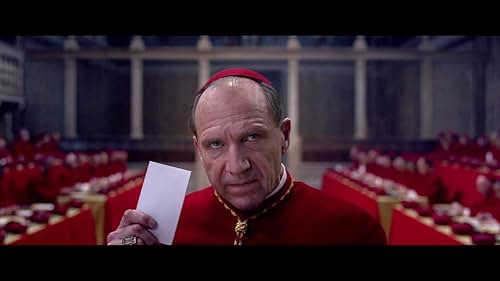
Photo caption: Ralph Fiennes (front) in CONCLAVE. Courtesy of Focus Features.

This week on The Movie Gourmet, new reviews of Edward Berger’s Vatican thriller Conclave, the first of this fall’s big Hollywood prestige pictures, and Hong Sang-soo’s little meditation In Water.

Note: In the Summers, director Alessandra Lacorazza Samudio’s hihly recommended debut film, is now available to stream on Amazon.

REMEMBRANCE

Quincy Jones, one of the giants of American music, left a huge imprint on American cinema, with contributions to literally hundreds of films. Starting with The Pawnbroker in 1965, he composed scores of soundtracks and earned seven Oscar nominations for original score or original song.

CURRENT MOVIES

ON TV

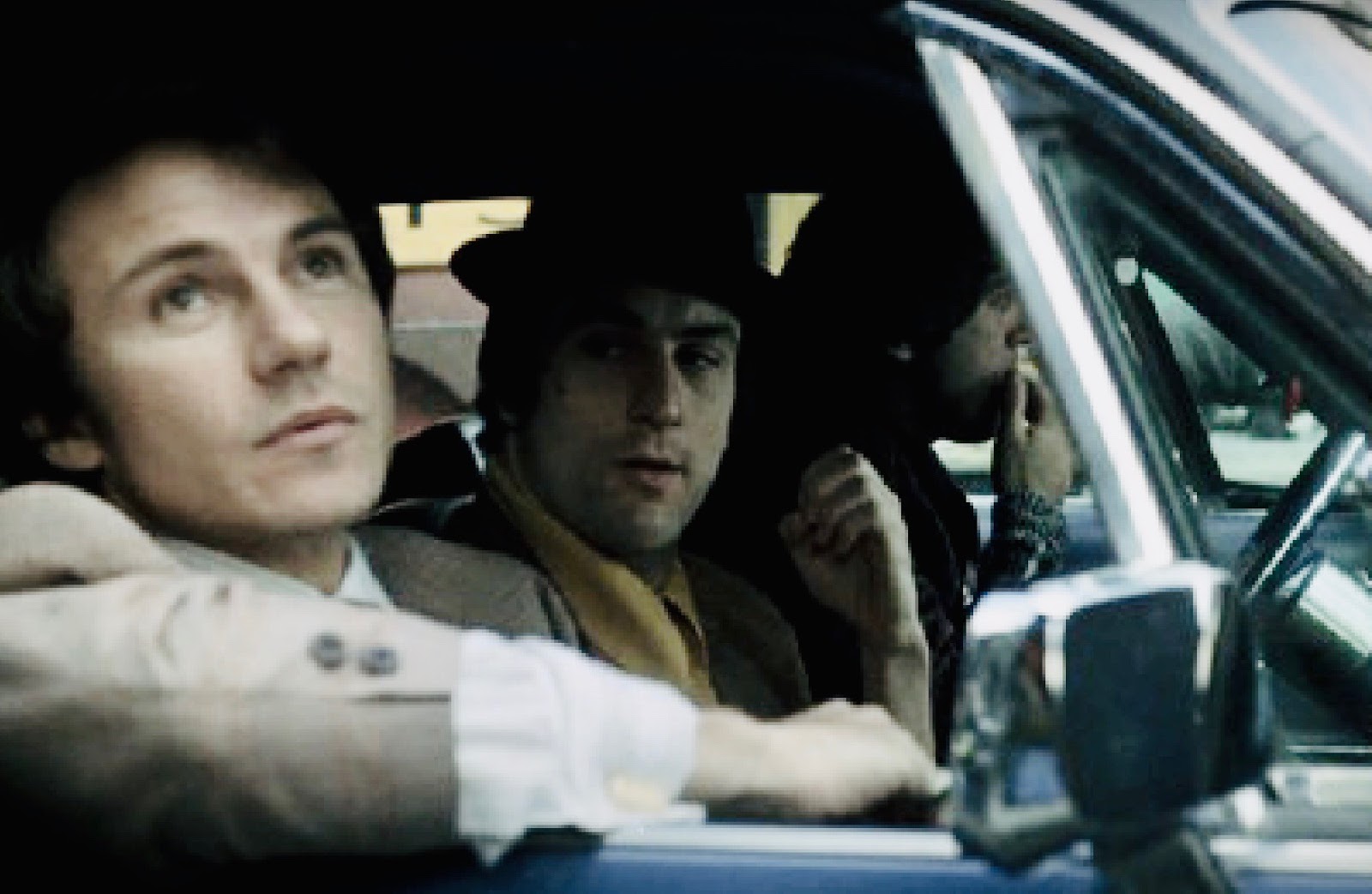
Harvey Keitel (left) and Robert De Niro (center) in MEAN STREETS.

On November 12, Turner Classic Movies is airing Mean Streets, the explosive showcase for Marin Scorsese, Harvey Keitel and Robert De Niro. In 1973, the three were essentially unknown, although De Niro had gained some notice as the slow-wited and dying catcher in the weeper Bang the Drum Slowly earlier in the year. Keitel’s first credit was in Scorsese’s debut film Who’s That Knocking at My Door?. De Niro’s next two films were The Godfather Part II and Taxi Driver. In the next five years, Keitel would make three more Scorsese films and work with Paul Schrader, Robert Altman and Francis Ford Coppola. Scorsese followed Mean Streets with the popular and affecting drama Alice Doesn’t Live Here Anymore and then embarked on his historic run of masterpieces (Taxi Driver, The Last Waltz, Raging Bull, The King of Comedy, Goodfellas) and some of recent cinema’s most ambitious films: The Last Temptation of Christ, Gangs of New York, and Killers of the Flower Moon).

In Mean Streets, Keitel plays a low-level gangster ridden with Catholic guilt and worried about his wild and self-destructive friend (played by De Niro), who seems destined to piss off one too many loan sharks. Scorsese’s introduction to these vivid characters and the verisimilitude with his setting in Little Italy demonstrated his filmmaking promise.