The Movie Gourmet’s 2019 Oscar Dinner

ROMA

Every year, we watch the Oscars while enjoying a meal inspired by the Best Picture nominees. For example, we had sushi for Lost in Translation, cowboy campfire beans for Brokeback Mountain and Grandma Ethel’s Brisket for A Serious Man – you get the idea. The high point has been the Severed Hands Ice Sculpture in 2011 for 127 Hours and Winter’s Bone (photo below). Here’s last year’s menu, centered on Reynolds Woodcock’s (Daniel Day-Lewis) comically elaborate breakfast order from Phantom Thread.

This year’s dinner will be built around Mexican cuisine as a tribute to Roma, the Oscar-nominated movie that we most admire.  We’ll have some shrimp (the family dines at the beach resort restaurant with the giant octopus sculpture outside) and The Movie Gourmet’s famous elote (street corn). The table will be adorned with references to the other Best Picture nominees.

So here is this year’s menu:

Gambas al ajillo, elote, frijoles y arroz from Roma.

Jack Daniels from A Star Is Born. A fifth of JD Black, just like the one drained by Jack (Bradley Cooper) in his limo.

Fried chicken from Green Book: Tony Lip (Viggo Mortensen) lights up with Kentucky Fried Chicken! In Kentucky! When’s that ever gonna happen!.

Cake with blue icing from The Favourite: In one of the least appetizing food scenes in recent cinema, Queen Anne (Olivia Colman), gout and all, battles this cake.

Almond croissant from Vice:  Offered some food at a meeting, Dick Cheney (Christian Bale) mumbles, “Nah, I’m eating healthy” – and then scarfs something from the pastry tray.

Coors from BlacKkKlansman: Something for all those Colorado Springs white supremacists.

Purple potion from Black Panther: Not having any real superhero potion, The Wife and I faked it with a sports drink.

Novelty false teeth for Bohemian Rhapsody. As a table decoration, we chose novelty false teeth to represent the horrible prosthetic teeth that Rami Malek had to wear as Freddie Mercury. The real Freddie was a very handsome guy with prominent teeth; the movie Freddie is downright horse-faced – and it’s a terrible distraction from Malek’s fine performance.  Speaking of which, on YouTube, you can find a side-by-side of the actual Queen performance at LiveAid and the Bohemian Rhapsody version – great stuff.  Still, why is this movie nominated for Best Picture?

My thanks to The Wife, who has been the real driving force behind this meal in the past few years.

The Movie Gourmet’s culinary tribute to 127 HOURS and WINTER’S BONE

CINEQUEST 2019 is just around the corner

Make your plans now to attend the 29th edition of Cinequest, Silicon Valley’s own major film festival. By some metrics the largest film festival in North America, Cinequest was recently voted the nation’s best by USA Today readers. The 2019 Cinequest is scheduled for March 5 through March 17 and will present almost 100 feature films and dozens of short films and virtual reality experiences from the US and over fifty other countries. And, at Cinequest, it’s easy to meet the filmmakers.

This year’s headline events include:

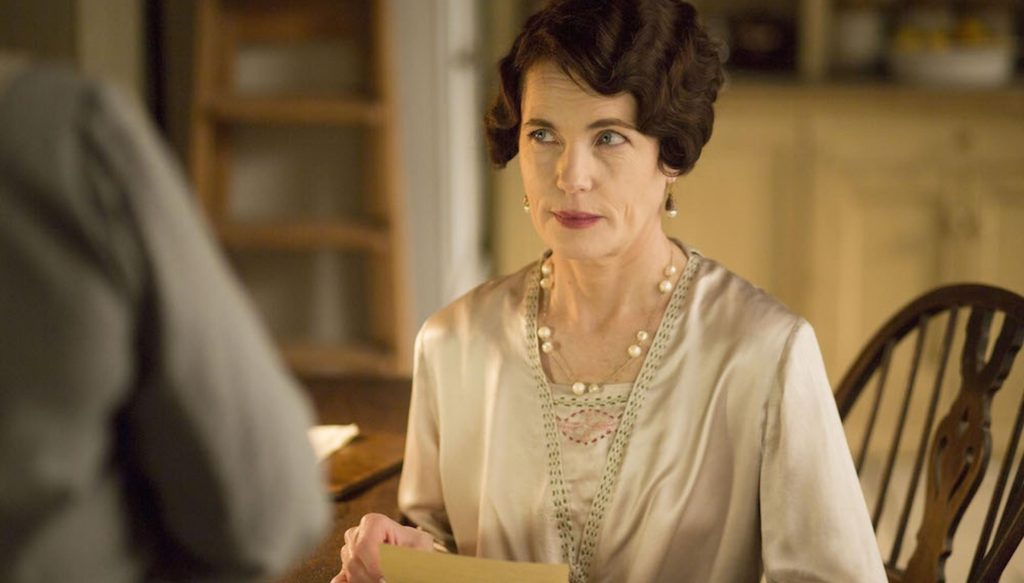
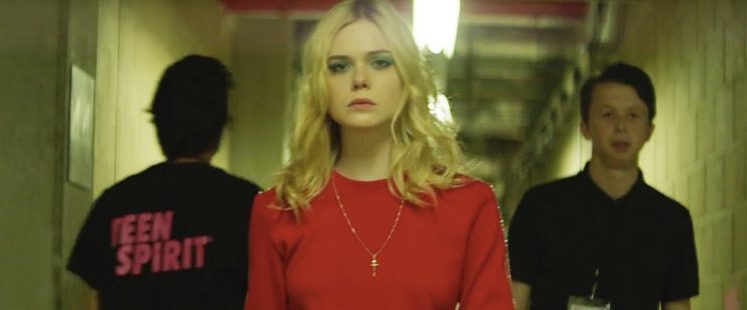
  • New movies with Elle Fanning, Rebecca Hall, Adam Driver, Emile Hirsch, Bruce Dern, Dev Patel, Jesse Eisenberg, Alexander Skarsgård, Stellan Skarsgård, Jeff Daniels, Salma Hayek, Martin Sheen,  Jonathan Pryce, Emilio Estevez, Christian Slater, Alec Baldwin, Jena Malone, Jeffrey Wright, Stephen Yeun, Katie Holmes, Elizabeth McGovern Blythe Danner, Levar Burton, Emily Mortimer, M. Emmet Walsh and Richard Kind.
  • New movies by directors Mike Leigh, Terry Gilliam, Christian Petzold, Michael Winterbottom and Kim Nguyen.
  • See it here FIRST:  Sometimes Always Never, Freaks, Hotel Mumbai, The Man Who Killed Don Quixote, The Hummingbird Project, Peterloo, The Public, Teen Spirit, The Third Wife, Transit, The Wedding Guest and Woman at War are all slated for theatrical release later this year.
  • For the first time at Cinequest – 5 U.S. premieres of Television series.
  • The 1928 Buster Keaton silent Steamboat Bill, Jr. projected in a period movie palace, the California Theatre, accompanied by world-renowned Dennis James on the Mighty Wurlitzer organ.

Indeed, the real treasure at Cinequest 2019 is likely to be found among the hitherto less well-known films. In the past four years, the Cinequest gems Eye in the Sky, Wild Tales, Ida, The Hunt, ’71, Corn Island, The Memory of Water, Magallanes, Quality Problems, The Sense of an Ending, For Grace, Lost Solace, Class Enemy, Heavenly Shift and Oh Boy/A Coffee in Berlin all made my Best of the Year lists.

Cinequest revels in its Downtown San Jose vibe, with concurrent screenings at the 1122-seat California, the 550-seat Hammer and the 257-seat 3Below, all within 1600 feet of the VIP lounge at The Continental Bar. There will still be satellite viewing in Redwood City.

At Cinequest, you can get a festival pass for as little as $165, and you can get individual tickets as well. The express pass for an additional tax-deductible $100 is a fantastic deal – you get to skip to the front of the lines!  Take a look at the entire program, the schedule and the passes and tickets.

As usual, I’ll be covering Cinequest rigorously with features and movie recommendations. I usually screen (and write about) over thirty films from around the world. Bookmark my Cinequest 2019 page, with links to all my coverage (links on the individual movies will start to go live on Sunday, March 3). Follow me on Twitter for the latest.

tonight on TV: SAMMY DAVIS, JR.: I’VE GOTTA BE ME: a needy talent through complicated times

Still from SAMMY DAVIS JR.: I’VE GOTTA BE ME. Photo courtesy JFI.

Tonight, PBS airs Sammy Davis Jr.: I’ve Gotta Be Me on its American Masters series.  As a Baby Boomer who had dismissed Sammy Davis Jr. from the moment he publicly hugged Richard Nixon, I found this to be the most surprising doc (and my favorite) at last year’s San Francisco Jewish Film Festival. I learned that Sammy’s 61-year career as a professional entertainer began at age three (with his first movie credit at age 7), a working childhood that  left emotional needs  It turns out that Sammy was a very, very talented but needy artist,, an uncomplicated man navigating several very complicated times.

Sammy’s life of entertainment began at 3.  We get to see a clip of him in the 1933 Rufus Jones for President.  All that professional work took away his childhood and engraved upon him a need to please.  That and his generation produced the 50s showbiz style that seemed so insincere to us Baby Boomers.  And, of course that embrace of Nixon seemed to be the ultimate sell-out moment.

Sammy Davis Jr.: I’ve Gotta Be Me also poses whether he was demeaned by Rat Pack humor? Were Frank and Dino laughing at Sammy, or with him?

But this was  an immensely talented man, a masterful dancer with a remarkable crooner’s voice and a gift for mimicry.  He was the first American entertainer of color to do impersonations of white celebrities.   BTW there is some unbelievable dancing in Sammy Davis Jr.: I’ve Gotta Be Me.  We get to see Sammy’s 60th anniversary in showbiz celebrated among a host of celebrities – he still had his dancing chops.

Sammy Davis Jr.: I’ve Gotta Be Me is the story of a man whose success condemned him to a career that spanned generations – none of which fit him comfortably.  It’s a fine and insightful film.

[Random note: This film title may contain the most different punctuation marks of any movie: a comma, a period, a colon and an apostrophe.]

DVD/Stream of the Week: THE VISITOR – self-isolation no longer

THE VISITOR
Richard Jenkins in THE VISITOR

The great character actor Richard Jenkins was nominated for an Oscar for his supporting role in last year’s Best Picture The Shape of Water, and we should remember that he also got an Oscar nod for his starring turn in the indie drama The Visitor. Touching on the themes of immigration to the US and the “otherness” of people from the Middle East, it’s especially topical today. Jenkins has the role of his career in The Visitor – a man who deals with loss by isolating himself. He becomes intrigued with an illegal Middle Eastern immigrant, then develops a bond and then reclaims passion into his life.

The Visitor is available on DVD from Netflix and streaming from Amazon, iTunes, Vudu, YouTube and Google Play.

Movies to See Right Now

THEY SHALL NOT GROW OLD

There aren’t many MUST SEES out right now, but don’t miss They Shall Not Grow Old. The Wife and I have been catching up on the Oscar nominees and recently saw Black Panther, which is excellent for the super hero genre (faint praise from me). We also caught Bohemian Rhapsody, a perfectly fine movie that has no business being nominated for Best Picture.  I’m looking forward to seeing Green Book again this weekend, this time with The Wife – she’ll love it.

Somehow, more of my family and friends have, despite my advice, seen The Favourite.  One of my friends, a professional filmmaker and opinion leader among cinéastes, liked it; everyone else hated, hated, HATED it.  Really hated it.

OUT NOW

  • In They Shall Not Grow Old, Lord of the Rings filmmaker Peter Jackson has, for the first time, layered humanity over our understanding of World War I. By slowing down the speed of the jerky WWI film footage and adding sound and color, Jackson has allowed us to relate to the real people in the Great War. This is a generational achievement and a Must See.
  • Roma is an exquisite portrait of two enduring women and the masterpiece of Alfonso Cuarón (Gravity, Children of Men and Y Tu Mama Tambien). Will win multiple Oscars. It is streaming now Netflix.
  • Green Book: Tony Lip is a marvelous character, and Viggo Mortensen’s performance is one of the great pleasures of this year in the movies.
  • Vice: in this bitingly funny biopic of Dick Cheney by writer-director Adam McKay (The Big Short), Cheney is played by a physically transformed and unrecognizable Christian Bale. A superb performance, .pretty good history, biography from a sharp point of view and a damn entertaining movie.
  • Stan & Ollie: Steve Coogan as Stan Laurel and John C. Reilly as Oliver Hardy deliver remarkable portraits of a partnership facing the inevitability of showbiz decline.
  • Pawel Pawlikowski’s sweeping romantic tragedy Cold War is not as compelling as his masterpiece Ida.
  • The Favourite: Great performances by three great actresses, sex and political intrigue are not enough; this critically praised film didn’t work for me.


ON VIDEO

This week’s Stream of the Week is my pick for 2010’s best film, the Oscar-nominated, searing drama Incendies:  a young man and woman journey from Quebec to the Middle East to uncover family secrets from the Lebanese civil war. You can stream it from Amazon, iTunes, Vudu, YouTube and Google Play.
 

ON TV

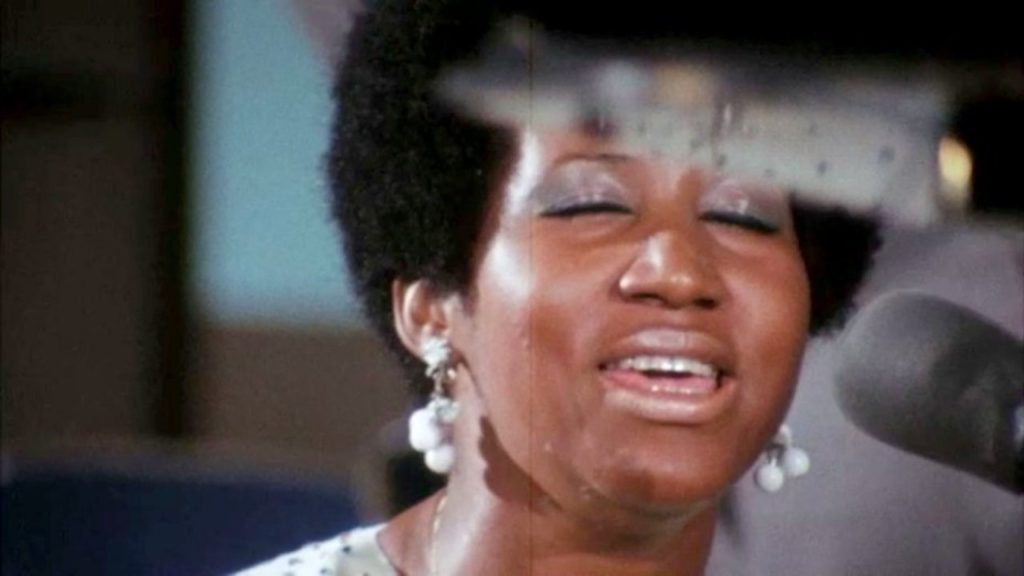
This month, Turner Classic Movies  features all Oscar-nominated movies its 31 Days of Oscars, and I recommend Blow-up on February 19. Set in the Mod London of the mid-60s, a fashion photographer (David Hemmings) is living a fun, but shallow, life filled with sports cars, discos and scoring with supermodels (think Jane Birkin, Sarah Miles and Verushka). Then he discovers that his random photograph of a landscape may contain a clue in a murder and meets a mystery woman (Vanessa Redgrave). After taking us into a vivid depiction of the Mod world, director Michelangelo Antonioni brilliantly turns the story into a suspenseful story of spiraling obsession. His L’Avventura, La Notte and L’Eclisse made Antonioni an icon of cinema, but Blow-up is his most accessible and enjoyable masterwork. There’s also a cameo performance by the Jeff Beck/Jimmy Page version of the Yardbirds and a quick sighting of Michael Palin in a nightclub.

BLOW-UP

Stream of the Week: INCENDIES – lives created by violence

Lubna Azabal in INCENDIES

This searing drama was my pick for 2010’s best film. Upon their mother’s death, a young man and woman learn for the first time of their father and their brother; they journey from Quebec to the Middle East to uncover family secrets. As they bumble around Lebanon, we see the mother’s experience in flashbacks. We learn before they do that their lives were created – literally – by the violence of the Lebanese civil war.

Because the film is anything but stagey, you can’t tell that Canadian director Denis Villaneuve adapted the screenplay from a play. Lubna Azabal, a Belgian actress of Moroccan and Spanish heritage, is brilliant as the mother.

It’s a tough film to watch, with graphic violence against women and children. But the violence is neither gratuitous nor exploitative – it is a civil war, after all, and the theme of the film is the cycle of retribution.

Incendies was nominated for the Best Foreign Language Oscar, but lost out to a much inferior film on the same subject of violence, In a Better Life. You can stream it from Amazon, iTunes, Vudu, YouTube and Google Play.

Movies to See Right Now

Christian Bale in VICE

If you haven’t seen it, don’t miss the Mr. Rogers biodoc Won’t You Be My Neighbor? Saturday night on PBS.

OUT NOW

  • In They Shall Not Grow Old, Lord of the Rings filmmaker Peter Jackson has, for the first time, layered humanity over our understanding of World War I. By slowing down the speed of the jerky WWI film footage and adding sound and color, Jackson has allowed us to relate to the real people in the Great War. This is a generational achievement and a Must See.
  • Roma is an exquisite portrait of two enduring women and the masterpiece of Alfonso Cuarón (Gravity, Children of Men and Y Tu Mama Tambien). Will win multiple Oscars. It is streaming now Netflix.
  • Green Book: Tony Lip is a marvelous character, and Viggo Mortensen’s performance is one of the great pleasures of this year in the movies.
  • Vice: in this bitingly funny biopic of Dick Cheney by writer-director Adam McKay (The Big Short), Cheney is played by a physically transformed and unrecognizable Christian Bale.  A  superb performance, .pretty good history, biography from a sharp point of view and a damn entertaining movie.
  • Stan & Ollie: Steve Coogan as Stan Laurel and John C. Reilly as Oliver Hardy deliver remarkable portraits of a partnership facing the inevitability of showbiz decline.
  • Pawel Pawlikowski’s sweeping romantic tragedy Cold War is not as compelling as his masterpiece Ida.
  • The Favourite: Great performances by three great actresses, sex and political intrigue are not enough; this critically praised film didn’t work for me.
  • Do NOT, under any circumstances, see I Hate Kids, which I started to screen for a film festival earlier in the year, but could not bring myself to finish. Somehow, it got a theatrical release, but it only has a Metacritic rating of 12.

ON VIDEO

My Stream of the Week is Mustang, an Ocar-nominated drama about five exuberant Turkish teenage girls who challenge the repression of traditional culture. You can stream Mustang on Netflix, Amazon, iTunes. Vudu, YouTube and Google Play.

ON TV

Turner Classic Movies is in the midst of its 31 Days of Oscar series, and I think that it’s time to revisit a spectacle. On February 13, TCM is broadcasting Lawrence of Arabia. For decades, many of us watched this epic squeezed into tinny-sounding TVs. In 1989, I was fortunate enough to see the director’s cut in an old movie palace. Now technology has caught up, and modern large screen HD televisions can do this wide-screen classic justice. Similarly, modern home sound systems can work with the great Maurice Jarre soundtrack.

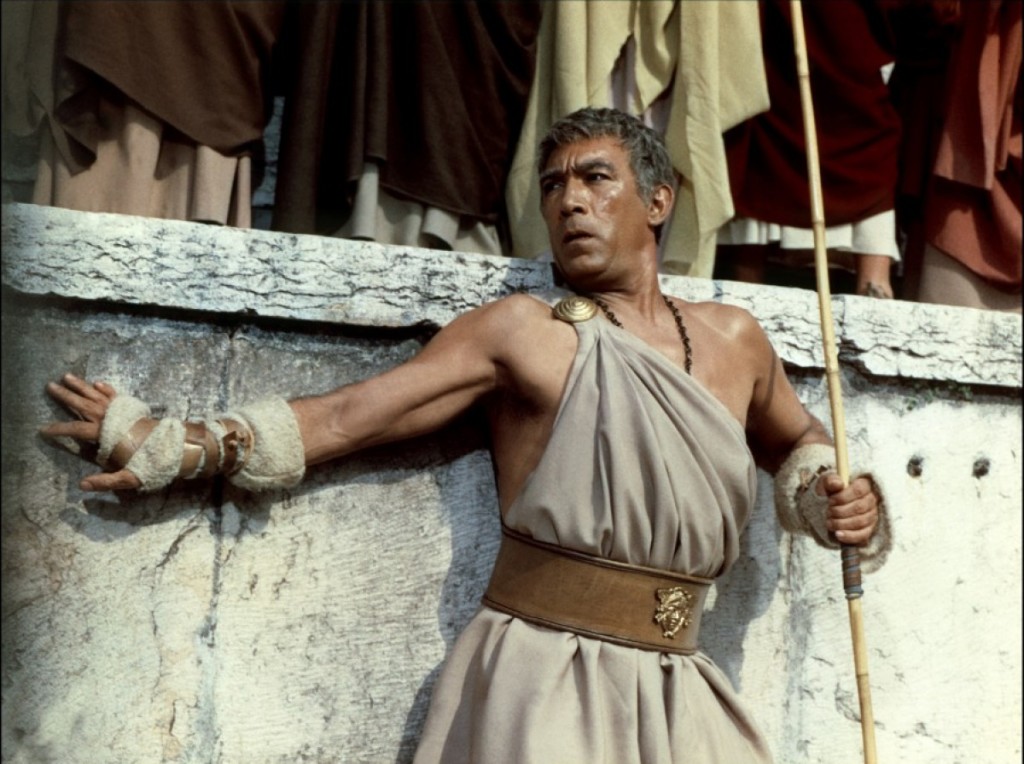
Nobody has ever created better epics than director David Lean (Bridge Over the River Kwai, Dr. Zhivago). Peter O’Toole stars at the moment of his greatest physical beauty. The rest of the cast is unsurpassed: Omar Sharif, Jose Ferrer, Anthony Quinn, Anthony Quayle, Claude Rains, Arthur Kennedy, thousands of extras and entire herds of camels. The vast and severe Arabian desert is a character unto itself.  And master editor Anne V. Coates delivered what is called the greatest cut in cinema.

Settle in and watch the whole thing – and remember what “epic” really means.

Peter O’Toole and Omar Sharif in Lawrence of Arabia

coming up on TV – WON’T YOU BE MY NEIGHBOR?: gentleness from ferocity

Fred Rogers with his Daniel Tiger in WON’T YOU BE MY NEIGHBOR?

On Saturday night, PBS will broadcast Won’t You Be My Neighbor?, the surprisingly moving biodoc of Fred Rogers, the originator and host of the PBS children’s program Mr. Roger’s Neighborhood. In theaters, this movie submerged audiences in their hankies.

Of course, Won’t You Be My Neighbor? tells the story of the show. But, more than that, it relates Rogers’ fierce passion for the plight of small children, and his need to protect them and help their emotional development.

What is so surprising is that Rogers’ sometimes laughably gentle affect sprang from such internal ferocity. It turns that Rogers was a man who hated, hated, hated the moral emptiness and materialism of commercial children’s television.

His need to help children through difficult times drove him to explain the word “assassination” the day after RFK was killed. And to demystify, clarify and normalize divorce and a host of other potentially child-traumatizing topics. Utterly unafraid of (most) controversy in a timid medium, he was first and foremost the champion for small children, a cardigan-clad champion.

I am immune to Mr. Rogers nostalgia because I am too old to have watched the show as a kid, and it was no longer a first-run show when my own kid came of age. So I was surprised to find myself choked with emotion when Fred Rogers explained to a very skeptical Senator John Pastore the need to “make it clear that feelings are mentionable and manageable”. As Rogers recited the lyrics of his song about having feelings and staying in control, Pastore visibly melted (and so did I).

In Won’t You Be My Neighbor?, Rogers’ family and his TV crew reveal their insider views of Rogers and his show. The origins of the characters, the puppets, the songs and themes are explained. But the core of Won’t You Be My Neighbor? is that Fred Rogers resolutely believed that every small child is deserving of love and has value, a view which has sadly become controversial among some.

Stream of the Week: MUSTANG – repression challenged by the human spirit

MUSTANG
MUSTANG

Mustang is about five exuberant Turkish teenage girls who challenge the repression of traditional culture. It’s a triumph for writer-director Deniz Gamze Ergüven, and one of the best films of the year.

The five parentless sisters are living with their uncle and aunt on the Turkish coast “a thousand kilometers from Istanbul”. They’re a high-spirited bunch, and their rowdiness – innocent by Western standards – embarrasses their uncle. Overreacting, he tries to protect the family honor by pulling them out of school, taking away their electronics, putting them in traditional dresses (evoking the dress wear of fundamentalist polygamist Mormons) and conniving to marry them off as soon as possible. The uncle turns their home into a metaphorical prison that becomes more and more literal. The girls push back, and the stakes of the struggle get very, very high.

Our viewpoint is that of youngest sister Lale (Günes Sensoy), who is a force of nature, ever watchful (often fiercely). The poster girl for indomitability, Lale is one of the great movie characters of 2015.

Mustang is a film of distilled feminism, without any first world political correctness. These are people who want to marry or not, who they want, when they want and to have some control over their lives. They want protection from abuse. That is not a high bar, but because they are female, the traditional culture keeps these basic rights from them.

Although Mustang is set and filmed in Turkey by a Turkish writer-director, the actors are Turkish and all the dialogue is Turkish, it is technically a French movie. Director Ergüven works in France and the film was financed and produced in France. In fact, it was France’s official entry for the Best Foreign Language Picture Oscar (over the Cannes winner Dheepan and the Vincent Lindon drama The Measure of a Man).

I happened to be in Sevilla, Spain during the Sevilla European Film Festival and saw Mustang there. I was rooting for Mustang to win the Best Foreign Language Oscar; it was nominated and SHOULD have won. .

You can stream Mustang on Netflix, Amazon, iTunes. Vudu, YouTube and Google Play.
THEY SHALL NOT GROW OLD: technology transforms film and resurrects a generation

THEY SHALL NOT GROW OLD

In They Shall Not Grow Old, Lord of the Rings filmmaker Peter Jackson has, for the first time, layered humanity over our understanding of World War I. By slowing down the speed of the jerky WWI film footage and adding sound and color, Jackson has allowed us to relate to the real people in the Great War.   All of the narration is from the recorded oral histories of actual WW I soldiers.

Jackson started with 100 hours of archived film and 600 hours of oral histories.  Removing the jerkiness by changing the film speed makes the biggest difference, but adding the sound of what we’re seeing through the work of Foley artists and even forensic lipreaders (who knew?) is also magically impactful.  Jackson was meticulous in newly recording the sounds of actual WWI equipment and artillery.

Stuff that we thought we knew is made real for the first time.  For example, we hear story after story of underage boys being accepted by military recruiters.  The non-battle relations between the Brit and German grunts seems new. And there are new tidbits, like the “sit on the rail” sanitary technique.   The soldiers’ reactions to the Armistice is unexpected – “too exhausted to enjoy it” and “the flattest feeling”.  I counted 94 individual oral histories in the end credits.

They Shall Not Grow Old is about 90-minutes long and is accompanied by a fascinating 30-minute “making of” documentary.  Jackson points out that soldiers had seen movies, but movie cameras were a novelty, so many soldiers are filmed staring at the camera agape and trying to hold still (as for a still camera).  Jackson also takes us to see a sunken road in the film today – and explains that most of the soldiers in the archived footage were in the final 30 minutes of their lives.

As he explains in the “making of ” documentary, Jackson chose to focus on the experience of the ordinary soldier, so he does not depict the naval or air wars, the roles of women and colonial troops or the home front.  It’s all-infantry all of the time.  That distillation is a sound choice and  allows the audience to immerse ourselves into that particular experience.

This is a generational achievement that should not be missed.