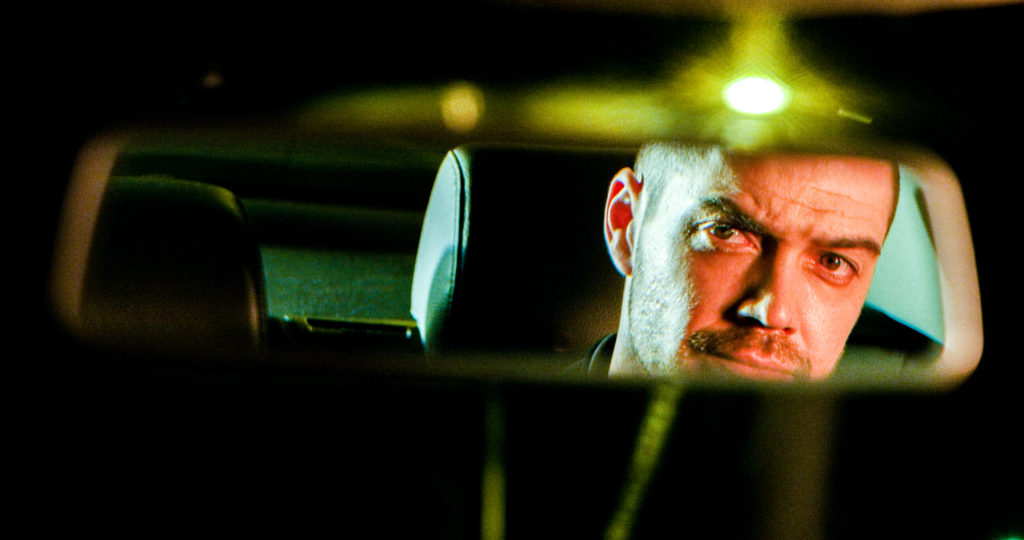
Michael Olavson in FOX HUNT DRIVE, premiering at Cinequest. Photo courtesy of Cinequest.
In the thriller Fox Hunt Drive, Alison (Lizzie Zerebko) is an architect whose career has been stymied by an unfair blackballing; she works as a rideshare driver at night to make the rent and subsidize her futile daytime job search. She picks up a ride (Michael Olavson) who may be a serial killer, and we’re all off on one wild ride.
The rider is anything but the wild-eyed Charlie Manson type. He is polite, professional and contained, and he doesn’t show any sign of compulsivity. But Alison finds some disturbing evidence in his bag…
So, here we have a woman alone, driving around deserted streets at night with a killer in the back seat, and the audience is screaming “Get away! Get away!” But she doesn’t.
This sets up a massive plot twist. Setting up this turn of events so that it’s credible as well as gobsmacking requires some ingenuity, so kudos to screenwriters Adam Armstrong and Marcus Devivo and director Drew Walkup.
Cinequest will host the world premiere of Fox Hunt Drive.
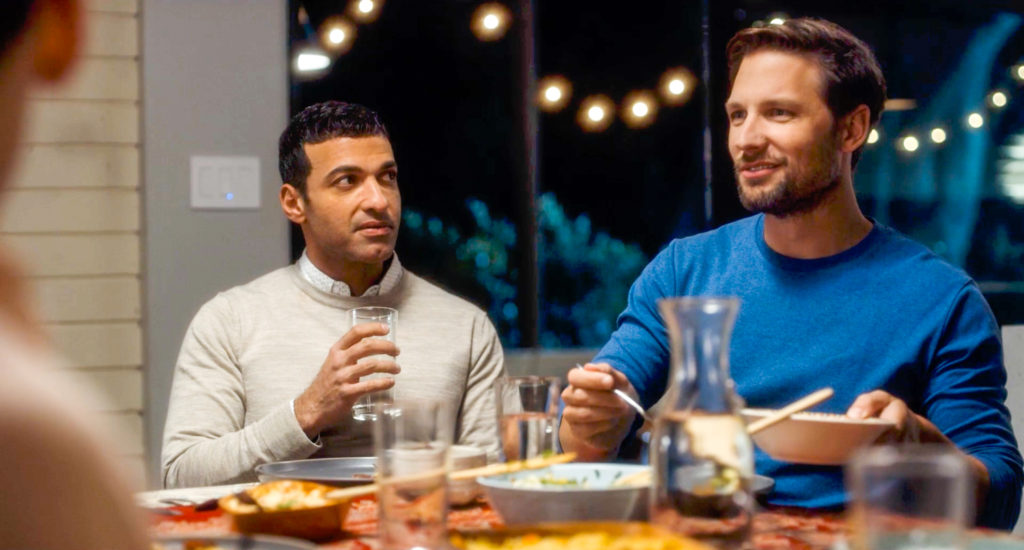
Haaz Sleiman and Michael Cassidy in BREAKING FAST. Photo courtesy of Cinequest.
In Breaking Fast, successful physician Dr. Mo (Haaz Sleiman) is a practicing Muslim who is out to his family, friends and work colleagues; although he lives in West Hollywood, he’s not part of the gay club scene. He has a longtime boyfriend Hassan (Patrick Sabongui), and Mo’s most flamboyant behavior is scoring the best desserts from the local Middle Eastern bakery for family gatherings.
Hassan’s family is not so tolerant, and Hassan – buried deep in the closet – believes that he must enter a sham heterosexual marriage, which Mo cannot stomach, and they split. Then, Mo meets meets Kal (Michael Cassidy), sparks fly, and the audience recognizes that Kal is perfect for Mo. But Kal is neither Arab nor Muslim, and Mo is still obsessed with losing Hassan. A romantic dramedy ensues.
The term “Gay-rab” pops up. And there is a stereotypical Gay Best Friend, Sam (Amin El Gamal), who is so gay that his party features a gospel choir singing Happy Birthday.
Sleiman is an adorable lead, and the flawless main characters must navigate a straightforward conflict.
This is a first feature by writer-director Mike Mosallam. He delivers solid entertainment here, elevated with insights into the quandaries faced by LGBTQ Muslim-Americans. Authentic-seeming cultural glimpses in the lives of Arab-Americans, Muslim-Americans and LGBTQ LA are a bonus.
There’s even an effective cameo by Veronica Cartwright. BTW it’s good to see these Arab-American actors getting chance to play something other than terrorists on episodic TV.
Although the most striking aspect of Breaking Fast is its breaking ground on the topic of LGBTQ Muslims, we should note that it’s a romantic comedy about someone on his forties, which isn’t all that that common, either.
So, this is just another gay Muslim romantic comedy…I predict that Breaking Fast will become the Feel Good hit of the 2020 Cinequest. And I wouldn’t bet against Breaking Fast getting a shot at theatrical distribution. Cinequest hosts the world premiere of Breaking Fast.
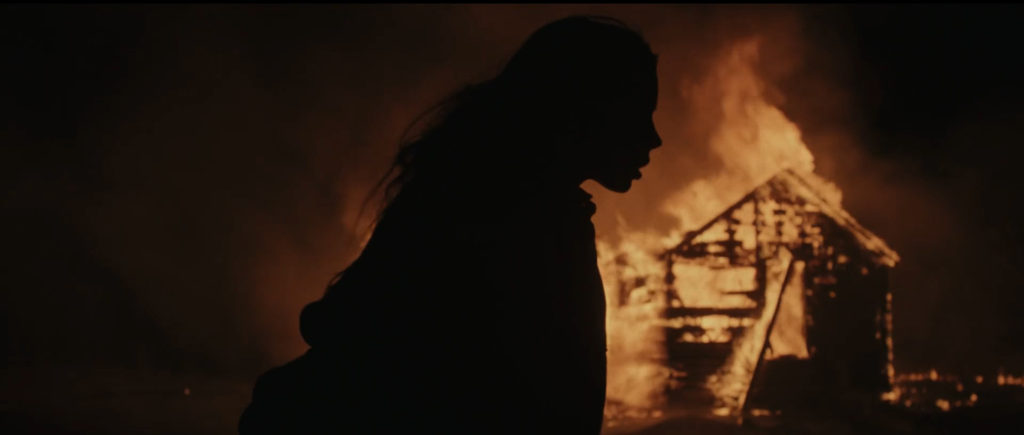
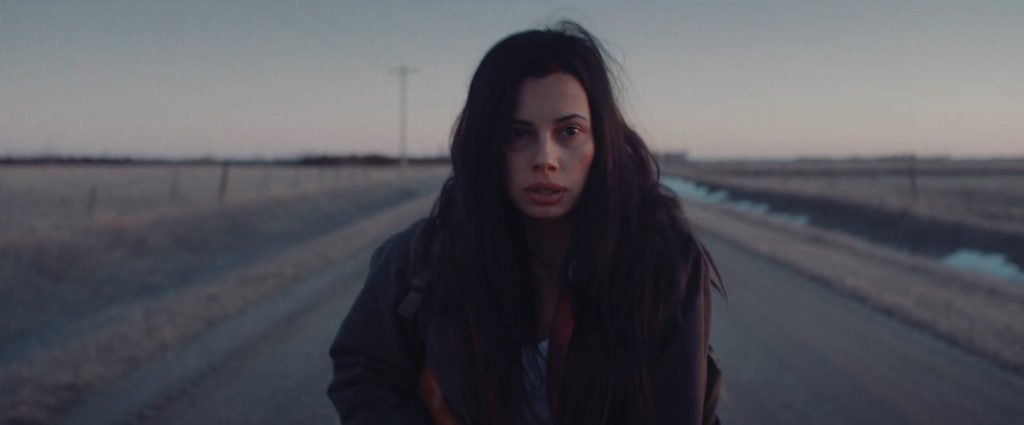
In the thriller Before the Fire, this year’s Must See at Cinequest, the only escape from an apocalyptic flu pandemic is a woman’s long-estranged rural hometown – but the scary family who traumatized her childhood is there, too. Written by its female star Jenna Lyng Adams, and the first feature by its female director Charlie Buhler, this indie thriller rocks.
Ava Boone (Adams) is a Hollywood actress who has found some success “pretending to be a vampire”, as she puts it, on a television series. As a killer flu sweeps America’s cities, her photojournalist husband (Jackson Davis) seeks to save her by tricking her into refuge with his family in their sparsely populated childhood hometown.
The problem is that growing up in a family ruled by her abusive father was deeply traumatizing. And it’s only a matter of time until her family finds out that she’s back.
As star and screenwriter Adams has said, “but what if the last place you wanted to go was the only place you could go?”
Veteran Charles Hubbell is excellent as the monstrous dad. The part is written to acknowledge that domestic abuse is about power and control – and not just physical abuse. This guy emanates physical brutality, but he is also a master manipulator.
To make things worse, the dad leads a militia of Deliverance-style yahoos, whose strategy to suppress the flu is to murder outsiders.
Ava was once – and is definitely no longer – a farm girl. For necessity’s sake, she begins repairing fences and doing the other hard, dirty and unglamorous work of the family farm run by her husband’s brother (Ryan Vigilant) and his mother (M.J. Karmi). Along the way, she physically hardens up and develops some skills with firearms.
Unsurprisingly (since she wrote it), the role of Ava is a showcase for Jenna Lyng Adams (The Kominsky Files). When Ava first sees her father again, she’s terrified to her core, which tells us all we need from the back story. Adams’ performance is compelling and credible as Ava has to devise and execute her own survival plan. Adams is on-screen in almost every scene and carries the picture.
“Audiences are thirsty for unconventional, layered, and imperfect women on-screen,” said Adams. “I wanted our protagonist to find her strength by facing the darkest parts of her life in the darkest hours of the world. She reinvents herself over and over again to survive.”
“We fought to make this movie, because we felt that there was a very specific expectation about the types of stories women were able to tell,” says director Charlie Buhler. “Male directors shift between genres much more fluidly, and I think you can feel it in the types of stories that make it to the screen. But Jenna and I both love action, we both love sci-fi, so we wanted to make a female protagonist that we women could really rally behind.”
Indeed, women filmmakers shouldn’t be left to the high-falutin’ Message Pictures while the guys have all the fun with the genre movies.
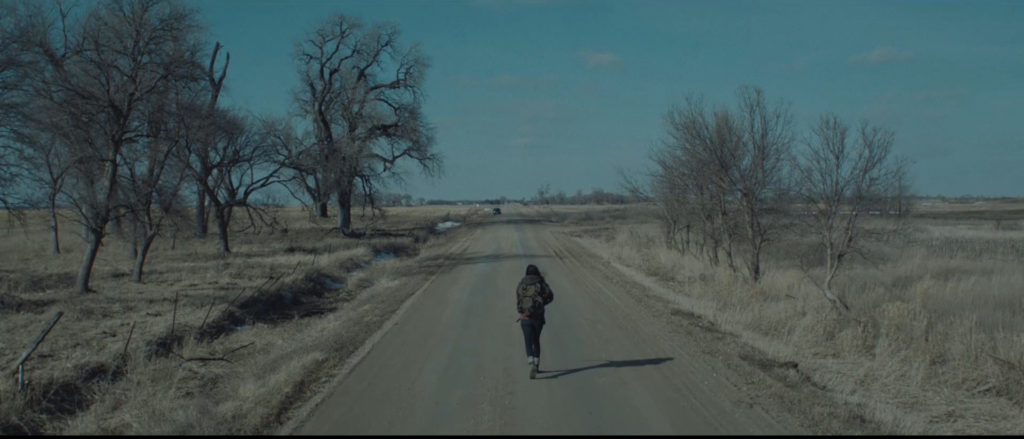
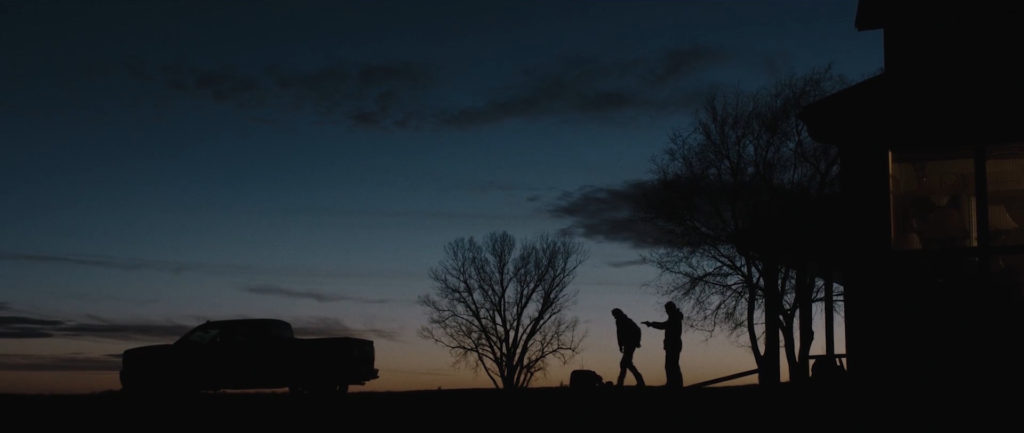
Before the Fire was filmed on location in South Dakota. Cinematographer Drew Bienemann (visual effects in Beasts of the Southern Wild) makes the barren wintry landscape work to illustrate the Ava’s isolation and vulnerability.
Cinequest will host the world premiere of Before the Fire, which is the best American narrative feature in the fest.
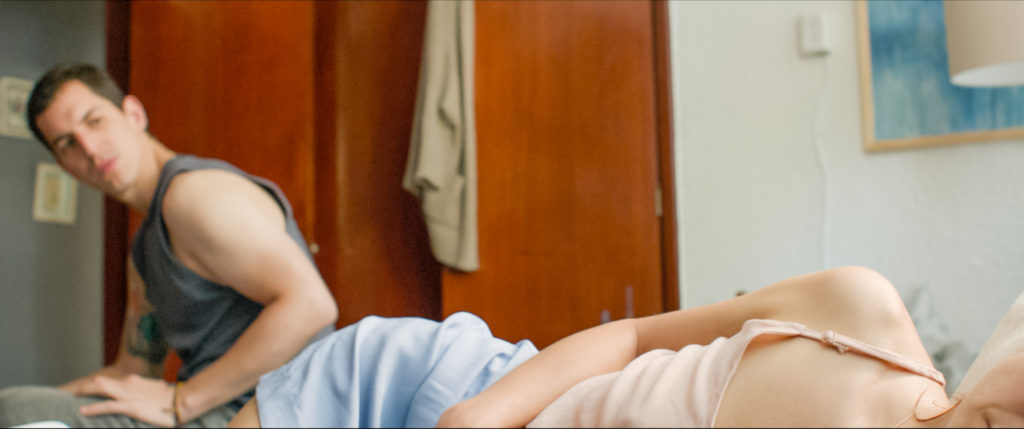
In the Mexican sexual psychodrama Ana’s Desire, Ana (Laura Agorreca) is a conscientious working single mom. She is unsettled by the sudden appearance of her shady younger brother Juan (David Calderón León), who has been out of contact for years. With his motorcycle and his subversion of Ana’s bedtime and dietary routines, Juan becomes that Way Cool, fascinating uncle to Ana’s son Mateo (Ian Garcia Monterrubio).
It turns out that Ana and Juan had a tough childhood, having been raised by a less-than-ideal widowed father. They became very close then, and Ana’s visit back to their hometown rekindles old memories and deep-rooted feelings.
What is going on here between Ana and Juan? Writer-director Emilio Santoyo lets the audience connect the dots in a slow burn compressed into only 80 minutes. The ending pays off.
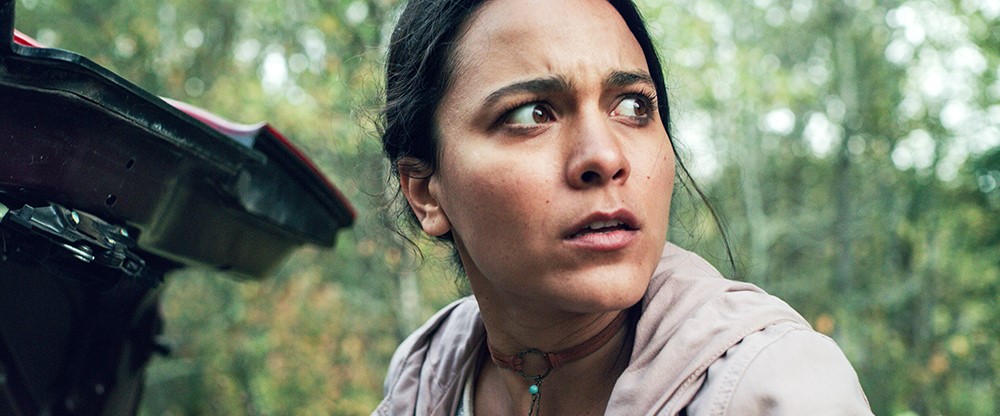
Maja Stojan in 3 DAY WEEKEND. Photo courtesy of Cinequest.
The inventively constructed thriller 3 Day Weekend is a storytelling triumph for writer-director Wyatt McDill and a taut 80 minutes of gripping entertainment.
3 Day Weekend begins with a lovelorn Millennial doofus, Ben, on a solo camping trip. Despite a noticeable lack of outdoor skills, Ben pitches his tent in the woods near a remote lake; but other people arrive, and everything that Ben witnesses tells him that he has blundered into a kidnapping in progress, and, possibly, a murder. But all is not as it seems…
We follow what Ben sees for 29 minutes, and then the point of view shifts to that of a second character. The added vantage point provides the audience with more puzzle pieces, and we start understanding that the story is going in another direction. Then a third character, and, finally a fourth, add layers to complete the story.
McDill even takes us from one crime subgenre to another – is this a peril-and-rescue film, a heist movie, a tragic neo-noir or a perfect crime flick?
And McDill tells his story with hardly any dialogue – and essentially none in the first half of the movie, unless you count grunts. The actors – Maya Stojan, Morgan Krantz, Nathan Phillips and Scott MacDonald – ably tell the story without many lines.
This isn’t exactly like Rashomon, where each character’s perspective shapes the facts differently. In 3 Day Weekend, the facts are all the same; it’s just that some characters come to the story knowing things that others don’t, and some characters experience events that others miss.
There’s plenty of humor slyly embedded in this tale, chiefly in the foibles of the male characters. Plus there are two tattoos that the audience will not be expecting.
McDill also cleverly uses the time-stamped notifications and texts from smart phones to set and reset the timeline of the story threads.
This is an ingenuously-constructed story. Cinequest hosts the world premiere of 3 Day Weekend.
BEFORE THE FIRE: world premiere at Cinequest. Photo courtesy of Cinequest.
I’m gearing up for my unparalleled coverage of Cinequest, which opens on Tuesday. Here’s my First Look at Cinequest from last month. I’ve already seen about twenty Cinequest films, and on Sunday I’ll be posting my festival preview with specific recommendations.
OUT NOW
What She Said: The Art of Pauline Kael is the remarkably thorough and insightful biodoc of the iconic film critic Pauline Kael and her drive for relevance.
Of the new films I haven’t yet seen, Seberg, with Kristin Stewart, looks the most promising.
And here’s what I’ve written about the best Oscar-nominated movies. They’re all available to stream:
My video pick is We Believe in Dinosaurs, a thought-provoking documentary on scientists being totally outmatched by a monumental creationist theme park and its hordes of believers, massive private investment, capacity for technical wizardry and even state support. We Believe in Dinosaurs can be streamed from Amazon, Vudu, YouTube and Google Play.
ON TV
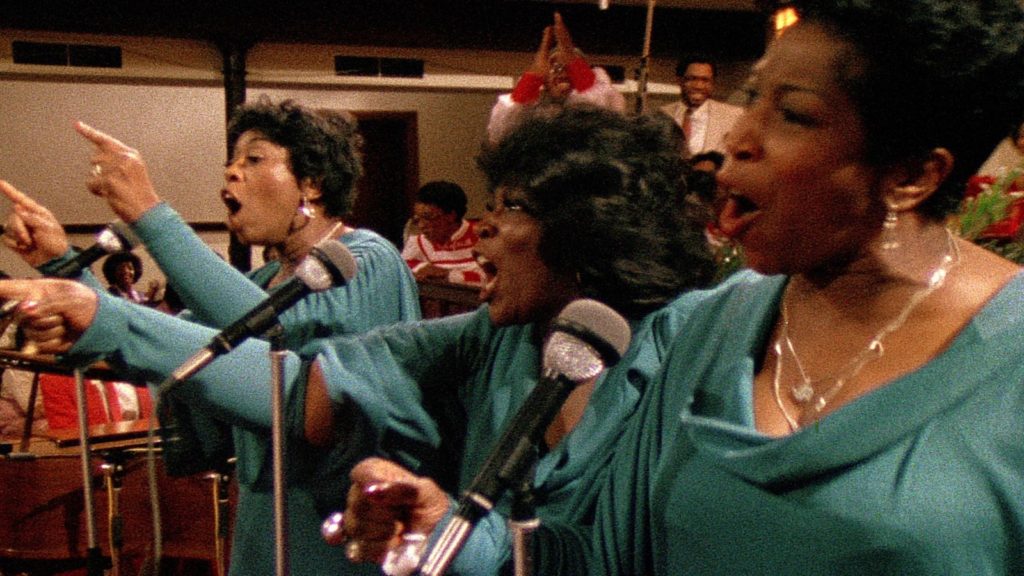
Need 100 minutes of uplift? On March 3, Turner Classic Movies brings us the gospel music documentary Say Amen, Somebody. This 1982 art house hit is very hard to find and is almost never on television. The film traces the genre from gospel pioneers Willie Mae Ford Smith and Thomas A. Dorsey to contemporary artists.
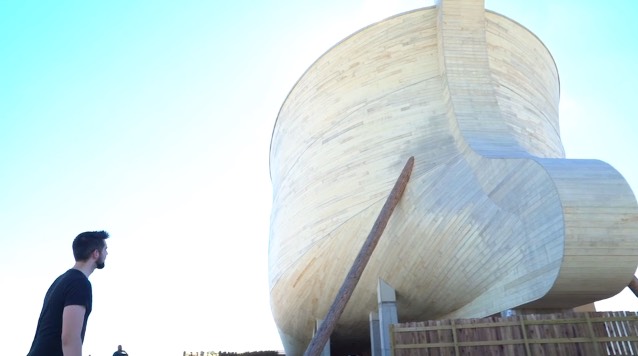
In the thought-provoking documentary We Believe in Dinosaurs, filmmakers Clayton Brown and Monica Long Ross introduce us to Ark Encounter, a Kentucky attraction with a full-size replica of Noah’s Ark. Explicitly pro-creationism and anti-evolution, Ark Encounter is filled with interpretive exhibits that illustrate the Biblical story of Noah as historical fact, kind of a fundamentalist, evangelical Smithsonian. Ark Encounter is 45 miles from its sister attraction, the Creation Museum.
There’s a lot to think about – and even marvel about – here. First of all, the Ark Encounter is an impressive spectacle. In Genesis, God directed Noah to build the ark to be 300 cubits long, 50 cubits wide, and 30 cubits high. That means that this thing is a football field-and-a-half long and over four stories high. We get to meet and observe the technicians and artists as they build the animatronic Noah family and the reproduced animals.
The bigger story here, though, is the massive investment in anti-science propaganda. To justify their literal acceptance of Biblical content that is inconsistent with scientific fact, these folks behind the Ark Encounter believe that they need to discredit science itself. And they’re not just defending the literal occurrence of every Bible story, but also the chronology of Bishop Ussher who, in the mid 1600s, calculated that the earth was created in 4004 B.C. That means that the Ark Encounter aggressively explains that the Earth and the human race, despite fossil evidence, are each 6,000 years old – and that dinosaurs lived alongside humans (and voyaged on the Ark). It also means that they seek to discredit the Theory of Evolution and the scientific method itself (while enjoying its byproducts – vaccines, for example).
When you distill their beliefs, these neo-creationists are essentially turbanless Taliban. Just for perspective, after suppressing Galileo’s 1615 discovery of the earth-centered solar system, the Catholic Church started backpedaling in 1718. That means that 300 years ago, even the reactionary Church decided not to double down on denying scientific discoveries.
And what about the scientists? And people of faith who accept science? We Believe in Dinosaurs
brings us the perspectives of Ark Encounter opponents, most notably a
geologist, and a former neo-creationist, both native Kentuckians.
There’s also a local Baptist minister, who thinks that people of faith
can also accept science.
One of the stunning aspects of We Believe in Dinosaurs is the unexpected David-and-Goliath story. We might expect the science-deniers to be outmatched. But the folks with most primitive beliefs are the creative masters. Anti creationists are the Goliath, supported by hordes of believers, massive private investment, capacity for technical wizardry and even state support. On the other hand, scientists are not often skilled in or equipped with tools for political persuasion and mass communications. The pro-science folks are, like John the Baptist, a lone voice in the wilderness, losing the optics battle.
Brown and Long Ross have a point of view (that science is good), but they don’t make the Ark Encounter people ridiculous. We directly hear the Ark Encounter leadership’s public pronouncements, and we meet the earnest and often sympathetic folks who are using their considerable talents to build and fill the attraction. Brown and Long Ross let us hear from both sides and let us connect our own dots. Watch the closing credits to the very end to get the subjects’ unfiltered view of the filmmakers. And wait for the film’s super-creepy money shot – that of an animatronic figure reflecting on the fate of others.
I saw We Believe in Dinosaurs at its world premiere at the San Francisco International Film Festival (SFFILM). We Believe in Dinosaurs can be streamed from Amazon, Vudu, YouTube and Google Play.
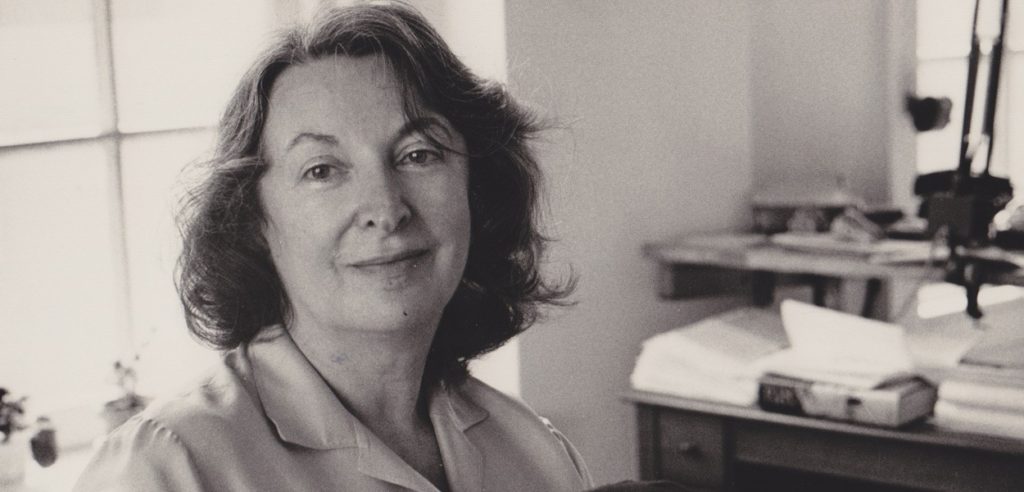
Pauline Kael in WHAT SHE SAID: THE ART OF PAULINE KAEL
What She Said: The Art of Pauline Kael is the remarkably thorough and insightful biodoc of the iconic film critic Pauline Kael and her drive for relevance.
Documentarian Rob Garver has sourced What She Said is well-sourced with the memories of Kael’s colleagues, rivals and intimates. Garver’s portrait of Kael helps us understand her refusal to conform to social norms as she basically invented the role of a female film critic and what today we might call a national influencer on cinema.
Of course, one of Kael’s defining characteristics was her all-consuming love of movies, a trait shared by many in this film’s target audience. Fittingly, Garver keeps things lively by illustrating Kael’s story with clips from the movies she loved and hated. Garver’s artistry in composing this mosaic of evocative movie moments sets What She Said apart from the standard talking head biodocs.
Kael was astonishingly confident in her taste (which was not as snooty as many film writers). For the record, I think Kael was right to love Mean Streets, Band of Outsiders, Bonnie and Clyde, and, of course, The Godfather. It meant something to American film culture that she championed those films. She was, however, wrong to love Last Tango in Paris. She was also right to hate Limelight, Hiroshima Mon Amour and The Sound of Music. But Kael was just being a contrarian and off-base to hate Lawrence of Arabia and Shoah.
Kael was by necessity an intrepid self-promoter and filled with shameless contradictions. She famously dismissed the auteur theory but sponsored the bodies of work of auteurs Scorsese, Peckinpah, Coppola and Altman. She loved – even lived – to discover and support new talent.
Most of the people we like and admire possess at least some bit of selflessness and empathy. Kael’s daughter Gina James says that Kael turned her lack of self awareness into triumph,. This observation, of course, cuts both ways.
I saw What She Said: The Art of Pauline Kael at the 2019 San Francisco Jewish Film Festival. It’s now playing in theaters in San Francisco and Berkeley.
Jenna Lyng Adams in BEFORE THE FIRE, an indie thriller premiering at Cinequest
This time of year, there are good movie-viewing choices – they’re just not the ones being newly released into theaters. Now it’s the time to catch up on unseen Oscar-winners and to binge good episodic TV.
For example, this week’s new Will Ferrell/Julia Louis-Dreyfus release Downfall (which I haven’t seen) is by all reports a very dumbed-down remake of the sharp Swedish Force Majeure. Stream the original instead.
I’m currently buried in screening films from the upcoming Cinequest (March 3-15). The best of this year’s festival is pretty good, and here’s a teaser – I’ll be recommending at least three premieres:
the world premiere of a gripping thriller, written by its female star and the first feature by its female director. Hang on to your seats.
the world premiere of a gay Muslim romantic comedy.
the North American premiere of the year’s best Czech film.
Stay tuned.
OUT NOW
The masterpiece Parasite explores social inequity, first with hilarious comedy, then evolving into suspense and finally a shocking statement of the real societal stakes. This is one of the decade’s best films.
Adam Driver and Scarlett Johannson are brilliant in Noah Baumbach’s career-topping Marriage Story. A superb screenplay, superbly acted, Marriage Story balances tragedy and comedy with uncommon success. Marriage Story is streaming on Netflix.
Martin Scorsese’s gangster epic The Irishman is tremendous, and features performances by Al Pacino and Joe Pesci that are epic, too. It’s streaming on Netflix.
Rian Johnson’s Knives Out turns a drawing room murder mystery into a wickedly funny send-up of totally unjustified entitlement. Knives Out is streaming.
Refusing to play it safe, director Francisco Meirelles elevates The Two Popes from would have been a satisfying acting showcase into a thought-provoker. It’s streaming on Netflix.
1917 is technically groundbreaking, but the screenplay neither thrilled me nor moved me.
ON VIDEO
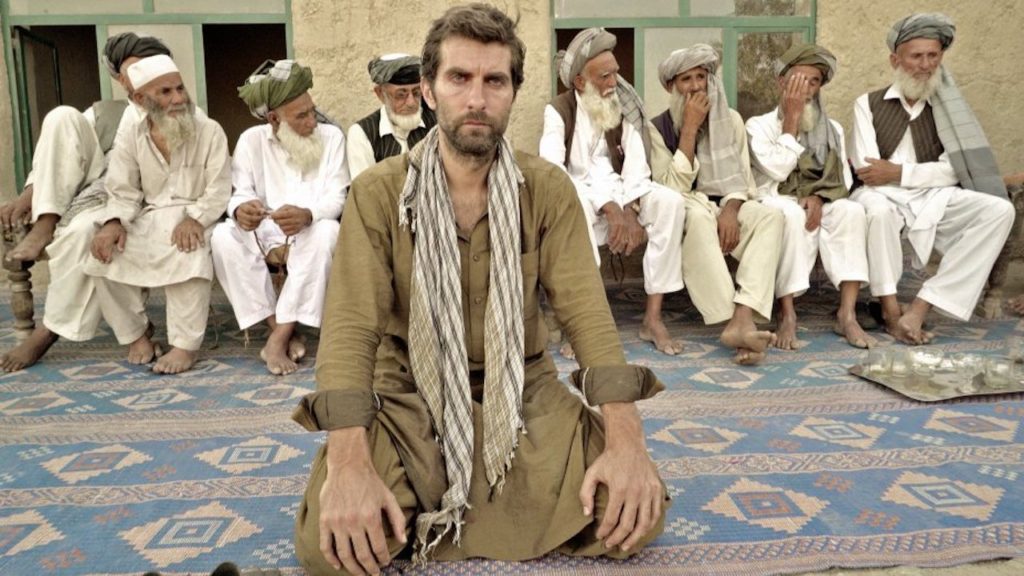
My Stream of the Week is Jirga, from my list of 10 Overlooked Movies of 2019. A man goes on a quest in this parable of atonement. The film was shot guerilla-style, under cover in wartorn, terrorist-infested Afghanistan. Stream from Amazon, iTunes, Vudu and Redbox.
ON TV
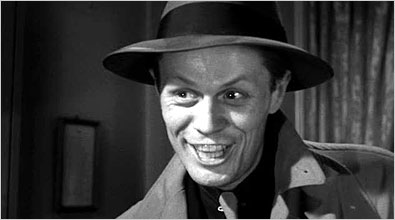
Turner Classic Movies’ 31 Days of Oscar continues on February 27 with the classic film noir Kiss of Death. Victor Mature plays an ex-con with horrific luck – he gets caught on a heist and takes the rap for his cohorts; this leads to a long sentence and a double-cross with impacts to his wife and kids. Seeking to see his kids again, he is released back on the streets to set up the double-crossers for the DA. Mature, too often dismissed for his campy sword-and-sandal movies, did his finest work in film noir – especially I Wake Up Screaming, Kiss of Death and The Long Haul. Kiss of Death includes Richard Widmark’s breakthrough performance as psychopath Tommy Udo.
In Jirga, the Australian soldier Mike (Sam
Smith) returns alone to Afghanistan three years after his tour of duty.
Mike begins a quest that takes him into the stark desolation of the
hinterlands, where he must survive both the unforgiving elements and the
Taliban. We don’t know his objective until it is revealed 44 minutes
into the film. What we do immediately understand is that the stakes are
very high.
The tension builds as we wonder if Mike will survive, but Jirga
is a contemplation. How do you redress a wrong that you’ve committed?
By paying compensation? By asking for forgiveness? By an act of
atonement? Or of self-sacrifice?
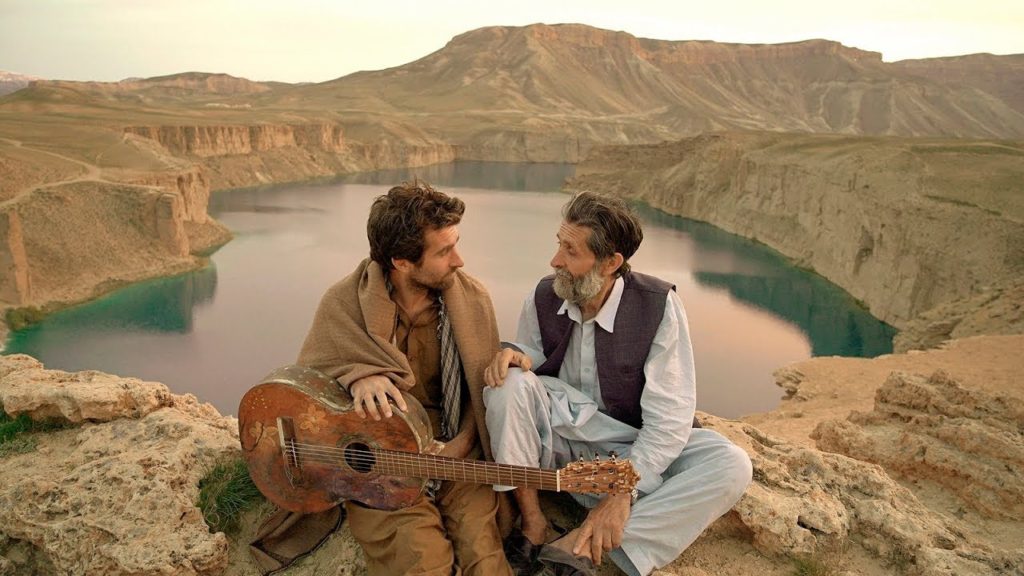
The Afghanistan in Jirga is as dramatic a desolate landscape
as I’ve ever seen, often starkly beautiful. At one point, Gilmour
relieves the severity of the desert by dropping in a totally incongruous
and unexpected paddle boat in the form of a pastel swan.
Sam Smith is in almost every frame of Jirga, and his performance is impeccable.
Jirga is a notable achievement in filmmaking. Gilmour had
received permission to film among the Pashtun in Pakistan’s tribal
areas, but was frustrated (and finally harassed) by the ISI, Pakistan’s
notorious intelligence force. Gilmour bought a small Sony camera in
Islamabad and flew himself and Smith to Kabul. There, under the
constant protection of bodyguards, Gilmour was able to shoot the film on
the fly; conditions were safe enough to shoot during 20 days of a
two-month sojourn. Only two of the Afghan cast had ever been in a
movie. Gilmour’s previous film Son of a Lion was also set among the Pashtun and is available on Amazon Prime.
JIRGA
I saw Jirga at Cinema Club Silicon Valley,
with a Q&A with writer-director-camera operator Benjamin Gilmour.
Gilmour got the idea for the film in his other work as a paramedic,
encountering the PTSD of Australian veterans of the Middle East wars.
Gilmour observed that “male bravery is taught as how well you can fight”, and focused Jirga
on Mike’s non-violent courage in risking – and even offering -his life.
Gilmour developed Mike’s story so the “moral injury he suffered doesn’t
take the tragic path” of alcoholic self-medication or suicide that
Gilmour has observed firsthand in combat vets.
Jirga was Australia’s submission to the Academy Awards. It made my list of 10 Overlooked Movies of 2019. You can stream Jirga from Amazon, iTunes, Vudu and Redbox.