MADE IN ETHIOPIA: it’s just like China used to be

Photo caption: MADE IN ETHIOPIA. Courtesy of POV.

In the scintillating documentry Made in Ethiopia, businesswoman Motto is the face of a huge, new Chinese industrial park in Ethiopia. How huge? A factory with 3,000 workers is just one of its 130 businesses – and Motto is working on an 18,000-acre expansion.

Motto is smart, zealous, charismatic and utterly non-ironic. Along with the other Chinese, she has drunk the Koo-Aid and sees the park as entirely benevolent – bringing large scale employment and investment to a poor and neglected society. A visiting Chinese official exclaims, “it’s just like China used to be!“.

All of the workers are Ethiopian, who earn $50 per month in what is essentially a clean and gleaming sweatshop. All of the supervisors are Chinese who have left their families behind in China. The local farmers feel ripped off by their government, and an armed rebellion may be brewing. Apart from a global pandemic, what could possibly go wrong? In their first feature, directors Xinyan Yu and Max Duncan have created a brilliant exploration of clashing cultures and economic imperialism.

I screened Made in Ethiopia for the SLO Film Fest, where it made my Best of the SLO Film Fest. Now it’s on PBS’ POV. You can stream Made in Ethiopia on the PBS app or directly at the POV website.

TOKYO COWBOY: he came, he saw, he changed

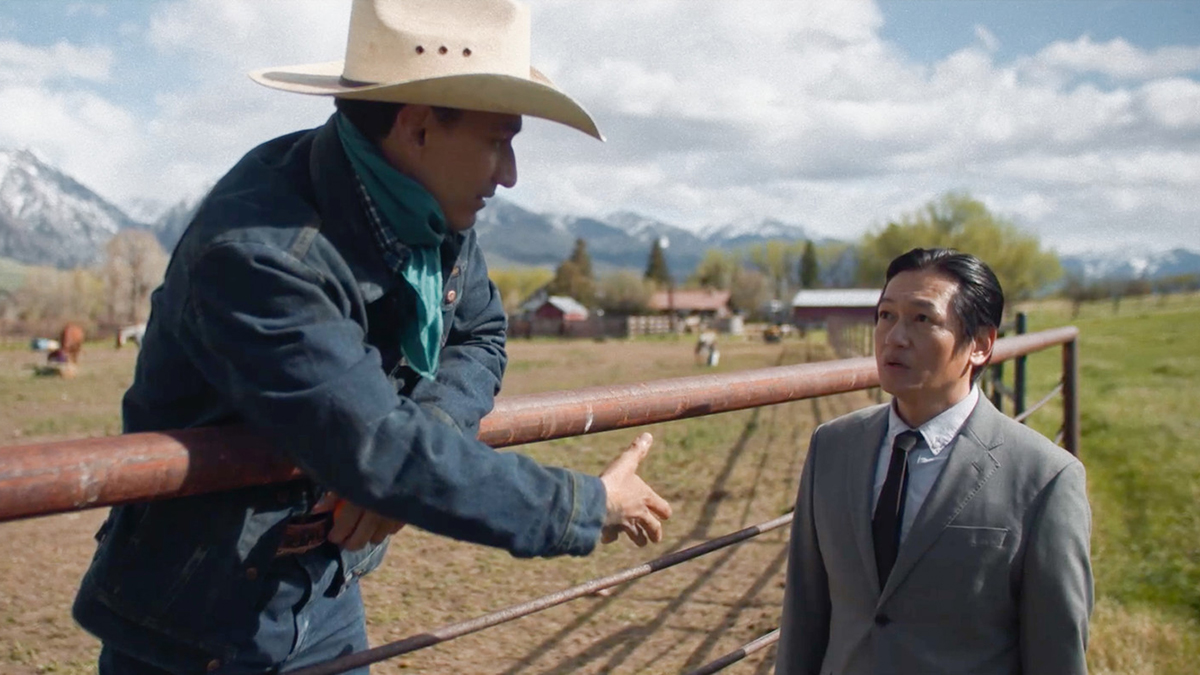
Photo caption: Goya Robles and Arata Iura in TOKYO COWBOY. Courtesy of Salaryman.

The charming dramedy Tokyo Cowboy centers on a Japanese corporate turnaround artist, Hideki (Arata Iura). Confident that he has the secret sauce to recharge any stagnant brand, he’s got a slick pitch deck (with a snapshot from his own childhood), and he’s engaged to the corporate vice-president he reports to. His company is about to liquidate a money-hemorrhaging cattle ranch in Montana, when he parachutes in for a quick fix. His Japanese beef consultant goes hilariously native, and Hideki, a smart guy, immediately sees that his idea for a quick fix was mistaken. Now unsettled and off the grid in an alien culture, Hideki recalibrates his values and his life goals.

Arata Iura’s performance is exceptional, especially since the character of Hideki is a restrained man from a very reserved culture, a cypher who is dramatically changing internally. Ayako Fujitani is very good a Hideki’s fiancé/boss Keiko. Robin Weigert (Calamity Jane in Deadwood) is excellent as the ranch manager. Jun Kunimura (222 IMDb credits) is hilarious as Hideki’s cattle expert.

Arata Iura and Ayako Fujitani in TOKYO COWBOY. Courtesy of Salaryman.

It’s the first narrative feature for director Marc Marriott, who, with cinematographer Oscar Ignacio Jiménez, creates a Big Sky setting that could reset any of us in need of self-discovery. Some directors would have ruined this story by making the fish-out-water comedy too broad or the self-discovery too self-important, but Marriott strikes the perfect tone. The screenplay was co-written by Ayako Fujitani (who plays Keiko)) and Dave Boyle.

I screened Tokyo Cowboy for the SLO Film Fest, where it won the jury award for Best Narrative Feature. Tokyo Cowboy opens on September 28 at the Lark in Larkspur and on October 25 at the Palm in San Luis Obispo.

BLACKBERRY: woulda, coulda, shoulda

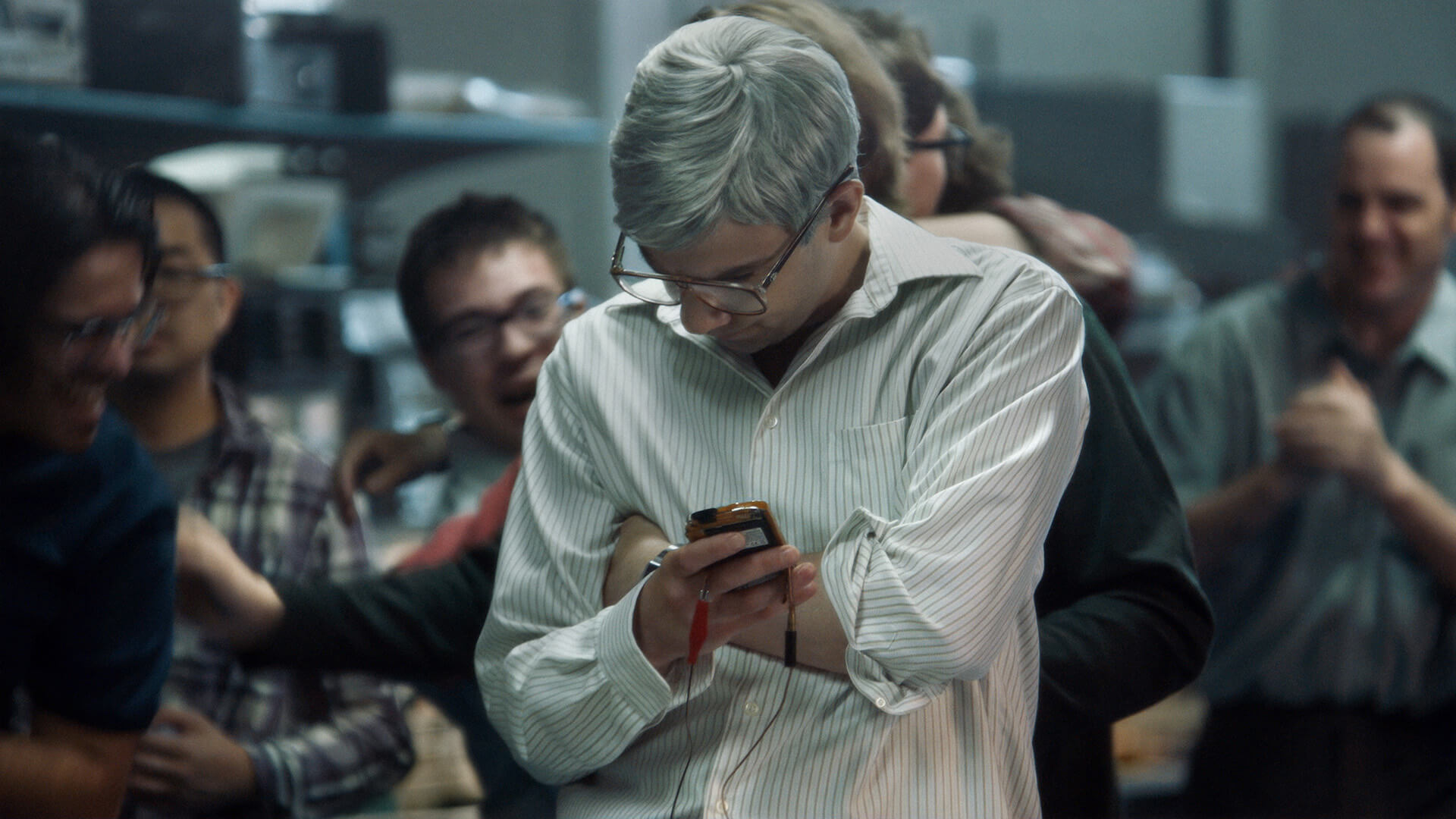
Photo caption: Jay Baruchal in BLACKBERRY. Courtesy of IFC Films.

BlackBerry is the funny true story of Canadian geeks who find themselves suddenly dominating the nascent smartphone market…but not for long. The improbable rise of BlackBerry’s parent company is a tale of the Odd Couple partnership co-CEOs, Mike Lazaridis (Jay Baruchal), who ran the engineering side, and Jim Balsillie (Glenn Howerton), who managed finance and sales.

Mike Lazaridis solved the technical challenge that had kept cell phones from becoming the email machines that they have been since. As played by Baruchal, Lazaridis is reserved, even shy, supremely confident in all things tech and not all confidant with other humans.

Lazaridis needed a pitchman, and that was the hard charging Balsillie, who, as played by Howerton ranged between hard-charging and abusive. A tech exec I knew in Silicon Valley was described to me as having “too much testosterone” and that’s Howerton’s Balsillie.

Lazaridis’ engineering brilliance, combined with Balsillie’s sheer will and audacity, allowed the company to nimbly pivot through various product cycles. Balsillie’s hubris even began to leak into Lazaridis. But then came an advance in product design that Lazaridis hadn’t anticipated, and Balsillie had cut one too many corners in finance.

I’ve mostly seen Baruchal in much more broadly funny roles (Tropic Thunder, This Is the End). Here, Baruchal successfully carries the leading role with a much more subtle and textured performance. One nice (and slyly underplayed) touch is that when Baruchal’s character transitions from the CEO of a start-up to the CEO of a company with a massive market cap, his haircut transitions, too.

For much of the movie, we see Howerton playing Balsillie as a one-note, hard charger. He refuses to acknowledge any obstacle, until, in a wonderful moment of performance, his face shows when knows he’s finally been had.

BlackBerry was directed by Matt Johnson, who also co-adapted the screenplay and plays one of company co-founders.

Make sure you watch the end credits to see what happened to the real guys.

I screened BlackBerry for the San Luis Obispo Film Festival, where it won the audience award for Best of Fest. BlackBerry opens in theaters tomorrow, and it’s a surefire audience-pleaser.