SUNDAY BEST: THE UNTOLD STORY OF ED SULLIVAN: a courageous surprise hiding in celebrity

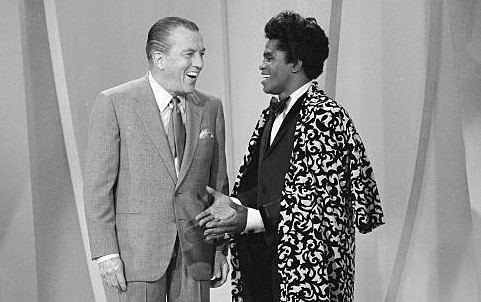
Photo caption: Ed Sullivan and James Brown in SUNDAY BEST: THE UNTOLD STORY OF ED SULLIVAN. Courtesy of Netflix.

Boy, was I ever wrong about Ed Sullivan. Coming of age at the end of the 23-year run of CBS’ weekly The Ed Sullivan Show, which seemed hopelessly old-fashioned and stale, I totally missed the fact that, two decades earlier, Sullivan had been alone in presenting African-American artists to national television audiences. And that African-Americans thought it was a very big deal.

The Ed Sullivan Show began in 1948, before many Americans owned a TV, and Sullivan helped invent the earliest evolutionary stage of television content. Sullivan himself picked every performer on The Ed Sullivan Show – over 10,000 of them over the show’s 23 year run. He harvested Vaudeville and nightclub performers who had not prospered in the Radio Era, including Bill “Bojangles” Robinson, Cab Calloway, Louis Armstrong, Ella Fitzgerald, Lena Horne, and the Ink Spots. Virtually every major African-American act got an early showcase on Sullivan’s show – Nat King Cole, Harry Belafonte, Mahalia Jackson, Diahann Carroll, James Brown, Ray Charles, the Supremes, Stevie Wonder, The Temptations, and the Jackson 5. By the time I was occasionally tuning in to the end of Sullivan’s run, there didn’t seem like anything was risky about Louis Armstrong and Pearl Bailey – but, then again, they had been appearing on TV for twenty years because of Ed Sullivan.

This was not the norm for programming by the three corporate television networks (yes, kids, there were only three TV channels for many years). Sunday Best: The Untold Story of the Ed Sullivan Show lets White Americans learn that, on Sunday nights, African-Americans rushed to their TVs – it was their only chance to see performing artists that looked like them. Sunday Best presents the testimony from Berry Gordy, Oprah Winfrey, Harry Belafonte and Smokey Robinson.

Sullivan did all this with intentionality. His own sense of justice required him to showcase the talents of the best artists regardless of race. And he despised Jim Crow and racial segregation. Director Sacha Jenkins has accessed Sullivan’s own personal writings, as well as contemporaneous recordings, so we hear Sullivan’s own words. Sullivan modeled his fearlessness and principles from his father, who knew about earlier anti-Irish discrimination. 

Two career incarnations earlier, Sullivan had been a NYC sports columnist. When NYU chickened out and benched their one Black football player so they play the University of Georgia, Sullivan was so outraged that his column called for NYU to drop football altogether in shame.

Personally, he was such a close friend of Bill Robinson that Sullivan helped organize (and probably pay for) Robinson’s funeral.

Everyone today (hopefully) remembers the Jim Crow era for the separate restrooms and drinking fountains, the segregated schools and accommodations, the back-of-the-bus shit and the terror of the KKK. But there was also prevalent a lot of craziness about people of different races touching each other at all (based, I’m sure, on fear of Black sexuality). In the South, black people were supposed to give change for retail sales without touching white hands, and whites would consider a swimming pool defiled if a black person dipped their feet in it. If a white person, like Ed Sullivan, even shook a Black person’s hand on TV – let alone put his arm on their shoulders – it was a Big Deal.

Imagine if John Legend introduced Taylor Swift at the Grammys and gave her a chaste buss on the cheek – in 1955, that would have made heads explode in a third of the nation.

Network executives were legitimately concerned about Southern Whites boycotting their sponsors. White supremacy activist Asa Carter and Georgia Governor Herman Talmadge both organized actual boycotts. But Ed Sullivan, fearless, just didn’t care.
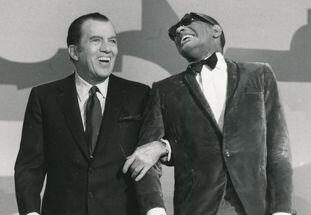
Ed Sullivan and Ray Charles in SUNDAY BEST: THE UNTOLD STORY OF ED SULLIVAN. Courtesy of Netflix.

This is big news to those of us who remember Sullivan’s anti-telegenic stone face and the acts with spinning plates and hoop-jumping dogs. The CBS network censors were notorious for not letting the camera show Elvis’ gyrating hips and for trying to get the Stones to change the lyrics of Let’s Spend the Night Together to Let’s Spend Some Time Together. But Elvis was only censored from waist down in his THIRD appearance on the Sullivan Show.

There are lots of gems in Sunday Best, including Sammy Davis Jr and Flip Wilson trying to outdo each others’ Ed Sullivan impression while standing next to Ed Sullivan.  

A 1958 Jackie Wilson performance on the Sullivan Show is gloriously entertaining by today’s standards. But, knowing what we learn in Sunday Best, it’s absolutely thrilling. In 1958, mainstream audiences would never have seen anything like Jackie’s rendition of Lonely Teardrops, effortlessly sliding into falsetto and nonchalantly dropping a jazz split. And all with a confident, cool swagger and without a hint of racial deference.

White Baby Boomers like me should watch Sunday Best to discover how invested Ed Sullivan was in civil rights before it became mainstream on national TV. Younger people, not just kids and Gen Xers, but also Millennials, should watch it to appreciate the ridiculous limits to which the American mainstream was cowed by Southern White racism. And all of should appreciate how The Ed Sullivan Show didn’t just reflect the cultural taste of America – it helped drive it.

Sunday Best: The Untold Story of Ed Sullivan is streaming on Netflix.
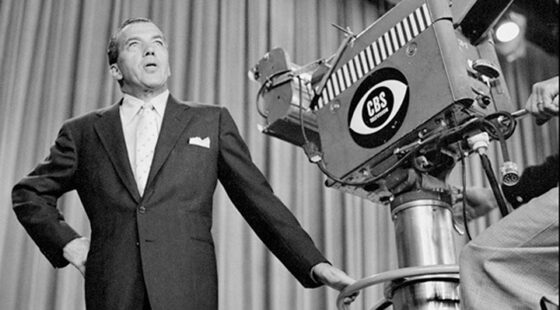
Ed Sullivan in SUNDAY BEST: THE UNTOLD STORY OF ED SULLIVAN. Courtesy of Netflix.

JOHN SINGER SARGENT: FASHION AND SWAGGER: locking gazes

Fortunately, the insightful documentary John Singer Sargent: Fashion and Swagger spends much of its running time staring at the subjects of the painter’s portraits, who gaze back at us is if they were alive.

The doc traces Sargent’s life, and talking heads try to explain how his brushwork results in such compelling art, but I didn’t find that stuff as compelling as when the camera zooms in and lingers on the face of a subject. Sargent really had a gift for making it seem as if the subject is alert to your walking into the room and then engaging with you. They seem in mid-conversation instead of mid-pose.

We get to spend so much time unhurriedly locking eyes with these folks, mostly rich women from 150 years ago, that it’s like being inside a John Sargent Singer coffee table book.

The title refers to “swagger portraits” (which I didn’t know was a thing) – vanity portraits commissioned by the rich and famous to depict their subjects as grand, important and fashionable. Sargent excelled at these.

John Singer Sargent: Fashion and Swagger is streaming free on kanopy.

A COMPLETE UNKNOWN: a genius and his time

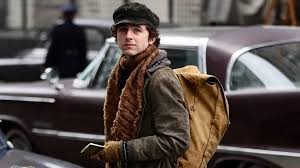
Timothée Chalamet in A COMPLETE UNKNOWN. Courtesy of Searchlight Pictures.

A Complete Unknown, James Mangold’s brilliant biopic of Bob Dylan, is a film about genius. If you need to understand why Dylan is the only songwriter to win the Nobel Prize for Literature, here is why. It’s a fascinating story, and Mangold’s telling of it is insightful and entertaining.

The story begins with 19-year-old Bob Dylan showing up in New York City. No one knows who he is (a complete unknown), because he hasn’t done anything, but he wants to meet his hero, the now hospitalized folksinger Woody Guthrie. Dylan can’t pretend to be anything but another homeless musician wannabe, but legendary folksinger Pete Seeger (Edward Norton) takes Dylan under his wing. Starting with open mic nights, Dylan starts playing around the Greenwich Village folk scene.

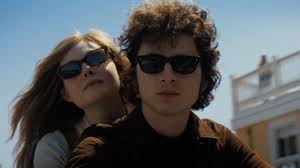
Dylan meets Sylvie Russo (Elle Fanning) a student activist Dylan whom appreciates because she is pretty, smart, opinionated and has an apartment. Sylvie is a barely fictionalized Suze Rutolo, Dylan’s girlfriend of the period, who appears on the cover of his The Freewheelin’ Bob Dylan album.

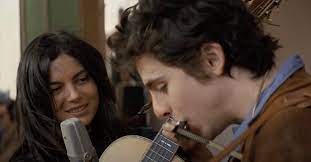
Dylan meets another woman his age, Joan Baez (Monica Barbaro), who is already a big deal. Baez had played the Newport Folk Festival at age eighteen and had already recorded three albums. Bob is excited by Baez’s stardom, and Joan admires Bob’s still undiscovered song writing. Without falling in love exactly, they begin an affair. Bob takes advantage of Joan’s connections and credibility (and apartment); he lets her cover Don’t Think Twice, It’s All Right before he released his own version. You get the impression that Joan could have fallen in love with Bob if he would treat her with decency and affection, but Bob is only in love with himself.

Seeger, Baez and others in Greenwich Village’s music world soon recognize the extraordinary, generational genus of Dylan’s songwriting. He finally gets to record his own material in 1963 with The Freewheelin’ Bob Dylan; it was an auspicious and transformative collection of original songs from a 22-year-old: Blowin’ in the Wind, Masters of War, A Hard Rain’s Gonna Fall and Don’t Think Twice, It’s All Right.

In what I found to be the most thrilling moment in A Complete Unknown, Dylan debuts The Times They Are a-Changin‘ to a live audience, and all the listeners, including Seeger and Baez, are captivated, by each new groundbreaking verse. Come mothers and fathers…Throughout the land…And don’t criticize…What you can’t understand…Your sons and your daughters…Are beyond your command. The song – and this scene in A Complete Unknown – completely capture the zeitgeist of the time.

Dylan becomes a huge star and cultural icon – a symbol of a generation. And he immediately is alienated by the accompanying trappings of celebrity.

Dylan also evolves musically from his roots in acoustic folk music. His mentors in the Folk Music movement have a tough time with that, and it all explodes at the 1965 Newport Folk Festival when Dylan defiantly shows up with an electric rock band, the climax of A Complete Unknown.

The folk purists, like Pete Seeger and the musicologist Alan Lomax, saw folk music as politically significant and rock and roll music as politically inconsequential – history soon proved them very wrong about this. The old folkies had also suffered for their movement by being victimized in the McCarthy Era, earning some of their self-righteousness. What the old folkies could not comprehend – and would find abhorrent if they did – is that Bob Dylan was bigger than the genre of Folk Music itself.

Elle Fanning and Timothee Chalamet in A COMPLETE UNKNOWN. Courtesy of Searchlight Pictures.

So, just who IS Bob Dylan? We expect any biopic to reveal, but Mangold has targeted one of our culture’s most notorious enigmas. Mangold and Chalamet give us a Dylan perhaps less complicated than his image. Here, Dylan is ambitious and absolutely committed to his art. He will not prioritize any relationship or behavioral norm above his songwriting or his career.

He wants the recognition, fame and money that comes from having an audience and fans but, in person, he doesn’t want to experience the fandom or even respect the audience. In pursuit of his own vision, Dylan is not afraid to disappoint (or enrage) anyone else, nor does he feel constrained by loyalty. (Although, if consistent with his vision, he can be kind to his hero Woody Guthrie.)

There’s more than a touch of narcissism there, too. A Complete Unknown depicts Dylan between the ages of 19 to 24, when he was only as mature as most of us were at that age; after all, one can be important while still very immature. He can be a brat, but he isn’t a bad person; he just isn’t capable of a reciprocal relationship. Sylvie Russo and Joan Baez both come to understand that, whoever he really is, he’s not interested in giving them what they want.

The older generation of folksingers certainly don’t GET Dylan, His manager Albert Grossman (Dan Fogler) doesn’t get him, but is fiercely devoted, anyway. In A Complete Unknown, the only people who get Bob are Bobby Neuwirth (Will Harrison), the singer-songwriter who became his road manager, and another icon, Johnny Cash (Boyd Harrison).

As far as I can tell, A Complete Unknown is remarkable for its historical accuracy. There are a few tiny factual quibbles (Dylan actually changed his name from Zimmerman just AFTER he arrived in New York), but none of them are important or detract from the essential truth.

A Complete Unknown is also a time capsule of the early 1960s, and will be especially evocative for Baby Boomers like me, right down to the institutional green paint on Woody Guthrie’s hospital walls. LBJ hadn’t yet escalated the Viet Nam War, so peaceniks were campaigning against the threat of nuclear annihilation and white college kids were flocking to the Civil Rights Movement. Mangold perfectly captures the instant terror and helplessness that Americans felt during The Cuban Missile Crisis – and the suddenness of relief when it was over.

If you know the story, there are lots of delicious tidbits. For example, in the recording session for Like a Rolling Stone, Al Kooper (Charlie Tahan of Ozark), whose services were not needed on guitar, switches instruments so he can get paid for the session and invents the 1960s’ most iconic organ riff.

Monica Barbaro and Timothee Chalamet in A COMPLETE UNKNOWN. Courtesy of Searchlight Pictures.

Chalamet, whom I’ve always seen as a little kittenish, finally gets to be a little dangerous and is appropriately prickly as Bob Dylan. Chalamet portrays Dylan’s aching and yearning for artistic achievement, which allows us to root for a guy who often behaves badly.

Barbaro’s Joan Baez is especially vivid, especially as she sizes up Dylan’s talent and assesses his behavior. Bob, you’re kind of an asshole.

Scoot McNairy’s performance as Woody Guthrie is especially haunting. Guthrie had been suffering from the then little understood Huntington’s disease; because of the disabling neurological effects and the behavioral symptoms, he spent his final years confined in psychiatric hospitals.

Big Bill Morganfield’s performance as a fictional blues artist named Jesse Moffette, who clearly stands in for Muddy Waters, is especially charismatic. Morganfield happens to be the son of Muddy Waters.

Chalamet, Norton, Barbaro and Boyd Harrison do their own singing in A Complete Unknown, which has been much ballyhooed, but I don’t find that important to a successful biopic. Their singing in character is all very good, and I was impressed by how perfectly Barbaro nails Baez’s unique voice. Norton, BTW, plays his own banjo, which is also impressive.

The editing by Andrew Buckland and Scott Morris is exceptional – none of the shots or scenes linger even a half-second too long. This is a two hour, twenty minute film that never lags.

A Complete Unknown is the best biopic, showbiz or otherwise, since Walk the Line (also a James Mangold film) and it’s one of the Best Movies of 2024.

WILDCAT: often admirable, rarely fun

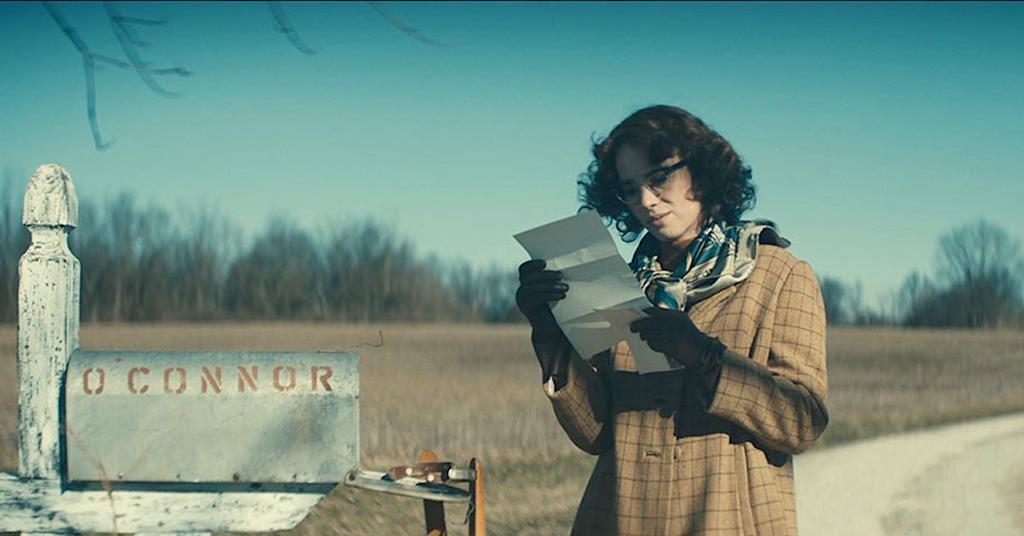
Photo caption: Maya Hawke in WILDCAT. Courtesy of Oscilloscope Laboratories.

Wildcat braids together the sad life of writer Flannery O’Connor (Maya Hawke) with several of her iconoclastic stories. Director Ethan Hawke starts Wildcat with a faux trailer for a lurid movie based on O’Connor’s short story The Comforts of Home.   Then he depicts O’Connor thinking up one of her stories and then suddenly shifts from O’Connor’s real life by bringing an O’Connor story to life. Maya Hawke and Laura Linney, who also plays Flannery’s mother Regina, play various fictional characters in the O’Connor stories.

O’Connor herself described writing, not as an escape, but as a “plunge into reality”, a reality many would prefer not to face.

Flannery was trapped in a cultural wasteland where no one understood her work (Milledgeville, Georgia), trapped in the body of an invalid (lupus) and trapped in profound loneliness. Flannery took herself and everything so seriously and made no concession to the social niceties.  At a cocktail party, Flannery could be an epic Debbie Downer. Flannery’s mother (Laura Linney) – so often wrongheaded – is absolutely correct when she suggests, “you might want to consider being a little more friendly “.

Wildcat is a showcase for Maya Hawke’s chameleonic performance as Flannery and as several of O’Connor’s fictional characters. Laura Linney is brilliant, too, both as Flannery’s mother and as several characters in O’Connor short stories (and is unrecognizable in the first vignette).

Poor Liam Neeson – he’s a fine actor who has become so iconic a movie star that, when he appears here as an Irish priest, you can’t help crying, “Hey – that’s Liam Neeson”.

Here’s my bottom line on Wildcat.  Ethan Hawke’s direction is imaginative.  Maya Hawke’s and Laura Linney’s acting are superb.  The core story is one of an unhappy and often unpleasant person.  Wanna sign up for this?

We revel in the art produced by the anguished artist, but would not enjoy being in the company of said artist and her anguish.  The best parts of Wildcat are the staging of O’Connor stories.  The least enjoyable are the scenes with O’Connor herself.

AMY: emotionally affecting and thought-provoking

AMY
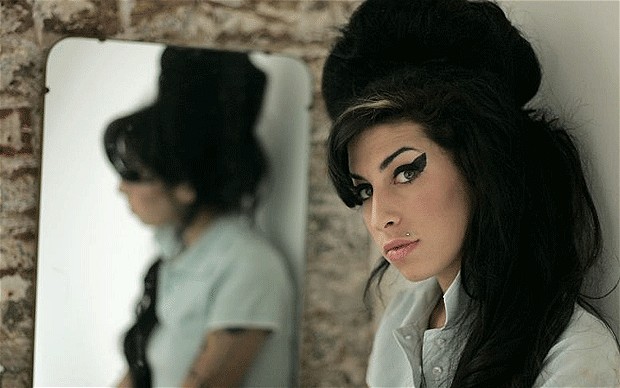
Photo caption: Amy Winehouse in AMY. Courtesy of A24.

An Amy Winehouse movie (Back to Black) is coming out this weekend, but I’m not aware of any reason to go see it, when you can watch a great Amy Winehouse movie, an Oscar winner, at home. Amy, documentarian Asif Kapadia’s innovative biopic of the singer-songwriter, is heart-felt, engaging and features lots of the real Amy Winehouse.

In a brilliant directorial choice, Amy opens with a call phone video of a birthday party.  It’s a typically rowdy bunch of 14 year-old girls, and, when they sing “Happy Birthday”, the song is taken over and finished spectacularly by one of the girls, who turns out to be the young Amy Winehouse.   It shows us a regular girl in a moment of unaffected joy and friendship, but a girl with monstrous talent.

In fact ALL we see in Amy is footage of Amy.  Her family and friends were devoted to home movies and cell phone video, resulting in a massive trove of candid video of Amy Winehouse and an especially rich palette for Kapadia.

We have a ringside seat for Amy’s artistic rise and her demise, fueled by bulimia and substance addiction.  In a tragically startling sequence, her eyes signal the moment when her abuse of alcohol and pot gave way to crack and heroin.

We also see when she becomes the object of tabloid obsession. It’s hard enough for an addict to get clean, but it’s nigh impossible while being when harassed by the merciless paparazzi.

Amy makes us think about using a celebrity’s disease as a source of amusement – mocking the behaviorally unhealthy for our sport.  Some people act like jerks because they are jerks – others because they are sick.   Winehouse was cruelly painted as a brat, but she was really suffering through a spiral of despair.

The Amy Winehouse story is a tragic one, but Amy is very watchable because Amy herself was very funny and sharply witty.  As maddening as it was for those who shared her journey, it was also fun, from all reports.  Everyone who watches Amy will like Amy, making her fate all the more tragic.

Amy, which won the Oscar for Best Documentary Feature can be streamed from Amazon, AppleTV, YouTube and is included in Max and Hulu subscriptions.

FERRARI: his racecars are easy, his women are not

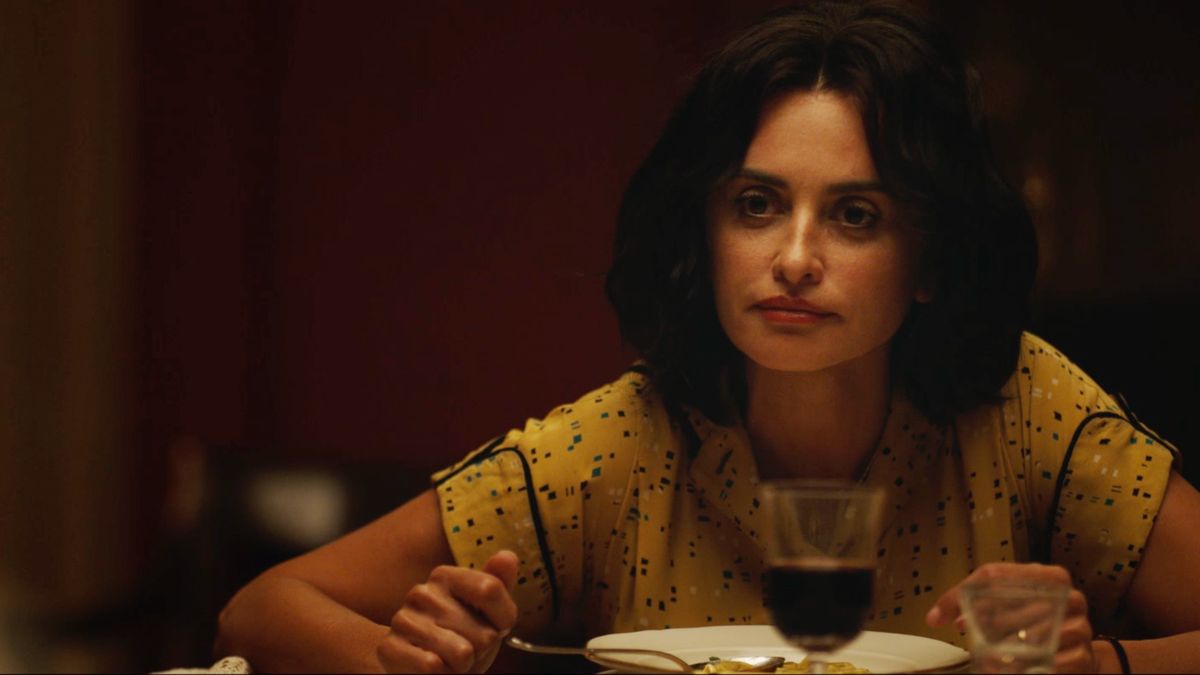
Photo caption: Penelope Cruz in FERRARI. Courtesy of NEON.

Ferrari takes place in 1957, when the groundbreaking auto racing figure Enzo Ferrari (Adam Driver) faces two crises at age 59. To attract a partnership with a larger automaker and save his company, Ferrari must win a famous road race. And, he must navigate the demands of both his wife and his girlfriend. The racing thread and the domestic thread combine to make a well-crafted, satisfying film.

Unconventionally, in Ferrari, Ferrari’s illicit relationship is anything but an exciting dalliance. Ferrari lives in the quiet countryside with his girlfriend Lina (Shailene Woodley) and their nine-year-old son. They live in modest domesticity, and Lina is supportive and generally undemanding.

Ferrari’s wife Laura (Penelope Cruz), on the other hand, is a volcano ready to blow at any moment. We learn that a tragic loss has devastated Enzo and Laura’s marriage, and Laura lives somewhere a simmer and a full blown rage. Complicating matters for Enzo, Laura is his business partner and must sign off on any Ferrari company decisions. And he must return to their Modena apartment on each workday morning.

The one thing that Lina asks for – that her son get his father’s surname – is the one thing that Laura forbids.

Driver, playing a character 20 years older than he is, is very good, and so is Woodley. It is Cruz, however, who has the juiciest role, and she knocks it out of the park. Cruz is outstanding when Laura is bitter or blazing, but beyond superb in a quieter scene where she reflects on the previous family tragedy.

I find auto racing to be the most boring of sporting endeavors, but director Michael Mann thrilled even me with the racing segments. Of course, Mann does know how to make a big, compelling movie (The Last of the Mohicans, Collateral, Heat, The Insider, Ali, Public Enemies).

Ferrari is a pretty good movie, most watchable when Penelope Cruz is on the screen.

OPPENHEIMER: creator of a monster controlled by others

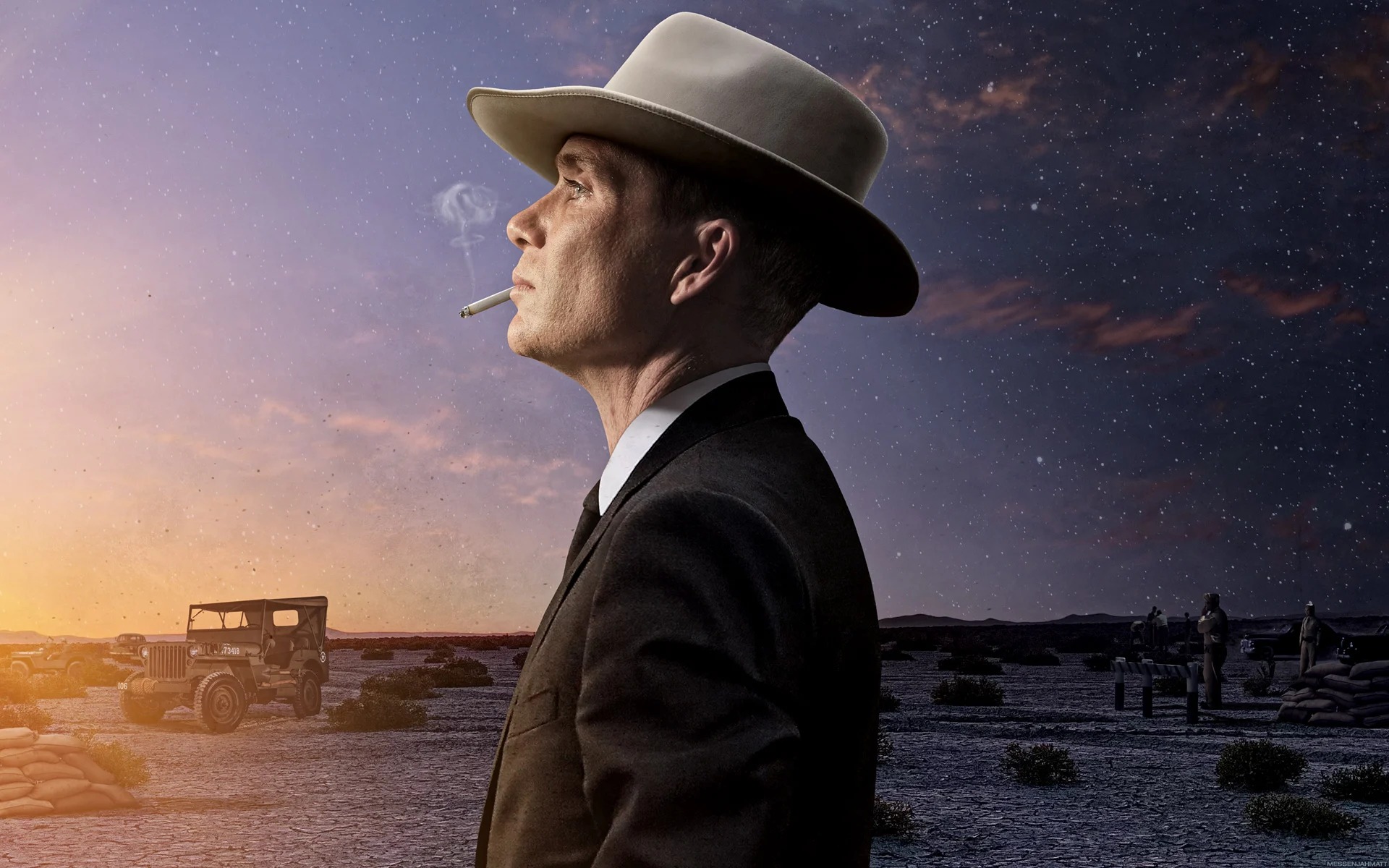
Photo caption: Cillian Murphy in OPPENHEIMER. Courtesy of Universal Pictures.

Christopher Nolan’s epic masterpiece Oppenheimer is a thrilling, three-hour psychological exploration of physicist Robert J. Oppenheimer (Cillian Murphy), who was brilliant enough to lead the development of the first atomic bomb, but could not grasp that he would then lose all control on its use.

Oppenheimer was a prima donna, but the team he assembled of star academics (31 of which had won or would win their own Nobel Prizes) was filled with prima donnas. Both a natural leader and manipulative, Oppenheimer was smoother, more practical and less politically naïve than the other scientists. But he was no match for real practitioners of politics. One character reminds him, genius is no guarantee of wisdom. The smartest person in the room makes a mistake in thinking that he can ALWAYS outthink everyone else.

Cillian Murphy, with his searing eyes and prominent cheekbones, is an actor with a striking appearance and presence. He’s always good, but he’s not the guy I would immediately think of to carry an epic; but this is Murphy’s sixth movie with Nolan, and Nolan knew that Murphy had the chops. Looking unusually gaunt, Murphy becomes Oppenheimer as he ranges from arrogant self-confidence to a creature in torment. It’s a magnificent, career-topping performance.

Himself a practitioner of the empirical, Oppenheimer, could not conceive of or understand the arena of public opinion, where lies and fear can triumph over fact and virtue. Robert Downey, Jr., in a great performance, plays Oppenheimer’s foil Lewis Strauss, a man who understands influence, political positioning and spin.

Nolan’s screenplay is based on the Oppenheimer bio American Prometheus. The mythological Prometheus brought fire to human, and was punished by the gods with perpetual torment, specifically by an eagle, each day of eternity, eating his liver anew. Oppenheimer gets the heartache of being victimized by the communist witch hunt of the 1950s and the nightmare that his monstrous creation is in the hands of those less ethical, less smart and less virtuous than he.

The Manhattan Project, the mastering of all the scientific and technological challenges in developing the first nuclear weapon, in a race with the worst villains in the history of the world – that’s fodder for an epic movie in itself. Yet that’s the backdrop to this psychological study. Together, the stories of the Bomb and Oppenheimer make for a movie that’s an astounding achievement.

The stakes could not be higher – not just life and death, but life and death on a heretofore unimagined scale. Not to mention the primary goal of stopping the Nazis. And the survival of the planet itself.

At the time, physicists could not rule out the possibility that a nuclear reaction would continue until it incinerated the atmosphere. In Oppenheimer, the scientists calculate a “near zero” chance of destroying the entire planet, giving serious pause to the scientists and alarm to lay people.

The bomb needed to be assembled and tested, of course, and the scenes of the fisrt bomb test are harrowing. Imagine putting together an atomic bomb and arming it, with 1940s technology (no robots or laser-precision machining) and THEN waiting out the winds and rain of a fierce desert storm.

There’s an emotionally surreal scene as the Los Alamos team rapturously celebrates the atomic bomb blast at Hiroshima – consumed by pride and relief that their work of over two years was successful and that it would surely end the war more quickly; but unthinking about the very real, inevitable and horrific human carnage on the ground in Hiroshima and the threat of nuclear annihilation that the world would tremble under for the rest of time. Nolan shows Oppenheimer leading the celebration, and then envisioning the horrors.

Oppenheimer is visually thrilling, thanks to Dutch-Swedish cinematographer Hoyte Van Hoytema, who already has an impressive body of work: Nope, Spectre, Ad Astra, Her, The Fighter, and Nolan’s Interstellar, Dunkirk and Tenet. Nolan, Van Hoytema and editor Jennifer Lame will undoubtedly be honored with Oscar nominations for Oppenheimer. Ludwig Göransson’s music is pretty great, too.

The cast is deep, and there are many excellent supporting performances in Oppenheimer, including:

  • Emily Blunt as Oppenheimer’s wife Kitty, who doesn’t get a lot of screen time, but becomes a force as Oppenheimer comes under attack.
  • Florence Pugh as a needy Oppenheimer girlfriend. I have not understood why Pugh is trending toward the A-list, but she’s really steamy here.
  • Matt Damon as General Leslie Groves, the military commander who job it was, while Oppenheimer was managing a town full of divas, to manage Oppenheimer himself., once observing you’re not just self-important; you ARE important.
  • Benny Safdie as the mercurial Edward Teller, who Oppenheimer keeps inside the tent, so as to not disrupt the Manhattan Project, with autonomy to develop a hydrogen bomb.

Rami Malek is glimpsed, oddly gecko-like, in the middle of the story and then pops up with a surprise near the end.

Mick LaSalle, writing on Oppenheimer, quipped that Gary Oldman “who played Winston Churchill in “The Darkest Hour,” is President Harry Truman here. If Oldman ever plays Stalin, he could do the Potsdam Conference as a one-man show.

Christopher Nolan and his collaborators have made a movie that runs for three hours without a single slow or dry moment, despite spending two hours on nuclear physics. I am confident in predicting that Oppenheimer will receive (and deserve) at least ten Oscar nominations and could challenge the record of fourteen.

ROCK HUDSON: ALL THAT HEAVEN ALLOWED: leading man in the closet

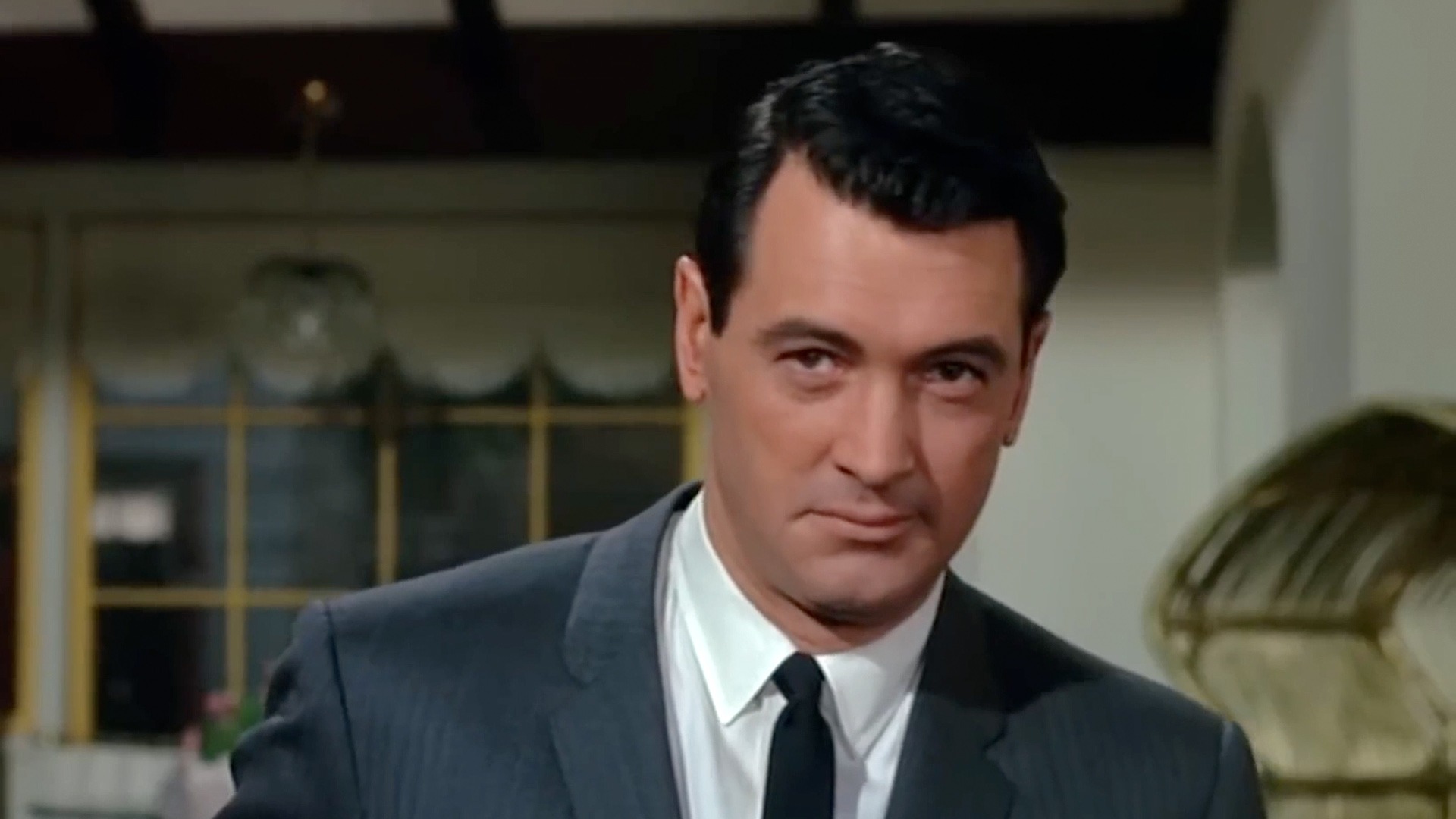
Photo caption: Rock Hudson in ROCK HUDSON: ALL THAT HEAVEN ALLOWED. Courtesy of HBO Max.

The insightful and often witty showbiz biodoc Rock Hudson: All That Heaven Allowed has an unbeatable leading man – Rock Hudson. From Magnificent Obsession in 1954 through 1962 (Come September and Lover Come Back) Rock earned eight straight years on the list of America’s top ten most popular movie stars. The basis for his popularity was a series of melodramas and romantic comedies that showcased him as the nation’s to heterosexual sex symbol, while he was secretly gay.

Rock’s Hollywood story begins when, as a young Navy vet, he is discovered by the prominent (and sexually predatory) agent Henry Willson, who groomed over a dozen of the beefcake stars of the 50s, many of whom were also closeted gays (e.g., Tab Hunter). Willson gets Rock a contract with Universal and the studio went to to work on re-creating the raw Adonis into leading man material.

Rock Hudson: All That Heaven Allowed unspools the story of Rock’s closeted but vibrant lifestyle, with his decades-long friendship with a Hollywood couple, George Nader (74 screen credits, including the lead in Robot Monster) and Mark Miller. We meet Lee Garlington, Rock’s companion in the early 60s. We hear from author Armistead Maupin (Tales of the City), who joined Rock’s social set in the 70s and kept urging him to come out. We also meet a smattering of Rock’s fellow actors and casual lovers. Rock’s poolside parties resembled a gay version of the Playboy Mansion.

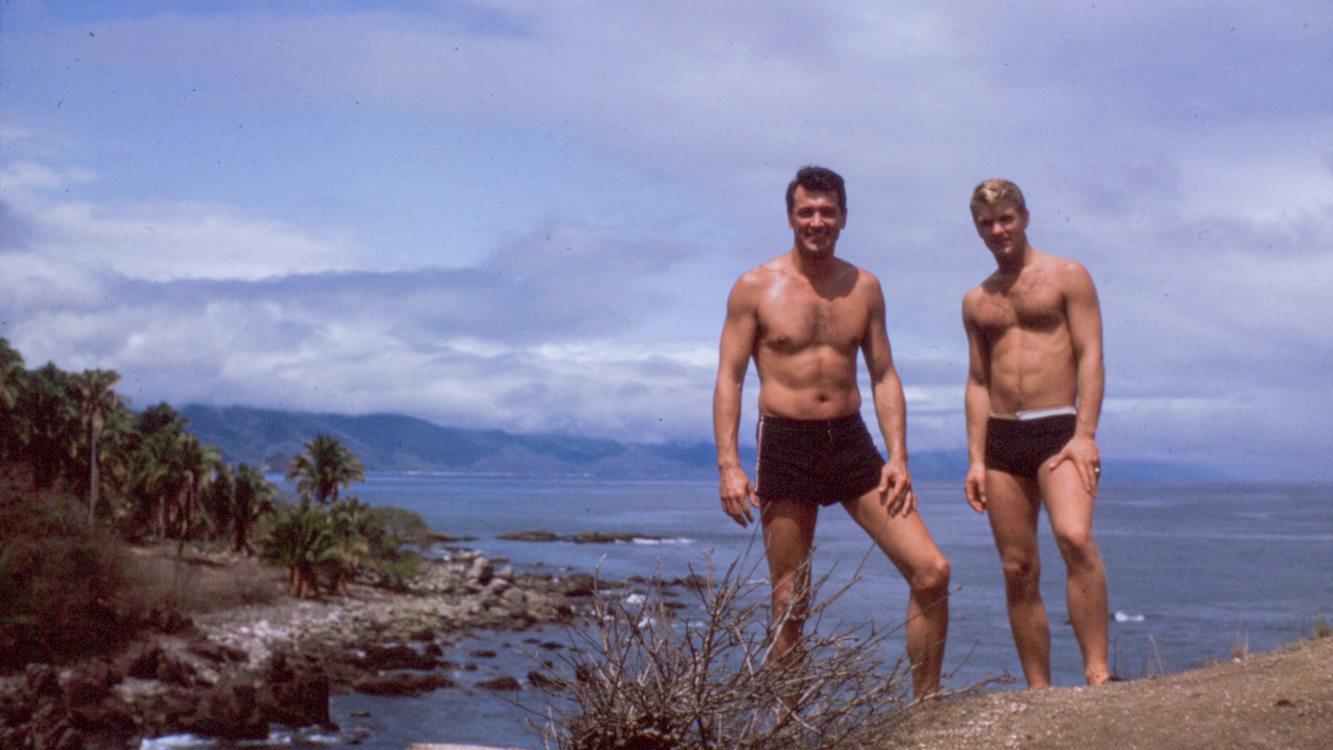
Rock Hudson and Lee Garlington in ROCK HUDSON: ALL THAT HEAVEN ALLOWED. Courtesy of HBO Max.

And then Rock Hudson: All That Heaven Allowed takes us back to Rock’s sad finale, as he wasted away from AIDS, early in the epidemic, before there was any real hope from therapeutic medication. We cringe as we revisit Rock’s harrowing kiss of Linda Evans in Dynasty while AIDS-positive – and hear from Evans herself. And we hear of the cruel blow-off by First Lady Nancy Reagan. Isolated by his fear of the AIDS stigma, he still refused to come out of closet, while finally publicly acknowledging his AIDS diagnosis essentially on his deathbed.

While Rock Hudson: All That Heaven Allowed is generally sympathetic to Rock and his closeted plight, it takes an unflinching look at his chain-smoking, heavy drinking, sometimes ruthless ambition and his stubborn refusal to come out.

While the arc of Rock’s life is ultimately tragic, director Stephen Kijak has made Rock Hudson: All That Heaven Allowed very fun to watch by peppering it with clips from Rock’s films. Of course, juxtaposition with the revelations of Rock’s private lifestyle, many, many melodramatic and sexy lines have become hilarious double entendres. The effect of the snippets is poignant as Rock’s story becomes sadder.

Rock Hudson: All That Heaven Allowed is streaming on HBO Max.

OSCAR MICHEAUX: THE SUPERHERO OF BLACK FILMMAKING: a pioneer worth knowing about

OSCAR MICHEAUX: THE SUPERHERO OF BLACK FILMMAKING. Courtesy of TCM.

If you don’t know who Oscar Micheaux is, you should – so watch the documentary Oscar Micheaux: The Superhero of Black Filmmaking. As writer/director/producer, the African-American Michaeux created so-called “race films” – movies made for black audiences from a black perspective during the most shameful years of American racial segregation. Michaeux himself directed 42 feature films DURING Jim Crow.

There’s a lot in Oscar Micheaux: The Superhero of Black Filmmaking:

  • Micheaux’s pivotal sojourn in a cabin in, of all places, the Dakotas.
  • His very personal and hands-on distribution methods.
  • His discovery of Paul Robeson’s on-screen charisma, a full eight years before Robeson’s first Hollywood film (The Emperor Jones).
  • Micheaux’s comfort in portraying that most incendiary topic – interracial relationships. 
  • How he slyly bent rules to avoid censorship.

I have seen some Oscar Micheaux films, and their stories, freed of the White Hollywood lens, are eyeopening. They allowed black audiences to see big screen characters that acted like real African-American – not the degrading stereotypes in Hollywood movies.

That being said, Michaeux did not make “Noble Negro” movies. His work is authentic, and criticized, for example, black preacher-hucksters who exploit religious devotion in the African-American community for their own venal and carnal appetites.

Oscar Micheaux: The Superhero of Black Filmmaking features a solid panel of expert talking heads to explain Micheaux’s place in cinema and in African-American history. The most compelling are screenwriter Kevin Wilmott and University of Chicago cinema professor/TCM host Jaqueline Stewart. 

Animation is used sparingly and effectively, including one inspired segment to Gil Scott-Heron’s The Revolution Will Not Be Televised.

I watched Oscar Micheaux: The Superhero of Black Filmmaking on Turner Classic Movies, and it is streaming on HBO Max.

Coming up on TV – the hard to find GEORGE WALLACE

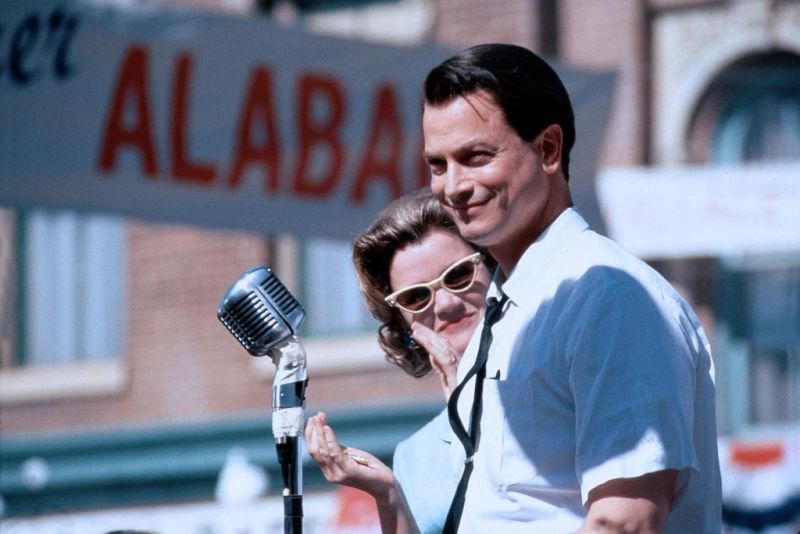
Photo caption: Gary Sinise in WALLACE.

On January 12, Turner Classic Movies brings us George Wallace, with its brilliant performance by Gary Sinise. Sinise captures the character of the driven, morally flexible Alabama Governor, whose political opportunism took him to personify the defense of racial segregation in America. His wild personal journey included presidential campaigns, becoming paralyzed by an assassination attempt, and mellowing in a redemption-seeking epilogue.

Originally a 1997 TV miniseries, this three-hour work was based on the fine Marshall Frady biography and was directed by the legendary John Frankenheimer (The Manchurian Candidate, Seven Days in May).

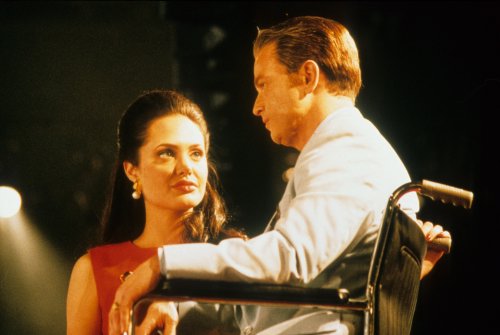
Mare Winningham plays Wallace’s first wife Lurleen, who succeeded him as Alabama’s Governor, and Angelina Joie plays his second wife Cornelia. Sinise, Winningham and Frankenheimer all won Primetime Emmys.

George Wallace is not available to stream and is rarely broadcast, so set your DVR.

Angelina Joie and Gary Sinise in GEORGE WALLACE