THE TRUTH: reconciling your truth with another’s

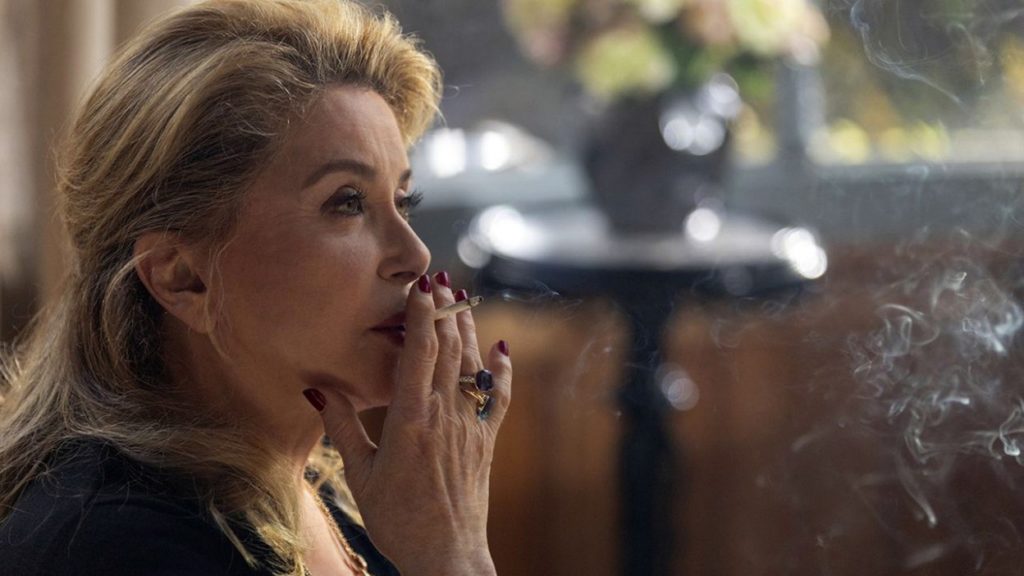
Catherine Denueve in THE TRUTH. Photo courtesy of IFC Films.

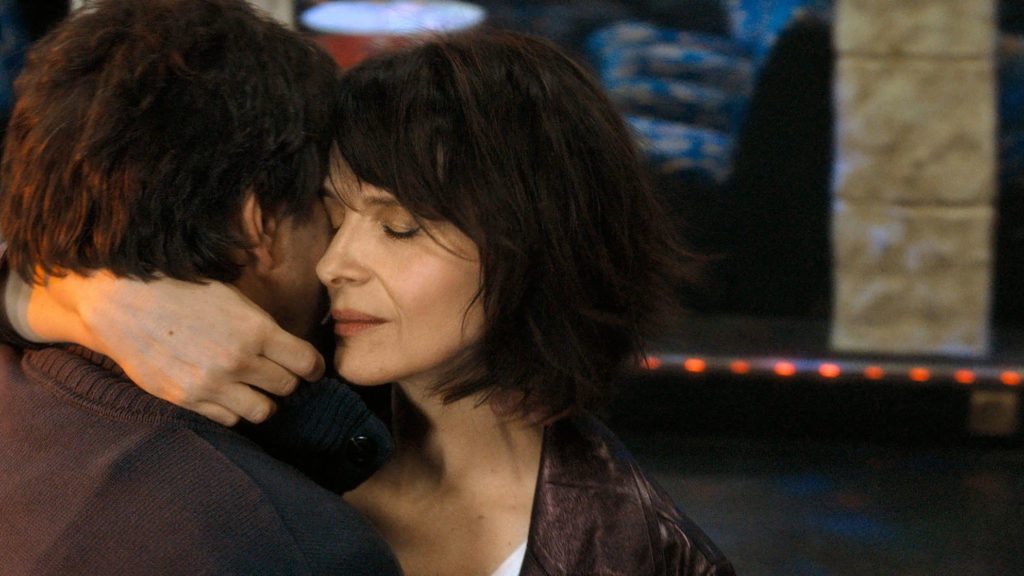
In The Truth, writer-director Hirozaki Koreeda’s latest wry and authentic exploration of human behavior, Catherine Deneuve plays Fabienne, one of France’s most iconic living actresses. Her daughter Lumir (Juliette Binoche), a screenwriter living in New York, brings her family to Paris for a visit to celebrate the publication of Fabienne’s memoir.

As the film opens, an imperious Fabienne is being interviewed by a journalist so mediocre that he’s not ashamed of plagiarizing his questions – and Fabienne doesn’t suffer fools.

Fabienne is a diva who demands to be doted upon, and she is a Real Piece of Work. Fabienne has been so career-focused that she sacrificed an emotional attachment to Lumir, who received maternal nurturing from Sarah, a now-deceased peer of Fabienne’s who Fabienne had screwed out of a career-making role.

Her self-worshipful memoir is ridiculously also entitled The Truth. The book falsely paints Fabienne as an attentive, model mother, doesn’t even mention her longtime assistant and inaccurately claims that Lumir’s father is dead.

Lumir’s resentments quickly bubble to the surface, the two probe and spar throughout he movie. Each sees her own experience as a “truth”. The Truth is about their journeys to accept the other’s point of view and on what terms. It’s very funny, and, thanks to Hirokeeda’s touch, remarkably genuine.
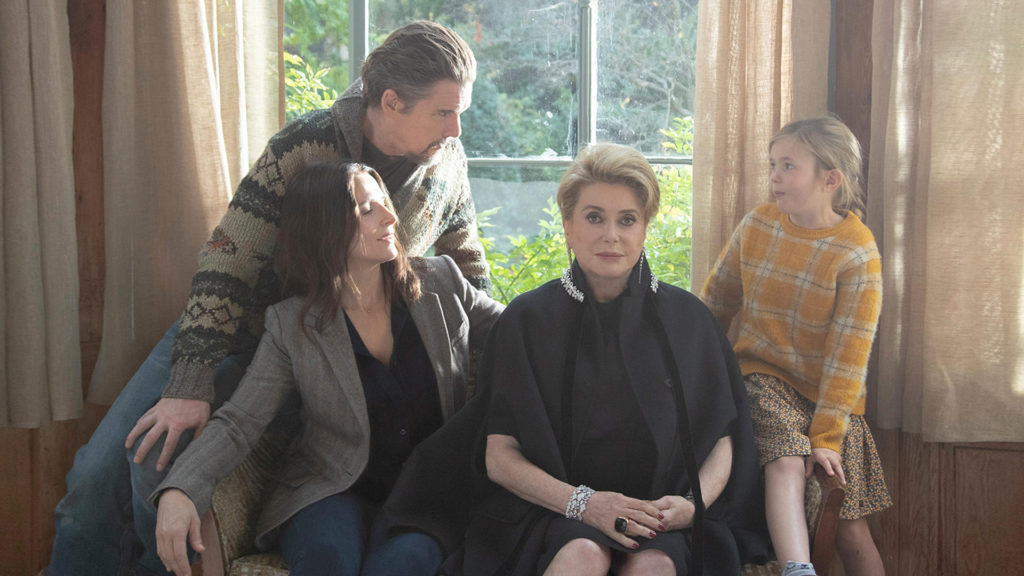
Juliette Binoche, Ethan Hawke, Catherine Deneuve and Clémentine Grenier in THE TRUTH. Photo courtesy of IFC Films.

Fabienne is now shooting a movie where she plays the mother of a much younger French film star (Manon Clavel), and the ever-competitive Fabienne has manufactured a one-sided rivalry with her, as she had with Sarah. (The film-within-a-film is a sci fi exploration of mother-daughter angst which I think I would hate if it were a real movie).

I’ve seen four of Koreeda’s movies and they’re all brilliant: Still Walking, Our Little Sister, The Third Murder and The Shoplifters. I rated The Shoplifters among the four best movies of 2018. The Truth is Koreeda’s first film made outside Japan and in languages (French and English) other than Japanese.

Deneuve and Binoche are superb. All of the cast is excellent, including Ethan Hawke, who is a good enough sport to play Lumir’s tag-along husband, a good-hearted but modestly talented American TV actor. The firecracker child actress Clémentine Grenier, in her first film, soars as Lumir and Hank’s daughter Charlotte; Charlotte wants to become an actress like her grandma, and Clémentine just might attain that herself.

The Truth also benefits from the beautiful work of cinematographer Eric Gautier (Ash Is Purest White, The Motorcycle Diaries, Summer Hours).

The Truth may not be Koreeda’s very best, but it’s plenty good. Hirokeeda, such an insightful observer of behavior, can cut to the core his characters’ profound humanity. The Truth is streaming on Amazon, Vudu, YouTube and Google Play.
NON-FICTION: Olivier Assayas has wasted too many hours of my life

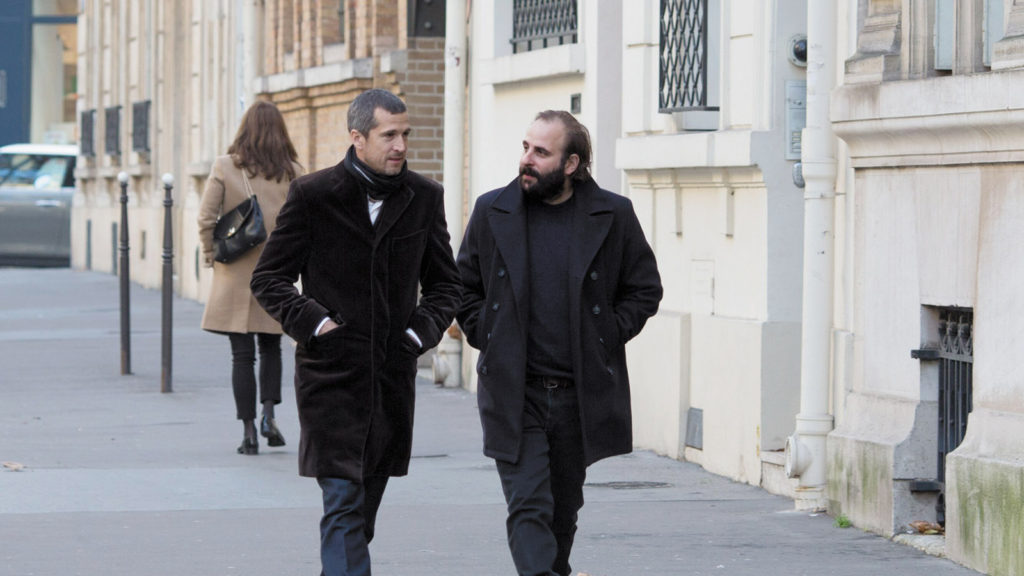
Guillaume Canet (left) and Vincent Macaigne in NON-FICTION

I finally got around to watching writer-director Olivier Assayas’ Non-Fiction. I had been eager to see it because I generally find the French actor Vincent Macaigne hilarious, and I will pretty much watch Juliette Binoche in anything. My conclusion: Olivier Assayas has wasted too many hours of my life, and I am over his films.

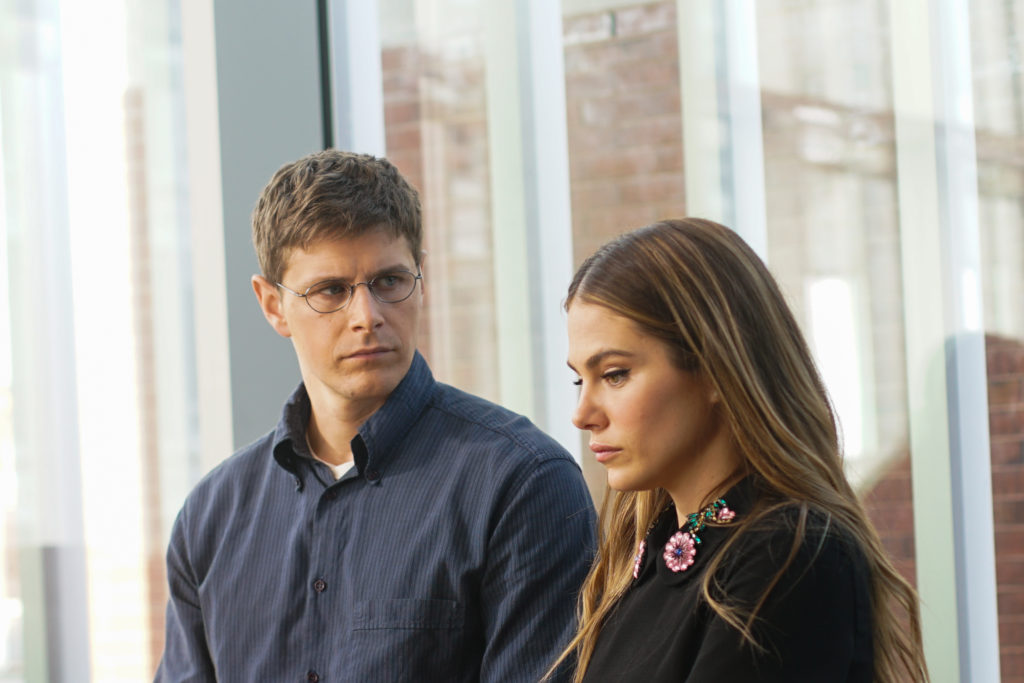
Non-Fiction is a comedy of manners that revolves around the once-successful novelist Leonard, whose books are very lightly disguised re-tellings of his own sordid romantic life, and Leonard’s publisher Alain (Guillaume Canet). Alain is married to Selena (Juliette Binoche), an actress in TV cop shows. Everybody sleeps with somebody else’s partner, and everyone wrings their hands over e-books, audio books, blogs and the impending death of the book industry. That’s about it. None of it is engaging.

In 2006, Assayas, a veteran screenwriter, wrote and directed an okay segment (the one with Maggie Gyllenhaal as an actress pining for her drug dealer) in the delightful anthology Paris, je t’aime. He followed it in 2008 with the fine family drama Summer Hours. And then, in 2011, he did the excellent true crime mini-series Carlos. This was a promising start, and he developed a fan base of admiring critics.

But since then, Assayas has wasted brilliant performances by Binoche and Kristen Stewart in the Clouds of Sils Maria and Personal Shopper – two muddled messes that masquerade as cinema. And now, the off-putting Non-Fiction. I am over this guy.

SPOILER: There is one funny moment in Non-Fiction, which I shall now spoil for you, so you won’t need to watch the movie. In the last quarter of the film, the characters decide to publish an audio book read by a celebrity, and they aspire to get Juliette Binoche (who is, of course, in this scene playing her character). I’ll concede that this is a genuinely witty moment, if self-referential.

Non-Fiction is now streaming on Amazon and other platforms.

THE FALL OF THE AMERICAN EMPIRE: pointed satire in the form of a heist movie

Alexandre Landry and Maripier Morin in THE FALL OF THE AMERICAN EMPIRE

In the pointed satire The Fall of the American Empire, Pierre-Paul (Alexandre Landry) chafes at his dead-end blue-collar job as an express freight delivery driver; he feels that, with his PhD in Philosophy, he has been unjustly screwed out of a much better life by the System. He may be right, but he’s also a self-absorbed putz, who is justifiably dumped by his girlfriend. But then he happens across a windfall fortune of ill-gotten cash – and keeps it. The critical questions, of course, are how he can escape from the ruthless gang and the corrupt police who want to recover the money, and how will he be able to spend the money without getting caught? Pierre-Paul is a heads-in-the-clouds intellectual, and he is totally over-matched.

Fortunately, Pierre-Paul makes the acquaintance of a criminal mastermind, Sylvain ‘The Brain’ Bigras (Rémy Girard), who has just been released from prison. Pierre-Paul also can’t resist blowing some of his newfound treasure on Montreal’s most expensive escort, the astonishingly beautiful Aspasie (Maripier Morin). She used to be the mistress of the powerful banker Taschereau (Pierre Curzi), and soon Pierre-Paul has a team of confederates with real know-how.

Veteran French-Canadian writer-director Denys Arcand portrays a society corrupted head-to-toe by the capitalist imperative to acquire more and more money. And all of the characters make a point of insisting getting theirs in American dollars. The two older guys – one a lifelong outlaw and convict and the other a socially and politically prominent banker – hit if off immediately; after all, they’re both crooks.

Arcand comes at his films from the the Left, but he skewers the doctrinaire Left with equal glee. He pokes fun at the personal foibles of individuals on the Left, but saves his savagery for the inequalities of Capitalism. While he is sending up the entire Capitalist system. he makes his points without descending into a screed. All the fun in The Fall of the American Empire is dotted with realistic – and some real – plight of the homeless – depicted neither with finger-wagging or as maudlin.

The satire fits into the formula of a heist film – the assembling of a team to pull off a job. Of course, here they already HAVE the money, and they don’t need to steal it. To get the benefit of the money, they need to launder it and hide it from tax authorities.

Rémy Girard in THE FALL OF THE AMERICAN EMPIRE

Arcand stalwarts Rémy Girard and Pierre Curzi both give superb performances. Vincent Leclerc, as a homeless man who volunteers at a soup kitchen, has an especially moving scene.

Arcand is known for his trilogy The Decline of the American Empire (1986), The Barbarian Invasions (2003 and Oscar-winner for Best Foreign Language Film) and Days of Darkness (2006 – which I haven’t seen).

While the love story between Pierre-Paul and Aspasie and the Robin Hood aspect of our heroes’ plans are fantasies, The Fall of the American Empire has an authenticity at its core – the impact of disparity of wealth in a system rigged in favor of the Haves. And it’s damn funny – progressively funnier as the money-laundering scheme takes shape. The Fall of the American Empire opens June 7 in the Bay Area, and will spread to more local theaters in June.

Stream of the Week: MUSTANG – repression challenged by the human spirit

MUSTANG
MUSTANG

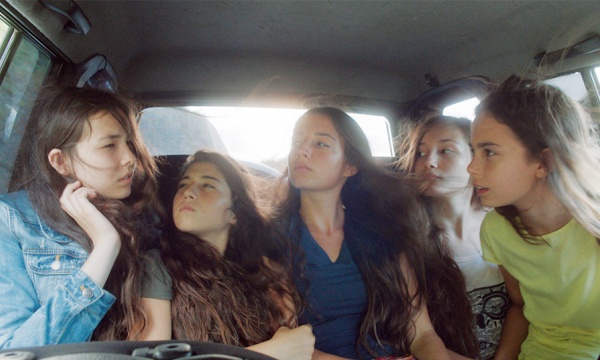
Mustang is about five exuberant Turkish teenage girls who challenge the repression of traditional culture. It’s a triumph for writer-director Deniz Gamze Ergüven, and one of the best films of the year.

The five parentless sisters are living with their uncle and aunt on the Turkish coast “a thousand kilometers from Istanbul”. They’re a high-spirited bunch, and their rowdiness – innocent by Western standards – embarrasses their uncle. Overreacting, he tries to protect the family honor by pulling them out of school, taking away their electronics, putting them in traditional dresses (evoking the dress wear of fundamentalist polygamist Mormons) and conniving to marry them off as soon as possible. The uncle turns their home into a metaphorical prison that becomes more and more literal. The girls push back, and the stakes of the struggle get very, very high.

Our viewpoint is that of youngest sister Lale (Günes Sensoy), who is a force of nature, ever watchful (often fiercely). The poster girl for indomitability, Lale is one of the great movie characters of 2015.

Mustang is a film of distilled feminism, without any first world political correctness. These are people who want to marry or not, who they want, when they want and to have some control over their lives. They want protection from abuse. That is not a high bar, but because they are female, the traditional culture keeps these basic rights from them.

Although Mustang is set and filmed in Turkey by a Turkish writer-director, the actors are Turkish and all the dialogue is Turkish, it is technically a French movie. Director Ergüven works in France and the film was financed and produced in France. In fact, it was France’s official entry for the Best Foreign Language Picture Oscar (over the Cannes winner Dheepan and the Vincent Lindon drama The Measure of a Man).

I happened to be in Sevilla, Spain during the Sevilla European Film Festival and saw Mustang there. I was rooting for Mustang to win the Best Foreign Language Oscar; it was nominated and SHOULD have won. .

You can stream Mustang on Netflix, Amazon, iTunes. Vudu, YouTube and Google Play.

Stream of the Week: CUSTODY: the searing essence of domestic violence

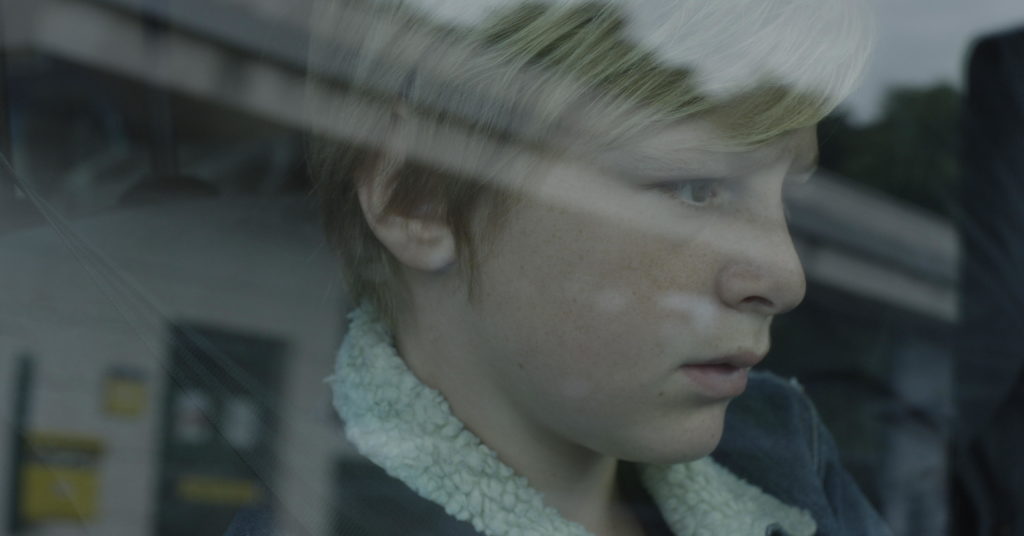
Thomas Gioria in CUSTODY. Courtesy Kino Lorber.

In his searing French thriller Custody, writer-director Xavier Legrand paints the most elemental and realistic depiction of domestic violence that I’ve seen.  Custody begins with a child custody hearing over an almost 18-year-old daughter and an 11-year-old son.  Neither kids wants anything to do with the dad, and there’s more than a hint of spousal abuse in their past, but the court awards the father weekend visits with his son.

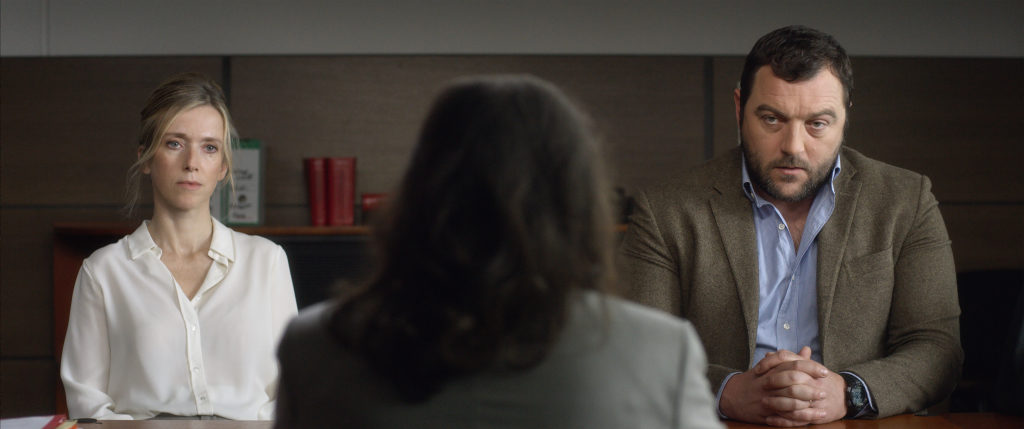
The father (Denis Ménochet) is acting very reasonably at the custody hearing, of course, but we soon see signs of the need for domination and control that is the core of domestic violence.  He can’t bear not knowing where his ex-wife (Léa Drucker) lives.  He needs to be the “winner” in every transaction.  With naked entitlement, he says “I get an extra hour because I picked you up an hour late”.   Too vile even for his own parents, the father is an insistent stalker.

Especially through the eyes of the son (Thomas Gioria in a miraculous performance),  Legrand helps the audience understand the traumatization of family violence.  Every family member lives with dread of the father surprising them like a bogeyman.  The boy takes on responsibility to protect his mom and sister by keeping the dad away from them – it’s an emotionally wracking burden that no child should bear.  The mom is not a hero or a feminist icon – she just wants to survive and not be a victim.

Intimate partner violence is about power and control.  In Custody, the father doesn’t react physically until the movie’s midpoint, and he doesn’t touch another character until almost the end.  But, without hitting anyone, he is successful in terrorizing the family.  By buzzing the mom’s doorbell in the middle of night, he proves that he really is a terrorist.  And his lethality emerges in the thriller ending.  LeGrand says that the thriller aspect of Custody comes organically from fear.

Léa Drucker and Denis Ménochet, in CUSTODY. Courtesy Kino Lorber.

Every performance is excellent, and Menochet’s has received plaudits.  But the child actor Thomas Gloria goes places you don’t expect a child to go; his performance is stunning.  Menochet discusses his performance and Gioria’s in this Inside Picturehouse interview on YouTube.

As the sister, Mathilde Auneveux delivers a mesmerizing performance of Proud Mary at her birthday party.  She is clearly distracted by at least one event in her life, but which is it?

In Custody, Legrand has also filmed the most perfectly shot pregnancy test scene ever.

Custody is the remarkable first feature from Xavier Lagrand.  The story grew out of his Oscar-winning short film with the same actors, Just Before Losing EverythingCustody won Legrand the Silver Lion (Best Director) at the Venice film festival.  I saw it at Silicon Valley’s Cinema Club months before its release.

Custody can be streamed from Amazon, iTunes, Vudu, YouTube and Google Play.
LET THE SUNSHINE IN: exquisite performance, pointless movie

Juliette Binoche in LET THE SUNSHINE IN

The French drama Let the Sunshine In is a pointless movie with a great, great performance from Juliette Binoche. Binoche plays a divorced artist who, yearning to be in a relationship with a guy, has sexual encounters with a range of them. She churns a series of men who are not good-relationship material for a variety of reasons. And she is aiming way too low. All of this is obvious.

Finally, she finds herself listening to counsel from a character played by Gérard Depardieu; I really lost track of whether the character is a therapist or some kind of guru, whatever. But in this scene, the movie’s final 10-15 minutes, we can appreciate the most exquisite acting of the year. Depardieu is doing 90% of the talking, but the camera is on Binoche as she listens and internalizes what is being said. I really couldn’t tell you whether his advice was sound or empty psychobabble.  I was just too entranced by Binoche’s reactions.

This is the GOOD part of the movie, but there’s a problem here, too. Just when the audience is enraptured by Binoche’s face, the giant letters J-U-L-I-E-T-T-E-B-I-N-O-C-H-E run across it. It’s so distracting that my first thought was that the movie’s projection had become garbled.  But no – it’s the CLOSING CREDITS scrolling across the most profound performance of the year. Unpardonable.

It should be noted that this story of a woman’s yearnings is told by the woman writer-director Claire Denis. I liked, but don’t otherwise remember much about her 2008 35 Shots of Rum; I was dismayed by her 2013 BastardsLet the Sunshine In is another whiff.

DVD/Stream of the Week: YOU WILL BE MY SON

YOU WILL BE MY SON

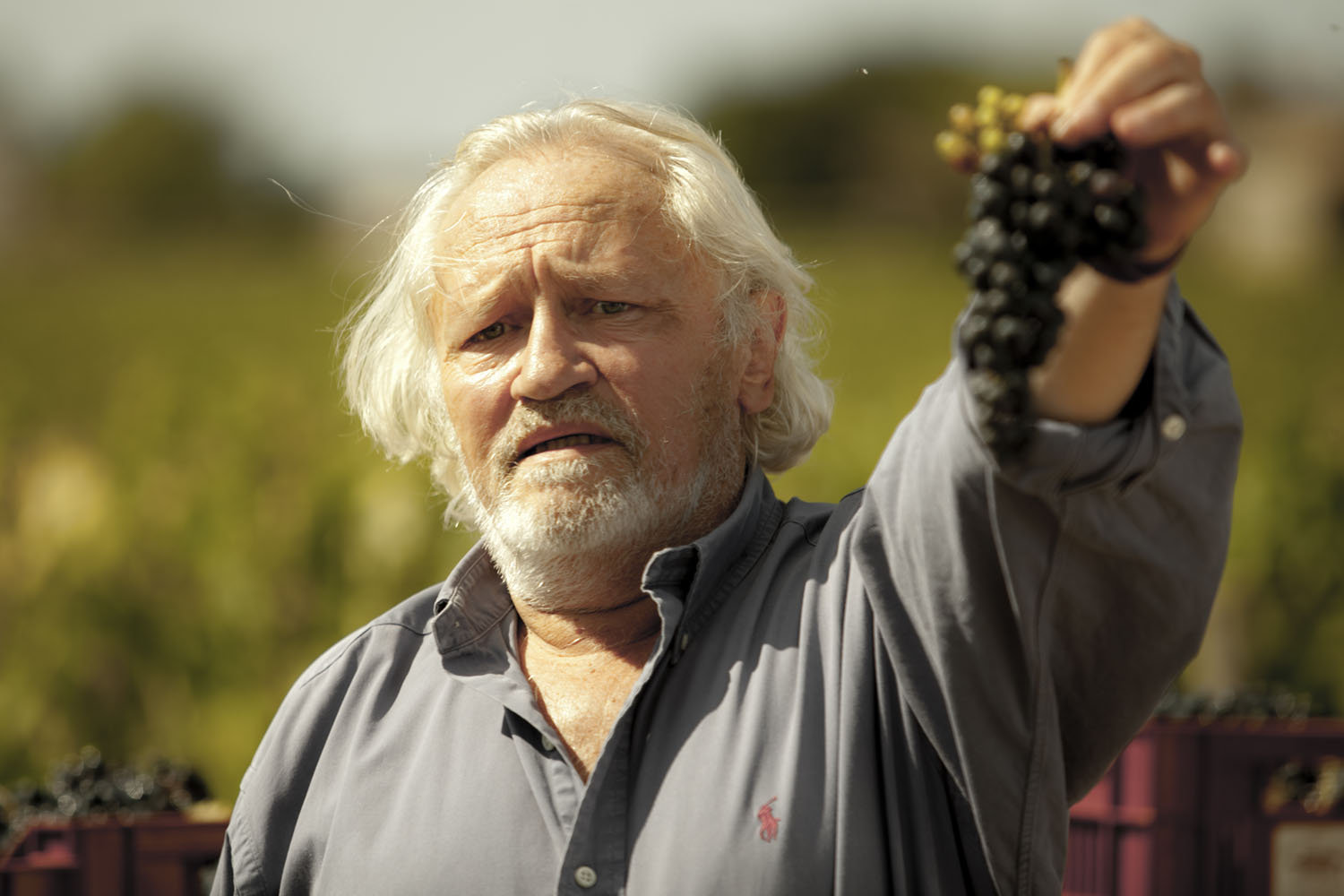
Niels Arestrup (A Prophet, War Horse) stars as the owner of French wine estate who places impossible expectations on his son, with lethal results. The poor son has gotten a degree in winemaking, has worked his ass off on his father’s estate for years and has even married well – but it’s just not enough for his old man. The father’s interactions with the son range from dismissive to deeply cruel.

The father’s best friend is his longtime estate manager, whose health is faltering. The son is the natural choice for a successor, but the owner openly prefers the son’s boyhood friend, the son of the manager. The first half of You Will Be My Son focuses on the estate owner’s nastiness toward his son, which smolders throughout the film. But then the relationship between the sons turns from old buddies to that of the usurper and the usurped. And, finally, things come down to the decades-long relationship between the two old men.

Deep into the movie, we learn something about the father that colors his view of his son. And then, there’s a startling development that makes for a thrilling and operatic ending.

It’s one of several good 2013 films about fathers and sons, like The Place Beyond the Pines and At Any Price. (This is also a food porn movie, with some tantalizing wine tasting scenes that should earn a spot on my Best Food Porn Movies.)

You Will Be My Son is available on DVD from Netflix and streaming from Tunes, Vudu, YouTube and GooglePlay.

ISMAEL’S GHOSTS: indecipherable waste of talent

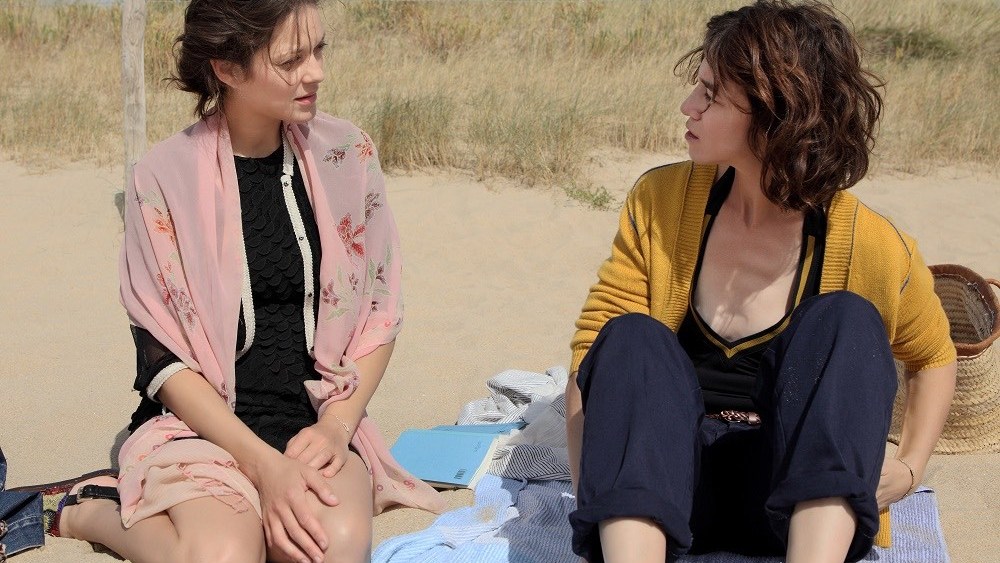
Marion Cotillard and Charlotte Gainsbourg in ISMAEL’S GHOSTS

Suppose that you’re in mid-life, mid-career and mid-relationship, and your ex-spouse – whom you have thought dead for a decade – suddenly shows up.  In Arnaud Desplechin’s Ismael’s Ghosts, that is exactly what happens to a filmmaker (Mathieu Amalric) when his long-disappeared ex (Marion Cotillard) pops in.  So far, so good.  But then Ismael’s Ghosts begins to slide off the rails.

The filmmaker accompanies his ex-father-in-law, who is being honored in Israel, but then the story becomes unhinged and, finally, impossible to follow.  It’s just one indecipherable mess.

I was actually looking forward to this movie.  I loved Desplechin’s My Golden Days, and I admire Cotillard and Charlotte Gainsbourg (who plays the filmmaker’s current partner).  But Ismael’s Ghosts is just a waste of their talent and my time.  I saw Ismael’s Ghosts at Cinequest before its US theatrical release.

GODARD, MON AMOUR: squandering artistic genius with political dilletantism

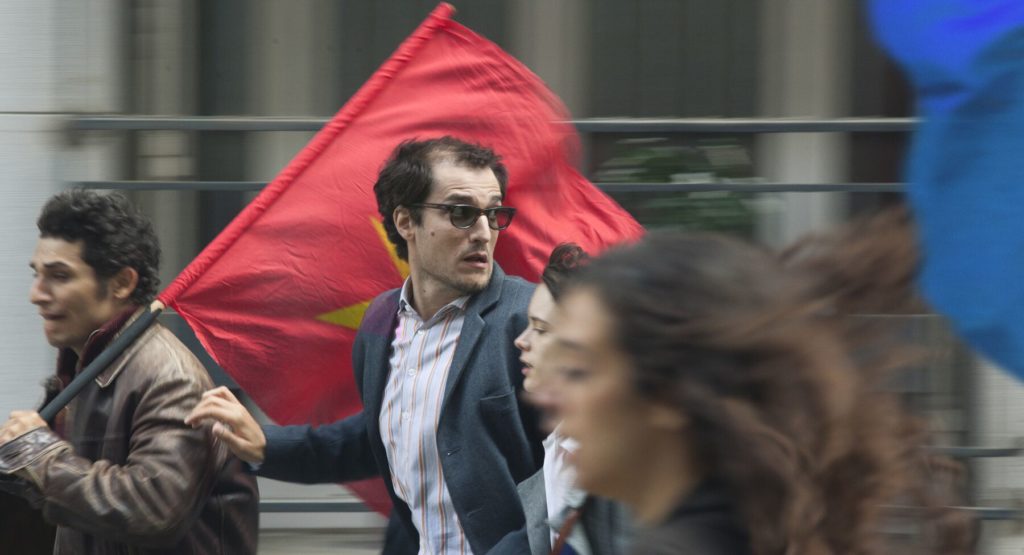
Louis Garrel in a scene from Michel Hazanavicious’s GODARD, MON AMOUR, playing at the 2018 San Francisco International Film Festival, April 4 – 17, 2018. Courtesy of SFFILM.

Godard, Mon Amour is a bitingly funny portrait of flawed genius. Michel Hazanavicius (The Artist) pays tribute to the genius of filmmaker Jean-Luc Godard’s early career while satirizing Godard’s personal excesses.

Godard, Mon Amour traces the three pivotal years after Godard married Anne Wiazemsky, the 19-year-old star of his La Chinoise. Godard (Louis Garrel) is age 37. In the preceding seven years he has helped revolutionize cinema as a leader of the French New Wave. He has made three masterpieces: Breathless, Contempt and Band of Outsiders. This is the Godard of “All you need to make a movie is a girl and a gun.”

But now Godard has become a doctrinaire Maoist and rejects his past work. He sees himself as a thought leader of revolutionary politics – but that is a delusion. He’s just a political amateur, a poseur, a tourist.

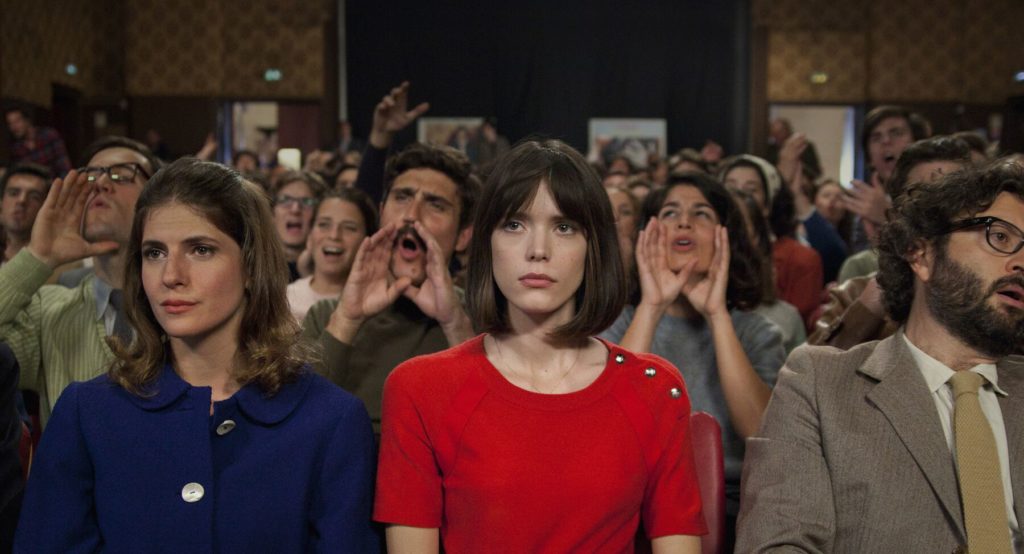
Stacy Martin (center) in a scene from Michel Hazanavicious’s GODARD, MON AMOUR, playing at the 2018 San Francisco International Film Festival, April 4 – 17, 2018. Courtesy of SFFILM.

“Godard is dead”, Godard declaims. But young Anne (Stacy Martin) has hitched her star to the old Godard, the master of cinematic innovation and rock star, not this new dogmatic Godard.

This is also a snapshot of 1967, when many on the French Left believed that revolution in France was around the corner.  By 1969, it was apparent to virtually everyone that this had been a mirage, that revolution was not going to happen.  To everyone but Godard, who stubbornly stuck with his dogma.

Louis Garrel, his dreamboat looks glammed down with Godard’s bald spot, is often very funny as he deadpans his way through Godard’s pretensions.  In Godard, Mon Amour, Godard’s thinking has become so devoid of humor, nuance, texture and ambiguity that his art has become one-dimensional and boring.  Indeed, I have found all of the Godard films since 1967’s Weekend to range from disappointing to completely unwatchable.  Godard is alive at age 87 and still making movies today – and they all suck.

In his very biting send-up of Godard’s personal failings, Michel Hazanavicius pays tribute to Godard’s groundbreaking cinematic techniques.  We see jump cuts, breaking the fourth wall, shifting between color and negative imagery, subtitling the characters’ interior thoughts over their spoken dialogue and references to earlier movies.  It’s all very witty.

There’s even a motif of repeatedly broken spectacles as an homage to Woody Allen’s Take the Money and Run.  In one of the more obvious jokes, Godard and Anne debate whether either would choose to appear nude in a movie while they walk around their room in complete, full-frontal nudity.

The more of Godard’s films you have seen, the more enjoyable you will find Godard, Mon Amour. If you don’t get the allusions to Godard’s filmmaking, you may find the protagonist of Godard, Mon Amour to be miserably tedious.  I saw Godard, Mon Amour at the 2018 San Francisco International Film Festival (SFFILM). It opens this Friday in the Bay Area.

SFFILMFestival Stream of the Week: THE STOPOVER – PTSD takes more than an umbrella drink…

Ariane Labed and Soko in THE STOPOVER photo courtesy of SFFILM
Ariane Labed and Soko in THE STOPOVER
photo courtesy of SFFILM

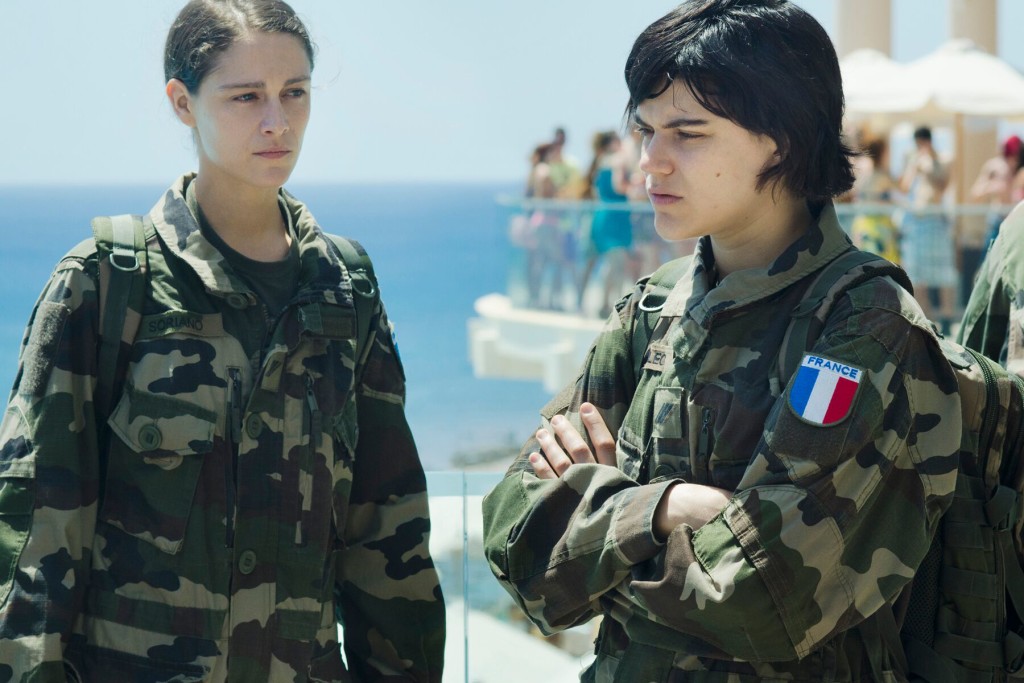
This week’s video pick salutes the  San Francisco International Film Festival, now underway.  From last year’s SFFILMFestival, the topical French drama The Stopover explores the after-effects of combat in contemporary warfare. We also get a female lens on the acceptance of women in combat roles and on sexual assault in the military from the co-writer and co-directors, the sisters Delphine and Muriel Coulin.

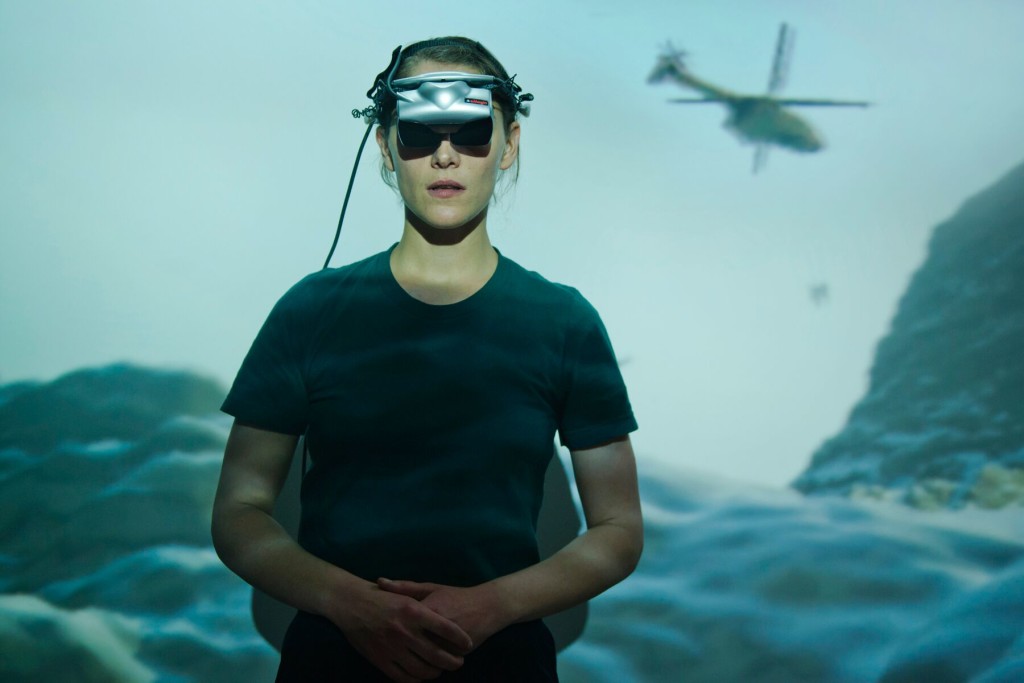
The Stopover’s title refers to a French combat unit’s three-day stay in a luxurious Cypriot seaside resort. The unit, heading back to France after a tour in Afghanistan, is supposed to decompress at the resort. They are required to engage in group therapy, enhanced by virtual reality goggles. As with any group of gung-ho and mostly macho twenty-somethings, talk therapy is not their thing. But they sure need decompression, because their service included a terrifying engagement in which they lost three comrades.

This combat unit includes women, and The Stopover focuses on Aurore (Ariane Labed) and Marine (Soko). The strong and purposeful Aurore has physically recovered from an emotionally (and literally) scarring experience in Afghanistan. The more impulsive Marine, on the other hand, is not a deep thinker, but has a serious chip on her shoulder.

Everyone in the unit wound very, very tightly. Some are fighting to keep psychotic outbursts from bubbling over. Plopping these guys amidst tourists and locals in such an absurdly and artificially tranquil setting creates a powder keg. From start to finish in The Stopover, we’re waiting for any and every character to snap or erupt.

Ariane Labed in THE STOPOVER photo courtesy of SFFILM
Ariane Labed in THE STOPOVER
photo courtesy of SFFILM

Labed is excellent as Ariane, who feels need to suppress her PTSD, to mask it with rowdy fun and, finally, to confront it. Labed won Best Actress at the Venice Film Festival for a completely different kind of movie in 2010, the absurdly goofy Attenberg, which I also watched at the San Francisco International Film Festival.

I just can’t take my eyes of Soko, who is a French pop music star. Here, as Marine, she has a feral fierceness. Soko is also a force of nature in the excellent period drama Augustine. She brings a simmering intensity to the screen, in contrast to her offbeat, ironic pop music.
The rest of the cast is excellent, too, particularly Karim Leklou as a sergeant with an unresolved issue or two.

The Stopover is available to stream on iTunes.  It’s an engrossing and powerful film.