NOIR CITY comes to your home

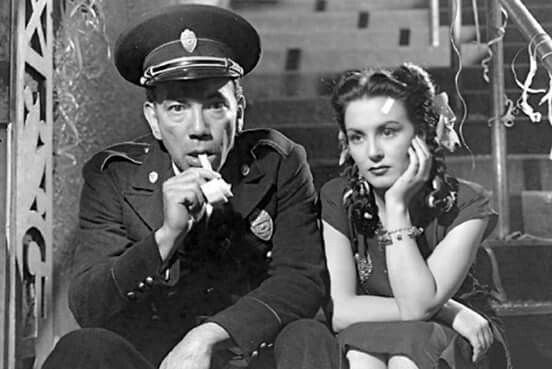
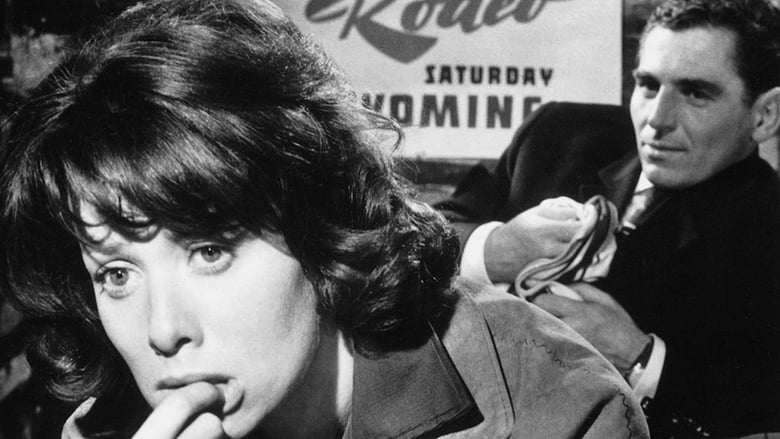
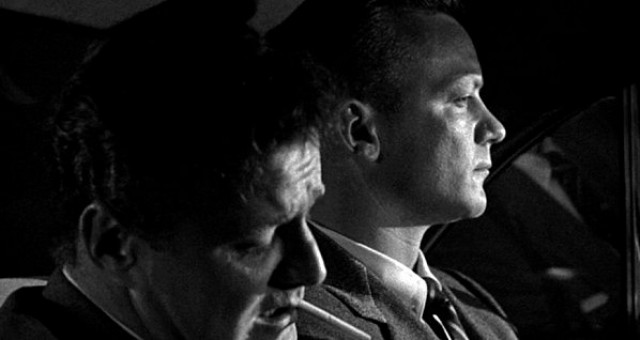
Ingmar Zeisberg and Helmut Wildt in BLACK GRAVEL

Here’s a once-in-a-pandemic film noir experience, the opportunity to see classic film noir that you can’t see anywhere else. The Noir City International at the AFI Silver is available to stream through November 29.

Noir City is the annual festival of the Film Noir Foundation, spearheaded by its founder and president, the Czar of Noir, Eddie Muller. The Foundation preserves movies from the traditional noir period that would otherwise be lost. Noir City often plays newly restored films and movies not available on DVD or streaming.

This January, as usual, I attended this year’s festival, sharing the program with a thousand other film fans in a vintage movie palace, San Francisco’s Castro Theatre. In normal years, Eddie Muller then takes the program on the road, but the pandemic eliminated the satellite Noir City mini-fests in other cities. Good news – this year’s festival program is streaming through the AFI Silver so everyone can watch it at home.

This year’s program is Noir City International 2 – l focusing on international film noir, as it did so successfully six years ago. Then I was enthralled by the Argentine Bitter Stems and the Swedish Girl with Hyacinths, and must admit that I had never even imagined that vintage film noir from those nations existed. This year’s fest brings us titles from Argentina, France, Germany, Korea, Japan, Czechoslovakia, Italy, and Poland.

One of best things about Noir City is the opportunity to see films that are not available to stream. This year Noir CIty is outdoing itself by presenting SIX films that can’t found on a streaming platform, most of them impossible to see outside of Noir City in any format.

  • Black Gravel (West Germany 1961)
  • The Black Vampire (Argentina 1953)
  • …And the Fifth Horseman Is Fear (Czechoslovakia 1965)
  • The Devil Strikes at Night (West Germany 1957)
  • Panique (France 1947)
  • Razzia (France 1955)

Pale Flower, Ashes and Diamonds and Any Number Can Win are only available to stream periodically on the Criterion Channel.

“Difficult to find” doesn’t mean “obscure”. The program includes films directed by Michelangelo Antonioni, Jean-Pierre Melville and Roebert Siodmak and starring Ingrid Bergman, Jean Gabin, Alain Delon and Jean-Paul Belmondo.
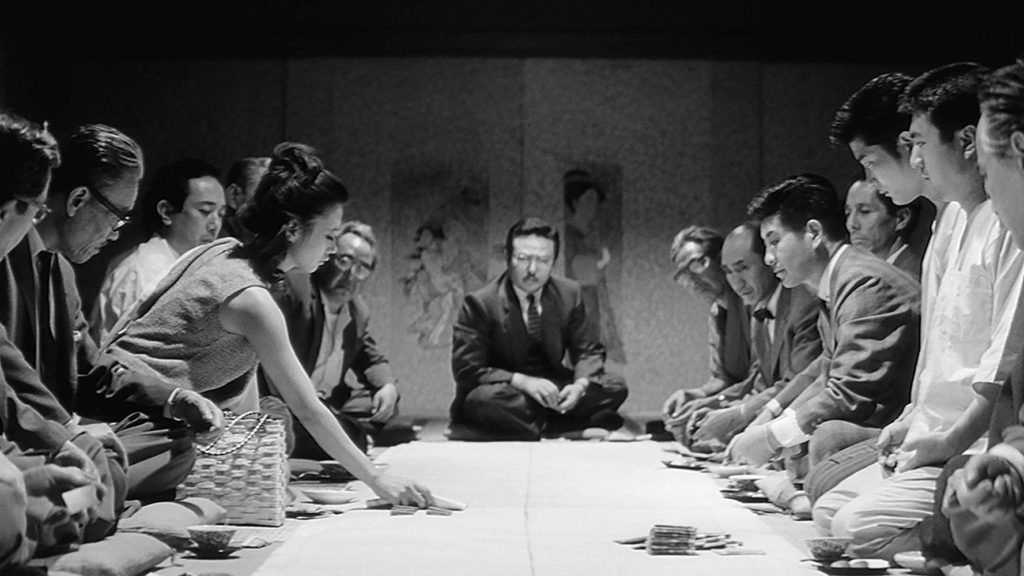
PALE FLOWER

My personal favorites on the program:

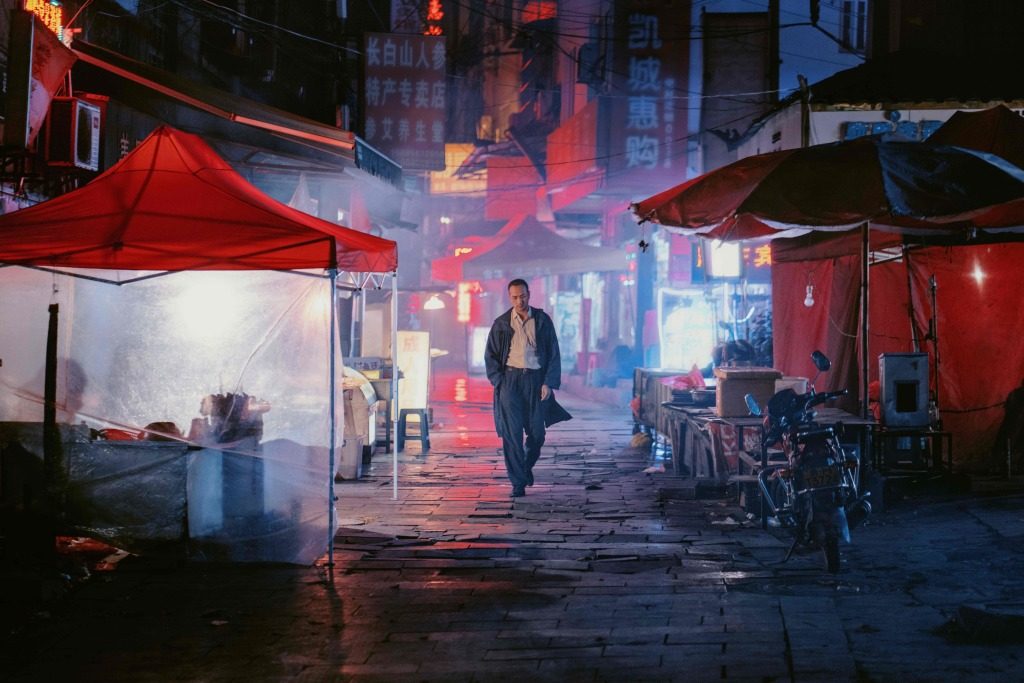
  • Pale Flower: Writer-director Masahiro Shinoda’s masterpiece is a slow burn that erupts into breathtaking set pieces. This is pioneering neo-noir; its look and feel is as different from classic noir as are Elevator to the Gallows and Blast of Silence.
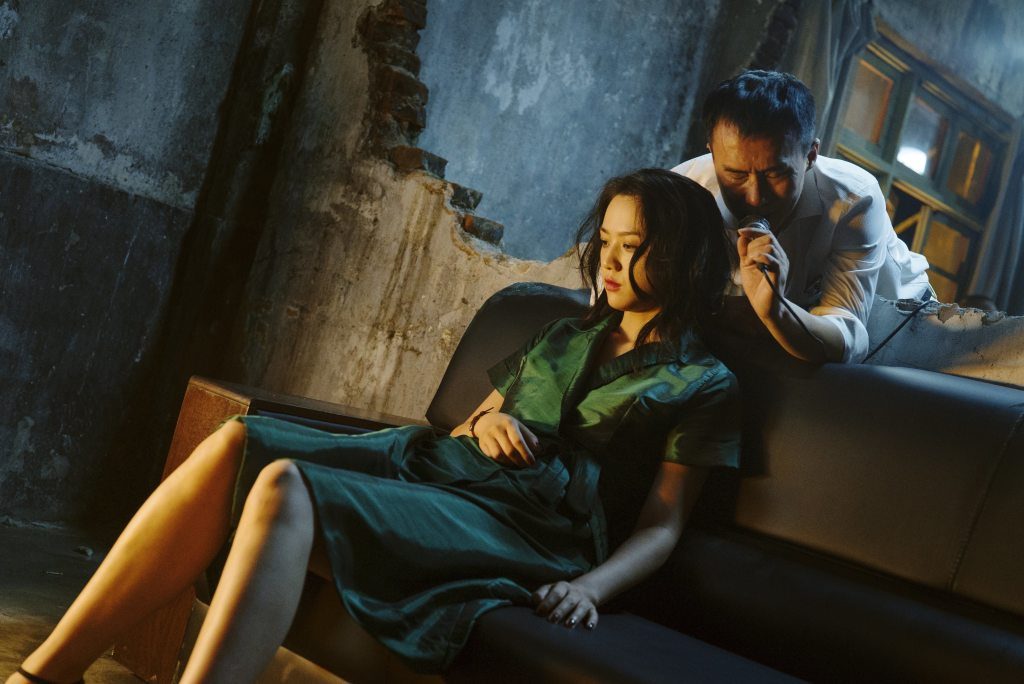
  • Black Gravel: This tragic romance is set in post-war Germany, a Petri dish for hustlers. Rarely has a movie plot swung as rapidly between They’re gonna get caught – No, they’re gonna get away with it – No, They’re gonna get caught – No, they’re gonna get away with it – No, They’re gonna get caught – No, they’re gonna get away with it – No, They’re gonna get caught.
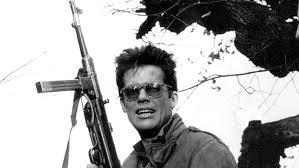
  • Ashes and Diamonds: Auteur Andrzej Wajda‘s filmmaking gifts are on display in this Hit Man Finds Love tale, set as the Polish Resistance battles for a place in post-war Poland. As kinetic and unpredictable as James Dean, Zbigniew Cybulski makes for an irresistibly charismatic leading man.
  • The Black Vampire: In this often trippy 1953 remake of Fritz Lang’s M, Nathán Pinzón is AT LEAST AS GOOD as was Peter Lorre in the original.

The offerings also include Leave Her to Heaven with Gene Tierney as the most disturbing female villain in film noir and Detour with Ann Savage as the grungiest and most predatory. The Korean The Housemaid is so bizarre as to defy description. And the coolest middle-aged guy in cinema, Jean Gabin, stars in Razzia and Any Number Can Win.

DO NOT MISS this rare opportunity. Individual screenings are $12 and the Festival Pass is $125. Explore the program and get your pass or tickets.
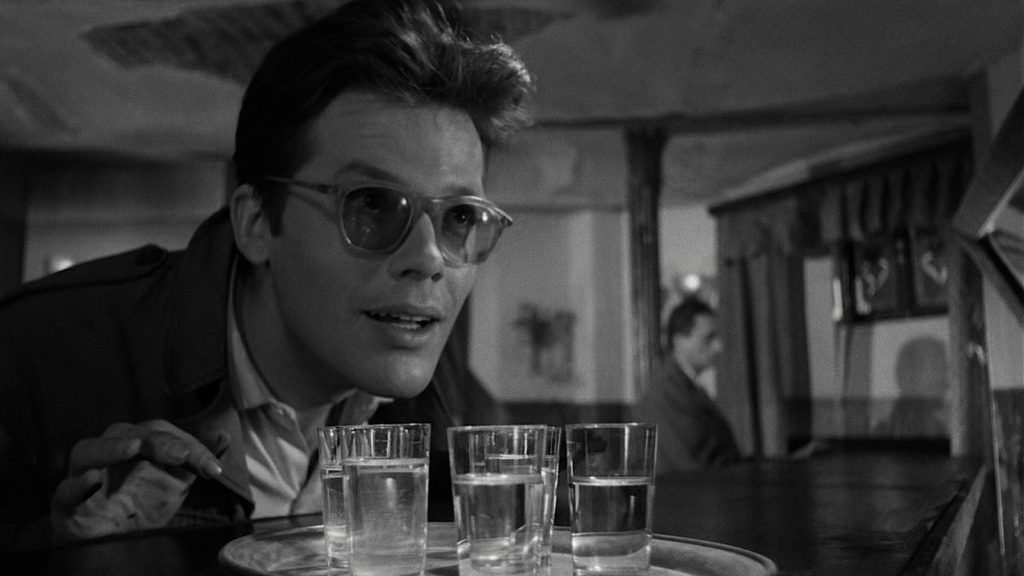
Zbigniew Cybulski in ASHES AND DIAMONDS

coming on TV: NIGHTFALL

NIGHTFAL

Here’s a rare chance to watch a highly recommended film on my list of Overlooked Noir. Nightfall (1957) is not available to stream, but it plays Saturday and Sunday on Turner Classic Movies.

The set-upl: How’s this for a hard luck guy? Aldo Ray is camping in the Tetons with a buddy, when two bank robbers careen into a car accident, kill his buddy and frame poor Aldo. Aldo manages to escape, and, in the chaos, the crooks misplace their bag of loot, which is soon obscured by an early Wyoming snowfall. Now both Aldo and the robbers have to wait for the spring thaw to recover the treasure. In the mean time, Aldo – now in hiding from both the police and the outlaws – skips from town to town.

As the movie opens, we’re in a neon-lit LA night. Just as Ray meets a beautiful but broke model (Anne Bancroft), the bad guys appear with lethal intent. Brian Keith made for one coldblooded bank robber, and his partner (Rudy Bond with a machine gun laugh) is psychotically blood thirsty. Ray and Bancroft go on the run through LA, and then head for Wyoming to locate the money. Unknown to both the good guys and the bad guys, James Gregory (most well-remembered as Inspector Fran Kruger in TV’s Barney Miller) is also closing in on the loot on behalf of the bank’s insurer.  It’s a crackerjack plot, adapted from a novel by David Goodis (Dark Passage, The Burglar).  The final confrontation involves a death by snow plow.

The LA scenes are dark and shadowy, no surprise since Nightfall was directed by noir master Jacques Tourneur (Out of the Past). Tourneur evokes Hitchcock with a set piece when the killers hunt Ray and Bancroft at a poolside fashion show where Bancroft is on the runway. Bancroft bolts, and Ray has to pick her up because she can’t run in her long, clingy gown.

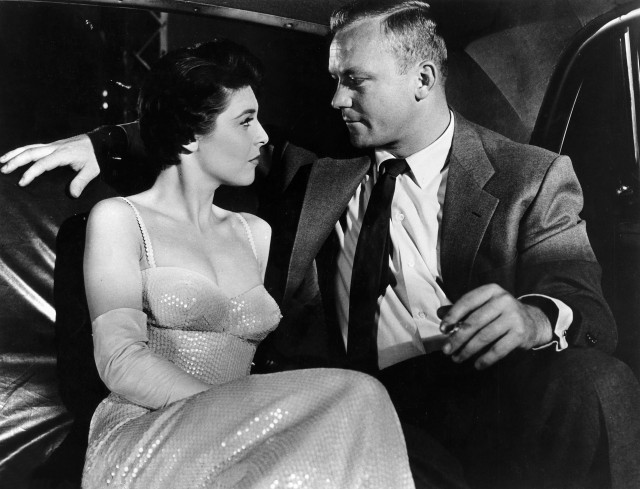
Anne Bancroft and Aldo Ray in NIGHTFALL

An important part of the appeal of Nightfall is the chemistry between Ray and Bancroft. Ray is a sympathetic Everyman, trying to make the best out of a hopeless circumstance. Bancroft was 31, ten years before her Mrs. Robinson in The Graduate, and very believable as a stunning model down on her luck. Because of the Production Code of the time, these two spend a lot of time NOT having sex when it’s clear that they SHOULD BE having sex. Bancroft purrs to Ray, “You’re the most wanted man I know”.

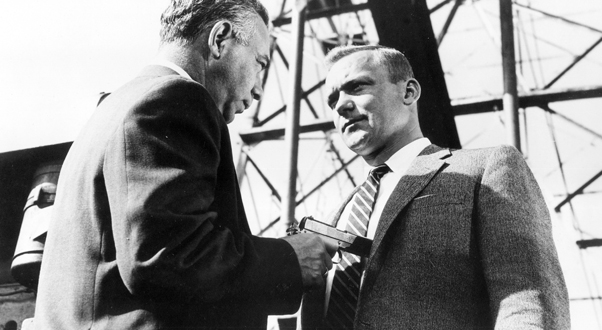
Rudy Bond and Aldo Ray in NIGHTFALL

ASHES AND DIAMONDS: a killer wants to stop

Zbigniew Cybulski in ASHES AND DIAMONDS

Coming up tomorrow night on Turner Classic Movies, a masterful director and his charismatic star ignite the war-end thriller Ashes and Diamonds, set amidst war-end treachery. It’s one of my Overlooked Noir.

It’s the end of WW II and the Red Army has almost completely liberated Poland from the Nazis. The future governance of Poland is now up in the air, and the Polish resistance can now stop killing Germans and start wrestling for control. Maciek (Zbigniew Cybulski) is a young but experienced soldier in the Resistance. His commanders assign him to assassinate a communist leader.

Maciek is very good at targeted killing, but he’s weary of it. As he wants out, he finds love. But his commander is insisting on this one last hit.

This is Zbigniew Cybulski’s movie. Often compared to James Dean, Cybulski emanates electricity and unpredictability, Unusual for a leading man, he often wore glasses in his screen roles. He had only been screen acting for four years when he made Ashes and Diamonds. Cybulski died nine years later when hit by a train at age forty,

Zbigniew Cybulski in ASHES AND DIAMONDS

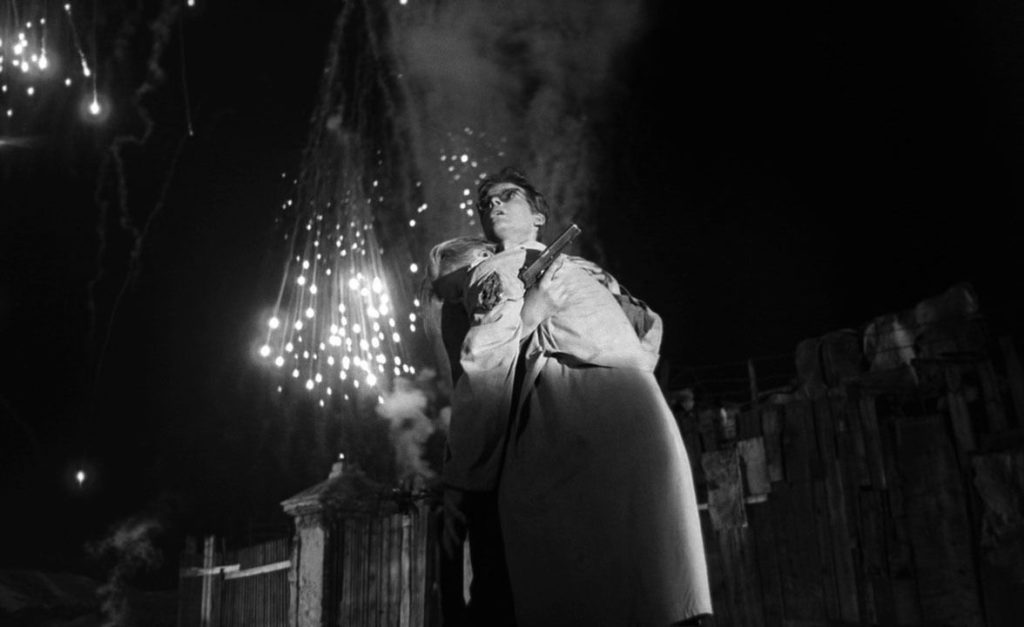
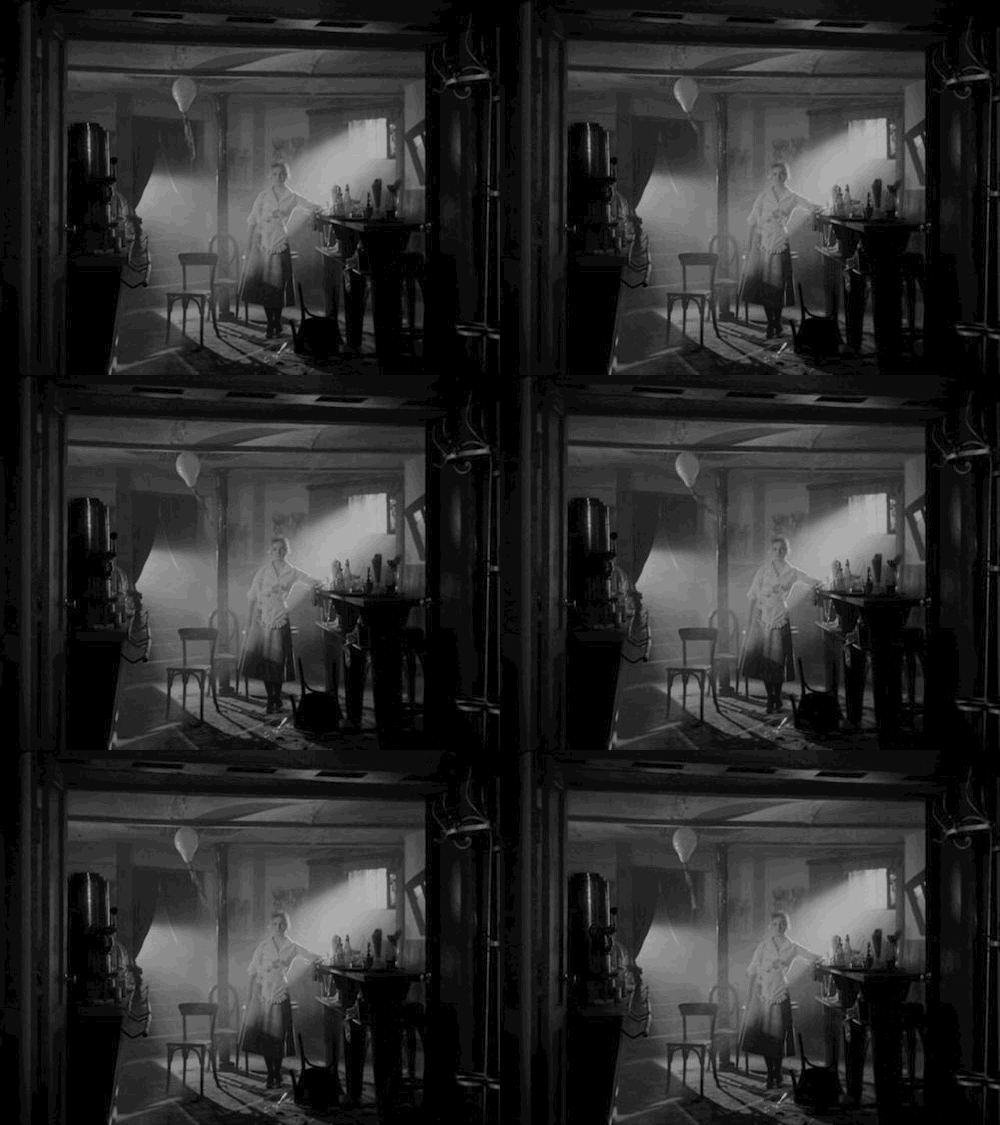
Andrzej Wajda fills the movie with striking visuals, such as viewing Maciek’s love interest, the waitress Krystyna (Ewa Krzyzewska), alone amidst the detritus of last night’s party, through billows of cigarette smoke. Wajda’s triumphant signature is, literally, fireworks at the climax; the juxtaposition of the celebratory fireworks with Maciek’s emotional crisis is unforgettable.

Ewa Krzyzewska in ASHES AND DIAMONDS

Wajda adapted a famous 1948 Polish novel into this 1958 movie. In the adaptation, the filmmaker changed the emphasis from one character to another.

Ashes and Diamonds was the third feature for Andrzej Wajda, who became a seminal Polish filmmaker and received an honorary Oscar. US audiences may remember his 1983 art house hit Danton with Gerard Depardieu.

TCM will be preceding Ashes and Diamonds with the documentary Wadja by Wadja, which I haven’t seen, but I will be recording. Ashes and Diamonds can be streamed from Amazon and iTunes. It was featured at the 2020 Noir City film festival.

Zbigniew Cybulski in ASHES AND DIAMONDS

THE BURNT ORANGE HERESY: old dogs Jagger and Sutherland light up a talky neo-noir

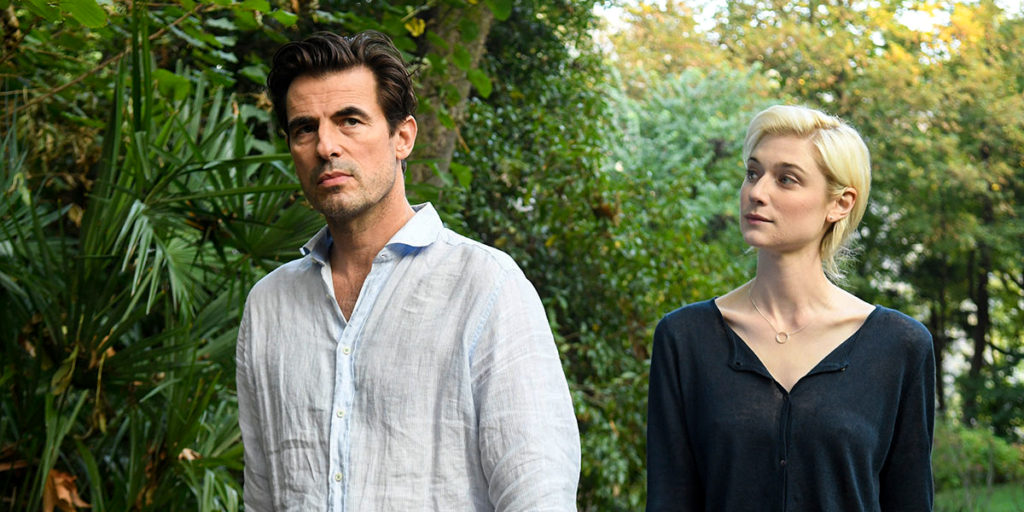
Klaes Bang and Elizabeth Debicki in THE BURNT ORANGE HERESY. Photo courtesy of Cinequest.

In the neo-noir The Burnt Orange Heresy, a shady art critic (Klaes Bang) picks up an adventuresome hottie (Elizabeth Debicki) and is enlisted by a menacing zillionaire (Mick Jagger) to scheme out a painting from a reclusive painter (Donald Sutherland). This being a neo-noir, things don’t go as the critic has planned and it takes him too long to realize that he is the sap in the story.

Klaes Bang (The Square) is just made to play that handsome charmer who is just Up To No Good, the kind of role that would have gone to Zachary Scott in the 1940s. But in The Burnt Orange Heresy, Debicki, Sutherland and Jagger are each so compelling, and their characters are so rich, that they completely overshadow Bang’s critic.

This is also a very talky movie, too much so. All the yakking and Bang’s unrelatability drag down The Burnt Orange Heresy and keep it from engaging the audience. relatibility

Sutherland has such a sparkle as the mischievous painter, and it may be easier to spot it now in the aged actor than forty years ago in MASH or Animal House.

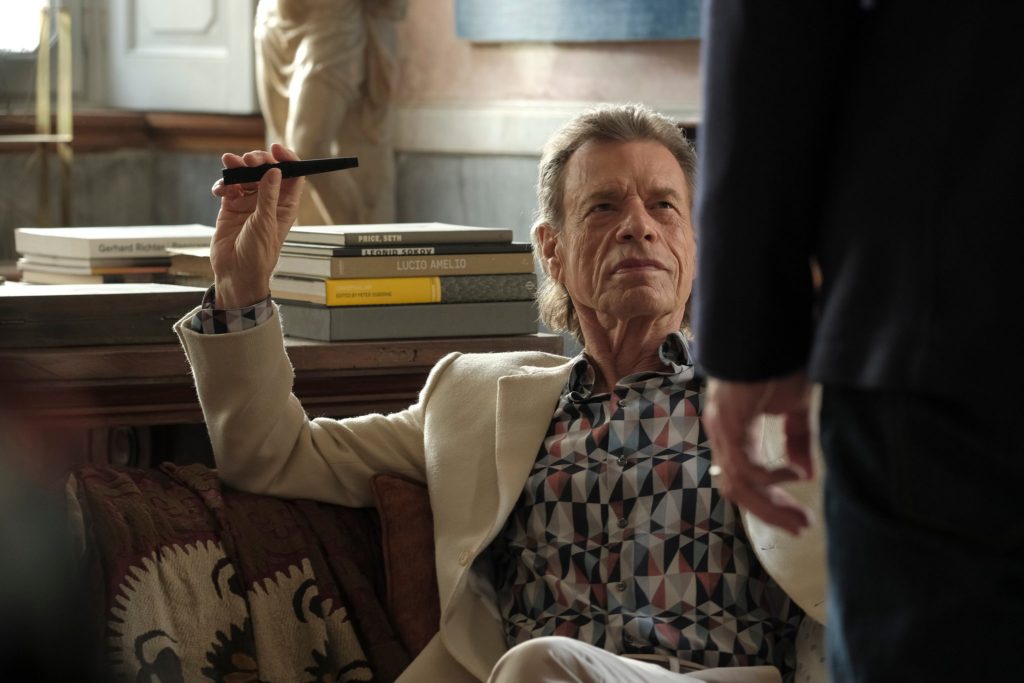
Mick Jagger in THE BURNT ORANGE HERESY

The real surprise here is Mick Jagger. This character, a rich and utterly masterful string-puller, is well within Jagger’s acting range and he nails it. After all, as an actor in fictional narratives, he is best known for two of the very worst movies of 1970: Ned Kelly and Performance. But here, Jagger employs his unmatched worldliness to inform this performance (and he makes great use of his trademark sneer and predatory smile, too). Jagger and Sutherland are probably the two best reasons to see this movie.

I saw The Burnt Orange Heresy at Cinequest. I expect it to be released theatrically in the Bay Area in the next few weeks.

NOIR CITY’S fiesta of Mexican noir

Anita Blanch and Pedro Armendáriz in NIGHT FALLS (LA NOCHE AVANZA)

This year’s Noir City had an international theme and was highlighted by an all day noirathon of four, count ’em, FOUR classics from a storied era in Mexican cinema. This Fiesta of Mexican Noir was hosted by the Film Noir Foundation’s Eddie Muller and Daniela Michel, an expert preservationist and historian of Mexican cinema and the founder and Director General of the Morelia International Film Festival.

Michel presented films by all three of the pillars of the Golden Age of Mexican cinema – Julio Bracho, Emilio Fernandez, and the Mexican director most identified with noir – or cine negro – Roberto Gavaldón.

Daniela Michel and Eddie Muller

Here’s the program:

  • In the deliriously entertaining Night Falls (La Noche Avanza) (1952), Pedro Armendáriz plays a ladykiller who treats his women horribly – and is begging for a noirish downfall. Night Falls was directed by Roberto Gavaldón, the Mexican director most well-known for film noir. In a uniquely Mexican touch of noir torture, waterboarding is performed with tequila. Stay to the end for for cinema’s act of greatest canine revenge.
  • Julio Bracho’s Another Dawn (Distinto Amancer) (1943) is a paranoid thriller about a heroic labor organizer (Pedro Armendáriz again) who has the evidence to expose corruption by the PRI, Mexico’s ruling party for 70 years.
  • In Bracho’s Twilight (Crepusculo) (1945), a surgeon is tormented by an obsession, and then by guilt. When former lovers – now married to others – are isolated together in a weekend house party during a thunderstorm, it’s inevitable this concentrated passion, obsession and betrayal is going to explode.
  • Salón México(1949) is an unusual contemporary noir directed by Emilio Fernandez, more often known for movies with rural and historical settings, Salon Mexico is a cabaretera, a uniquely Mexican genre about a woman with a heart of gold (Marga López here) who is forced by poverty to work as a singer in a sketchy nightspot or even as a prostitute. It’s also a time capsule of 1949 Mexico City.

Follow the links for my commentary on the films, images and where to find them.

Miguel Inclán and Marga López in SALON MEXICO

LONG DAY’S JOURNEY INTO NIGHT: memory of a doomed romance and an epic plunge into neo-noir


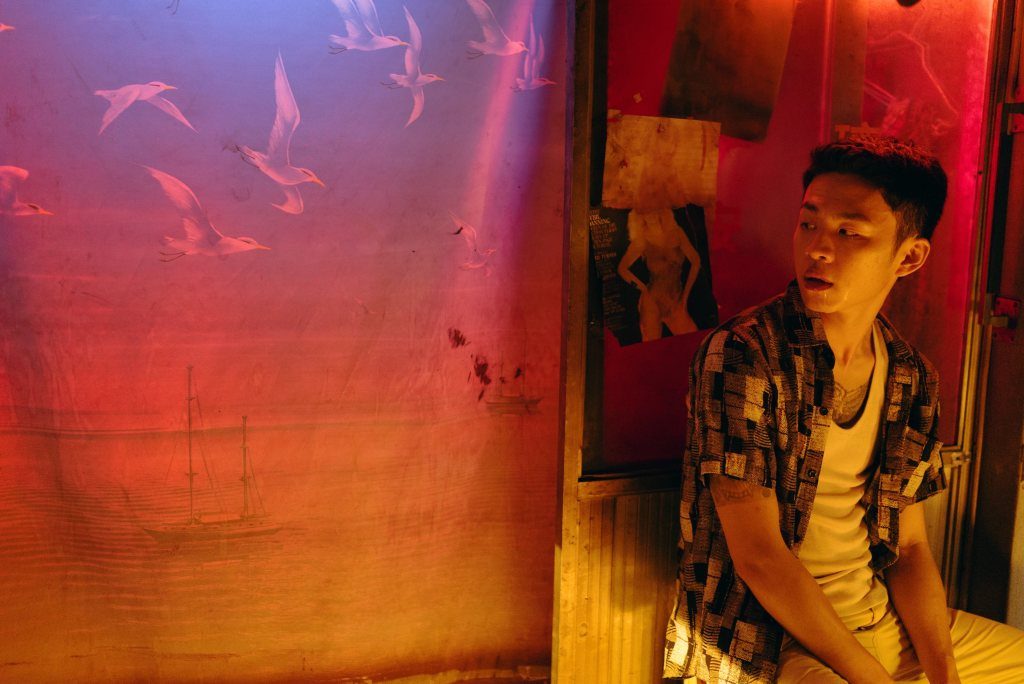
Jue Huang in a scene from Long Day’s Journey Into Night. Photo by Bai Linghai, courtesy Kino Lorber.

In the singular Chinese neo-noir Long Day’s Journey Into Night, Luo (Jue Huang) embarks on a search to find the mysterious woman he dallied with twenty years before. As he follows the clues, he plunges into an atmospheric underworld of dripping darkness and people who don’t want to talk. Along the way, he encounters the sultry, down-on-her-luck floozy Wan Qiwen (Wei Tang), whose lethal, fedora-adorned boyfriend does not want to relinquish her to Luo’s quest.

After a low burn beginning, Luo’s search reaches its climax in a spectacular ONE-HOUR single shot. It’s nighttime and both the exteriors and interiors are lit to evoke a surreal world stained by noirish danger. The shot requires the camera to follow Luo and Wan Qiwen, together and separately, inside and outside, between various levels and twice past a nervous horse, all while other characters interact with them. It’s right up there with the magnificent shots in Children of Men, Goodfellas, Touch of Evil, The Secret in Their Eyes, Atonement, Gun Crazy and the one-shot film Victoria.

Long Day’s Journey Into Night is the triumph of writer-director Bi Gan, who never forgets that he is telling his story in the medium of cinema. Long Day’s Journey Into Night is so atmospheric that sometime we feel the dankness of his set designs. Repeatedly, the richest of colors stand out against noirish backdrops. Wan Qiwen is unforgettable in her satiny emerald green dress, lit by Luo’s headlights as he tracks her by automobile in a dark tunnel. (Bi Gan has acknowledged his admiration for Wong Kar-wai, and Bi Gan has created a film as visually intoxicating as Wong Kar-wai’s.) Ban Gi used three directors of photography; the second cinematographer prepared the final shot for the third. There are recurring themes of spinning rooms, flooded floors and dripping ceilings, single flames and sparklers. The soundtrack centers on ambient sound, with very few musical cues.


Wei Tang, Yongzhong Chen in a scene from Long Day’s Journey Into Night. Photo by Liu Hongyu, courtesy Kino Lorber.

All of this enhances the story of Luo’s obsession with a doomed romance (and possibly more than one doomed romance). He can’t sure that what he hears is true – or even that what he sees is real. It’s a world filled with dissolute and murderous men and unreliable women. Luo asks a man, “Is that child yours?” and is answered, “She was a master story teller” (not a complement in this instance).

Bi Gan says, “It’s a film about memory”. Indeed, he has Luo say, “The difference between film and memories is that film is always false. They are composed of a series of scenes. But memories mix truth and lies. They appear and vanish before our eyes .”

That final shot is in 3D. Bi Gan says, “After the first part (in 2D), I wanted the film to take on a different texture. But I believe this three-dimensional feeling recalls that of our recollections of the past. Much more than 2D, anyway. 3D images are fake but they resemble our memories much more closely.


Hong-Chi Lee in a scene from Long Day’s Journey Into Night. Photo by Liu Hongyu, courtesy Kino Lorber.

This film is entirely written by Bi Gan, with no apparent relationship to the identically-titled 1962 film of the Eugene O’Neill play, the famed four-hander with Katharine Hepburn, Ralph Richardson, Jason Robards and Dean Stockwell. The Mandarin title of Bi Gan’s film is literally Last Evenings On Earth, a title which came from a short story by Roberto Bolaño. Bi Gan just liked the title Long Day’s Journey into Night and thought that it fit the spirit of his film.

Long Day’s Journey Into Night is the biggest Chinese art house hit ever, and won an award at Cannes in 2018. It opens this weekend in the Bay Area.

Stream of the Week: FRANK & LOLA – Bad Girl or Troubled Girl?

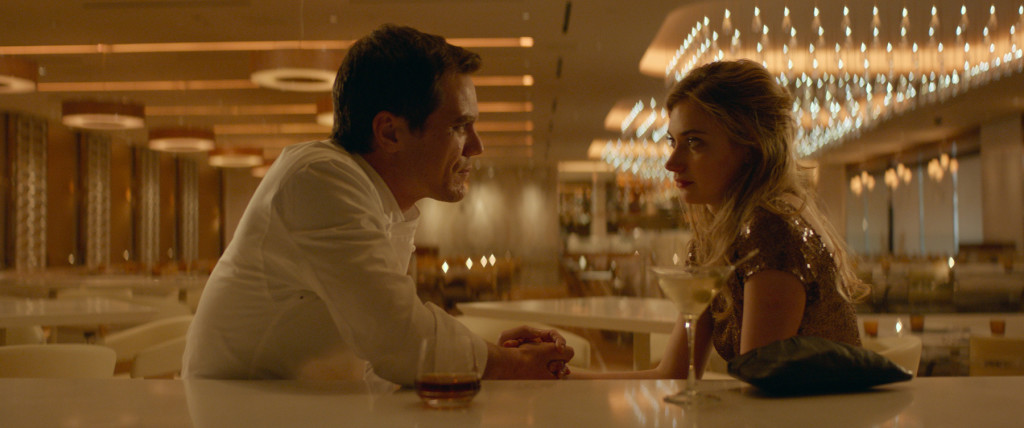
Imogen Poots with Michael Shannon in FRANK & LOLA. Photo courtesy of the San Francisco Film Society.
Michael Shannon and Imogen Poots in FRANK & LOLA.
Photo courtesy of SFFILM.

The San Francisco International Film Festival is underway, so this week’s video pick comes from the program of the 2016 festival. The absorbing neo-noir romance Frank & Lola opens with a couple lovemaking for the first time – and right away there’s a glimmer that he’s more invested than she is. Soon we’re spirited from Vegas to Paris and back again in a deadly web of jealousy.

Lola (Imogen Poots) is young and beautiful, a lively and sparkly kind of girl. Frank (the great Michael Shannon) is older but “cool” – a talented chef. He is loyal and steadfast but given to possessiveness, and he says things like, “who’s the mook?”.

In a superb debut feature, writer director Matthew Ross has invented a Lola that we (and Frank) spend the entire movie trying to figure out. Imogen Poots is brilliant in her most complex role so far. She’s an unreliable girlfriend – but the roots of her unreliability are a mystery – is she Bad or Troubled? A character describes her with “She can be very convincing”, and that’s NOT a complement. Poots keeps us on edge throughout the film, right up to her stunning final monologue.

Shannon, of course, is superb, and the entire cast is exceptional. There’s a memorable turn by Emmanuelle Devos, the off-beat French beauty with the cruel mouth. Rosanna Arquette is wonderful, as is Michael Nyqvist from the Swedish Girl With the Dragon Tattoo movies. I especially liked Justin Long as Keith Winkleman (is he a namedropping ass or something more?).

Frank & Lola has more than its share of food porn and, as befits a neo-noir, lots of depravity. But, at its heart, it’s a romance. Is Lola a Bad Girl or a Troubled Girl? If she’s bad, then love ain’t gonna prevail. But if she’s damaged, can love survive THAT either? We’re lucky enough to go along for the ride.

I saw Frank & Lola in 2016 at the San Francisco International Film Festival. I liked it more than most and put it on my Best Movies of 2016Frank & Lola is now available to stream on Amazon Instant, iTunes, Vudu, YouTube and Google Play.

https://vimeo.com/188033673

NOIR CITY 2019 is here

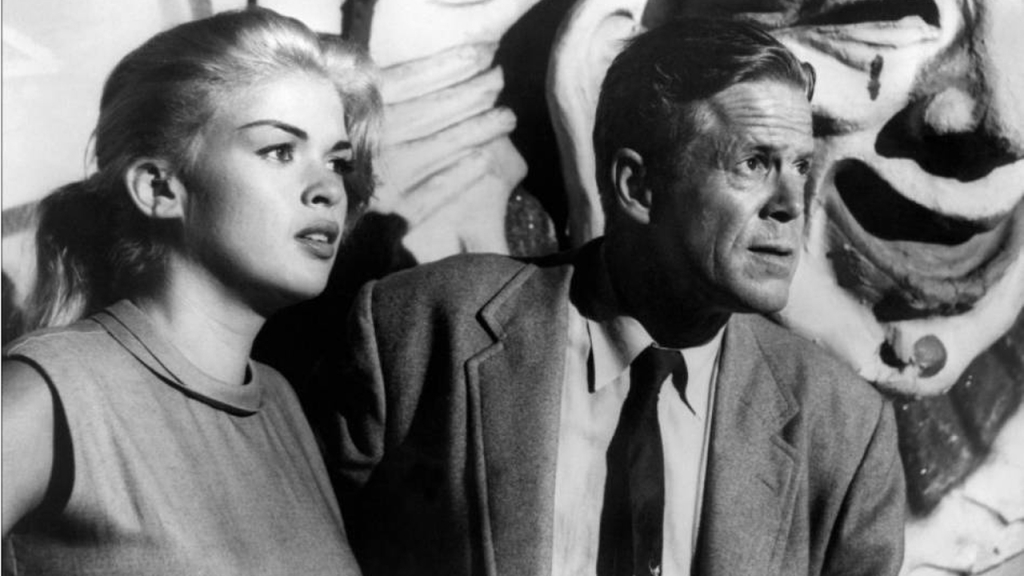
Jayne Mansfield and Dan Duryea in THE BURGLAR

The Noir City film fest, always one of the best Bay Area cinema experiences, opens this weekend in San Francisco. Noir City is the annual festival of the Film Noir Foundation, spearheaded by its founder and president Eddie Muller. The Foundation preserves movies from the traditional noir period that would otherwise be lost. Noir City often plays newly restored films and movies not available on DVD or streaming. And we get to watch them in a vintage movie palace (San Francisco’s Castro Theatre) with a thousand other film fans.

Eddie Muller, whom you should recognize as the host of Turner Classic Movies’ Noir Alley series, has programmed this year’s version as NOIR CITY Reveals the Dark Side of Mid-Century America.  The tagline is “Think the 1950s were buttoned-down and conservative? Think again.”  Trench coats and fedoras are not required (and no smoking, please), but, other than that, you’ll get the full retro experience in the period-appropriate Castro.

You can’t stream three of the very best films in the fest: Nightfall, Pushover and Blast of Silence.  And Trapped, The Well, The Turning Point, The Scarlet Hour and Murder by Contract are pretty much impossible to find in any format.  So, see it here or don’t see it at all.  Trapped has just been restored by the Film Noir FoundationThis year’s program features eight movies on The Movie Gourmet’s list of Overlooked Noir.

Allen Baron in BLAST OF SILENCE

My personal favorites on the program:

  • Two underrated noir masterpieces on the same double bill: Nightfall and The Burglar. Nightfall features smoldering chemistry between Aldo Ray and Anne Bancroft as they hunt for hidden loot while on the run themselves. The core of The Burglar is the stellar lead performance of Dan Duryea as a tortured and worn-out guy – with one deep loyalty. There are plenty of noir moments – lots of shadows, uplit faces in the darkness, amoral, grasping characters and not one, but two noir vixens – Jayne Mansfield and Martha Vickers.
  • The cop-yields-to-temptation double feature with Pushover and Private Hell 36. Tracking a notorious criminal, the cop (Fred MacMurray) in Pushover, follows – and then dates – the gangster’s girlfriend (“Introducing Kim Novak”) as part of the job, but then falls for her himself. He decides that, if he can double cross BOTH the cops and the criminal, he can wind up with the loot AND Kim Novak. (This is a film noir, so we know he’s not destined for a tropical beach with an umbrella drink.)
  • Another double feature, pairing the down-and-dirty Kiss Me Deadly and Stanley Kubrick’s groundbreaking Killer’s Kiss.
  • Sam Fuller and James Shigeta breaking ground by normalizing a Japanese-American protagonist in The Crimson Kimono.
  • The closing double feature with Sam Fuller’s brutal Underworld USA and that most emotionally bleak transition into neo-noir, the proto-indie Blast of Silence, which I’ve described as “a cauldron of seething hatred“.

Noir City runs from Friday, January 25 through Sunday, February 3. To see the this year’s Noir City program and buy tickets, go here. I’ll be there myself on this Friday and Saturday.

NOIR CITY: the great San Francisco festival of film noir

Make plans to attend Noir City film fest, always one of the best Bay Area cinema experiences, in San Francisco January 25-February 3.  Noir City is the annual festival of the Film Noir Foundation, spearheaded by its founder and president, the Czar of Noir, Eddie Muller. The Foundation preserves movies from the traditional noir period that would otherwise be lost. Noir City often plays newly restored films and movies not available on DVD or streaming. And we get to watch them in a vintage movie palace (San Francisco’s Castro Theatre) with a thousand other film fans.

The 2019 Noir City will focus on film noir in the 1950s – from just after the genre’s peak to its transition into neo-noir.  The festival tag line is, “Think the 1950s were buttoned-down and conservative? Think again.” The Film Noir Foundation has restored Trapped (1949), and the world premiere of the restored version will open the fest.  Think about it – you can be in the first movie theater audience to see Trapped in sixty-nine years.  Closing night will feature that most brutal and emotionally bleak of neo-noirs, Blast of Silence.

Three of the best films in the program are not available to stream, and five more are impossible to see outside of Noir City in any format. This year’s program features eight movies on The Movie Gourmet’s list of Overlooked Noir.

Noir City runs from Friday, January 25 through Sunday, February 3. To see the this year’s Noir City program and buy tickets, go here.

I’ll be posting a comprehensive Noir City preview on January 23. And you may run into me at Noir City as I cover the opening weekend.

NIGHTFALL, one of NOIR CITY’S highlights

Stream of the Week: THE AMERICAN FRIEND – Dennis Hopper and Robby Müller make things weird

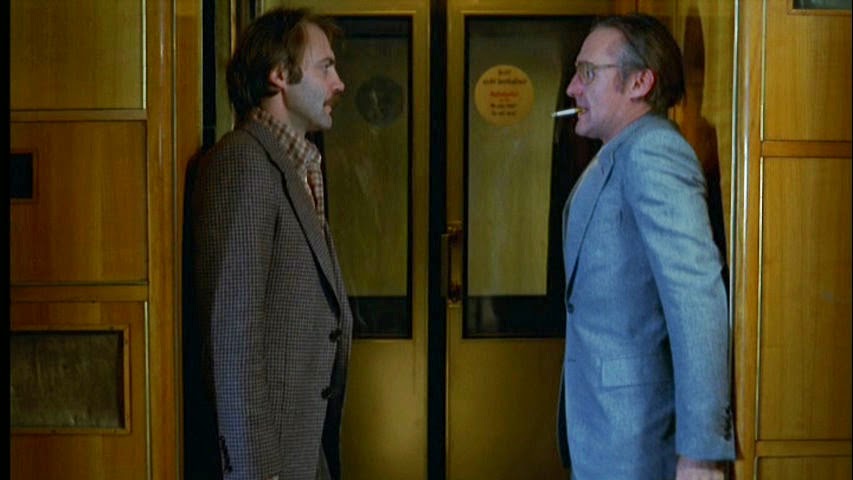
Bruno Ganz and Dennis Hopper in THE AMERICAN FRIEND

Dennis Hopper, in his Wild Man phase, brings electricity to the 1977 neo-noir The American Friend, an adaptation of the Patricia Highsmith novel Ripley’s Game. Highsmith, of course, wrote the source material for Strangers on a Train along with a series of novels centered on the charming but amoral sociopath Tom Ripley; her gimlet-eyed view of human nature was perfectly suited for noir.

German director Wim Wenders had yet to direct his art house hit Wings of Desire, his American debut Hammett or his masterpiece Paris, Texas. He had directed seven European features when he traveled to ask Highsmith in person for filming rights to a Ripley story.

In The American Friend, Zimmermann (Bruno Ganz) is a craftsman who makes frames for paintings; he dabbles in the shady world of art fraud, making antique-appearing frames for art forgeries. Tom Ripley (Dennis Hopper) entangles him in something far more consequential – a murder-for-hire.

As befits a neo-noir, Zimmermann finds himself amid a pack of underworld figures, all set to double-cross each other with lethal finality. In very sly casting by Wenders, all the criminals are played by movie directors: Sam Fuller, Nick Ray, Peter Lilienthal, Daniel Schmid, Gérard Blain, Rudolf Schündler, Jean Eustache. Nick Ray is especially dissolute-looking with his rakish eye-patch. Sam Fuller, in his mid-60s, insisted on performing his own stunt, with a camera attached to his body on a dramatic fall.

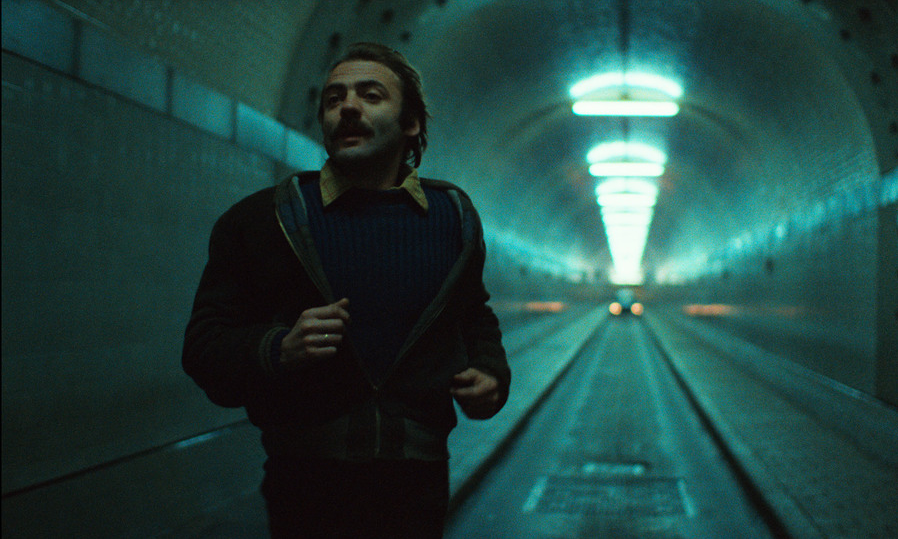
Bruno Ganz in THE AMERICAN FRIEND

As the murder scheme unfolds, there is a tense and thrilling set piece on a train, worthy of The Narrow Margin. Other set pieces include a white-knuckle break-in and the ambush of an ambulance.

Here’s one singular sequence. After a meeting with Ray, Hopper walks away from the camera along an elevated highway. Then Hopper is shown, still on the highway, in long shot from what turns out to be Fuller’s apartment, where Fuller interrupts the filming of a skin flick to deny having a guy shot on the Paris Metro. Then we see Hopper on an airplane, and then Ganz on a train. Finally, Ganz returns to a seedy neighborhood by the docks. It’s excellent story-telling – at once economical and showy and ultra-noirish .

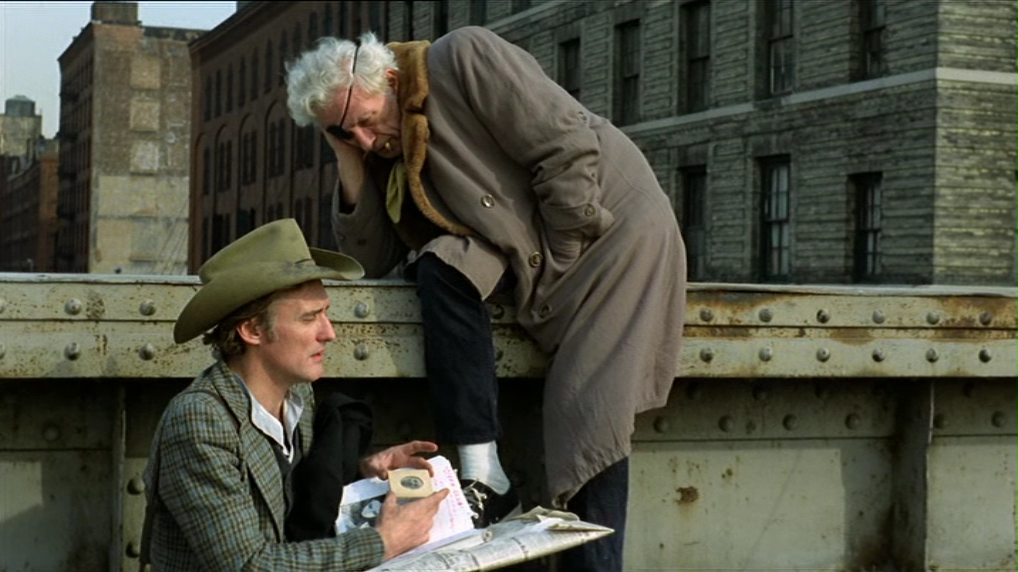
Dennis Hopper and Nick Ray in THE AMERICAN FRIEND

Cinematographer Robby Müller pioneered use of fluorescent lighting in The American Friend. The nighttime interiors have a queasy eeriness that matches the story perfectly. Müller, who died in 2018, was endlessly groundbreaking. He made the vast spaces of the Texas Big Bend country iconic in Paris, Texas. He was also responsible for the one-way mirror effect in Paris, Texas’ pivotal peepshow scene. For better or worse, he jerked the handheld camera in Breaking the Waves, spawning a legion of lesser copycats. Müller gave a unique look to indie movies from Repo Man to Ghost Dog; The Way of the Samurai.

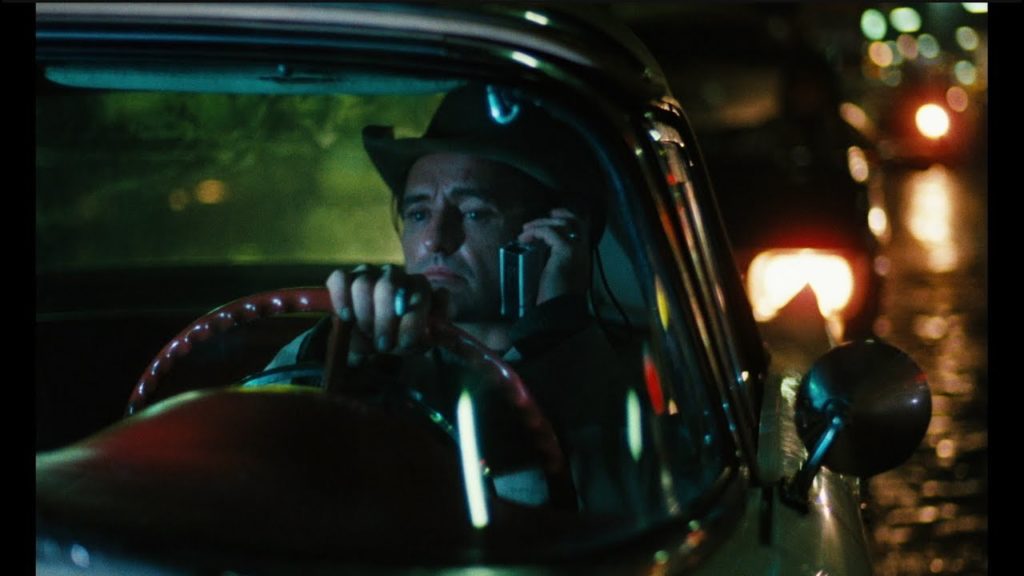
Dennis Hopper in THE AMERICAN FRIEND

Dennis Hopper in THE AMERICAN FRIEND

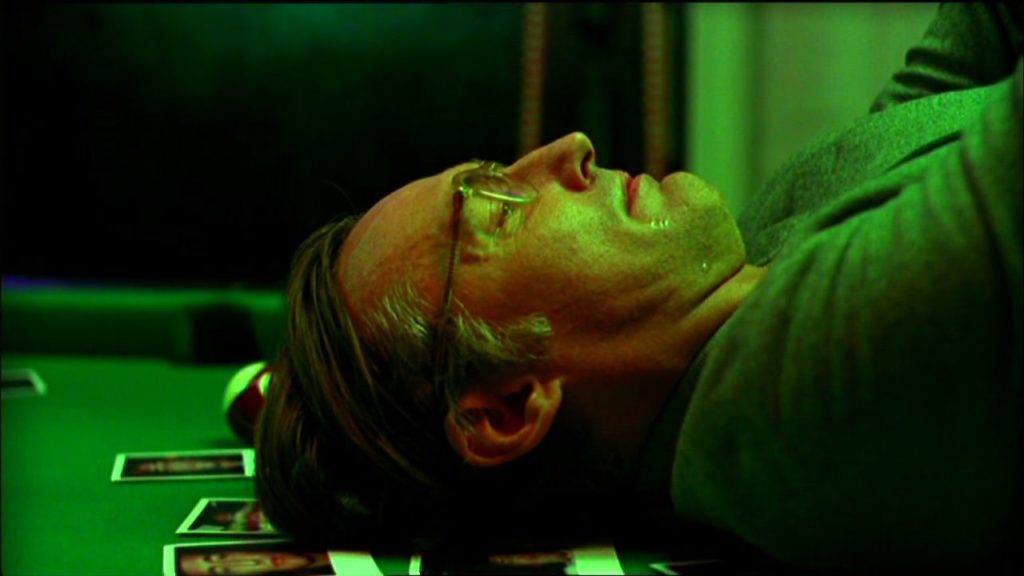
The American Friend was shot in 1977, in the midst of Dennis Hopper’s tumultuous drug abuse phase. He had just directed his notorious Lost Film The Last Movie and arrived in Europe from the Philippines set of Apocalypse Now!, where he was famously drug-addled and out of control. After getting Hopper’s substance abuse distilled down to only one or two drugs of choice, Wenders gave Hopper carte blanche to take chances in his performance, The American Friend being the only movie Tom Ridley in a cowboy hat. It paid off in a brilliant scene in which Hopper lies on a pool table, snapping selfies with a Polaroid camera; it’s a brilliant imagining of a sociopath in solitary, with no one to manipulate. John Malkovich, Matt Damon and even Alain Delon have played some version of Tom Ripley. Hopper’s is as menacing as any Ripley, and – by a long shot the most tormented. Courtesy of the Criterion Collection, here is Wenders on Hopper.

The American Friend is not a great movie. Zimmermann is motivated by a grave health issue, but too much screen time is wasted on that element, causing the movie to drag in spots. Movie auctions come with built-in excitement, but The American Friend’s art auction is pretty ordinary. And, other than Fuller, Ray and Blain, the directors are not that good as actors.

Still, the unpredictability in the high wire Dennis Hopper performance, the look of the film and the action set pieces warrant a look.

The American Friend can be streamed from Amazon, iTunes and Vudu. The late great FilmStruck offered some exceptional features, including a 38-minute interview with Wenders (excerpted above).