Photo caption: Geoff McFetridge in GEOFF MCFETRIDGE: DRAWING A LIFE. Credit: Andrew Paynter; courtesy of Gravitas Ventures.
The thoughtful documentary Geoff McFetridge: Drawing a Life examines a great artist who is decidedly not tortured. No ear-slicing, overdoses or bratty rampages here, just a guy whose disciplined lifestyle and commitment to his family subvert the stereotypes of an artist fueled by torment.
Where’s the interest in a movie about someone who creates without turbulence? This is a guy who is unusually fierce with both his artistic and family lives. He refuses to compromise his art; his attitude is, take it or leave it (although, as a good Canadian, he is polite about it). Just as tenaciously, he safeguards his family time.
At one point in Drawing a Life, McFetridge makes it explicit. He sees it as too easy to make everything else – good behavior, responsibilities – subservient to art. The achievement is to do great art while maintaining life balance.
You may not know McFetridge’s name, but you’ll recognize his art. McFetridge has exhibited in major cities around the world, collaborated with filmmakers like Spike Jonz and Sofia Coppola, and designed for brands like Apple, Hermes, Vans and Patagonia.
Director and co-writer Dan Covert has filled Drawing a Life with McFetridge’s art, and viewing the film is to be immersed in the art. The editing, by Covert and co-writer Eric Auli, is magnificent. Geoff McFetridge: Drawing a Life won the 2023 Audience Award for Documentary Feature at SXSW.
Geoff McFetridge: Drawing a Life opens in NYC theaters tomorrow, in LA next week and digitally on July 2.
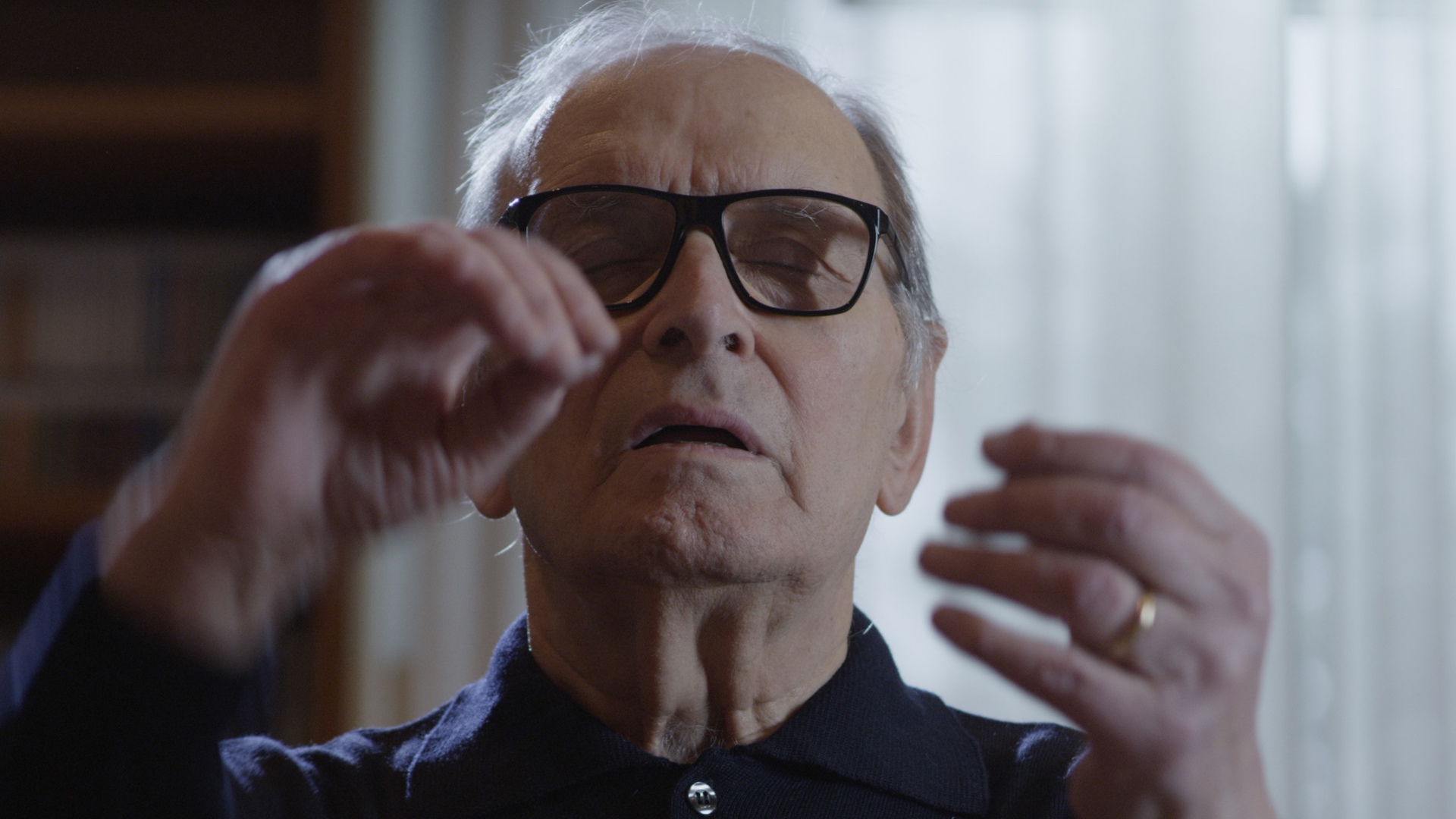
Photo caption: Ennio Morricone in ENNIO. Courtesy of Music Box Films.
Ennio Morricone is one of the greatest composers of movie music and certainly the most original, and the thorough and well-sourced documentary Ennio traces his life and body of work. We hear from Morricone himself and plenty of talking heads – many film directors, composers and musicians, from Clint Eastwood to Bruce Springsteen.
Morricone is the first artist I’ve heard of who aspired to become a doctor, but was forced by his father to play trumpet. During WW II in Italy, the Morricone family business was a small town brass band that entertained occupying German, then American troops, which the young Ennio found humiliating. Nevertheless, he followed his talent into a music conservatory, and evolved into composing.
Circumstances brought him a gig writing movie music and led to his groundbreaking scores for Sergio Leone’s spaghetti westerns A Fistful of Dollars, For a Few Dollars More and The Good, the Bad and the Ugly. Beginning with the whistle in A Fistful of Dollars, this now iconic music is described in Ennio as “cultural shock” “operatic” and a “whole new language”. We learn how Morricone built his score for The Good, the Bad and the Ugly around his interpretation of a coyote howl. Great stuff.
Ennio’s other highlights include:
His work with Joan Baez for Sacco & Vanzetti in 1971.
His 9/11 symphony.
How he was snubbed by the Oscars for The Mission and The Untouchables before wining for The Hateful Eight.
Ennio takes two hours and 36 minutes to comprehensively survey Morricone’s entire career, and I would have preferred a shorter film more focused on the highlights. There is an unnecessarily long exit ramp of accolades at the end.
BTW I recommend listening to Morricone himself conduct an orchestra’s performance of his music from The Mission; search YouTube for “morricone conducts the mission”
Ennio is now available to stream on Amazon, AppleTV and YouTube.
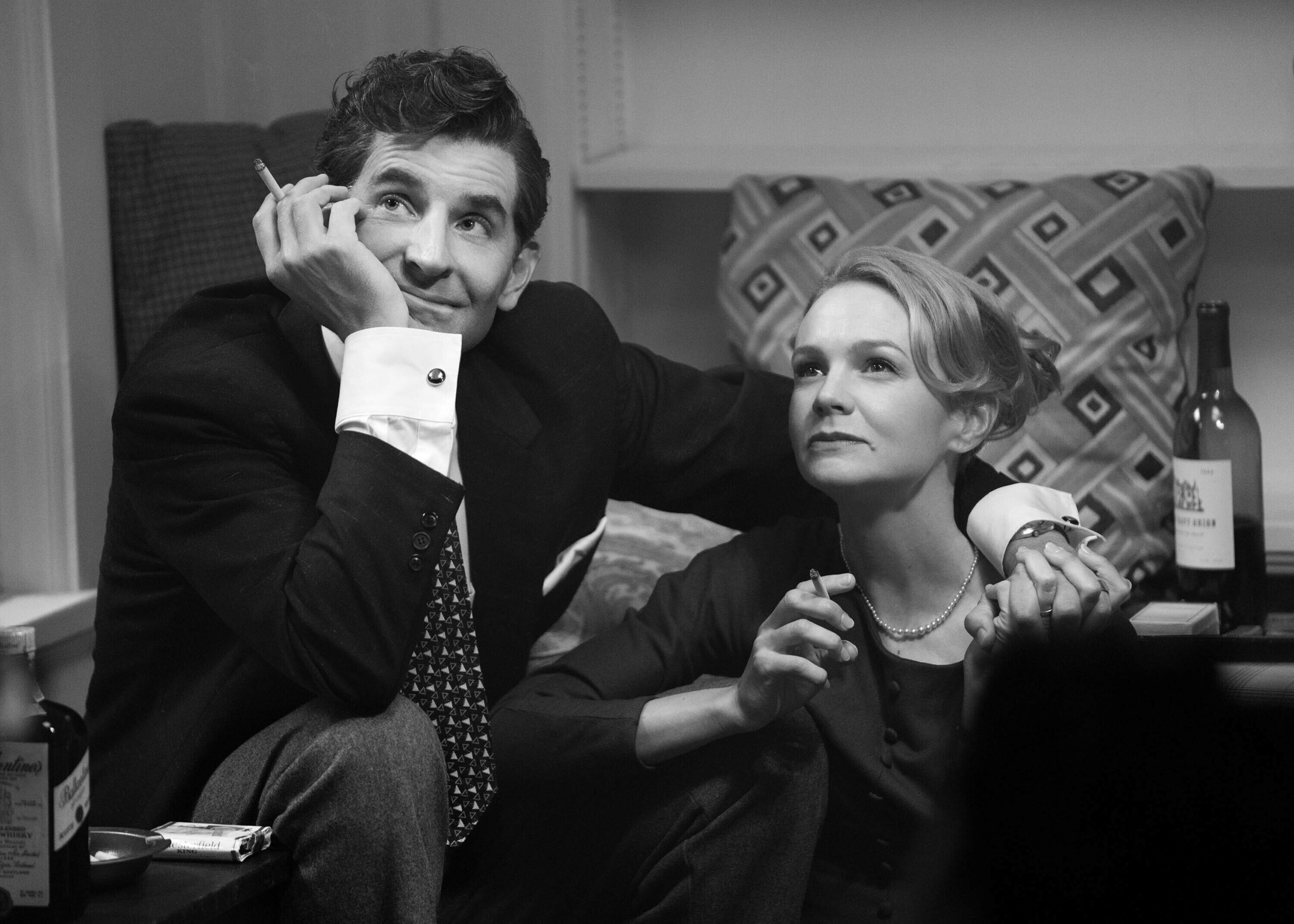
Maestro is the dramatization of the marriage between legendary conductor/composer Leonard Bernstein (Bradley Cooper, who also directed) and his wife Felicia (Carey Mulligan). As portrayed in Maestro, the marriage was shaped by three factors:
The two shared deep affection for each other, along with interests and sensibilities.
Bernstein’s career, driven by his genius, soared into superstardom.
In the first decades of the marriage, the mainstream would not accept a public figure who was gay or bisexual, which Lenny was.
Lenny was the prodigious talent and the celebrity, but Maestro is really Felicia’s story, because she faces the major conflict and because of Carey Mulligan’s sensational performance.
Indeed, although I’m lukewarm about Maestro, Mulligan is one of the two best reasons to see it. The second is a magical six-minute scene in which Bernstein conducts the London Symphony Orchestra in Mahler’s “Resurrection” Symphony No. 2 at Ely Cathedral in 1973; it is as spectacular cinema as we’ve seen (and heard) this year.
Bradley Cooper’s Lenny is a jumble of ebullience, creative energy and conflict-avoidance; he was always, perhaps compulsively, the life of the party. Sharing her life with a guy who sucked out all the oxygen in the room was enough of a roller coaster ride for Felicia. Felicia was pretty open-minded about her husband’s dalliances with other men; but his wanting to bring his male lover (Tommy Cothran, played by Gideon Glick) into her family was a bridge too far.
It seems that Lenny primarily valued Felicia for having his children and accompanying him to trendy parties; theNYT’s Manohla Dargis impeccably describes those as “those fabulously glamorous New York parties that mostly exist in old Hollywood films or in biographies of very important dead people.” He didn’t need her as a business adviser, a creative partner or even a muse, but she was much more than his beard. Her admiration for his artistry wasn’t that of a wannabe or a groupie – Felicia, as a working New York theater actor, was an accomplished artist herself.
So, as was common in the era, its was Lenny who defined their relationship, not he and Felicia together. Carey Mulligan inhabits a character who enjoys the initial exuberance and who slowly observes that Lenny is not going to deliver what she believed that he originally committed to.
Bradley Cooper is an excellent director, as demonstrated by A Star Is Born. Here, he is very cinematic, switching aspect ratios and toggling between black and white and color.
Sarah Silverman is delightful in a very small part as one of Felicia’s friends.
Back when the trailer was released, there was a tempest in a teapot about Cooper’s prosthetic nose, to make him resemble Bernstein, a familiar figure. Bernstein’s his family stepped in and quelled the silliness. But, I was distracted by another prosthetic, the folds of wattles and neck fat on Cooper playing the old Bernstein
I’m decidedly not a fan of classical music (although I did like Amadeus); The Wife likes classical music, and she liked Maestro a bit more than I did. We were both engrossed when Mulligan was onscreen, but I was bored when she wasn’t.
This is a BIG, ambitious movie, and all of my favorite critics liked it more than I did. It’s the kind of movie (like Kramer vs. Kramer or Spotlight) that may garner lots Oscar buzz (with Netflix support), but that we won’t remember in a few years. Maestro is in theaters and streaming on Netflix.
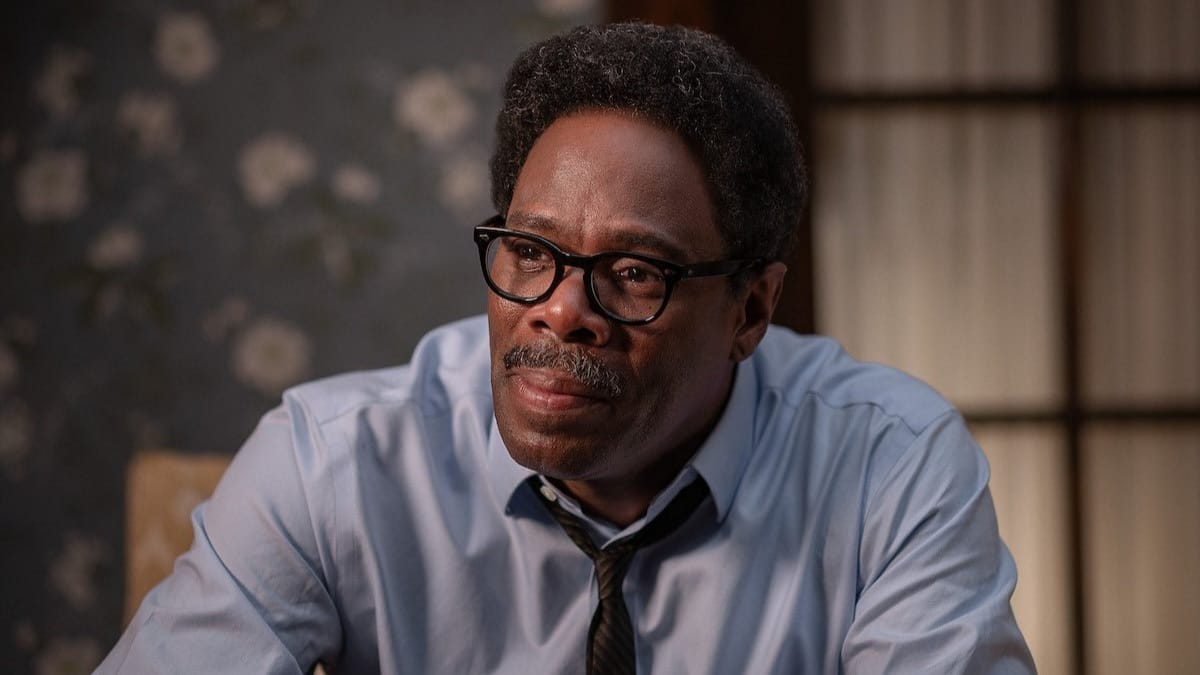
Photo caption: Colman Domingo in RUSTIN. Courtesy of Netflix.
We all know of the March on Washington, culminating in Dr. Martin Luther King’s I Have a Dream speech, delivered on the steps of the Lincoln Memorial before 250,000 people filling the National Mall. It’s one of the most iconic and important moments in American history. Rustin introduces many folks to the overlooked greatness of Bayard Rustin (Colan Domingo), the organizer of the event.
Bayard Rustin was an important civil rights leader who was relegated to the background of the movement, and sometimes even ostracized, because he was a gay man. In the 1950s and 1960s, being a former Communist didn’t help, either.
Rustin’s mentor A. Philip Randolph (played in Rustin by Glynn Turman) is the other most overlooked male civil rights leader. Randolph’s two greatest accomplishments, the integration of the military and of the defense industries, occurred before television (and were filtered by the white mainstream print media). A personal note from The Movie Gourmet: my decades-long career has been in politics, and one of my very first political day jobs was funded by the A. Philip Randolph Institute. Here is more on Randolph and Rustin from the APRI website.
Rustin takes us behind the scenes, and we see the strategic disagreements, petty jealousies and jockeying for status between civil rights leaders. It’s important that the leaders came from generational strata. In 1963, Randolph was 74. Rustin was 52. NAACP head Roy Wilkins was 61, and Harlem Congressman Adam Clayton Powell was 55, both at the peaks of their careers. MLK was a rising superstar, but still only 34. John Lewis was still only 23.
In birthing the March on Washington, Rustin was fighting the overt attacks of J. Edgar Hoover and Strom Thurmond and the covert obstructionism of Attorney General Bobby Kennedy. Rustin also had the contend with the antagonism of Wilkins and Powell. But, Rustin had two cards to play – the respect demanded by Randolph and the rock star sizzle of MLK.
In a stellar, commanding performance, Colman Domingo is charismatic as Rustin. Domingo has been so good in everything I’ve seen him in: Ma Rainey’s Black Bottom, Zola,Selma and Lincoln. Glynn Turman brings gravitas and moral authority to Randolph. In ingenious, against-type casting, Chris Rock is excellent as the funny-as-a-heart-attack Roy Wilkins. Jeffrey Wright PERFECTLY captures Adam Clayton Powell.
Ami Ameen has the challenge of satisfying audience expectation in portraying MLK. He gets the speech patterns and mannerisms right, while inhabiting a still-young MLK growing into the leader he was just becoming.
If you want to learn more of Bayard Rustin, I recommend Matt Wolf’s award-winning, but hard to find, short doc Bayard & Me, which features Rustin’s longtime partner Walter Neagle’s recollection of his life with Rustin; it’s an important insight into both Civil Rights and LGBTQ history.
Rustin was directed by George C. Wolfe, whose previous feature, Ma Rainey’s Black Bottom, was my #2 movie of 2021. We need to see more movies from this guy.
Photo caption: Brian Jones in THE STONE AND BRIAN JONES. Courtesy of Magnolia Pictures.
The Stones and Brian Jones tells the story of the ill-fated co-founder of The Rolling Stones. Most of us remember that Jones was fired from the band when his abuse of alcohol and drugs kept him from being able to record and perform with the band. This film delves into:
Jones’ unhappiness with Mick Jagger and Keith Richard’s diversification of the Stone’s portfolio beyond American Blues.
Jones’ insecurity about his role in the Stones being eclipsed by the band’s primary songwriters, Jagger and Richards.
Jones’ complex relationship with his parents.
The essential testimony of Jones’ girlfriends and those of other Stones (but not from the late Alita Pallenberg, who emerges as a villain in the story).
The most revelatory moments in The Stones and Brian Jones come from Jones’ bandmate, bassist Bill Wyman, who explains Jones’ musical contributions by pointing them out as we hear Stones songs.
Wisely, The Stones and Brian Jones doesn’t spend much time on Jones’ very unmysterious death. Somebody who mixes large amount of barbiturates and alcohol daily just isn’t going to survive very long, especially when they also get in swimming pools alone at night. Jones’ death occurred before premature substance abuse deaths of celebrity music figures (Jimi Hendrix, Janis Joplin, Mama Cass, Jim Morrison, Gram Parsons, Keith Moon) became more commonplace.
This is a competent and extremely well-sourced doc, which helps us understand someone who played a key role in forming an iconic band, but it’s not a Must See rock documentary. The Stones and Brian Jones is streaming on Amazon, AppleTV, Vudu and YouTube.
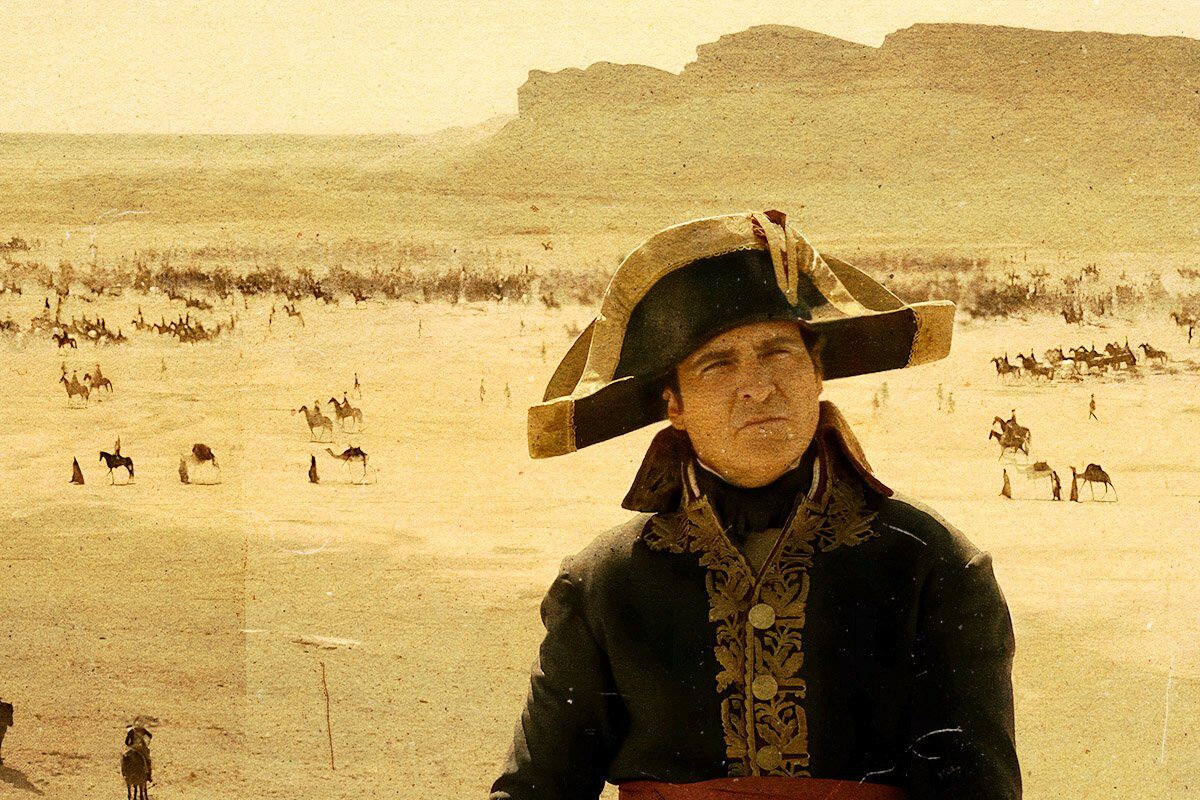
Photo caption: Joaquin Phoenix in NAPOLEON. Courtesy of AppleTV.
Of all living filmmakers, Ridley Scott would seem the most well-equipped to pull off a boundless EPIC, but his Napoleon, other than three spectacular battle scenes and a little sex, is boring, underwhelming and a little confounding. As The Wife said exiting the theater, it’s a slog, and she wasn’t referring to the winter retreat from Moscow.
For better or worse, Napoleon covers Napoleon Bonaparte’s entire public career – from his emergence in 1793 at age 24 to the beginning of his final captivity on St. Helena in 1815 at the age of 46. It’s kinda like a college survey course in the Napoleonic Era. Napoleon’s historical accuracy is solid, and, for a Hollywood movie, remarkably unusual.
Even with a running time of 2 hours and 38 minutes, there’s a lot of ground to cover. He did fight 61 battles, and it took the SEVENTH Coalition of opposing nations to defeat him. So, we get the briefest of glimpses of Napoleon’s mother, his second wife and other major figures in his life and times.
Here’s what is great about Napoleon – three extraordinarily spectacular battle scenes, depicting the Siege of Toulon, and the famous Battles of Austerlitz and Waterloo. They are amazing to watch, and the first two help us to understand Napoleon’s military genius (and the third, Wellington’s military genius). A segment of Austerlitz where Napoleon orders cannon fire to break the ice under enemy forces is one of greatest and most unforgettable battle scenes in cinema history.
Napoleon also does a pretty fair job with the the relationship between Napoleon (Joaquin Phoenix) and his first wife Josephine (Vanessa Kirby). It was a very uncomplicated one: he was utterly captivated by and devoted to her, and she just wasn’t that IN to him. Josephine was a survivor and an adventuress, who navigated through her misogynistic environment with a gift for canny manipulation. He finds that even making her an empress isn’t enough to quell her promiscuity. Phoenix and Kirby do a good job with this part of the story.
But, oddly for a biopic, Napoleon fails to help us understand Napoleon. Sure, he’s ambitious from the start, but why? And why does he need to keep conquering, at the risk of overreaching and losing everything? After all, didn’t they name a complex after this guy?
Joaquin Phoenix was so vivid as Johnny Cash in Walk the Line, as Commodus in Gladiator, and as Freddie in The Master; he was so original and authentic in Her and C’mon C’mon. But, in Napoleon, his performance doesn’t unwrap the package of Napoleon’s psyche. I can’t say it’s Phoenix’a fault, but the collaboration between Phoenix, Scott and screenwriter David Scarpa doesn’t pay off.
Scott does point out in an end title that 3 million lost their lives during the Napoleonic Wars, which raises the question, to what end? This guy with an insatiable appetite for power and conquest was starting wars with some twits who had been born into underserved monarchy.
Here’s a random digression from the movie Napoleon. Was Napoleon’s military prowess overrated? This is ironic, because Napoleon rose on his merits. But the forces he was defeating were led by royalty and aristocrats, who were given command of armies, not by their own training and demonstrated skills, but by the accident of birth. Alexander I of Russia, for example, started out as an immature, headstrong nitwit and aged into a fullblown nutcase. Maybe Napoleon was analogous to MLB Hall of Famers who never had to face black ballplayers. Hmmm.
Napoleon is now in theaters, and will stream on AppleTV on a date TBD.
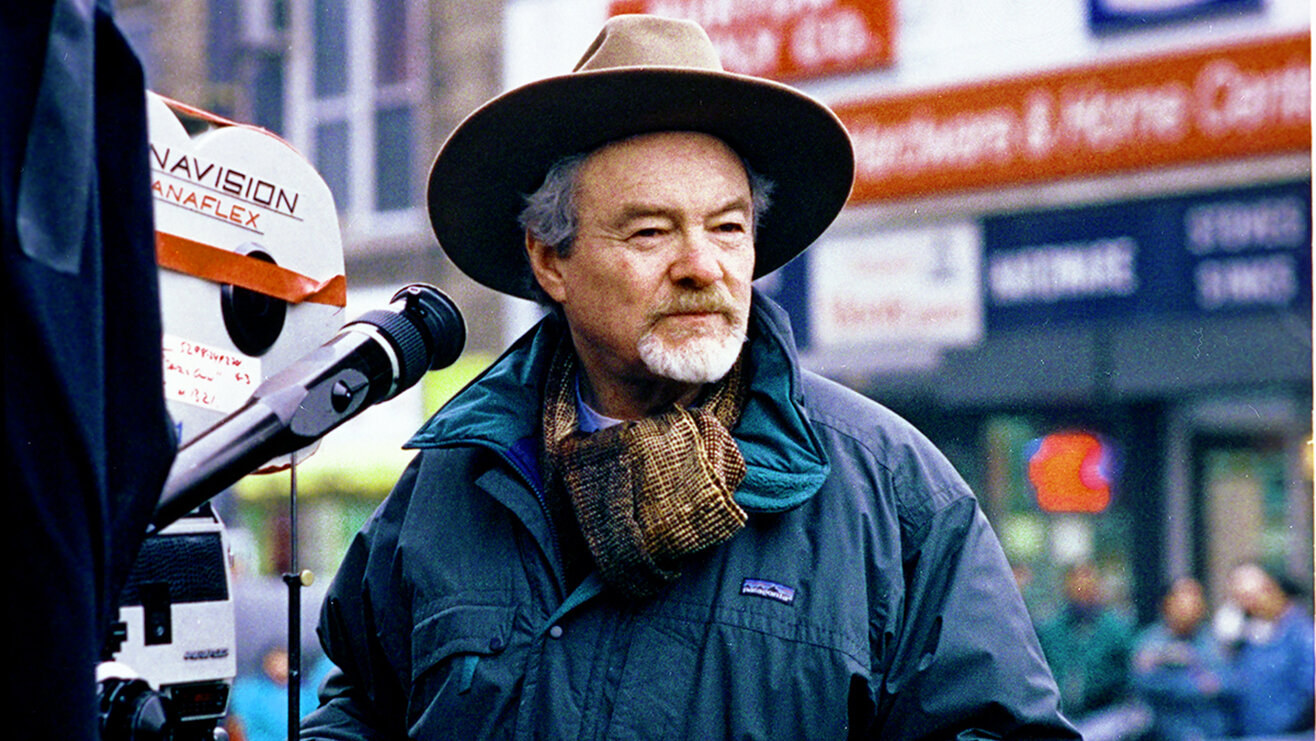
Alan Pakula in ALAN PAKULA: Going for Truth. Courtesy of Magnolia Pictures.
Alan Pakula: Going for Truth is the fine biodoc of the filmmaker Alan Pakula, who received Oscar nominations for producing To Kill a Mockingbird, directing All the President’s Men and writing Sophie’s Choice.
Pakula demonstrated very high standards, and, as entertaining as his films are, his filmography doesn’t contain anything cheap and popular or any dumbed-down content. Famous for his “paranoia trilogy” of the 1970s (Klute, The Parallax View and All the President’s Men), he was remarkably versatile, also mastering the psychological thriller (Presumed Innocent) and the heart-wrenching, high-brow drama (Sophies Choice). Pakula was also responsible for launching the directing career of screenwriter James Brooks (Terms of Endearment, Broadcast News).
Alan Pakula: Going for Truth is exceptionally well-sourced. We see plenty of clips of and interviews with Pakula himself. We hear from his colleagues and widow, along with Jane Fonda, Harrison Ford, Robert Redford, Meryl Steep, and Harrison Ford.
Alan Pakula: Going for Truth can be streamed from Amazon, AppleTV, Vudu and YouTube.
Shere Hite in THE DISAPPEARANCE OF SHERE HITE. Courtesy of IFC Films.
The Disappearance of Shere Hite: This film, a triumph for director Nicole Newnham (Crip Camp), explores the life and times of the groundbreaking sex researcher and best-selling author. A woman of uncommon confidence, determination and resourcefulness, Hite sailed into the face of the patriarchy. Denied resources and respect by the academic establishment, her guerilla research uncovered pivotal truths of female sexuality and spoke them for the first time. The resulting sensation brought fame, acclaim and notoriety to Hite, accompanied by both financial success and a vicious backlash. The persistence of that backlash, and its personal toll, caused Hite to essentially revoke her own celebrity. Hite did not suffer fools, and was fearless until she wasn’t.
We meet a slew of Hite’s intimates in this superbly sourced film and gain insight into her personality. Shere Hite speaks to us directly in file footage and in her writings, voiced by Dakota Johnson.
For those of us who were roaming the earth in the 1970s, it’s still jarring to see the cultural resistance to what we now accept as biological fact. For those experiencing this story for the first time, it’s astonishing and powerful. I understand that women under age forty-five, having missed Shere Hite’s moment of ubiquitous media presence, are responding strongly to this film.
I screened The Disappearance of Shere Hite for the Nashville Film Festival, and it topped my Must See at NashFilm. It opens in theaters this weekend.
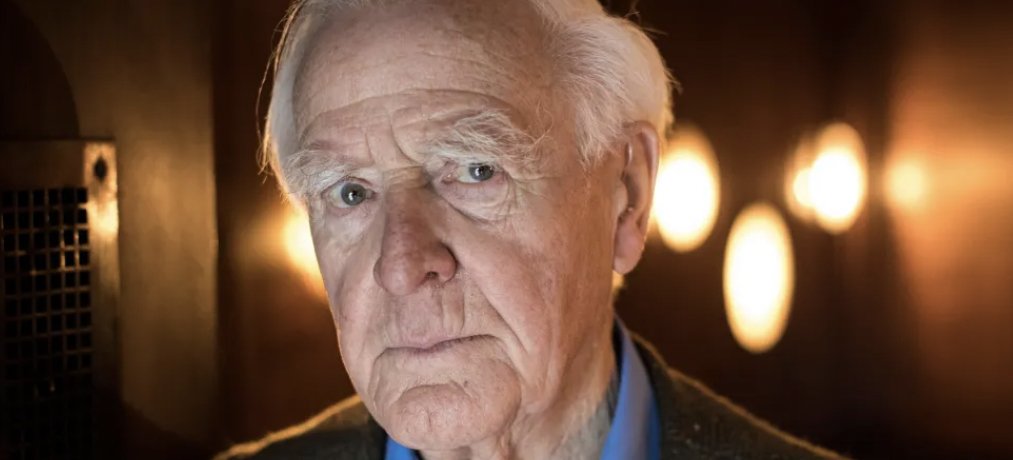
Photo caption: John le Carré in THE PIGEON TUNNEL. Courtesy of AppleTV.
The espionage novelist John le Carré was one of our greatest storytellers over the past sixty years, and, in The Pigeon Tunnel, the great documentarian Errol Morris cajoles le Carré (real name David Cromwell) to tell his own life story – and what a story it is.
I love the twists and turns in le Carré’s stories, which are set in the world which le Carré himself experienced in his youth as a Cold War British spy. But the underlying theme of le Carré’s work is that his characters are engaged in the highest stakes when it really doesn’t matter who wins;. The comic strip character Pogo wisely told us: We have met the enemy and he is us. The spymasters are incented by their own bureaucratic imperatives and the gamesmanship itself, not by righteousness or utility. His credo seems to be, rage against the machine, with futility.
Indeed, the title of the film stems from a most unsettling and revelatory image from the young le Carré’s trip with his father to Monaco – a grim analogy about the hopeless position of those who are pawns in the games of others.
What formed the cynical rage behind the cultured and ever so pleasant le Carré? As Morris probes le Carré’s childhood, we learn of his father, a sociopath and career con artist, a man so psychotically selfish that his mother abandoned her sons as the only way to escape their father.
Le Carré also explains the impact on him of the British traitor Kim Philby, the pivotal moment of his time in British espionage, which cemented Le Carrie’s own fascination with betrayal.
It is important for le Carré to take the measure of Morris as interviewer/interrogator. It is so interesting that le Carré/Cromwell’s storytelling (the means? the depth? the very content?) depends on whom he is engaged with.
Erroll Morris has created some of the best ever American documentary films, including Gates of Heaven and The Thin Blue Line. He is the master of the interview doc, where he uses a gizmo to photograph his subjects while they maintain direct eye contact with him; he has employed the technique to let Robert McNamara (The Fog of War) and Donald Rumsfeld (The Unknown Known) reveal more of themselves than they intended and to introduce us to the woman who kidnapped a Mormon missionary as a sex slave and later cloned her pet dogs (Tabloid) and the designer of execution techniques who denied the Holocaust (Mr. Death: The Rise and Fall of Fred A Leuchter, Jr.).
Many le Carré novels and stories have been made into excellent films, which are available to stream, including
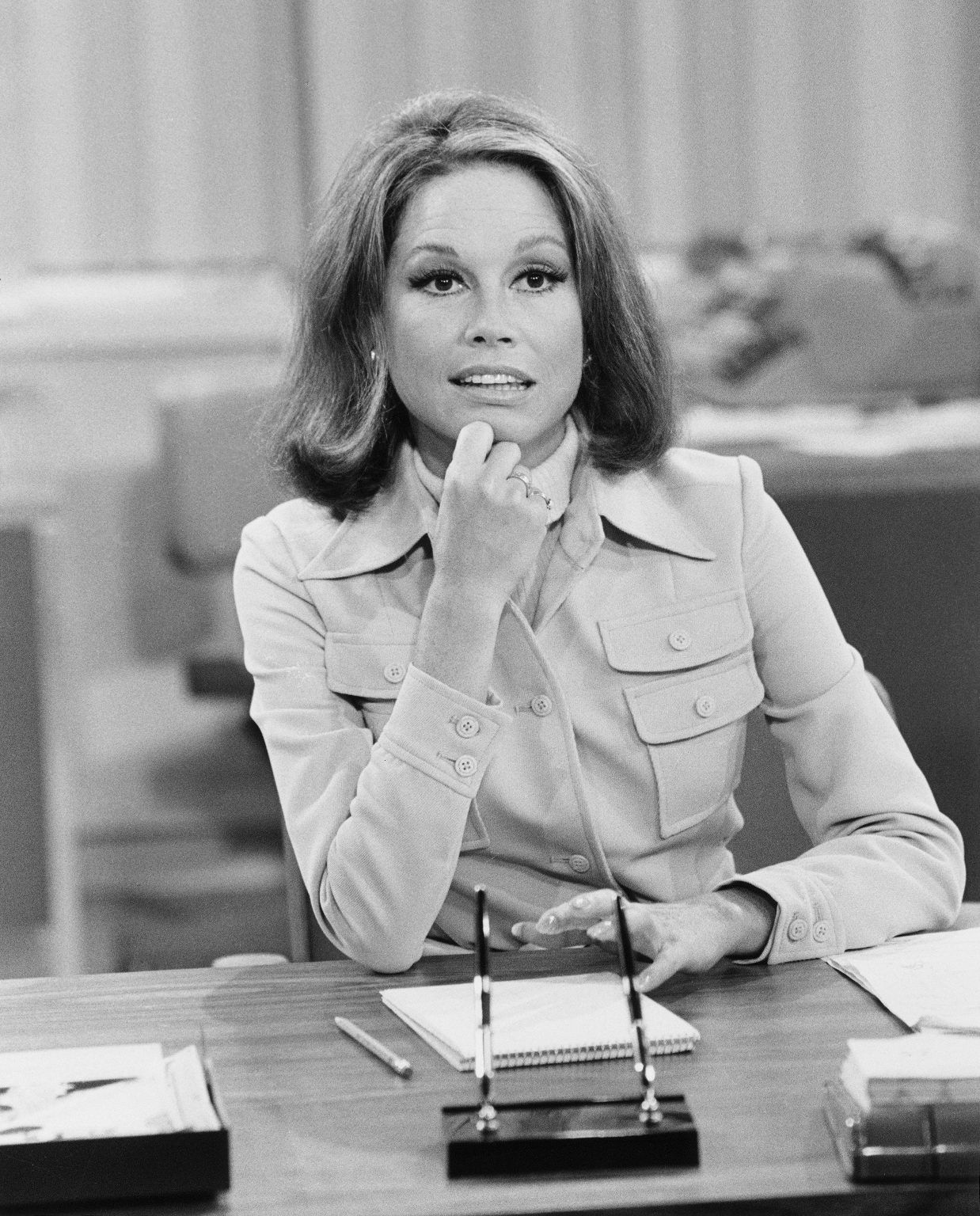
Photo caption: BEING MARY TYLER MOORE. Courtesy of HBO.
The showbiz biodoc Being Mary Tyler Moore traces the career and life of an important trailblazer who captivated American TV audiences for decades. The ever-relatable Mary Tyler Moore pioneered the fictional single woman on TV, an important cultural moment.
While she was playing the archetypal single career woman, Moore was a wife and mother. She and husband Grant Tinker created some of the best TV ever – The Bob Newhart Show, WKRP in Cincinnati, Hill Street Blues, and St. Elsewhere – and pioneered the TV spinoff with Rhoda. It bears remembering that CBS’ Saturday evening 8-11 pm slate in the fall of 1973 was the best nightly TV lineup ever: All in the Family, M*A*S*H, The Mary Tyler Moore Show, The Bob Newhart Show and The Carol Burnett Show.
Being Mary Tyler Moore traces the lesser known aspects of Moore’s life, including her childhood and retirement years. Of course, there’s a clip from the Mary Tyer Moore Show’s unforgettable Chuckles the Clown episode.
Incidentally, I highly recommend Joan Jett’s version of the MTM Show theme Love Is All Around, which you can find on YouTube.
Being Mary Tyler Moore is streaming on HBO, beginning May 26. I screened it for the SFFILM in April.