BBC’s 100 Greatest American Films

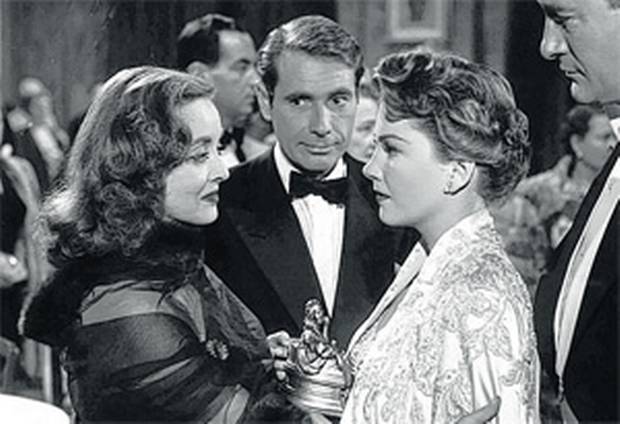
ALL ABOUT EVE - needs to be on the list!
ALL ABOUT EVE – needs to be on the list!

The BBC has surveyed film critics and came up with BBC’s list of 100 Greatest American Films. I’m a sucker for lists, and this is a rare “Best List” that’s focused only on American Cinema. American films only constuitute about 50-65% of the movies on my list of Greatest Movies of All-Time and my yearly “Best”lists, and I relish this chance to delve into the canon of American films.

Naturally, I have opinions, having seen 96 of the 100 (all but The Band Wagon, Love Streams, Letter from an Unknown Woman and the 1959 Imitation of Life).  (Confession – I had never heard of the short film Meshes of the Afternoon, but was able to view it  on YouTube.) The list has gotten some notoriety because Gone With the Wind is only #97 (which is okay with me).

Bottom line: it’s a really good list. I especially appreciate the inclusion of some films that are truly great but tend not to get recognized on “great” lists: 25th Hour, In a Lonely Place, Deliverance, Groundhog Day, The Right Stuff, The Best Years of Our Lives, The Man Who Shot Liberty Valance, It’s a Wonderful Life and Pulp Fiction. I also was tickled by the inclusion (at #85) of George Romero’s 1968 seminal zombie classic Night of the Living Dead, which really was a groundbreaking film.

I do have some quibbles. I can’t fathom why anyone would think that Marnie and Johnny Guitar would rise to this list. Michael Cimino’s cinematic disaster Heaven’s Gate was reassessed by critics a couple of years ago; I rewatched it again, too, but I still found it laughably awful today. Just as indefensible as including Heaven’s Gate was the omission of Cimino’s REAL masterpiece The Deer Hunter.

Though I personally loathe Terence Malick’s The Tree of Life and Stanley Kubrick’s Eyes Wide Shut, a critic can make a plausible argument for them. Still, the list is too reverential  to Kubrick, Malick and David Lynch (both Mulholland Drive AND Blue Velvet?).

Documentaries are represented here by Killer of Sheep and Grey Gables, two groundbreaking films from the late 60s/early 70s that have been seen by everyone who’s taken a film course between 1980 and 2000. But I actually prefer Salesman from that period. And there are much better American documentaries that I would include instead: Harlan County USA, Hoop Dreams and the entire work of Errol Morris, especially Gates of Heaven and/or The Thin Blue Line.

Here’s another serious beef. The only animated film on the list is The Lion King, which I think is an excellent movie, but probably not in my top ten of American animated films. The BBC list excludes the Toy Story series and Fantasia (and all of the other Disney movies from Disney’s classic period) – CRIMINAL!

There’s also an “Eat Your Broccoli, It’s Good For You” aspect to the list – as if every movie important to study in film class is “great”. There are some hard slogs on this list. I wouldn’t recommend that most movie fans run out and see, as important as they are, Sunrise, Greed, the Cassavetes films, Killer of Sheep, Meshes of the Afternoon or The Magnificent Ambersons. (By all reports, Orson Welles made a masterpiece in The Magnificent Ambersons – but none of us has seen it because it was mangled by studio editors; frankly, I have really tried to embrace the available version of Ambersons, but it’s never rung my chimes.)  Hey, Bonnie and Clyde is a really important movie, too, and it’s not on the BBC list.

There are some missed opportunities, too. Any list of great American cinema MUST include: All About Eve, Sullivan’s Travels, Fargo, Out of the Past, Laura and last year’s masterpiece, Boyhood. The BBC also whiffed on the entire work of Clint Eastwood; I would have included Million Dollar Baby, but Mystic River and Unforgiven are deserving, too.

Woody Allen gets two of his deserving movies on the list, but how about Manhattan and Hannah and Her Sisters, too?  Similarly, Robert Altman’s recognition should also include The Player (and Gosford Park, if it counts as an “American” film).

I could also make a case for: The Producers, High Noon, All the President’s Men, American Graffiti, All That Jazz, Bull Durham, Cool Hand Luke, Five Easy Pieces, My Man Godfrey, Best in Show and Sideways.

Still, I always enjoy haggling over a list, and it’s great to focus once in a while on purely American cinema.
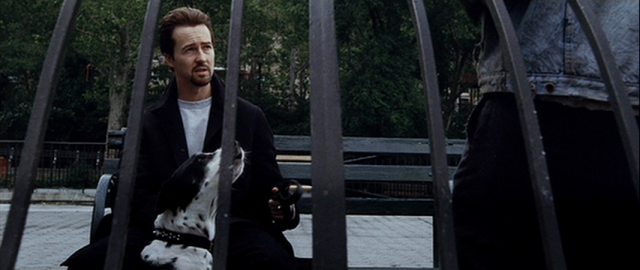
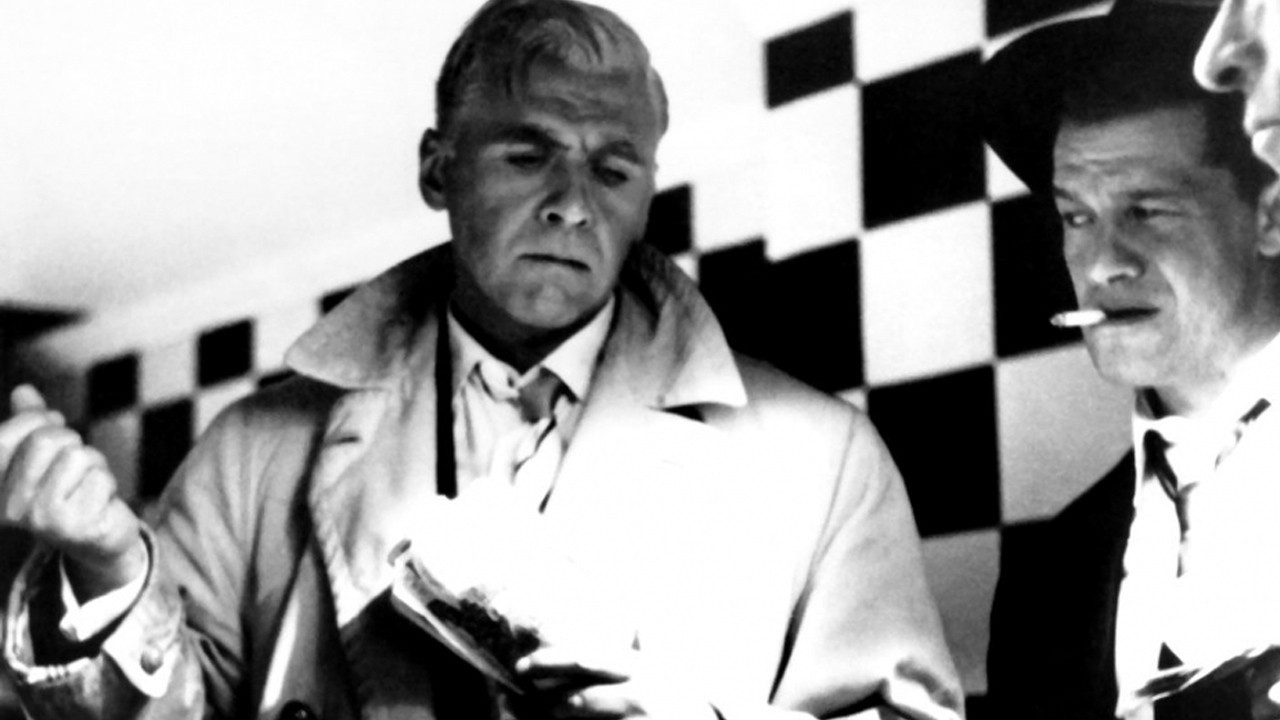
25TH HOUR - getting its due.
25TH HOUR – getting its due.

DVD of the Week: OMAGH – after an atrocity, a search for justice

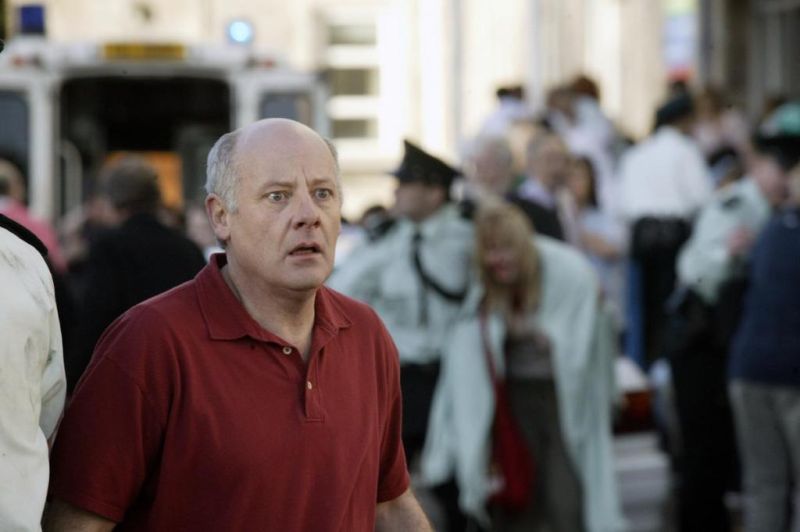
Gerard McSorley in OMAGH

The compelling and affecting true-life drama Omagh (2004) begins with the infamous 1999 car bombing in Omagh, Northern Ireland. But Omagh is more about the aftermath – the pain and grief of the survivors as they strive for justice and accountability.

The bombing, by a nationalist splinter group, killed 29 on the small town’s market street. It had been just four months since the Good Friday Accord, and both mainstream republicans and unionists were getting used to the day-to-day peace of a post-Troubles era. The bombing was a jarring interruption of that peace, and many felt even more betrayed because the “warning” actually worked to draw more victims toward the lethal blast.

Omagh vividly depicts the carnage and chaos after the blast. The desperate search for loved ones amid the confusion is profoundly moving. We experience Omagh through the perspective of Michael Gallagher, father of one of the victims. He takes the helm of the survivors group as they seek answers – and run into a series of stone walls and cover-ups. The soft-spoken Gallagher may be the least histrionic leader in human history, and he is able to lead because the other survivors rely on his decency, good sense and quiet courage. We also see that – as in real life – people grieve at different paces, and the obsession of some in the family doesn’t work for others.

Michael Gallagher is played by the veteran actor Gerard McSorley (In the Name of the Father, Widow’s Peak, Braveheart, The Boxer, Bloody Sunday). It is McSorley’s powerful and profoundly sad performance that elevates Omagh.

Director Pete Travis employs a jiggly camera and a spare soundtrack to focus our attention on the characters with intimacy and immediacy. When we hear the door closed after the last guest leaves a funeral, the sound of the latch communicates more finality than would any dialogue.

Omagh is high on my list of Best Movies About the Troubles. It is available on DVD from Netflix.

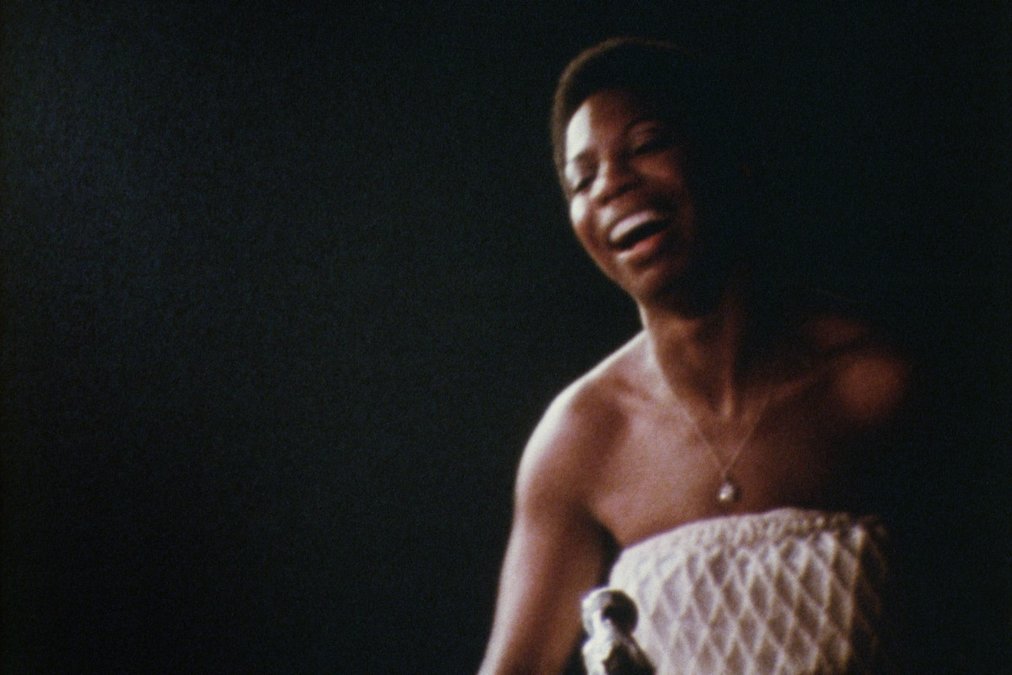
WHAT HAPPENED, MISS SIMONE?: an already turbulent life disrupted

WHAT HAPPENED, MISS SIMONE?

The biodoc What Happened, Miss Simone? opens with the middle-aged singer Nina Simone coming on-stage for a come-back concert in the mid-1970s.  We see her regarding the audience – and we ask, is she a temperamental artist or is she high or is she unhinged?

Nina Simone led a remarkable life, presented in this documentary by filmmaker Liz Garbus.  Growing up as a poor girl in the segregated South, Simone’s talent as a classical pianist led her to Julliard.  A racial glass ceiling in classical music, redirected her to earning a living singing blues in nightclubs.  Her gifts as a vocalist and as a songwriter earned her a recording deal.  Then she became consumed by militant political activism to the expense of her career.

That’s a pretty interesting arc, but the core of What Happened, Miss Simone? is that she was bipolar and long undiagnosed and untreated.  The illness made what was already a turbulent life more erratic and self-destructive.  Garbus has the benefit of testimony from Simone’s intimates – her daughter, husband, musical director, managers and friends.  We even see Simone’s own thoughts through her often heartbreaking journal entries.

What Happened, Miss Simone? is available to stream on Netflix Instant.

Movies to See Right Now

'71
’71

This week’s opener is Mr. Holmes; Ian McKellen is superb as the aged Sherlock Holmes, re-opening his final case.

If you haven’t seen it yet, you owe it to yourself to see the CAN’T MISS coming of age masterpiece Me and Earl and the Dying Girl. Besides Me and Earl, two more of my Best Movies of 2015 – So Far are playing in theaters:

Don’t miss Fabrice Luchini in the delightfully dark comedy Gemma Bovery. The coming of age comedy Dope is a nice little movie that trashes stereotypes. Alicia Vikander’s strong performance carries the anti-war memoir Testament of Youth. This summer’s animated Pixar blockbuster Inside Out is very smart, but a little preachy, often very sad and underwhelming. The Melissa McCarthy spy spoof Spy is a very funny diversion. Mad Max: Fury Road is a rock ’em sock ’em action tour de force but ultimately empty-headed and empty-hearted.

My DVD/Stream of the Week is the year’s best thriller so far – ’71, a harrowing tale set in the Troubles of Northern Ireland. ’71 is available on DVD from Netflix and streaming on Amazon Instant Video, Vudu, YouTube, Google Play and Xbox Video.

Don’t forget that Turner Classic Movies is filling each June and July Friday with film noir in its Summer of Darkness series, hosted by Film Noir Foundation president Eddie Muller – the Czar of Noir. The series schedule includes several favorites of my Overlooked Noir. Tonight features next Friday, look out for 99 River Street.

Saturday night, Saturday, July 18, TCM is presenting THREE of the greatest films about politics: The Dark Horse, The Last Hurrah and The Candidate. On the 21st, TCM brings us that classic suspense Western 3:10 to Yuma, along with Peeping Tom – still one of the very best serial killer movies after 50 years.

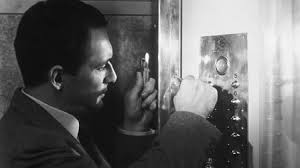
On July 24, Turner Classic Movies will show the groundbreaking French noir Elevator to the Gallows. It’s a groundbreaking film with so many outstanding elements that I’ll be writing about it next week. But set your DVR now.

Marcel Ronet in ELEVATOR TO THE GALLOWS

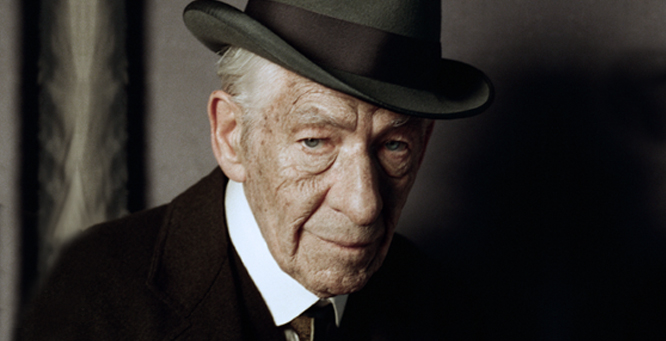
MR. HOLMES: in old age, Sherlock reopens his final case

Ian McKellen as MR. HOLMES

It’s 1947 and 93-year-old Sherlock Holmes has been self-exiled to the Dover coast in retirement for almost thirty years. He’s still keenly observant, but his memory is deteriorating with age, and he knows it. That’s a problem as he feels an urgent need to summon up the facts of his final case, left unresolved in 1919. In Mr. Holmes, Ian McKellen plays Sherlock in his 1947 frailty and desperation and in the flashbacks to 1919, when he’s at the top of his game.

As Mr. Holmes, opens, Sherlock has just returned home from a trip to Japan. So desperate to refresh his memory, he has sought a Japanese homeopathic cure (“prickly ash”), in the process meeting a Japanese family with an unsolved disappearance of their own. Back home, he lives with his housekeeper (Laura Linney) and her gifted son, Roger (Milo Parker). Holmes recognizes the boy’s exceptionalism and quasi-adopts as a grandchild. The boy has lost his father in World War II, and his relationship with the old man is another central thread in the movie.

Ian McKellen is delightful and endearing as the crusty Holmes. McKellen is an actor of enough stature to pull off this iconic role, and he is able both to project the Holmes genius and to deliver the humor in this very witty screenplay.

Holmes resents how his former roommate Dr. Watson has depicted him in fiction – and doesn’t like fiction at all (until the very last scene). At least, when they lived together, Watson avoided an onslaught of tourists by publishing the wrong address for their rooms (they actually lived across the street from 221B Baker Street). And Holmes goes to a theater to see a very bad 1940s Sherlock Holmes movie.

I saw Mr. Homes at the San Francisco Film Festival at a screening in which producer Anne Carey and screenwriter Jeffrey Hatcher spoke. When Carey read the source material – the novel “Slight Trick of the Mind” by Mitch Cullin – she recognized the appeal of the central role, the settings and the theme of “don’t wait too long for things important to your heart”. It took her eight years to get director Bill Condon (Gods and Monsters, Dreamgirls) on board, who brought in McKellen.

Hatcher was attracted by Holmes’ relationship to the boy Roger and by theme of how we rewrite our own stories. He pointed out that the 1919 story in Mr. Holmes has four versions: what really happened, how Watsone added a happy ending in his book, the Hollywood melodrama of the film-within-the-film and, finally, as Holmes himself connects it to the Japanese story thread at the end.

Carey and Hatcher revealed that Condon playfully referenced Hitchcock in Mr. Holmes: Ambrose Chapel from The Man Who Knew Too Much, carrying of tea a la Notorious and a “Vertigo” sequence under the arches.

It’s a good story with a superb performance by McKellen. Mr. Homes opens tomorrow.

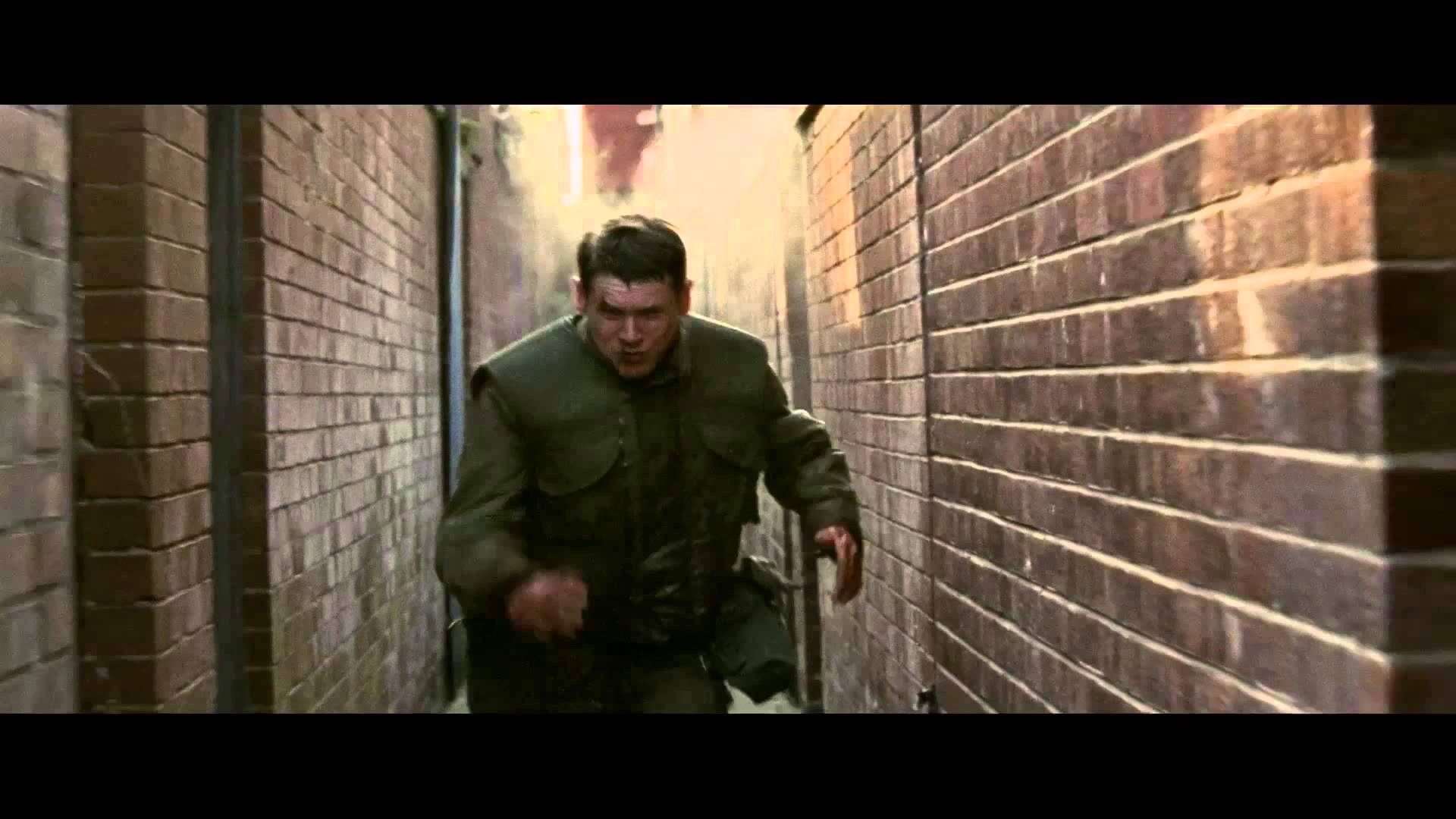
’71: keeping the thrill in thriller

'71
’71

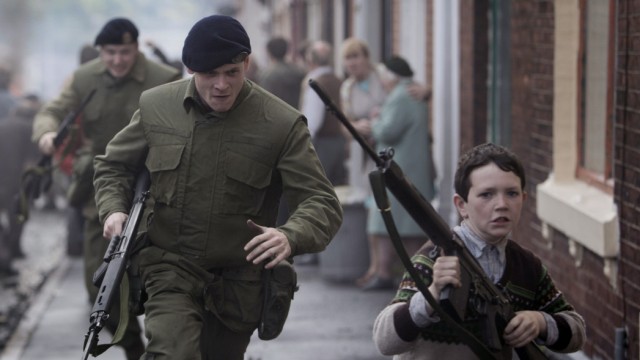
The title of the harrowing thriller ’71 refers to the tumultuous year 1971 in Northern Ireland’s Troubles. An ill-prepared unit of British soldiers gets their first taste of action in Belfast, and the rookie Private Gary Hook (Jack O’Connell) gets inadvertently left behind in hostile territory. Private Hook races around an unfamiliar and dangerous city at night. He is being hunted by his own regular troops, a shadowy and sketchy military intelligence unit, the regular IRA, the hotheaded Provisional IRA and Ulster paramilitaries – all with their own conflicting agendas. Any civilian who helps him will be at direct and lethal risk from the partisans.

In their feature debuts, director Jann Demange and cinematographer Tat Ratcliffe take us on a Wild Ride, with just a couple of chances for the audience to catch its collective breath. Importantly, the way Private Hook gets left behind amid the escalating chaos is very believable. Then there’s an exhilarating footrace through the alleys and over brick walls. Every encounter with another person is fraught with tension. Finally, there’s a long and thrilling climactic set piece in a Belfast apartment block.

O’Connell is in 90% of the shots and carries it off very well. All of the acting in ’71 is excellent. Corey McKinley is special as the toughest and most confident ten-year-old you’ll ever meet. Barry Keoghan takes the impassive stone face to a new level. And I always enjoy David Wilmot (so hilarious in The Guard).

I thank the casting and the direction for making it easy for us to tell all of these pale, ginger characters apart. To the credit of writer Gregory Burke, the beginning of the film economically sets up Private Hook as having the fitness and stamina to survive what befalls him throughout the night.

With all the different sides playing each other, the action (and the action is compelling) is set in an especially treacherous version of three-dimensional chess. Some of the double- and triple-crossing at the end is breathtaking. But what ’71 does best is putting the thrill in a thriller – keeping the audience on the edge of our seats for all 99 minutes.

’71, which I saw at Cinequest, makes my list of the Best Movies of 2015 – So Far. It’s now available on DVD from Netflix and Redbox and streaming on Amazon Instant Video, iTunes, Vudu, YouTube, Google Play and Xbox Video.

Movies to See Right Now

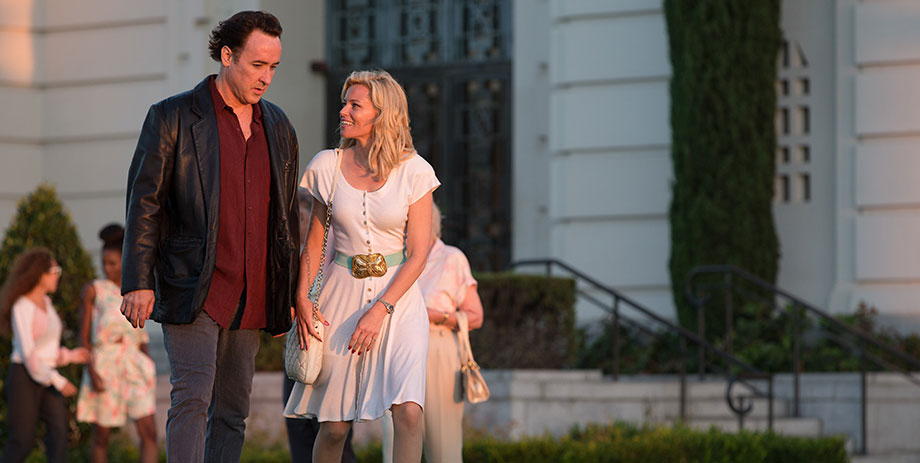
John Cusack and Elizabeth Banks in LOVE & MERCY

If you haven’t seen it yet, you owe it to yourself to see the CAN’T MISS coming of age masterpiece Me and Earl and the Dying Girl.  Besides Me and Earl, two more of my Best Movies of 2015 – So Far are playing in theaters:

Don’t miss Fabrice Luchini in the delightfully dark comedy Gemma Bovery. The coming of age comedy Dope is a nice little movie that trashes stereotypes. Alicia Vikander’s strong performance carries the anti-war memoir Testament of Youth. This summer’s animated Pixar blockbuster Inside Out is very smart, but a little preachy, often very sad and underwhelming. The Melissa McCarthy spy spoof Spy is a very funny diversion. Mad Max: Fury Road is a rock ’em sock ’em action tour de force but ultimately empty-headed and empty-hearted.

My Stream of the Week is the thriller Nightcrawler, with Jake Gyllenhaal as a highly functioning psychotic. You can stream it from Amazon Instant Video, iTunes and Vudu and rent it on DirecTV PPV.

Don’t forget that Turner Classic Movies is filling each June and July Friday with film noir in its Summer of Darkness series, hosted by Film Noir Foundation president Eddie Muller – the Czar of Noir. The series schedule includes several favorites of my Overlooked Noir. Tonight I recommend D.O.A. and Caged; next Friday, look out for 99 River Street.

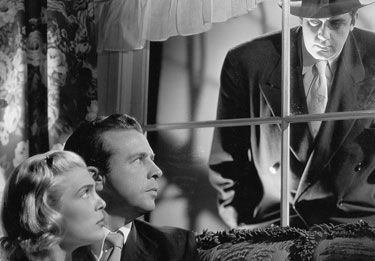
On July 15, Turner Classic Movies features the 1948 film noir Pitfall. Dick Powell plays a bored middle class married guy who is aching for some excitement. In his humdrum job as an insurance investigator, he investigates an embezzlement and meets the captivating Lizabeth Scott, the girlfriend of the imprisoned embezzler. They fall into a torrid but short-lived affair. Just when Powell thinks that he’s back to his normal family life, both he and Scott are dragged into a thriller by two baddies – the sexually obsessed sickie of a private eye (Raymond Burr) and the nasty and very jealous embezzler (Byron Barr), just released from the hoosegow. Jane Wyatt plays Powell’s wife.

Pitfall is especially interesting because it deviates from two prototypical characterizations. Unlike the usual noir sap, Powell doesn’t fall for Scott “all in”; although he has a brief extramarital fling, he’s never going to leave his family for her. And Scott, although she allures Powell, is not femme fatale. She’s not a Bad Girl, just an unlucky one. She has horrible taste in a boyfriend and the bad luck to attract a menacing stalker (Burr), but she’s fundamentally decent. Will her sexual promiscuity be punished at the end of this 1948 movie?

I feature Pitfall in my list of Overlooked Noir.

Lizabeth Scott, Dick Powell and Raymond Burr in PITFALL
Lizabeth Scott, Dick Powell and the looming Raymond Burr in PITFALL

Stream of the Week: NIGHTCRAWLER – Gyllenhaal finally plays 100% psycho

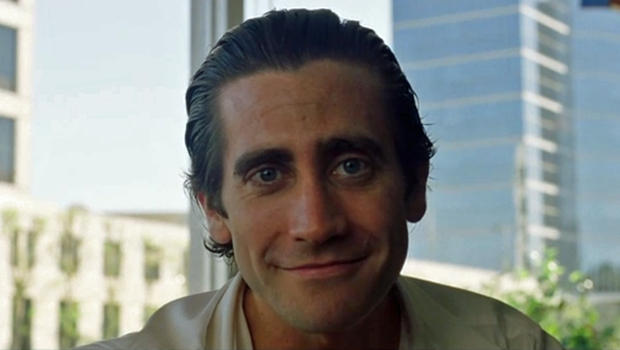
Jake Gyllenhaal in NIGHTCRAWLER

The all-around outstanding actor Jake Gyllenhaal excels at playing guys who are just a little too obsessive (Zodiac, Prisoners, Enemy) to let you get comfortable with them.  In the thriller Nightcrawler, Gyllenhaal gets to play a 100% psycho.  His character is seriously twisted, but in that high functioning way so the other characters don’t suspect it until IT’S TOO LATE.

Gyllenhaal’s bug eyes come in handy in playing the ever-too-intense Lou Bloom, a hustler who talks like a super-caffeinated sales guy, full of the argot of self-help and inspirational speakers.  His bromides about success seem mainstream, but his hyper affect puts off regular folks.  He’s thieving copper when he sees an opportunity to turn himself into a free-lance video journalist.  Nightcrawler is an acid commentary on the TV news world, and Lou has finally found an arena where being balanced is not an asset.

In fact, a cynical TV producer (Rene Russo) finds Lou’s intrusiveness and utter disregard for social boundaries to be helpful.  When placing her order with Lou, she can be entirely unfiltered: “What we re looking for is a woman running down the street with her throat cut”, preferably a “White well-off victim”.

Riz Ahmed, so compelling as The Reluctant Fundamentalist
is unrecognizable here as Lou’s tweaked and shifty homeless assistant Rick.  It’s an effective transformation, and it’s equally great not to see Ahmed stuck playing a terrorist again.

Nightcrawler is successful both as a biting satire and as a charter-driven thriller.  You can stream Nightcrawler from Amazon Instant Video, iTunes and Vudu and rent it on DirecTV PPV.

Netflix No More

BOB LE FLAMBEUR, one of the movies that I once could only see on Netflix DVD

This month I did something that was once unthinkable for me – I cancelled my Netflix DVD service.

Let me explain why this seemed like a big deal.  I embraced the early Netflix as the best source to satisfy my insatiable appetite for indie, foreign and documentary films – the kinds of quality cinema that chain video stores didn’t carry.  Not only that, I evangelized for the service – encouraging everyone I knew to subscribe.

In the early years, I was a super Netflix customer, receiving and watching up to 22 DVDs each month.  I used Netflix as a film school, as I studied the entire Francois Truffaut filmography and plumbed the depths of French and Japanese film noir.  If one of those cool Sundance or Cannes festival hits didn’t make it to Bay Area theaters, I could catch it on Netflix DVD.

But, in 2007, Netflix began to move away from DVDs and toward streaming.  The Netflix DVD collection suffered.

In 2008 I saw 130 movies on Netflix. In 2014, after I had gone down to 1-DVD-out-at-a-time, I watched only 13 Netflix DVDs.

In 2006, I saw 36 recent (2005 and 2006) movies on Netflix DVD.  In 2014, I only saw 5 recent movies on Netflix.

Have I adapted to streaming?  Yes, but I haven’t moved completely to Netflix streaming.  I live for the indie/foreign/doc titles, and for those,  Netflix streaming isn’t nearly as good for me as Amazon, iTunes and Vudu.

The 1955 French film noir Bob le Flambeur is a great example.   If you’re into either film noir or French cinema (and I love both), it’s a Must See – and it’s available on a typically superb Criterion Collection DVD.   Just ten years ago, I could only rent Bob le Flambeur on Netflix DVD.  Today, I can also stream it on iTunes, Vudu, YouTube and Google Play.  How about on Netflix Instant?  Nope.

The way I see it, I’m not so much leaving Netflix as that Netflix left me.

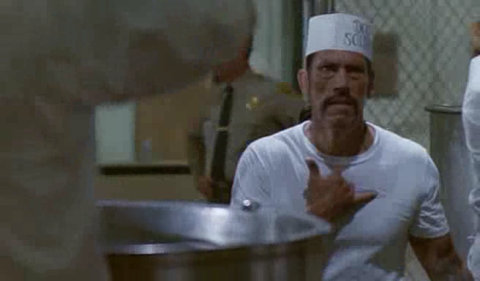
BLOOD IN, BLOOD OUT - the last movie I watched on Netflix DVD
BLOOD IN, BLOOD OUT – the last movie I watched on Netflix DVD


TESTAMENT OF YOUTH: the tragedy of war

Alicia Viksander in TESTAMENT OF YOUTH
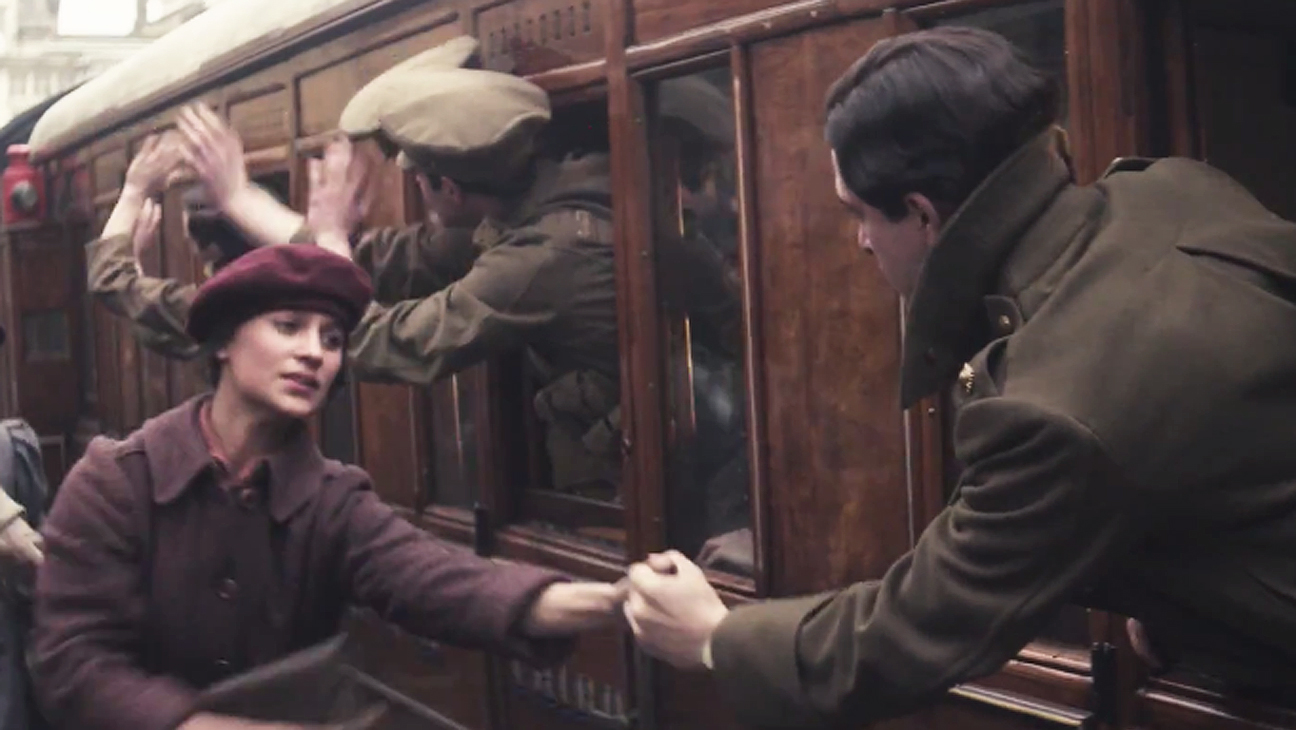
Alicia Viksander bids farewell to Kit Harington in TESTAMENT OF YOUTH

In Testament of Youth, Alicia Viksander plays Vera, a gifted and determined young British woman who overcomes the conventions of the day and the objections of her father to attend Oxford in the 1910s. In 1914, Vera’s brother, fiance and closest male friends all enlist in Britain’s WW I army. No one at the time could have imagined the industrialized carnage that WW I would become, and it’s poignant when the young men say that the war will probably be over before they’ve completed their basic training. The war is, of course, an unspeakable horror. We don’t expect the young men to fare well in the War, and they don’t. Vera suspends her Oxford education to work as a nurse, first in Britain and later at the front. She is in position to observe the effects of war both at the front and on the home front, where her parents are especially impacted.

Testament of Youth is based on Vera Brittain’s popular and influential 1933 memoir of the same name, which is also an icon of feminist literature. Brittain became a pacifist leader.

This story follows a familiar arc, and I often ask “why did someone feel the need to make this movie?”. Testament of Youth, however, is fairly compelling. Credit goes to Viksander and to director James Kent, who somehow prevent the film from slipping into an unwatchable slog of grimness.

The most impressive element of Testament of Youth is the performance of Alicia Viksander as Vera Brittain. Viksander is onscreen in every scene, often in close-up and she carries the film with a flawless performance.  As good as she is here, Viksander is even better in this year’s sci-fi hit Ex Machina, where she plays a machine embedded with artificial intelligence. (Ex Machina is the best American movie of the year so far.)

With Ex Machina, Viksander is exploding into cinema as a major star.  Most Americans first saw the 26-year-old Swede in two 2012 movies.  She played a key supporting role in Anna Karenina and a lead in the Mads Mikkelsen period drama A Royal Affair. Although I thought it too long, A Royal Affair won the Silver Bear at the Berlin Film Festival.  Now she has five films completed or in post-production, including upcoming Derek Cianfrance film The Light Between the Oscars, co-starring Michael Fassbender, who she ihas been dating.  She also has the top credit in the upcoming The Man from U.N.C.L.E., which looks wretched from the trailer.  Plus, she slated to co-star with Matt Damon in the next Bourne movie.  It’s quite a career trajectory, and from what I’ve seen, richly deserved.

Americans will find this odd, but the Swedish Viksander reportedly had to struggle to learn Danish for A Royal Affair.  It seems especially odd, given that she speaks English with a perfect American accent in Ex Machina and perfect middle class British accent in Testament of Youth.

Back to Last Testament of Youth – it’s not a Must See, but it is a well-made and evocative treatment of the tragedy of war.