DVD/Stream of the Week: THE SECRET IN THEIR EYES – see the real Oscar winner before the Hollywood version

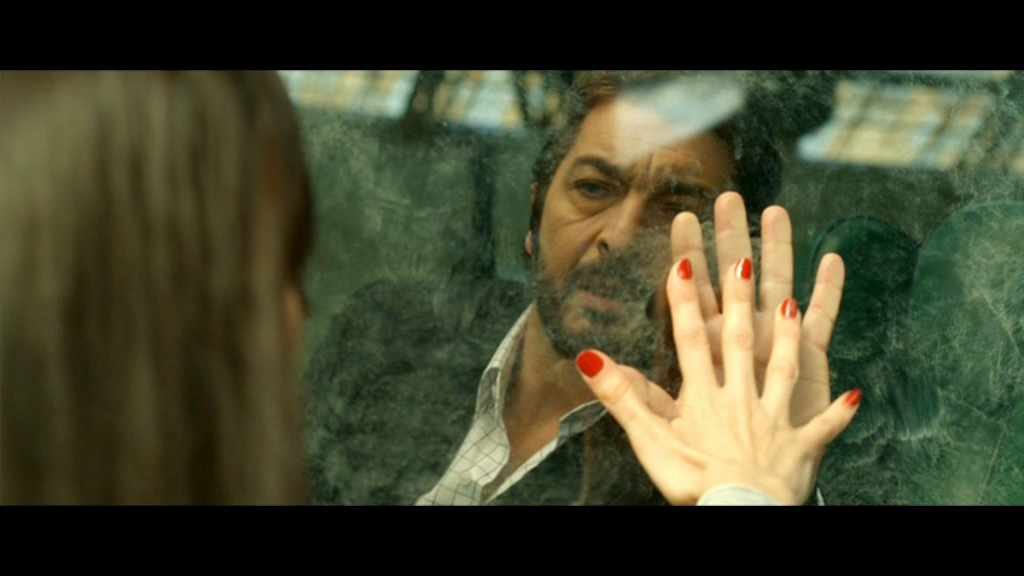
Ricardo Darin in THE SECRET IN THEIR EYES

The superb The Secret in Their Eyes (El Secreto de Sus Ojos) won the 2010 Oscar for Best Foreign Language Picture. The Hollywood remake is coming out this fall, but you should first see the original. The Secret in Their Eyes is a police procedural set in Argentina with two breathtaking plot twists, original characters, a mature romance and one breathtaking, “how did they do it?” shot. The story centers on a murder in Argentina’s politically turbulent 1970s, but most of the story takes place twenty years later when a retired cop revisits the murder.

Veteran Argentine actor Ricardo Darin shines once again in a Joe Mantegna-type role. Darin leads an excellent cast, including Guillermo Francella, who brings alive the character of Darin’s drunk assistant. Darin’s detective is a solitary guy who retracts into his lair to bang away at a novel. He has feelings for his boss, a tough judge played by Soledad Villamil. Her career and her personal life can’t wait for the detective to get his own stuff together. All three characters throw themselves into solving the murder and, when stymied, are all scarred by the lack of resolution.

The movie is titled after one element that I hadn’t seen before in a crime movie.  And then there are the major plot twists.  The final one is a jaw-dropper.

Director Juan Jose Campanella received justifiable praise for the amazing shot of a police search in a filled and frenzied soccer stadium. It ranks as one of the great single shots of extremely long duration, right up there with the opening sequence of Touch of Evil, the kitchen entrance in Goodfellas and the battle scene in Children of Men. This shot alone makes watching the movie worthwhile.

Filmmaker Billy Ray has remade the Argentine film as Secret in Their Eyes, to be released October 23 starring Nicole Kidman, Julia Roberts and Chiwetelu Ejiofor. Ray is no hack – he’s adapted the screenplays for Shattered Glass (which he also directed), Captain Phillips and the first The Hunger Games. The plot has been turned into a story about thee US federal law enforcement officials and the murder of one of their children; unfortunately, the trailer looks more like a plot-driven Law & Order, with none of the characters as singular or as memorable as in the Argentine original. We shall see.

The Secret in Their Eyes is high on my Best Movies of 2010. It’s available on DVD from Netflix and streaming from Amazon Instant Video, iTunes, Vudu, YouTube, Google Play, Xbox Video and Flixster.
ELEVATOR TO THE GALLOWS: his alibi for one murder is another murder

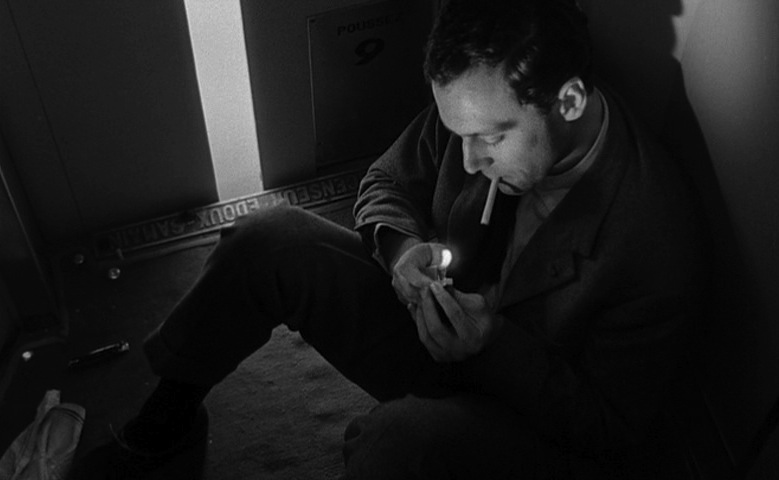
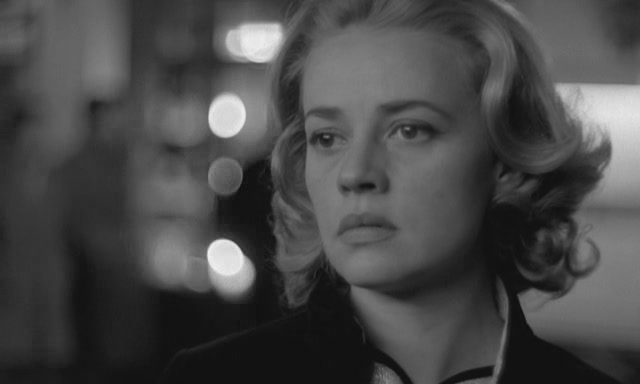
Jeanne Moreau in ELEVATOR TO THE GALLOWS

Tomorrow night, July 24, Turner Classic Movies presents the groundbreaking French noir Elevator to the Gallows.  It’s one of my Overlooked Noir.

Elevator to the Gallows (1958) is such a groundbreaking film, you can argue that it’s the first of the neo-noir. It’s the debut of director Louis Malle, shot when he was only 24 years old. It’s difficult now to appreciate the originality of Elevator the Gallows; but in 1958, no one had seen a film with a Miles Davis soundtrack or one where the two romantic leads were never on-screen together.

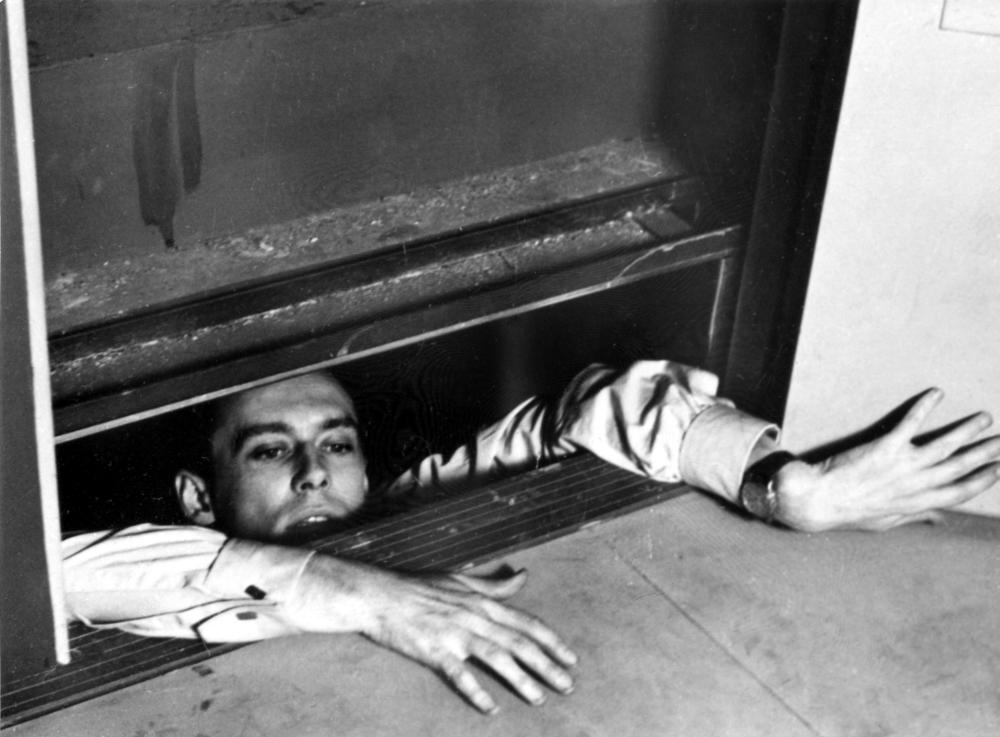
A thriller that still stands up today, Elevator to the Gallows (Ascenseur pour l’échafaud) is about the perfect crime that goes awry. The French war hero Julien (Marcel Ronet), is now working as an executive for a military supplier. He’s having an affair with Florence (Jeanne Moreau), whose husband owns the firm. Seeking to possess both his lover and his company, Julien implements an elaborately detailed plan to get away with his boss’ murder. Everything goes perfectly until he makes one oversight; then the dominoes begin to fall, and soon he is trapped in a very vulnerable situation. He is incommunicado, and he remains ignorant of the related events that transpire outside.

Almost every character makes false assumptions about what is going on. Florence mistakenly believes that Julien has run off with a young trollop. A young punk and his peppy girlfriend incorrectly assume that they are on the verge of arrest. The police pin a murder on Julien that he didn’t commit – but his alibi is the murder that he DID commit. And there’s a great scene where Julien is striding confidently into a busy cafe, unaware that he has become the most recognizable fugitive in France.

It’s a page-turner of a plot, and the acting is superb, but Malle’s choices make this film. When Florence thinks that she’s been dumped, she walks through Paris after dark. Jeanne Moreau doesn’t have any lines (although her interior thoughts are spoken in voice-over). Instead, she embodies sadness and shock through her eyes and her carriage – the effect is heartbreaking. Mile Davis’ trumpet reinforces the sadness of her midnight stroll.

The Miles Davis score is brilliant, but Malle often makes effective use of near silence, too. And he reinforces the kids’ shallowness and over-dramatizing with strings. Every audio choice is perfect.

There’s vivid verisimilitude in a Paris police station at 5 am – all grittiness with drunks sobering up, and the holding cage filled with thieves and prostitutes. The contrast in how the police treat the wealthy and influential is stark and realistic.

The young couple is completely believable. The joyride is absolutely what these characters would do. The young guy is sullen and the girl is hooked on his moodiness. And, of course, with the self-absorption of youth, they over-dramatize their own situation.

Every scene in Elevator to the Gallows is strong, but the scenes with Moreau pop off the screen. This was her star-making role, and perhaps the definitive Jeanne Moreau role (yes – even more than Jules et Jim).

Marcel Ronet is also excellent as Julien. Julien is a guy with serious skills, and the confidence and poise to use them. When Julien is trapped in the situation that would cause most of us to freak out, he immediately starts working on an Apollo 13-like solution without any hint of panic. The harrowing scenes of Julien’s entrapment and escape fit alongside the mot suspenseful moments in the great French crime thrillers Rififi (1955) and Le trou (1960). The means of his eventual escape is one of the most ironic moments in cinema.

Marcel Ronet in ELEVATOR TO THE GALLOWS

Eventually we see the marvelous Lino Ventura as the detective captain. A former European wrestling champion, Ventura had debuted five years earlier in the great Touchez pas au grisbi and had followed that with several gangster/cop supporting roles. Immediately after Elevator to the Gallows, Ventura started getting lead roles. Ventura had an almost unique combination of charm, wit and hulking physicality; he’s one of the few actors I can envision playing Tony Soprano.

The high contrast black and white photography, the voiceovers and the city at night all scream “noir”. So does the amorality of the main characters seeking to get what they want by murder, the ironies of the miscommunications and mistaken assumptions and the profoundly cynical ending.

But the look and sound of Elevator to the Gallows is entirely new. The experience of viewing Elevator to the Gallows seems closer to the American indie triumphs of the early 1970s (The Godfather, Chinatown, The Conversation) than to the likes of The Postman Always Rings Twice or The Big Sleep. Elevator to the Gallows remains a starkly modern film that is still as fresh today as in 1958.

Marcel Ronet in ELEVATOR TO THE GALLOWS

’71: keeping the thrill in thriller

'71
’71

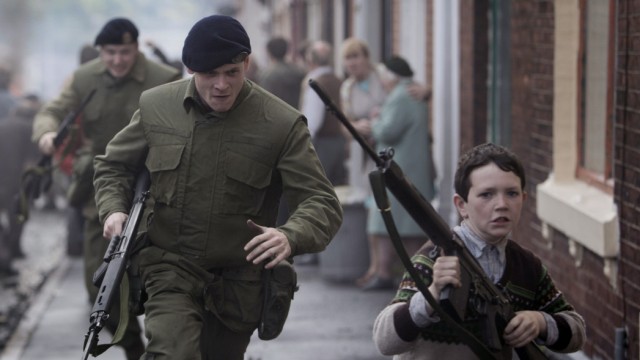
The title of the harrowing thriller ’71 refers to the tumultuous year 1971 in Northern Ireland’s Troubles. An ill-prepared unit of British soldiers gets their first taste of action in Belfast, and the rookie Private Gary Hook (Jack O’Connell) gets inadvertently left behind in hostile territory. Private Hook races around an unfamiliar and dangerous city at night. He is being hunted by his own regular troops, a shadowy and sketchy military intelligence unit, the regular IRA, the hotheaded Provisional IRA and Ulster paramilitaries – all with their own conflicting agendas. Any civilian who helps him will be at direct and lethal risk from the partisans.

In their feature debuts, director Jann Demange and cinematographer Tat Ratcliffe take us on a Wild Ride, with just a couple of chances for the audience to catch its collective breath. Importantly, the way Private Hook gets left behind amid the escalating chaos is very believable. Then there’s an exhilarating footrace through the alleys and over brick walls. Every encounter with another person is fraught with tension. Finally, there’s a long and thrilling climactic set piece in a Belfast apartment block.

O’Connell is in 90% of the shots and carries it off very well. All of the acting in ’71 is excellent. Corey McKinley is special as the toughest and most confident ten-year-old you’ll ever meet. Barry Keoghan takes the impassive stone face to a new level. And I always enjoy David Wilmot (so hilarious in The Guard).

I thank the casting and the direction for making it easy for us to tell all of these pale, ginger characters apart. To the credit of writer Gregory Burke, the beginning of the film economically sets up Private Hook as having the fitness and stamina to survive what befalls him throughout the night.

With all the different sides playing each other, the action (and the action is compelling) is set in an especially treacherous version of three-dimensional chess. Some of the double- and triple-crossing at the end is breathtaking. But what ’71 does best is putting the thrill in a thriller – keeping the audience on the edge of our seats for all 99 minutes.

’71, which I saw at Cinequest, makes my list of the Best Movies of 2015 – So Far. It’s now available on DVD from Netflix and Redbox and streaming on Amazon Instant Video, iTunes, Vudu, YouTube, Google Play and Xbox Video.

Stream of the Week: NIGHTCRAWLER – Gyllenhaal finally plays 100% psycho

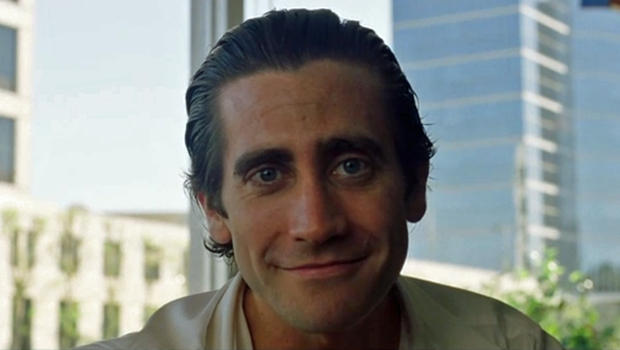
Jake Gyllenhaal in NIGHTCRAWLER

The all-around outstanding actor Jake Gyllenhaal excels at playing guys who are just a little too obsessive (Zodiac, Prisoners, Enemy) to let you get comfortable with them.  In the thriller Nightcrawler, Gyllenhaal gets to play a 100% psycho.  His character is seriously twisted, but in that high functioning way so the other characters don’t suspect it until IT’S TOO LATE.

Gyllenhaal’s bug eyes come in handy in playing the ever-too-intense Lou Bloom, a hustler who talks like a super-caffeinated sales guy, full of the argot of self-help and inspirational speakers.  His bromides about success seem mainstream, but his hyper affect puts off regular folks.  He’s thieving copper when he sees an opportunity to turn himself into a free-lance video journalist.  Nightcrawler is an acid commentary on the TV news world, and Lou has finally found an arena where being balanced is not an asset.

In fact, a cynical TV producer (Rene Russo) finds Lou’s intrusiveness and utter disregard for social boundaries to be helpful.  When placing her order with Lou, she can be entirely unfiltered: “What we re looking for is a woman running down the street with her throat cut”, preferably a “White well-off victim”.

Riz Ahmed, so compelling as The Reluctant Fundamentalist
is unrecognizable here as Lou’s tweaked and shifty homeless assistant Rick.  It’s an effective transformation, and it’s equally great not to see Ahmed stuck playing a terrorist again.

Nightcrawler is successful both as a biting satire and as a charter-driven thriller.  You can stream Nightcrawler from Amazon Instant Video, iTunes and Vudu and rent it on DirecTV PPV.

DVD/Stream of the Week: THE TWO FACES OF JANUARY – dark hearts in sunny Greece

two faces of january2
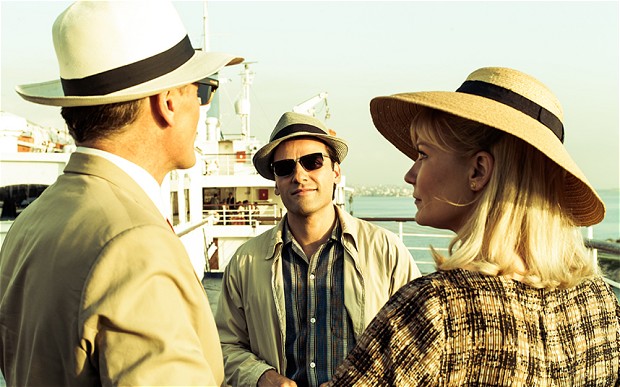
The successful period thriller The Two Faces of January, set in gloriously bright Greek tourist destinations, may not have the shadowy look of a traditional film noir, but its story is fundamentally noirish. Viggo Mortenson and Kirsten Dunst play an affluent couple vacationing in Athens in the early 1960s. They meet a handsome young American expat (Oscar Isaacs from Inside Llewyn Davis) knocking around Greece. The husband quickly and accurately sizes up the younger man as a con man – “I wouldn’t trust him to mow my lawn”. The central noir element is that NO ONE is as innocent as they seem, and the three become interlocked in a situation that becomes increasingly desperate for all three, culminating in a thrilling manhunt.

It’s the first feature directed by Hossein Amini, who adapted the screenplay for the markedly intense Drive, and he does a fine job here with a film that becomes more and more tense each time more information about the characters is revealed.

The Two Faces of January is available on DVD from Netflix and streaming on Amazon, iTunes, Vudu, YouTube, Google Play and Xbox Video.

WOMAN ON THE RUN – a sassy gal in 1950 San Francisco

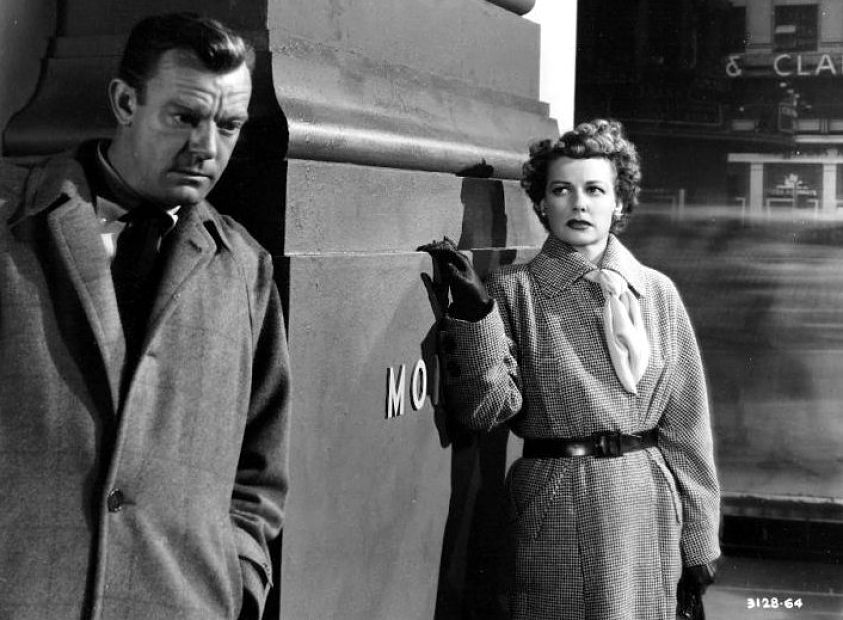
Deenis O'Keefe and Ann Sheridan in WOMAN ON THE RUN
Deenis O’Keefe and Ann Sheridan in WOMAN ON THE RUN

On Friday night, June 5, Turner Classic Movies is presenting one of my Overlooked Noir, in its wonderful film noir series Summer of Darkness.   The character-driven thriller Woman on the Run (1950)  is notable for its San Francisco locations, making it a veritable time capsule of the post-war City By The Bay.

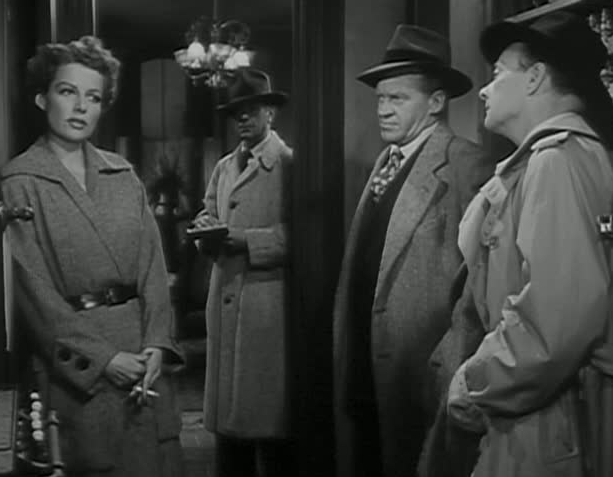
The movie opens with a murder, and the one terrified witness goes underground.  When the police coming looking for him, they are surprised to find his wife (Ann Sheridan) both ignorant of his whereabouts and unconcerned.  While still living in the same apartment, the couple is estranged.  And the wife has a Mouth On Her, much to the dismay of the detective (Robert Keith), who keeps walking into a torrent of sass.

But soon the wife starts hunting hubbie, along with the cops, a reporter (Dennis O’Keefe) and the killer.  It’s a race to see who can find him first.  One character is revealed to be more dangerous than was apparent, and the audience learns this before our heroine does.

One quirky nugget – when she visits his workplace, we learn that his job is making mannikins in the basement of a large department store.

Sheridan is great in this uncharacteristically insolent role.  So are O’Keefe and Keith.  But the real star of Woman on the Run is San Francisco itself, from the hilly neighborhoods to the bustling streets to the dank and foreboding waterfront.  Oddly, the finale is at an amusement park which seems to be Playland At the Beach (but was actually filmed at the Santa Monica Pier).  (Further trivia – that Laffing Sal is the one at Santa Monica, not the one at Playland which now resides at the Santa Cruz Beach Boardwalk.)  The only movie that rivals Woman on Run for its depiction of San Francisco in the 1950s is The Lineup.

The story is a taut 77 minutes of mouthy Ann Sheridan, the life-or-death manhunt and stellar period San Francisco.  Woman on the Run is available on DVD from Netflix and streaming from Amazon Instant Video (free with Amazon Prime).

Ann Sheridan (far left) sasses Robert Keith (far right) in WOMAN ON THE RUN

DVD/Stream of the Week: YOU WILL BE MY SON

YOU WILL BE MY SON

Niels Arestrup (A Prophet, War Horse) stars as the owner of French wine estate who places impossible expectations on his son, with lethal results. The poor son has gotten a degree in winemaking, has worked his ass off on his father’s estate for years and has even married well – but it’s just not enough for his old man. The father’s interactions with the son range from dismissive to deeply cruel.

The father’s best friend is his longtime estate manager, whose health is faltering. The son is the natural choice for a successor, but the owner openly prefers the son’s boyhood friend, the son of the manager. The first half of You Will Be My Son focuses on the estate owner’s nastiness toward his son, which smolders throughout the film. But then the relationship between the sons turns from old buddies to that of the usurper and the usurped. And, finally, things come down to the decades-long relationship between the two old men.

Deep into the movie, we learn something about the father that colors his view of his son. And then, there’s a startling development that makes for a thrilling and operatic ending.

It’s one of several good 2013 films about fathers and sons, like The Place Beyond the Pines and At Any Price. (This is also a food porn movie, with some tantalizing wine tasting scenes that should earn a spot on my Best Food Porn Movies.)

You Will Be My Son is available on DVD from Netflix and streaming from Amazon, Vudu, iTunes and Xbox Video.

’71: keeping the thrill in thriller

'71
’71

The title of the harrowing thriller ’71 refers to the tumultuous year 1971 in Northern Ireland’s Troubles.  An ill-prepared unit of British soldiers gets their first taste of action in Belfast, and the rookie Private Gary Hook (Jack O’Connell) gets inadvertently left behind in hostile territory.  Private Hook races around an unfamiliar and dangerous city at night.   He is being hunted by his own regular troops, a shadowy and sketchy military intelligence unit, the regular IRA,  the hotheaded Provisional IRA and Ulster paramilitaries – all with their own conflicting agendas.  Any civilian who helps him will be at direct and lethal risk from the partisans.

In their feature debuts, director Jann Demange and cinematographer Tat Ratcliffe take us on a Wild Ride, with just a couple of chances for the audience to catch its collective breath.  Importantly, the way Private Hook gets left behind amid the escalating chaos is very believable.  Then there’s an exhilarating footrace through the alleys and over brick walls.  Every encounter with another person is fraught with tension.  Finally, there’s a long and thrilling climactic set piece in a Belfast apartment block.

O’Connell is in 90% of the shots and carries it off very well.  All of the acting in ’71 is excellent.  Corey McKinley is special as the toughest and most confident ten-year-old you’ll ever meet.   Barry Keoghan takes the impassive stone face to a new level.  And I always enjoy David Wilmot (so hilarious in The Guard).

I thank the casting and the direction for making it easy for us to tell all of these pale, ginger characters apart.  To the credit of writer Gregory Burke, the beginning of the film economically sets up Private Hook as having the fitness and stamina to survive what befalls him throughout the night.

With all the different sides playing each other, the action (and the action is compelling) is set in an especially treacherous version of three-dimensional chess.  Some of the double- and triple-crossing at the end is breathtaking.  But what ’71 does best is putting the thrill in a thriller –  keeping the audience on the edge of our seats for all 99 minutes.

Cinequest: GUARD DOG

GUARD DOG
GUARD DOG

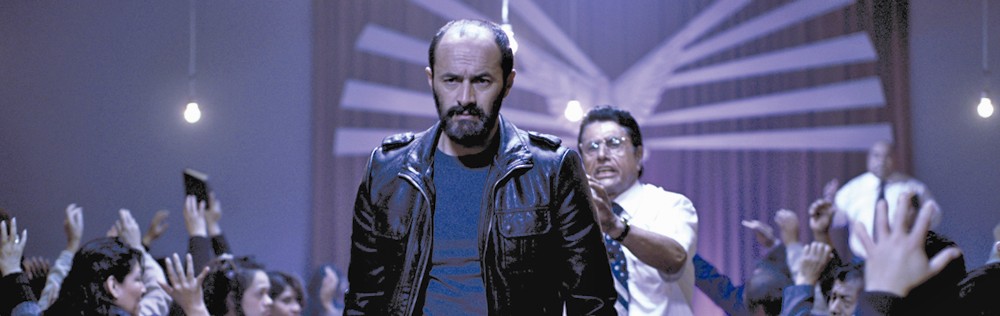
The dark and violent Peruvian Guard Dog is set in 2001, five years after a controversial amnesty for the government-sponsored death squads active in the previous decades.  Our protagonist is the vestige of those death squads, an ascetic hit man who still performs some residual executions.  He is a Man On A Mission, and one serious dude.  After his opening hit, he takes out the photo of his victim and burns out the image’s eyes with his cigarette.

Guard Dog is ultimately more of a mood piece than a thriller.  The theme of personal corruption keeps re-emerging, with a grossly rotting apartment ceiling and even a moment of pus-draining.  The most interesting aspect of the story is our anti-hero’s encounters with an unjaded young girl who is, in contrast to him, bubbling and full of life.

I saw Guard Dog’s US Premiere at Cinequest, and it plays the fest again March 4 at the California Theatre and March 6 at Camera 12.

DVD/Stream of the Week: DOSE OF REALITY from Cinequest 2013

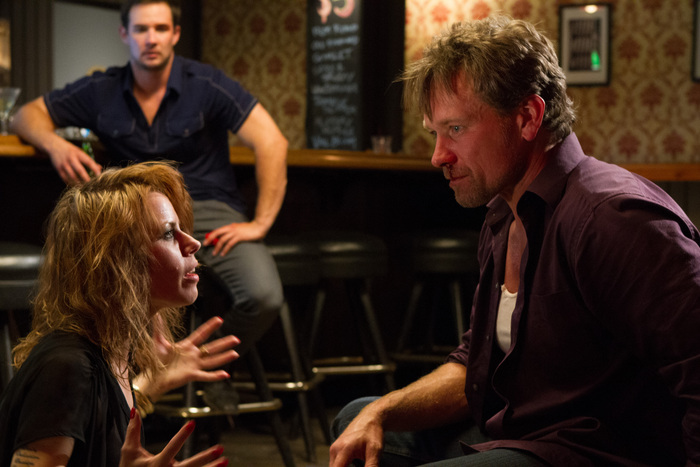
Fairuza Balk, Ryan Merriman (rear) and Rick Ravanello in DOSE OF REALITY

To celebrate the beginning of Cinequest 2015, my weekly DVD/Stream is one of the hits of Cinequest 2013 – the American indie thriller Dose of Reality. Dose of Reality star Rick Ravanello also has the lead in Withdrawal, a short playing Cinequest 2015 in the BARCO Escape 1 Short Program on March 1, 7 and 8.

Dose of Reality packs wire-to-wire intensity and a surprise ending that no one will see coming. A woman is found in a bar’s restroom after closing time, apparently beaten and raped, but unable to remember by whom. Two bar employees are the only possible suspects. Both deny it, and the woman launches a series of searing mind games to determine her attacker.

Fairuza Balk (American History X, Almost Famous) commands the screen as the woman. Her character, starting from a place of utter victimization, becomes totally dominant over the men. The most interesting of the guys is played by veteran TV actor Rick Ravanello, (106 acting credits on IMDb). Ravanello’s eyes have an uncommon capacity to credibly take the character through dimness, cunning, tweaked impairment, guilt and terror.

It’s a plenty compelling movie for the first 75 minutes, but Dose of Reality is all about the Big Surprise at the end – which is a shocker on the scale of The Crying Game. Afterward, I was able to reflect back and identify at least four clues in the story, but every one of the 250 audience members at Dose of Reality’s Cinequest world premiere was rocked by the surprise on first viewing. Actor Ravanello recounts that when he first read the script, he got to the end and blurted “No Fucking Way!”. Writer-director Christopher Glatis has a real winner in Dose of Reality.

Dose of Reality is available on DVD from Netflix and streaming on Amazon Instant Video, iTunes, Vudu, YouTube, GooglePlay and some other VOD outlets.