
In the lovely and genuine The August Virgin, 33 year-old Eva (Itsaso Arana) is between relationships, not defined by any career success, and her biological clock is ticking. She knows it’s time for a reset. In August, Eva borrows an acquaintance’s apartment in another Madrid neighborhood and sets off on a series of strolls, in search of possibilities as yet unknown.
Many madrileños escape the city’s oppressive heat for the month of August. But Madrid is still filled with street festivals and tourists. Eva meanders around town, encountering old friends and making new ones. As Eva notes, in Madrid’s August, expectations are relaxed.
Eva is purposeful about shaking things up, but she has no plan other than to be open to the possibilities. That openness, with its fluidity and randomness, leads her to her moment of reinvention.
Eva is played by the film’s co-writer, Itsaso Arana. What’s so singular about Arana’s performance is that her Eva, as dissatisfied as she is with her current situation, is always comfortable in her own skin. She’s never desperate or needy (except when trying to negotiate a reluctant door lock) and always confident enough to engage with a stranger. At one point, the Spanish pop star Soleá sings, “I’ve still got time. I’m still here.”
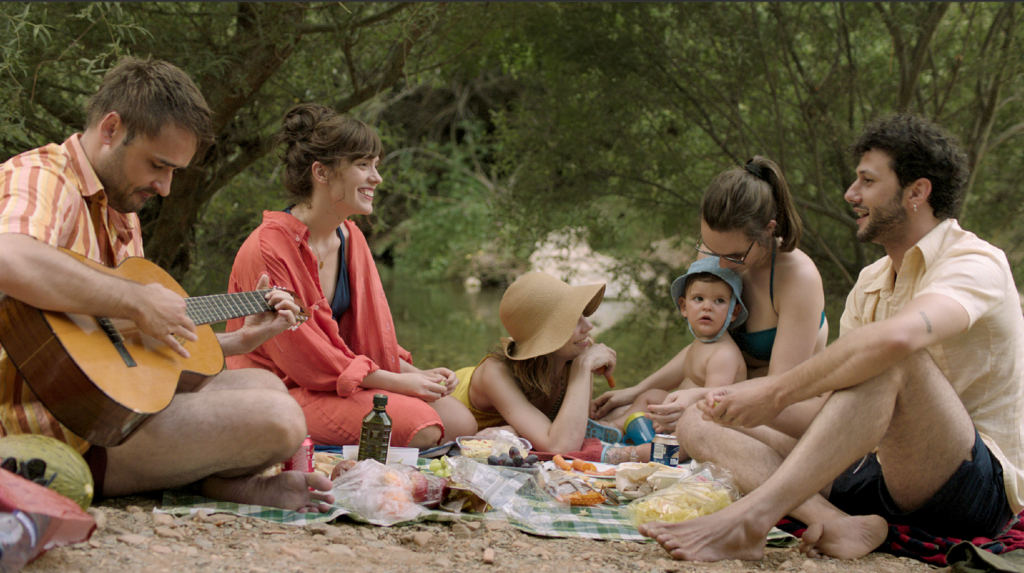
The August Virgin’s other co-writer is director Jonás Trueba, and this is his sixth feature. I recently watched his next most recent film The Reconquest (La Reconquista) on Netflix, and it’s another intensely personal and genuine story, about two 30-year-olds reconnecting 15 years after a teen crush. Jonás Trueba is the son of Oscar-winning director Fernando Trueba (Belle Epoque, Chico & Rita).
Several critics have seen Trueba’s work as an homage to French New Wave filmmaker Éric Rohmer, but I found The August Virgin, with Eva’s serial conversations (real, probing conversations), reminded me of the more accessible work of Richard Linklater.
Madrid itself is on display here, with its searing daytime sun, and the liveliness of the streets, tapas bars and after-hours clubs when the sun goes down.
Trueba and Arana allow Eva her process, and she samples one experience after another, seemingly with the faith that one of them will lead her to where she wants to be. This is not a film for the impatient, but I found its two hours enchanting.
The August Virgin is on my list of Best Movies of 2020 – So Far and will be available to stream beginning Friday, August 21 on Virtual Cinemas, like San Rafael’s Rafael or Laemmle’s in LA.