Sun Don’t Shine: shaky cam noir

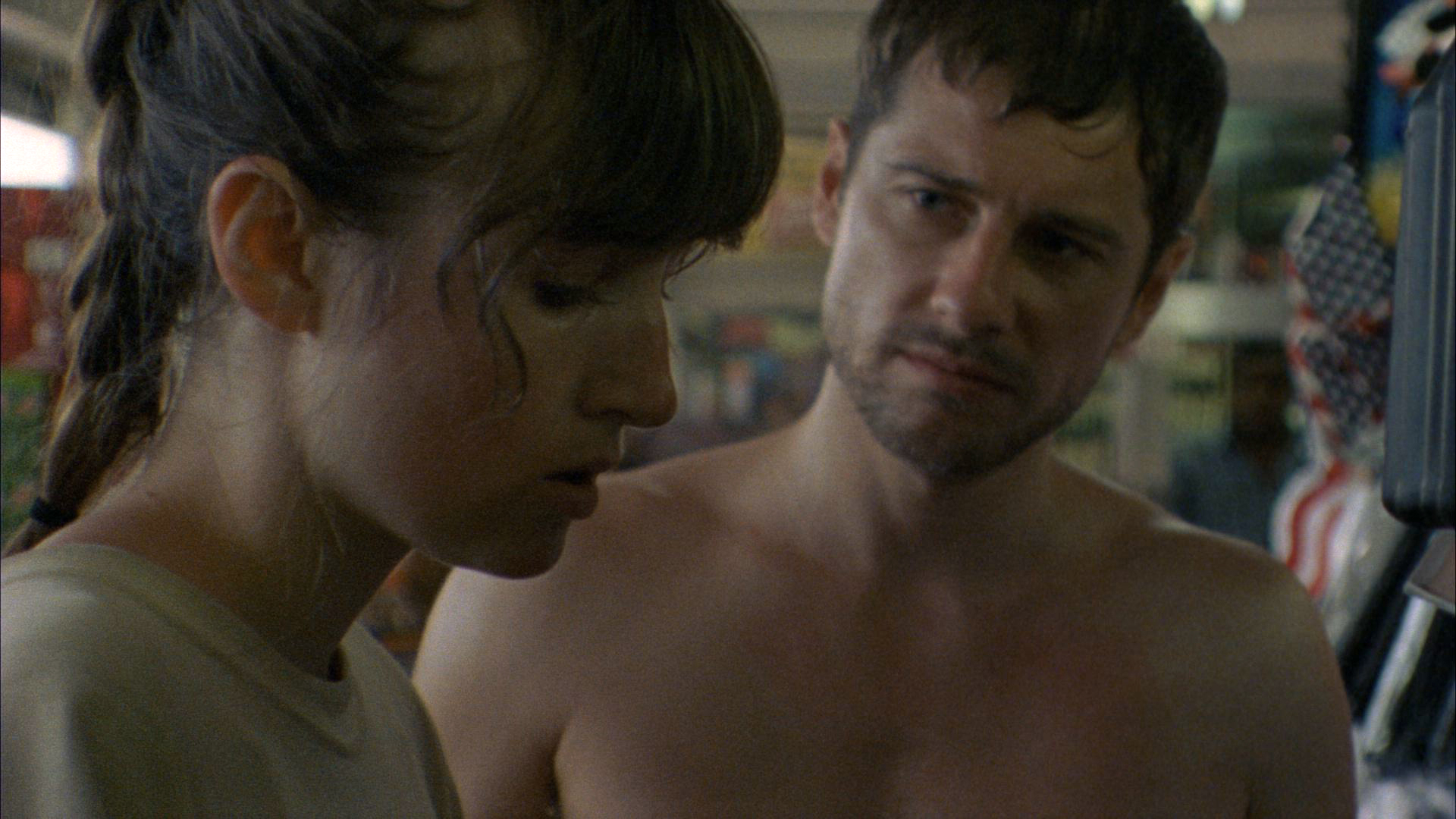
Kate Lyn Shein and Kentucker Audley in SUN DON'T SHINE

Thirtyish Crystal and Leo are on the run and coaxing his weathered (and probably uninsured) sedan through central Florida.  Crystal is a white-hot mess.  I was going to describe her as needy and erratic, but those adjectives seem inadequate.  She is a unfiltered, explosive bundle of nerves, filled with impulses that are unfailingly ruinous.  The suspense in Sun Don’t Shine stems from whether Leo can navigate an escape path through her emotional minefield; we can tell from the neo-noir undercurrent that she’s going to bring him down no matter what.

In her first feature, writer-director Amy Seimetz combines a command of pacing with a Malickesque visual sense.   Watching her sweaty characters, we can feel both the Floridian humidity and the relief from air conditioning in a tourist trap. (A promising actor, Seimetz just turned in a compelling performance in the controversial Upstream Color.)  

The strength of the screenplay is that the audience only gradually learns why the two are on the run, from what and to where.  However, those revelations are not surprising.  Fortunately, Seimetz has chosen not to send her characters on yet another hyper-violent nihilistic crime spree.

But why doesn’t Leo leave Crystal on the side of the road and drive the hell away?  After about fifteen minutes, we know that’s his only chance.  He’s not very bright, but he is grounded in reality, and we wonder why he is so drawn to this wackadoodle. It may be a fim noir, but she sure isn’t Mary Astor’s Brigid O’Shaughnessy in Maltese Falcon

Watching Sun Don’t Shine is a 96-minute simulation of having an annoyingly clingy and scarily volatile girlfriend.  Long ago my friend Steve advised me, “Never sleep with anyone crazier than you are”.  Sage words, my friend.

Sun Don’t Shine is available for streaming from Amazon Instant and other VOD outlets, and is beginning a limited theatrical release.
DVD of the Week: The Paperboy

Set in 1969 Florida, The Paperboy is a coming of age film nestled within a deliciously pulpy crime drama.  The story is centered around an overlooked younger son (talented up-and-comer Zac Efron) who is thrilled when his older brother (Matthew McConaughey) returns to their swampy backwater after making it in the big time of Miami.  The older brother is an investigative reporter who seeks the truth about a sensational death row case.

The strength of the film is in the supporting characters.  David Oyelowo plays the older brother’s cynical and self-absorbed partner.  John Cusack’s death row inmate is utterly animalistic, a real departure for Cusack.  Nicole Kidman plays the convict’s pen pal fiance; the younger brother falls for her, but she’s apparently screwing everyone except him.

But the surprise performance in The Paperboy is by recording artist Macy Gray, who plays the family domestic.  With complete authenticity, Gray is playful, hurt, dignified, angry, funny, tough, cagy and vulnerable and, as the narrator, she keeps the movie together.  It’s a really superb performance, and I look forward to seeing Gray in more high profile parts.

This is director Lee Daniels’ follow up to his heart rending Precious.  Once again, his  character driven story-telling is first rate.  The Paperboy is dark, violent, sexy and gripping with vivid characters.

Watch for Kidman’s particularly alarming treatment for jellyfish stings.

DVD of the Week: Elena

Elena is a superbly crafted film that vividly peeks into a dark, very dark contemporary Russia.  Directed and co-written by Andre Zvyagintsev (The Return), Elena is the triumph of drama over melodrama.  There is an absolute minimum of on-screen action and no histrionics at all, yet the story simmers throughout. It’s on my list of Best Movies of 2012 – So Far.

Zvyagintsev builds the story upon his characters.  It is set in a toney apartment in a quiet upscale Moscow neighborhood, home of Vladimir and Elena.  Vladimir is pushing 70 and rich.  I doubt that any softies got rich in post-Soviet Russia, and Vladimir is a hard man, devoid of sentimentality except for his estranged daughter.   Late in life, he has married the working class Elena, his one-time nurse, now in her 50s.  They have a comfortable, frank, affectionate and practical relationship.

Both have adult children from previous marriages.  Vladimir’s daughter Katerina has no use for her father, but he subsidizes her lifestyle of perpetual partying.  Vladimir and Katerina finally share a moment, bonding over their shared cynicism.

Elena’s nogoodnik son Sergey lives in a hard scrabble suburb and embraces his chronic unemployment with alarming indolence.  His equally lazy and selfish teenage son, having an indifferent high school career, is now facing the dreaded Army unless someone can bribe his way into a college.

Elena is desperate to rescue her grandson from his self-inflicted predicament, but only Vladimir’s money can help, and Vladimir despises Elena’s trashy and shiftless family.  The movie is built on this conflict, and it is Elena’s story.   As Elena, the actress Nadezhda Markina reveals Elena’s affection, desperation and determination with her eyes, face and movements.  Perfectly framing Markina’s outstanding performance by isolating it, Zvyagintsev delivers the film in a series of long shots, with terse dialogue and a spare soundtrack. There is no expository dialogue explaining the plot or swelling music manipulating our reaction.

Elena is a dark movie that asks its audience to invest patience, thought and energy – so it’s not for everybody.  Elena is also one of the year’s best films, and an extraordinary example of a very pure breed of filmmaking.

The Paperboy: a trashy Nicole Kidman and a canny Macy Gray

Set in 1969 Florida, The Paperboy is a coming of age film nestled within a deliciously pulpy crime drama.  The story is centered around an overlooked younger son (talented up-and-comer Zac Efron) who is thrilled when his older brother (Matthew McConaughey) returns to their swampy backwater after making it in the big time of Miami.  The older brother is an investigative reporter who seeks the truth about a sensational death row case.

The strength of the film is in the supporting characters.  David Oyelowo plays the older brother’s cynical and self-absorbed partner.  John Cusack’s death row inmate is utterly animalistic, a real departure for Cusack.  Nicole Kidman plays the convict’s pen pal fiance; the younger brother falls for her, but she’s apparently screwing everyone except him.

But the surprise performance in The Paperboy is by recording artist Macy Gray, who plays the family domestic.  With complete authenticity, Gray is playful, hurt, dignified, angry, funny, tough, cagy and vulnerable and, as the narrator, she keeps the movie together.  It’s a really superb performance, and I look forward to seeing Gray in more high profile parts.

This is director Lee Daniels’ follow up to his heart rending Precious.  Once again, his  character driven story-telling is first rate.  The Paperboy is dark, violent, sexy and gripping with vivid characters.

Watch for Kidman’s particularly alarming treatment for jellyfish stings.

Coming up on TV: Night and the City

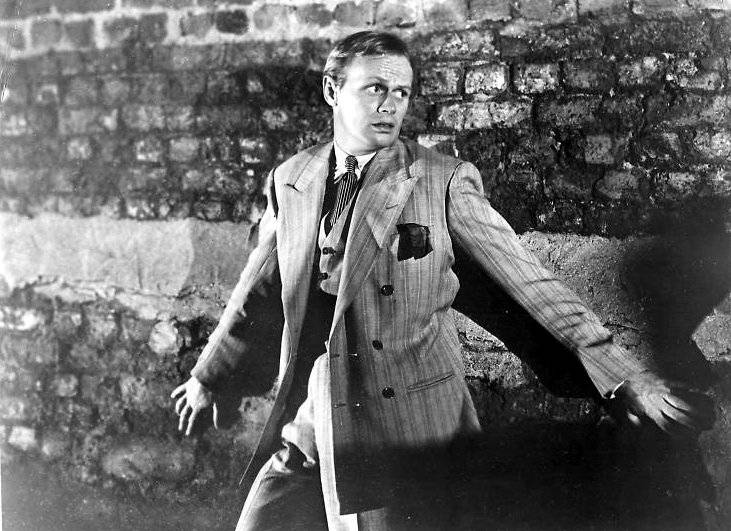
Richard Widmark running out of luck in THE NIGHT AND THE CITY

On July 15, Turner Classic Movies is showing the under appreciated film noir classic Night in the City (1950). Richard Widmark is superb as a loser who tries to corner the pro wrestling business in post-war London – and, as in any noir classic, it doesn’t end well for the sap.

The American director Jules Dassin had just made the noir classics The Naked City and Thieves’ Highway when he shot Night and the City in the UK. He was blackballed in the McCarthy Era and never moved back to the US.

At the request of a studio exec, Dassin created a role in Night and the City for the stunningly beautiful but emotionally fragile Gene Tierney. The cast also includes real life wrestlers Stanislaus Zbyszko and Mike Mazurki.

Night in the City (along with The Wrestler) represents wrestling on my list of Best Sports Movies, and there’s a clip of an extended wrestling scene from the movie on that page. (Also, Dassin’s Brute Force makes my list of Best Prison Movies.)

Elena: a vividly dark peek into contemporary Russia

Elena is a superbly crafted film that vividly peeks into a dark, very dark contemporary Russia.  Directed and co-written by Andre Zvyagintsev (The Return), Elena is the triumph of drama over melodrama.  There is an absolute minimum of on-screen action and no histrionics at all, yet the story simmers throughout.

Zvyagintsev builds the story upon his characters.  It is set in a toney apartment in a quiet upscale Moscow neighborhood, home of Vladimir and Elena.  Vladimir is pushing 70 and rich.  I doubt that any softies got rich in post-Soviet Russia, and Vladimir is a hard man, devoid of sentimentality except for his estranged daughter.   Late in life, he has married the working class Elena, his one-time nurse, now in her 50s.  They have a comfortable, frank, affectionate and practical relationship.

Both have adult children from previous marriages.  Vladimir’s daughter Katerina has no use for her father, but he subsidizes her lifestyle of perpetual partying.  Vladimir and Katerina finally share a moment, bonding over their shared cynicism.

Elena’s nogoodnik son Sergey lives in a hard scrabble suburb and embraces his chronic unemployment with alarming indolence.  His equally lazy and selfish teenage son, having an indifferent high school career, is now facing the dreaded Army unless someone can bribe his way into a college.

Elena is desperate to rescue her grandson from his self-inflicted predicament, but only Vladimir’s money can help, and Vladimir despises Elena’s trashy and shiftless family.  The movie is built on this conflict, and it is Elena’s story.   As Elena, the actress Nadezhda Markina reveals Elena’s affection, desperation and determination with her eyes, face and movements.  Perfectly framing Markina’s outstanding performance by isolating it, Zvyagintsev delivers the film in a series of long shots, with terse dialogue and a spare soundtrack. There is no expository dialogue explaining the plot or swelling music manipulating our reaction.

Elena is a dark movie that asks its audience to invest patience, thought and energy – so it’s not for everybody.  Elena is also one of the year’s best films, and an extraordinary example of a very pure breed of filmmaking.

Coming up on TV: Night and the City

Richard Widmark running out of luck in THE NIGHT AND THE CITY

On March 25, Turner Classic Movies is showing the under appreciated film noir classic Night in the City (1950).  Richard Widmark is superb as a  loser who tries to corner the pro wrestling business in post-war London – and, as in any noir classic, it doesn’t end well for the sap.

The American director Jules Dassin had just made the noir classics The Naked City and Thieves’ Highway when he shot Night and the City in the UK.  He was blackballed in the McCarthy Era and never moved back to the US.

At the request of a studio exec, Dassin created a role in Night and the City for the stunningly beautiful but emotionally fragile Gene Tierney.  The cast also includes real life wrestlers Stanislaus Zbyszko and Mike Mazurki.

Night in the City (along with The Wrestler) represents wrestling on my list of Best Sports Movies., and there’s a clip of an extended wrestling scene from the movie on that page.  (Also, Dassin’s Brute Force makes my list of Best Prison Movies.)

DVD of the Week: Drive

Drive is a movie that you haven’t seen before – a stylishly violent noir tale unfolding on a brilliantly filmed canvas.

Ryan Gosling stars as a stunt driver by day, criminal getaway driver by night.  He hardly talks and doesn’t emote.  Indeed, his character is listed in the credits as “Driver” and sometimes referred to in the dialogue as “The Kid”.  He is motivated only by his pursuit of adrenaline rushes and the opportunity to do something good for a vulnerable mom (Carey Mulligan).  Indeed, Gosling is superb.

But the real star of Drive is its Danish writer-director, Nicolas Winding Refn.  The film has a noir plot but Refn eschews the shadowy black and white of traditional noir for especially vivid scenes of Los Angeles.  For example, early in the film, Gosling enters a convenience store and the screen is filled with the garish colors of junk food packaging.  It’s one of the most artfully lit and photographed scenes in the last year.

Drive abounds in nice touches. While being hunted by the cops, Gosling’s driver is listening to both the police scanner and a radio broadcast of the Lakers game; unexpectedly, it turns out that there is an essential reason that he’s listening to the Lakers.

This movie contains some extreme violence – violence that is intentionally extreme for its effect.

The cast is excellent, with especially memorable turns by Albert Brooks, Bryan Cranston (Breaking Bad) and Oscar Isaac.

(I admired Refn’s 2008 Bronson, the story of a Britain’s “most dangerous convict” who parlayed a seven-year sentence into 34 years (30 of them in solitary) by repeatedly taking hostages and beating up the SWAT teams that rescue them.   Roger Ebert called Bronson “92 minutes of rage”.)

Drive has been nominated for the Sound Editing Oscar (but is up against some tough competition).

Blogging from Noir City: It’s Bad Girl Night!

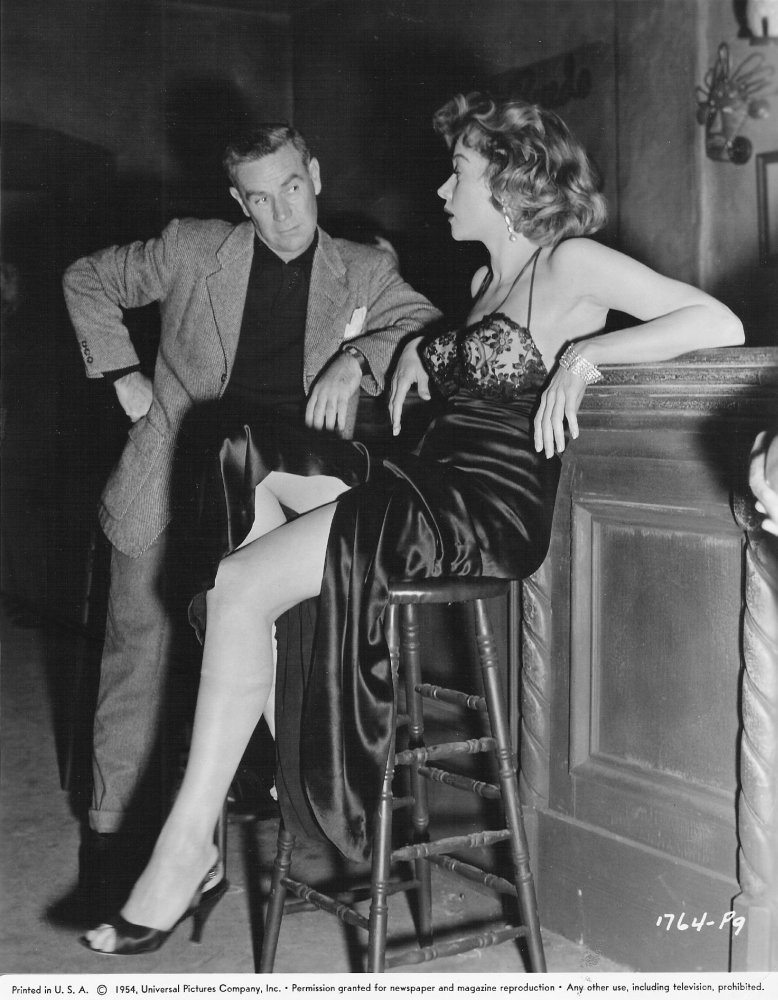
Gloria Grahame with Director Jerry Hopper on the set of NAKED ALIBI

Last night I had a great time at Noir City, the 10th annual San Francisco Film Noir Festival.  Noir City is spearheaded by the film noir expert Eddie “The Czar of Noir” Muller.  Its website also includes top rate film noir resources and merchandise.

Last night’s program was a double feature that is not available on DVD.  In fact, Universal went into its vault for the negative and made what is now the only print of Naked Alibi (1954) for this screening.    Naked Alibi  features Gene Barry as a seemingly regular guy with a violent and unpredictable temper.  Sterling Hayden is a cop from the “I’ll beat a confession out of him” school of law enforcement; Hayden’s obsession, without any apparent empirical basis, is that Barry is a cop killer.  They both vie for Gloria Grahame, a sexy saloon singer with a heart of gold.

Film noir is dependent on its femme fatales and Gloria Grahame may be my all-time fave.  Many of you remember her as the slutty Violet in It’s a Wonderful Life and as Bogie’s co-star in the drama In a Lonely Place.  The fact that Gloria was a Bad Girl in real life doesn’t hurt.  I thank Mark A. Clark and his great blog Film Noir Photos for the great photo above.

The second film was Pickup, a lively and cynical low budget indie from 1951.  The writer/director Hugo Haas made several of these films in the early 50s.  As usual, in Pickup, Haas stars as the middle aged sap in the thrall of a young hottie.  Two things make Pickup an absolute howl.  First,  Haas loses his hearing; when he unexpectedly recovers his hearing, he doesn’t let on that he can hear his trashy young wife and her beau plot to kill him for his money.   Second, Beverly Michaels plays the femme fatale so broadly, creating one of the most unashamedly selfish characters in screen history – a floozy totally devoid of empathy.  Only Ann Savage in Detour was a nastier noir villainess.


DVD of the Week: The Last Lullaby

This is a surprisingly brilliant contemporary noir film from 2008 (that I KNOW that you haven’t seen).  Tom Sizemore plays a retired hit man, a professional loner now living what would be a comfortable loner life (except for his chronic insomnia).  He is offered a very large sum to take out a librarian (Sasha Alexander), but he is attracted to her and wonders why?  And, as in any noir film, is she the innocent that she seems?  Sizemore’s performance and a smart screenplay by Peter Biegen and Max Alan Collins carry this film, and Alexander is good, too.

Other recent DVD picks have been Road to NowhereTinker, Tailor, Soldier Spy, Poetry, Queen to Play and Kill the Irishman.