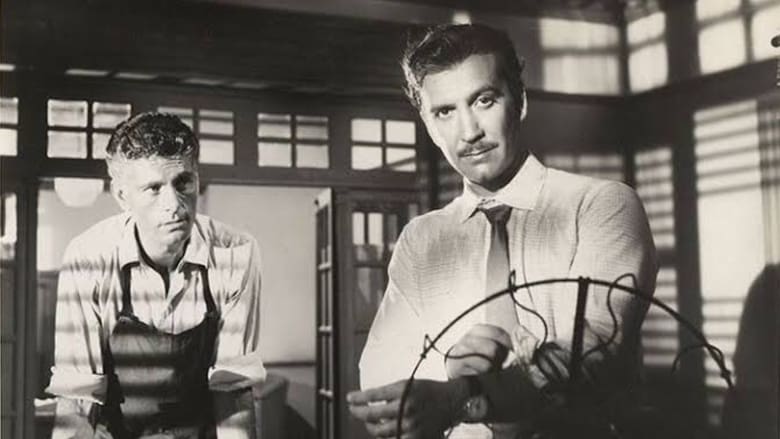
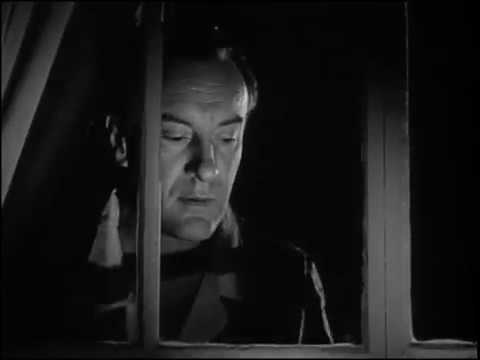
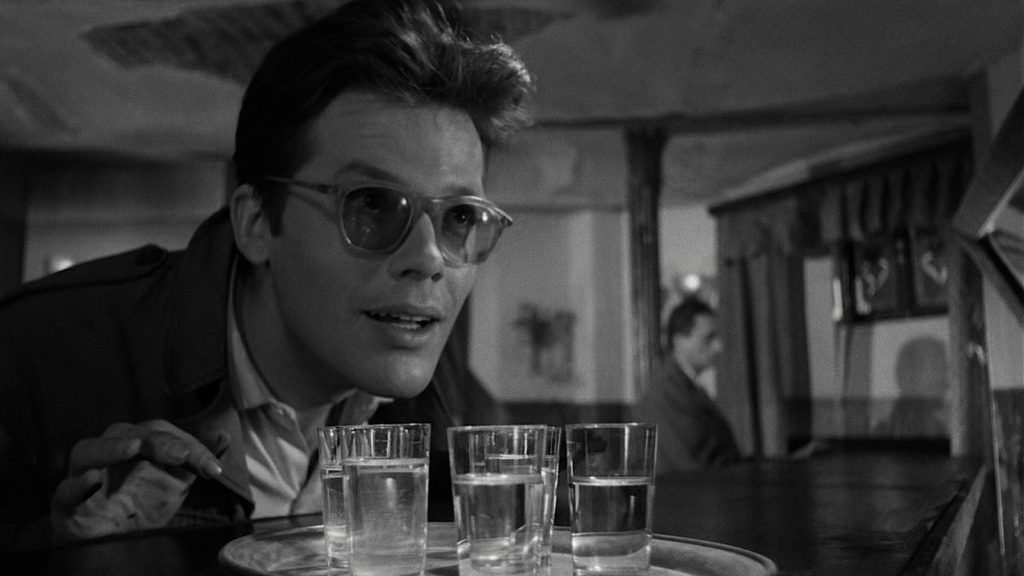
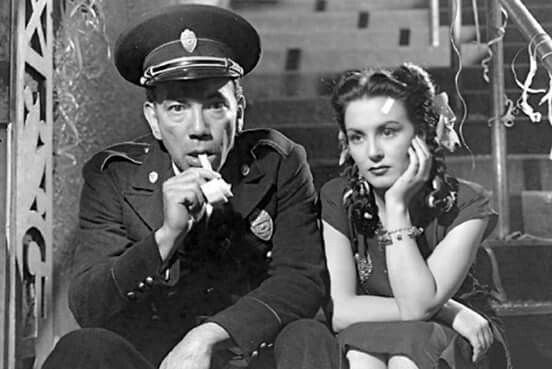
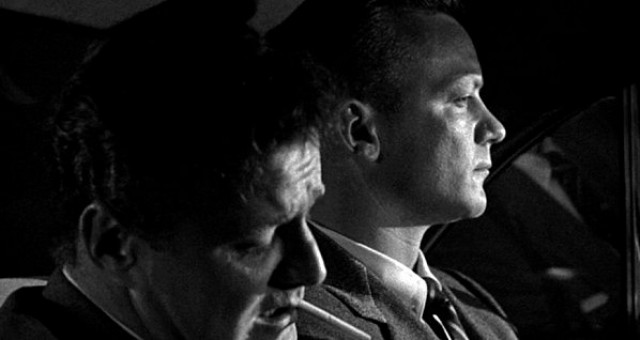
Photo caption: Vassili Lambrinos and Carlos Cores in BITTER STEMS
Turner Classic Movies brings us a rare treat this Saturday and Sunday, July 17-18, the recently recovered Argentine masterpiece of film noir – The Bitter Stems (Los tallos amargos). TCM will air it on Eddie Muller’s Noir Alley.
The Bitter Stems was listed as one of the “50 Best Photographed Films of All-Time” by American Cinematographer. It won the Silver Condor (the Argentine Oscar) for both Best Picture and Best Director (Fernando Ayala).
The Bitter Stems was thought to be lost until a print was discovered in a private collection in 2014 and restored with the support of Muller’s Film Noir Foundation. I saw it – and was enthralled – at the 2016 Noir City film festival in San Francisco. That was probably The Bitter Stem’s US premiere and probably the first time that it was projected for any theater audience in over fifty years.
There is often an Icarus theme in film noir, with protagonists who over-reach and risk a lethal fall. Here, Gaspar (Carlos Cores), a grasping Argentine journalist, conspires with Hungarian immigrant Liudas (Vassili Lambrinos) to concoct a fraud that will make them a quick and easy fortune. Unfortunately, the scheme requires a hamster-in-the-wheel effort to stay ahead of collapse – and everything must go just right…
Lambrinos’ performance is particularly sui generis.
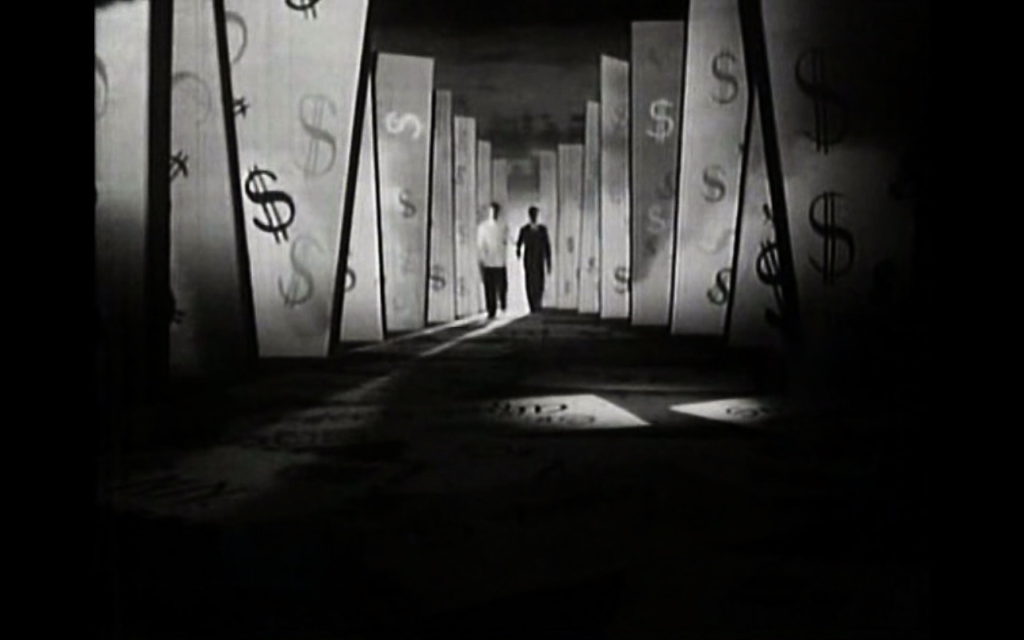
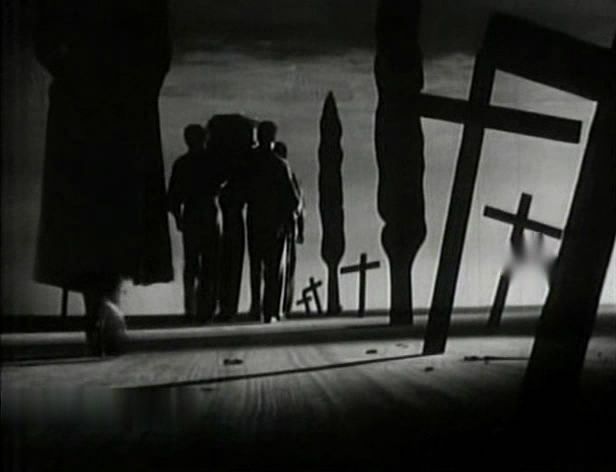
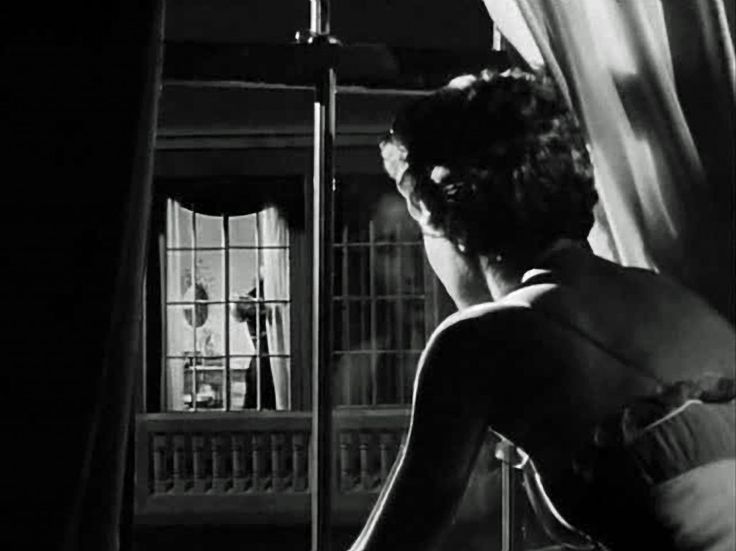
This was a very early film for director Fernando Ayala, who went on to establish himself as one of Argentina’s major directors. Cinematographer Ricardo Younis had studied under Greg Toland, who originated the groundbreaking techniques in Citizen Kane. Ayala and Younis combined to create the film’s storied dream sequence – one of the most surreal in cinema (see images below).
The Bitter Stems (Los tallos amargos) is a masterpiece, but almost nobody has seen it in over fifty years. Don’t miss it this time – set your DVR.
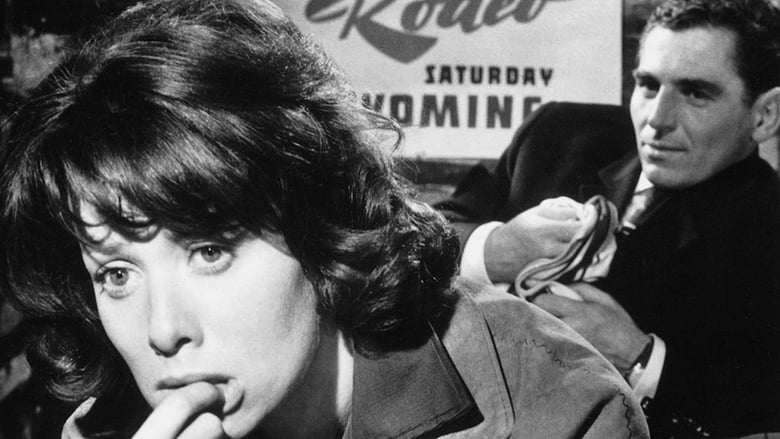
On January 16 and 17, Turner Classic Movies is airing the gripping and hard-to-find Witness to Murder. Richter (George Sanders) and Cheryl (Barbara Stanwyck) live in neighboring apartments. Cheryl believes she has seen Richter murder someone, but Richter’s clever and ruthless duplicity makes it appear that Cheryl is just crazy. Will Police Lt. Larry Mathews (Gary Merrill) believe her before Richter can make Cheryl his second victim?
What a wowzer first scene! Witness to Murder opens with a gripping scene that economically sets up the plot. “Operator, get me the police! Hurry!” We know immediately and certainly that Richter really committed the murder and that Cheryl really saw it. Throughout the movie, the audience knows this and Richter knows this, but no one else does, and neither does Cheryl herself during segments of the story.
Cheryl reports the murder and the police (Larry Mathews and sidekick) respond. However, Richter has concealed the crime so well that cops can’t find any evidence that a crime occurred. Could Cheryl have been mistaken? Or dreamed it? or made it up? or hallucinated? Is she neurotic and mildly hysteric or is she psychotic and delusional?
Larry develops an immediate attraction to Cheryl, and, despite her apparent emotional instability, begins a courtship.
Richter (malevolently) and Larry (paternalistically) begin gaslighting Cheryl, trying to convince her that she really only imagined what she saw – trying to convince her that what seemed so real, was not. Cheryl starts doubting herself.
Of course, Richter knows that he committed the murder, and he knows that Cheryl knows. To get her out of the way, he schemes to have her seen as crazed stalker. His scheme drives her to an outburst that serves as a pretext for locking her up in a psychiatric facility (with an interview by an oddly brusque shrink). Richter’s attempts to murder Cheryl continue right into Witness to Murder’s Perils-of-Pauline ending.
On this weekend’s TCM broadcast of Witness to Murder, film historian Eddie Muller – the Czar of Noir – will provide his always insightful intro and outro. Witness to Murder is not available to stream; I own the DVD. Be sure to DVR it when it airs on Turner Classic Movies.
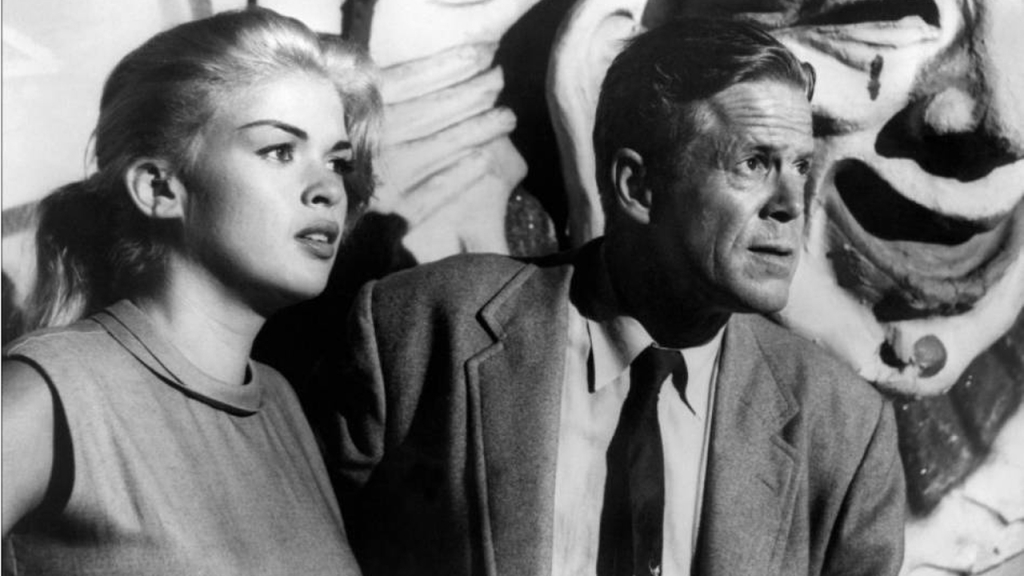
Turner Classic Movies is presenting one of my Overlooked Noir on December 12, and you shouldn’t miss it. The Burglar (1957) is known popularly as the movie debut of Jayne Mansfield, but it’s a fine film noir. It starts out with a tense burglary, but once the necklace is successfully burgled, the story focuses on the heist team going stir crazy as they wait for the environment to cool down so they can safely fence the booty. They are strung so tight that even the whistle of a tea kettle is enough to startle the gang. While dodging the cops, they find that they are also being hunted by a corrupt rogue cop and his partner.
The core of The Burglar is the stellar lead performance of Dan Duryea as the chief burglar. He’s a tortured and worn-out guy – with one deep loyalty.
There are plenty of noir moments – lots of shadows, uplit faces in the darkness and amoral, grasping characters. We have not one, but two noir vixens – Jayne Mansfield and Martha Vickers. Asked at a bar by Duryea what she wants, Vickers answers “Basically, I’m out to find myself a man.” The characters in this fine film noir find themselves in Atlantic City, where the bad cop chases the protagonists through the House of Horrors and the Steel Pier, culminating in a final confrontation under the boardwalk.
The acting is excellent, other than Peter Capell, who gives over-acting a bad name while playing the most nerve-wracked member of the gang. Even Mansfield is good; (The Burglar was held in the can for two years and then released when Mansfield became a sensation with The Girl Can’t Help It).
The movie was shot on location in Philadelphia and Atlantic City. We see Independence Hall, and it’s hard not to think of Rocky when Duryea climbs the steps to the Philadelphia Museum of Art.
The Burglarplays from time to time on Turner Classic Movies and is available streaming on Amazon, AppleTV, Vudu, and other platforms.
[Note: The Burglar features John Facenda as his real-life role as a Philadelphia newscaster (when local TV stations aired 15-minute newscasts). Facenda later found much broader fame as “The Voice of God” for his narration for NFL Films football documentaries.]
Here’s a once-in-a-pandemic film noir experience, the opportunity to see classic film noir that you can’t see anywhere else. The Noir City International at the AFI Silver is available to stream through November 29.
Noir City is the annual festival of the Film Noir Foundation, spearheaded by its founder and president, the Czar of Noir, Eddie Muller. The Foundation preserves movies from the traditional noir period that would otherwise be lost. Noir City often plays newly restored films and movies not available on DVD or streaming.
This January, as usual, I attended this year’s festival, sharing the program with a thousand other film fans in a vintage movie palace, San Francisco’s Castro Theatre. In normal years, Eddie Muller then takes the program on the road, but the pandemic eliminated the satellite Noir City mini-fests in other cities. Good news – this year’s festival program is streaming through the AFI Silver so everyone can watch it at home.
This year’s program is Noir City International 2 – l focusing on international film noir, as it did so successfully six years ago. Then I was enthralled by the Argentine Bitter Stems and the Swedish Girl with Hyacinths, and must admit that I had never even imagined that vintage film noir from those nations existed. This year’s fest brings us titles from Argentina, France, Germany, Korea, Japan, Czechoslovakia, Italy, and Poland.
One of best things about Noir City is the opportunity to see films that are not available to stream. This year Noir CIty is outdoing itself by presenting SIX films that can’t found on a streaming platform, most of them impossible to see outside of Noir City in any format.
Black Gravel (West Germany 1961)
The Black Vampire (Argentina 1953)
…And the Fifth Horseman Is Fear (Czechoslovakia 1965)
The Devil Strikes at Night (West Germany 1957)
Panique (France 1947)
Razzia (France 1955)
Pale Flower, Ashes and Diamonds and Any Number Can Win are only available to stream periodically on the Criterion Channel.
“Difficult to find” doesn’t mean “obscure”. The program includes films directed by Michelangelo Antonioni, Jean-Pierre Melville and Roebert Siodmak and starring Ingrid Bergman, Jean Gabin, Alain Delon and Jean-Paul Belmondo.
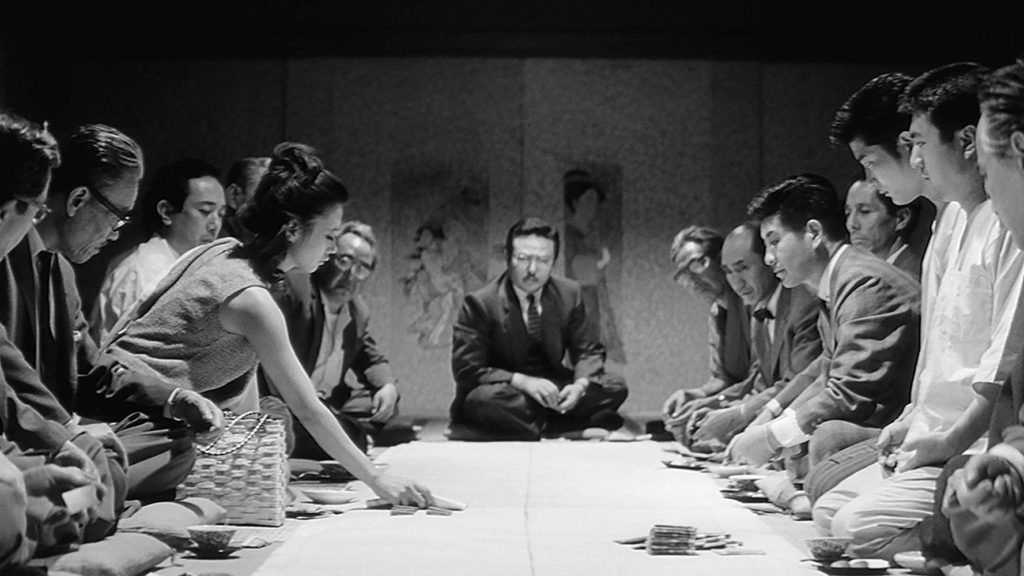
PALE FLOWER
My personal favorites on the program:
Pale Flower: Writer-director Masahiro Shinoda’s masterpiece is a slow burn that erupts into breathtaking set pieces. This is pioneering neo-noir; its look and feel is as different from classic noir as are Elevator to the Gallows and Blast of Silence.
Black Gravel: This tragic romance is set in post-war Germany, a Petri dish for hustlers. Rarely has a movie plot swung as rapidly between They’re gonna get caught – No, they’re gonna get away with it – No, They’re gonna get caught – No, they’re gonna get away with it – No, They’re gonna get caught – No, they’re gonna get away with it – No, They’re gonna get caught.
Ashes and Diamonds: Auteur Andrzej Wajda‘s filmmaking gifts are on display in this Hit Man Finds Love tale, set as the Polish Resistance battles for a place in post-war Poland. As kinetic and unpredictable as James Dean, Zbigniew Cybulski makes for an irresistibly charismatic leading man.
The Black Vampire: In this often trippy 1953 remake of Fritz Lang’s M, Nathán Pinzón is AT LEAST AS GOOD as was Peter Lorre in the original.
The offerings also include Leave Her to Heaven with Gene Tierney as the most disturbing female villain in film noir and Detour with Ann Savage as the grungiest and most predatory. The Korean The Housemaid is so bizarre as to defy description. And the coolest middle-aged guy in cinema, Jean Gabin, stars in Razzia and Any Number Can Win.
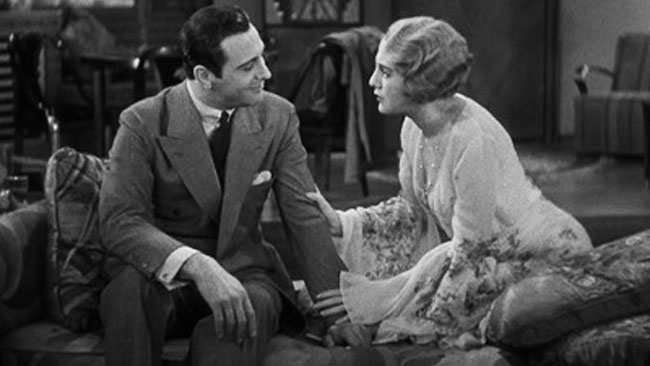
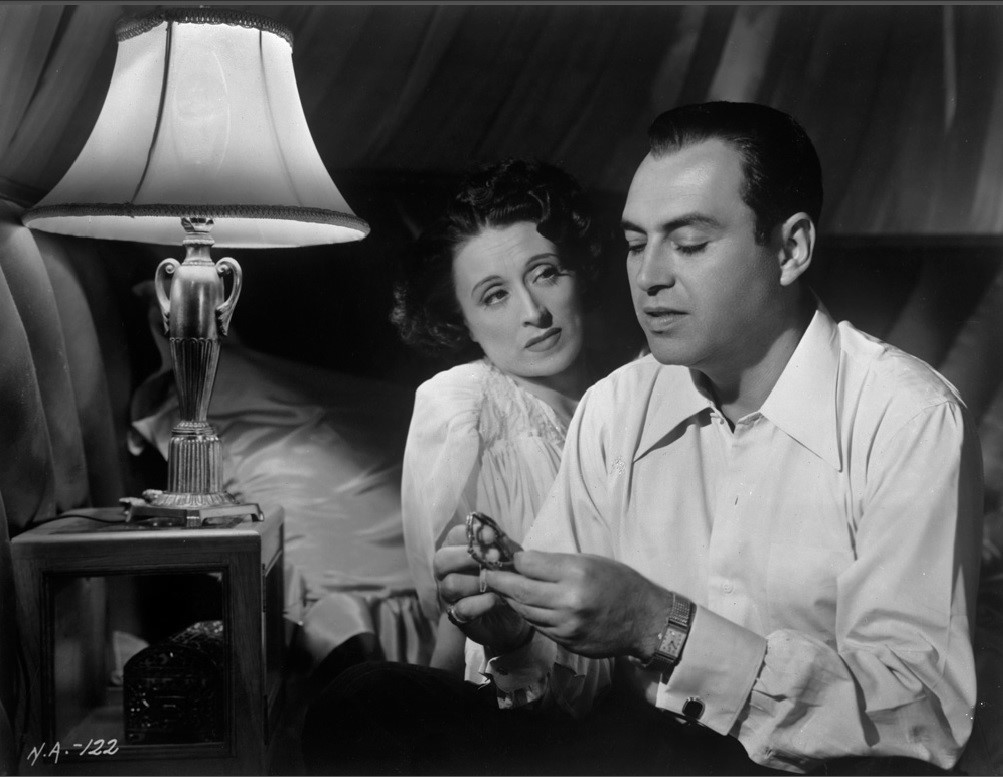
Ricardo Cortez and Bebe Daniels in 1931’s THE MALTESE FALCON
When we think of The Maltese Falcon, the 1941 John Huston film justifiably comes to mind. After all, it’s arguably the first film noir and undeniably influential. It’s also got Humphrey Bogart as an indelible detective Sam Spade and an unsurpassed ensemble cast. But this is only one of three movie versions of Dashiell Hammett’s source novel.
The 1931 movie was a sex comedy, and the 1936 version was a screwball comedy. All three films are united by Hammett’s cynicism.
THE MALTESE FALCON (1931)
unclad Bebe Daniels in 1931’s THE MALTESE FALCON
The first cinematic The Maltese Falcon came out in 1931, only one year after the novel. It was directed by Roy Del Ruth with its screenplay adapted by Maude Fulton, Brown Holmes and Lucien Hubbard. Sam Spade was played by Ricardo Cortez, born Jacob Krantz to Austrian Jewish parents and recast by Hollywood into a Latin Lover.
Cortez’s Sam Spade is lecherous, cocksure, leering and pawing. Indeed, if this Pre-Code The Maltese Falcon is about anything, it’s about sex. It opens with a woman adjusting her hose before leaving Sam Spade’s office, evidence of a just-completed sexual encounter.
Bebe Daniels plays Miss Wonderly/Brigid O’Shaughnessy as sexually aggressive. She’s shown taking an obviously post-coital bath, and deals out lines like “who’s that dame wearing MY kimono?“.
At one point, a large banknote is missing and Spade takes Brigid into an adjoining room and strip searches her. This 1931 movie is the only Maltese Falcon that contains this sequence. What we see on camera is an apparently nude Brigid clutching her clothes behind the door.
As entertaining as this raunchy version is, much of the drama is drained drama from the final confrontation. Spade produces Chinese merchant Lee Fu Gow as an eyewitness to Archer’s murder, resulting in Brigid’s conviction. Then Spade shows up to jail to buy premium perks for Brigid while she is incarcerated. Off-screen, Wilmer kills Gutman and Cairo.
According to film noir expert Eddie Muller, this 1931 Effie (Spade’s secretary), played by Una Merkel, is the closest screen portrayal to the detective’s secretary in Hammett’s source novel.
The Hays Code prevented the re-release of The Maltese Falcon in 1936, which led to the 1936 remake. Because it’s so risque, the complete version of this 1931 film was not screened again in the United States until 1966.
SATAN MET A LADY (1936)
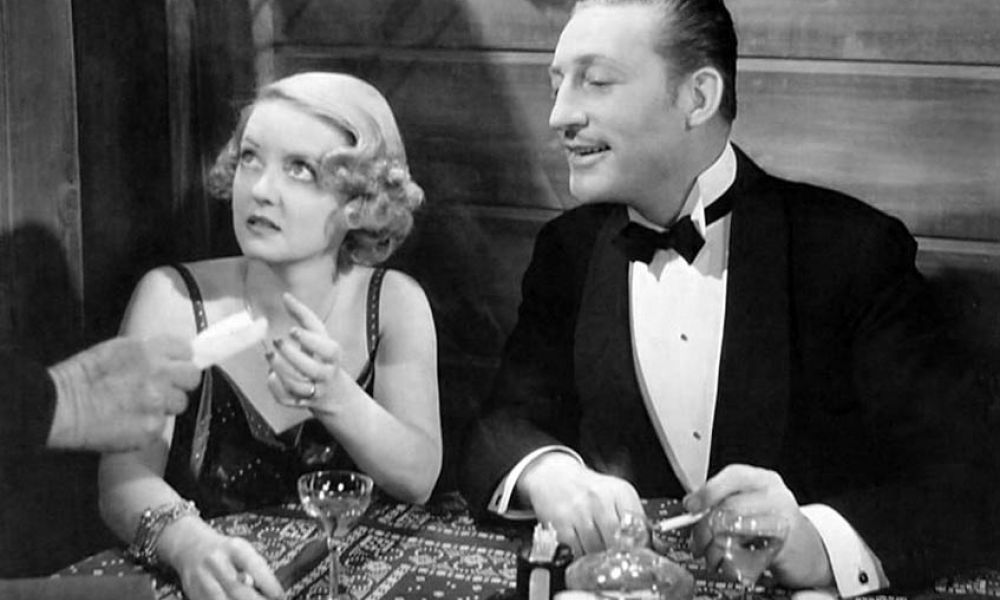
Bette Davis and Warren William in SATAN MET A LADY
That 1936 remake was directed by William Dieterle, with a screenplay by Brown Holmes. It’s more of a screwball comedy than a whodunit. And it’s an actor’s movie – with the stars riffing off their already established screen personae.
Like the title, all of the characters are renamed but recognizable. Warren William plays the shamus Sam Spade, Bette Davis is the Brigid fatale, ditzy Marie Wilson is the Effie, Alison Skipworth is a female take on the Gastman character and Arthur Treacher’s Travers fills the place of the Cairo character. The gunsel is played as an obvious homosexual by purring Maynard Holmes (an effective scene stealer despite being uncredited). And the MacGuffin they’re all chasing is The Horn of Roland, not the black bird.
Warren William was the King of Pre-Code, a leading man who delighted in playing shameless scoundrels. That’s what audiences were expecting, and that’s what they got in Satan Met a Lady. William’s Spade is flamboyant and always looking for a quick buck (and a quickie). Bette Davis matched up well with William, as she did earlier in the political satire The Dark Horse.
Alison Skipworth was already 72 when she made Satan Met a Lady, and her jovial but devious performance is at least as good as Sydney Greenstreet’s in the 1941 version.
Quips fly back and forth in a ping pong of witticisms. And you can’t take your eyes off Maynard Holmes and Marie Wilson whenever they’re on the screen.
THE MALTESE FALCON (1941)
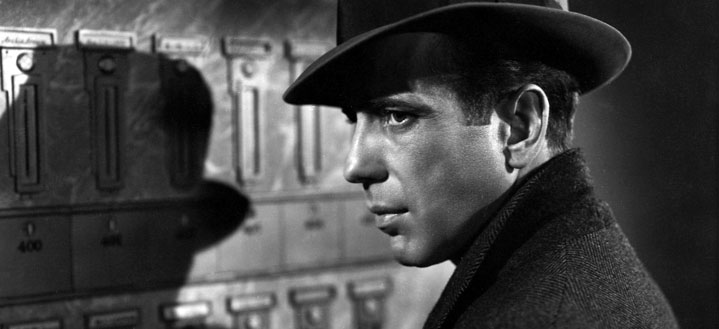
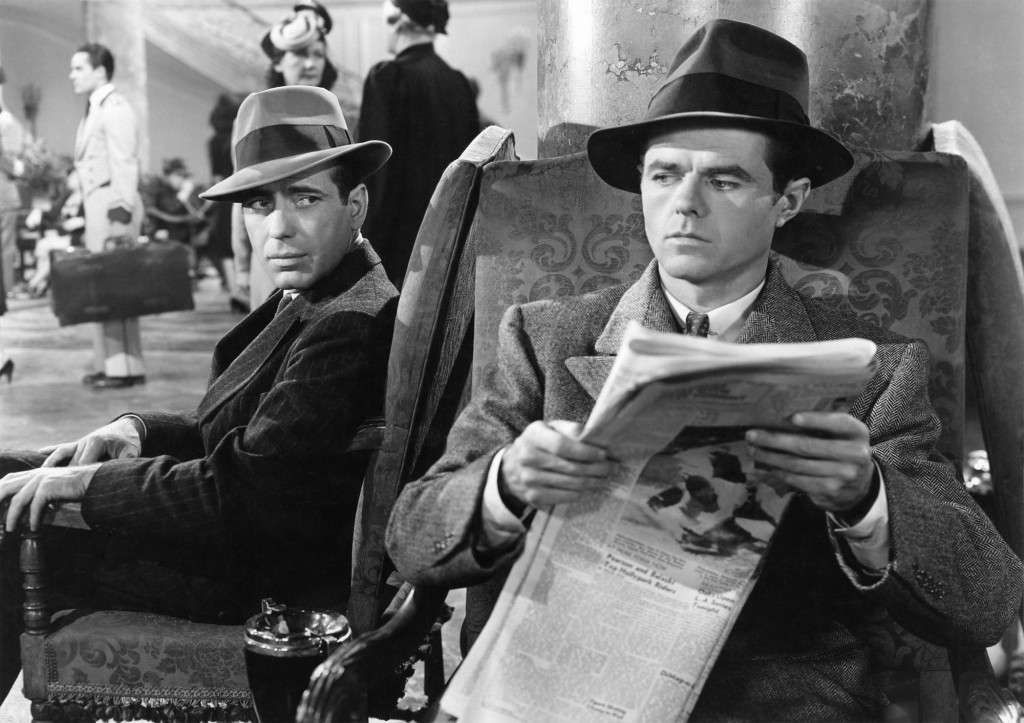
Humphrey Bogart in THE MALTESE FALCON (1941)
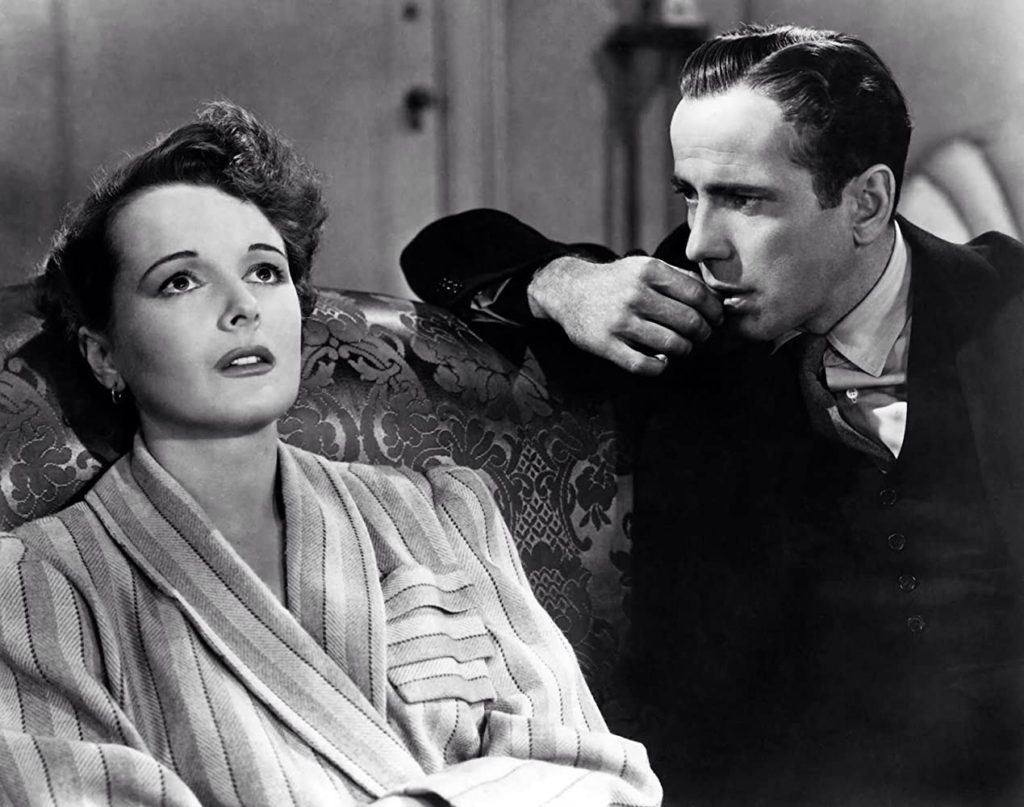
John Huston directed and adapted the screenplay for the 1941 The Maltese Falcon. This is the most famous version because it is by far the best. It’s darker, and virtually every character is richer, and the performances by Humphrey Bogart and Mary Astor are riveting.
Huston’s Maltese Falcon is often called the first film noir, and it’s certainly more influential than the other contenders. Huston and cinematographer Arthur Edeson (Casablanca) teamed up to create innovative camera shots and a a setting every much as shadowy as the characters. You can see The Maltese Falcon‘s look and feel in the entire genre of film noir.
Right away, audiences knew they were looking t something different. We see the shadow of the lettering “Spade and Archer” on the office floor. Spade’s phone is lit by outside streetlights when he gets the call about Archer’s demise. Many faces emerge from the shadows, dramatically lit. Spade leans over to kiss Brigid, and we see over his shoulder, out the window to Wilmer’s stakeout on the street below. Look for the shadows of the curtains blowing behind Spade in the final scene.
You can play a drinking game with the times that Brigid has bars across her, from the shadows of Venetian blinds, the stripes on cloths, and, finally, when the bars of the elevator are pulled across her face.
Bogart was a familiar face in crime movies, usually as the villain dispatched by the hero. But The Maltese Falcon put him on the A-List. Bogart’s Sam Spade was the streetwise, cynical guy looking out for himself, but who still adheres to a code, just like his upcoming iconic roles in Casablanca, To Have and Have Not, The Big Sleep and Key Largo.
Humphrey Bogart trying to assess Mary Astor in THE MALTESE FALCON
Mary Astor’s Brigid O’Shaughnessy is a tour de force. Adorable, captivating and seemingly vulnerable, Astor’s Brigid is SO manipulative. Bogart’s Spade is so jaded that he expects the worst from everyone, but even he can let his guard down for Astor’s Brigid.
Astor was an uncommonly beautiful girl, and, beginning at age 15, she made 49 pictures in the Silent Movie Era. Her best role had been at age 29 in Dodsworth, filmed while she was being tormented by scandalous child custody litigation. Here, the 35-year-old Astor is seasoned enough to play a crafty woman who uses her sexuality without looking like that’s what she’s doing.
Superb performances abound, especially Sydney Greenstreet as the affable but sinister mastermind Gutman and Peter Lorre as the fey hustler Joel Cairo. As Wilmer, Elisha Cook, Jr., delivers the finest depiction of a weak punk, wannabe hard guy before John Cazale’s Fredo in The Godfather.
This was the first movie for the 61-year-old stage actor Greenstreet and the beginning of his on-screen pairing with Peter Lorre. Huston and Edeson film Gutman from below to emphasize his girth and menace. Upon receiving really bad news, the nervous Cairo melts down and Gutman clutches at his carotid artery, but then recovers and embarks in merry greed.
Dashiell Hammett’s world view – that no one can disappoint you as long as you expect them to act only in their craven self interest – pervades all three Maltese Falcons. But Bogart’s Sam Spade, as written by John Huston, elevates the 1941 version. Ever sympathetic, Bogart’s Spade is never cuddly; his partner is not yet in the ground when Spade has the sign painter remove the partner’s name from the office door. And, as would any man, Sam can have feelings for Brigid, but he won’t be her sap.
Elsiha Cook, Jr. finds out that Humphrey Bogart is on to him in the 1941 version of THE MALTESE FALCON
Klaes Bang and Elizabeth Debicki in THE BURNT ORANGE HERESY. Photo courtesy of Cinequest.
In the neo-noir The Burnt Orange Heresy, a shady art critic (Klaes Bang) picks up an adventuresome hottie (Elizabeth Debicki) and is enlisted by a menacing zillionaire (Mick Jagger) to scheme out a painting from a reclusive painter (Donald Sutherland). This being a neo-noir, things don’t go as the critic has planned and it takes him too long to realize that he is the sap in the story.
Klaes Bang (The Square) is just made to play that handsome charmer who is just Up To No Good, the kind of role that would have gone to Zachary Scott in the 1940s. But in The Burnt Orange Heresy, Debicki, Sutherland and Jagger are each so compelling, and their characters are so rich, that they completely overshadow Bang’s critic.
This is also a very talky movie, too much so. All the yakking and Bang’s unrelatability drag down The Burnt Orange Heresy and keep it from engaging the audience. relatibility
Sutherland has such a sparkle as the mischievous painter, and it may be easier to spot it now in the aged actor than forty years ago in MASH or Animal House.
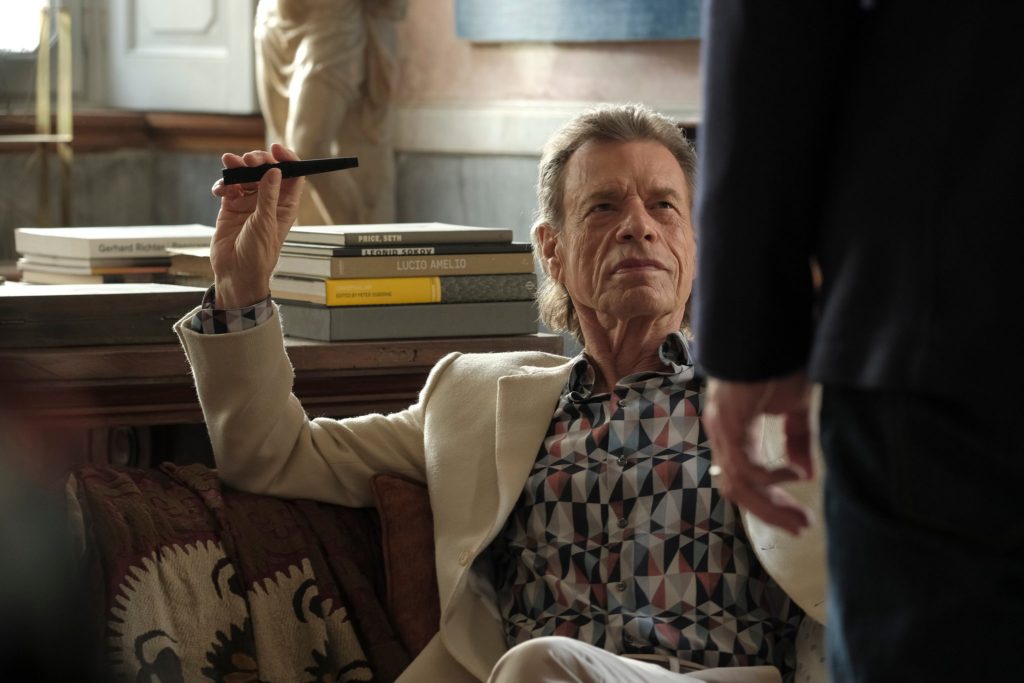
Mick Jagger in THE BURNT ORANGE HERESY
The real surprise here is Mick Jagger. This character, a rich and utterly masterful string-puller, is well within Jagger’s acting range and he nails it. After all, as an actor in fictional narratives, he is best known for two of the very worst movies of 1970: Ned Kelly and Performance. But here, Jagger employs his unmatched worldliness to inform this performance (and he makes great use of his trademark sneer and predatory smile, too). Jagger and Sutherland are probably the two best reasons to see this movie.
I saw The Burnt Orange Heresy at Cinequest. I expect it to be released theatrically in the Bay Area in the next few weeks.
Anita Blanch and Pedro Armendáriz in NIGHT FALLS (LA NOCHE AVANZA)
This year’s Noir City had an international theme and was highlighted by an all day noirathon of four, count ’em, FOUR classics from a storied era in Mexican cinema. This Fiesta of Mexican Noir was hosted by the Film Noir Foundation’s Eddie Muller and Daniela Michel, an expert preservationist and historian of Mexican cinema and the founder and Director General of the Morelia International Film Festival.
Michel presented films by all three of the pillars of the Golden Age of Mexican cinema – Julio Bracho, Emilio Fernandez, and the Mexican director most identified with noir – or cine negro – Roberto Gavaldón.
Daniela Michel and Eddie Muller
Here’s the program:
In the deliriously entertaining Night Falls(La Noche Avanza) (1952), Pedro Armendáriz plays a ladykiller who treats his women horribly – and is begging for a noirish downfall. Night Falls was directed by Roberto Gavaldón, the Mexican director most well-known for film noir. In a uniquely Mexican touch of noir torture, waterboarding is performed with tequila. Stay to the end for for cinema’s act of greatest canine revenge.
Julio Bracho’s Another Dawn (Distinto Amancer) (1943) is a paranoid thriller about a heroic labor organizer (Pedro Armendáriz again) who has the evidence to expose corruption by the PRI, Mexico’s ruling party for 70 years.
In Bracho’s Twilight(Crepusculo) (1945), a surgeon is tormented by an obsession, and then by guilt. When former lovers – now married to others – are isolated together in a weekend house party during a thunderstorm, it’s inevitable this concentrated passion, obsession and betrayal is going to explode.
Salón México(1949) is an unusual contemporary noir directed by Emilio Fernandez, more often known for movies with rural and historical settings, Salon Mexico is a cabaretera, a uniquely Mexican genre about a woman with a heart of gold (Marga López here) who is forced by poverty to work as a singer in a sketchy nightspot or even as a prostitute. It’s also a time capsule of 1949 Mexico City.
Follow the links for my commentary on the films, images and where to find them.
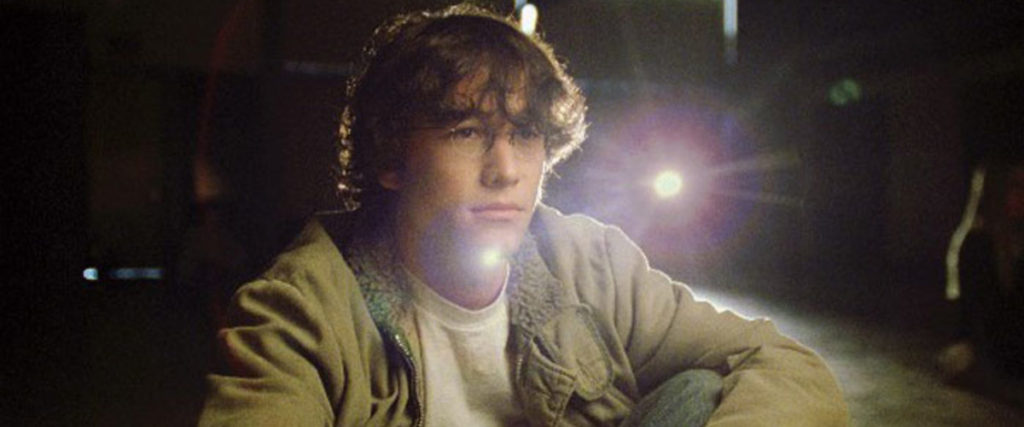
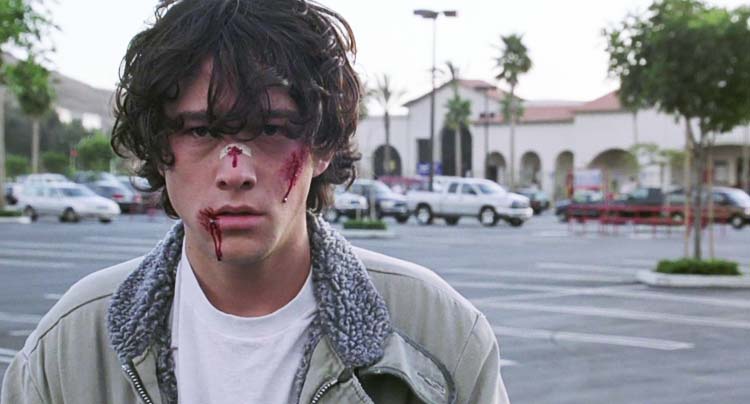
Writer-director Rian Johnson’s gloriously inventive 2005 debut, Brick, was inspired by Johnson’s love of Dashiell Hammett’s novels and his own dark memories of high school.
Brick is a hard-boiled detective story, complete with a femme fatale and a plot right out of a Dick Powell classic noir like Murder, My Sweet or Cry Danger.
The genius of Brick is that it takes place in the teenage culture of 2005 San Clemente. The characters roam the isolated school corridors where the nerd eats lunch by himself, the drama room, the vice-principal’s office, the empty football field where kids can meet after school the party at the popular girl’s house. The kingpin crime lord operates out of his mother’s basement; he and his gang emerge upstairs in the kitchen where his mom supplies breakfast cereal and dispenses milk from a pitcher shaped like a chicken.
The dialogue is Hammettesque:
I gave you Jerr to see him eaten, not to see you fed.
The ape blows or I clam.
Bulls would gum it. They’d flash their dusty standards at the wide-eyes and probably find some yegg to pin, probably even the right one. No cops, not for a bit
Brad was a sap. You weren’t. You were with him, and so you were playing him. So you’re a player. With you behind me I’d have to tie one eye up watching both your hands, and I can’t spare it.
The noir patter works because Johnson and the cast play it dead seriously, with no hint of irony.
In Nate Jones’ interview in Vulture, Johnson says “One thing I don’t believe in is the notion that this is a dusty old genre and you have to find a way to flip the old tropes on their heads. The basic machinery of it, the tropes of it, are why it works.”
Brick was at that point in Joseph Gordon-Levitt’s career, between Mysterious Skin (2004) and Lookout (2007), when it was becoming clear what a major talent he is.
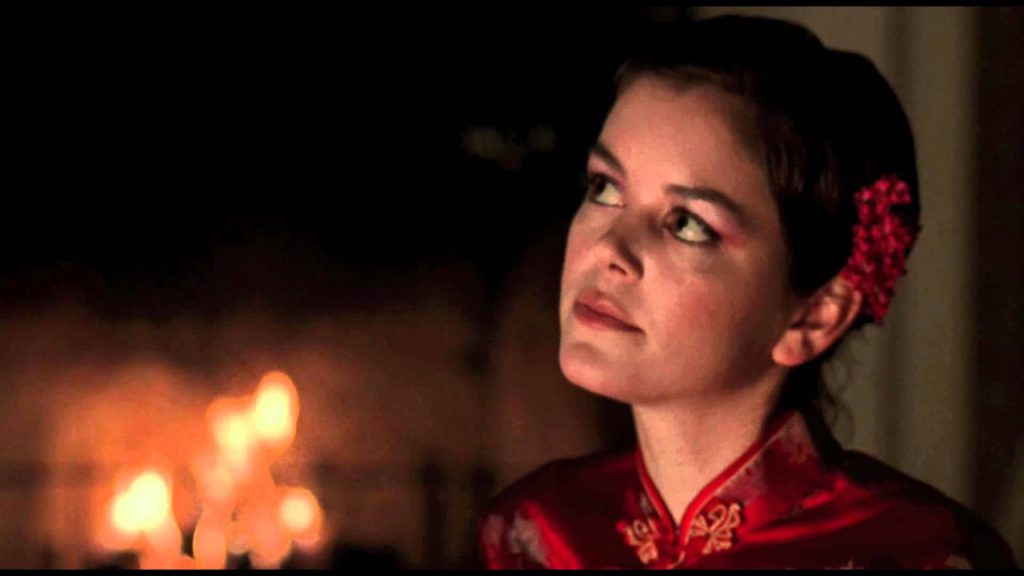
Norah Zehetner in BRICK
The femme fatale is played by Norah Zehetner in an unforgettable performance. Zehetner works a lot, and did ten episodes of Grey’s Anatomy, but Brick may be her career-topper.
Rian Johnson went on to make another original feature with Gordon-Levitt, Looper, along with the 2017 Star Wars movie. Knives Out, Johnson’s new take on the drawing room mystery, hits theaters this weekend.
Brick is available to stream on Netflix, AYouTube and Google Play.
Michael Shannon and Imogen Poots in FRANK & LOLA. Photo courtesy of SFFILM.
The San Francisco International Film Festival is underway, so this week’s video pick comes from the program of the 2016 festival. The absorbing neo-noir romance Frank & Lola opens with a couple lovemaking for the first time – and right away there’s a glimmer that he’s more invested than she is. Soon we’re spirited from Vegas to Paris and back again in a deadly web of jealousy.
Lola (Imogen Poots) is young and beautiful, a lively and sparkly kind of girl. Frank (the great Michael Shannon) is older but “cool” – a talented chef. He is loyal and steadfast but given to possessiveness, and he says things like, “who’s the mook?”.
In a superb debut feature, writer director Matthew Ross has invented a Lola that we (and Frank) spend the entire movie trying to figure out. Imogen Poots is brilliant in her most complex role so far. She’s an unreliable girlfriend – but the roots of her unreliability are a mystery – is she Bad or Troubled? A character describes her with “She can be very convincing”, and that’s NOT a complement. Poots keeps us on edge throughout the film, right up to her stunning final monologue.
Shannon, of course, is superb, and the entire cast is exceptional. There’s a memorable turn by Emmanuelle Devos, the off-beat French beauty with the cruel mouth. Rosanna Arquette is wonderful, as is Michael Nyqvist from the Swedish Girl With the Dragon Tattoo movies. I especially liked Justin Long as Keith Winkleman (is he a namedropping ass or something more?).
Frank & Lola has more than its share of food porn and, as befits a neo-noir, lots of depravity. But, at its heart, it’s a romance. Is Lola a Bad Girl or a Troubled Girl? If she’s bad, then love ain’t gonna prevail. But if she’s damaged, can love survive THAT either? We’re lucky enough to go along for the ride.
I saw Frank & Lola in 2016 at the San Francisco International Film Festival. I liked it more than most and put it on my Best Movies of 2016. Frank & Lola is now available to stream on Amazon Instant, iTunes, Vudu, YouTube and Google Play.
Make plans to attend Noir City film fest, always one of the best Bay Area cinema experiences, in San Francisco January 25-February 3. Noir City is the annual festival of the Film Noir Foundation, spearheaded by its founder and president, the Czar of Noir, Eddie Muller. The Foundation preserves movies from the traditional noir period that would otherwise be lost. Noir City often plays newly restored films and movies not available on DVD or streaming. And we get to watch them in a vintage movie palace (San Francisco’s Castro Theatre) with a thousand other film fans.
The 2019 Noir City will focus on film noir in the 1950s – from just after the genre’s peak to its transition into neo-noir. The festival tag line is, “Think the 1950s were buttoned-down and conservative? Think again.” The Film Noir Foundation has restored Trapped (1949), and the world premiere of the restored version will open the fest. Think about it – you can be in the first movie theater audience to see Trapped in sixty-nine years. Closing night will feature that most brutal and emotionally bleak of neo-noirs, Blast of Silence.
Three of the best films in the program are not available to stream, and five more are impossible to see outside of Noir City in any format. This year’s program features eight movies on The Movie Gourmet’s list of Overlooked Noir.
Noir City runs from Friday, January 25 through Sunday, February 3. To see the this year’s Noir City program and buy tickets, go here.
I’ll be posting a comprehensive Noir City preview on January 23. And you may run into me at Noir City as I cover the opening weekend.