
EX MACHINA: a MUST SEE thinker’s sci-fi

EX MACHINA
EX MACHINA

The intensely thought-provoking Ex Machina is a Must See and one of the year’s best films. Set in the present or the very near future, we meet the genius Nathan (played with predatory menace by Oscar Isaac) who developed the worlds top search engine when he was 13 and is now fantastically wealthy. Nathan lives in an extremely remote wilderness with his apparently mute housekeeper Kyoko (Sonoya Mizuno), and brings up one of his smartest software engineers under the pretext of winning a contest for a week with the boss. But Nathan really has brought in the young coder Caleb (Domhnall Gleeson) to test his latest invention – a machine equipped with artificial intelligence.

Specifically, Caleb is tasked with the Turing Test (named after Alan Turing, the subject of The Imitation Game) – he is to converse with the machine to determine whether it’s thinking and behavior is indistinguishable from a human’s. Nathan and Caleb reference that a chess-playing computer may be very efficient, but does it know that it’s playing chess and does it know what chess is? Nathan says that – if he has succeeded – he has the greatest advancement in the history of the world; Caleb rejoins that it would be the greatest invention in the history of gods.

That raises the issue of playing god. If a being – even one that is human-created – is self-aware, conscious and has feelings and its own thoughts, then who has the right to end its life or take away its liberty? And can it seek liberty on its own?

We care about these questions because the machine, named Ava, is so, well, human. Ava is played by Alicia Vikander, an actress with an uncommonly sensitive face. Vikander’s performance is top-notch, and like Caleb, we are soon seduced into liking her and then NEEDING to protect her.

Ex Machina makes so much so-called science fiction pale in comparison, because it really challenges the audience with the moral implications of a real scientific concept. Not everything set in the future is really SCIENCE fiction. Gravity, a superb movie, was basically a survival tale, and Star Wars was a Quest Fantasy and Avatar was basically a remake of the Western A Man Called Horse. Most movies set in the future are just dumb excuses to put a lot of explosions on-screen. The few recent examples of truly thoughtful sci-fi include I Origins and Her.

Ex Machina is both a great-looking movie and a stellar example of economic filmmaking.  There essentially only four characters and one set.  Computer graphics aren’t used for empty action eye candy, just to allow an actress to credibly play a machine.  Nathan’s house/laboratory looks amazing, and the overall art direction and production design is stellar.  The stark landscape surrounding Nathan’s hideaway was shot in Norway.

This is the first directing feature for writer-director Alex Garland, and it’s a triumph.  He wrote the screenplay for Danny Boyles’ brilliant 28 Days Later, one of my Zombie Movies for People Who Don’t Like Zombie Movies.

DVD/Stream of the Week: YOU WILL BE MY SON

YOU WILL BE MY SON

Niels Arestrup (A Prophet, War Horse) stars as the owner of French wine estate who places impossible expectations on his son, with lethal results. The poor son has gotten a degree in winemaking, has worked his ass off on his father’s estate for years and has even married well – but it’s just not enough for his old man. The father’s interactions with the son range from dismissive to deeply cruel.

The father’s best friend is his longtime estate manager, whose health is faltering. The son is the natural choice for a successor, but the owner openly prefers the son’s boyhood friend, the son of the manager. The first half of You Will Be My Son focuses on the estate owner’s nastiness toward his son, which smolders throughout the film. But then the relationship between the sons turns from old buddies to that of the usurper and the usurped. And, finally, things come down to the decades-long relationship between the two old men.

Deep into the movie, we learn something about the father that colors his view of his son. And then, there’s a startling development that makes for a thrilling and operatic ending.

It’s one of several good 2013 films about fathers and sons, like The Place Beyond the Pines and At Any Price. (This is also a food porn movie, with some tantalizing wine tasting scenes that should earn a spot on my Best Food Porn Movies.)

You Will Be My Son is available on DVD from Netflix and streaming from Amazon, Vudu, iTunes and Xbox Video.

FAR FROM THE MADDING CROWD: if you’re looking for a bodice ripper

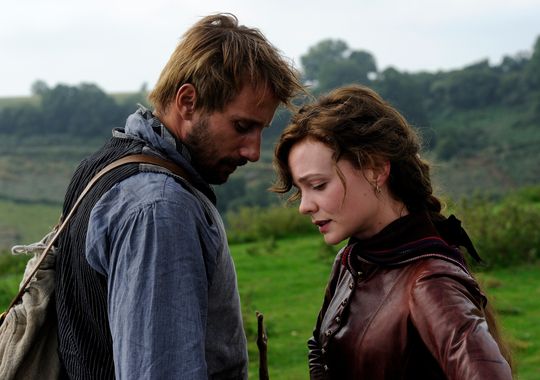
Matthias Schoenaerts and Carey Mulligan in FAR FROM THE MADDING CROWD

If you’re looking for cinematic romance with a proto-feminist perspective, you can do worse than Far from the Madding Crowd. Now I’m neither the target audience for a period romance or a fan of Carey Mulligan, but Far from the Madding Crowd is pretty fresh for having been based on a Thomas Hardy novel, and delivers an unusual (for the 19th Century)  female character and sweeping, sometimes operatic melodrama.

Mulligan plays a young woman who is smart, attractive, capable and VERY confident but has the wrong taste in men.  Because she has lucked into affluence, she has no NEED for a husband.  Indeed, under English law of the Victorian period, she would diminish her legal standing and lose her economic freedom if she marries.   A character sings the song “Let No Man Steal Your Heart”, and we know that the stakes are high.

Men DO try to steal her heart, sometimes with cringeworthily abrupt proposals of marriage (with pianos proffered to sweeten the deal).  She is wooed by the “safety” and comfort from a rich guy (Michael Sheen) vs the loyal hunk (Matthias Schoenaerts) who is below her station.  Then a very handsome soldier (Tom Sturridge), who turns out to be shallow and cruel, comes into play with a WOWZA of a first kiss.  We know who is the right guy for her, but SHE doesn’t see it that way, which creates all the drama.

I love the work of Danish director Thomas Vinterburg – 1998’s The Celebration (Festen), 2012’s The Hunt (Jagten).  Here he does a pretty good job keeping the wild swings and improbable coincidences of Hardy’s plot from becoming laughable.  How many ways are there to kill off an entire herd of sheep, anyway?

Far from the Madding Crowd opens tomorrow, and is a good choice for someone looking for a period romance.

DVD/Stream of the Week: CLOUDBURST

Olympia Dukakis and Brenda Fricker in CLOUDBURST

The funny and sentimental Canadian dramedy Cloudburst pairs Oscar-winning actresses Olympia Dukakis (Moonstruck) and Brenda Fricker (My Left Foot) as lesbian life partners of many decades. Because they live in Maine before the legalization of same-sex marriage there, their union is not legally recognized. The sweet-tempered Dotty (Fricker) is visually-impaired and becoming more and more infirm. Her partner Stella (Dukakis) is irascible and enjoys a startlingly vulgar vocabulary. The pair is separated when Dotty’s granddaughter moves Dotty into a convalescent home over Stella’s objection. Stella rescues Dotty and spirits the two of them off to get legally married in Nova Scotia. On the run from Maine authorities, they pick up a feckless young guy (Ryan Doucette) and head off on a very funny, and sometimes dangerous, road trip.

Cloudburst is directed and written by Thom Fitzgerald from his own play. Fitzgerald has written wonderful characters for Dukakis and Fricker to play, and their performances are superb. Surprisingly, this is the first lead role for the 68-year-old Fricker.

Cloudburst was an indie hit in Canadian theaters, but was purchased by Lifetime and didn’t get a theatrical release in the US. That’s a shame, because I think that Cloudburst could have become an art house hit like The Best Exotic Marigold Hotel. It’s a crowd pleaser.

Cloudburst is available on DVD from Netflix and streaming from Netflix, Amazon Instant Video , iTunes, Vudu and Xbox Video.

DRUNK STONED BRILLIANT DEAD: The Story of the National Lampoon

DRUNK STONED BRILLIANT DEAD

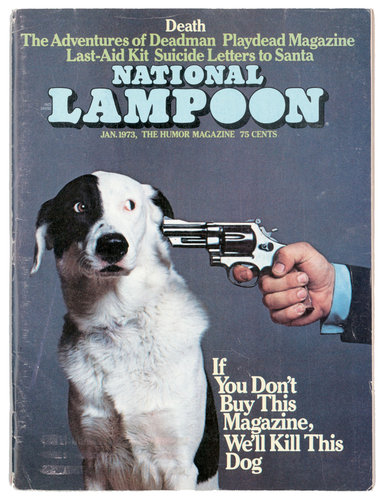
DRUNK STONED BRILLIANT DEAD: The Story of the National Lampoon takes us through an engaging and comprehensive history of the groundbreaking and seminal satirical magazine.  For those of you who weren’t there, the National Lampoon – ever irreverent, raunchy and tasteless – was at the vanguard of the counter-culture in the early 1970s.  Once reaching the rank of #2 news stand seller among all US magazines, it may be the most popularly accepted subversive art ever in the US (along with the wry Mad magazine during the Cold War).

In a few short years, the Lampoon rose from nowhere (well, actually from the Harvard Lampoon) to a humor empire with the magazine, records, a radio show and a traveling revue.  And, yes, the title DRUNK STONED BRILLIANT DEAD does encapsulate the arc of the Lampoon’s story.

Documentarian Douglas Tirola tells the story so successfully because he persuaded almost all the surviving key participants to talk. We meet co-founder Henry Beard, publisher Matty Simmons, Art Director Michael Gross and other Lampoon staff including P.J. O’Rourke and Christopher Buckley.  You’ll recognize the first editor, Tony Hendra, from his performance as the harried band manager in This Is Spinal Tap.  We see clips of two Lampoon originals who haven’t survived, co-founder Doug Kenney and resident iconoclast Michael O’Donoghue.

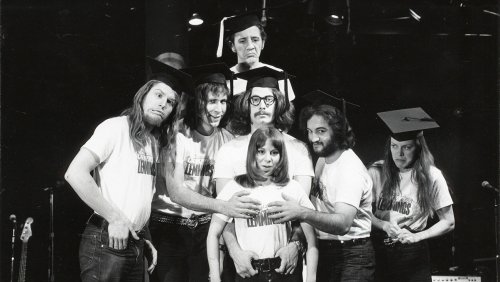
The National Lampoon’s live performance revue featured John Belushi, Chevy Chase, Bill Murray, Brian Doyle Murray, Gilda Radner and Harold Ramis.  When Lorne Michaels hired the whole crew for Saturday Night Live, the hit television show instantly surpassed the magazine in cultural penetration.  “The Lampoon lost its exceptionalism”, says one observer.

But the Lampoon made its mark on the movies by launching the entire genre of raunchy comedies with Animal House and spawning the careers of filmmakers John Landis and Harold Ramis, as well as the SNL performers.  We also see a clip of Christopher Guest in an early Lampoon performance.  On the other hand, I hadn’t remembered a less successful Lampoon project from its later era, Disco Beaver from Outer Space.

This is all, of course, major nostalgia for Baby Boomers.  Before seeing DRUNK STONED BRILLIANT DEAD, I thought, yeah, I’ll enjoy the Blast From The Past, but will younger audience viewers dismiss this humor as quaint? After all, the Lampoon’s success came from puncturing the boundaries of taste, and it’s hard to imagine anything today that would be shockingly raunchy.  But, after watching DRUNK STONED BRILLIANT DEAD, I have to say that the humor stands up today as very sharp-edged.  After all, an image of a baby in a blender with Satan’s finger poised to press the “puree” button is pretty transgressive no matter when it’s published.  The sole exception is the Lampoon’s over-fixation on women’s breasts, which comes off today as pathetically sophomoric – or even adolescent.

DRUNK STONED BRILLIANT DEAD: The Story of the National Lampoon has also vaulted on to my list of Longest Movie Titles.

DRUNK STONED BRILLIANT DEAD is currently knocking about the film festival circuit, and distribution theatrically or on another platform is unresolved.  I saw it at the San Francisco International Film Festival.  This is an important cultural story, well-told and it deserves a wide audience.

Drunk Stoned Brilliant Dead2

MR. HOLMES: in old age, Sherlock reopens his final case

Ian McKellen as MR. HOLMES

It’s 1947 and 93-year-old Sherlock Holmes has been self-exiled to the Dover coast in retirement for almost thirty years.  He’s still keenly observant, but his memory is deteriorating with age, and he knows it.  That’s a problem as he feels an urgent need  to summon up the facts of his final case, left unresolved in 1919.  In Mr. Holmes, Ian McKellen plays Sherlock in his 1947 frailty and desperation and in the flashbacks to 1919, when he’s at the top of his game.

As Mr. Holmes, opens, Sherlock has just returned home from a trip to Japan.  So desperate to refresh his memory, he has sought a Japanese homeopathic cure (“prickly ash”), in the process meeting a Japanese family with an unsolved disappearance of their own.  Back home, he lives with his housekeeper (Laura Linney) and her gifted son, Roger (Milo Parker).  Holmes recognizes the boy’s exceptionalism and quasi-adopts as a grandchild.  The boy has lost his father in World War II, and his relationship with the old man is another central thread in the movie.

Ian McKellen is delightful and endearing as the crusty Holmes.  McKellen is an actor of enough stature to pull off this iconic role, and he is able both to project the Holmes genius and to deliver the humor in this very witty screenplay.

Holmes resents how his former roommate Dr. Watson has depicted him in fiction – and doesn’t like fiction at all (until the very last scene).   At least, when they lived together, Watson avoided an onslaught of tourists by publishing the wrong address for their rooms (they actually lived across the street from 221B Baker Street).  And Holmes goes to a theater to see a very bad 1940s Sherlock Holmes movie.

I saw Mr. Homes at the San Francisco Film Festival at a screening in which producer Anne Carey and screenwriter Jeffrey Hatcher spoke.  When Carey read the source material – the novel “Slight Trick of the Mind” by Mitch Cullin – she recognized the appeal of the central role, the settings and the theme of “don’t wait too long for things important to your heart”.  It took her eight years to get director Bill Condon (Gods and Monsters, Dreamgirls) on board, who brought in McKellen.

Hatcher was attracted by Holmes’ relationship to the boy Roger and by theme of how we rewrite our own stories.  He pointed out that the 1919 story in Mr. Holmes has four versions:  what really happened, how Watsone added a happy ending in his book, the  Hollywood melodrama of the film-within-the-film and, finally, as Holmes himself connects it to the Japanese story thread at the end.

Carey and Hatcher revealed that Condon playfully referenced Hitchcock  in Mr. Holmes: Ambrose Chapel from The Man Who Knew Too Much, carrying of tea a la Notorious and a “Vertigo” sequence  under the arches.

It’s a good story with a superb performance by McKellen.  Mr. Homes is scheduled for a theatrical release on July 17.

THE LOOK OF SILENCE: chilling and powerful

THE LOOK OF SILENCE
THE LOOK OF SILENCE

In the powerful and chilling The Look of Silence, documentarian Joshua Oppenheimer explores the aftermath of genocide in a society that has never experienced a truth and reconciliation process. This is Oppenheimer’s second masterpiece on the Indonesian genocide of 1965-66 in which regime-sponsored death squads executed over one million suspected political opponents.  Today, the victims’ families live among the murderers.

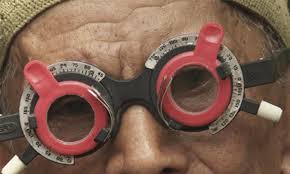
The Look of Silence centers on 44-year-old optometrist Adi as he investigates the murder of Ramli, the older brother he never knew.  Earlier, Oppenheimer had filmed Ramli’s killers as they describe and act out Ramli’s savage torture, mutilation and murder.   They are unrepentant and even nostalgic about their crimes.  Their matter-of-fact recollections are sickening.  We see Adi watching this video, trying to contain his rage and disgust.  Later, Adi – in the guise of fitting them for new glasses – is able to confront those responsible.   He faces the actual machete-wielding killers, the leader of the village death squad, the higher-up who ordered the killings and even one of his own relatives.

What makes this bearable to watch (and even more affecting) is meeting Adi’s family: his earthy 80-something mother, his frail and batty 103-year-old father, his giggly 7-year old daughter and his 10-year-old son.   There’s plenty of humor in this warm family.  But in one scene, the son receives a ridiculously twisted propaganda version of the genocide in public school.

The “Silence” in The Look of Silence is reinforced by the spare soundtrack.  We often hear only “crickets” (frogs, actually).

The Look of Silence is the companion to Oppenheimer’s The Act of Killing, which made my list of Best Movies of 2013.  In The Act of Killing, Oppenheimer got the unapologetic killers to re-enact their atrocities for the camera – even relishing their deeds.  The Act of Killing contains some of the most bizarre moments in any documentary EVER, including a cross-dressing mass murderer and a staged Bollywood-like musical number of Born Free, complete with dancing-girls in front of a waterfall, in which the garotted dead reappear to thank the killers for sending them on to the afterlife. The Act of Killing is more of a jaw-dropper.  The Look of Silence – because it is more personal – is more powerful.

The Look of Silence stands alone – you can fully appreciate it without having seen The Act of Killing.  But what I wrote about The Act of Killing is true for both films:  “hypnotically compelling – you can’t believe what’s on the screen, can’t believe that you’re still watching it and can’t stop watching”.

I saw The Look of Silence at the San Francisco International Film Festival before its limited theatrical release slated for July 17.  It’s one of the best films of 2015.

Movies to See Right Now

Gene Hackman in the 1975 NIGHT MOVES

I’m at the San Francisco International Film Festival, and I haven’t caught up with the promising sci-fi Ex Machina or the rock doc Lambert & Stamp. Here are the movies that I know are good:

In theaters, I liked Ethan Hawke’s gentle documentary Seymour: An Introduction. If you’re looking for a scare, try the inventive and non-gory horror gem It Follows.

Documentarian Alex Gibney has TWO excellent films playing now on HBO:

  • Going Clear: The Prison of Belief, a devastating expose of Scientology is playing on HBO; and
  • Sinatra: All or Nothing at All, an especially well-researched and revelatory biopic of Frank Sinatra.

Don’t bother with Clouds of Sils Maria – it’s a muddled mess.  Insurgent, from the Divergent franchise is what it is – young adult sci-fi with some cool f/x. The romance 5 to 7 did NOT work for me, but I know smart women who enjoyed it.  The biting Hollywood satire of Maps to the Stars wasn’t worth the disturbing story of a cursed family. I also didn’t like the Western Slow West, now out on video.

My DVD/Stream of the Week is the drama Wild, with its wonderful performances by Reese Witherspoon and Laura Dern. It’s available on DVD from Netflix and streaming on Amazon Instant Video, iTunes, Vudu, YouTube, Google Play, Xbox Video and Flixter.

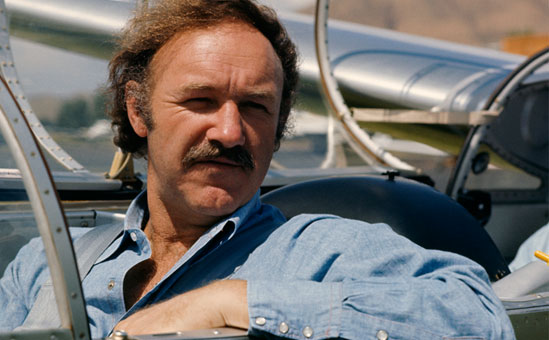
On April 27, Turner Classic Movies is airing the 1975 character-driven neo-noir Night Moves, with Gene Hackman as an LA private eye who follows a trail of evidence to steamy Florida. Hackman shines in the role – the detective is deeply in love with his estranged wife, but unsuited for marriage. Night Moves also features Melanie Griffith’s breakthrough role as the highly sexualized teen daughter in the Florida family; Griffith was eighteen or nineteen when this was filmed, and had already been living with Don Johnson for three years.

And TCM is also showing one of my very favorite films, the Sam Peckinpah 1973 Western Pat Garrett & Billy the Kid (April 30), featuring James Coburn and Kris Kristofferson in the title roles. Peckinpah takes us into a realistically dusty world of 1880s New Mexico and makes the story operatic in its sweep. Pat Garrett is a revisionist Western, with Billy representing the have-nots and his old pal Garrett hiring out to do the bidding of the capitalist one-percenters. It’s a near-great movie; if the unfortunate “Paco” story line were excised, it would rank among the greatest three or four Westerns of all time. (Another minor flaw: Richard Jaeckel has to wear a Paul Revere wig. )

Pat Garrett also features the Peckinpah repertory company of Luke Askew, Strother Martin, L.Q. Jones, Gene Evans, Dub Taylor, Emilio Fernandez and, in one his most memorable roles, R.G. Armstrong. The stellar cast also features Harry Dean Stanton, Jason Robards, Elisha Cook Jr., Chill Wills, Richard Jaeckel, Jack Elam, Barry Sullivan, Jack Dodson (Howard Sprague in The Andy Griffin Show), Richard Bright (Al Neri in The Godfather), and Charles Martin Smith (Terry the Toad in American Graffiti).

The sound track is by Bob Dylan, and Dylan has a small acting role, too; this is the origin of Knockin’ on Heaven’s Door, which perfectly underlines a heartbreaking scene with two greats of the Western genre, Slim Pickins and Katy Jurado.

DVD/Stream of the Week: WILD

Reese Witherspoon in WILD

Based on the popular memoir by Cheryl Strayed, Wild is the story of how Strayed dealt with her own emotional collapse. Suffering  from the death of her mother, among other issues, Strayed (Reese Witherspoon) had become a red-hot mess, playing around with heroin and destructive serial sex and, in the process, dooming her marriage to a solid guy (Tomas Sadoski from The Newsroom). To cleanse herself from her demons, Strayed embarked on a solitary thousand mile hike along the Pacific Crest Trail.

Hiking the Pacific Coast Trail is a mighty quest – both an ordeal and an achievement. But walking it alone as a woman – that’s a whole different deal. The camera is on Reese Witherspoon in every scene, and she carries the movie with her performance – both as Cheryl implodes in the flashbacks and as she overcomes her fears and inexperience on her hike. It’s been eight years since Witherspoon won the Oscar for Walk the Line. Recently, she’s been reinventing her career with high quality fare like Mud, Devil’s Knot, Wild and the upcoming Inherent Vice. Her work in Wild is top rate.

Laura Dern’s performance may be even better than Witherspoon’s. She plays Strayed’s mom, a woman who has been dealt a shit sandwich every day of her life, but who relentlessly insists on appreciating life’s small pleasures. It’s a compelling and heartbreaking performance.

Now I have done some back country hiking and I know what it’s like to walk for 15 miles in a day. It can be pretty damn monotonous. But not this movie. Writer Nick Hornby (High Fidelity, About a Boy) and director Jean-Marc Vallée do a fine job in presenting the scope of a thousand mile journey by pulling out the most compelling components – the moments that illustrate the impressiveness of the feat and the depths of Strayed’s emotional damage and healing.

It’s pretty fine piece of filmmaking overall, and I’m going to start looking for the work of Jean-Marc Vallée. As he did in Dallas Buyers Club, here he tees up extraordinary performances while avoiding what could have become trite and sentimental audience manipulation. Watching Witherspoon and Dern in Wild is a good use of anyone’s time.

Wild is available on DVD from Netflix and streaming on Amazon Instant Video, iTunes, Vudu, YouTube, Google Play, Xbox Video and Flixter.

SINATRA: ALL OR NOTHING AT ALL – as told by his wives and his kids

SINATRA: ALL OR NOTHING AT ALL

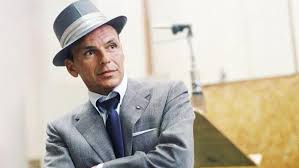
Sinatra: All or Nothing At All is a solid and sometimes revelatory biopic of Frank Sinatra now playing on HBO. It’s shown in two two-hour segments. Sinatra fans should watch the whole thing. For everyone else, the middle part is especially strong – focus on the stretch from his affair and marriage to Ava Gardner through the Frank, Jr., kidnapping and the marriage to Mia Farrow.

Documentarian Alex Gibney has an unusual gift for finding the best possible source material, including coaxing interviews from the most intimate witnesses. The strength of Sinatra: All or Nothing At All comes from interviews of Sinatra’s children Tina, Nancy and Frank, Jr., along with audio of Sinatra’s first three wives – Nancy Sinatra, Ava Gardner and Mia Farrow – and girlfriend Lauren Bacall.

Gibney has another strong doc running on HBO right now: Going Clear: The Prison of Belief. He won an Oscar for Taxi to the Dark Side, and he made the excellent Casino Jack: The United States of Money, Enron: The Smartest Guys in the Room, Client 9: The Rise and Fall of Elliot Spitzer and Mea Maxima Culpa: Silence in the House of God.

Sinatra: All or Nothing At All is a pretty comprehensive biodoc, tracing the Italian immigrant parents, the humble (but not destitute) Hoboken upbringing, rocketing to pop stardom, the career fade with the Great Comeback – along with his womanizing and friendships with the Mob, the Rat Pack and JFK. There are also some tidbits that I hadn’t seen before, for example, not being able to get an US government security clearance to entertain troops in Korea because of his political associations, plus an awkward performance with Elvis in the 50s. See “Spoiler Alert” below for the movie’s take on how Sinatra got the role in From Here to Eternity that launched his comeback. And, although I lived through it, I had completely forgotten about the kidnapping of Frank, Jr.

Sinatra: All or Nothing At All is playing on HBO and is available streaming from HBO GO.

[Spoiler Alert: By the early 50s, Sinatra’s career was floundering and he was desperate for the acting role of Maggio in the upcoming From Here to Eternity. For years, there has been a legend that Sinatra called on his buddies in the Mafia to put the arm on Columbia Pictures to cast him. This tale is depicted in The Godfather with the horse’s-head-in-the-bed scene. Sinatra: All or Nothing At All persuasively debunks this story, explaining that, instead, his recent ex Ava Gardner pressured the studio filmmakers to cast Sinatra. Another appeal was that Sinatra was also a big name who worked for very cheap. This is consistent with Director Fred Zinnemann’s version .]