
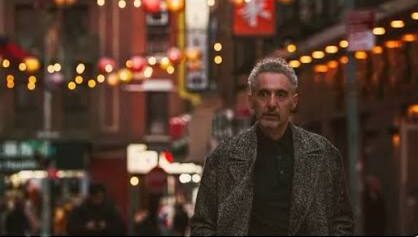
THE ONLY LIVING PICKPOCKET IN NEW YORK: desperate, not for survival, but for redemption

Photo caption: John Tuturro in THE ONLY LIVING PICKPOCKET IN NEW YORK. Courtesy of Sony Pictures Classics.

The Only Living Pickpocket in New York features a gripping, perhaps career-topping, performance by John Tuturro. Writer-director Noah Segan has created a portrait of a man who has evaded all of life’s responsibilities except one, and now finds himself desperate, not for survival, but for redemption.

Tuturro plays Harry, who glides through New York City’s streets and subways in his long cashmere coat, effortlessly lifting wallets and sundry valuables from a populace to whom he is invisible. He cashes in the watches and jewelry with his longtime fence Ben (Steve Buscemi). Harry and Ben are struggling to adjust to a modern world in which nobody’s wallet contains cash and most Rolexes are worthless knock-offs. Still, Harry makes a good enough living to support himself and to pay for care of his beloved disabled wife.

Then Harry steals the wrong item from the wrong people. He embarks on a race against time to make things right. Can he save himself? Can he save anyone?

John Tuturro, so indelible in his many supporting roles, is unforgettable as Harry, a complicated man – both an outlaw who lives by a code and a deadbeat fiercely devoted to one responsibility. Harry is a thief with nerves of steel, but he knows to be terrified of the cops and organized crime. And he has mastered a pre-high tech world that is fading away. Despite his vulnerabilities, Harry is one wily character, just wily enough to give him a fighting chance.

Tatiana Maslany (Orphan Black, She-Hulk in the Marvel Universe) blazes as Harry’s long-estranged daughter. Buscemi and the rest of the cast – Giancarlo Esposito, Will Price, Jamie Lee Curtis – are excellent, too. Tuturro’s and Maslany’s performances are award-worthy.

This is only the third feature for Segan, a prolific actor and protege of Rian Johnson. His Harry character is unique and there is textured depth in all of the supporting characters. There is outstanding verisimilitude in all the NYC scenes, and the pacing is thrilling.

I screened The Only Living Pickpocket in New York for the Mill Valley Film Festival where I labeled it as the under-the-radar Must See at the festival. It’s one of the Best Movies of 2026 – So Far, and its theatrical release begins this weekend.

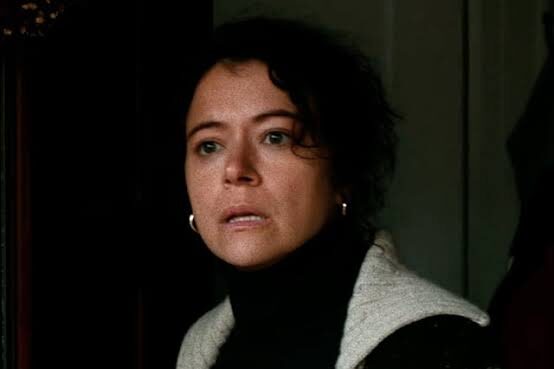
Photo caption: John Tuturro in THE ONLY LIVING PICKPOCKET IN NEW YORK. Courtesy of Sony Pictures Classics.
Tatiana Maslany in THE ONLY LIVING PICKPOCKET IN NEW YORK. Courtesy of Sony Pictures Classics.

THE ROOM NEXT DOOR: Tilda and Julianne, life and death

Photo caption: Tilda Swinton and Juianne Moore in THE ROOM NEXT DOOR. Courtesy of Sony Pictures Classics.

Pedro Almodóvar’s The Room Next Door is about the reconnection of two friends at a highly charged moment. Decades before, Martha (Tilda Swinton) and Ingrid (Julianne Moore) were running and gunning together in Manhattan, even dating the same guy (not at the same time). Each moved on to a successful career elsewhere – Ingrid as an author based in Europe and Martha as a war correspondent in the Balkans and Middle East. Ingrid returns to NYC on a book tour, and finds that Martha is hospitalized with stage 3 cervical cancer.

Martha undergoes an experimental treatment which seems to work, until it doesn’t. Martha has faced death many times in wars. She accepts her own mortality, but wants to avoid the indignity and suffering of her final weeks, and she wants to go out before experiencing happiness becomes impossible. But Martha doesn’t want to be alone, and her adult daughter is estranged.

Martha asks Ingrid to join her at a rented house in the woods, knowing that, on one night, Martha will end he own life. Not incidentally, Ingrid’s latest bestseller is about her own fear of death. Nevertheless, Ingrid agrees.

Remarkably, given the situation, The Room Next Door is not depressing. It’s absorbing, and even funny in places. The old boyfriend (a very funny John Tuturro), who both women remember as particularly zesty, is now a climate disaster Gloomy Gus, now essentially a public scold. Inrgid and Martha curl up on the couch to enjoy Buster Keaton’s hilarious Seven Chances.

We learn the back story about the father of Martha’s daughter, and more about Martha and Ingrid. Ingrid (and we the audience) wait on tenterhooks for Martha to implement her plan.

Of course, Moore and Swinton are two of cinema’s most talented actresses, and their performances are exquisite. Swinton even plays a second character.

We expect any Pedro Almodóvar film to be visually lush, with stellar performances from actresses, and The Room Next Door is certainly that. I never lost interest, but the work doesn’t rise to the level of Almodóvar’s masterpieces Talk to Her and Broken Embraces. .

This is Almodóvar’s first film in English, and he wrote the screenplay in English, evidently without enough collaboration. Hence, the dialogue is not as natural as if two native English speakers were conversing – sometimes a little stilted.

Although the core story about Martha and Ingrid is compelling, there are some extraneous distractions. I understood that a flashback from Martha’s wartime experiences is designed to tell us something about her, but it isn’t worth the time away from the main story. The same holds true when a cop tries to make some trouble for Ingrid; although very well acted by Allessandro Nivola, that thread doesn’t go anywhere (as it wouldn’t have in real life).

The Room Next Door is ever visually beautiful, with lots of Almodóvar’s favorite color of red. Almodovar takes full advantage of his leading ladies’ striking hair and graces them with vivid lipstick and fashion. He even gets to set ablaze a house on the prairie, just like the one in Terence Malick’s Days of Heaven

The Room Next Door, although not an essential film, still offers the mastery of Tilda Swinton and Julianne Moore, in a story of life and death.