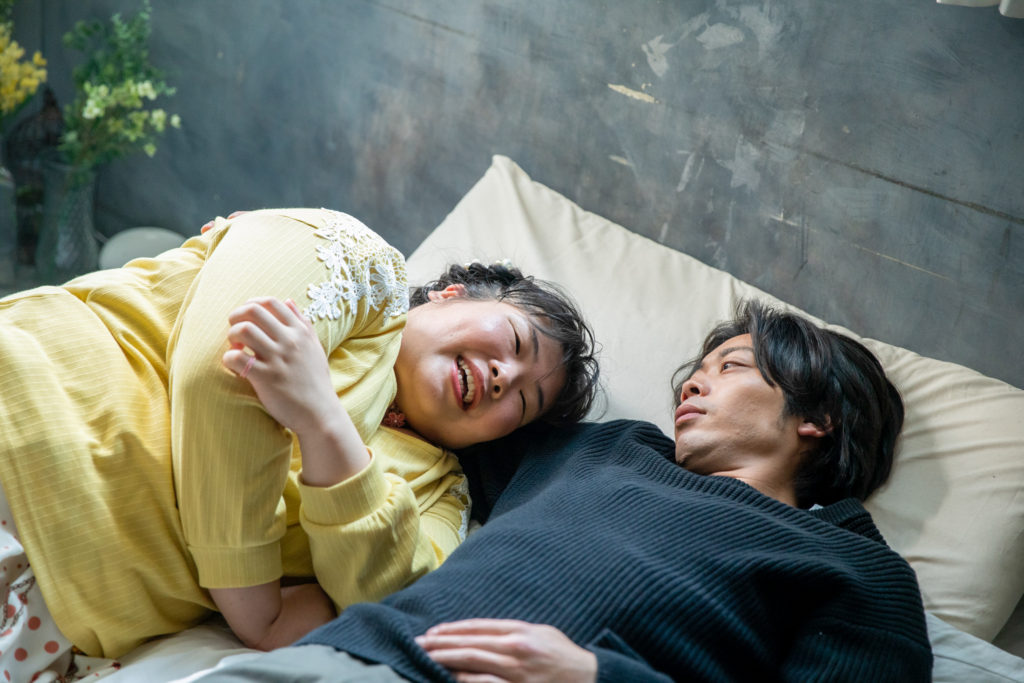
In the offbeat dramedy Closet, Jin is reeling from a breakup and gets a very unusual job. The job is with a non-sexual escort service where clients pay him to cuddle with them as they try to get to sleep. It’s one of those quirky only-in-Japan things, like capsule hotels and golf in highrise buildings.
The cuddle is often preceded by a massage and/or a listening session. Cuddling is so intimate that the audience often expects sex to break out, but it doesn’t.
The service appeals to insomniacs because they can drift off to sleep with the comfort of another warm human body. Closet moves through vignettes on a varied set of customers – all differently motivated. One is a lively spirited 18-year-old student (Aino Kuribayashi).
Given his recent medical and relationship traumas and the weirdness of his new job, Jin (Yosuke Minokawa) often looks bewildered.
Cinequest will host the world premiere of Closet. Closet, with its novel premise, is a worthwhile choice.
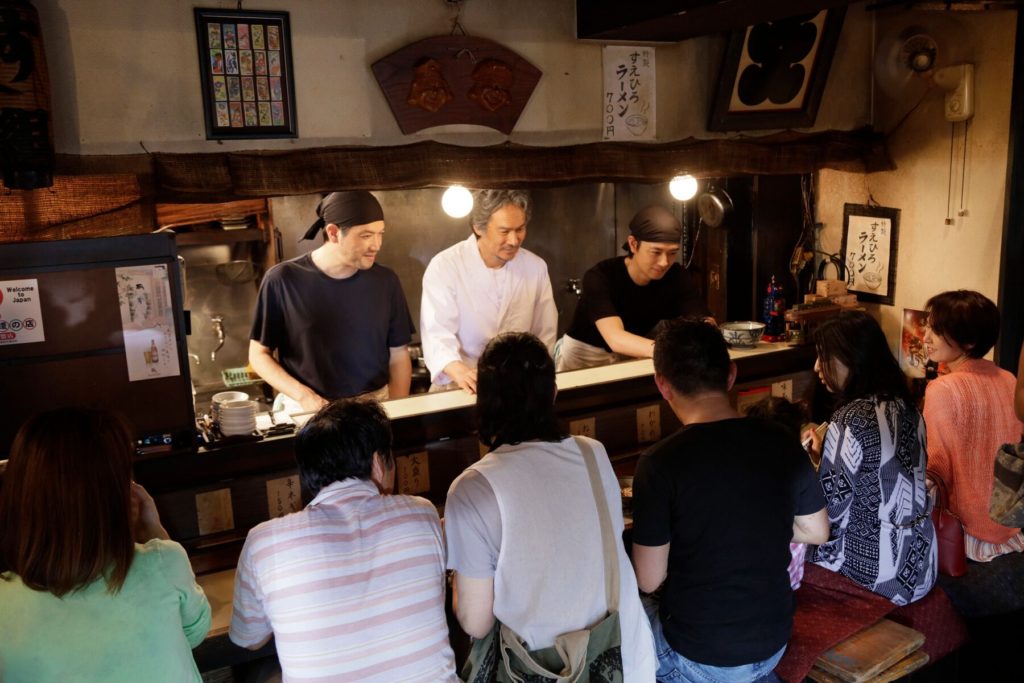
Ramen Shop is about a family’s reconciliation in light of troubled Singaporean-Japanese history. Masato (Taikumi Saito) is a young Japanese ramen chef who loses his father; his Singaporean mom had died when he was a young child. He heads to Singapore to probe his family’s past and encounters a smorgasbord of Singaporean cuisine, a helpful and comely food blogger and his relatives – some more welcoming than others.
The first thirty minutes – with the grief of the son, his memories of his saintly mother and the flashbacks of parental romance – are too schmalzy for me. On the other hand, the thread of family turmoil as the legacy of a specific trauma from the Japanese conquest of Singapore works well.
There’s a metaphorical foodie angle here, too, in Masato’s Holy Grail – fusion of Singaporean pork rib soup with Japanese ramen stock. The foodie scenes – especially the food exploration scenes in Singapore – are mouth-watering.
I saw Ramen Shop at the San Francisco International Film Festival (SFFILM). It opens this week in the Bay Area.
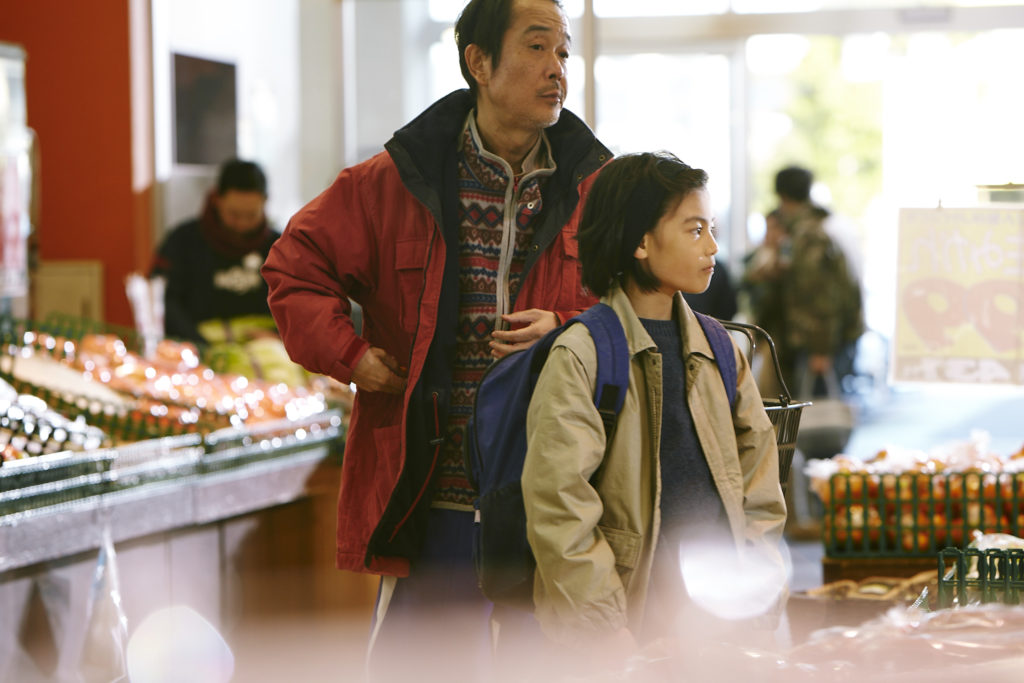
Ando Sakura, Sasaki Miyu, Jyo Kairi, Lily Franky, Matsuoka Mayu and Kiki Kirin in SHOPLIFTERS, a Magnolia Pictures release. Photo courtesy of Magnolia Pictures.
Shoplifters is a witty, and finally heartbreaking, look at a family that lives on the margins – and then is revealed to be not what it seems. Everyone in this contemporary Japanese family – dad, mom, teen girl and even grandma – has some shady job or outright scam. The dad has taught the 10-year-old boy to become a skilled shoplifter and tells him that he isn’t sent to school because he’s too smart. The dad and son rescue a lost and neglected four-year-old girl from a harsh winter night; the family decides to adopt her into the family. Of course, we wonder if the little girl’s biological parents will report her missing and whether the authorities will track her down.
Other than informally adding a child, not much seems to happen as the family goes on with its daily life – “work”, “shopping”, meal prep, bedtime and the rest, even a beach excursion. These lovable scoundrels are a hoot, and Shoplifters is very funny.
Writer-director Hirokazu Koreeda reveals – character by character – how each came into the family. Eventually that becomes critically important to the family’s survival – and leads to an emotionally powerful ending. The closest families are chosen by each other.
Lily Franky and Jyo Kairi in SHOPLIFTERS, a Magnolia Pictures release. Photo courtesy of Magnolia Pictures.
Shoplifters features a magnificent performance by Sakura Andô as the family’s mother figure – pretty understated until she gets to a knock-your-socks-off seduction scene. Her two jailhouse interviews at the end of the film are heartbreaking.
Jyo Kairi, with one of the best child performances of the year, is also superb as the boy.
Shoplifters just won the Palm d’Or, the top award at this year’s Cannes Film Festival. Koreeda is known for the 1995 art house hit Maborosi, one of the best movies of 2008, Still Walking and this year’s The Third Murder. I saw Shoplifters in early October at the Mill Valley Film Festival.
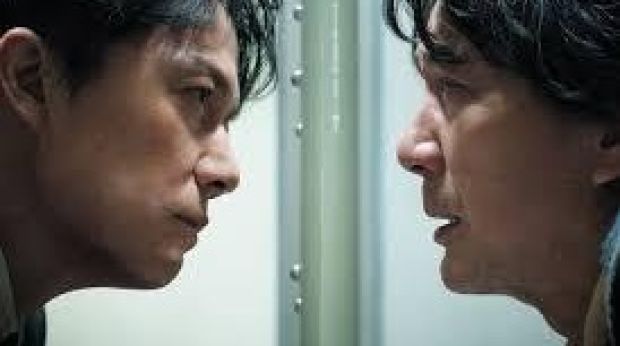
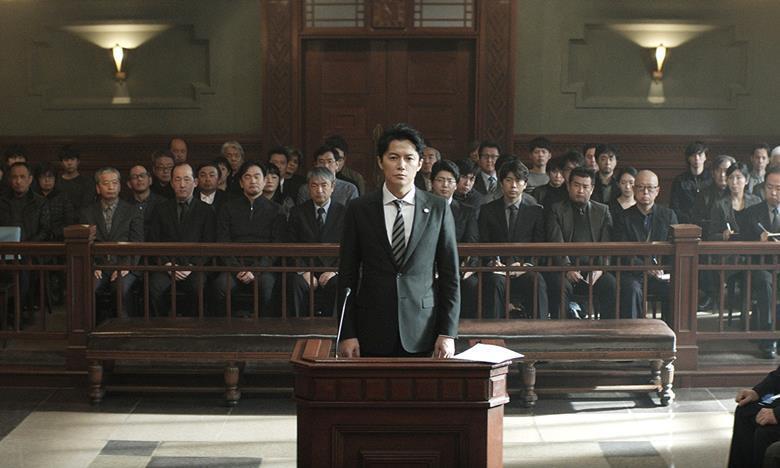
Masaharu Fukuyama and Kôji Yakusho in Hirokazu Koreeda’s THE THIRD MURDER. Photo courtesy of San Francisco Film Society (SFFILM).
The Third Murder opens with a killing, and the audience gets a clear full-face view of the killer. Then the mystery begins – not about who done it, but about why and who will be held accountable.
A high-powered defense lawyer (Masaharu Fukuyama) has been called in to take over a challenging case; it’s potentially a death penalty case, and the defendant (Kôji Yakusho) has confessed. Moreover, the defendant has previously served thirty years for an earlier murder, he’s an oddball and he keeps switching his story.
Nevertheless, the lawyer thinks he can avoid the death penalty with a technicality about the motivation for the crime. He gets some good news from forensic evidence and then discovers one startling secret about the victims’ family – and then another one even more shocking – one that might even exculpate his client.
The Third Murder is a slow burn, as the grind of legal homework is punctuated by reveal after reveal. Eventually, there’s a shocker at the trial, and this legal procedural eventually gives way to philosophical questions. Finally, there’s an edge-of-the-seat epilogue – a final lawyer-client face-to-face where the shell-shocked lawyer tries to confirm what really happened and why.
Masaharu Fukuyama in Hirokazu Koreeda’s THE THIRD MURDER. Photo courtesy of San Francisco Film Society (SFFILM).
Yakusho (Tampopo, Shall We Dance?, Babel, 13 Assassins) is quite excellent as the defendant, a man who seems to be an unreliable mental case, but who might have a sense of justice that trumps everyone else’s.
The Third Murder is the work of director Hirokazu Koreeda, who made the 1995 art house hit Maborosi and one of the best movies of 2008, Still Walking. Koreeda’s Shoplifters just won the Palm d’Or at Cannes, and will be released in the US by Magnolia Pictures on November 23. I saw The Third Murder at the 2018 San Francisco International Film Festival (SFFILM).
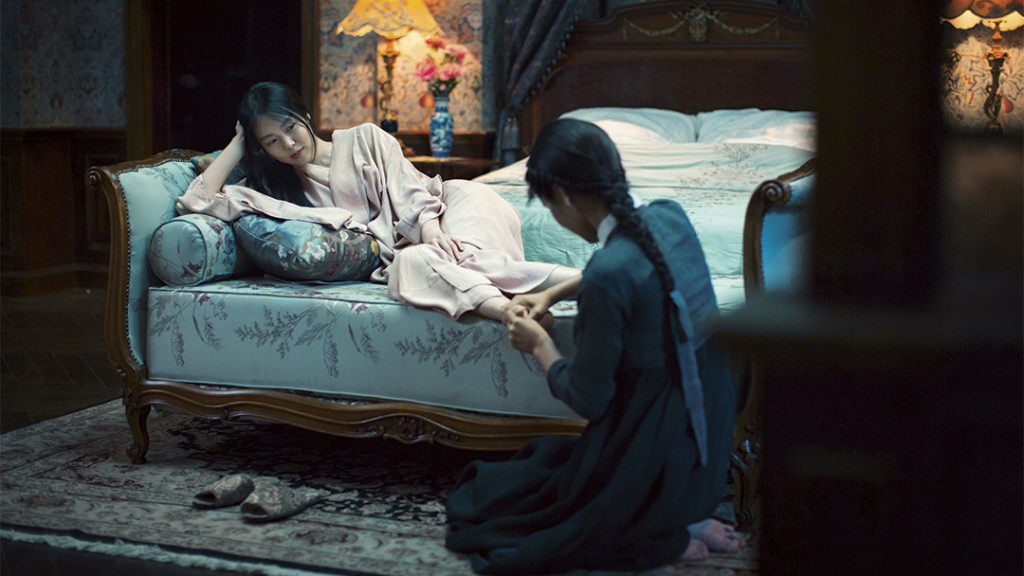
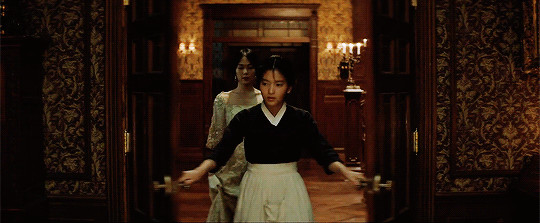
After a few minutes of The Handmaiden, we learn that it’s a con artist movie. After 100 minutes, we think we’ve watched an excellent con artist movie, but then we’re surprised by a huge PLOT TWIST, and we’re in for two more episodes and lots of surprises in a gripping and absorbing final hour. It’s also one of the most visually beautiful and highly erotic films of the year.
Director and co-writer Chan-wook Park sets the story in 1930s Korea during Japanese occupation (Japanese dialogue is subtitled in yellow and Korean dialogue in white). A young heiress has been secluded from childhood by her guardian uncle, who intends to marry her himself for her fortune. A con man embarks on a campaign to seduce and marry the wealthy young woman to harvest her inheritance himself. The con man enlists a pickpocket to become handmaiden to the heiress – and his mole. I’m not going to tell you more about the plot, but the audience is in for a wild ride.
The Handmaiden takes its time revealing its secrets. Who is conning who? Who is attracted to whom? How naive is the heiress? How loyal is the handmaiden? Who is really Japanese and who is really Korean? What’s in those antique books? What’s in the basement? Is the uncle perverted or REALLY perverted? And what legendary sex toy will show up in the final scene?
THE HANDMAIDEN
Chan-wook Park’s 2003 US art house hit Oldboy is highly sexualized, trippy and disturbing. The Handmaiden is much more mainstream and accessible than Oldboy, but its sexuality packs a punch.
Gorgeous and erotic, The Handmaiden is one of the most gloriously entertaining films of the year. You can stream it on Amazon Instant Video, iTunes, Vudu, YouTube and Google Play.
After a few minutes of The Handmaiden, we learn that it’s a con artist movie. After 100 minutes, we think we’ve watched an excellent con artist movie, but then we’re surprised by a huge PLOT TWIST, and we’re in for two more episodes and lots of surprises in a gripping and absorbing final hour. It’s also one of the most visually beautiful and highly erotic films of the year.
Director and co-writer Chan-wook Park sets the story in 1930s Korea during Japanese occupation (Japanese dialogue is subtitled in yellow and Korean dialogue in white). A young heiress has been secluded from childhood by her guardian uncle, who intends to marry her himself for her fortune. A con man embarks on a campaign to seduce and marry the wealthy young woman to harvest her inheritance himself. The con man enlists a pickpocket to become handmaiden to the heiress – and his mole. I’m not going to tell you more about the plot, but the audience is in for a wild ride.
The Handmaiden takes its time revealing its secrets. Who is conning who? Who is attracted to whom? How naive is the heiress? How loyal is the handmaiden? Who is really Japanese and who is really Korean? What’s in those antique books? What’s in the basement? Is the uncle perverted or REALLY perverted? And what legendary sex toy will show up in the final scene?
THE HANDMAIDEN
Chan-wook Park’s 2003 US art house hit Oldboy is highly sexualized, trippy and disturbing. The Handmaiden is much more mainstream and accessible than Oldboy, but its sexuality packs a punch.
Gorgeous and erotic, The Handmaiden is one of the most gloriously entertaining films of the year.
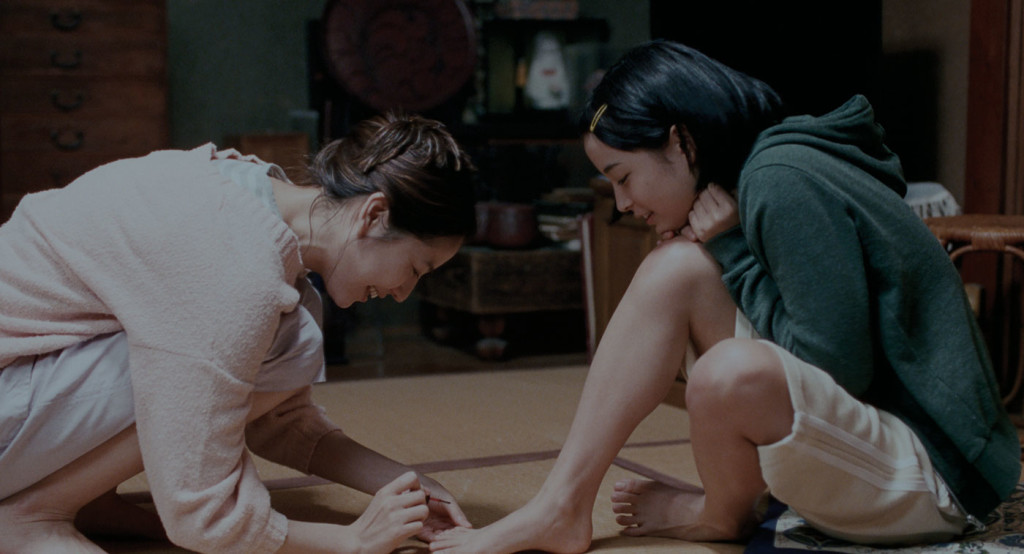
The remarkably uplifting Japanese domestic drama Our Little Sister centers on three 20-something sisters whose father left them over fifteen years ago and whose flighty, selfish mom was never much of a factor in their lives. The sisters are single and live together when their estranged dad dies and they travel to his funeral. They meet their 15-year-old half-sister, and rescue her from her step-mom, the father’s third wife. Now the household contains four siblings, all with different personalities, but all dealing with some sense of parental loss.
The four go about their daily lives, working, going to school, eating at a diner, watching fireworks. Now here’s the beauty of Our Little Sister, although there’s essentially no action and very little overt conflict, we learn a lot about these women. And we begin to care for them. And we become engaged in their journeys of self-discovery.
Writer-director Hirokazu Kore-eda was introduced to American fans of indie cinema in 1996 with Maborosi, and I listed his Still Walking on my Best Movies of 2009. It’s a privilege to spend two hours with Kore-eda’s characters in Our Little Sister. It’s impossible to leave Our Little Sister without being touched by its tenderness (and I’m a pretty cynical and hard-boiled viewer).
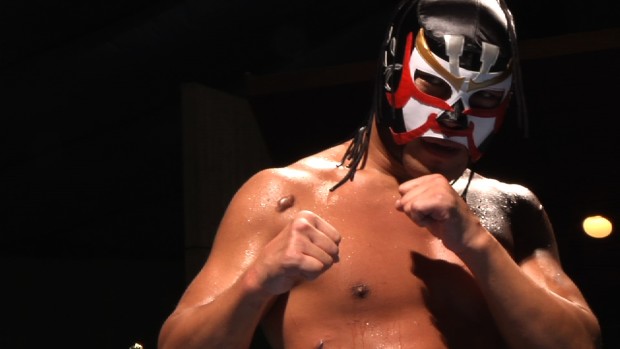
Mikiko Sasaki’s ever surprising The Great Sasuke starts out with the most essential element of a documentary – a compelling subject. Here it’s a Japanese pro wrestler who achieved stardom after bringing a Lucha Libre mask (and a wife) from his training days in Mexico. Between 1992 and 2006, The Great Sasuke won championships and filled large Tokyo arenas. He especially thrilled audiences with his aerial moves (that’s when he climbs up on the turnbuckles and jumps off on to the hapless opponent). But all that combat has taken a toll on his body, and now he is headquartered in his obscure hometown 300 miles north of Tokyo, performing in front of a couple hundred on folding chairs or floor mats. So far we have the familiar story of an athlete aging out of fame and success, but two aspects of The Great Sasuke make this story much more interesting.
First, this guy NEVER takes off his mask. We see him striding down the sidewalk in a business suit, briefcase in hand – fully masked. And we see him eating breakfast with his kids, vacuuming the floor, driving, brushing his teeth – all in his mask. He’s even developed a technique for changing between his everyday mask and his performance mask – all in a way that doesn’t let anyone glimpse his face. (At the Cinequest screening, director Sasaki said that The Great Sasuke’s wife insisted that she would not be married to a guy who didn’t take the mask off in the bedroom, and The Great Sasuke’s kids have seen his face, too.)
Second, he’s a quirky guy who plunges himself in to offbeat (and doomed) schemes to set up business enterprises and even run for political office. He is completely sincere and just couldn’t work any harder, but he won’t listen to anyone tell him that his plans are completely half-baked. He may be a force of nature, but it’s pretty hard to sway voters when you’re campaigning on street corners in a wrestling mask. It all adds up to a good movie experience.
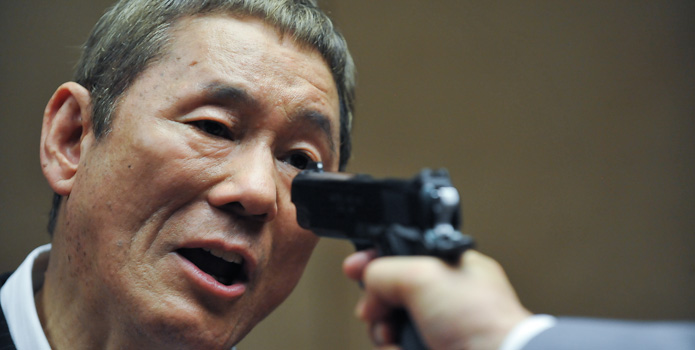
Takeshi Kitano dares a Yakuza to shoot him in OUTRAGE BEYOND
Takeshi Kitano returns to star in the Japanese gangster movie Outrage Beyond. It’s a sequel to writer-director Kitano’s 2011 Outrage, of which I wrote:
If you’re looking for a hardass gangster movie with deliciously bad people doing acts of extreme violence upon each other, Outrage is the film for you. But what makes Outrage stand out is the pace and stylishness of all the nastiness, as if Quentin Tarantino had made Goodfellas (only without all the extra dialogue about foot rubs and the Royale with cheese)…Kitano, much like Charles Bronson, has the worn and rough face of a man who has seen too much disappointment and brutality.
Outrage was more of a tragic noir, because you know that most of the characters probably won’t survive – and they know it, too. There is less foreboding in Outrage Beyond, which is just glorious exploitation – gangster mayhem splattering the streets. Because this is a Yakuza film, Kitano delivers the minimum one full body tattoo and one severed finger. But he also makes ingeniously lethal use of a pitching machine in a batting cage, and “Let’s play baseball” is the cruelest line in the film.
I saw Outrage Beyond at the San Francisco International Film Festival. It’s now available on DVD from Netflix and streaming from Amazon, iTunes, Vudu, Google Play and XBOX Video.
Takeshi Kitano dares a Yakuza to shoot him in OUTRAGE BEYOND
Takeshi Kitano returns to star in the Japanese gangster movie Outrage Beyond. It’s a sequel to writer-director Kitano’s 2011 Outrage, of which I wrote:
If you’re looking for a hardass gangster movie with deliciously bad people doing acts of extreme violence upon each other, Outrage is the film for you. But what makes Outrage stand out is the pace and stylishness of all the nastiness, as if Quentin Tarantino had made Goodfellas (only without all the extra dialogue about foot rubs and the Royale with cheese)…Kitano, much like Charles Bronson, has the worn and rough face of a man who has seen too much disappointment and brutality.
Outrage was more of a tragic noir, because you know that most of the characters probably won’t survive – and they know it, too. There is less foreboding in Outrage Beyond, which is just glorious exploitation – gangster mayhem splattering the streets. Because this is a Yakuza film, Kitano delivers the minimum one full body tattoo and one severed finger. But he also makes ingeniously lethal use of a pitching machine in a batting cage, and “Let’s play baseball” is the cruelest line in the film.
I saw Outrage Beyond at the San Francisco International Film Festival.