
SHOPLIFTERS: The closest families are chosen by each other

Ando Sakura, Sasaki Miyu, Jyo Kairi, Lily Franky, Matsuoka Mayu and Kiki Kirin in SHOPLIFTERS, a Magnolia Pictures release. Photo courtesy of Magnolia Pictures.

Shoplifters is a witty, and finally heartbreaking, look at a family that lives on the margins – and then is revealed to be not what it seems. Everyone in this contemporary Japanese family – dad, mom, teen girl and even grandma – has some shady job or outright scam. The dad has taught the 10-year-old boy to become a skilled shoplifter and tells him that he isn’t sent to school because he’s too smart. The dad and son rescue a lost and neglected four-year-old girl from a harsh winter night; the family decides to adopt her into the family. Of course, we wonder if the little girl’s biological parents will report her missing and whether the authorities will track her down.

Other than informally adding a child, not much seems to happen as the family goes on with its daily life – “work”, “shopping”, meal prep, bedtime and the rest, even a beach excursion. These lovable scoundrels are a hoot, and Shoplifters is very funny.

Writer-director Hirokazu Koreeda reveals – character by character – how each came into the family. Eventually that becomes critically important to the family’s survival – and leads to an emotionally powerful ending. The closest families are chosen by each other.


Lily Franky and Jyo Kairi in SHOPLIFTERS, a Magnolia Pictures release. Photo courtesy of Magnolia Pictures.

Shoplifters features a magnificent performance by Sakura Andô as the family’s mother figure – pretty understated until she gets to a knock-your-socks-off seduction scene. Her two jailhouse interviews at the end of the film are heartbreaking.

Jyo Kairi, with one of the best child performances of the year, is also superb as the boy.

Shoplifters just won the Palm d’Or, the top award at this year’s Cannes Film Festival. Koreeda is known for the 1995 art house hit Maborosi, one of the best movies of 2008, Still Walking and this year’s The Third Murder. I saw Shoplifters in early October at the Mill Valley Film Festival.
THE THIRD MURDER: legal procedural turns philosophical

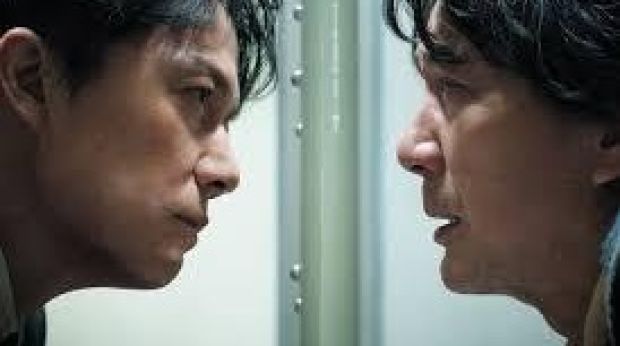
Masaharu Fukuyama and Kôji Yakusho in Hirokazu Koreeda’s THE THIRD MURDER. Photo courtesy of San Francisco Film Society (SFFILM).

The Third Murder opens with a killing, and the audience gets a clear full-face view of the killer.  Then the mystery begins – not about who done it, but about why and who will be held accountable.

A high-powered defense lawyer (Masaharu Fukuyama) has been called in to take over a challenging case; it’s potentially a death penalty case, and the defendant (Kôji Yakusho) has confessed. Moreover, the defendant has previously served thirty years for an earlier murder, he’s an oddball and he keeps switching his story.

Nevertheless, the lawyer thinks he can avoid the death penalty with a technicality about the motivation for the crime. He gets some good news from forensic evidence and then discovers one startling secret about the victims’ family – and then another one even more shocking – one that might even exculpate his client.

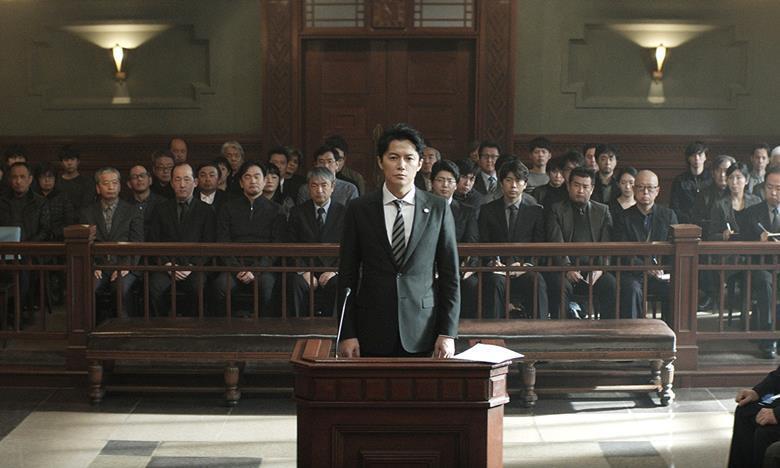
The Third Murder is a slow burn, as the grind of legal homework is punctuated by reveal after reveal. Eventually, there’s a shocker at the trial, and this legal procedural eventually gives way to philosophical questions. Finally, there’s an edge-of-the-seat epilogue – a final lawyer-client face-to-face where the shell-shocked lawyer tries to confirm what really happened and why.

Masaharu Fukuyama in Hirokazu Koreeda’s THE THIRD MURDER. Photo courtesy of San Francisco Film Society (SFFILM).

Yakusho (Tampopo, Shall We Dance?, Babel, 13 Assassins) is quite excellent as the defendant, a man who seems to be an unreliable mental case, but who might have a sense of justice that trumps everyone else’s.

The Third Murder is the work of director Hirokazu Koreeda, who made the 1995 art house hit Maborosi and one of the best movies of 2008, Still Walking.  Koreeda’s Shoplifters just won the Palm d’Or at Cannes, and will be released in the US by Magnolia Pictures on November 23.  I saw The Third Murder at the 2018 San Francisco International Film Festival (SFFILM).


Stream of the Week: THE HANDMAIDEN – gorgeous, erotic and a helluva plot

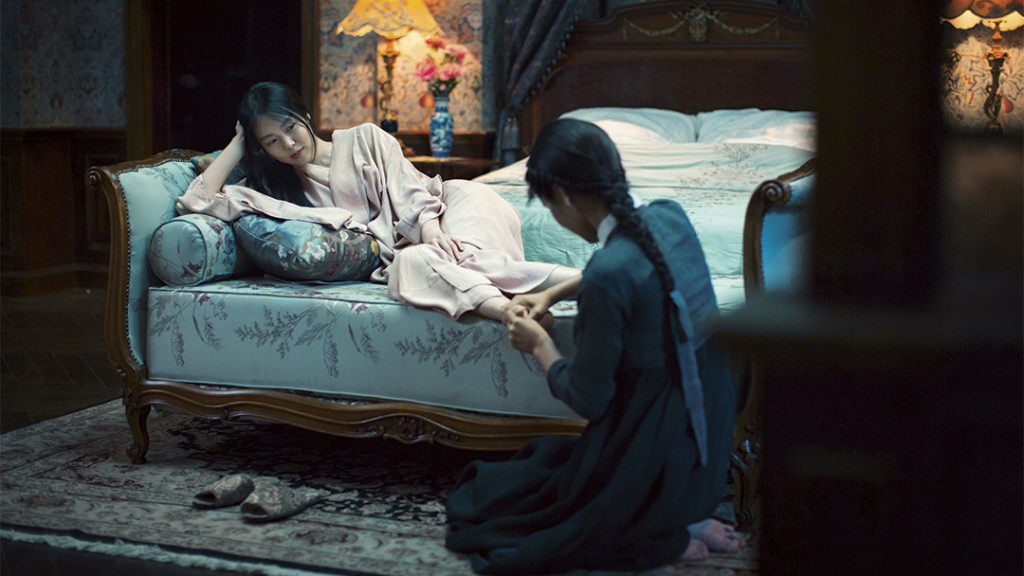
THE HANDMAIDEN
THE HANDMAIDEN

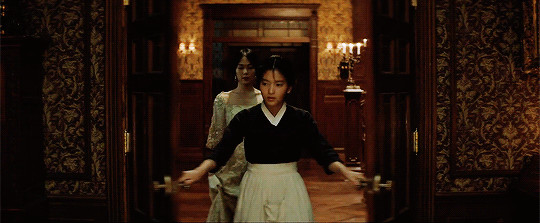
After a few minutes of The Handmaiden, we learn that it’s a con artist movie. After 100 minutes, we think we’ve watched an excellent con artist movie, but then we’re surprised by a huge PLOT TWIST, and we’re in for two more episodes and lots of surprises in a gripping and absorbing final hour. It’s also one of the most visually beautiful and highly erotic films of the year.

Director and co-writer Chan-wook Park sets the story in 1930s Korea during Japanese occupation (Japanese dialogue is subtitled in yellow and Korean dialogue in white). A young heiress has been secluded from childhood by her guardian uncle, who intends to marry her himself for her fortune. A con man embarks on a campaign to seduce and marry the wealthy young woman to harvest her inheritance himself. The con man enlists a pickpocket to become handmaiden to the heiress – and his mole. I’m not going to tell you more about the plot, but the audience is in for a wild ride.

The Handmaiden takes its time revealing its secrets. Who is conning who? Who is attracted to whom? How naive is the heiress? How loyal is the handmaiden? Who is really Japanese and who is really Korean? What’s in those antique books? What’s in the basement? Is the uncle perverted or REALLY perverted? And what legendary sex toy will show up in the final scene?

THE HANDMAIDEN
THE HANDMAIDEN

Chan-wook Park’s 2003 US art house hit Oldboy is highly sexualized, trippy and disturbing. The Handmaiden is much more mainstream and accessible than Oldboy, but its sexuality packs a punch.

Gorgeous and erotic, The Handmaiden is one of the most gloriously entertaining films of the year.  You can stream it on Amazon Instant Video, iTunes, Vudu, YouTube and Google Play.

THE HANDMAIDEN: gorgeous, erotic and a helluva plot

THE HANDMAIDEN
THE HANDMAIDEN

After a few minutes of The Handmaiden, we learn that it’s a con artist movie. After 100 minutes, we think we’ve watched an excellent con artist movie, but then we’re surprised by a huge PLOT TWIST, and we’re in for two more episodes and lots of surprises in a gripping and absorbing final hour. It’s also one of the most visually beautiful and highly erotic films of the year.

Director and co-writer Chan-wook Park sets the story in 1930s Korea during Japanese occupation (Japanese dialogue is subtitled in yellow and Korean dialogue in white). A young heiress has been secluded from childhood by her guardian uncle, who intends to marry her himself for her fortune. A con man embarks on a campaign to seduce and marry the wealthy young woman to harvest her inheritance himself. The con man enlists a pickpocket to become handmaiden to the heiress – and his mole. I’m not going to tell you more about the plot, but the audience is in for a wild ride.

The Handmaiden takes its time revealing its secrets. Who is conning who? Who is attracted to whom? How naive is the heiress? How loyal is the handmaiden? Who is really Japanese and who is really Korean? What’s in those antique books? What’s in the basement? Is the uncle perverted or REALLY perverted? And what legendary sex toy will show up in the final scene?

THE HANDMAIDEN
THE HANDMAIDEN

Chan-wook Park’s 2003 US art house hit Oldboy is highly sexualized, trippy and disturbing.  The Handmaiden is much more mainstream and accessible than Oldboy, but its sexuality packs a punch.

Gorgeous and erotic, The Handmaiden is one of the most gloriously entertaining films of the year.

Emperor: one romance too many

Completely destroyed by US aerial bombardment and facing nuclear annihilation, Japan has just surrendered.  General Douglas MacArthur has just arrived to lead the American occupation of Japan, with the long-term goal of rebuilding Japan as a modern, democratic, pro-Western and relatively demilitarized country; in the short-term, he has to punish Japan’s WW II war criminals. MacArthur makes a grand strategic decision not to blame the Emperor of Japan for the war, but to enlist the authority of the Emperor in support of MacArthur’s efforts.  Emperor is the story of this moment in world history, with Tommy Lee Jones playing MacArthur.

Tommy Lee Jones is always fun to watch, especially when he is not suffering fools,  and he does an excellent job of portraying MacArthur’s decisiveness, self-promotion and vanity.  But he is is perhaps too sympathetic here, failing to capture MacArthur’s absolute and defining narcissism.

But we only occasionally see MacArthur.  Most of the screen time is reserved for the officer (Matthew Fox of Lost) gathering the evidence that will justify MacArthur’s preferred option (absolving the Emperor).  Unfortunately, Fox’s character is also searching for the Japanese woman who was his pre-war lover.  Unpeeling the onion of the Japanese imperial bureaucracy is more interesting than the sappy love story.

Given that it was directed by Peter Webber (Girl With a Pearl Earring), I had higher hopes for Emperor.  I would recommend it only for those with an interest in WW II and Japanese history.